

Want to eat in a way that supports a long, energetic life without living on sad desk salads? The traditional Okinawa diet offers a surprisingly practical answer. It centers on vegetables, sweet potatoes, beans, seafood, and a habit that stops you from eating like you’ve entered a competitive buffet.
People in Okinawa, Japan once earned global attention for their unusually high number of healthy older adults. Their traditional food culture didn’t rely on magic powders, punishment workouts, or a refrigerator full of beige “wellness” products. It relied on simple food, smaller portions, daily movement, and strong social ties.
The real secret? The Okinawa diet works as a lifestyle pattern, not a strict menu. Ever wondered why that matters so much? A plan that fits ordinary life usually beats a perfect plan that makes you miserable by Thursday.
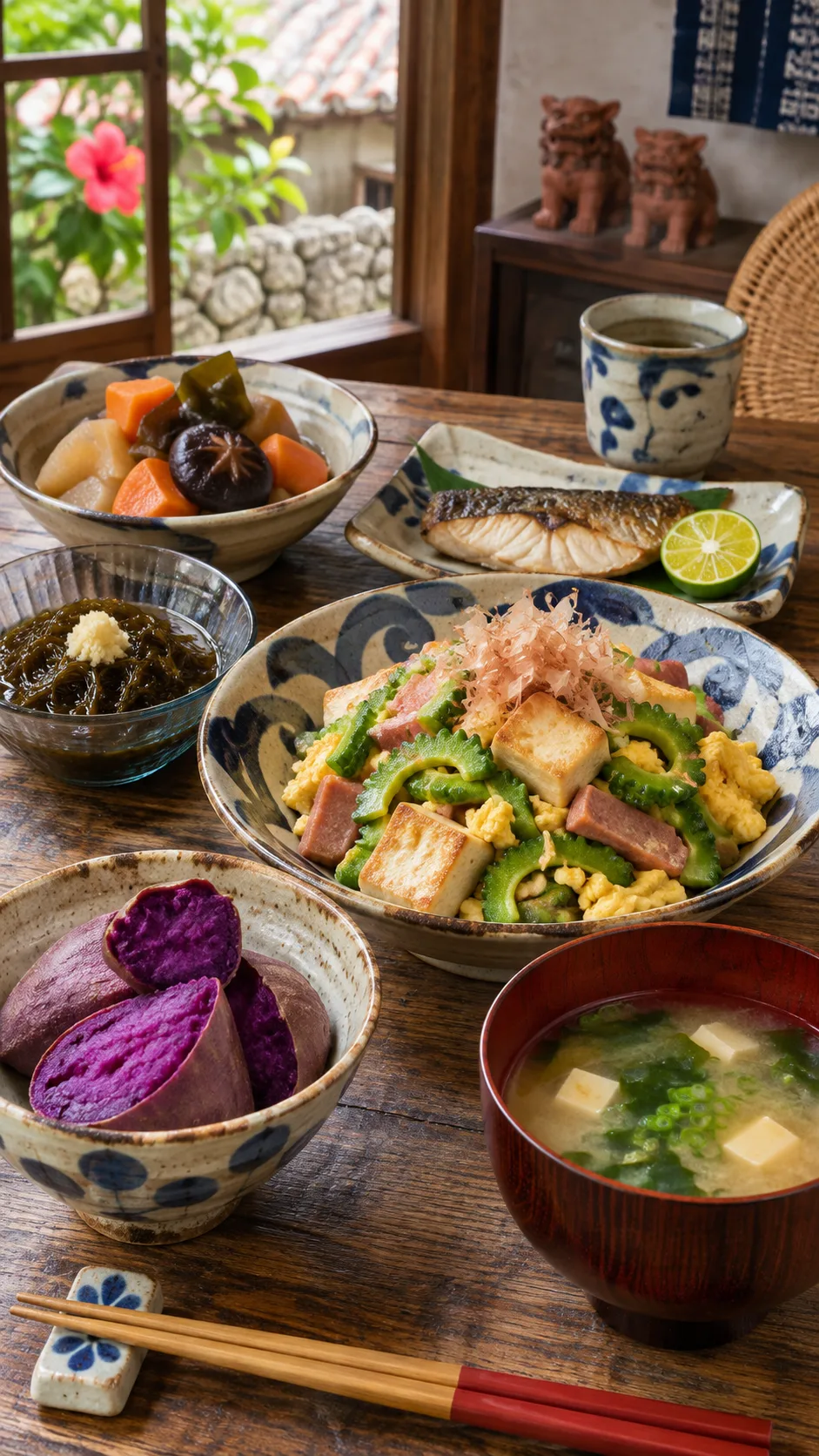
What is the traditional Okinawa diet?
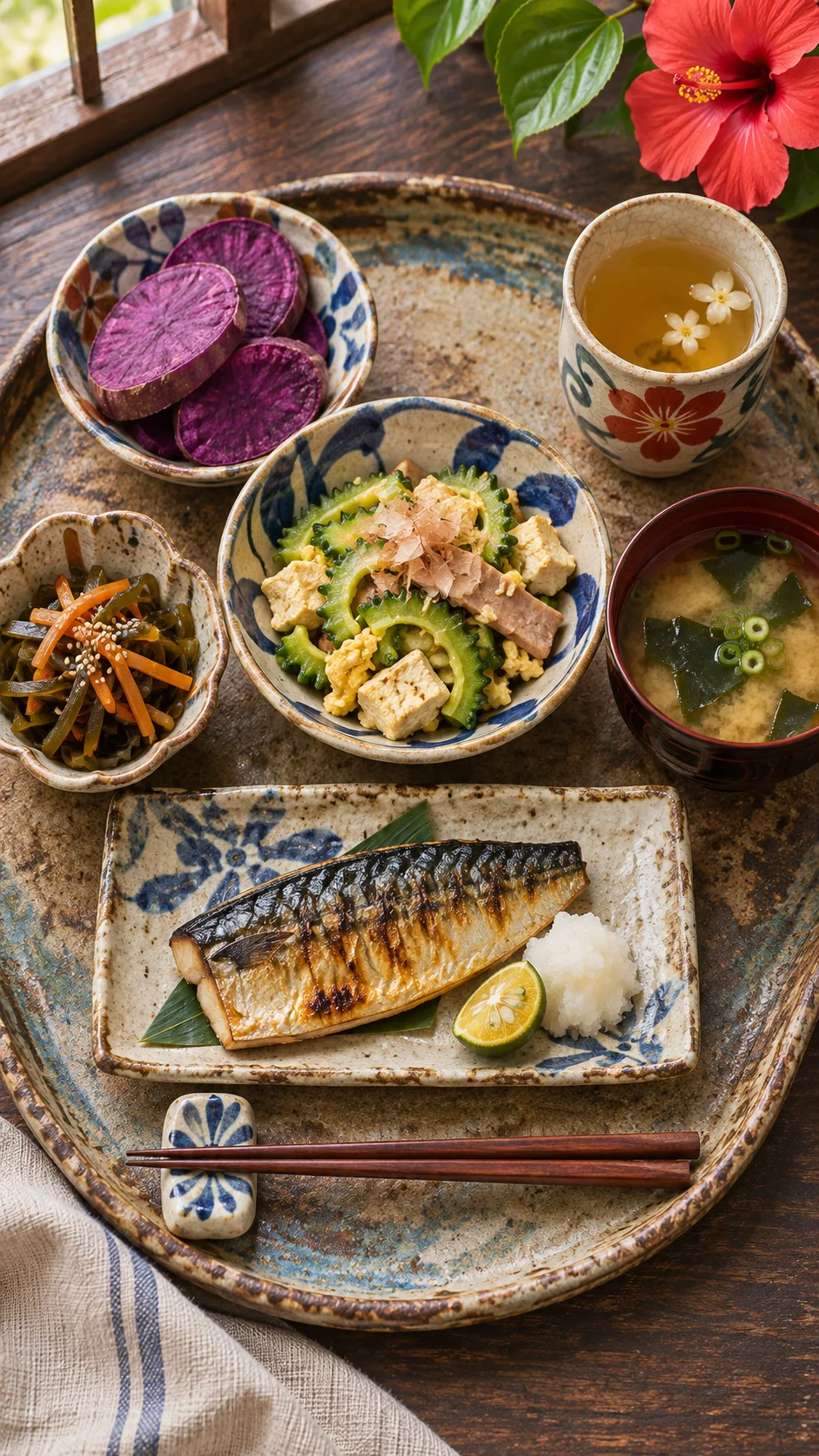
The Okinawa diet comes from the food traditions of Okinawa, a group of islands in southern Japan. Older Okinawan generations built meals around homegrown plants, legumes, sea vegetables, modest amounts of fish and pork, and lots of sweet potato. They ate what grew well locally, which sounds obvious until you remember that many modern diets treat imported powders as sacred artifacts.
Researchers have linked the traditional Okinawan eating pattern with low rates of several chronic diseases among older adults in historical populations. A widely cited review in PubMed’s research record on Okinawan longevity describes how diet, activity, social connection, and low smoking rates worked together. No single food handed out immortality.
Context matters: Okinawa’s health story has shifted across generations. Many younger residents now eat more processed food, meat, refined grains, and fast food than their grandparents did. So when people praise the “Okinawa diet,” they usually mean the traditional pattern, not every meal people eat in Okinawa today.
The core foods on an Okinawan plate
Traditional Okinawan meals lean heavily toward plant foods. These foods bring fiber, potassium, antioxidants, vitamins, and slow-digesting carbohydrates. They also make meals filling without forcing you to count every crumb like an accountant with trust issues.
- Purple and orange sweet potatoes: The historic calorie staple, rich in complex carbohydrates and plant compounds.
- Vegetables: Bitter melon, leafy greens, carrots, cabbage, daikon radish, pumpkin, and onions.
- Legumes and soy: Tofu, miso, edamame, and other soy foods provide protein and minerals.
- Sea vegetables: Kelp, wakame, mozuku, and other edible seaweeds add flavor and trace minerals.
- Fish and seafood: People eat them in sensible portions rather than making them the whole plate.
- Whole grains: Brown rice and other minimally processed grains play a supporting role.
- Herbs and spices: Turmeric, ginger, garlic, and mugwort add flavor without a sodium avalanche.
Traditional Okinawan cooking also uses pork in small, purposeful amounts. Pork broth and small cuts add flavor and protein, but they don’t dominate the plate. That detail matters because social media loves turning balanced food traditions into cartoon versions of themselves.
The big Okinawa diet principle: Hara Hachi Bu
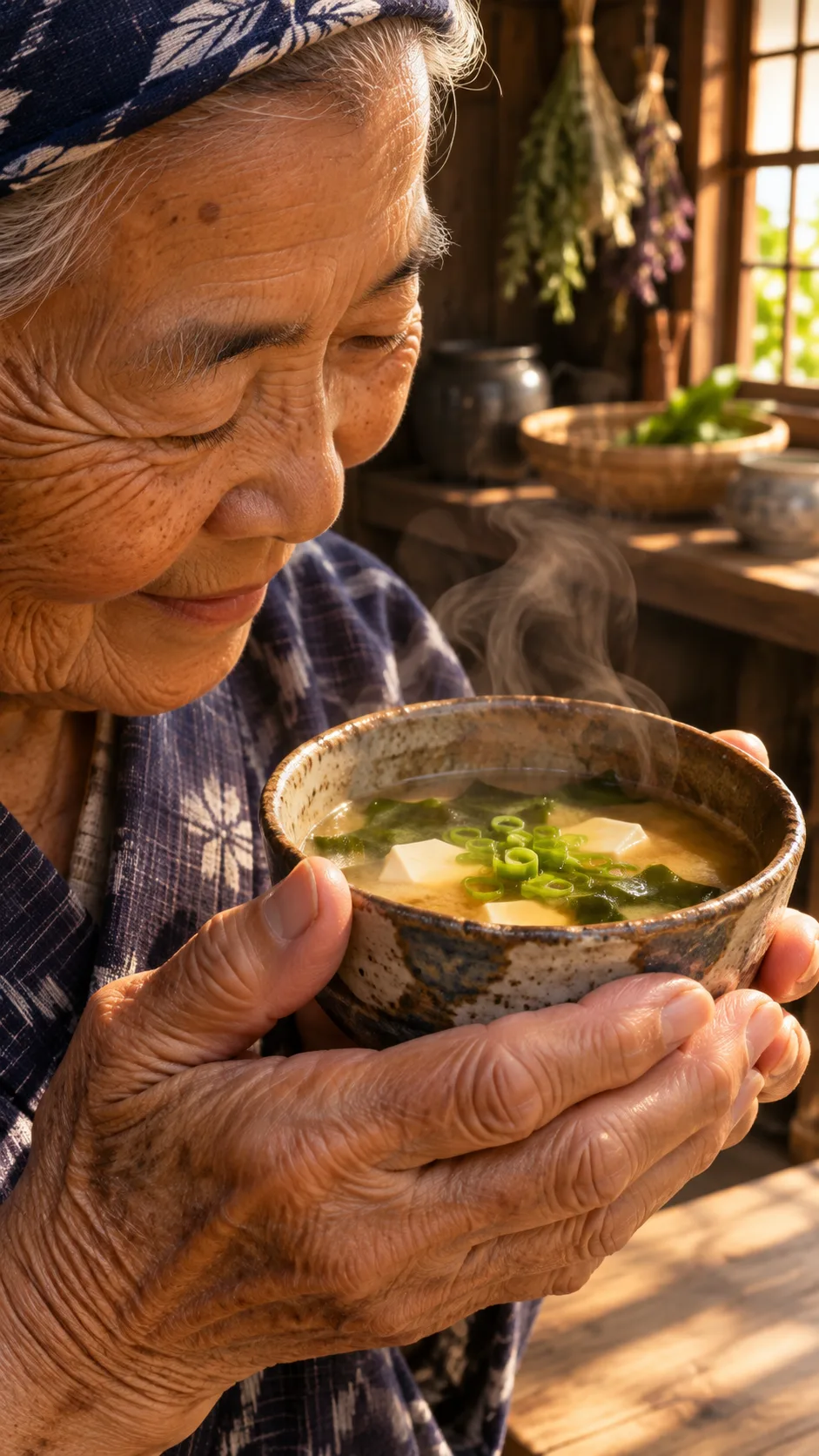
The phrase hara hachi bu encourages people to stop eating when they feel about 80% full. It doesn’t demand hunger, guilt, or dramatic table-side math. It simply creates a pause before “comfortably satisfied” becomes “why did I do this to myself?”
This practice may help people reduce overeating because fullness signals take time to reach the brain. You can use the idea without guessing exact percentages. Eat slowly, serve a reasonable portion, and ask yourself whether you need more food or just want more flavor.
I think this habit offers the most useful Okinawa diet lesson for busy people. Most of us don’t need another list of forbidden foods. We need a reliable off-ramp before a normal dinner turns into a snack spiral.
How to practice hara hachi bu without making meals weird
- Put food on a plate instead of eating from a bag, box, or pan.
- Start with vegetables, soup, fruit, or another high-fiber food.
- Take a few breaths before your first bite and eat without scrolling for at least part of the meal.
- Slow your pace by putting down your fork between bites.
- Stop when you feel satisfied, then wait 10 minutes before reaching for seconds.
You don’t need perfect restraint at every meal. You need a pattern that works more often than it fails. A birthday cake doesn’t destroy your health, FYI; daily mindless overeating causes far more trouble.
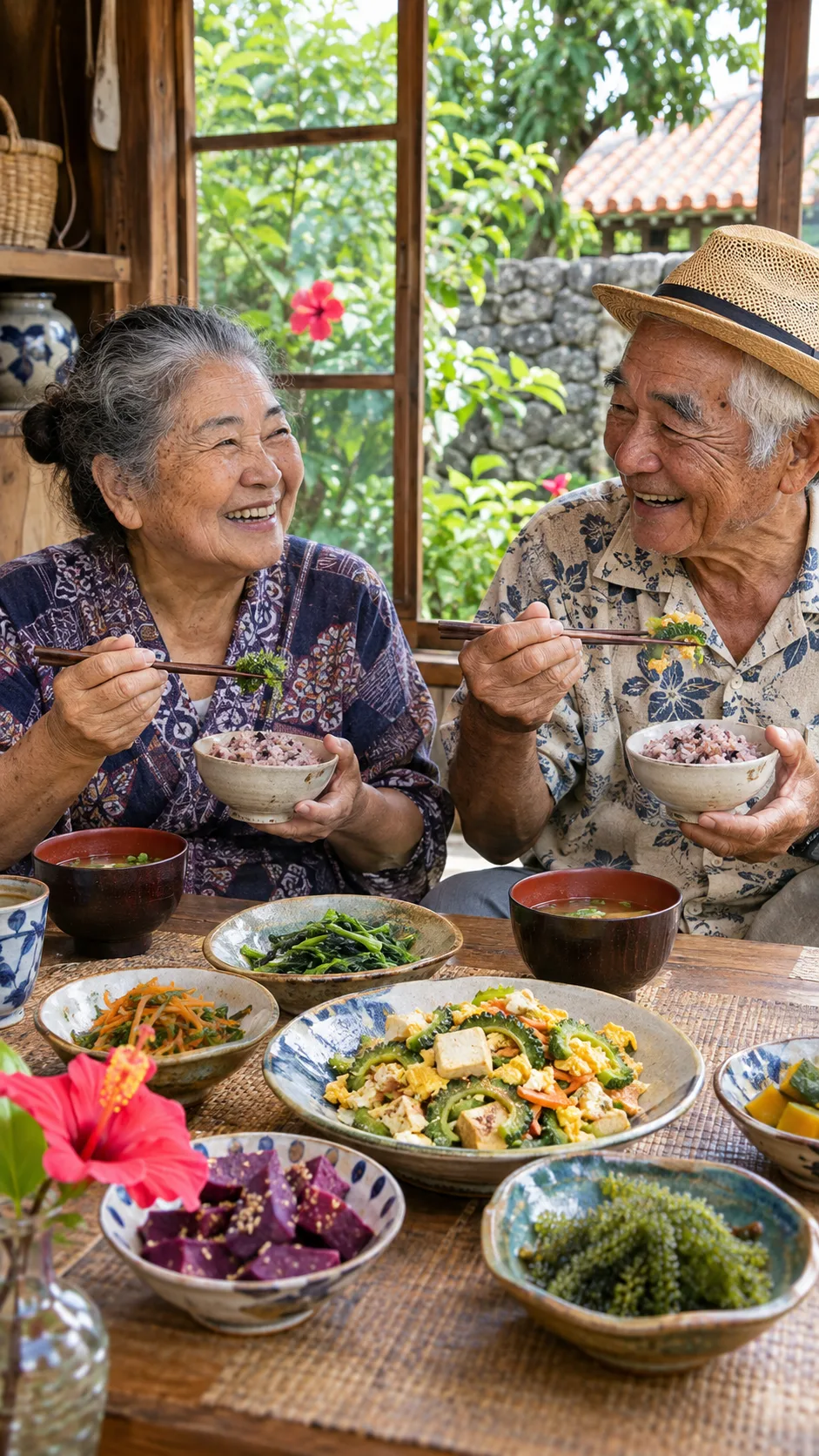
Why the Okinawa diet supports healthy aging
The traditional Okinawa diet packs a lot of nutrition into relatively few calories. Vegetables, sweet potatoes, beans, and soups fill the stomach while keeping energy density low. That combination can support a healthy body weight without leaving you ravenous.
Fiber plays a major role here. It feeds beneficial gut microbes, supports regular digestion, slows blood sugar swings, and helps meals keep you full. The World Health Organization recommends diets built around fruits, vegetables, legumes, whole grains, and nuts for better long-term health.
You can read the broader evidence in the World Health Organization’s healthy diet guidance. The Okinawan pattern lines up with those fundamentals remarkably well. Fancy branding never beats solid basics.
More plants, more protective nutrients
Purple sweet potatoes contain anthocyanins, the pigments that give them their striking color. Bitter melon, leafy greens, herbs, and sea vegetables offer a wide range of plant compounds too. Scientists continue studying how these compounds affect health, but you don’t need a lab coat to benefit from eating more colorful plants.
Variety also makes the diet easier to sustain. You can rotate vegetables, beans, fruits, and grains based on season, taste, and budget. That flexibility gives the Okinawa diet an advantage over rigid plans that collapse the minute you can’t find one niche ingredient.
Protein without a meat-heavy plate
Tofu, beans, fish, and modest pork portions give Okinawan-style meals protein without making meat the main event. This approach can help many people increase plant intake while still enjoying animal foods. You don’t need to declare war on chicken to make your plate more plant-forward.
Soy foods deserve special attention. Tofu, tempeh, edamame, and unsweetened soy milk offer protein, iron, and other nutrients. Choose minimally processed versions when possible, and watch the salt in packaged sauces and instant soups.
Movement and community complete the picture
Food explains only part of Okinawan longevity. Traditional life included walking, gardening, cooking, household tasks, and frequent social contact. People also built close support networks, often called moai, that brought friendship and practical help.
That matters because health doesn’t live on a plate alone. Stress, sleep, exercise, income, medical care, smoking, and relationships all shape how we age. Anyone who promises that one sweet potato can fix all of that is selling you a very charming lie.
What the Okinawa diet does not promise
The Okinawa diet does not guarantee a longer life. Genes, environment, healthcare access, social conditions, and plain luck all influence lifespan. Responsible nutrition advice should never turn a population trend into a personal guarantee.
It also isn’t a treatment for diabetes, kidney disease, thyroid conditions, digestive disorders, or eating disorders. Talk with a registered dietitian or clinician if you manage a health condition or take medication. Personalized advice beats internet certainty every time.
Seaweed deserves a quick note too. It can provide useful minerals, but some varieties contain a lot of iodine. Enjoy seaweed as part of varied meals instead of taking huge quantities or stacking iodine supplements on top.
If you need a structured way to identify digestive triggers, an elimination diet meal plan may offer a more suitable framework than copying someone else’s food culture. Work with a qualified professional for a true elimination plan, especially if symptoms feel severe or persistent.
How to eat Okinawan-style wherever you live
You don’t need to move to Japan or order obscure ingredients online. Start with the principles: vegetables first, fiber-rich carbs, beans or soy, modest protein, and less ultra-processed food. Your local supermarket can handle most of this mission just fine.
Swap purple sweet potatoes for orange sweet potatoes, winter squash, or regular potatoes when needed. Use spinach, kale, cabbage, broccoli, carrots, or frozen mixed vegetables in place of Okinawan greens. Adaptation keeps this approach affordable and realistic.
A simple Okinawa-inspired day of eating
This sample day offers inspiration, not a prescription. Adjust portions for your hunger, body size, activity level, culture, health needs, and goals. Food should support your life, not become another full-time job.
- Breakfast: Oatmeal with berries, chia seeds, walnuts, and unsweetened soy yogurt.
- Lunch: Brown rice bowl with baked tofu, cabbage, carrots, edamame, mushrooms, and ginger-lime dressing.
- Snack: Fruit with a small handful of nuts, or roasted edamame.
- Dinner: Miso-style vegetable soup with beans or fish, roasted sweet potato, and a side of greens.
- Something sweet: Fresh fruit, tea, or a small dessert that you genuinely enjoy.
Notice what this menu avoids: obsession. It doesn’t ban carbohydrates, demand a juice cleanse, or require a suspiciously expensive subscription box. It simply makes nutrient-dense food the default.
Five easy Okinawa diet changes to start this week
- Make vegetables half your lunch or dinner plate. Use roasted, stir-fried, steamed, fresh, or frozen vegetables.
- Choose sweet potatoes more often. Bake a batch for quick meals, soups, bowls, and snacks.
- Add beans or tofu three times this week. Toss them into salads, curries, soups, tacos, or grain bowls.
- Eat one meal without screens. Give your hunger and fullness cues a chance to speak.
- Invite someone to share a meal or a walk. Community supports health in ways macros can’t measure.
Small changes create more momentum than dramatic resets. If you currently eat few vegetables, add one extra serving a day. If you regularly overeat at night, try the 80% full pause before you try a complicated diet overhaul.
For people who want a broader plant-rich approach with familiar spices and home-style meals, these healthy diet plans for Indian women offer useful ideas too. Different food cultures can share the same smart foundation: plants, fiber, satisfying portions, and consistency.
Common Okinawa diet mistakes to avoid
The biggest mistake is treating the Okinawa diet like a low-calorie contest. Traditional Okinawans ate enough food for their work, age, and energy needs. Under-eating can drain your energy, hurt training recovery, and trigger rebound hunger later.
Another mistake is loading every meal with salty miso, soy sauce, and seaweed. Traditional flavors taste wonderful, but sodium still counts. Use lower-sodium options, add citrus and ginger, and let vegetables bring their own flavor to the table.
Some people also focus only on food while ignoring movement, sleep, and relationships. That approach misses the point. The Okinawa lifestyle connected daily routines with purpose and community, and those pieces matter enormously.
Finally, don’t use Okinawan food as an excuse to avoid medical advice. The National Institute on Aging’s nutrition resources can help you build healthy eating habits as you age. Ask your healthcare team for guidance when you need support with a specific condition.
The bottom line on the Okinawa diet
The Okinawa diet secret doesn’t hide in one superfood. It lives in a daily pattern of vegetables, sweet potatoes, beans, modest portions, regular movement, and meaningful connection. That pattern supports health because it gives your body what it needs without making food feel like a punishment.
Start with one Okinawan-inspired meal this week, then practice stopping when you feel satisfied. Add color to your plate, slow down for a few bites, and call someone you care about. A longer, healthier life rarely starts with perfection. It starts with the next ordinary choice.