You can eat 1,200 calories without thinking about toast all day. Willpower rarely survives until 3 p.m. when somebody opens a packet of biscuits nearby.
A filling 1,200 calorie meal plan relies on protein, fibre, bulky vegetables, sensible carbohydrates, and enough fat to make meals enjoyable. You do not need joyless lettuce lunches or portions arranged with tweezers.
This guide lays out a simple day of meals, explains why those meals satisfy you, and helps you adapt the plan to your body and routine. Calorie cutting does not need to feel like a crisis.
First: Is a 1,200 calorie meal plan right for you?
A 1,200 calorie diet may suit some smaller adults with lower energy needs as a short term, structured starting point. It does not suit everybody, and nobody wins a prize for logging the lowest number in an app.
Your calorie needs depend on your age, height, weight, activity level, health conditions, goals, and medicines. Tall people, active people, pregnant or breastfeeding people, teenagers, and people with a history of disordered eating often need much more than 1,200 calories.
The NHS guidance on calories explains that calorie needs differ widely from person to person. Speak with a registered dietitian or clinician before you follow a low calorie plan, particularly if you manage diabetes, take glucose lowering medicine, or live with a medical condition.
Treat this plan as a useful template, not a rule carved into a grumpy stone tablet. Raise your intake and reassess if hunger damages your concentration, sleep, training, mood, or social life.
Why most 1,200 calorie diet plans leave you hungry
Many low calorie plans shrink portions and ignore satiety. They give you a rice cake, three almonds, and a motivational quote, then seem surprised when you search the kitchen later.
Protein, fibre, food volume, texture, fluids, and meals you enjoy all affect fullness. A 1,200 calorie weight loss plan needs those parts to work together.
Protein helps you stay full
Protein helps you feel satisfied after meals and supports lean muscle while you lose weight. Chicken, eggs, fish, Greek yogurt, tofu, beans, cottage cheese, lean beef, and lentils all work well.
Try to eat roughly 25 to 35 grams of protein at each main meal, then include a protein rich snack when your schedule calls for one. Your body size and health needs shape your own target, but spreading protein through the day often feels better than saving most of it for dinner.
Fibre makes meals feel larger
Fibre rich foods add bulk and slow digestion. Vegetables, fruit, oats, beans, lentils, potatoes, whole grains, and seeds help you eat satisfying portions without using up your calorie budget too quickly.
The CDC healthy eating guidance recommends fruits, vegetables, whole grains, and a range of protein sources. These foods bring nutrients and volume, which beats living on “diet” snacks that taste like packing material.
Volume keeps your plate generous
Base meals on non starchy vegetables: spinach, cabbage, cucumber, carrots, tomatoes, peppers, broccoli, cauliflower, green beans, courgettes, mushrooms, and salad leaves. Add herbs, spices, lemon, vinegar, garlic, chilli, and measured sauces so they taste good.
A large bowl of vegetable packed soup or a loaded salad can feel far more satisfying than a small, calorie dense meal. Your eyes count too. A full plate can make the plan feel easier before your first bite.
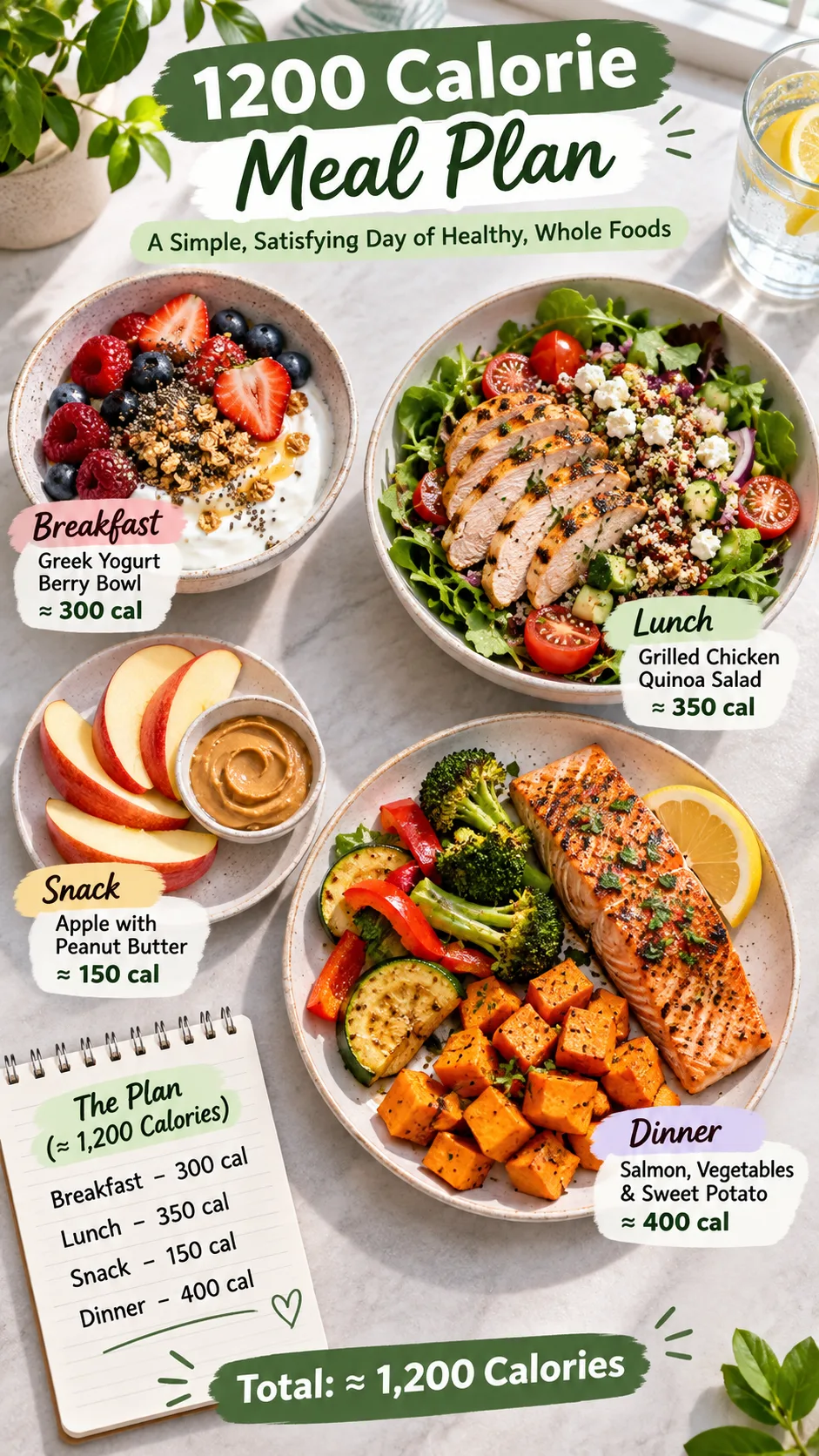
The simple 1,200 calorie meal plan: One full day
This sample day comes to about 1,200 calories, though brands, cooking methods, and portion sizes can change that number. Weigh calorie dense foods such as oils, nut butter, cheese, rice, and granola when you need accuracy. A guessed olive oil drizzle can become a whole side quest.
Drink water, sparkling water, unsweetened tea, black coffee, or coffee with a measured splash of milk during the day. Count any calories you drink.
Breakfast: Greek yogurt oats bowl
Approximate calories: 300
- 170g plain non-fat Greek yogurt
- 30g rolled oats
- 100g berries, fresh or frozen
- 1 teaspoon chia seeds
- Cinnamon and a zero-calorie sweetener, if you enjoy one
Mix everything in a bowl, then leave it for five minutes to soften the oats. The yogurt provides protein, the oats and berries bring fibre, and the bowl gives you enough food to start the day without a sugar crash.
For a warm breakfast, cook the oats in water, stir in the yogurt after cooking, and add the berries on top. The creamy texture feels richer than its calorie count.
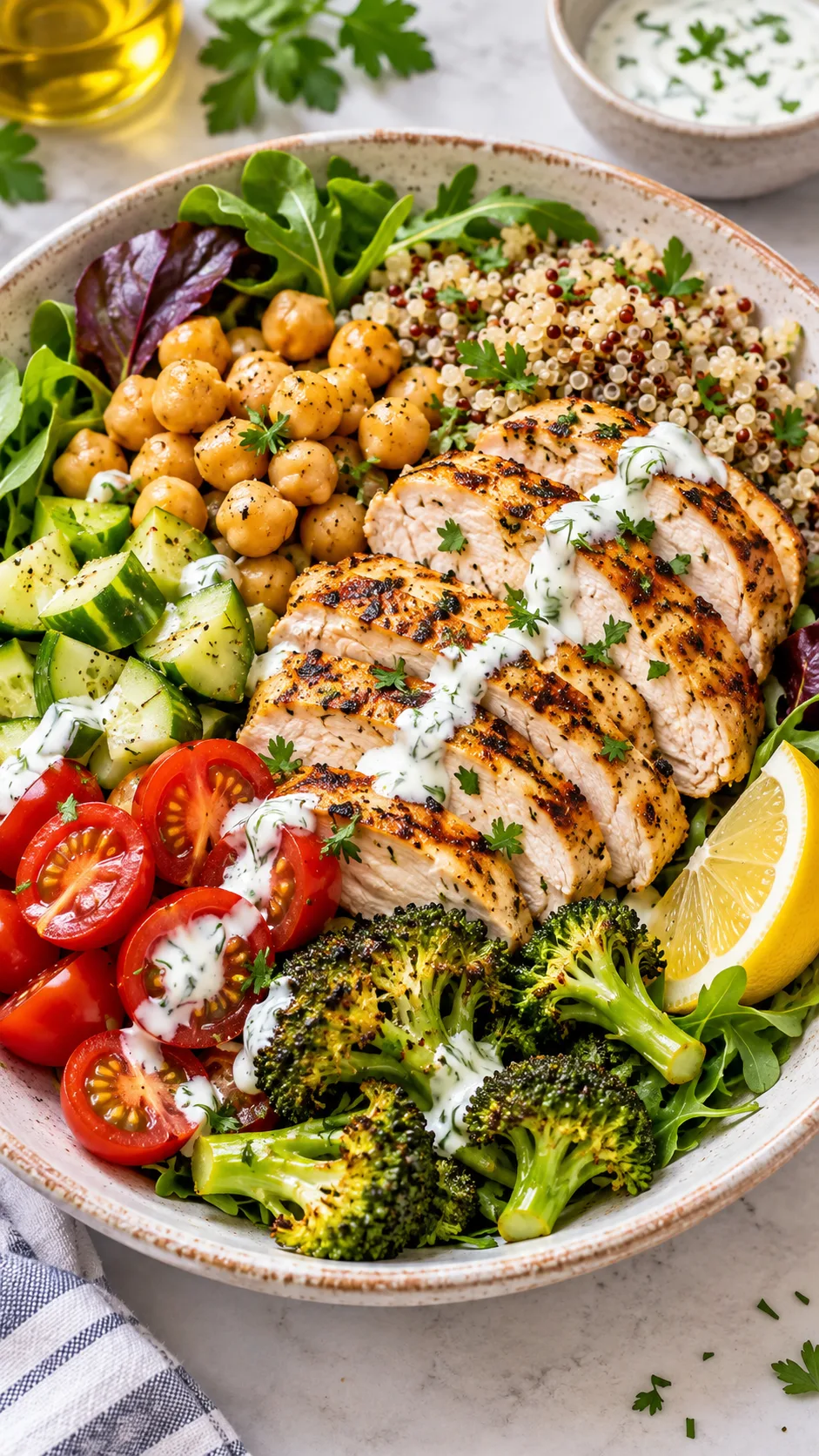
Lunch: Chicken, quinoa, and crunchy salad bowl
Approximate calories: 360
- 100g cooked chicken breast, sliced
- 80g cooked quinoa
- 2 large handfuls mixed salad leaves
- 1 cup chopped cucumber, tomato, peppers, and carrots
- 1 tablespoon light vinaigrette or lemon-yogurt dressing
- 1 teaspoon olive oil, if your dressing does not include it
Fill at least half the bowl with vegetables, then add the chicken and quinoa. Quinoa provides slowly digested carbohydrate, while chicken gives the meal a solid dose of protein.
You can replace chicken with tuna in spring water, baked tofu, prawns, turkey, beans, or lean beef. Choose food you can eat regularly. A so called perfect plan falls apart when you dread every lunch.
Snack: Apple and peanut butter
Approximate calories: 170
- 1 medium apple
- 1 tablespoon natural peanut butter
This snack pairs crunchy fruit and fibre with satisfying fat. Measure the peanut butter. Peanut butter brings plenty of good qualities, but modest portions do not belong on that list.
For a savoury snack, try a boiled egg with carrot sticks, 100g cottage cheese with cucumber, or roasted chickpeas. Choose the one that keeps you from reaching dinner ravenous.
Dinner: Salmon, sweet potato, and roasted vegetables
Approximate calories: 370
- 90g salmon fillet
- 120g baked sweet potato
- 2 cups roasted broccoli, courgette, cauliflower, or green beans
- 1 teaspoon olive oil for roasting
- Lemon, pepper, garlic, paprika, and herbs
Season the salmon with lemon, garlic, pepper, and paprika, then bake it or cook it in an air fryer. Roast the vegetables until their edges brown, because browned vegetables taste much better than steamed vegetables that have given up on life.
This dinner gives you protein, omega 3 fats, fibre, and a satisfying carbohydrate source. You end the day with a proper meal rather than a bowl of regret.
Your daily total
- Breakfast: about 300 calories
- Lunch: about 360 calories
- Snack: about 170 calories
- Dinner: about 370 calories
- Total: about 1,200 calories
Your total can move by 50 to 100 calories based on the products you buy. Check labels, use a kitchen scale for a week or two, and learn your usual portions without counting every blueberry.
How this filling meal plan works
This 1,200 calorie menu gives you four chances to eat, which can help you avoid the all or nothing cycle that derails many diets. It includes protein whenever you eat, plenty of produce, and enough carbohydrate for daily energy.
You also get variety. Boredom can make a takeaway menu look like an ancient treasure map.
- Protein appears through the day. Yogurt, chicken, peanut butter, and salmon can help curb hunger.
- Fibre appears at every meal. Oats, berries, vegetables, quinoa, apple, and sweet potato help keep portions generous.
- Healthy fats stay measured. Salmon, chia seeds, peanut butter, and olive oil add satisfaction without consuming the full calorie budget.
- Carbohydrates support consistency. Oats, quinoa, fruit, and sweet potato give you useful energy for everyday life.
- Meals use ordinary foods. Most supermarkets sell them, and you can cook them without a chemistry degree.
The USDA MyPlate framework follows a similar approach: fill much of your meal with fruit and vegetables, include protein foods, and choose nutrient dense carbohydrate sources.
Easy swaps so you do not get bored
You do not need to eat this exact 1,200 calorie meal plan every day. Please do not, unless you like lunch to feel like a rerun.
Choose swaps with similar calorie counts and keep protein high. Your meals can fit your culture, budget, preferences, and whatever you find in the fridge on a Tuesday.
Breakfast swaps
- Two eggs scrambled with spinach, mushrooms, and one slice whole-grain toast
- Protein smoothie with unsweetened milk, protein powder, berries, spinach, and ice
- Cottage cheese with pineapple, cinnamon, and a small handful of high-fibre cereal
- Vegetable omelette with salsa and a small boiled potato
If you enjoy familiar West African options, explore these Nigerian breakfast ideas for weight loss and build portions around protein and vegetables. Your meal plan should suit your kitchen, not somebody else’s Instagram feed.
Lunch and dinner swaps
- Turkey mince lettuce wraps with brown rice and chopped vegetables
- Lentil soup with a side salad and plain yogurt
- Tuna and white bean salad with lemon, herbs, tomatoes, and cucumber
- Lean beef stir-fry with plenty of vegetables and cauliflower rice or a measured serving of rice
- Grilled tilapia with vegetable stew and a small portion of boiled plantain or yam
- Tofu curry with cauliflower, spinach, tomatoes, and measured brown rice
For more familiar meal ideas, this guide to Nigerian foods for weight loss can help you create satisfying meals with staples you already know and enjoy.
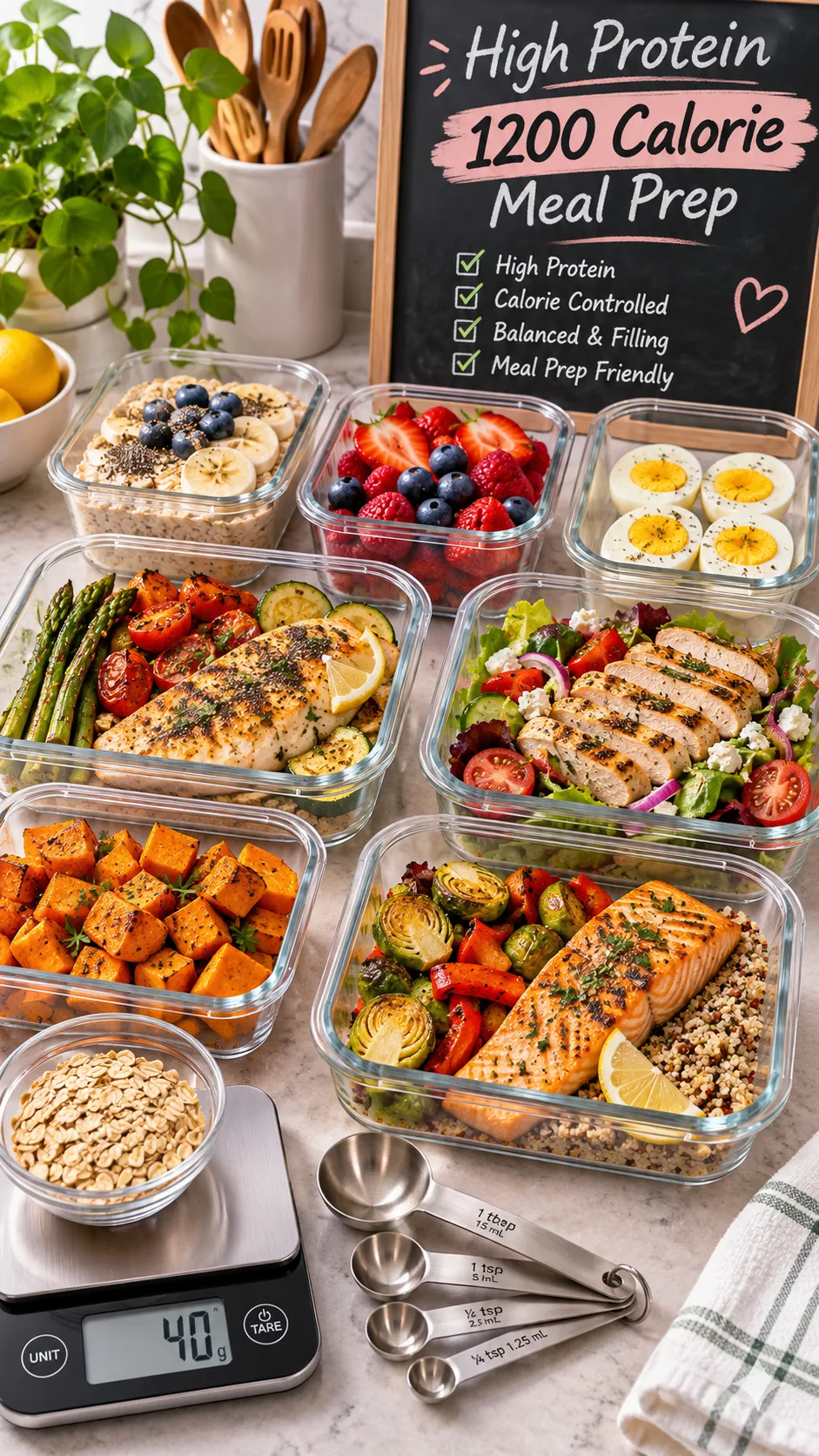
Make the plan easier with smart meal prep
Meal prep does not demand five hours, twenty containers, and a personality change. Once or twice a week, prepare two proteins, one carbohydrate, a tray of vegetables, and a quick sauce.
That little bit of planning answers the “what can I eat?” question when hunger hits. Poor food choices often begin with no plan and very loud hunger.
- Cook chicken, turkey mince, tofu, fish, or beans for two to three days.
- Roast a large tray of mixed vegetables with measured olive oil and spices.
- Cook quinoa, rice, potatoes, or sweet potatoes in portions.
- Wash and chop salad ingredients so you can make lunch in five minutes.
- Keep protein snacks where you can see them: yogurt, eggs, cottage cheese, tuna, edamame, or measured nuts.
- Portion calorie dense extras such as peanut butter, cheese, dressing, and nuts ahead of time.
Keep sauces simple: salsa, hot sauce, mustard, vinegar, lemon juice, herbs, garlic, low sugar yogurt dressing, and spices add plenty of flavour for few calories. Bland food invites rebellion, and your taste buds will organise it.
How to stay full on 1,200 calories
Try these habits before you decide the plan does not suit you. Small changes can affect hunger more than another round of severe calorie cutting.
Start meals with vegetables or soup
Eat a broth based vegetable soup or a large crunchy salad before lunch or dinner. That habit adds volume and slows your pace, giving your brain time to register the meal.
Choose protein at breakfast
A pastry and sweet coffee can use hundreds of calories and leave you hungry again soon after. Start with Greek yogurt, eggs, cottage cheese, tofu scramble, or a protein smoothie instead.
Eat without your phone when you can
Scrolling can make a meal vanish quickly. Sit down, chew properly, notice the texture and flavour, and give your food ten to fifteen minutes of attention.
Protect your sleep
Short sleep can make appetite harder to manage and can increase cravings for calorie dense foods. Nobody gets perfect sleep, but a regular bedtime can help more than you might expect.
Plan for cravings instead of pretending they never happen
Cravings do not mean you lack discipline. Include a 100 to 150 calorie option in your day: dark chocolate, a mini ice cream, a small packet of crisps, or yogurt with cocoa and berries.
A planned treat can stop a chaotic “I already ruined today” spiral. You did not ruin anything by eating chocolate. You ate chocolate because you are human and have taste buds.
Common mistakes that make a 1,200 calorie diet harder
Most people do not struggle because they lack effort. A few easy to miss habits can quietly erase a calorie deficit or leave you very hungry.
- Skipping protein: A meal low in protein can send you looking for snacks soon after.
- Ignoring cooking oil: Measure oil, butter, mayonnaise, creamy sauces, and nut butter.
- Drinking your calories: Sugary coffee drinks, juice, alcohol, and smoothies can add up quickly.
- Eating tiny meals all day: Save enough calories for satisfying meals with real volume.
- Going too low for too long: Constant exhaustion, dizziness, intense hunger, poor sleep, or binge urges mean you need to reassess.
- Copying someone else’s targets: Your body and schedule need a plan of their own.
If you want an approach with fewer carbohydrate foods, read our 1,200 calorie low carb meal plan for beginners. Low carb eating helps some people manage appetite, but you do not need to fear every carbohydrate to lose weight.
When to increase your calories
A 1,200 calorie meal plan should not make your life smaller. Increase your intake and seek professional guidance if you feel weak, dizzy, constantly cold, unable to focus, overly focused on food, or unable to exercise and recover normally.
Do not follow this plan without clinical guidance if you are pregnant or breastfeeding, live with an eating disorder or a past eating disorder, take insulin or certain diabetes medicines, or manage kidney disease or another condition that changes your nutrition needs.
Weight loss should support your health, not punish you for wanting change. The best calorie target gives you progress while leaving you enough energy to work, move, laugh, sleep, and enjoy dinner with people you like.
Final thoughts: Keep fullness as the goal
A simple 1,200 calorie meal plan can work when you build it around protein, fibre, vegetables, measured fats, and meals you want to eat. You do not need perfection. You need repeatable choices that keep hunger manageable.
Start with this one day menu, use the swaps, and watch your energy, hunger, and results for two weeks. Then adjust like a sensible adult, not somebody trying to win a reality TV challenge.
Make your plate look generous, treat protein as nonnegotiable, and fit the plan around real life. That approach can help you stay full through the day and continue long enough to see results.