Your aunt swears by skipping dinner. Your gym buddy swears by “zero roti.” Your WhatsApp group swears by a seven-day cabbage soup. And you? You still carry the same belly, plus a fresh layer of hunger-induced irritability.
The good news: you don’t need to ditch dal-chawal, hide from ghee, or live on salad to lose fat. An Indian diet plan for fat loss works best when it uses the food you already love in smarter proportions.
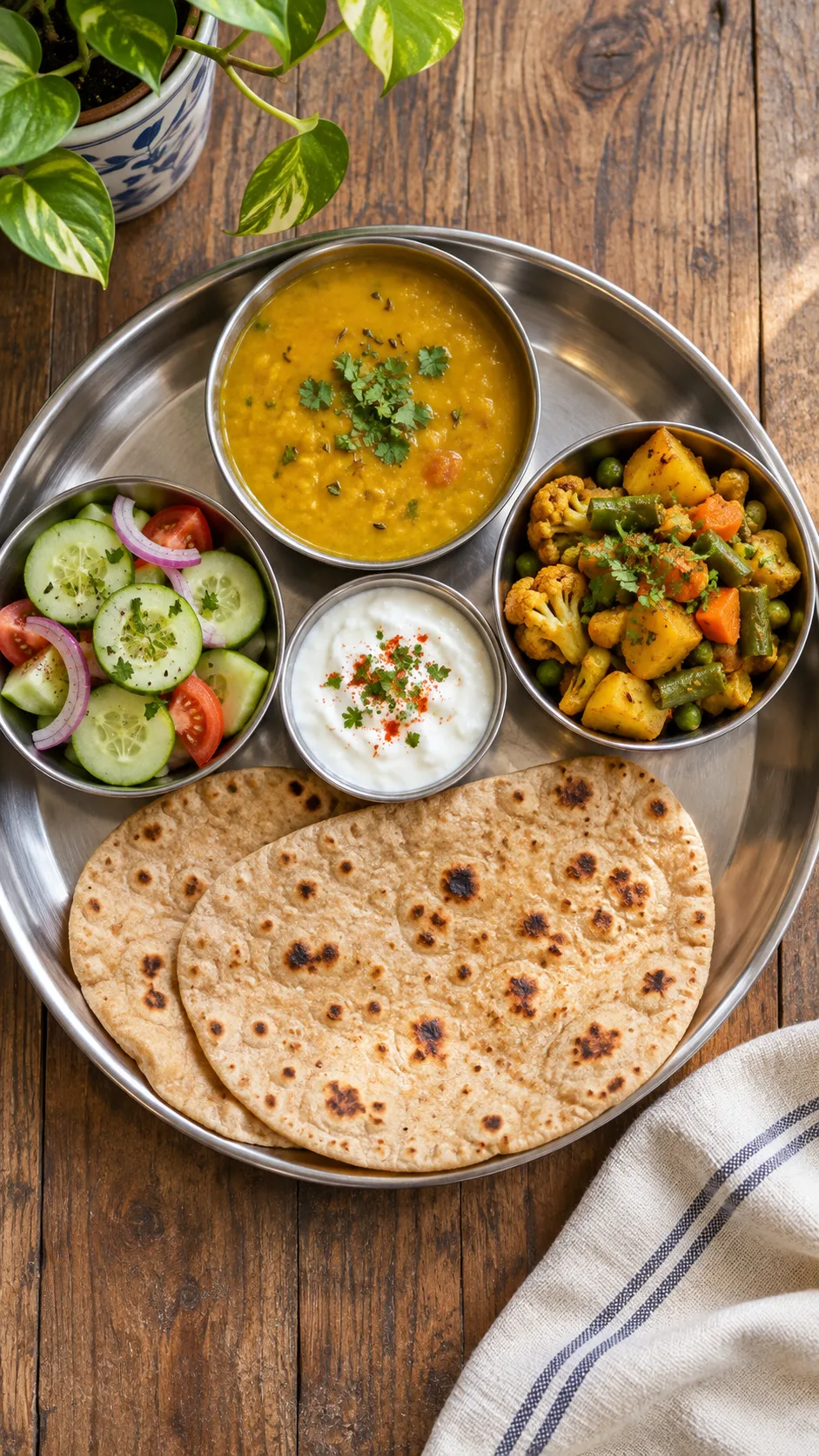
Why most Indian diet plans for weight loss fail
Most plans fail for one boring reason: they ask you to eat like someone else. They copy Western meal plans, swap oats for poha, and call the result “Indian.” Then you hit a family function, a Diwali week, or a Tuesday, and the whole thing collapses.
Traditional Indian meals also come with a few built-in traps. Ever noticed how a “light lunch” often ends up as three rotis, two spoons of rice, and a mountain of aloo? That is the problem.
- Plates run heavy on carbs, and rice, roti, poha, paratha, and sweets often share one meal.
- Many vegetarian Indian diets fall short on protein, so you feel hungry an hour later.
- A “simple” sabzi can swallow 3 to 4 tablespoons of oil.
- Chai with sugar, packaged juice, and lassi add up fast as liquid calories.
Fix those four things and you fix most of the problem. You don’t have to starve.
The fat loss basics (yes, calories still count)
I’ll keep this short, because nobody opened this article for a physics lecture. Fat loss happens when you eat slightly fewer calories than you burn. That’s it. The trick is doing it without feeling like a hostage.
Aim for a moderate deficit
Cut roughly 300 to 500 calories a day from your maintenance level. Crash diets that slash 1,000 calories or more usually backfire. You lose muscle, your energy tanks, and you rebound with extra enthusiasm at the next biryani sighting.
For a rough sense of scale, many women lose fat comfortably at around 1,400 to 1,700 calories a day, and many men at around 1,800 to 2,200. Your height, weight, age, and activity level all shift that range, so treat it as a starting point and not gospel. If you want a broader framework, our guide to the fat loss diet plan that works without starving walks through the calculation step by step.
Prioritise protein
Protein keeps you full and protects muscle while you lose fat. It also burns more calories to digest than carbs or fat do. A common target for people trying to lose fat is roughly 1.2 to 1.6 grams per kilogram of body weight per day. If you have kidney issues or another medical condition, check with a doctor or registered dietitian first.
Pack in fibre
Fibre slows digestion and stretches your stomach, so you feel satisfied on fewer calories. Indian kitchens already hold the best sources: dal, rajma, chana, vegetables, fruit, and whole grains like jowar, bajra, and ragi. You just need to use them on purpose.
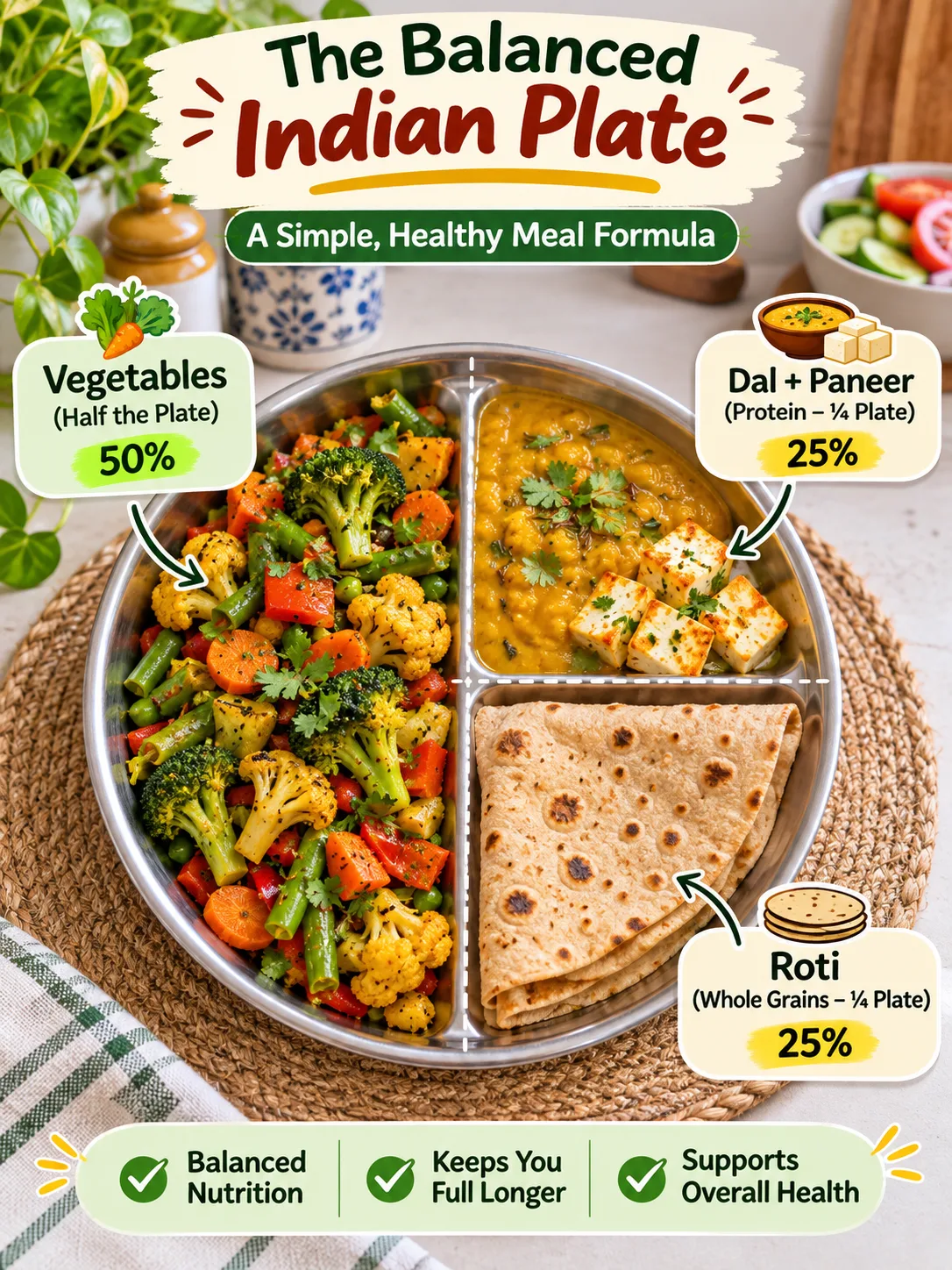
The Indian plate method (no food scale needed)
Counting every gram gets old by day four. The plate method keeps things simple, and you can use it at home, at a dhaba, or at your cousin’s wedding.
- Fill half your plate with vegetables such as sabzi, salad, sautéed greens, or sprouts. Go heavy.
- Give a quarter of the plate to protein: dal, paneer, eggs, chicken, fish, tofu, soya, or curd.
- Give another quarter to carbs. One or two rotis, or a small portion of rice, does it.
- Add a small amount of healthy fat. One teaspoon of ghee or a little cold-pressed oil is plenty.
The ICMR-National Institute of Nutrition publishes Dietary Guidelines for Indians that echo this approach: variety, more vegetables and pulses, less oil, less salt, and less sugar. It sounds boring, but it works.
A sample day on the Indian diet plan for fat loss
This sample sits around 1,500 to 1,600 calories. Men or very active people can add an extra roti, a bigger protein portion, or a fruit. Swap freely, because rigid plans break and flexible ones last.
Early morning
- Warm water with lemon, or plain water. This won’t “melt fat.” It hydrates you, and that is enough.
- Black coffee or chai with minimal sugar (half a teaspoon or none).
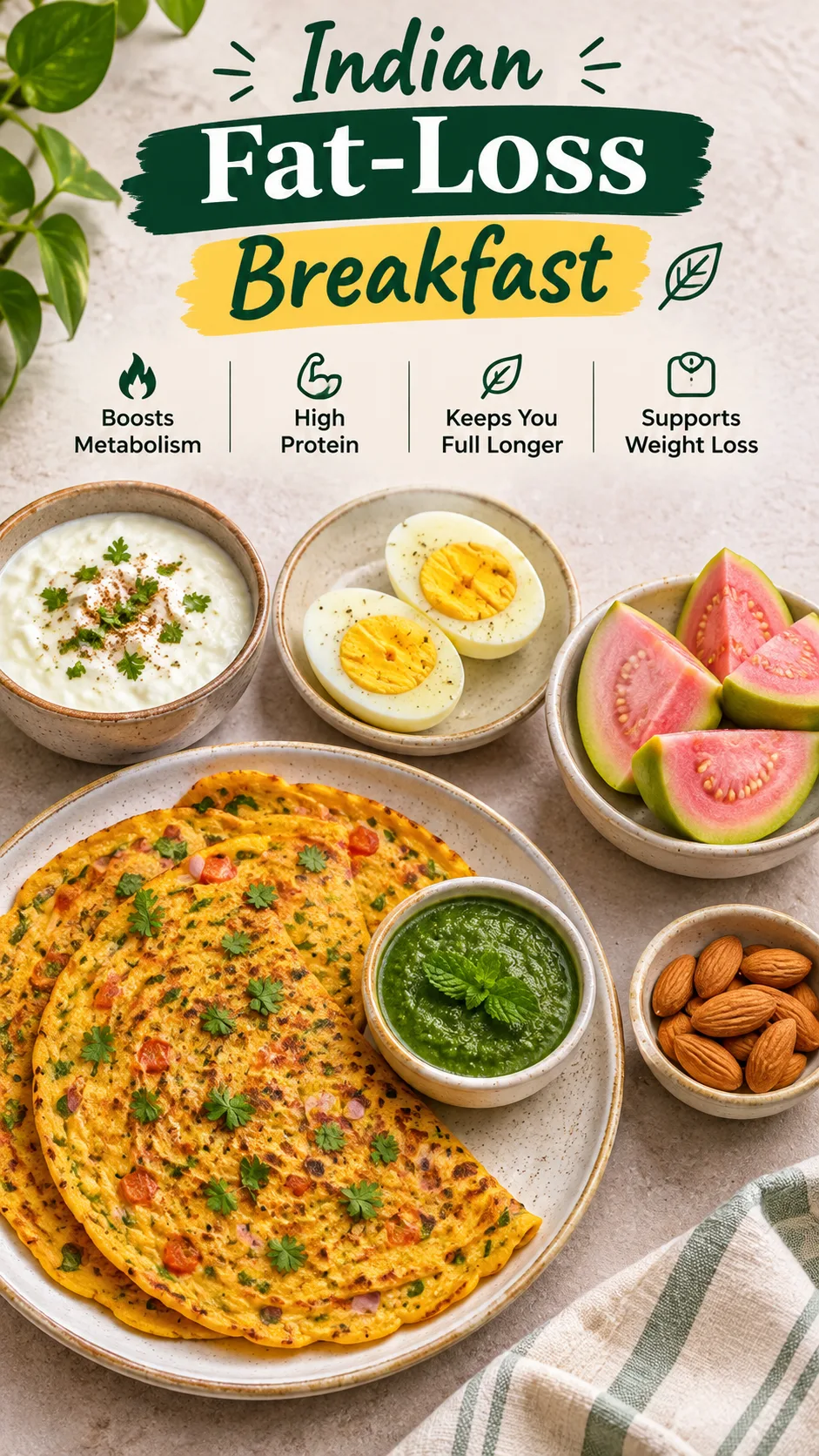
Breakfast (8:00 to 9:00 AM)
Pick one:
- Besan chilla (2 medium) stuffed with paneer or veggies, with mint chutney
- Vegetable moong dal cheela (2) with a bowl of curd
- 2 egg bhurji with one multigrain toast and sliced tomato
- Vegetable upma with a side of boiled chana
Mid-morning snack (11:00 AM)
Have a fruit (apple, guava, papaya, or an orange) and a handful of almonds or roasted chana. Skip the juice. The whole fruit gives you fibre, and the juice mostly gives you sugar.
Lunch (1:00 to 2:00 PM)
- 2 whole wheat or millet rotis (or ¾ cup cooked rice)
- 1 bowl dal, rajma, or chole
- 1 big bowl of sabzi with minimal oil
- Cucumber-tomato-onion salad
- ½ cup curd or a glass of thin chaas
Evening snack (4:30 to 5:00 PM)
Choose roasted makhana, a sprouts chaat, or a small bowl of roasted chana with chai. Want something more filling? Add a boiled egg or a glass of buttermilk.
Dinner (7:30 to 8:30 PM)
Pick one:
- Grilled paneer or tofu tikka with sautéed vegetables and 1 roti
- Chicken or fish curry (light gravy) with a big salad and ½ cup rice
- Vegetable-loaded khichdi made with moong dal, with a bowl of curd
- Soya chunk curry with 1 roti and stir-fried greens
Eat dinner at least two hours before bed when you can. Your digestion and your sleep will both thank you.
Best protein sources for Indian vegetarians and non-vegetarians
Most Indian diets fall short on protein. These approximate values give you a quick reference.
- Eggs: about 6 g each
- Chicken breast (100 g cooked): about 30 g
- Fish like rohu or surmai (100 g cooked): about 20 to 25 g
- Paneer (100 g): about 18 g, though it also carries plenty of fat
- Soya chunks (50 g dry): about 25 g
- Cooked dal (1 katori): about 6 to 9 g
- Greek-style or thick curd (100 g): about 5 to 9 g, depending on the type
- Roasted chana (30 g): about 6 g
If you are vegetarian and want more protein, pair your foods. Dal with roti, rajma with rice, and chana with curd all deliver a broader amino acid mix than any one of them alone. Soya chunks are cheap and filling, and I think people underrate them.
Smart swaps that cut calories and keep the flavour
You don’t need to give up your favourites. You need small, sneaky upgrades that work in real kitchens.
- Swap maida naan for a whole wheat roti. You get more fibre and fewer calories.
- Swap deep-fried pakoras for air-fried or baked versions. The crunch stays, and the oil drops sharply.
- Swap sugary chai for chai with a pinch of cinnamon or cardamom. Your taste buds adapt in about two weeks.
- Swap white rice for a mix of rice and cooked vegetables or millets. The portion looks big, but the calories stay modest.
- Swap packaged namkeen for roasted makhana or chana. You still get the crunch, and your protein goes up.
- Swap cream-based gravies for tomato-onion or yogurt-based ones. Your butter chicken habit will survive.
If you want more everyday ideas, check out our Indian diet plan that keeps you full without giving up desi food.
The foods to limit (not banish)
I’m not a fan of “forbidden foods.” Ban a food and you crave it ten times harder. Treat these as occasional guests and never as roommates.
- Sugary drinks and packaged juices add calories without making you feel full.
- Deep-fried snacks like samosas, bhajiyas, and kachoris soak up a lot of oil.
- Refined flour items include white bread, maida biscuits, and bakery rusks.
- Mithai and desserts are fine in a small portion. Eat it slowly and skip the second helping.
- Heavy restaurant gravies often hide cream, butter, and a lot of oil.
The World Health Organization recommends keeping free sugars below 10% of your total energy intake, and below 5% for added benefits. A sweet chai habit of three cups a day can eat that budget alone.
Can you still eat rice and roti?
Yes. Extra calories add fat, and carbs on their own don’t. Rice and roti sit at the centre of Indian cooking for good reason, and cutting them out entirely often leads to a binge by day five.
Control the portion and keep the food. Choose one or two rotis, or a measured bowl of rice, and fill the rest of your plate with protein and vegetables. Eat the dal and sabzi first, then the carbs. Plenty of people find this order helps them feel full sooner.
If you hit a plateau later, you can experiment with the carb cycling meal plan to shake things up. Don’t start there, though. Master the basics first.
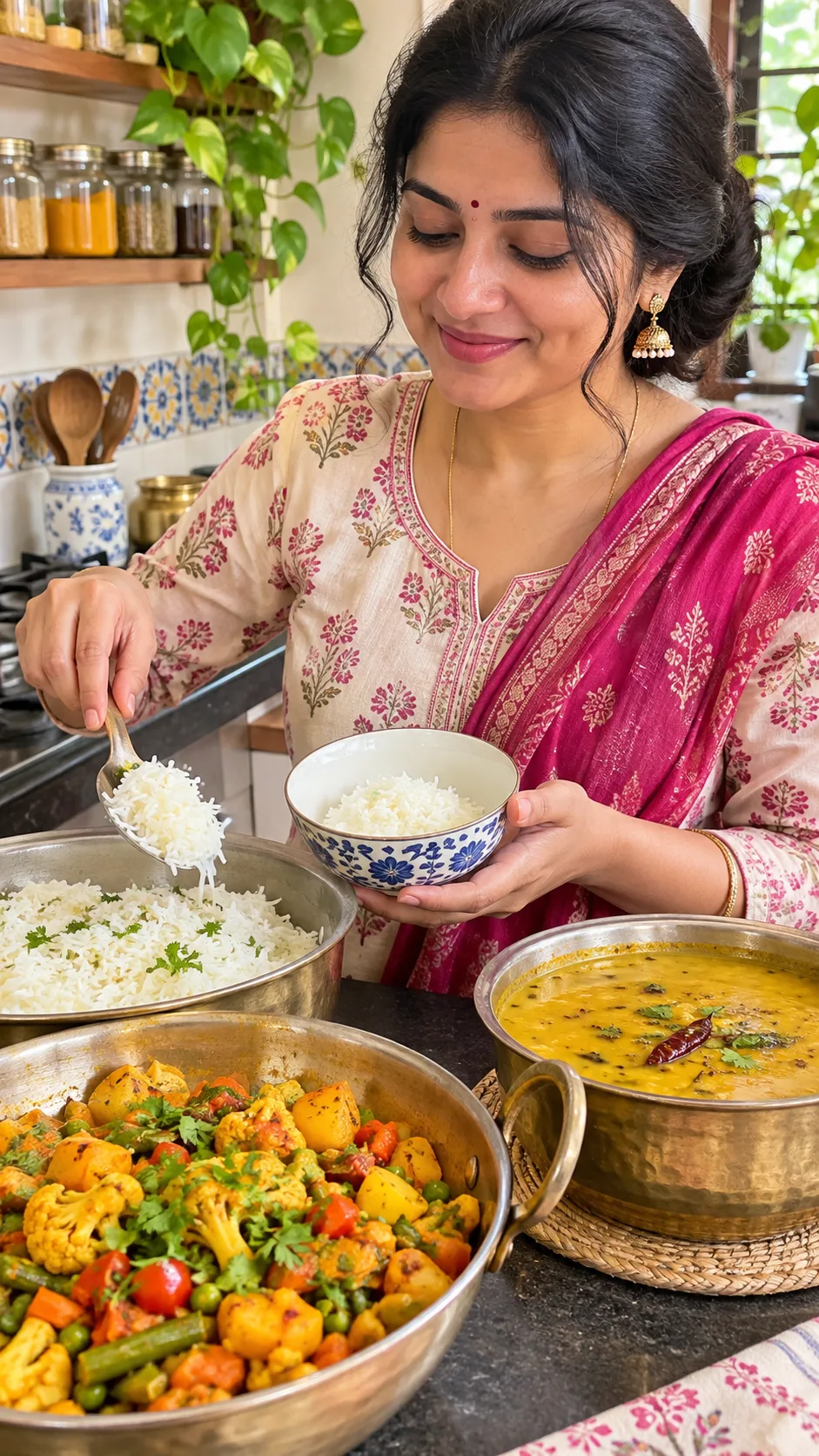
Video: Indian fat loss meal ideas in action
Sometimes seeing a plate beats reading about one. This video walks through practical Indian meal ideas you can copy this week.
Movement, sleep, and stress: the unglamorous habits
Diet drives most of your fat loss results. Still, a few other habits decide whether you keep going or quit in week three.
Walk more
A daily walk of 30 to 45 minutes burns calories, lowers stress, and helps your digestion. A 10-minute stroll after meals is a nice bonus. The WHO recommends at least 150 minutes of moderate physical activity per week for adults, and you can reach that with walking alone.
Lift something heavy
Strength training two or three times a week helps you hold on to muscle while you lose fat. Muscle gives you a toned look, instead of a smaller version of the same shape. Bodyweight squats, push-ups, and resistance bands all count.
Sleep like it’s your job
Poor sleep raises hunger hormones and makes late-night snacking far more tempting. Aim for 7 to 8 hours. That means closing Instagram reels at 11 PM, which hurts, I know.
Common mistakes that stall fat loss
I’ve watched friends and family make these mistakes for years, and I made a couple myself. Early on, I cut dinner entirely for two weeks. I lost a little weight, then I ate an entire box of jalebis on a Saturday and undid it all.
- Skipped meals feel fine until ravenous hunger hits, and then you overeat.
- Too little protein makes you hungry sooner and costs you muscle.
- People underestimate oil and ghee. One tablespoon of oil adds around 120 calories, and that adds up quickly.
- “Healthy” packaged snacks fool a lot of people. Many “multigrain” or “baked” snacks still contain plenty of refined flour and sugar.
- Obsessive weighing misleads you, because water weight swings by a kilo or two a day. Track weekly averages, waist size, and how your clothes fit.
- Going all or nothing backfires. One heavy meal doesn’t ruin your week, and your next meal gets you back on track.
Tweaking the plan for your situation
For belly fat
You can’t spot-reduce fat from your stomach, however many crunches you do. You can lower your overall body fat, though, and the belly usually shrinks along with it. Our lose belly fat diet goes deeper on this.
For PCOD or thyroid issues
Hormonal conditions change how your body handles insulin and weight. Work with your doctor or a registered dietitian, and stick with high-fibre, high-protein, lower-glycaemic meals. Our PCOD Indian diet plan covers this in more detail.
For eating out
Pick tandoori, grilled, or dry preparations over creamy gravies. Ask for extra salad, and share the naan or skip it. Start with dal or soup, and you’ll order less food without trying.
Frequently asked questions
How fast can I lose fat on an Indian diet plan?
A realistic, sustainable pace sits around 0.25 to 0.5 kg per week, though the first couple of weeks may show faster changes because of water loss. Steady progress lasts longer than dramatic drops.
Do I need to avoid ghee completely?
No. Ghee is calorie-dense, so measure it. A teaspoon or two a day fits well in most fat loss plans. Don’t pour it freely over everything.
Is intermittent fasting necessary?
No. It helps some people control their calories, and it frustrates others. If you feel great eating three meals and a snack, keep doing that. If you want to experiment with extreme fasting styles, read our piece on the one meal diet plan first and talk to a doctor.
Can I lose fat without exercise?
Yes, because diet does the heavy lifting. Exercise improves your health, protects your muscle, and helps you keep the weight off, so it is worth adding. Start small with walking.
Should I take supplements?
Most people don’t need them to lose fat. A doctor may suggest vitamin D, B12, or protein powder if blood tests or your diet show gaps. Get your nutrients from food first.
Final thoughts: eat desi and lose fat without losing your mind
The plan comes down to five habits:
- Eat a modest calorie deficit of about 300 to 500 calories.
- Build every meal around vegetables and protein.
- Keep your rotis and rice, and control the portion.
- Watch hidden oil, sugar, and liquid calories.
- Walk daily, lift weights twice a week, and sleep well.
For reliable background reading on balanced eating, the Harvard Healthy Eating Plate gives you a solid visual guide that matches the plate method above. This article offers general guidance, not personal medical advice, so check with your doctor or dietitian if you have a health condition.
Your grandmother never counted macros, and she did just fine. Start with one change today, maybe an extra serving of sabzi at lunch, and build from there. Skip the punishment plan and pick one you can live with.