Staring at a sad rice cake and wondering how you’ll survive until dinner? Most 900 calorie meal plans fail because they ignore hunger. This one doesn’t.
I’m going to show you how to build a 900 calorie day around protein, fiber, and volume, so your stomach stops filing complaints by 3 p.m. First, though, we need to talk about safety. Skip that part and the rest of the article won’t help you.
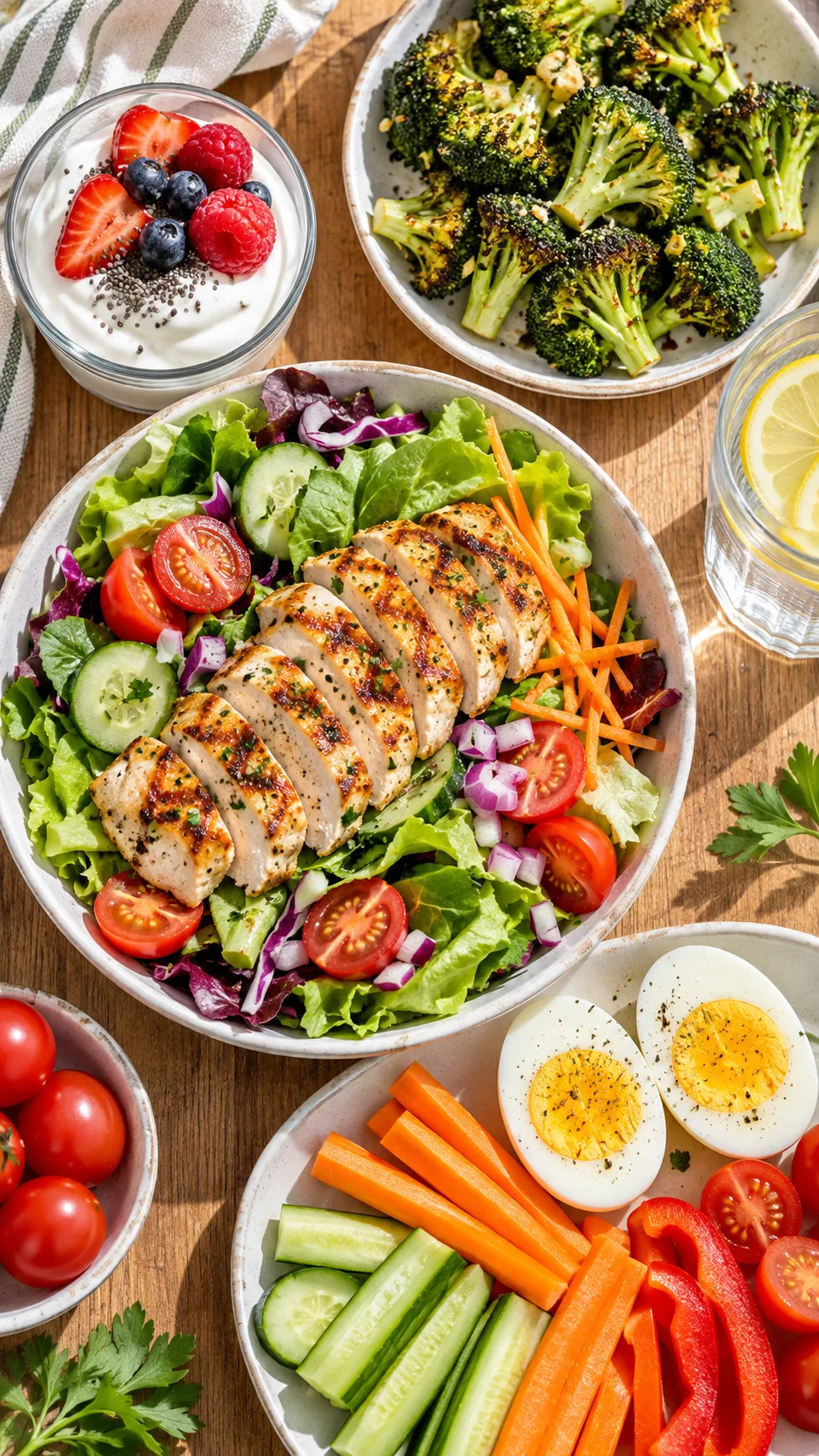
Read this before you cut to 900 calories
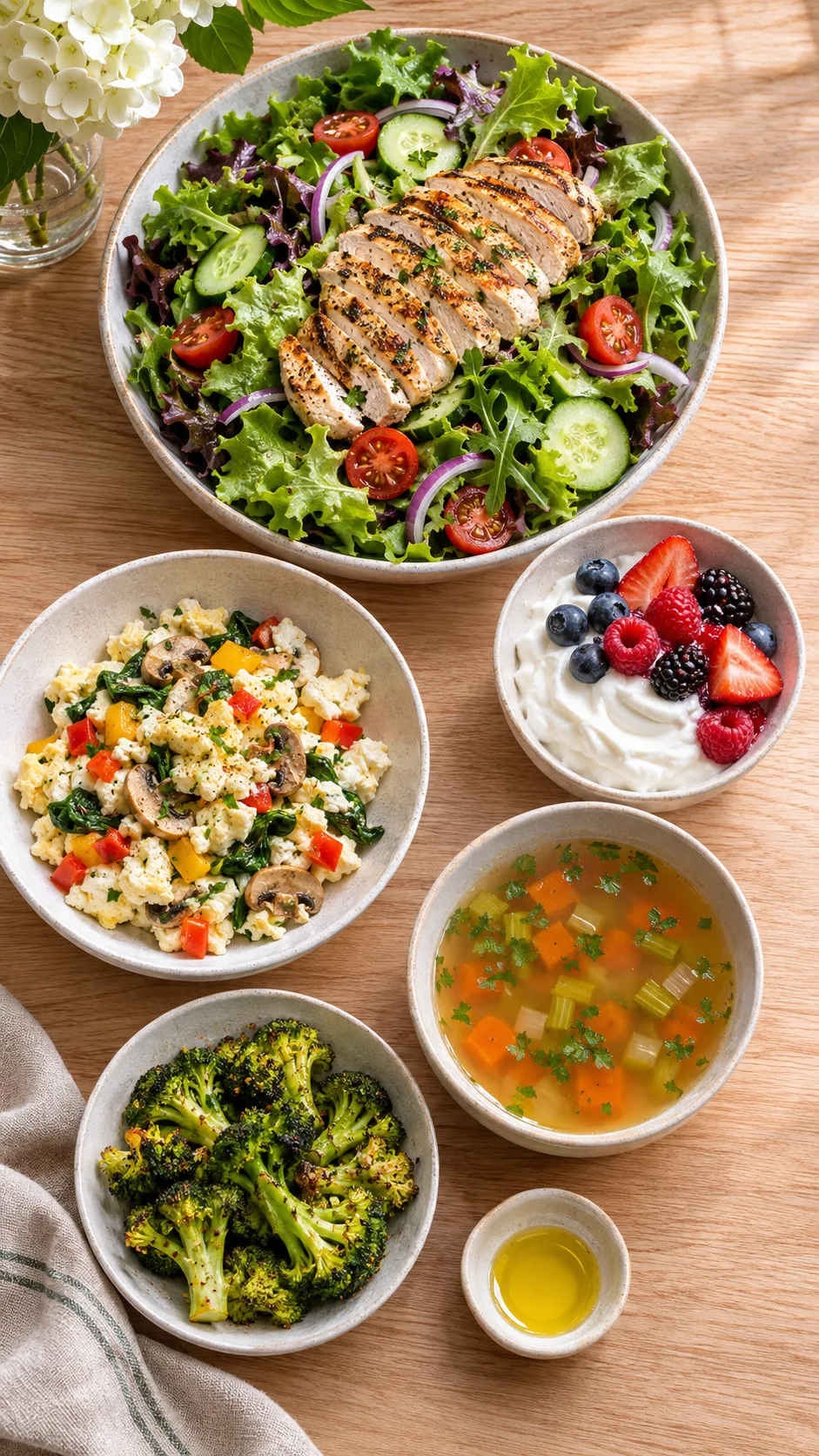
This number is low. 900 calories sits well below what most adults need, and it falls into the “very low calorie diet” category. The usual floor for unsupervised dieting is about 1,200 calories for women and 1,500 for men.
The National Institute of Diabetes and Digestive and Kidney Diseases says very low calorie diets (usually 800 calories or fewer) belong under a doctor’s supervision. Risks include gallstones, fatigue, nutrient gaps, and muscle loss.
Who should skip this plan
- Pregnant or breastfeeding women
- Anyone with a history of disordered eating
- People with diabetes, kidney disease, heart conditions, or who take medications that affect blood sugar
- Teens and children
- Very active people or anyone doing heavy training
Talk to your doctor or a registered dietitian first. Ask them to check your medications, run baseline labs, and tell you how long you can safely stay at this level. A short, supervised stretch beats a heroic month of white-knuckling it every time.
Why most 900 calorie plans leave you starving
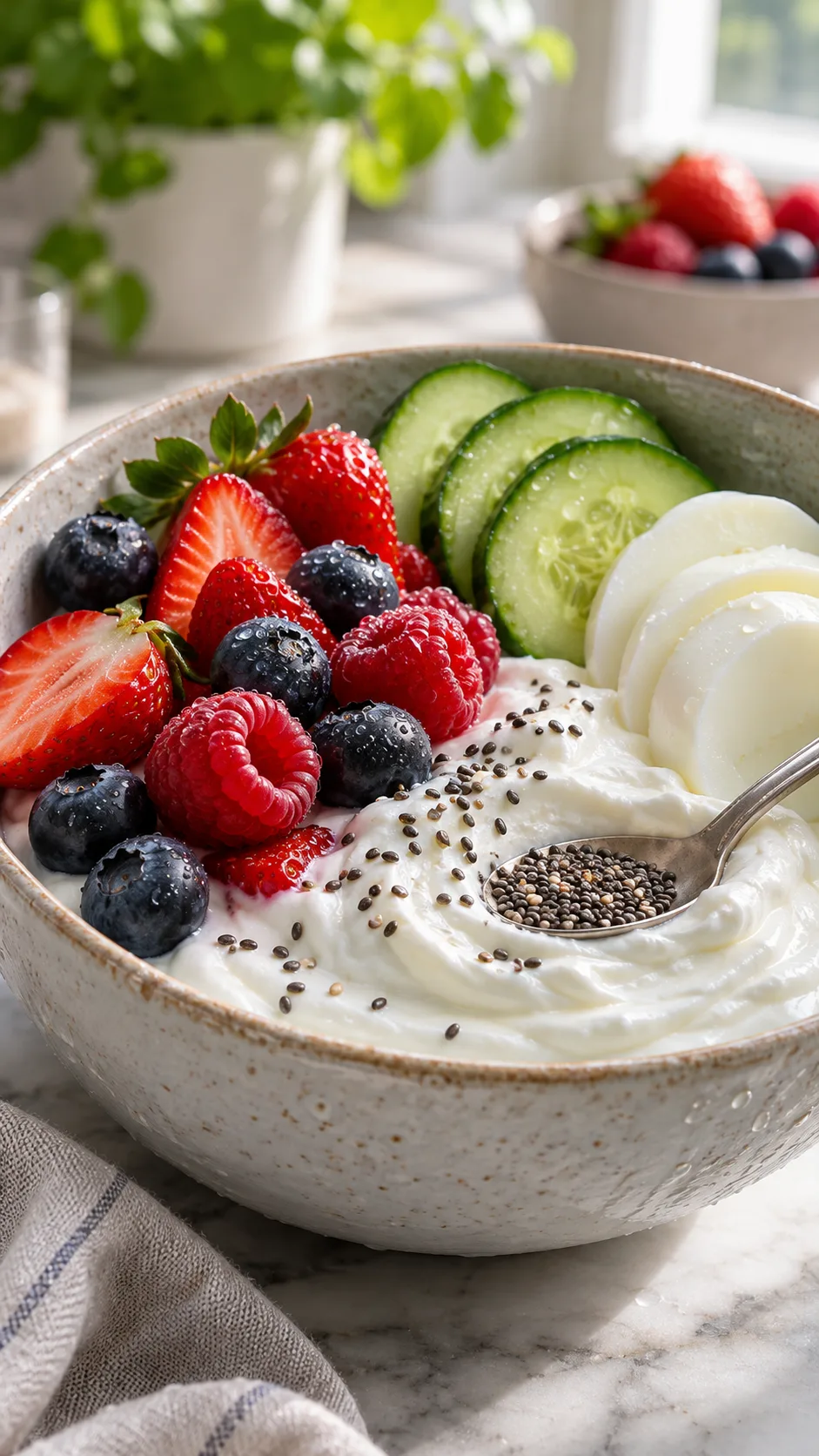
Why does a 900 calorie day of crackers and diet soda feel like a hostage situation? Calories alone don’t decide how full you feel. What those calories contain decides it.
Bad plans spend their tiny budget on foods that digest fast and vanish from your stomach in an hour. Your hunger hormones then throw a tantrum. Smart plans spend the same calories on foods that slow digestion and fill physical space.
Three things control fullness
- Protein. It is the most filling macronutrient, and it protects your muscle while you eat less.
- Fiber. It slows digestion and adds bulk, so you feel satisfied longer.
- Volume. Water-rich foods like leafy greens, cucumbers, and broth fill your stomach for very few calories.
Build every meal on those three pillars and the plan changes completely. You eat more food, not less, and you still land on 900.

The 5 rules of a 900 calorie plan that works
Follow these rules before you plan a single meal. They separate “I can do this” from “I’m eating the couch cushion.”
- Aim for 80 to 100 grams of protein daily. Lean poultry, white fish, egg whites, nonfat Greek yogurt, and tofu do the heavy lifting here. Check with your doctor for your exact target.
- Eat non-starchy vegetables at every meal. Pile them high. Two cups of broccoli cost about 60 calories.
- Keep fat small but not zero. One teaspoon of olive oil adds flavor and helps you absorb vitamins A, D, E, and K.
- Spread your food over 3 meals and 1 snack. Long gaps make hunger spike.
- Drink water and zero-calorie fluids all day. Thirst often disguises itself as hunger.
In my opinion, rule number one matters most. When I look at why people quit low-calorie plans, low protein is the usual culprit.
Your sample 900 calorie day
This full day lands near 900 calories and about 90 to 100 grams of protein. Brands and portion sizes shift the numbers a little, so weigh your food and use a tracking app for accuracy.
Breakfast: veggie egg scramble (about 230 calories)
- 1 whole egg plus 3 egg whites
- 1 cup fresh spinach and a few diced tomatoes
- 1 slice whole-grain toast
- Cooking spray, black pepper, and hot sauce
You get roughly 24 grams of protein here. The egg whites add volume and protein without much else, and the spinach cooks down to almost nothing while it adds fiber and micronutrients.
Lunch: big chicken and chickpea salad (about 300 calories)
- 4 oz grilled chicken breast
- 3 cups mixed greens, cucumber, and bell pepper
- 1/3 cup chickpeas
- 1 teaspoon olive oil with lemon juice and mustard
This salad fills a huge bowl. Chewing a mountain of crunchy vegetables takes time, and that slower pace gives your brain a chance to register fullness.
Afternoon snack: cinnamon Greek yogurt (about 100 calories)
Grab a single-serve cup (about 5 oz) of plain nonfat Greek yogurt and stir in cinnamon. You get around 15 grams of protein. Add a few raspberries if your budget allows, since they pack fiber into very few calories.
Dinner: baked cod with roasted broccoli (about 270 calories)
- 5 oz cod, baked with lemon, garlic, and paprika
- 2 cups broccoli roasted with 1 teaspoon olive oil
- 1/2 cup cauliflower rice or a small scoop of cooked quinoa
Cod gives you around 25 to 30 grams of protein for very few calories. Roast the broccoli until the edges crisp and it tastes like a treat instead of a punishment.
Watch: a visual guide to low calorie meal prep
Seeing portions in real life teaches more than reading about them. This video shows how to batch-cook lean proteins and vegetables for the week.
Swap ideas so you don’t get bored
Eating the same cod every night will test your loyalty. Mix and match from these lists and keep each meal near its calorie target.
Breakfast swaps (200 to 250 calories)
- Cottage cheese (1/2 cup, low-fat) with sliced cucumber and everything bagel seasoning, plus a small apple
- Protein smoothie: 1 scoop whey, 1 cup unsweetened almond milk, 1/2 cup frozen berries, and a handful of spinach
- Smoked salmon (2 oz) on a rice cake with sliced radish
Lunch swaps (280 to 320 calories)
- Turkey lettuce wraps with shredded carrots and mustard
- Tuna salad made with Greek yogurt instead of mayo, over greens
- Big bowl of chicken and vegetable soup with extra shredded chicken
Dinner swaps (250 to 300 calories)
- Shrimp stir-fry with zucchini, snap peas, and a splash of low-sodium soy sauce
- Turkey meatballs (lean ground turkey) over zucchini noodles with marinara
- Baked tofu with roasted green beans and mushrooms
Smart tricks to stay full on very few calories
Meal choices matter, but small habits stretch them further. These tricks cost almost nothing.
- Start meals with a broth-based soup or a glass of water. Both fill your stomach before the main course.
- Eat slowly. Your fullness signals need about 20 minutes to reach your brain.
- Season aggressively. Spices, vinegar, citrus, garlic, and herbs add big flavor for nearly zero calories.
- Choose crunchy foods. Raw peppers, celery, and radishes take effort to chew and keep your mouth busy.
- Sip hot tea or black coffee. Warm drinks soothe cravings, especially in the evening.
- Sleep seven or more hours. Short sleep ramps up hunger hormones, and no meal plan can outsmart that.
Common mistakes that wreck a 900 calorie day
Mistake 1: skimping on protein
Fill your plate with vegetables but forget the protein, and you’ll hit a wall by mid-afternoon. Protein anchors the whole plan. Cut it and your muscle pays the price.
Mistake 2: drinking your calories
Juice, flavored lattes, and “healthy” smoothies can eat 300 calories without making you feel fed. Liquid calories rarely satisfy. Stick to water, tea, black coffee, or a protein shake you planned on purpose.
Mistake 3: ignoring vitamins and minerals
When you eat this little, nutrient gaps appear fast. Ask your doctor whether a multivitamin makes sense for you. Rotate your vegetables too, so you collect a wide range of vitamins.
Mistake 4: staying too long
Nobody should treat 900 calories as a lifestyle. Set an end date with your healthcare provider before you start. A plan with no exit turns into a rebound waiting to happen.
What to do after your 900 calorie stretch
Jumping straight back to pizza and pints will undo your progress, and your stomach will let you know about it. Raise your calories gradually instead. Add 100 to 200 calories every week or so, mostly from protein and fiber-rich carbs.
A middle step like the 1200 calorie low carb meal plan can ease the transition. After that, try the high-protein 1800 calorie meal plan as you move toward maintenance. For everyday ideas, our guide to healthy diet food that keeps you full has plenty of options.
The Dietary Guidelines for Americans offer a solid framework for long-term eating patterns. The NHS healthy weight guidance also covers sustainable weight loss in plain language.
Grocery list for the 900 calorie plan
Shop once, prep once, and skip the 6 p.m. panic. This starter list covers the plan.
- For protein, buy chicken breast, cod or tilapia, eggs, liquid egg whites, nonfat Greek yogurt, low-fat cottage cheese, and firm tofu.
- For vegetables, pick up spinach, mixed greens, broccoli, cauliflower, zucchini, cucumbers, bell peppers, tomatoes, and green beans.
- For carbs, stick with whole-grain bread, chickpeas, quinoa, berries, and apples.
- For flavor, stock olive oil, lemon, garlic, mustard, hot sauce, paprika, cinnamon, and low-sodium broth.
Frequently asked questions
How much weight can I lose on 900 calories a day?
It varies a lot by body size, activity, and starting point. Early drops often include water weight, so don’t expect that pace to continue. Your doctor can set a realistic and safe target for you.
Can I exercise on 900 calories?
Light activity like walking works for many people. Hard workouts on this little fuel can leave you dizzy, weak, and sore. Ask your provider before you do anything intense.
What if I feel dizzy or faint?
Stop the plan and call your doctor. Dizziness, heart palpitations, extreme fatigue, or hair loss mean your body needs more fuel. No weight loss goal deserves a hospital visit.
Is there a gentler option?
Yes. Many people lose weight steadily at 1,200 calories or more without the harsh side effects. If you want fewer meals but more structure, our breakdown of the one meal diet plan covers another approach, though that one also needs caution.
The bottom line
A 900 calorie day can feel manageable when you build it on lean protein, fibrous vegetables, and high-volume foods. Spread your meals out, season boldly, and drink plenty of fluids. Treat this as a short, supervised tool, not a forever plan.
The best meal plan is the one you can follow safely. Book that doctor appointment, print the grocery list, and cook something delicious tonight. Your stomach might even stay quiet.