Could a pretty little robin’s egg blue plate really shrink your waistline? Short answer: the plate helps, but the color does very little. Here is the science, minus the Pinterest glow.
The Tiffany plate food diet floats around social media and wellness chats as a “pretty plate, smaller portions” approach. Nobody has run a clinical trial on it, and no official rulebook exists. Still, the idea rests on real portion-control research, and that part deserves a fair look.

What is the Tiffany plate food diet?

First, this is not a formal diet plan. No registered dietitian wrote it, and no medical body backs it. People use the name for a habit: they eat every meal from one smaller plate in a Tiffany-style blue (that soft turquoise-aqua shade), fill it once, and stop.
The color comes from Tiffany & Co., which has used its signature robin’s egg blue since the 1800s and has since trademarked it. Fans of the trend say the shade makes meals feel special, so you savor a smaller amount of food. Does that claim hold up? We’ll get there.
The typical “rules” people follow
- You get one plate per meal. No second helpings, and no “just a few more bites” from the pot.
- You use a smaller plate, usually 8 to 9 inches across instead of the 11 to 12 inch dinner plates that fill most cupboards.
- You choose a blue or aqua color, which followers treat as the “signature” element.
- You eat at a table. You sit down, set the plate in front of you, and skip the couch and the screen.
Most of that list has nothing to do with color. The structure does the heavy lifting.
Why a smaller plate can change how much you eat
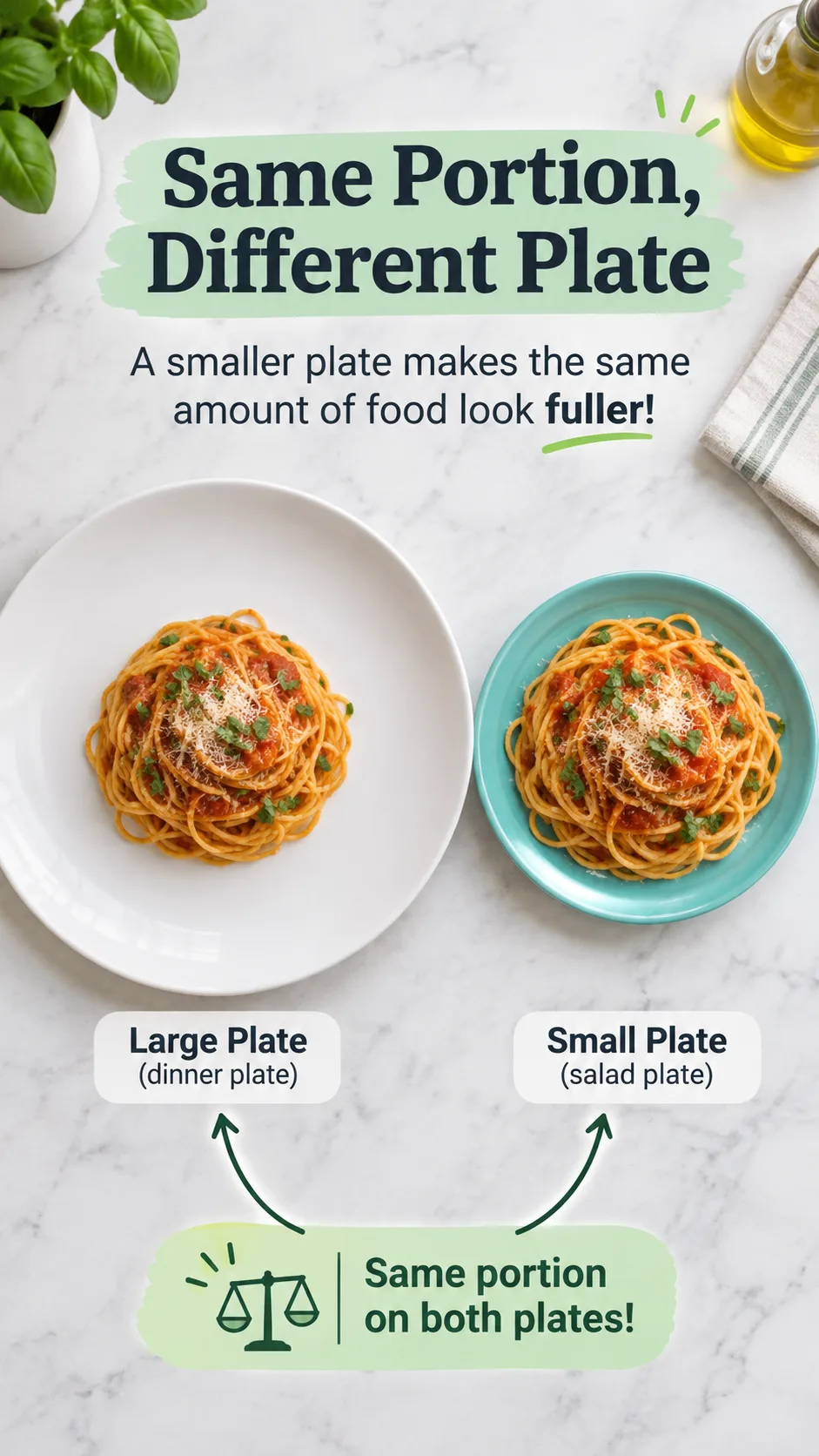
This is the part that works. Bigger plates nudge you to serve more food, and most of us finish whatever lands in front of us. We rarely stop to check whether we still feel hungry.
The portion size effect
Researchers call this the portion size effect: people eat more when you give them more. A Cochrane review by Hollands and colleagues looked at studies on portion, package, and tableware size. It found that larger sizes consistently led to higher food consumption, although the quality of evidence varied.
A smaller plate does not trick your stomach. It changes the default amount you serve yourself, and your brain tends to accept that default as “a normal meal.”
The optical illusion angle
You may have heard of the Delboeuf illusion, where a circle looks bigger or smaller depending on the ring around it. Apply that to dinner: the same scoop of pasta looks skimpy on a huge plate and generous on a small one.
I should be honest about the limits here. Researchers have debated how big this effect is, and some of the flashiest plate-size claims from past studies have drawn criticism. Treat any promise of dramatic results with suspicion.
Does the Tiffany blue color really matter?
The whole trend hangs on this question. You’ve probably read that blue suppresses appetite. The theory goes like this: few natural foods look blue, so blue plates make food less appealing.
It sounds neat, but solid proof is thin. Small studies hint that color can influence how much people serve and eat, yet results swing with the food, the table, and the person. No strong evidence shows that a Tiffany-blue plate cuts calories on its own.
What color might do
- Contrast may play a role. Some research suggests people serve themselves more when food blends into the plate and less when food stands out. A blue plate makes most foods pop, so it may help a little.
- A distinctive plate can work as a mindfulness cue that reminds you to slow down. The reminder works because you notice it. Blue has no special power here.
- A few studies found that red tableware reduced snack intake, probably because people link red with “stop.” The findings remain preliminary.
I see nothing wrong with buying a plate you love. Just don’t expect the hue to burn fat. Color is the garnish. Portion size is the meal.
What it does to your waistline: a reality check
Let’s look at the numbers without fantasy. Weight change comes from a sustained calorie gap, and a smaller plate can help you create one. If you trim even 100 to 200 calories a day and don’t secretly make up for it later, that adds up over weeks and months.
The catch is that plenty of people compensate. They finish the small plate, then raid the pantry at 9 p.m. Did the plate fail, or did the evening snack do the damage?
Realistic expectations
- Expect slow, modest change. Rapid weight loss is unlikely.
- What you put on the plate decides the result. A small plate of fries and a small plate of grilled chicken and vegetables do very different things.
- Consistency beats perfection. The plate only works if you use it most days.
The main point: the plate gives you a portion-control tool. It does not replace food quality, sleep, movement, or stress management.
How to try the Tiffany plate method (step by step)
Want to test it yourself? Follow this routine for two weeks and see how you feel. You don’t need a luxury brand. Any aqua or turquoise plate works.
- Pick your plate. Choose one around 8 to 9 inches across. Thrift stores and discount shops stock plenty of them.
- Serve in the kitchen. Fill your plate at the counter and leave the pots and serving dishes there. Distance fights seconds.
- Build the plate with care. Fill about half with vegetables and fruit, a quarter with protein, and a quarter with whole grains or starchy foods.
- Sit down and put the phone away. Eating while distracted makes you miss fullness cues.
- Pause halfway. Set your fork down for a minute and ask yourself how hungry you still feel.
- Wait 15 to 20 minutes before deciding on more. Fullness signals take a little time to reach your brain.
- Track how you feel, not just the scale. Notice your energy, your cravings, your mood, and your sleep.

What should go on that pretty plate?
A tiny plate full of junk still gives you junk. The best-known framework comes from Harvard’s Healthy Eating Plate. It recommends filling half your plate with vegetables and fruits, one quarter with whole grains, and one quarter with healthy protein.
That layout pairs nicely with the Tiffany plate idea. You get a visual guide, and the vegetables take up the space that heavier foods would otherwise grab.
Easy plate combos
- For breakfast, try scrambled eggs with sautéed spinach and a slice of whole-grain toast.
- For lunch, build a big salad with chickpeas and cucumbers, then add a spoonful of brown rice.
- For dinner, bake salmon and pair it with roasted broccoli and a small sweet potato.
If you want a plate-friendly approach built on minimally processed ingredients, check out this real food diet reset. It keeps you full without making you count every bite. And if you wonder whether eating everything uncooked is smarter, this raw food diet guide for beginners lays out the pros and pitfalls honestly.
The pros and cons, straight up
What works
- It costs little. A plate runs far cheaper than a meal-replacement subscription.
- It stays simple. You skip calorie counting and food scales.
- It builds awareness. You start noticing how much you serve yourself.
- It bends to your life. You can keep eating the foods you already like.
What doesn’t
- The color claims lack proof. Don’t pay a premium for a brand name and expect a miracle.
- One-size-fits-all portions miss the mark. A tall, active person needs more fuel than a petite, sedentary one.
- Rigid rules can backfire. Strict “no seconds ever” thinking can trigger a restrict-then-binge cycle in some people.
- It can ignore hunger. If you still feel truly hungry after your plate, eat a little more. In my view, listening to your body beats obeying a rule.
Who should skip or adjust this approach
Portion rules don’t suit everyone. Talk to a doctor or registered dietitian first if you fall into any of these groups:
- You have a history of disordered eating or an eating disorder. Plate rules and portion limits can fuel unhealthy patterns.
- You manage diabetes, kidney disease, or another condition that needs tailored meal planning.
- You are pregnant, you are breastfeeding, or you are an athlete with high energy needs.
- You are recovering from surgery or following a texture-modified diet. In that case, your care team’s guidance comes first, and resources like this soft food diet after surgery guide can help you plan meals that support healing.
Children and teens also need flexible, growth-friendly eating instead of strict plate limits. Their pediatrician can guide you.
Tips to make it stick without going nuts
Want to keep the habit going past week two? Try these small tweaks.
- Start with the biggest meal. Dinner usually brings the largest portions, so switch plates there first.
- Keep seconds on the vegetable side. If you’re still hungry, go back for more greens or salad rather than more pasta.
- Put protein and fiber first. Both help you feel full longer.
- Drink water with your meal. Thirst sometimes passes for hunger.
- Give yourself a flex meal. A birthday dinner or a family feast doesn’t ruin anything, so enjoy it.
Frequently asked questions
Is the Tiffany plate food diet real?
It exists as a social media habit. Nobody has tested it clinically, and it has no formal rules. The core idea of using a smaller plate to control portions has genuine research behind it. The Tiffany-blue part is mostly style.
Do blue plates really reduce appetite?
The evidence doesn’t back it up strongly. Color might change how food looks and how much you serve, but studies disagree. Plate size and eating habits matter far more.
How much weight can I lose with a smaller plate?
It depends on what you eat now and whether you compensate later. A small, steady calorie reduction can lead to gradual weight loss over time. Don’t expect fast results.
Do I need a real Tiffany & Co. plate?
Nope. Any plate in a similar shade works just as well. Your wallet will thank you.
Can I use this method with a soft food or special diet?
You can, as long as you follow your medical team’s food guidelines first. If you need gentle textures, these satisfying soft food diet meals give you ideas that look good on any plate.
The bottom line
The Tiffany plate food diet works for the same reasons any smart portion strategy works. A smaller plate changes your default serving size, and slowing down helps you notice fullness. The blue color is a nice touch, but the science doesn’t show that it matters.
- Plate size matters more than plate color.
- What you put on the plate matters more than the plate itself. Aim for half vegetables and fruit.
- Flexibility beats rigidity. Honor real hunger and skip the guilt.
- Check with a professional if you have health conditions or a history of disordered eating.
So grab a plate you love, fill it with real food, and eat like you mean it. Your waistline will respond to the habit and ignore the hue. Ready to give it a two-week test run?