

You eat lunch at 1 PM. By 3:30, you’re staring into the kitchen cabinet like a detective hunting for biscuits. Sound familiar?
The good news: you don’t need quinoa bowls, kale smoothies, or a personality transplant to fix that. A smart Indian diet plan for satiety uses the dal, sabzi, roti, curd, and chutney you already love. You just rearrange the plate.
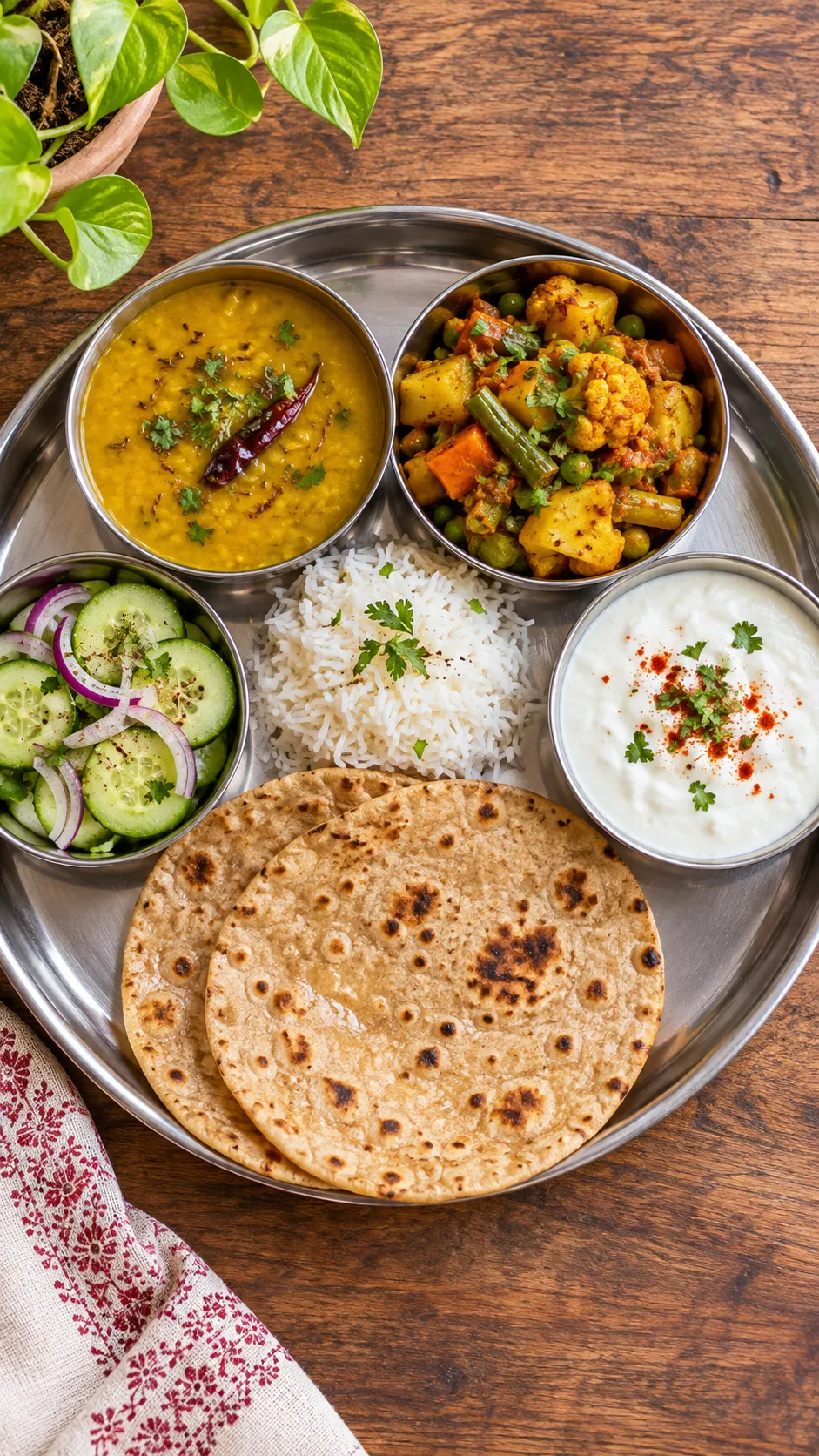
Why you feel hungry two hours after a “full” meal
Blame the plate, not your willpower. Most Indian meals lean heavily on refined carbs: white rice, maida-based snacks, sugary chai, and a lonely spoonful of dal. Your blood sugar spikes, then crashes, and your brain screams for more.
Four things keep you full. Protein, fibre, healthy fats, and food volume all slow digestion and calm the hunger hormones. Miss any of them and you’ll raid the biscuit tin by 4 PM.
Ever wondered why a plate of poha leaves you hungry while a bowl of moong dal chilla keeps you going until dinner? The chilla packs far more protein, and the poha packs mostly quick-digesting carbs. The difference comes down to that.
What the guidelines say
The ICMR-National Institute of Nutrition publishes the Dietary Guidelines for Indians. They push for more pulses, vegetables, and whole grains, and less refined cereal and sugar. The World Health Organization agrees and recommends at least 400 g of fruit and vegetables daily. Nobody needs a fancy imported diet here.
The 4 pillars of a filling Indian diet
Forget calorie math for a minute. Build every meal on these four pillars, and hunger mostly takes care of itself.
- Start with protein. Aim for a palm-sized portion (or a full katori of dal) at every meal.
- Choose carbs that carry fibre. Pick whole grains, millets, and legumes over refined flour.
- Fill half your plate with vegetables. They fill your stomach for very few calories.
- Add a thumb of good fat, such as ghee, mustard oil, nuts, or seeds, in sensible amounts.
Pillar 1: Protein does the heavy lifting
Protein is the most filling nutrient, and most Indian diets run short on it. Adults generally need around 0.8 to 1 gram of protein per kg of body weight, and many active people do better with a bit more. A 65 kg person lands near 52 to 65 grams daily.
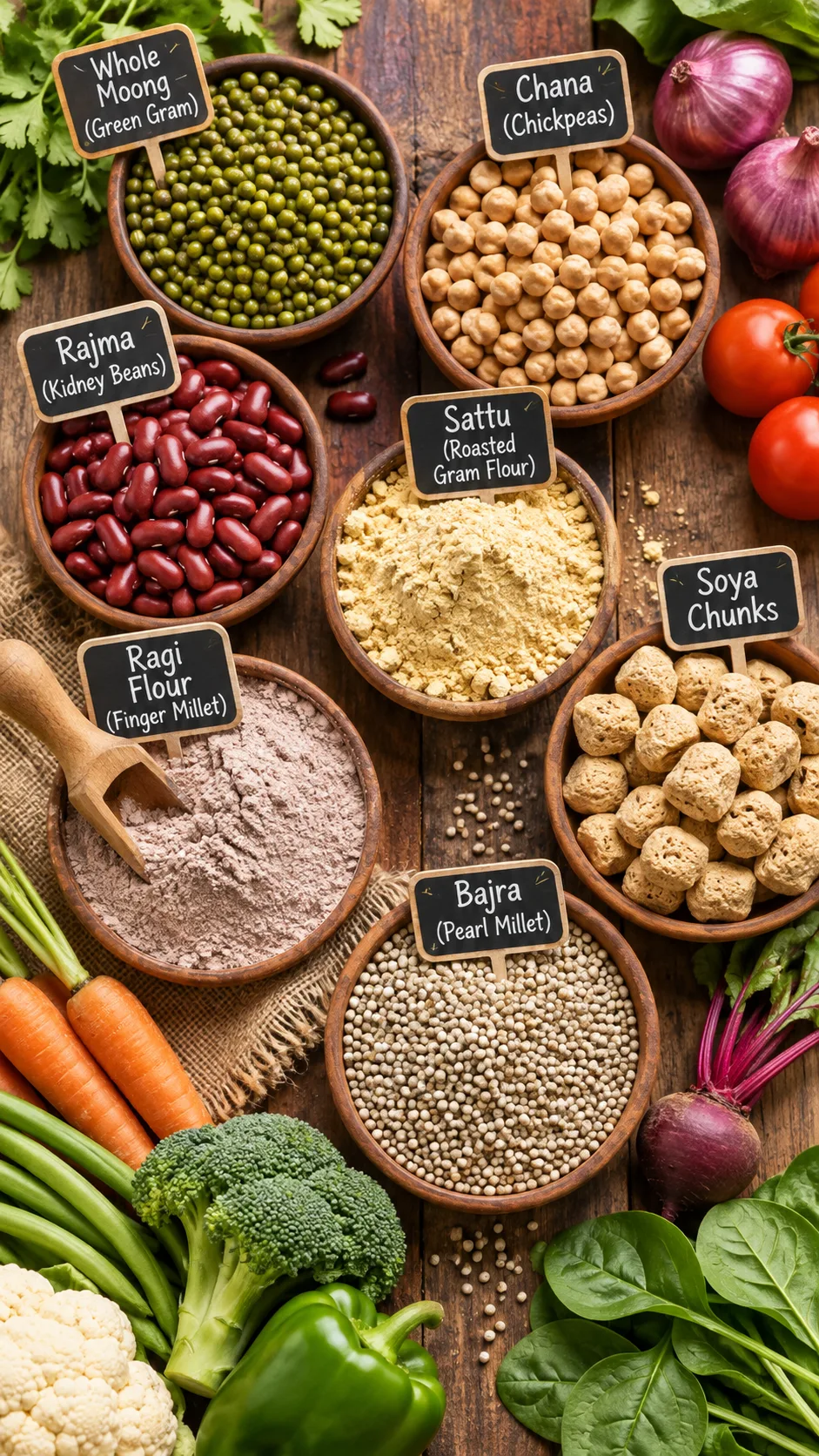
Desi protein sources are everywhere. Dals, rajma, chole, paneer, curd, eggs, soya chunks, sattu, and chicken all count. In my opinion, sattu is the most underrated protein in the country, and it costs next to nothing.
Pillar 2: Fibre slows everything down
Fibre makes your stomach empty slowly and feeds your gut bacteria. Most adults should target 25 to 30 grams a day. A typical Indian diet built around white rice often falls short.
Easy fibre wins include whole moong, chana, rajma, oats, bajra, jowar, ragi, and vegetables with the skin on. The Harvard T.H. Chan School of Public Health’s Nutrition Source recommends diets rich in fibre for steadier blood sugar and better fullness.
Pillar 3: Volume without the guilt
Vegetables weigh a lot and carry few calories. A big bowl of lauki sabzi, bhindi, or cabbage stir-fry fills your stomach physically. Your brain notices and shuts off the hunger signal sooner.
Start lunch and dinner with a cucumber and tomato salad or a clear vegetable soup. You’ll eat less roti without even trying. Sneaky, but it works.
Pillar 4: Fat is not your enemy
A teaspoon of ghee on your dal slows digestion and makes the meal taste like home. You don’t need to swim in it. One to two teaspoons per meal works for most people.
Add a small handful of almonds, walnuts, or peanuts as a snack. Roasted pumpkin and flax seeds work too. Fat also helps your body absorb vitamins A, D, E, and K from those vegetables.
A full day on the plan (real food, real kitchen)
Below is a sample day. Adjust portions to your body size and activity level. It’s a template you can steal, not a prescription.
Early morning
- A glass of warm water with a squeeze of lemon, or jeera water
- 5 soaked almonds and 2 walnut halves
Breakfast (7:30 to 9 AM)
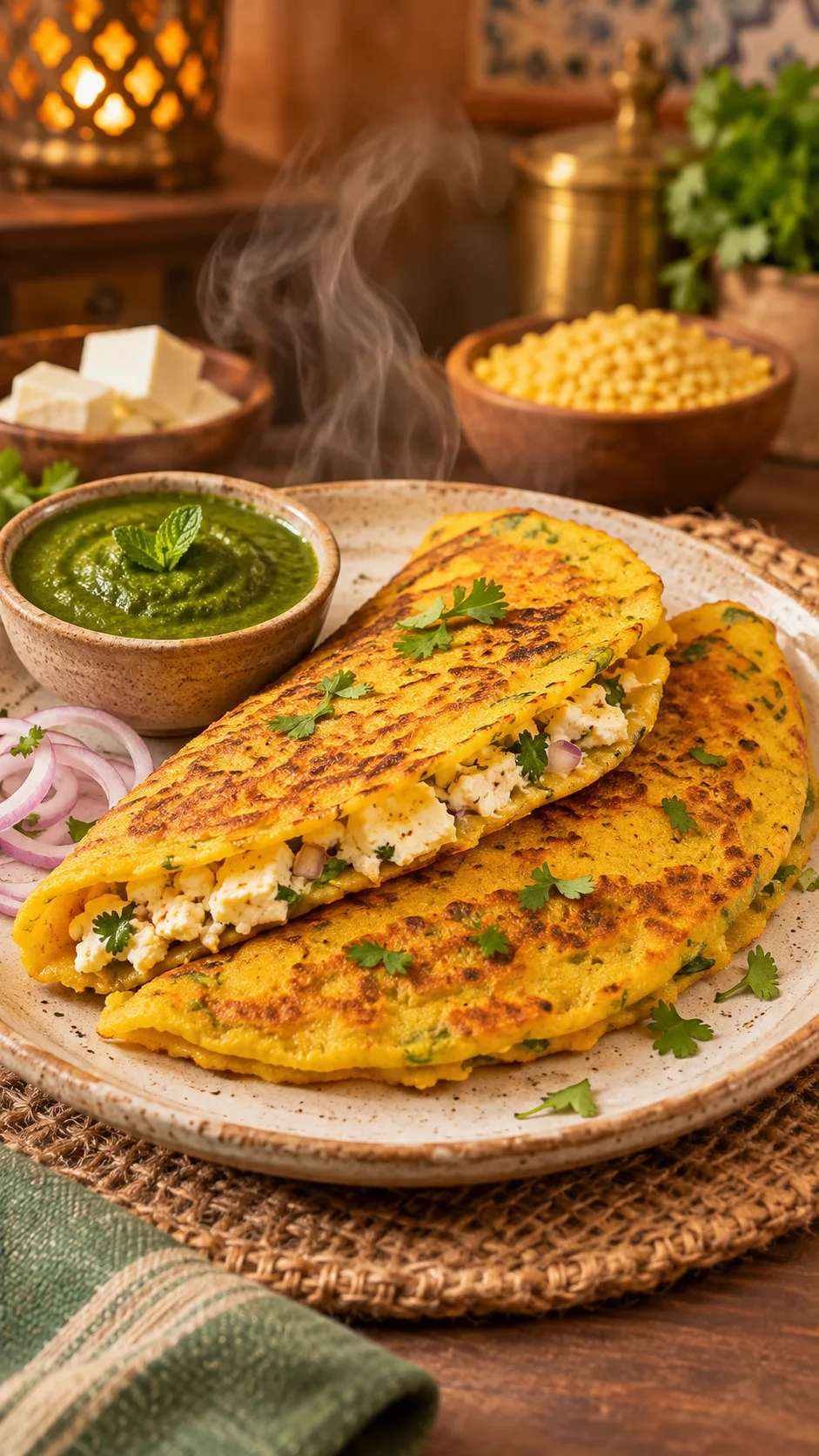
- Option A: 2 moong dal chillas stuffed with grated paneer, with mint chutney
- Option B: Vegetable besan cheela with a bowl of curd
- Option C: Bhurji made with 2 eggs, one multigrain roti, and sautéed vegetables
Lunch (1 to 2 PM)
- 1 large katori of dal or rajma
- 1 to 2 rotis (multigrain or jowar)
- 1 big bowl of seasonal sabzi
- Salad and a small bowl of plain curd
- Optional: half a cup of cooked rice, if you really want it
Evening snack (4:30 PM)
- A handful of roasted chana with chai (go light on sugar)
- Or a bowl of sprouts chaat with lemon and onion
Dinner (7:30 to 8:30 PM)
- Paneer bhurji, egg curry, grilled fish, or tofu stir-fry
- A large portion of sautéed or steamed vegetables
- 1 roti, or a small bowl of vegetable khichdi
Notice what’s missing? You need no exotic ingredients, no mandatory protein powder, and no starvation. You eat three proper meals and one snack, and you enjoy them.
Watch this before you plan your week
A good visual walkthrough beats a thousand words of me nagging you. This video covers how to build a balanced Indian plate and keep hunger in check.
The most filling desi foods, ranked by real-life results
Indian foods don’t all fill you equally. These ones keep people satisfied for hours.
- Dal (moong, masoor, toor, chana) gives you protein and fibre in one cheap bowl.
- Rajma and chole are dense, slow to digest, and brilliant with salad.
- Curd and chaas bring protein and probiotics, plus a cooling effect in summer.
- Paneer has roughly 18 grams of protein per 100 grams.
- Eggs have about 6 grams of protein each, and they cook in five minutes.
- Soya chunks have over 50 grams of protein per 100 grams dry. Soak them first, and don’t overcook them into rubber.
- Sattu mixes into water, stuffs into parathas, or rolls into litti.
- Millets (ragi, bajra, jowar) have more fibre and minerals than refined wheat or white rice.
Nutrient values vary by brand and cooking method, so check your packet labels for exact numbers.
Roti and rice: do you have to quit?
No. Please stop believing the “carbs are evil” noise. Carbs fuel your brain and your workouts. What matters is the type and the portion.
How to keep your rice
Rice isn’t the villain. A huge heap of rice with a spoonful of dal is. Flip the ratio: fill half the plate with vegetables and dal, and give rice just a quarter.
- Cook rice, cool it, then reheat it. This raises resistant starch, which digests more slowly.
- Pair rice with dal, curd, and sabzi, and never eat it on its own.
- Try brown rice, red rice, or parboiled rice for extra fibre.
How to upgrade your roti
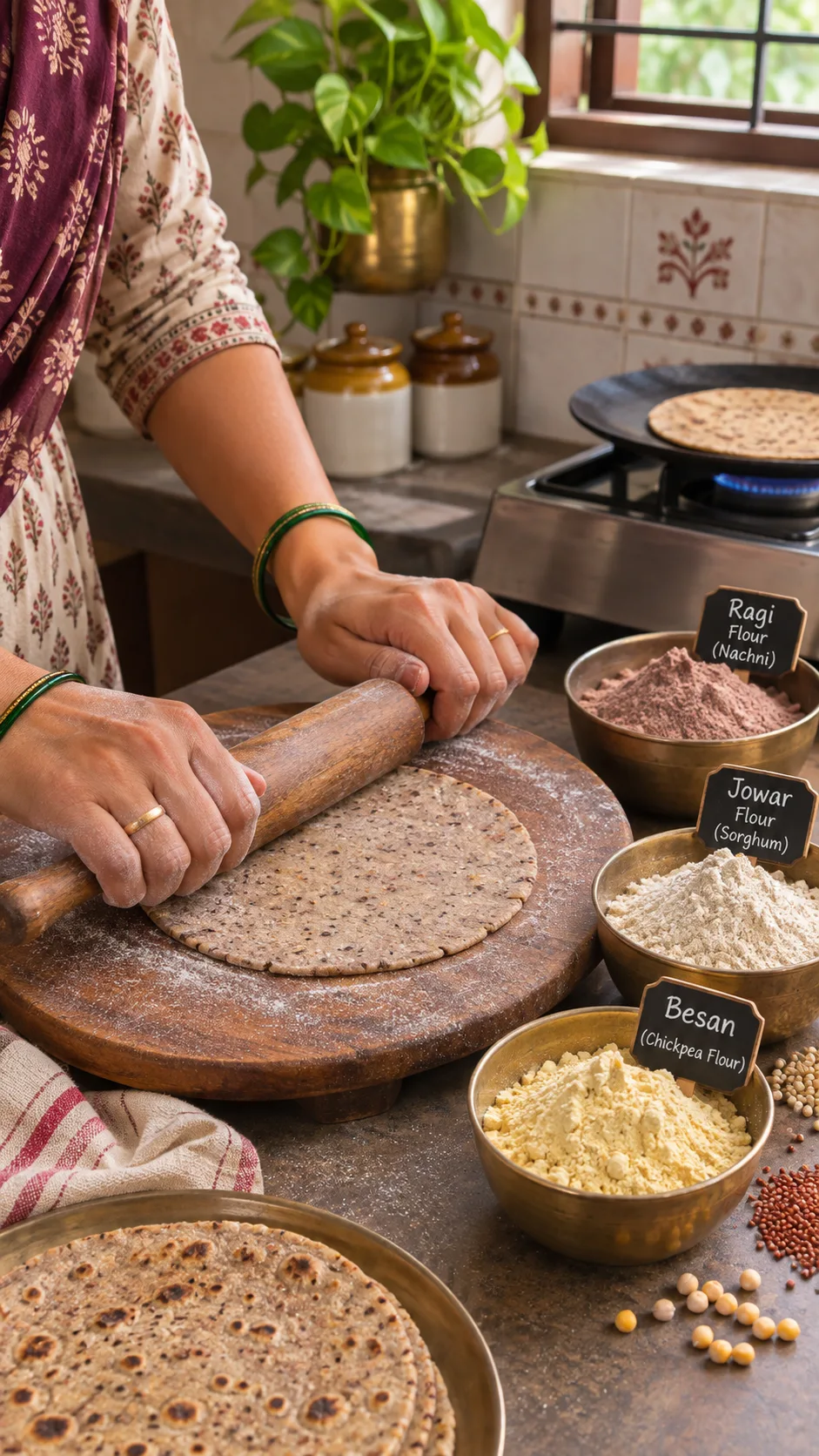
Swap part of your wheat flour for besan, ragi, jowar, or soya flour. A 70:30 mix of wheat and besan works well and tastes great. Your family probably won’t even notice.
Skip the butter-drenched naan and maida paratha on weekdays. Save them for the weekend and enjoy every bite without guilt.
Snacks that don’t wreck your plan
Snacks decide whether your diet survives the evening. Keep smart options within reach, and you’ll avoid the namkeen trap.
- Roasted makhana with a pinch of pepper and rock salt
- Roasted chana or masala peanuts (a small handful)
- Sprouts chaat with onion, tomato, and lemon
- Greek yogurt or thick curd with a few berries or chopped fruit
- A boiled egg with black pepper
- Buttermilk with roasted jeera
- Apple or guava with a spoon of peanut butter
Does a samosa ever sneak in? Sure, and life goes on. One samosa won’t ruin your progress, but a daily samosa habit might.
Vegetarian, eggetarian, or non-veg: it all works
You can follow this plan with any food preference. Vegetarians just need to plan protein more deliberately.
If you’re vegetarian
Combine dal with roti or rice to cover the amino acid profile. Add paneer, curd, soya, sprouts, and sattu daily. Two to three protein sources a day keep you comfortably covered.
If you eat eggs, fish, or chicken
Eggs for breakfast and fish or chicken at dinner make hitting protein targets easy. Choose curries with less oil, and grill or pressure-cook when you can. Tandoori chicken beats butter chicken for fullness per calorie, and I say that with deep sadness as a butter chicken fan.
7 mistakes that leave you hungry
I’ve watched friends, family, and clients repeat these mistakes again and again. Fix them and you’ll notice the difference within a week.
- Skipping breakfast, then overeating at 4 PM. Eat a protein-rich morning meal instead.
- Drinking sugary chai five times a day. Cut it to two cups and shrink the sugar.
- Drinking fruit juice instead of eating whole fruit. Juice strips out the fibre and spikes your sugar.
- Cooking sabzi with too little oil, then adding no fat elsewhere. Your body needs some fat to feel satisfied.
- Drinking too little water. Thirst often disguises itself as hunger.
- Sleeping five hours a night. Poor sleep raises ghrelin, your hunger hormone.
- Eating while scrolling. Your brain misses the “I’m full” signal.
What about PCOD, diabetes, or other health conditions?
This plan works as a general framework for healthy adults. Health conditions change the details. If you have PCOD, you’ll want a plan that handles insulin resistance and hormone balance specifically, and our guide on the PCOD Indian diet plan walks you through exactly that.
People with diabetes, thyroid problems, kidney disease, or pregnancy need personalised advice. Please talk to a registered dietitian or your doctor before you change your diet significantly. No blog post, including this one, replaces that conversation.
How to start this week (without overhauling your life)
Big changes fail. Small ones stick. Pick two or three of these and run with them for seven days.
- Add one protein source to breakfast.
- Fill half your lunch and dinner plate with vegetables.
- Swap one refined-flour meal for a millet or multigrain option.
- Replace your evening biscuits with roasted chana or makhana.
- Drink a glass of water before each meal.
Once those feel automatic, add the next change. Consistency beats perfection. If you want a gentler version that focuses on hormones, our guide to balancing hormones without starving shows how to adapt the same principles.
Frequently asked questions
Can I lose weight on this Indian diet plan?
Yes, if you eat in a modest calorie deficit and stay consistent. Fullness makes that deficit far easier to hold. You won’t feel like you’re fighting your own stomach every evening.
How much dal should I eat daily?
One to two katoris of cooked dal per day suits most adults. Rotate between moong, masoor, toor, and chana to vary your nutrients.
Is ghee okay on a filling diet?
Yes, in moderation. One to two teaspoons per meal adds flavour and satisfaction. Count it toward your daily fat intake, because it isn’t a free pass.
Do I need protein powder?
Most people don’t. Dal, curd, paneer, eggs, and sattu cover the basics. Consider powder only if you struggle to hit your protein target with food alone.
How long before I feel less hungry?
Most people notice better fullness within three to seven days of raising protein and fibre. Your cravings take a little longer to settle, usually two to three weeks.
The bottom line
You don’t need to give up desi food to feel full. You need to build each meal around protein, fibre, vegetables, and a little good fat, and then let the dal, sabzi, and curd do what they’ve always done.
Start small, stay consistent, and keep the chai (just ease off the sugar). Your grandmother’s kitchen already held most of the answers. Now go cook something that keeps you full until dinner.