

Hungry again an hour after lunch? That sad desk salad let you down.
High fiber, high protein meal prep fixes that with food that sticks around. You get steady energy, bigger portions, better digestion, and fewer 3 p.m. raids on the office vending machine.
I rely on this combo when I want simple, filling meals without tracking every crumb. Protein makes you feel satisfied, fiber gives you staying power, and meal prep keeps you from making questionable decisions while hungry. Ever tried grocery shopping on an empty stomach? Your cart suddenly develops opinions.
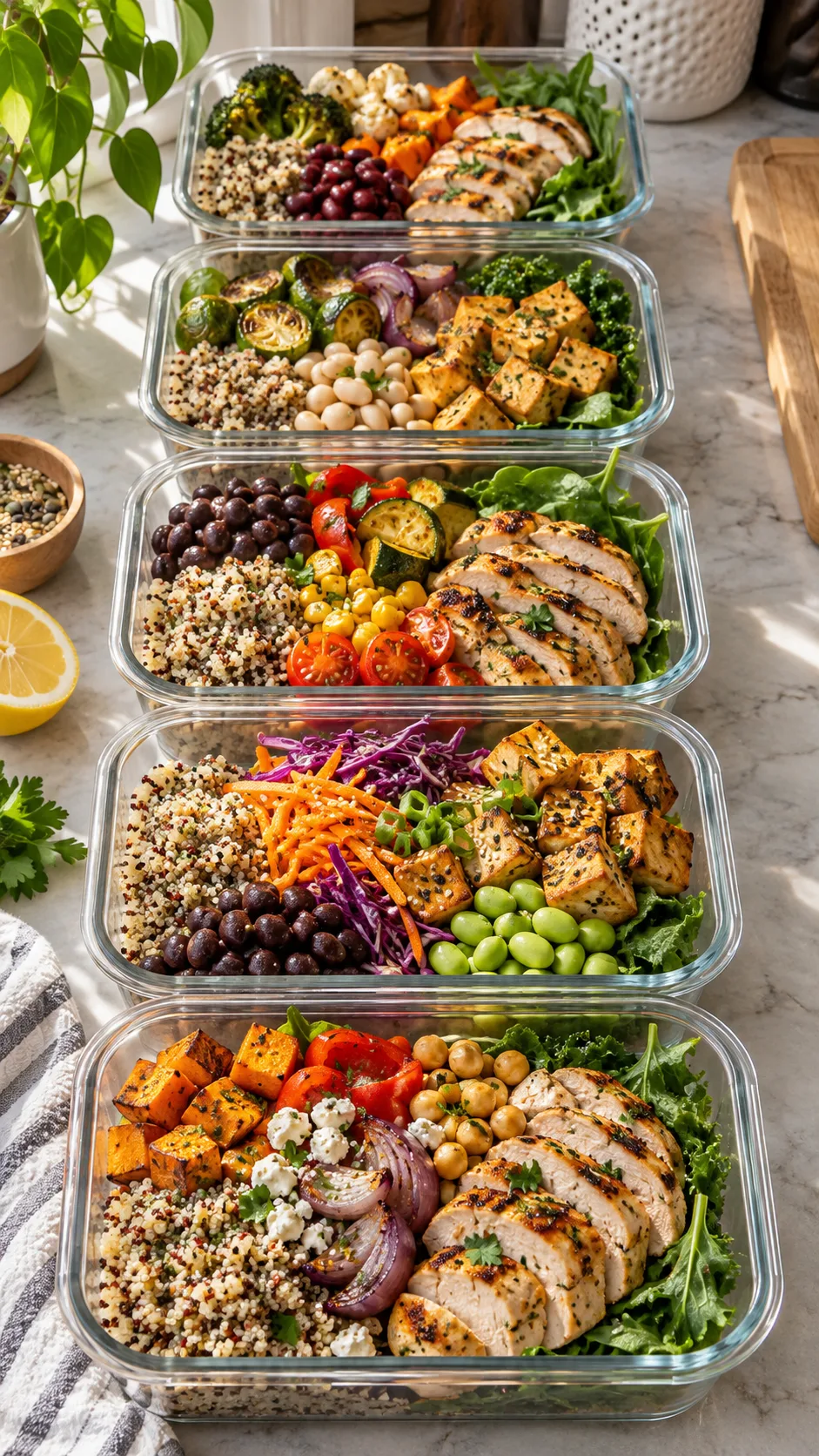
Why high fiber and high protein keep you full
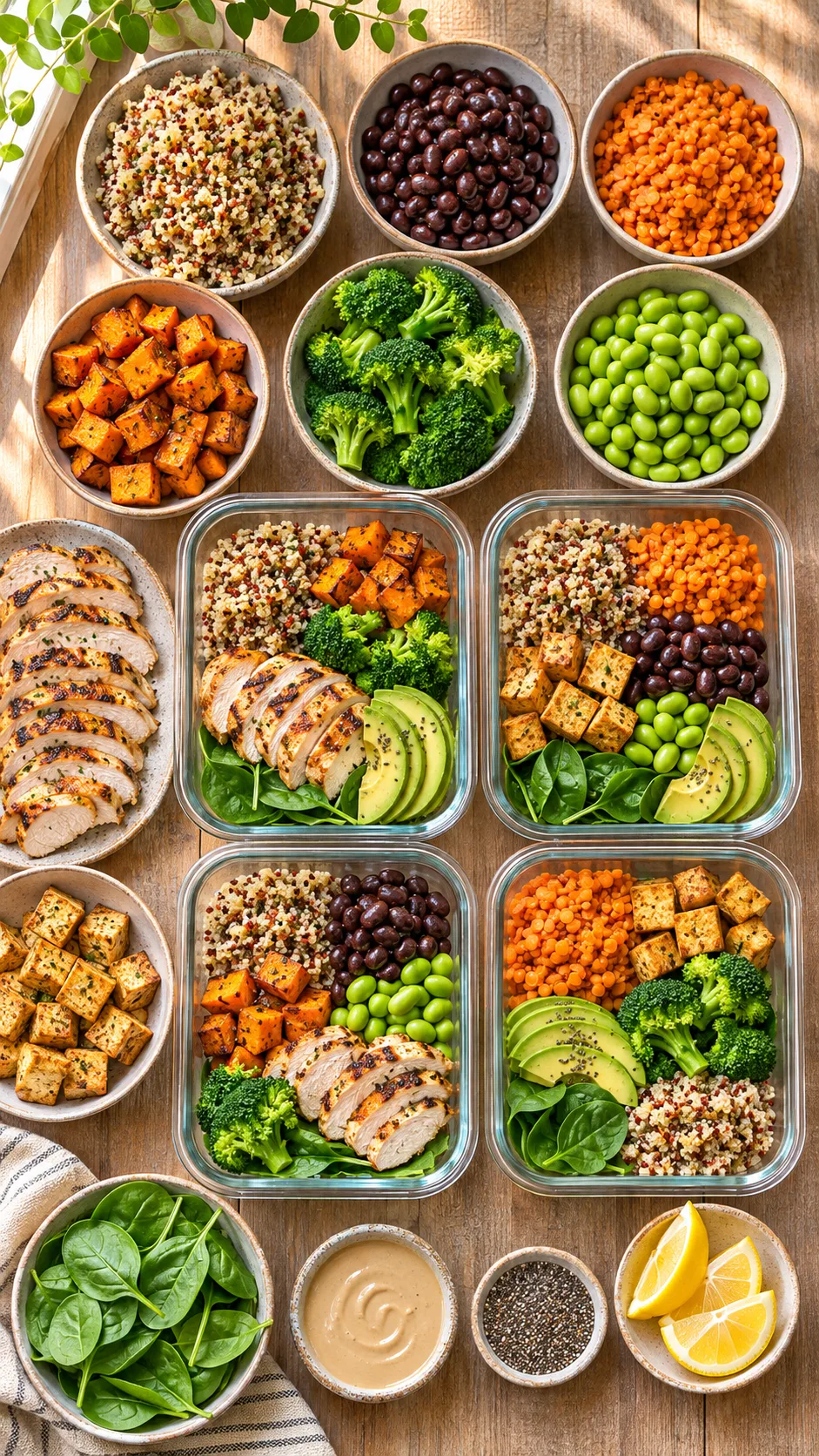
Protein and fiber make a good team. Protein helps you feel satisfied after meals, while fiber slows digestion and adds bulk to your plate. Together, they turn a bowl of food into a real meal instead of a snack wearing a lunchbox costume.
The Dietary Guidelines for Americans recommend that adults get fiber from nutrient-dense foods such as beans, whole grains, vegetables, fruits, nuts, and seeds. Most adults need roughly 22 to 34 grams daily, depending on age and sex, yet many people fall far short.
The Dietary Guidelines for Americans lay out the full fiber guidance. You do not need to chase perfection. You just need meals that make fiber easy to eat day after day.
Fiber does more than “keep things moving”
Yes, fiber supports regular digestion, but it also feeds helpful gut microbes and keeps you satisfied between meals. Soluble fiber from oats, beans, lentils, apples, and chia seeds forms a gel-like texture during digestion. That gel makes meals feel more substantial.
Insoluble fiber from vegetables, whole grains, and legumes adds bulk. Your body benefits from both types, so aim for variety rather than obsessing over one “superfood.” No single chia pudding can rescue a week of drive-thru dinners. Sorry, chia fans.
Protein adds the “I’m good” factor
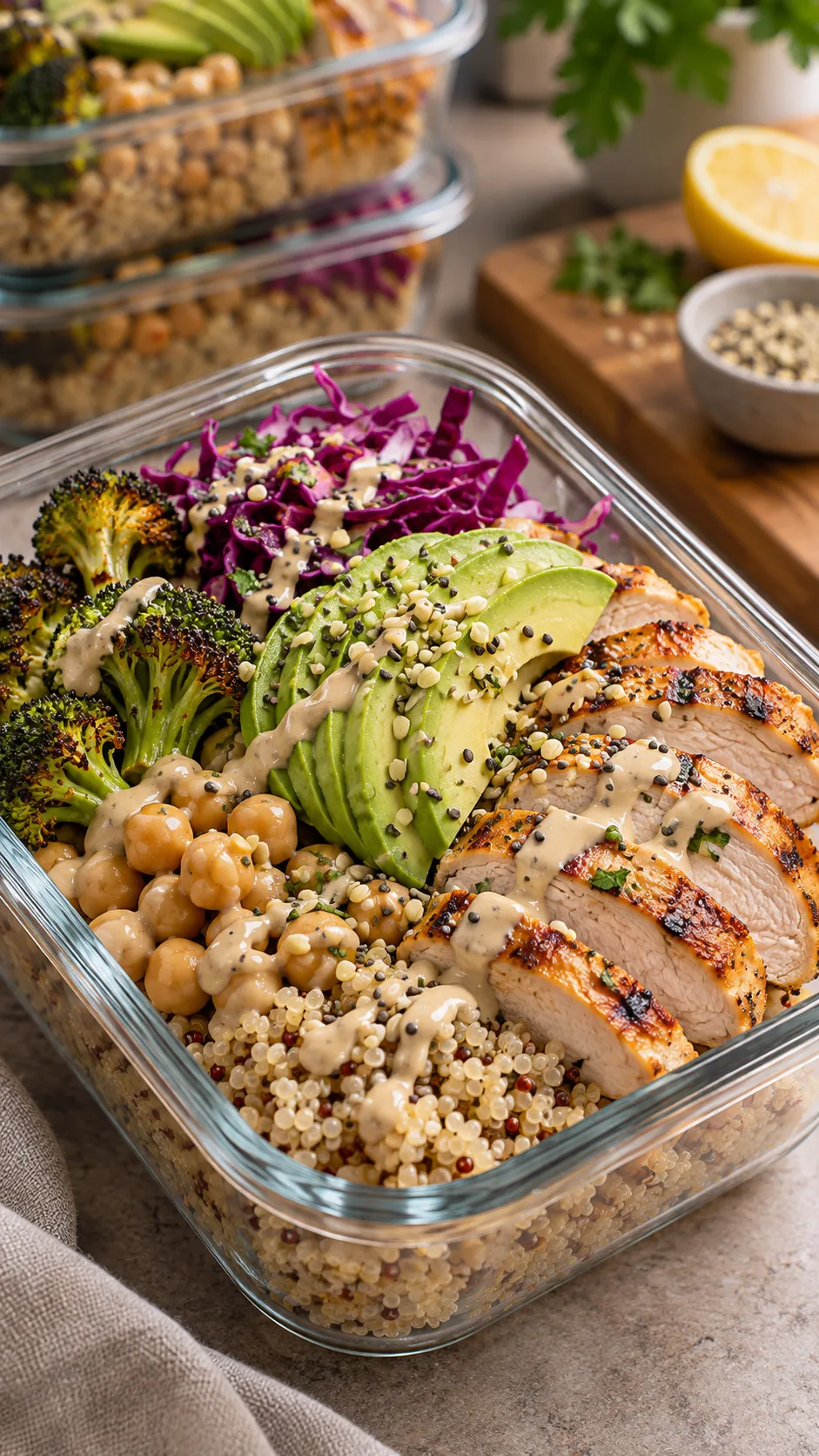
Chicken, fish, eggs, Greek yogurt, tofu, tempeh, lean meat, cottage cheese, beans, lentils, and edamame all give you protein. Most people can build a satisfying meal with 25 to 40 grams of protein, although your ideal amount depends on your body size, activity, health goals, and total daily intake.
If you manage kidney disease or another medical condition, talk with a registered dietitian or clinician about your protein needs. The USDA Nutrition.gov protein guide gives a solid general overview.
The simple formula for high fiber meal prep
You do not need complicated recipes or 19 tiny jars of mystery powders. Use one repeatable formula, then swap ingredients to match your budget, the season, and your mood.
- Pick a protein, such as chicken, turkey, salmon, tuna, eggs, tofu, tempeh, Greek yogurt, cottage cheese, lentils, beans, or edamame.
- Add a high-fiber carb: oats, quinoa, brown rice, farro, whole-wheat pasta, potatoes, sweet potatoes, beans, or lentils.
- Load up on produce. Choose at least two vegetables, or a mix of fruit and vegetables.
- Bring in fat and flavor with avocado, olive oil, tahini, nuts, seeds, pesto, salsa, herbs, spices, lemon, or a yogurt-based sauce.
- Finish with crunch from pumpkin seeds, roasted chickpeas, cabbage, chopped nuts, or crispy whole-grain crackers.
This formula works because every component has a job. Protein supports fullness, fiber stretches the meal, fats add flavor, and vegetables keep your container from looking like a beige apology.
How much fiber should one meal have?
Aim for roughly 8 to 15 grams of fiber per main meal if your current diet already includes fiber regularly. That target spreads fiber across the day instead of cramming it all into one heroic bean bowl.
If you currently eat very little fiber, start lower and increase slowly over a couple of weeks. Drink enough water as your fiber intake rises. Your digestive system likes a gradual introduction, trust me.
7 high fiber, high protein meal prep recipes
Each recipe makes about four servings and holds well for several days. Nutrition estimates change with brands, portions, and add-ons, so check labels or use a nutrition calculator when you need exact numbers.
1. Chicken, white bean, and roasted vegetable bowls
These bowls taste hearty without feeling heavy. Chicken gives you lean protein, white beans bring fiber and extra protein, and roasted vegetables add volume and sweetness.
- 1 1/2 pounds boneless, skinless chicken breast
- 2 cans cannellini beans, rinsed and drained
- 2 zucchini, 2 bell peppers, and 1 red onion, chopped
- 2 tablespoons olive oil
- 1 teaspoon garlic powder, 1 teaspoon smoked paprika, salt, and pepper
- 1 cup cooked farro or quinoa
- Lemon-herb Greek yogurt sauce
Roast the vegetables at 425°F until tender and browned. Season the chicken and cook it in a skillet, or bake it alongside the vegetables. Divide the farro, beans, vegetables, and sliced chicken among containers, then pack the sauce separately.
Each serving has roughly 40 grams of protein and 12 grams of fiber, depending on your portions. Want more chicken ideas? Try these high-protein chicken breast meal prep ideas for easy mix-and-match options.
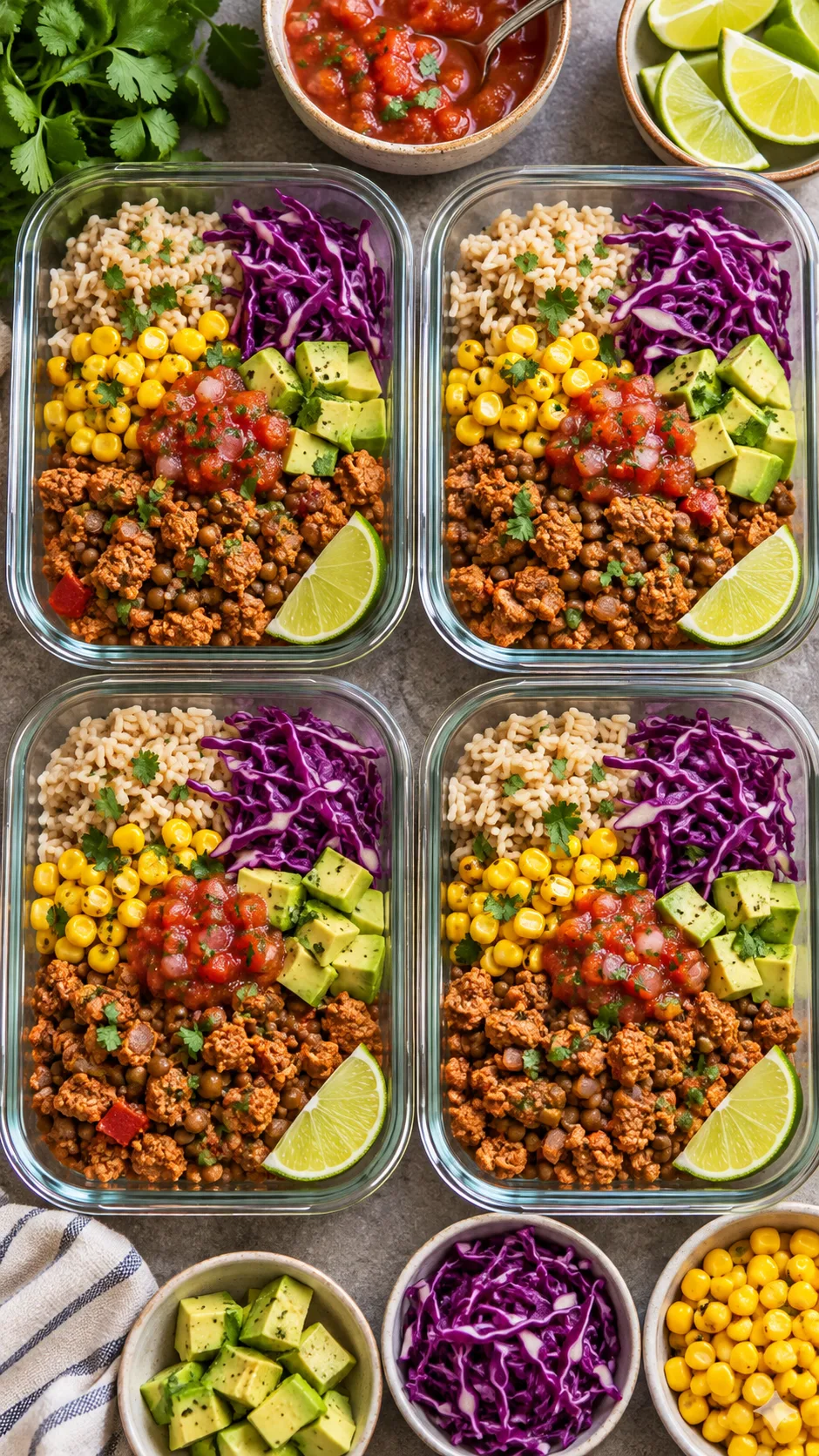
2. Turkey lentil taco bowls
Lentils stretch ground turkey, add plenty of fiber, and soak up taco seasoning like champions. These bowls also reheat well, which matters when Wednesday arrives and your motivation leaves the chat.
- 1 pound lean ground turkey
- 2 cups cooked brown or green lentils
- 1 cup cooked brown rice
- 1 cup corn
- 1 red bell pepper, diced
- 2 cups shredded cabbage or romaine
- Taco seasoning, salsa, lime, and avocado
Brown the turkey with taco seasoning and diced pepper. Stir in the lentils and a splash of salsa, then simmer until the flavors come together. Layer rice, turkey-lentil filling, corn, and cabbage in containers.
Add avocado and lime right before you eat for the best texture. One bowl usually delivers about 35 grams of protein and 14 grams of fiber.
3. Mediterranean tuna chickpea pasta salad
This cold lunch solves the “I have no microwave” problem. Chickpeas, whole-wheat pasta, tuna, and crunchy vegetables make a filling meal with zero reheating drama.
- 8 ounces whole-wheat rotini
- 3 cans tuna packed in water, drained
- 2 cans chickpeas, rinsed and drained
- 1 cucumber, 1 pint cherry tomatoes, and 1 red bell pepper
- 1/2 cup chopped parsley
- 1/3 cup crumbled feta
- Olive oil, lemon juice, Dijon mustard, oregano, salt, and pepper
Cook the pasta until just tender, then rinse it under cold water. Toss it with the tuna, chickpeas, vegetables, feta, and a lemon-Dijon dressing. Keep it chilled and stir before serving.
Each serving lands near 32 grams of protein and 11 grams of fiber. Swap the tuna for mashed white beans or baked tofu if you want a vegetarian version.
4. Creamy overnight oats with Greek yogurt and berries
Breakfast meal prep should not taste like punishment. These overnight oats get their fiber from oats, chia seeds, and berries, and the Greek yogurt makes them a high-protein breakfast.
- 2 cups rolled oats
- 2 cups plain Greek yogurt
- 1 1/2 cups milk or unsweetened soy milk
- 4 tablespoons chia seeds
- 2 cups berries, fresh or frozen
- 2 tablespoons peanut butter or almond butter
- Cinnamon and a little maple syrup, if desired
Mix the oats, yogurt, milk, chia, cinnamon, and nut butter in a large bowl. Divide the mixture into jars, top with berries, and refrigerate overnight. Add a pinch of salt if you want the nut butter flavor to pop.
Each jar provides about 25 to 30 grams of protein and 10 to 13 grams of fiber. Use certified gluten-free oats if you need them, and choose lactose-free yogurt if dairy bothers you.
5. Tofu edamame peanut noodle boxes
Tofu does not need a personality transplant. A bold peanut-lime sauce, crisp vegetables, edamame, and whole-grain noodles turn it into a filling lunch.
- 14 ounces extra-firm tofu, pressed and cubed
- 8 ounces whole-wheat spaghetti or soba noodles
- 2 cups shelled edamame
- 2 cups shredded cabbage
- 2 carrots, julienned
- 3 tablespoons peanut butter
- Soy sauce, lime juice, rice vinegar, ginger, garlic, and warm water
Bake or pan-sear the tofu until the edges turn golden. Cook the noodles, whisk the sauce, and toss everything together with the cabbage, carrots, and edamame. Store extra sauce separately if you like a fresher texture.
This meal has roughly 30 grams of protein and 12 grams of fiber per serving. Add chili crisp if your taste buds enjoy a little chaos.
6. Salmon, sweet potato, and black bean bowls
Salmon brings protein and omega-3 fats, while sweet potatoes and black beans add slow-digesting carbohydrates and fiber. This combination works well after a tough workout or a long day that somehow lasted nine years.
- 1 1/2 pounds salmon fillets
- 2 medium sweet potatoes, cubed
- 2 cans black beans, rinsed and drained
- 4 cups broccoli florets
- 1 teaspoon cumin, 1 teaspoon chili powder, salt, and pepper
- Lime, cilantro, and Greek yogurt
Roast the sweet potatoes and broccoli at 425°F with olive oil and spices. Bake the salmon until it flakes easily with a fork, then divide it among containers with the beans and vegetables. Spoon on lime Greek yogurt when you serve.
Each bowl has around 35 grams of protein and 13 grams of fiber. For more fish ideas, check out these salmon meal prep ideas.
7. Beef, barley, and mushroom soup
Soup meal prep deserves more respect than it gets. This recipe uses lean beef, pearl barley, mushrooms, and vegetables for a comfort-food lunch that keeps you full without sending you into a nap coma.
- 1 pound lean ground beef or diced stew beef
- 1 cup pearl barley
- 8 ounces mushrooms, sliced
- 2 carrots and 2 celery stalks, diced
- 1 onion, diced
- 1 can diced tomatoes
- 6 cups low-sodium beef or vegetable broth
- 2 cups chopped kale or spinach
Cook the beef, then sauté the onion, carrots, celery, and mushrooms in the same pot. Add the barley, tomatoes, broth, and seasonings, then simmer until the barley turns tender. Stir in the kale near the end so it stays bright.
One generous serving provides about 30 grams of protein and 9 to 11 grams of fiber. Pair it with fruit or a side salad when you want an even bigger fiber boost.
How to prep a week of filling meals without spending Sunday in the kitchen
Meal prep should make your week easier. It should not turn your Sunday into a low-budget cooking show. Pick two recipes for lunches and one for breakfast, then repeat them. Variety matters, but so does finishing the food you buy.
Use this 90-minute game plan
- Start the grains, lentils, or oats first, since they take the longest to cook.
- Chop every vegetable while the oven heats.
- Roast vegetables and proteins on separate sheet pans.
- Mix sauces and dressings while everything cooks.
- Cool hot food slightly, portion it into containers, and refrigerate it promptly.
Sheet pans make high fiber meal prep much faster because they cook vegetables and proteins together with minimal cleanup. If you love that strategy, these sheet pan meal prep dinners can save even more time.
Keep wet ingredients separate when you can. Dressings, salsa, avocado, crunchy toppings, and leafy greens stay better when you add them right before eating. Nobody wants a soggy cucumber situation.
Food safety and storage tips for meal prep
Good meal prep tastes great on day one and stays safe on day four. Refrigerate cooked food within two hours, use shallow containers so food cools faster, and keep your refrigerator at 40°F or below.
The FDA food safety guidance recommends refrigerating leftovers promptly and eating most cooked leftovers within three to four days. Freeze extra portions if you prep more than you can safely eat in that window.
- Cooked chicken, turkey, beef, fish, tofu, beans, and grains stay good in the refrigerator for three to four days.
- Overnight oats usually keep well for up to four days, depending on the ingredients.
- Add cut avocado fresh when possible, or coat it with lime juice and store it tightly covered.
- Label every frozen container with the recipe and date, because “brown bowl thing” tells Future You absolutely nothing.
Reheat hot meals until they steam throughout, and use a food thermometer when you want certainty. The USDA recommends a 165°F internal temperature for reheated leftovers. Food safety has no room for bravado.
Smart swaps for different diets and budgets
High protein, high fiber meals fit almost any eating style. You do not need expensive powders, imported berries, or a fridge that looks like a wellness influencer’s showroom.
Vegetarian and vegan swaps
Use tofu, tempeh, edamame, lentils, beans, seitan, or soy yogurt instead of meat and dairy. Combine legumes with whole grains, seeds, and soy foods to make meals more satisfying and nutritionally varied.
Nutritional yeast adds savory flavor, and fortified versions can provide vitamin B12. Check the label, since brands differ. If you follow a vegan diet long term, talk with a qualified healthcare professional about B12 supplementation.
Budget swaps
Choose canned beans, dried lentils, frozen vegetables, store-brand oats, eggs, canned fish, and chicken thighs when prices rise. Frozen produce often costs less, lasts longer, and still gives you good nutrition. FYI, you can roast frozen broccoli straight from the bag.
Buy sauces and spices you will use. A basic lineup of garlic powder, chili powder, cumin, smoked paprika, Italian seasoning, soy sauce, salsa, lemon juice, and hot sauce can make the same ingredients taste completely different.
Common high fiber meal prep mistakes
Even healthy meal prep can backfire when you make a few avoidable moves. Fix these issues, and your meals will sit better in your stomach and taste better by Friday.
- If you increase fiber too fast, your gut will complain. Add beans, whole grains, fruit, and vegetables gradually, then drink more water.
- If you forget protein at breakfast, oatmeal alone can leave you hungry fast. Add Greek yogurt, cottage cheese, eggs, protein powder, nuts, or soy milk.
- If you prep dry food, you will dread opening the container. Use sauces, salsa, broth-based grains, yogurt dressings, or citrus to keep meals enjoyable.
- If you make every meal identical, boredom sets in. Prep two sauces or switch toppings so your bowls do not taste like nutritional Groundhog Day.
- If you skip produce, protein and rice will fill you up, but vegetables, fruit, beans, and whole grains help you hit your fiber target.
Make your next meal prep work for you
The best high fiber meal prep recipes combine protein, beans or whole grains, vegetables, and flavor you enjoy. Start with one breakfast and two lunch recipes, then repeat that system until it feels automatic.
Increase fiber gradually, drink plenty of fluids, store food smartly, and keep your portions realistic. You do not need perfect containers or a five-hour prep marathon. You need food that keeps you full, tastes good on Thursday, and stops you from ordering emergency fries at 4 p.m.
Pick one recipe from this list, put it on your grocery list, and make next week easier. Your hungry future self will appreciate it.