

You cut spicy food, bought bland crackers, and still wake up with a throat full of fire. Frustrating, right? A few easy-to-miss diet habits may keep your acid reflux symptoms coming back.
Heartburn does not follow one tidy rule. Your body responds to food choices, meal size, timing, sleep position, stress, medications, weight changes, and personal triggers. That can feel annoying. You can usually sort it out with some focused detective work.
This guide covers common acid reflux diet mistakes, foods that often cause fewer problems, and habits that give your stomach a better shot at settling down. No miracle celery juice. No lifetime of dry chicken and sadness.

First, know what you are managing

Acid reflux happens when stomach contents travel up into your esophagus. Your lower esophageal sphincter, a muscle at the bottom of your esophagus, normally keeps that traffic moving in the right direction. When it relaxes too often or takes on too much pressure, you may feel burning, regurgitation, chest discomfort, burping, or a sour taste.
Doctors often call frequent reflux gastroesophageal reflux disease, or GERD. Many people also deal with a chronic cough, hoarseness, throat clearing, or the feeling that something has lodged in their throat. If a cough shows up mainly after dinner, reflux may explain more than allergies do.
Food can trigger symptoms, but food does not always cause the problem itself. That difference matters. A very restrictive GERD diet can make eating miserable without fixing the issue behind your symptoms. The National Institute of Diabetes and Digestive and Kidney Diseases explains that lifestyle changes can help, though each person needs an approach that suits their symptoms.
If reflux bothers you more than twice a week, talk with a clinician. Get prompt medical care for chest pain, trouble swallowing, unexplained weight loss, vomiting blood, black stools, persistent vomiting, or anemia. Do not try to solve red-flag symptoms on your own.
Mistake #1: Cutting every “trigger food” before you test anything
Many reflux diet plans hand you an enormous blacklist: tomatoes, citrus, chocolate, coffee, garlic, onions, mint, fried food, spicy food, alcohol, and nearly every meal with any personality. Some of those foods trouble a lot of people. They do not trouble everyone.
A food list gives you somewhere to start, not a life sentence. When you cut ten foods at once, you cannot tell which one caused the problem. You might also overlook the bigger issue: a huge dinner at 9:30 p.m.
What to do instead: Run a simple trigger test
Track your meals and symptoms for two weeks. Note what you ate, how much you ate, when you ate, and when symptoms started. Keep the notes simple enough to use. Nobody needs a spreadsheet with seventeen tabs.
- Start with meals built around foods that tend to cause fewer reflux symptoms.
- Cut one suspected trigger for seven to fourteen days.
- Try that food again in a modest portion after symptoms settle.
- Watch for symptoms over the next several hours and the following morning.
- Keep foods that work for you and limit foods that repeatedly cause trouble.
Portion size matters during this test. Half a cup of tomato sauce may sit fine, while a giant pepperoni pizza with soda may set things off. The whole meal matters, not just one ingredient.
Better reflux-friendly foods to start with
- Oatmeal with banana, pear, or melon
- Brown rice, couscous, quinoa, potatoes, or whole-grain toast
- Chicken, turkey, fish, tofu, lentils, or eggs in sensible portions
- Green beans, carrots, zucchini, leafy greens, peas, cucumber, and broccoli
- Low-fat yogurt or milk alternatives if you tolerate them
- Ginger or chamomile tea instead of mint tea
These foods cannot promise a symptom-free day. They give many people a calmer place to begin. From there, you can build a reflux-friendly diet that still tastes like food you want to eat.
Mistake #2: Eating “healthy” foods that still trigger your reflux
A food can look healthy and still make heartburn worse. Citrus smoothies, tomato-heavy salads, dark chocolate, kombucha, and peppermint tea may win applause on social media. Your esophagus does not care about the branding.
Acidic foods can irritate an already sensitive esophagus. High-fat foods can slow stomach emptying and bring on reflux in some people. Carbonated drinks can raise pressure in your stomach, which can turn a harmless-looking sparkling water into a tiny chaos can.
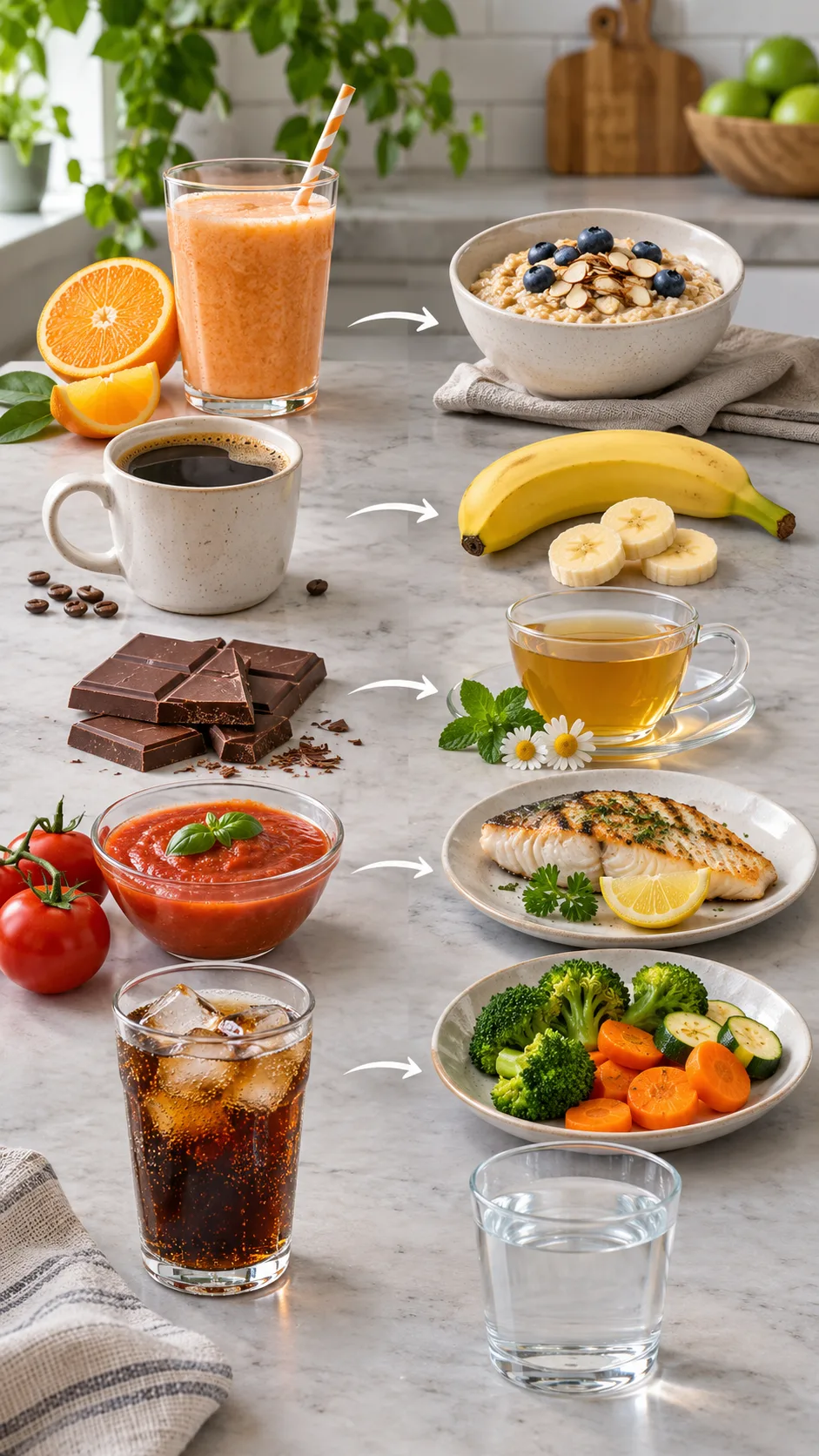
Common “healthy” reflux triggers
You do not need to fear these foods automatically, but test them if symptoms keep returning. Watch your own response after you eat or drink:
- Citrus fruits, lemonade, orange juice, and grapefruit
- Tomatoes, salsa, ketchup, pizza sauce, and marinara
- Chocolate and cocoa drinks
- Peppermint tea, mint gum, and mint candies
- Raw onion, garlic-heavy meals, and very spicy dishes
- Full-fat cheese, creamy sauces, bacon, sausage, and fried food
- Carbonated water, soda, energy drinks, beer, and kombucha
Try gentler swaps before you give up favorite foods forever. Make a banana-and-oat smoothie instead of one with orange juice. Use pesto or roasted vegetables for pasta sauce instead of tomato sauce. Drink ginger tea instead of peppermint tea.
Some people tolerate cooked onion better than raw onion. Others can eat a small square of chocolate after lunch but not a large dessert after dinner. Your reflux diet should follow patterns, not fear.
Mistake #3: Focusing on ingredients and ignoring meal size
You can eat the world’s most reflux-friendly dinner and still set off symptoms if you eat enough to feed a rugby team. Large meals stretch your stomach. That extra pressure makes it easier for stomach contents to move upward.
This catches people because they eat “clean” food. A huge bowl of brown rice, chicken, avocado, broccoli, and hummus may offer plenty of nutrients, but it also brings a lot of volume and fat. Your stomach does not award bonus points for meal-prep aesthetics.
What to eat instead: Smaller, balanced meals
Aim for moderate portions and slow down while you eat. Stop before you feel stuffed. Your brain needs time to register fullness, and your stomach will appreciate the courtesy.
Many people do well with three moderate meals and one or two small snacks. You do not need to graze every hour, but you also do not need to reach dinner so hungry that you could eat the table centerpiece.
- Breakfast: oatmeal with sliced banana and a spoonful of nut butter, if you tolerate nut butter
- Lunch: turkey and cucumber wrap with baked potato wedges
- Snack: low-fat yogurt with melon, or whole-grain crackers with turkey
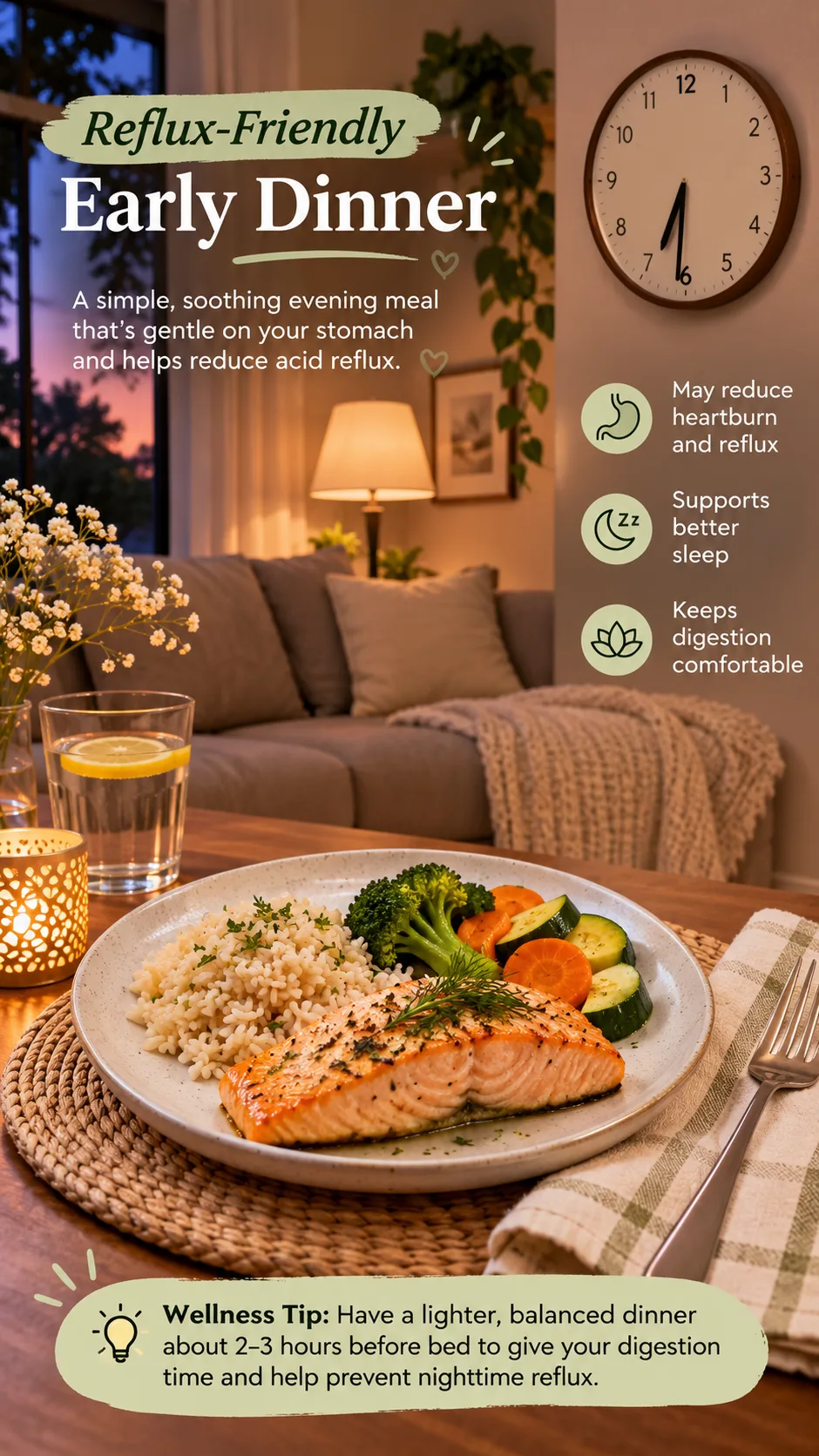
- Dinner: baked salmon, rice, zucchini, and carrots
Keep high-fat foods modest, especially at night. Fat does not bother everyone, but a fatty meal often causes more trouble than a leaner one. Choose grilled, baked, poached, roasted, or air-fried foods more often than deep-fried options.
Mistake #4: Eating too close to bedtime
This one feels unfair because late-night snacks taste great on the couch. Lying down soon after eating gives reflux an easier path upward. Gravity usually helps keep stomach contents where they belong, and bedtime removes that help.
Try to finish dinner at least two to three hours before you lie down. This habit can ease nighttime heartburn, regurgitation, coughing, and sore throat symptoms. If you work late or eat with family later in the evening, start with a smaller dinner and make the schedule lighter where you can.
If hunger hits before bed, choose something small and low in fat, then stay upright afterward. A few crackers, half a banana, plain oatmeal, or a small serving of yogurt may work better than pizza, ice cream, or a heroic bowl of cereal.
Want more practical dinner ideas that support better sleep? Check out these acid reflux diet meals for nighttime heartburn. A steady dinner routine often helps more than a complicated food rulebook.
Mistake #5: Drinking your triggers without noticing
People often inspect every bite and forget every sip. Coffee, alcohol, soda, energy drinks, citrus juice, and large amounts of sparkling water can all contribute to reflux symptoms. A “healthy” green juice can also cause problems when it contains lemon, orange, pineapple, or a huge amount of raw ginger.
Caffeine affects people differently. Some people can drink a small coffee with breakfast and feel fine. Others get heartburn after half a cup, especially on an empty stomach.
Smarter drinks for acid reflux
- Still water, sipped throughout the day
- Non-mint herbal tea, such as chamomile or ginger
- Low-fat milk, if dairy agrees with you
- Non-citrus smoothies with banana, oats, pear, melon, or mild greens
- Decaf coffee in a small amount, only if you tolerate it
Try not to chug a huge drink with meals. A large volume of liquid can add pressure to your stomach, especially after a full plate. Sip with food, then drink more between meals.
Alcohol deserves special attention because it can relax the lower esophageal sphincter and irritate the digestive tract. If wine, cocktails, beer, or “just one” nightcap brings on symptoms, pay attention to that pattern. Your stomach will not negotiate around weekend plans.
Mistake #6: Going too low-fat, too low-calorie, or too restrictive
Some people hear “avoid fatty foods” and start eating plain rice cakes with air for flavor. That approach can leave you hungry, stressed, and much more likely to overeat later. It can also leave your diet short on protein, fiber, and important nutrients.
You need balance, not punishment. Eat smaller amounts of fats that agree with you, such as olive oil, avocado, nuts, seeds, or nut butter. If one of those foods brings on symptoms, reduce the portion or leave it out for now.
Fiber also helps many people stay regular and manage weight, which can help with GERD symptoms. Add fiber gradually because a sudden flood of fiber can cause bloating and gas. Nobody wants a bloated stomach pushing upward after a “healthy” lentil experiment.
The American College of Gastroenterology GERD guideline supports weight management for people with overweight or obesity and recommends avoiding meals close to bedtime to ease reflux symptoms. A registered dietitian can help you plan meals that support your health without needless restrictions.
Mistake #7: Assuming diet alone must fix everything
Food changes can help a great deal, but they cannot fix every cause of reflux. A hiatal hernia, pregnancy, certain medications, smoking, obesity, delayed stomach emptying, and other health issues can affect symptoms. You deserve a plan that considers the full picture.
Some medications can worsen reflux for certain people, including some pain relievers, blood pressure medicines, sedatives, and asthma medicines. Do not stop a prescribed medication on your own. Ask your prescriber whether a different timing, dose, or medication could help.
Habits that work alongside a reflux diet
- Stay upright after meals. Take an easy walk, do chores, or sit comfortably for at least two to three hours.
- Raise the head of your bed. Use bed risers or a wedge that lifts your upper body. Stacking pillows usually just bends your neck into a pretzel.
- Wear comfortable waistbands. Tight clothes can increase pressure around your abdomen.
- Stop smoking if you smoke. Smoking can worsen GERD and harms nearly every part of your body.
- Manage stress. Stress does not cause reflux from nothing, but it can make symptoms feel worse and disrupt sleep.
- Ask about medication options. Antacids, H2 blockers, and proton pump inhibitors can help some people when a clinician guides their use.
The NHS guidance on heartburn and acid reflux also recommends smaller meals, avoiding late meals, and raising your head and shoulders in bed. Simple steps often help when you repeat them consistently.
A one-day reflux-friendly meal plan you can enjoy
You do not need to follow this exact menu, but it shows that a GERD diet can feel satisfying without tasting bland. Adjust portions for your appetite, medical needs, and personal triggers. If you have diabetes, kidney disease, food allergies, or a history of an eating disorder, ask a qualified clinician for guidance tailored to you.
Breakfast
Eat warm oatmeal with banana slices, cinnamon, and a small spoonful of almond butter if you tolerate it. Drink still water or chamomile tea. This meal gives you fiber and staying power without a large dose of fat or acidity.
Lunch
Build a bowl with brown rice, grilled chicken or tofu, zucchini, carrots, cucumber, and a small drizzle of olive oil. Add parsley, basil, dill, or oregano for flavor. Skip heavy garlic dressing and tomato vinaigrette if those foods trigger you.
Afternoon snack
Choose melon, a pear, or a banana with a few whole-grain crackers. Add low-fat yogurt if you tolerate dairy. This snack can keep you from reaching dinner thinking, “I have not eaten all day, so I ordered three appetizers.”
Dinner
Try baked fish or turkey meatballs with roasted sweet potato and green beans. Eat early enough to stay upright afterward. For more ideas, save this guide to nighttime reflux-friendly meals that can help calm evening symptoms.
How to know when your reflux diet needs a doctor, not another food swap
Diet changes should help you feel more in control, not more anxious around food. If symptoms continue despite a careful reflux diet and lifestyle routine, schedule a medical visit. Your clinician can look for GERD complications and other conditions that can mimic heartburn.
Seek urgent care for crushing or severe chest pain, chest pain with shortness of breath, sweating, jaw pain, or pain that spreads to your arm. Heart symptoms can resemble reflux, and guessing can put you in real danger. Let a medical professional make that call.
Also contact a clinician if you need over-the-counter reflux medicine often, wake frequently with symptoms, struggle to swallow, or notice food sticking. Persistent reflux needs more than endless trial-and-error dinners.
The bottom line: Make your reflux diet smarter, not smaller
The biggest reflux diet mistakes often involve over-restriction, huge portions, late dinners, liquid triggers, and ignoring your own patterns. Start with calmer foods, eat moderate meals, finish dinner earlier, and test suspected triggers one at a time. Small changes can bring meaningful relief.
You do not need a perfect diet. You need a realistic routine that lets your stomach settle and helps you enjoy food again. Start with your next meal, keep a few notes, and give your body room to show you what works.
Your reflux does not need more food rules. It needs better clues.