

I used to keep a bottle of antacids on my nightstand the way other people keep a glass of water. Around 1 a.m., every single night, my chest would light up like someone had poured hot sauce straight down my throat. I blamed stress, my pillow, the weather, Mercury retrograde. I never blamed the real culprit, which sat on my dinner plate.
Then I changed what I ate after 6 p.m., and the burn stopped. Not overnight, and not by magic, but within about three weeks. Food fixed what three years of chewable chalk tablets never could.
Below are the meals that worked for me, plus the ones I had to break up with. No lecture, and no sad plate of steamed celery, I promise.
First, why does reflux attack at night?
Ever wonder why your chest behaves all day and then goes nuclear the second your head hits the pillow? Gravity, or rather the sudden loss of it working in your favour.
When you stand or sit, gravity keeps stomach acid where it belongs. Lie flat, and that acid has a straight, unobstructed highway into your esophagus. The little muscle guarding the gate (the lower esophageal sphincter, or LES) relaxes when it shouldn’t, and the acid strolls right through.
Some foods make that gate lazier. Others push acid production higher or slow your stomach’s emptying, so a pile of half-digested dinner is still sloshing around at midnight. The National Institute of Diabetes and Digestive and Kidney Diseases lists diet and meal timing as frontline changes for a reason.
My “aha” moment (it was embarrassing)
I tracked my food for two weeks in a cheap notebook. The pattern jumped off the page: every single flare-up followed a late, greasy, tomato-heavy dinner. My beloved 9 p.m. pepperoni pizza amounted to an arson attack on my own esophagus. :/
Track your meals for 14 days. You’ll spot your triggers faster than any article can guess them, this one included.
The 5 rules I follow before I even think about recipes
The meals matter. The habits around the meals matter just as much, so here’s my non-negotiable list:
- Stop eating 3 hours before bed. This single change cut my nighttime burn by roughly half. Your stomach needs a head start.
- Eat smaller portions, more often. A huge meal stretches the stomach and pops that LES valve open. Four small meals beat two giant ones.
- Sip, don’t chug. Drinking a liter of water with dinner fills your stomach like a balloon. Drink between meals instead.
- Raise the head of your bed 6 to 8 inches. Use blocks under the bedposts, not extra pillows. Pillows just bend your middle and squeeze your stomach.
- Walk for 10 minutes after dinner. Gentle movement speeds up stomach emptying. Crunches, however, will ruin your evening.
FYI, sleeping on your LEFT side helps too. Your stomach sits slightly left, so that position keeps acid pooled below the esophagus. It costs nothing and it works, so try it tonight.

The foods I had to break up with
I won’t tell you to cut out everything fun. I will tell you which foods torched me over and over, and which ones research keeps flagging.
The usual suspects
- Fried and fatty foods: fat slows stomach emptying and relaxes the LES. Double trouble.
- Tomato-based sauces: naturally acidic, and they cling to everything.
- Citrus juices: orange juice on an empty stomach felt like a dare.
- Chocolate: it contains methylxanthines, which relax that valve. I know. I’m sorry.
- Peppermint: the “soothing” herb that relaxes the LES instead. Ironic, right?
- Coffee and caffeine: my worst late-day offender by a mile.
- Alcohol, especially wine and beer: it relaxes the valve AND irritates the lining.
- Carbonated drinks: bubbles expand, pressure builds, acid escapes. Basic physics.
- Raw onion and garlic: the cooked versions treated me far better.
- Spicy chili-heavy dishes: capsaicin slows digestion for a lot of people.
Here’s the honest part: trigger foods are personal. The Harvard Health Publishing team makes the same point, because blanket elimination lists often strip out foods you tolerate perfectly fine. I still eat garlic. I just cook it soft and keep it early in the day.
My nighttime dinner rotation (the stuff that works)
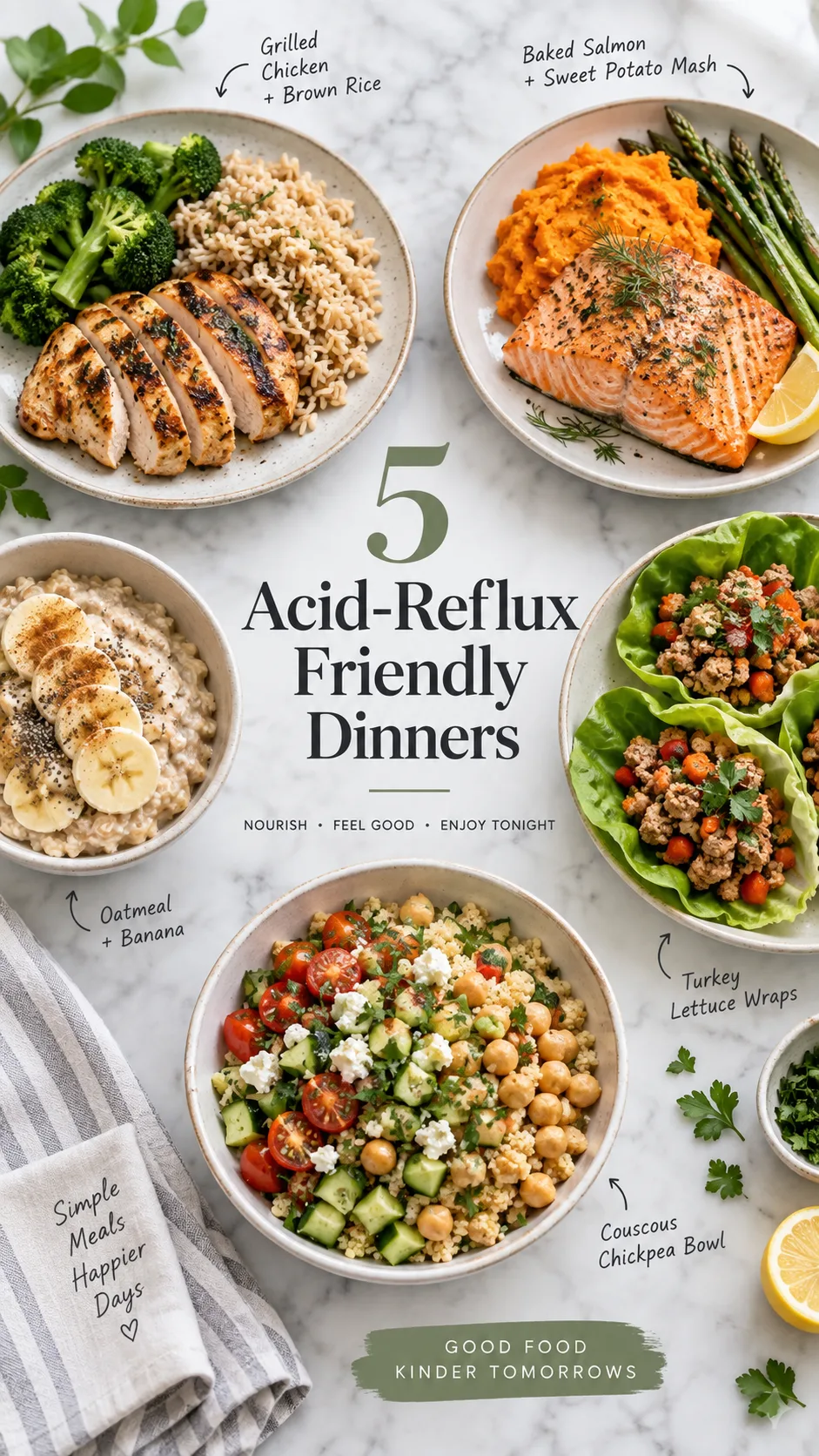
These are the meals I rotate through week after week, and they keep my chest quiet. They’re boring in the best possible way, boring like a smooth flight.
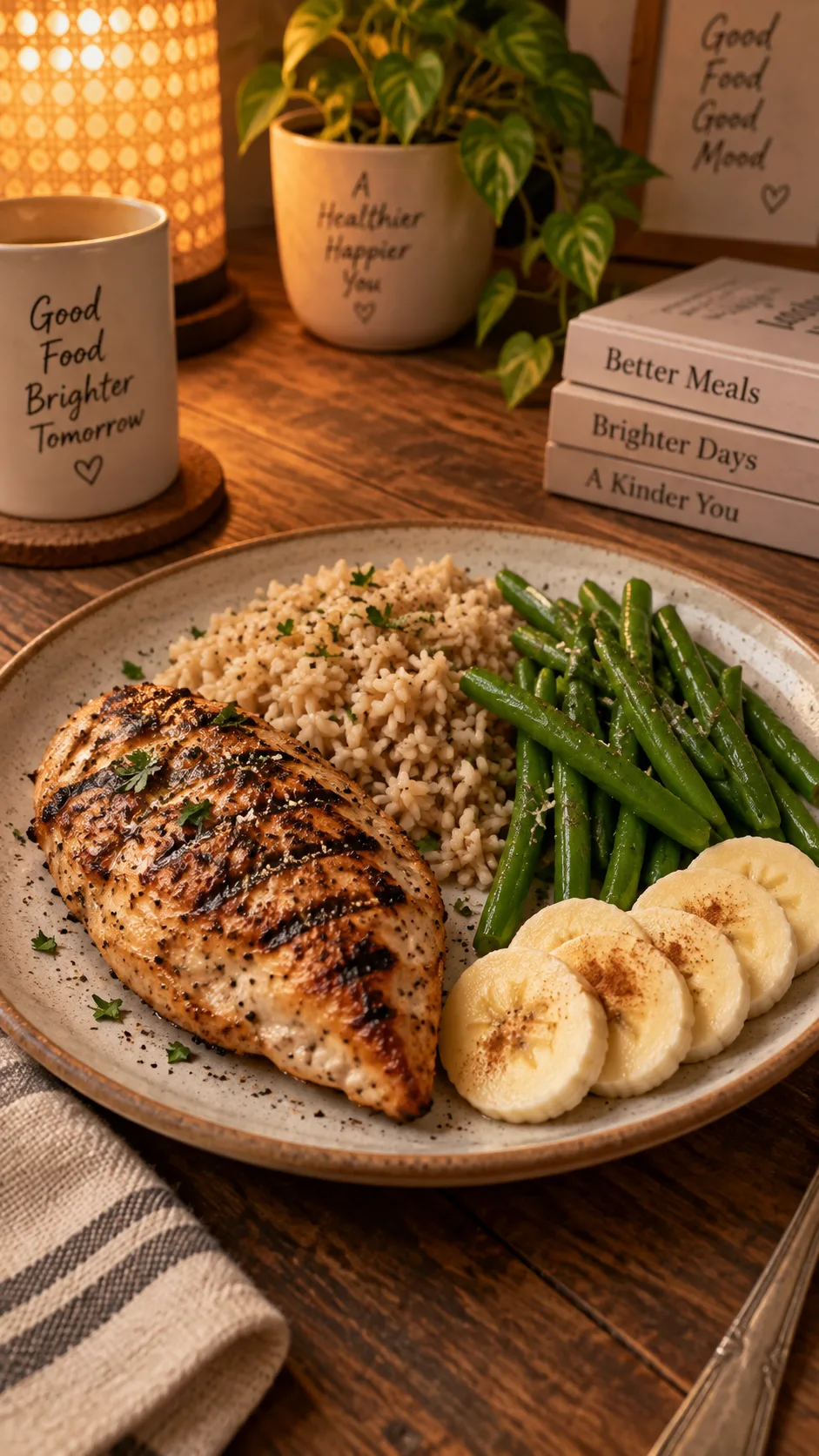
1. Grilled chicken, brown rice & steamed green beans
The MVP. Lean protein, gentle carbs, low-acid vegetables. I season with rosemary, thyme, a pinch of salt and a squeeze of nothing citrus. Olive oil goes on lightly after cooking, and I never deep-fry.
Why it works: low fat empties the stomach faster. Brown rice soaks up excess acid. Green beans sit close to pH-neutral. I eat this at 6 p.m. and sleep like a rock.
2. Baked salmon with sweet potato mash
Salmon has fat, yes, but it’s omega-3 fat, and my stomach handles it far better than anything fried. I bake it at 180°C with herbs and a splash of olive oil.
Sweet potato mash replaces the heavy, buttery version. I mash it with a little oat milk instead of cream. It tastes indulgent and behaves politely.
3. Oatmeal dinner (yes, dinner)
Don’t laugh. On nights when my throat already feels raw, I make plain oats with banana and a drizzle of honey. Oatmeal soaks up acid and coats the stomach lining. It’s the closest thing to a hug in bowl form.
Bananas are one of the most alkaline fruits you can eat. Melon works too. Skip the berries at night if they sting you, since they’re mildly acidic.
4. Turkey and veggie lettuce wraps
Ground turkey, grated carrot, zucchini and a little ginger, cooked in minimal oil and wrapped in butter lettuce. Light, quick, and it doesn’t sit in your gut like concrete.
Ginger is the underrated hero here. It calms inflammation and speeds gastric emptying. I keep fresh ginger in the freezer and grate it into almost everything.
5. Couscous bowl with cucumber, chickpeas and tahini
My meat-free night. Chickpeas bring the protein, cucumber cools things down, and tahini adds flavour without turning into a fat bomb. I skip lemon and use a little rice vinegar, which is much gentler, IMO.
Breakfast and lunch matter more than you think
Nobody told me this part: what you eat at 8 a.m. affects how you feel at 1 a.m. Irritate your esophagus all day, and it arrives at bedtime already inflamed and cranky.
Breakfasts that don’t betray you
- Oatmeal with banana and almond butter: the classic, for good reason
- Scrambled egg whites with spinach: yolks bothered me, whites never did
- Whole grain toast with avocado: keep the portion modest, because avocado is fatty
- Low-fat Greek yogurt with melon: probiotics plus alkaline fruit
- Herbal tea instead of coffee: chamomile or ginger, never peppermint
The coffee thing hurt, and I won’t pretend otherwise. I switched to one small cup mid-morning with food, never on an empty stomach, and that compromise saved my mornings and my nights.
Lunches that keep you calm
- Grilled chicken salad with olive oil and rice vinegar (no tomato, no raw onion)
- Lentil soup with carrots and celery: low-fat, filling and forgiving
- Turkey sandwich on whole grain with cucumber and lettuce
- Rice bowl with steamed broccoli, tofu and a light sesame drizzle
Notice a pattern? Lean protein, complex carbs, low fat, minimal acid. That’s the whole formula. Everything after that is a seasoning choice.
The science bit (quick, I promise)
I want you to trust these suggestions, so here’s the reasoning behind them instead of vibes.
- Fat delays gastric emptying. Food lingers longer, pressure builds, reflux follows. Lower-fat meals leave the stomach faster.
- High-fibre diets correlate with fewer reflux symptoms. Fibre may help the LES work better, and it reduces the pressure spikes that push acid upward.
- Meal timing changes everything. Studies on late-evening eating consistently show more nighttime reflux episodes compared with early dinners.
- Weight around the midsection raises abdominal pressure. Even modest weight loss reduces symptoms for many people.
- Alkaline foods buffer acid. Bananas, melons, cauliflower, fennel and nuts help neutralise what’s already there.
The American College of Gastroenterology backs lifestyle and dietary changes as first-line management for GERD. The Mayo Clinic flags the same trigger categories I listed above.
A sample 3-day anti-reflux meal plan
Steal this. Adjust portions to your appetite, and finish dinner by 7 p.m. at the latest.
Day 1
- Breakfast: Oatmeal, sliced banana, teaspoon of honey
- Lunch: Grilled chicken salad, olive oil + rice vinegar, cucumber, romaine
- Snack: A handful of almonds and a pear
- Dinner: Baked salmon, sweet potato mash, steamed broccoli
Day 2
- Breakfast: Egg-white scramble with spinach, one slice whole grain toast
- Lunch: Lentil soup with carrot and celery, side of brown rice
- Snack: Low-fat yogurt with melon chunks
- Dinner: Turkey lettuce wraps with ginger and grated zucchini
Day 3
- Breakfast: Smoothie with banana, spinach, oat milk and a tablespoon of oats (no citrus!)
- Lunch: Couscous bowl, chickpeas, cucumber, tahini drizzle
- Snack: Rice cakes with a thin layer of almond butter
- Dinner: Grilled chicken, brown rice, green beans, roasted fennel
If you’re managing blood sugar alongside reflux, the same low-fat, high-fibre logic applies. Our glycemic index table of Nigerian foods pairs surprisingly well with this plan, since plenty of those gentle carbs turn up here too.
Drinks: the trap nobody warns you about
I fixed my meals and still burned. Why? My drinks were sabotaging me.
Drink these
- Plain water: sipped between meals, not during
- Chamomile or ginger tea: calming, warm, reliable
- Low-fat or plant milk: oat and almond worked best for me
- Coconut water: naturally alkaline and mildly sweet
- Diluted aloe vera juice: soothing, but buy the decolorised kind
Avoid these after 4 p.m.
- Coffee and energy drinks
- Soda and sparkling water
- Wine, beer, spirits
- Orange, grapefruit, pineapple and lemon juice
- Thick milkshakes and full-fat lattes
Giving up evening wine annoyed me for about two weeks. Then I worked out that I’d been trading one glass of Merlot for four hours of chest fire. Not a great exchange rate. 🙂
Mistakes I made so you don’t have to
- I stacked pillows. Folding your torso upward squeezes the stomach. Elevate the whole bed frame instead.
- I ate “healthy” trigger foods. Tomatoes, oranges and dark chocolate are genuinely nutritious, and also genuinely brutal for reflux.
- I went too extreme. I cut 30 foods at once, hated life, and quit in nine days. Cut your top 5 offenders first.
- I drank a liter of water with dinner. Volume is volume. Your stomach doesn’t care that it’s healthy.
- I ignored chewing. I inhaled meals in six minutes flat. Slowing down genuinely reduced my symptoms.
- I skipped the doctor. Nine months of self-treating persistent heartburn is not a flex. Please don’t copy me.
When food alone isn’t enough
I need to say this clearly: diet fixed my reflux, but diet doesn’t fix everyone’s reflux. Some people have a hiatal hernia, H. pylori, an esophageal motility problem, or GERD severe enough to need medication.
See a doctor if you experience any of these:
- Heartburn more than twice a week for over three weeks
- Trouble swallowing or food feeling “stuck”
- Unexplained weight loss
- Vomiting blood or black, tarry stools
- Chest pain with shortness of breath: go immediately, because that’s not reflux territory
- Chronic cough, hoarseness or a raspy morning voice
Untreated chronic reflux can damage the esophagus over time. Food is a powerful tool, not a substitute for a diagnosis.
How long until you feel better?
My timeline, reported honestly:
- Days 1 to 4: Nothing. I felt betrayed and hungry.
- Days 5 to 10: Fewer wake-ups. Two quiet nights in a row.
- Weeks 2 and 3: Noticeably calmer. I stopped reaching for the nightstand bottle.
- Week 4 onward: Full nights of sleep. Occasional flare-ups when I cheat badly.
Give it a month before you judge the results. An inflamed esophagus needs time to heal, and it won’t repair itself in 48 hours because you ate one bowl of oats.
If you like structured eating plans, two others on this site follow similar gentle-on-the-gut principles. The low cholesterol diet plan overlaps heavily with reflux-friendly cooking, and the Korean diet approach leans on steamed, broth-based meals that treat the stomach kindly, though you’ll want to watch the kimchi and chili paste.
The bottom line
Nighttime reflux isn’t a mysterious curse. It usually comes down to what you ate, how much you ate, and how recently you ate it before you went horizontal.
Start with the three changes that gave me the biggest return:
- Finish dinner three hours before bed. Non-negotiable.
- Cut the fat and acid in your evening meal. Lean protein, complex carbs, gentle vegetables.
- Elevate the head of your bed and sleep on your left side. Free, instant, effective.
You don’t need a joyless diet of plain rice and regret. You need smarter timing, lighter evenings and a short list of foods your body tolerates.
Grab a notebook tonight. Write down what you eat and how you sleep for the next 14 days. Your own data beats every list on the internet, mine included. And when you finally sleep through a whole night without that 1 a.m. fire alarm, you’ll wonder why you waited so long.