

You’ve been doing single leg glute bridges for weeks, your glutes look exactly the same, and you’re starting to wonder if the exercise even works. Sound familiar? You’re not alone, and the problem isn’t the exercise. The problem is how you’re doing it.
I’ve been there. I added single leg glute bridges to my routine thinking I was being smart and targeted. Weeks later, my hamstrings were sore, my lower back was complaining, and my glutes? Completely unbothered. Classic case of working hard, not smart.
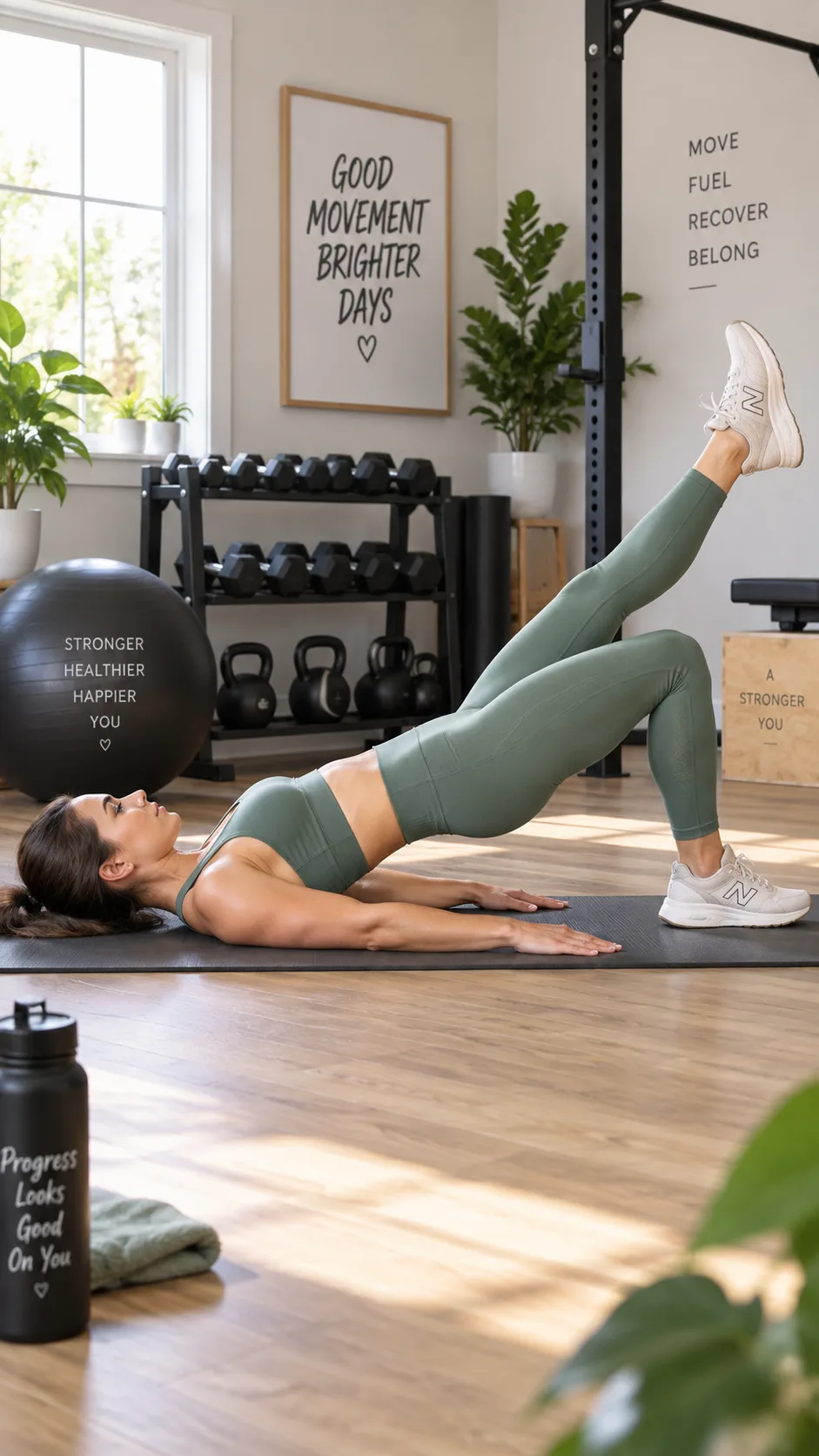
What even is a single leg glute bridge?
Before we get into what you’re doing wrong, let’s get on the same page. The single leg glute bridge is a unilateral lower body exercise where you lie on your back, plant one foot flat on the floor, extend the other leg straight out, and drive your hips up toward the ceiling. When you do it correctly, it targets your glutes, hamstrings, and core.
It’s a solid accessory movement for athletes, gym beginners, and anyone trying to correct muscle imbalances. NASM ranks it as one of the top unilateral glute exercises for good reason. But like most bodyweight exercises, it has a deceptively high technique ceiling.
It looks easy. It absolutely isn’t, not if you want real results.
The number one mistake that’s quietly wrecking your progress
Here it is: you’re not squeezing your glute at the top of the movement. You’re lifting your hips and calling it a day. Your hip flexors and hamstrings end up doing most of the work while your glutes sit there completely unchallenged.
This is called synergistic dominance, where surrounding muscles take over because the target muscle isn’t being properly activated. It’s incredibly common, and it silently kills glute progress.
Why this happens
Most people have underactive glutes from sitting at a desk all day. Your glutes literally forget how to fire properly. When you go straight into a bridging movement without proper activation, your body reroutes the effort to whatever muscles are more “awake,” which is usually your hamstrings and lower back.
ACE Fitness explains that gluteal amnesia (yes, that’s a real term) is one of the most common issues trainers deal with in clients. The good news? It’s completely fixable.
Other common single leg glute bridge mistakes
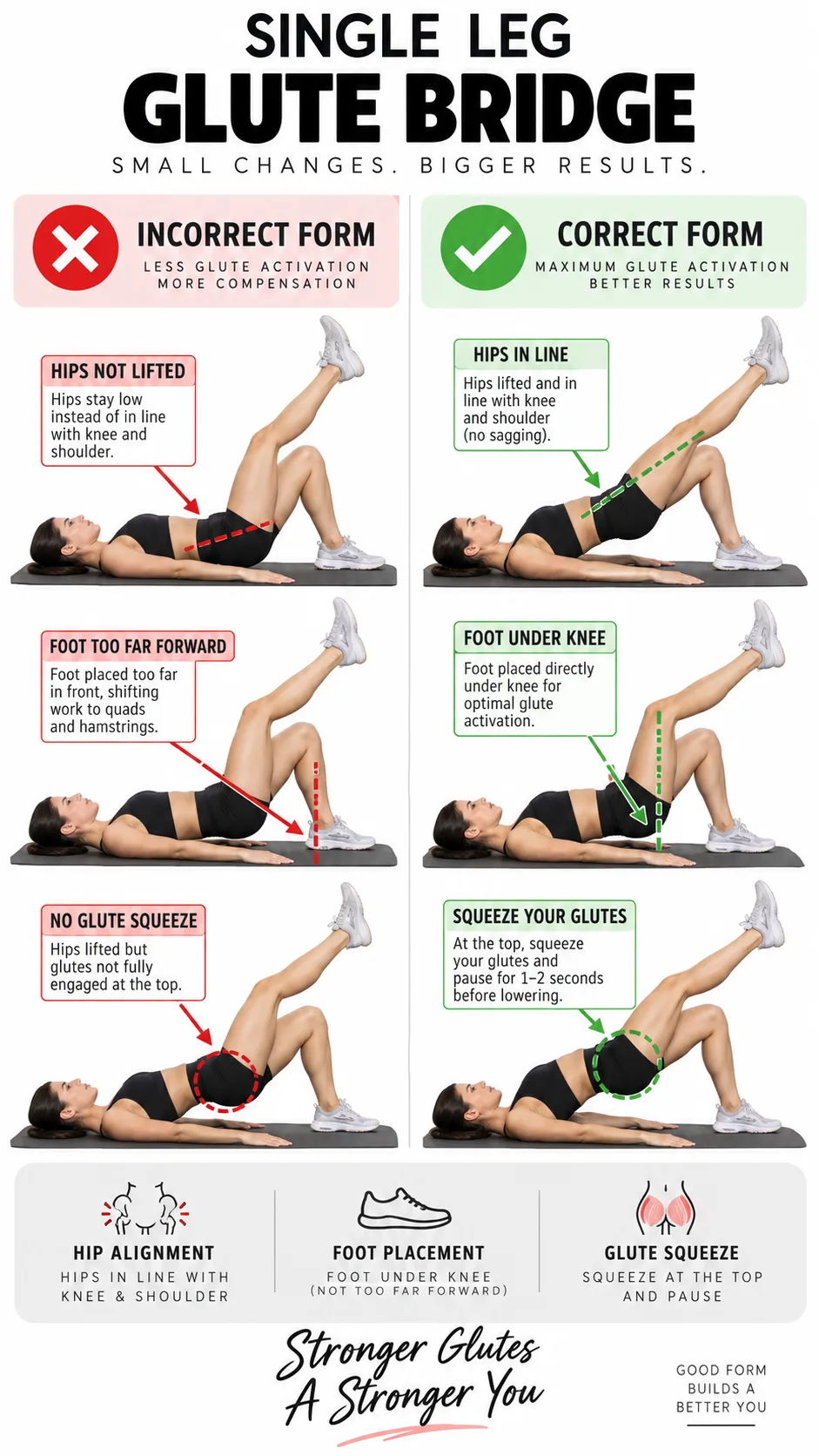
The squeeze issue is the big one, but it rarely shows up alone. Here are the other mistakes that compound the problem:
- Foot placement too far or too close to your butt — If your foot is too far away, you overload your hamstrings. Too close, and you recruit your quads instead. The sweet spot is when your shin sits roughly perpendicular to the floor at the top of the movement.
- Letting your hips rotate — The whole point of a single leg version is to challenge hip stability. If you allow one hip to drop or twist, you defeat that purpose entirely and set yourself up for lower back pain.
- Rushing through reps — This isn’t a race. Slamming through 20 fast reps with zero control does nothing. Slow, controlled reps where you actually feel the glute working will always beat high volume with sloppy form.
- Not keeping your core engaged — Your core and glutes work together. When your abs relax, your pelvis tilts, your lower back arches, and your spine pays for it. Brace like you’re about to take a punch.
- Skipping the mind-muscle connection — Sounds fluffy, but research backs it up. Studies published in the European Journal of Sport Science show that consciously focusing on the target muscle during exercise significantly increases muscle activation.
The fix that actually changed my training
When I figured out what I was doing wrong, the fix wasn’t complicated. It came down to a few small adjustments done consistently. Here’s exactly what I changed:
Step 1: Activate before you train
Spend 2-3 minutes on glute activation before your bridge work. Clamshells, donkey kicks, or even just isometric glute squeezes lying flat on the floor wake the glutes up properly. This one change made an immediate difference in how my glutes felt during the exercise.
Step 2: Slow down the tempo
I switched to a 2-1-3 tempo: two seconds going up, a full one-second squeeze and hold at the top, then three seconds lowering back down. It’s humbling at first because your rep count drops dramatically. But the quality of each rep goes through the roof.
Step 3: Drive through your heel
Instead of pushing through your whole foot, consciously drive through your heel as you raise your hips. This cue immediately shifts the emphasis away from your quads and onto your glutes and hamstrings, where it belongs.
Step 4: The glute squeeze cue
At the top of every single rep, I added a deliberate, hard glute squeeze, like I was trying to crack a walnut (you’re welcome for that image). Hold it for a full second. Don’t just go up and come back down. That squeeze is where the actual muscle-building stimulus lives.

How to program single leg glute bridges for real results
Now that you know how to do them properly, here’s how to fit them into your routine for real glute development:
- Frequency: 2-3 times per week, with at least one rest day between sessions
- Sets and reps: 3-4 sets of 8-12 reps per side using the slow tempo above
- Progression: Once bodyweight becomes easy, add a resistance band just above your knees or hold a dumbbell on your working hip
- Placement in your workout: Use them as an activation or accessory exercise, not as a primary compound movement
If you’re also managing your nutrition to support muscle growth and fat loss, keeping an eye on your overall calorie intake matters. Check out this Nigerian Calories PDF to get a sense of where your daily numbers land.
Why single leg beats double leg for glute development
With both feet on the ground, your stronger leg tends to compensate for the weaker one. You never actually fix the imbalance; you just keep reinforcing it. The single leg version forces each glute to work independently, which exposes weaknesses and builds symmetrical strength.
It also increases the demand on your hip stabilizers, including the glute medius and glute minimus, which matter for athletic performance, injury prevention, and the overall shape of your backside. Everyone should have this exercise in their rotation, regardless of fitness level.
If you’re pairing your training with a smart approach to recovery, you might also want to look into the benefits of turmeric. It’s genuinely useful for reducing exercise-related inflammation and helping your body bounce back between sessions.
Watch: proper single leg glute bridge form explained
Sometimes seeing it is better than reading about it. This video breaks down the exact form cues we covered above, and it’s worth three minutes of your time:
Quick-reference: single leg glute bridge checklist
Before every set, run through this mentally:
- Did I activate my glutes first?
- Is my planted foot at the right distance (shin perpendicular at the top)?
- Core braced tight?
- Driving through my heel?
- Squeezing hard at the top for a full second?
- Hips level, not rotating or dropping?
- Controlled tempo on the way down?
Run through that list every time and you’ll be ahead of the vast majority of people doing this exercise in the gym right now.
When progress still feels slow
If you’re nailing your form and still not seeing the glute development you want, the issue is probably nutrition and overall caloric balance. Muscles grow when they’re challenged and properly fueled. If you’re significantly under-eating or loading up on the wrong foods, your results will stall no matter how good your form is.
Pairing smart training with a real understanding of what you eat regularly helps enormously. A resource like the Glycemic Index Table of Nigerian Foods can help you make smarter meal choices that support your energy during workouts and your recovery afterward.
The bottom line
The single leg glute bridge is genuinely one of the best exercises you can do for your glutes, but only when you do it right. The squeeze matters. The tempo matters. Activation matters. Without those three things, you’re just lying on the floor doing cardio for your hamstrings.
Fix your form, slow down, squeeze hard at the top, and stay consistent. Give it four to six weeks of proper execution and your glutes will notice the difference. Your old jeans might too.
Start your next session with the checklist above and feel the difference from rep one. Your glutes have been waiting long enough.