You do not need to survive on sad salads, tiny crackers, and the smell of someone else’s pizza to lose weight. You need a smarter weight loss diet plan that lets you eat satisfying portions without quietly blowing your calorie target.
The plan starts with one simple move: swap high-calorie foods for lower-calorie foods that do the same job. Keep the crunch, the creaminess, the volume, the flavour, or the comfort. Lose the calorie avalanche. Sounds almost suspiciously sensible, right?
I love food swaps because they skip the usual diet drama. You do not have to “start over Monday,” delete every meal you enjoy, or pretend celery gives you emotional support. You just make better defaults, one meal at a time.
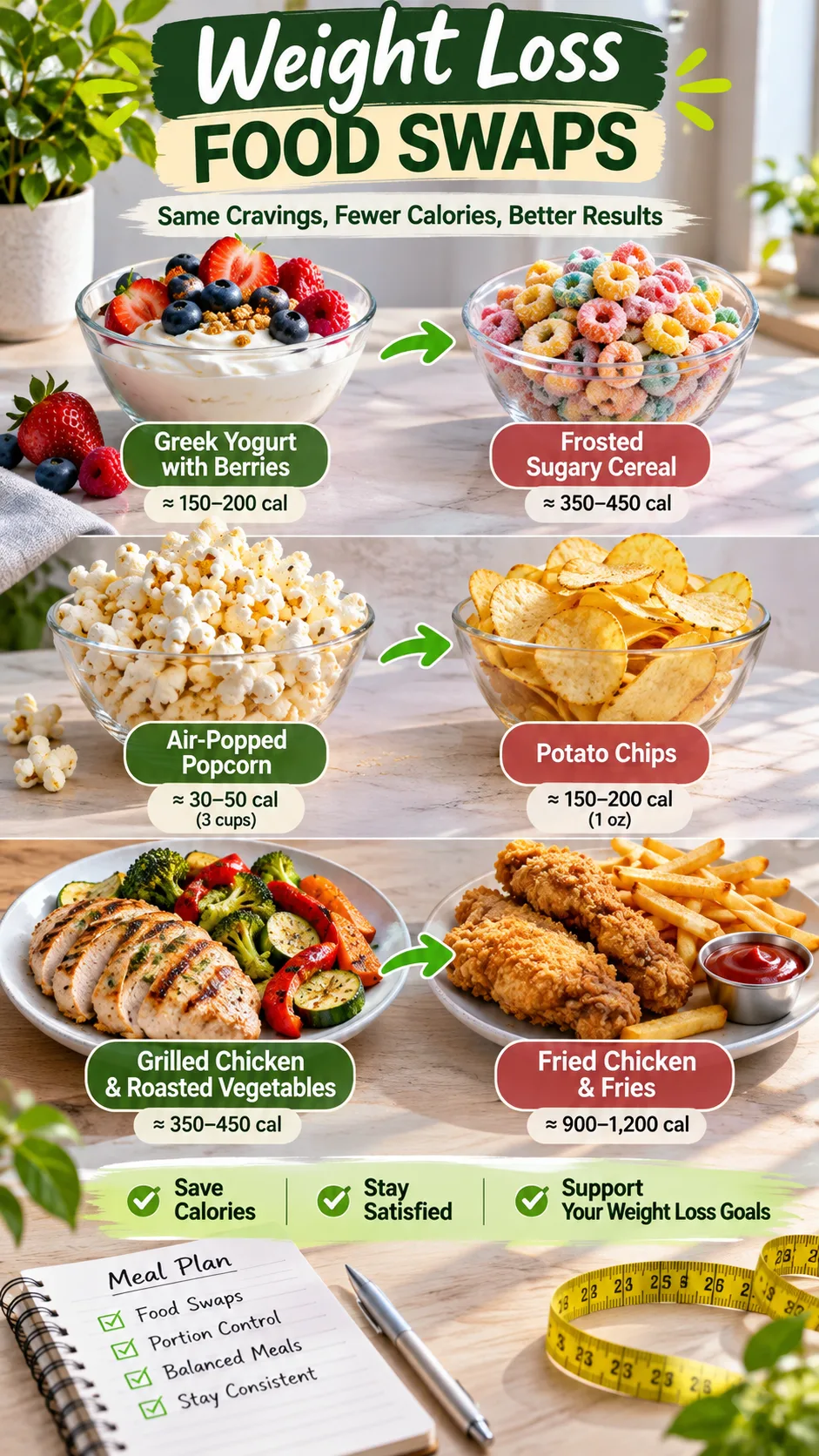
Why food swaps make a calorie deficit feel less miserable
Weight loss usually requires a calorie deficit, which means you eat fewer calories than your body uses over time. You do not need a detox tea or a motivational speech from a lemon to get there. You need consistency.
The trouble starts when people slash calories by shrinking every meal. Hunger then shows up like an unpaid bill: loud and hard to ignore. A good food swap lowers your calories and keeps your plate generous.
Most successful swaps increase at least one of these three things: protein, fibre, or food volume. Protein helps you stay full after meals, fibre slows digestion and supports fullness, and water-rich foods fill your plate for very few calories.
The Centers for Disease Control and Prevention recommends gradual, steady weight loss because sustainable habits tend to work better than extreme short-term plans. Food swaps fit that advice. They let you create a calorie deficit without turning dinner into a punishment.
The swap formula that works
Before you swap anything, ask one question: What do I want from this food? Maybe you want something crunchy during a film. Maybe you want a creamy sauce, a sweet breakfast, or a big comforting bowl of rice.
Then pick a lighter option that gives you the same experience. Do not replace ice cream with a carrot and expect your brain to clap. Match the craving first, then lower the calories.
- For crunch, swap crisps for air-popped popcorn, roasted chickpeas, or cucumber slices with salsa.
- For creaminess, swap heavy mayo or cream sauces for Greek yogurt, blended cottage cheese, or a smaller amount of avocado.
- For sweetness, swap pastries for fruit, yogurt bowls, oats, or dark chocolate with berries.
- For a big portion, swap half the rice, pasta, or noodles for vegetables, beans, or cauliflower rice.
- For comfort, swap deep-fried foods for oven-baked, grilled, air-fried, or stewed versions.
The biggest calorie-saving food swaps for everyday meals
Some food swaps save 20 calories, which helps a little. Others save 200 to 500 calories without making your meal feel tiny. Start with the foods you repeat often, because your usual breakfast or snack shapes your results far more than one “perfect” dinner.
Breakfast swaps that stop the mid-morning snack attack
Breakfast can steady your appetite, or it can send you hunting for biscuits at 10:30 a.m. Sugary cereal, sweet coffee drinks, pastries, and oversized granola bowls often pack lots of calories and very little staying power.
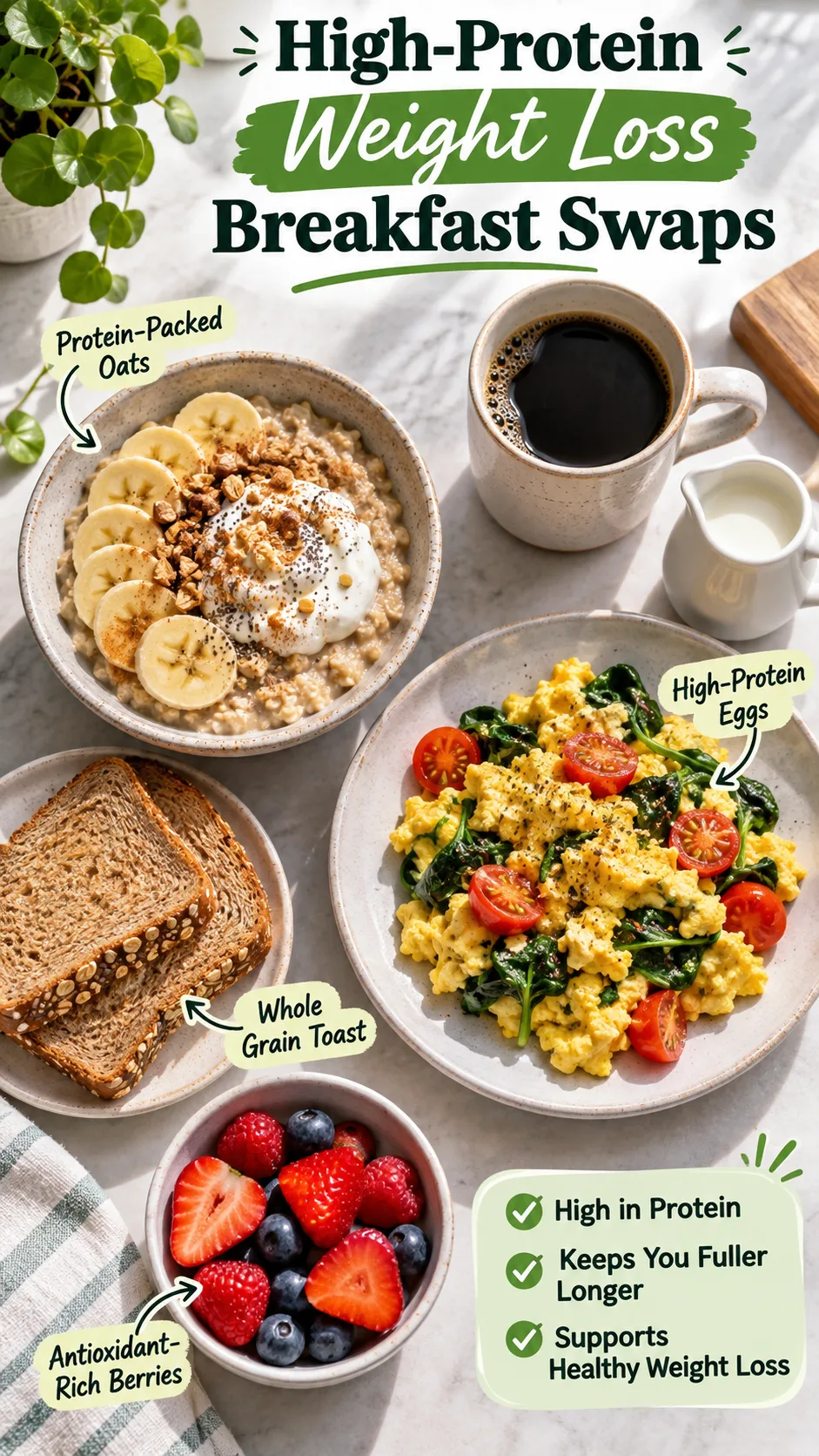
- Swap sugary cereal for oats with protein. Make oats with milk or water, then add Greek yogurt, peanut butter powder, or a scoop of protein powder, and put eggs on the side. You get more fibre and protein, and your breakfast lasts longer than 40 minutes.
- Swap a bakery muffin for eggs, fruit, and whole-grain toast. A muffin can carry the calories of a full meal and still leave you hungry. Eggs and fruit give you a much better deal.
- Swap flavoured yogurt for plain Greek yogurt with fruit. Add berries, banana slices, cinnamon, and a teaspoon of honey if you need it. You control the sweetness instead of letting a tiny pot of yogurt run the show.
- Swap a giant latte for coffee with measured milk. Syrups and whipped cream turn coffee into dessert wearing office clothes. Keep the coffee and measure the extras.
If you enjoy Nigerian breakfast foods, you do not need imported “diet” meals to make progress. Try beans with a modest portion of bread, eggs with vegetables, or oats with fruit. You can find more realistic ideas in these Nigerian breakfast ideas for weight loss.
Lunch and dinner swaps that keep your plate full
Most people do not need to ban rice, pasta, potatoes, or bread. They need to stop letting one starch take up 80% of the plate. A balanced plate gives you more food and fewer calories than a mountain of refined carbs with an oil-heavy sauce.
Use this easy visual guide: fill half your plate with non-starchy vegetables, add a palm-sized serving of protein, then add a fist-sized portion of carbs. Adjust the portions for your hunger, activity, and goals, but this structure gives you a reliable starting point.
- Swap half your white rice for vegetables or beans. Mix rice with cauliflower rice, cabbage, green beans, carrots, peas, or beans. You still eat rice, because life should contain joy, but you cut calories and raise fibre.
- Swap fried chicken for grilled, baked, or air-fried chicken. Season it aggressively. Paprika, garlic, ginger, pepper, lemon, and herbs make chicken exciting without a swimming pool of oil.
- Swap creamy pasta sauce for tomato sauce. Add mushrooms, spinach, courgettes, minced turkey, lentils, or chicken to make it filling. Save the cream sauce for a deliberate treat, not a Tuesday emergency.
- Swap fatty minced meat for lean mince, chicken, turkey, fish, or beans. You can still make burgers, meatballs, stew, tacos, and jollof-style dishes with less oil and more vegetables.
- Swap large takeaway chips for a side salad, roasted potatoes, or extra vegetables. You do not need to fear potatoes. You just need to watch the oil, the portion, and the mysterious mayonnaise situation.
Want local meal ideas that respect your taste buds? Check out these Nigerian foods for weight loss for practical meals that fit a calorie-controlled plan.
The snack swap that can save hundreds of calories
Snacks do not ruin weight loss. Mindless snacks do. You can easily eat 600 calories from crisps, biscuits, juice, and chocolate while insisting you “barely ate anything.” Your stomach may disagree, but calories count even when they arrive in tiny packets.
Build snacks around protein, produce, or a measured portion of something you enjoy. That approach gives you control without forcing you into an endless parade of rice cakes. Nobody wants that.
Better snack swaps for real hunger
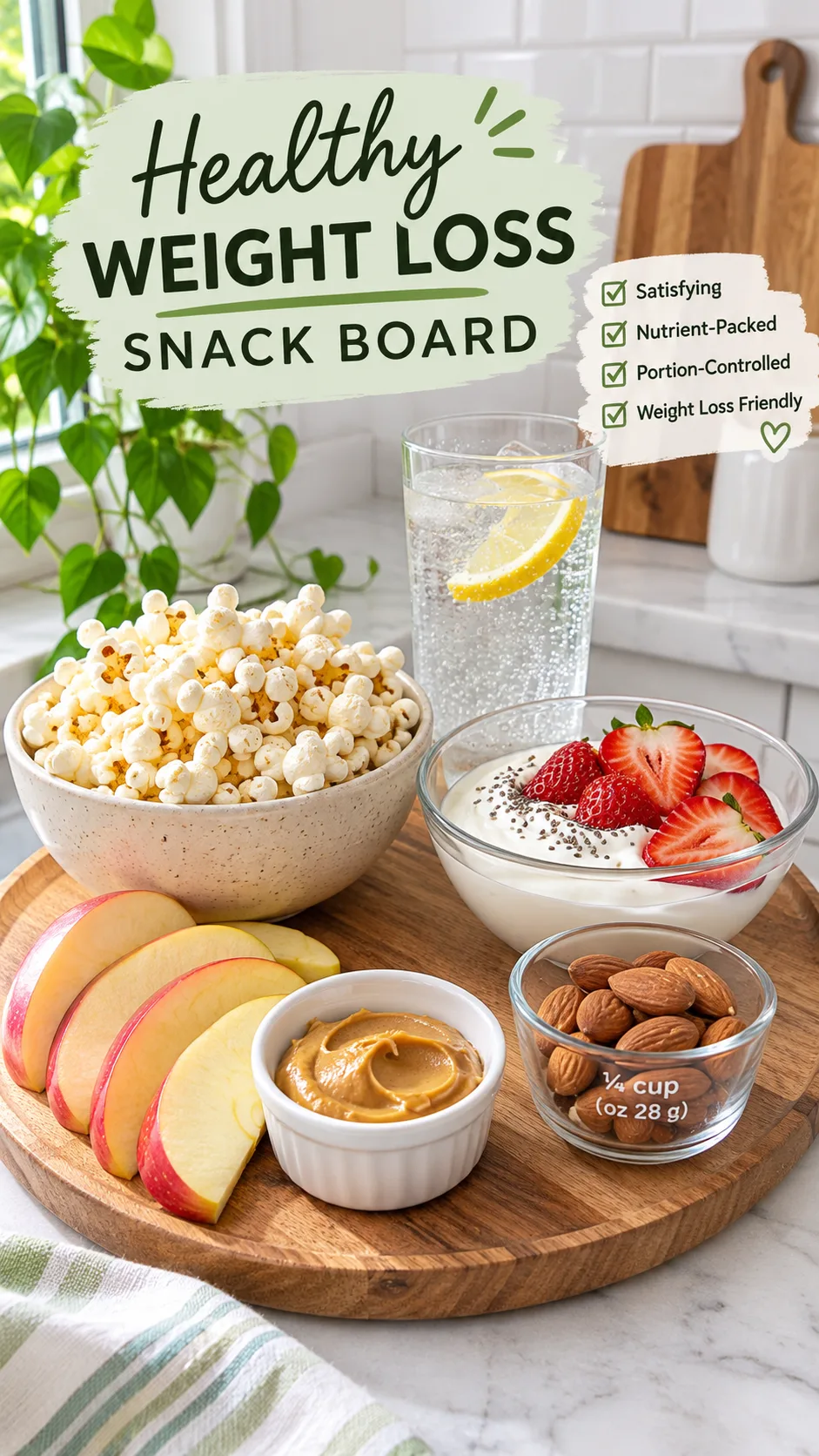
- Swap crisps for air-popped popcorn. Popcorn gives you far more volume for fewer calories when you skip the butter bath.
- Swap sweets for fruit plus Greek yogurt. The fruit handles the sweet craving, and the yogurt adds protein.
- Swap cookies for a protein yogurt bowl. Stir in cocoa powder and berries, then top it with a few crushed nuts for crunch.
- Swap a chocolate bar for two squares of dark chocolate with fruit. You still get chocolate, but you end the “I ate the whole packet while replying to emails” routine.
- Swap juice or soda for sparkling water with citrus. Liquid calories rarely satisfy hunger, so they make an easy first target.
- Swap a handful of nuts from the bag for a measured serving. Nuts contain healthy fats, but they also pack calories like tiny delicious bricks.
The National Institute of Diabetes and Digestive and Kidney Diseases encourages people to choose nutrient-dense foods and build habits they can maintain. That matters because your “perfect” diet fails if you hate it by Wednesday.
Swap calories without making yourself hungrier
Not every low-calorie swap helps. Some products carry fewer calories but leave you ravenous and irritated, one inconvenience away from ordering enough food for four people. Choose swaps that satisfy your body as well as your calorie budget.
Prioritise protein at every meal
Protein supports muscle maintenance while you lose weight, and it helps many people manage hunger. Include a clear protein source at each meal: eggs, fish, chicken, turkey, lean meat, Greek yogurt, cottage cheese, tofu, beans, lentils, or protein powder.
Your exact protein needs depend on your body size, age, health, training, and goals. A registered dietitian can help you set a target if you have medical conditions, train intensely, or struggle with appetite. The Academy of Nutrition and Dietetics explains the role protein plays in a balanced eating pattern.
Use volume to fill the plate
Volume eating means you choose foods that take up plenty of space for relatively few calories. Think soups, salads, vegetables, fruit, broth-based stews, potatoes, beans, and lean proteins. Your plate looks abundant, and your brain gets the message that dinner happened.
Start meals with vegetables, salad, or broth-based soup if that suits your routine. Add vegetables to stir-fries, omelettes, pasta sauces, rice dishes, and sandwiches. You do not need fancy spiralised courgette sculptures. Frozen mixed vegetables work brilliantly.
Measure “healthy” extras
Olive oil, peanut butter, avocado, cheese, nuts, seeds, mayonnaise, coconut milk, and dressings can all fit a healthy weight loss diet plan. They can also turn a 450-calorie meal into a 900-calorie surprise. Healthy does not mean calorie-free.
Use a measuring spoon for oils and sauces for one week. Weigh calorie-dense foods a few times if you can. You do not need to track forever, but you do need honest portions before your swaps can work.
A one-day food swap meal plan you can follow
This sample day shows how food swaps create a satisfying calorie deficit without extreme restriction. Adjust portions to match your own energy needs, medical advice, food preferences, and activity level. No single menu fits every human with a fridge.
Breakfast
Eat oats cooked with milk or water, then add Greek yogurt, berries, cinnamon, and a small spoon of peanut butter. This swap replaces a sugary cereal breakfast with more protein and fibre. You still get a sweet, comforting bowl, but it works harder for you.
Lunch
Build a chicken, tuna, tofu, or bean bowl with half vegetables, one portion of rice or potatoes, and salsa or yogurt dressing. This swap replaces a huge takeaway-style rice bowl loaded with oil and creamy sauce. Add chilli, herbs, lime, and spices until it tastes like food you want to eat.
Afternoon snack
Choose an apple with Greek yogurt, a boiled egg with fruit, or air-popped popcorn with a protein drink. This swap replaces the office biscuit loop: one biscuit, then three biscuits, then somehow the packet looks empty. We have all seen the crime scene.
Dinner
Make grilled fish, chicken, lean meat, tofu, or beans with roasted vegetables and a moderate serving of potatoes, plantain, rice, or whole-grain pasta. Use a tomato, pepper, herb, or yogurt sauce instead of a heavy cream sauce. You get flavour, carbs, and protein on a plate that does not look like a diet brochure.
Something sweet
Finish with fruit and yogurt, a small square of dark chocolate, or a homemade frozen yogurt bowl. Plan this treat on purpose. Planned enjoyment beats random grazing every time.
How to start your food swap weight loss plan this week
Do not overhaul your entire kitchen tonight. That burst of motivation feels great, but it often ends with expensive groceries and a takeaway app by Friday. Pick a few high-impact changes and repeat them until they feel normal.
- Write down your three most frequent high-calorie foods or drinks. Look for the items you eat almost automatically.
- Choose one satisfying lower-calorie replacement for each item. Match the texture, taste, and occasion whenever possible.
- Swap one breakfast item and one snack first. These meals often give you the easiest wins.
- Prep your swap foods before hunger hits. Wash fruit, cook protein, portion nuts, and keep vegetables where you can see them.
- Review your hunger after seven days. If hunger keeps bothering you, add more protein, fibre, vegetables, or meal volume.
- Keep the foods you love, in sensible portions. Total restriction often creates rebound eating, while flexibility builds trust.
If you prefer a structured eating window, pair these swaps with an approach that suits your routine. This guide to a fasting diet intermittent schedule can help you decide whether time-restricted eating fits your lifestyle. It does not replace calorie awareness, but it may simplify your routine.

When you should get personal advice
Food swaps work well for many adults, but they do not replace medical care. Talk with a doctor or registered dietitian before you make major diet changes if you live with diabetes, kidney disease, digestive conditions, an eating disorder, pregnancy, breastfeeding, or any condition that affects your nutrition needs.
Also seek support if food tracking makes you anxious, guilty, or obsessive. Weight loss should improve your health and quality of life, not turn every meal into a maths exam. You deserve a plan that supports both your body and your head.
The bottom line: small swaps create big results
The easiest weight loss diet plan does not demand perfection. It asks you to make better swaps more often: more protein, more fibre, more vegetables, less liquid sugar, less hidden oil, and sensible portions of calorie-dense extras.
Keep your favourite foods in the picture, and give them smarter supporting actors. Swap, do not suffer. Your next meal gives you a fresh chance to make cutting calories feel surprisingly easy.