

You’ve tried counting calories. You’ve weighed chicken breast on a tiny kitchen scale like a drug dealer. You’ve downloaded three apps, deleted two, and still felt hungry by 10am. Sound familiar?
Here’s what nobody tells you: your willpower was never the problem. Your schedule was. Most people fail at intermittent fasting because they grab a random eating window off Instagram and hope for the best. Then they wonder why they’re staring at the fridge at 11pm like it owes them money.
I’ve coached clients through this for years, and I’ve done it myself, badly at first, then properly. Below is the exact fasting diet intermittent schedule that makes fat loss feel automatic instead of punishing.
What intermittent fasting really is, minus the hype
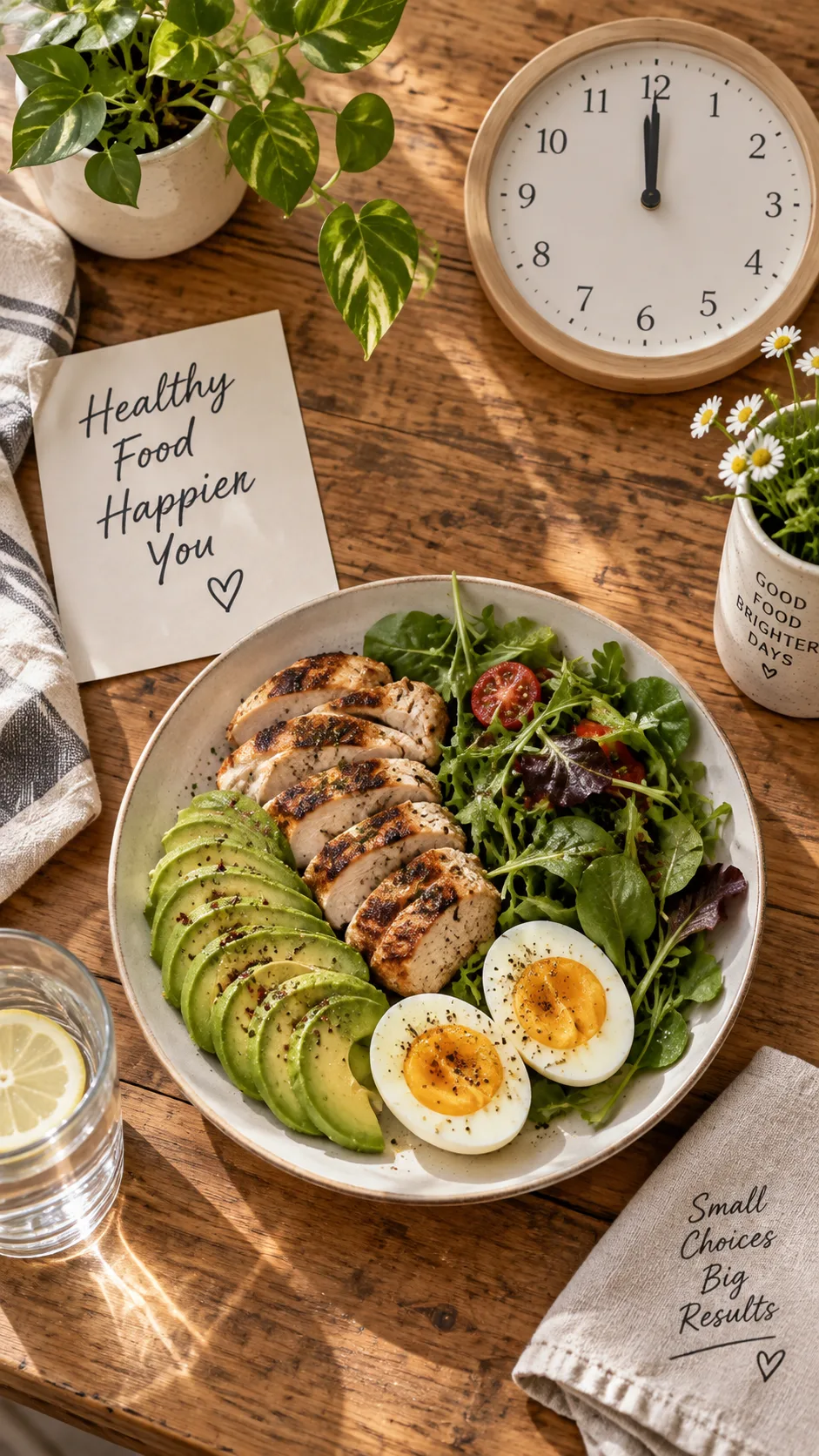
Intermittent fasting isn’t a diet. It’s a timing strategy. You change when you eat before you change what you eat, and that single shift does more heavy lifting than most people expect.
When you stop eating for 12 hours or more, your insulin levels drop. Low insulin tells your body: “Cool, no more incoming fuel, let’s burn the stuff we stored.” That stored stuff? Body fat. Simple as that.
The Johns Hopkins Medicine research on intermittent fasting calls this “metabolic switching”: your body flips from burning glucose to burning fat. No magic involved. It’s biology doing what it evolved to do.
Why it beats traditional dieting for most people
- Fewer decisions. Skip breakfast and you skip one round of “what should I eat?” Decision fatigue is real.
- Natural calorie reduction. Compress eating into 8 hours and most people eat 300-500 fewer calories without tracking a thing.
- No banned foods. Nobody tells you rice is evil. You just eat it inside your window.
- It’s free. No meal kits, no shakes, no “detox” tea that’s really laxatives in disguise.
The schedule that works: 16:8, done right
Ever wondered why some people rave about 16:8 while others quit in a week? Same schedule, completely different execution. The people who stick with it build the window around their real life. The ones who quit copy a fitness influencer who trains at 5am and has no kids.
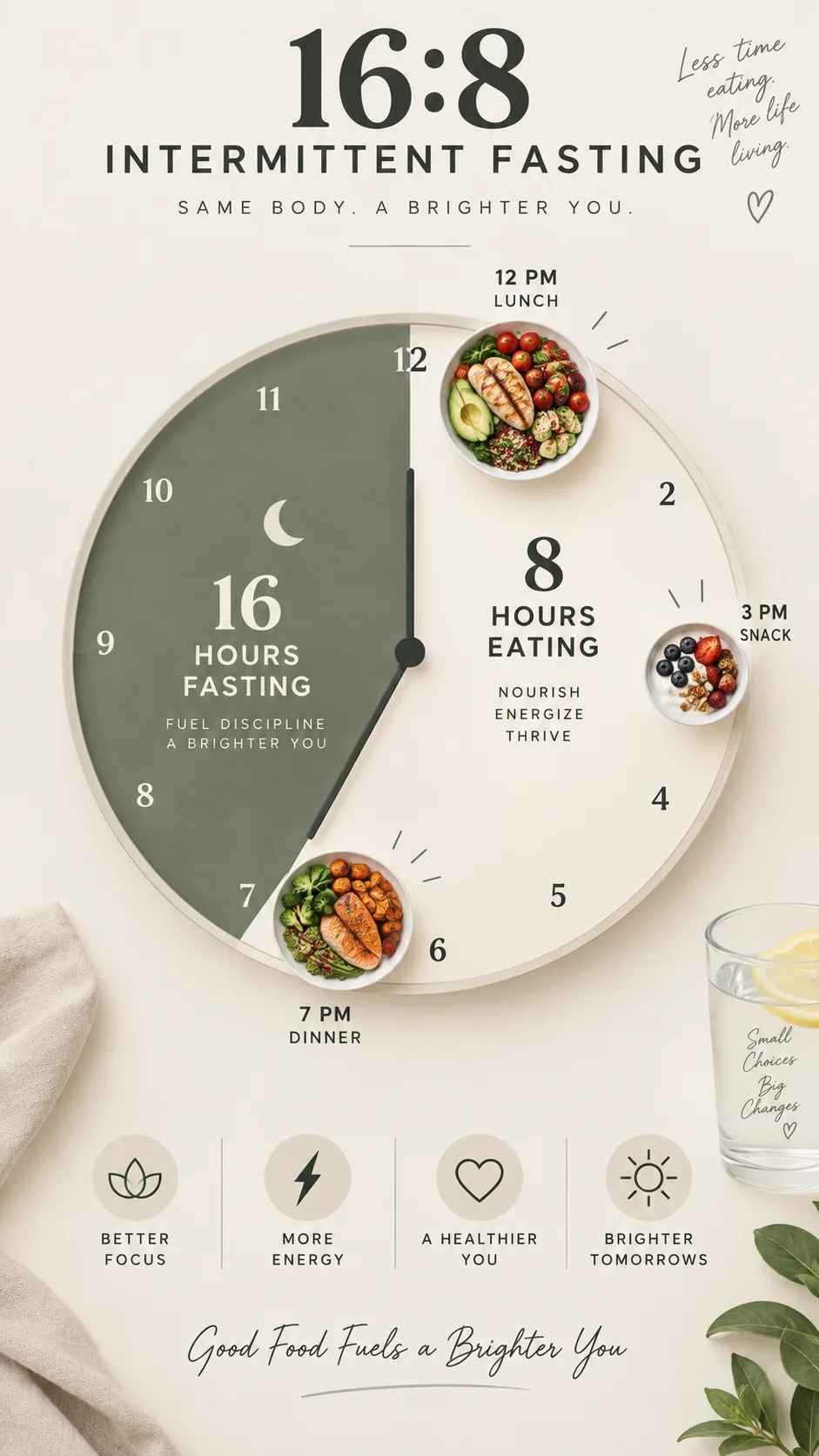
16:8 means you fast for 16 hours and eat within an 8-hour window. Sleep counts toward the fast, which is honestly the best loophole in nutrition.
The best window: 12pm to 8pm
After testing this on myself and dozens of clients, noon to 8pm wins for most people. Why? Your hardest hunger hours are usually morning (coffee handles that) and evening (when you’re eating socially anyway).
Here’s how a typical day looks:
- 7:00am, wake up. Water, black coffee, or plain tea. Zero calories. Zero cheating with the creamer.
- 9:00am, second coffee or green tea. This switches your appetite off.
- 12:00pm, break your fast. Protein-heavy meal. Eggs, chicken, fish, beans. Add vegetables.
- 3:30pm, snack. Nuts, Greek yogurt, boiled eggs, or fruit. Keep it real food.
- 7:00pm, main dinner. Your biggest, most satisfying meal of the day.
- 8:00pm, window closes. Herbal tea only from here.
Notice something? You never go to bed hungry. That’s the part every failed diet gets wrong. Going to sleep with a growling stomach is how people end up eating cold jollof at 2am in the dark, full of shame.
Why most people pick the wrong window
The internet loves 6am to 2pm “early time-restricted feeding.” Research does show early windows carry a slight metabolic edge. My honest opinion, though: the best schedule is the one you’ll keep for a year.
Can you eat dinner at 1:45pm forever? Can you skip family dinner? Can you say no to drinks with friends? IMO, no. A “slightly less optimal” plan you follow beats a “perfect” plan you quit in 11 days.
Match the window to your life
- Office worker, 9 to 5: 12pm to 8pm. Lunch with colleagues, dinner at home. Easy.
- Night shift worker: flip it. 6pm to 2am works fine. Consistency matters more than clock time.
- Early riser who trains at 6am: 10am to 6pm. Eat after training, finish early, sleep well.
- Parent with family dinners: 1pm to 9pm. Protect that dinner table at all costs.
The beginner ramp: don’t jump straight to 16 hours
Going from “I eat from 7am to 11pm” to a 16-hour fast overnight is like running a marathon after watching one on TV. Your body will protest. Loudly.
Use this four-week ramp instead:
- Week 1, 12:12. Eat 8am to 8pm. Basically just stop late-night snacking. Painless.
- Week 2, 14:10. Eat 10am to 8pm. Push breakfast back two hours.
- Week 3, 15:9. Eat 11am to 8pm. You’ll barely notice the difference now.
- Week 4, 16:8. Eat 12pm to 8pm. Welcome to the club.
By week four, your hunger hormones have adjusted. Ghrelin, the “feed me” hormone, recalibrates to your new schedule within roughly two weeks. Your stomach stops yelling at 8am because it learns nothing’s coming.
Other intermittent fasting schedules worth knowing
1. 5:2, the flexible one
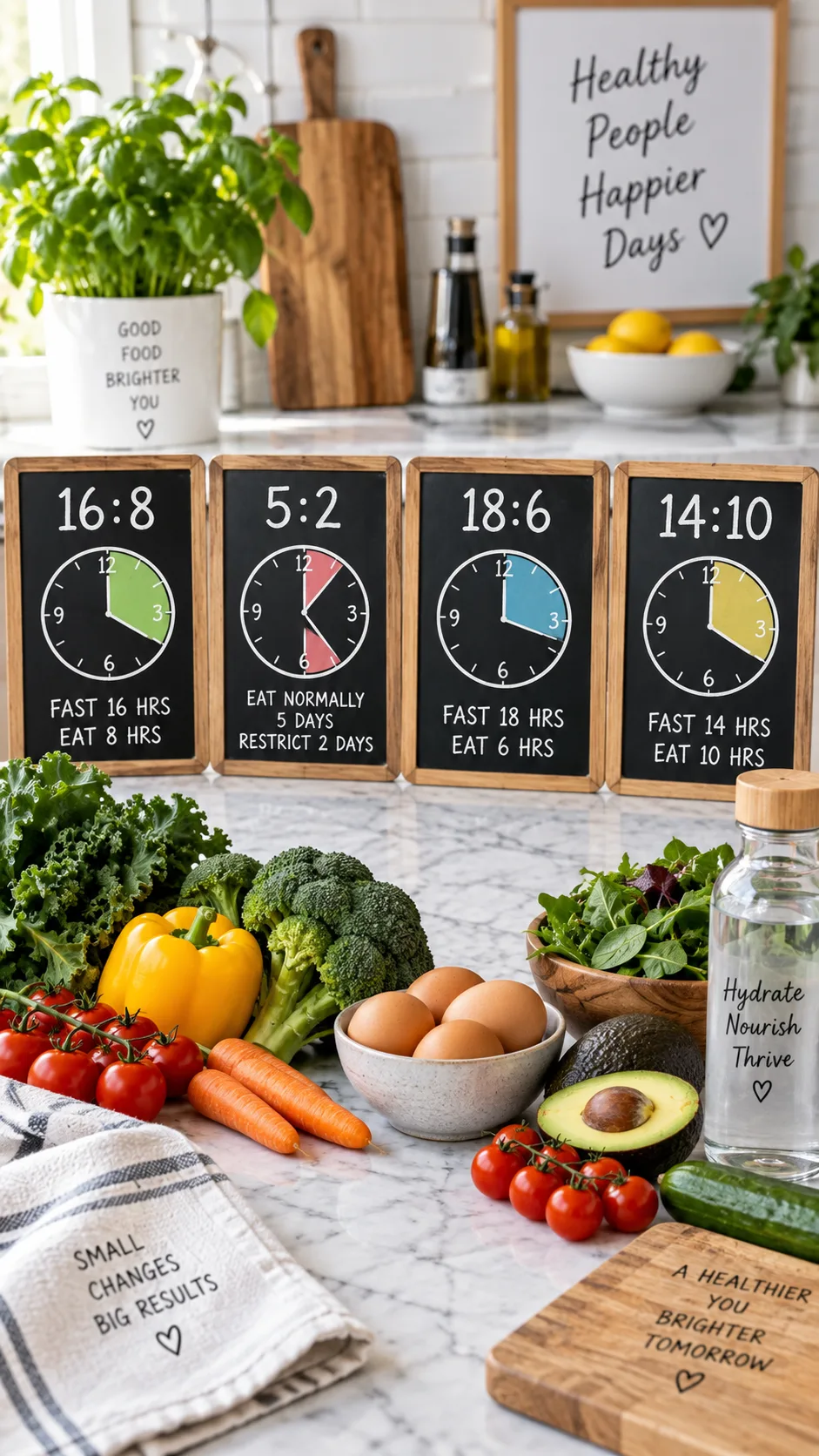
Eat normally five days a week. On two non-consecutive days, cap intake at 500-600 calories. Good for people who hate daily restriction but can white-knuckle two rough days.
Downside? Those two days genuinely suck. I tried it for six weeks and spent both low days thinking about bread.
2. 18:6, the advanced squeeze
An 18-hour fast with a 6-hour eating window, usually 1pm to 7pm. Good for breaking a plateau, though hitting your protein target in six hours gets tough. Only move here after 16:8 feels boring.
3. OMAD, one meal a day
One massive meal, 23 hours of fasting. Some people love it. But getting 130g of protein and enough micronutrients in one sitting? Rough. I don’t recommend it as a long-term plan for most people.
4. 14:10, the sustainable starter
Underrated. 14:10 delivers maybe 80% of the benefits with 30% of the difficulty. If you’re new, stressed, or over 50, this might be your permanent home. No shame in that.
What you can drink during the fast
This trips up more beginners than anything else. Here’s the clean list:
Allowed (zero or near-zero calories):
- Water, still or sparkling, drink loads of it
- Black coffee, no milk, no sugar, no “just a splash”
- Plain tea: green, black, herbal, oolong
- A pinch of salt in water (helps with electrolyte dips)
Breaks your fast:
- Milk, creamer, oat milk, yes, even “just a little”
- Sugar, honey, agave
- Bone broth (it’s food, friend)
- Most “zero-calorie” flavoured drinks with sweeteners (the jury’s out, but they spike appetite for many people)
- Chewing gum with sugar
Green tea deserves a special mention. It supports fat oxidation and kills morning hunger beautifully. If you’re shopping, this rundown of the best green tea brands for weight loss saves you from buying flavoured sugar dust.
The part everyone ignores: what you eat in the window
Time for the uncomfortable truth. Intermittent fasting doesn’t give you a licence to eat 3,000 calories of pastry between 12 and 8. Shocking, I know.
Fasting creates the opportunity. Your food choices decide whether you lose fat. Get the next three things right and you’re 90% there.
Priority 1: protein at every meal
Aim for 1.6-2.2g of protein per kg of bodyweight daily. Protein keeps you full, protects muscle during a calorie deficit, and burns more energy just to digest. The research on protein intake and body composition backs this hard.
Practical targets per meal: chicken breast, fish, eggs, Greek yogurt, beans, lentils, tofu, lean beef.
Priority 2: fibre and volume
Vegetables fill your stomach for almost no calories. Half your plate, every meal. If you build meals around local ingredients, this list of Nigerian foods for weight loss genuinely helps. Ugu, ewedu, garden eggs, and okra are volume heroes.
Priority 3: don’t fear carbs, time them
Carbs aren’t the enemy. Put most of them around your training or at dinner, where they help sleep quality via serotonin. Rice, yam, sweet potato, plantain. Portion them, don’t ban them.
If planning meals feels like a chore, grab a ready-made structure. This Nigerian weight loss meal plan and food timetable slots neatly into a 12pm to 8pm window with almost no editing.
Watch: how intermittent fasting works in your body
The first two weeks: what happens
Let me be straight with you, because most articles gloss over this part.
Days 1 to 3: you’ll feel hungry around your old breakfast time. Headaches are common, usually from dehydration or caffeine timing rather than starvation. Drink more water. Add a pinch of salt.
Days 4 to 7: hunger arrives in waves instead of sitting there constantly. You’ll notice it passes in about 20 minutes if you ignore it. That’s ghrelin making its scheduled announcement.
Days 8 to 14: morning hunger mostly disappears. Energy improves. Your head clears before noon in a way that surprises people. I get my best writing done fasted, no exaggeration.
Week 3 onwards: it stops feeling like a diet. This is the “effortless” part everyone talks about. You’re not resisting food, you’ve simply stopped thinking about it.

7 mistakes that wreck your results
- Breaking the fast with sugar. A pastry at noon after 16 hours fasted sends your insulin on a rollercoaster. Lead with protein.
- Not drinking enough water. You normally get a lot of fluid from food. Fasting removes that. Aim for 3 litres.
- Inconsistent windows. 12pm today, 3pm tomorrow, 9am Sunday? Your body never adapts. Pick one and defend it.
- Zero protein tracking. Most people eat half what they think. Weigh your food for three days as a reality check.
- Skipping strength training. Fasting with no resistance work costs you muscle alongside fat. Lift 2-3 times weekly, minimum.
- Going too aggressive too fast. 20-hour fasts in week one is how you binge in week two.
- Ignoring sleep. Poor sleep raises ghrelin and cortisol. You’ll fight hunger you created yourself.
Who should not do intermittent fasting
This one isn’t for everyone, and anyone claiming otherwise is selling something. Skip intermittent fasting or speak to a doctor first if you:
- Are pregnant or breastfeeding
- Have a history of disordered eating
- Take insulin or medication that requires food timing
- Are under 18
- Have Type 1 diabetes or unstable blood sugar
- Are underweight or recovering from illness
The American Heart Association notes that fasting works for many people but suits some poorly. Get personalised advice if any of the above applies to you.
Stacking extras: what helps, what’s nonsense
Once your schedule is locked in, a few additions genuinely help. Most don’t.
Worth it
- Caffeine, which suppresses appetite and gives a small metabolic bump
- Electrolytes: sodium, potassium, magnesium during longer fasts
- Protein powder, which makes hitting targets in 8 hours realistic
- Walking, 8,000 to 10,000 steps daily, which beats any fat burner ever sold
Mostly nonsense
- “Detox” teas (laxatives, not fat loss)
- Waist trainers (sweat isn’t fat)
- Most thermogenic pills
Before you spend money, read this honest breakdown of weight loss products. The results might annoy a few supplement companies.
Tracking progress without losing your mind
Don’t weigh yourself daily and panic. Water weight swings 1-2kg easily. Instead:
- Weigh weekly, same day, same time, after the bathroom, before eating.
- Measure your waist every two weeks. It often drops when the scale refuses to.
- Take photos monthly, same lighting, same clothes. Photos don’t lie.
- Track energy and sleep in a note on your phone. How you feel matters as much as kilos.
Realistic rate? 0.5-1% of bodyweight per week. Move faster than that and you’re shedding muscle and water along with the fat.
The bottom line
The fasting diet intermittent schedule that finally works is the one that disappears into your life. Strictness has very little to do with it. For most people that means 16:8 with a noon to 8pm window, built up gradually over four weeks.
Protein first. Water always. Consistent timing. Lift some weights. That’s the whole playbook, with no secret ingredient, no expensive powder, and no 4am cold plunge.
My final thought: this feels effortless because you stopped making 40 food decisions a day. You made one decision about your schedule and let it run.
Pick your window tonight. Start tomorrow at 12:12. In four weeks, you’ll wonder why you ever ate a breakfast you didn’t want. FYI, that’s exactly what everyone says.