

You do not need a fancy gym, a squat rack, or matching workout clothes to grow your glutes. You need a solid plan, real effort, and enough patience to repeat simple moves until they get hard.
Glute growth changes your shape when you build muscle consistently. Random squats while you scroll TikTok will not do much, sadly. Why do some people train for months with little to show for it while others develop a rounder, higher looking bum? Exercise selection, progressive overload, food, and consistency usually explain the difference.
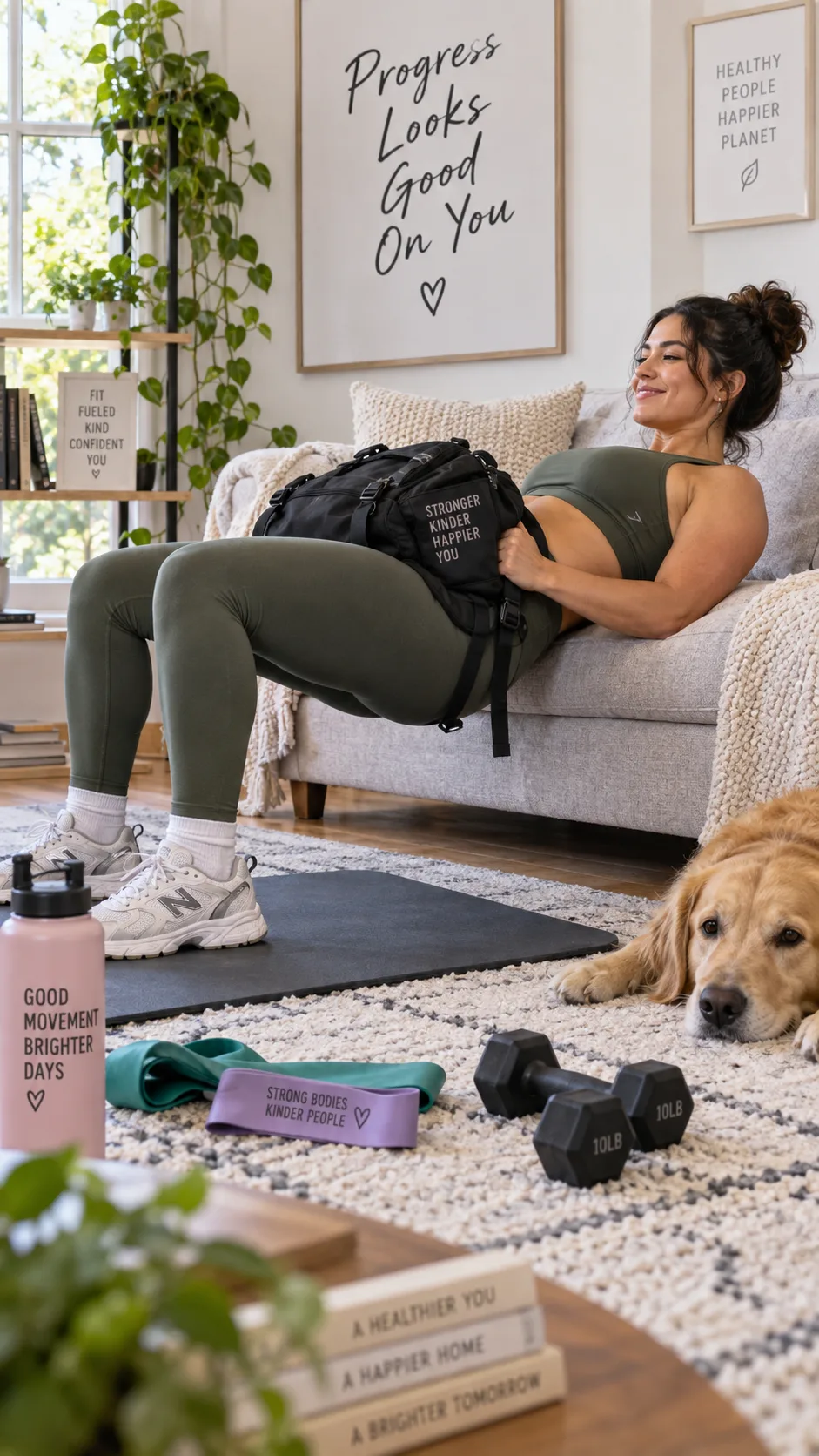
First: Know what makes your glutes grow
Your glutes include three muscles: the gluteus maximus, gluteus medius, and gluteus minimus. The gluteus maximus creates most of the size and projection people mean when they say they want bigger glutes.
Your glute medius and minimus sit closer to the upper, outer part of your hips. They add fullness at the sides, support your hips, and help your knees stay steady during single leg exercises.
Muscle grows when you challenge it hard, recover well, and keep repeating that challenge over time. Researchers call this progressive overload. As you get stronger, you gradually add reps, weight, sets, range of motion, or control.
The American College of Sports Medicine’s resistance-training guidance supports progressive training for muscle growth. Put simply: your glutes need a reason to adapt. A resistance band in your cupboard will not make that happen on its own.
Why home glute workouts work
Training at home removes a lot of excuses. You can work out in your bedroom, lounge, balcony, or any spot where nobody will trip over your backpack weights.
You can build glutes at home with bodyweight, resistance bands, a sturdy chair, a backpack, water bottles, or dumbbells. Your equipment matters less than the effort you put into those final difficult reps.
Train close to failure
You do not need to collapse on the floor after every set. Finish most working sets with roughly one to three good reps left in the tank.
If you can do 40 glute bridges without slowing down, your glutes probably need more weight or a harder variation. Add a backpack, pause at the top, switch to one leg, or lower yourself more slowly. Make your muscles do the work, not your imagination.
Use enough weekly volume
Aim for around 10 to 20 challenging glute sets per week, spread across two to four sessions. Beginners can start with 8 to 12 sets and slowly add more when recovery feels manageable.
For example, you could train glutes on Monday, Wednesday, and Saturday. That schedule gives your muscles time to recover and keeps up the stimulus for growth.
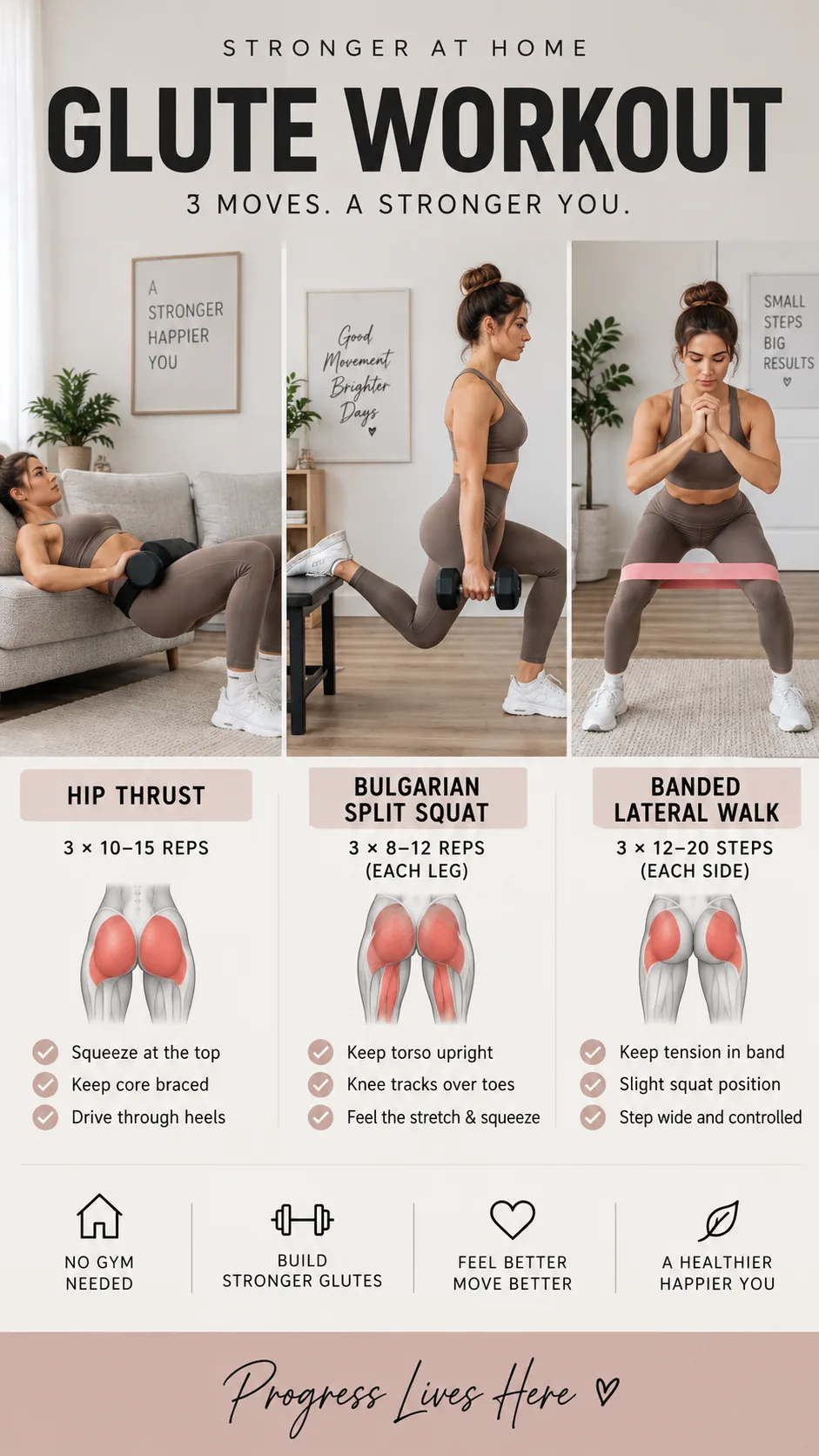
The best home exercises for bigger glutes
Do not rely on one exercise. Combine movements that load your glutes in a stretched position, movements that let you squeeze hard, and exercises that work one leg at a time.
1. Hip thrusts and glute bridges
Hip thrusts make your glutes contract hard at the top of each rep. Use a sofa or sturdy bench for hip thrusts, or begin on the floor with glute bridges.
Keep your ribs down, tuck your chin slightly, and push through your midfoot and heel. Squeeze your glutes at the top without over arching your lower back. Do not let your back take over the exercise.
2. Bulgarian split squats
Bulgarian split squats work your glutes, quads, balance, and patience at once. Put your rear foot on a chair, take a long stance, and lean your torso forward a little.
Push through your front foot as you stand. Hold a backpack or dumbbells once bodyweight stops challenging you. These feel rude at first, but they work.
3. Romanian deadlifts
Romanian deadlifts work your glutes through a deep stretch, so they help you build size. Hold a loaded backpack, two water containers, or dumbbells close to your thighs.
Push your hips back, keep a soft bend in your knees, and lower the weight until your hamstrings stretch hard. Then drive your hips forward and squeeze your glutes. Keep your spine long instead of rounding your back.
4. Step-ups
Step-ups turn a stable chair, stair, or bench into a challenging glute exercise. Pick a height that lets you push through the working leg without bouncing off the floor.
Lean forward slightly and control your descent. Hold weight when you need more resistance. Your glutes work harder when you stop using your trailing leg to push yourself up.
5. Banded abductions and lateral walks
Banded abductions, clamshells, and lateral walks work the upper and side glutes. These moves cannot replace hard hip thrusts or split squats, but they give you more useful volume and help your hips stay stable.
Keep tension on the band through every rep. Take controlled steps instead of snapping around like you spotted a cockroach.
Your home glute workout plan
Do this workout three times each week on nonconsecutive days. Start with weights that let you use clean form, then write down your reps and weight after every session.
- Loaded hip thrust: 4 sets of 8 to 15 reps
- Romanian deadlift: 3 sets of 8 to 12 reps
- Bulgarian split squat: 3 sets of 8 to 12 reps per leg
- Step-up: 2 sets of 10 to 15 reps per leg
- Banded lateral walk or seated abduction: 2 to 3 sets of 15 to 25 reps
Rest for 90 seconds to two minutes after your bigger exercises. Rest for 45 to 75 seconds after band work. Good rest lets you do stronger reps, and stronger reps give your glutes more reason to grow.
When you reach the top of the rep range for every set with solid form, raise the weight or make the exercise harder. Add books to your backpack, use a thicker band, add one or two reps, or hold the top position longer.
Eat for glute growth without overcomplicating it
Training starts the job, and food supports it. If you want noticeable glute muscle, eat enough calories and give your body enough protein.
A small calorie surplus often helps people build muscle more easily. Add roughly 150 to 300 calories a day, then track your strength, measurements, energy, and bodyweight for several weeks. You do not need to force feed yourself or turn meals into a peanut butter contest.
Research from the International Society of Sports Nutrition suggests that active people can support muscle growth with about 1.4 to 2.0 grams of protein per kilogram of bodyweight each day. Spread your protein across meals instead of saving it for one huge dinner.
Easy foods that support glute gains
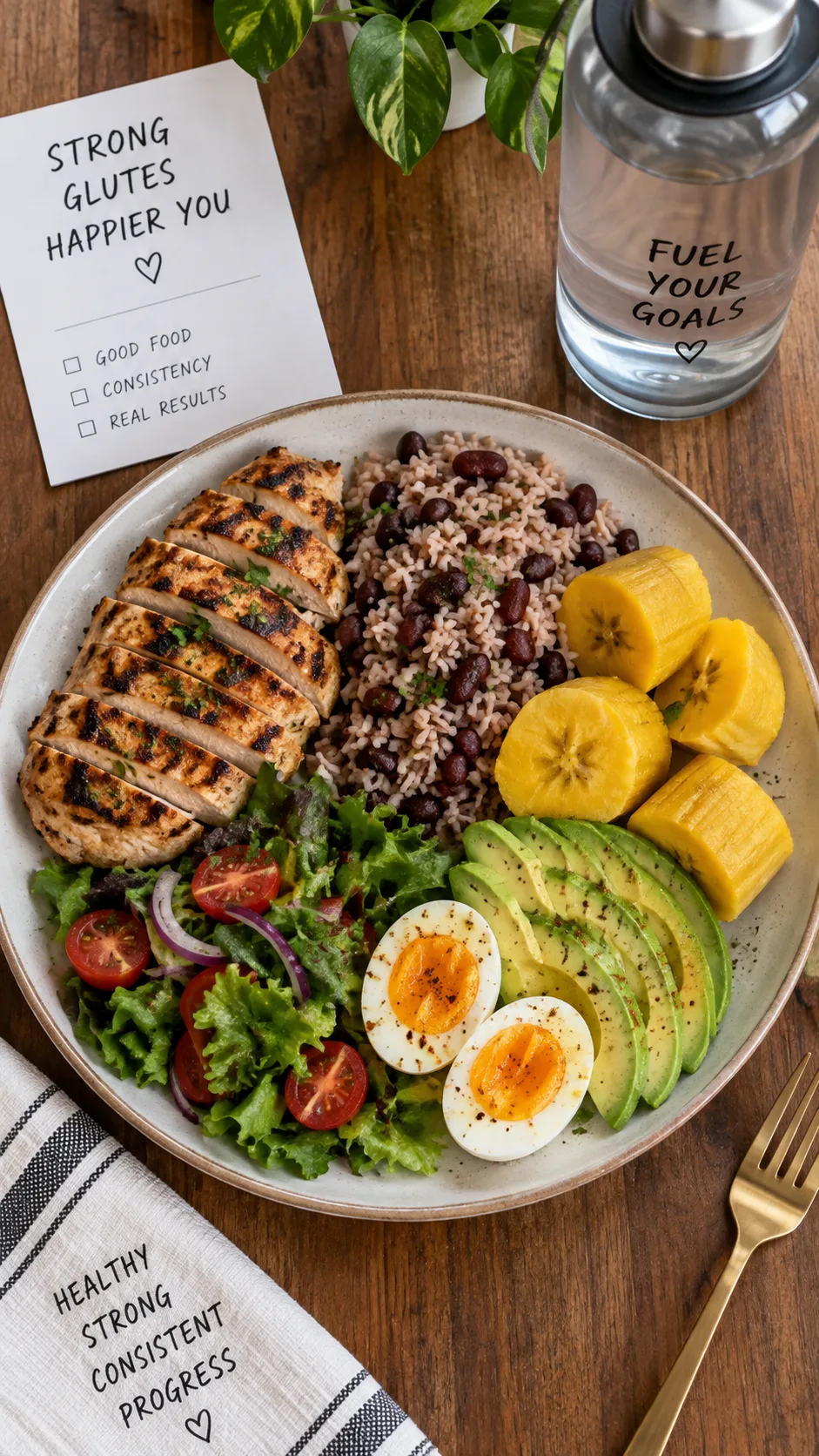
- Eggs, chicken, fish, beef, turkey, tofu, beans, and Greek yogurt for protein
- Rice, oats, potatoes, yam, bread, pasta, and plantain for training energy
- Avocado, groundnuts, olive oil, and peanut butter for extra calories
- Fruits and vegetables for fibre, vitamins, and easier digestion
If you struggle to eat enough, check this Nigerian food timetable for weight gain for practical meal ideas. If bloating keeps ruining your appetite, this guide to Nigerian foods that cause bloating can help you spot possible triggers.
Hydration matters too. Your muscles store glycogen with water, and hard training feels much harder when you run low on fluids and rely on stubbornness alone. The NHS hydration guide gives sensible advice based on evidence for daily fluid intake.
Common mistakes that keep your glutes the same
Most people do not struggle because they lack motivation. They follow a plan that never gets harder, skip meals, or rush through their form.
- Only doing band workouts: Bands help, but your glutes eventually need more tension than light bands can provide.
- Changing workouts every week: Keep the main exercises long enough to get better at them.
- Using tiny weights forever: Your body adapts to challenge, so add resistance when your current setup gets too easy.
- Ignoring protein and calories: Your body needs enough food to build new tissue.
- Training glutes every single day: Your muscles grow during recovery, not when you hammer them seven days a week.
- Expecting a new shape in two weeks: Muscle growth takes time, but steady training adds up.
How long until you see glute growth?
You may feel stronger within two to four weeks. You may notice early visual changes in eight to twelve weeks, especially when you train consistently, eat enough, and take progress photos in the same lighting.
More obvious changes in shape often take several months. Genetics influence your natural hip width, fat distribution, and rate of muscle growth, but training can still build a fuller, firmer, more lifted look.
Measure the fullest part of your hips every four weeks. Track your hip thrust weight, split squat reps, and bodyweight too. Mirrors can fool you, but numbers often tell a clearer story.
Final takeaway: Build the habit, then build the glutes
You can grow your glutes at home with hard exercises, progressive overload, enough food, and recovery. Focus on hip thrusts, split squats, Romanian deadlifts, step-ups, and band work. Train two to four times each week, make your workouts harder over time, and eat protein rich meals.
Start with one workout this week, write down every rep, and repeat it next week with a little more strength. Your glutes do not care whether you train under gym lights or beside your laundry basket. They care whether you give them a reason to grow.