
Back rolls can feel stubborn, especially when your jeans seem to record every bend and twist. You can build a stronger, firmer-looking back with regular training, steady nutrition, and patience.
One point matters: no exercise burns fat from one exact spot. Your body decides where it loses fat. The right back exercises can build muscle, improve posture, and give your back a smoother, more toned shape as your overall body fat drops.
This guide covers nine exercises for back rolls and a realistic plan you can keep doing week after week.
Why back rolls happen in the first place
Back rolls often come from a mix of body fat distribution, posture, genetics, skin elasticity, and muscle tone. Many people carry fat around the mid-back, bra line, lower back, and waist. Genetics strongly affect where you store fat, so do not blame yourself for having a normal human body.
A slouched posture can make back folds more noticeable. When your shoulders round forward and your ribs sink down, your upper and lower back lose their long, supported position. Strong back muscles help you stand taller and can improve how your back looks in clothes.
For fat loss, aim for a modest calorie deficit, strength training, daily movement, sleep, and enough protein. The Centers for Disease Control and Prevention recommends gradual, sustainable weight loss instead of crash dieting. That approach tends to fit real life much better.
Can you get rid of back rolls?
You can reduce the appearance of back rolls, build definition, and strengthen the muscles beneath them. You cannot tell your body to burn fat only from your back, no matter what a late-night fitness ad promises.
Pair full-body fat loss with back and core training. Rows, pulldowns, hinges, and core exercises work your lats, traps, rear shoulders, spinal erectors, and deep core. Those muscles build a firmer frame while your nutrition and activity help lower body fat.
Some people look leaner after improving their posture, even before they lose much weight. A stronger upper back draws your shoulders into a more open position, while a strong core helps you avoid the familiar desk-chair slump.
The 9 best exercises for back rolls
Do these exercises two or three times each week. Choose weights that let you control every repetition, then add resistance, repetitions, or sets as you get stronger. Good form matters more than lifting heavy.
-
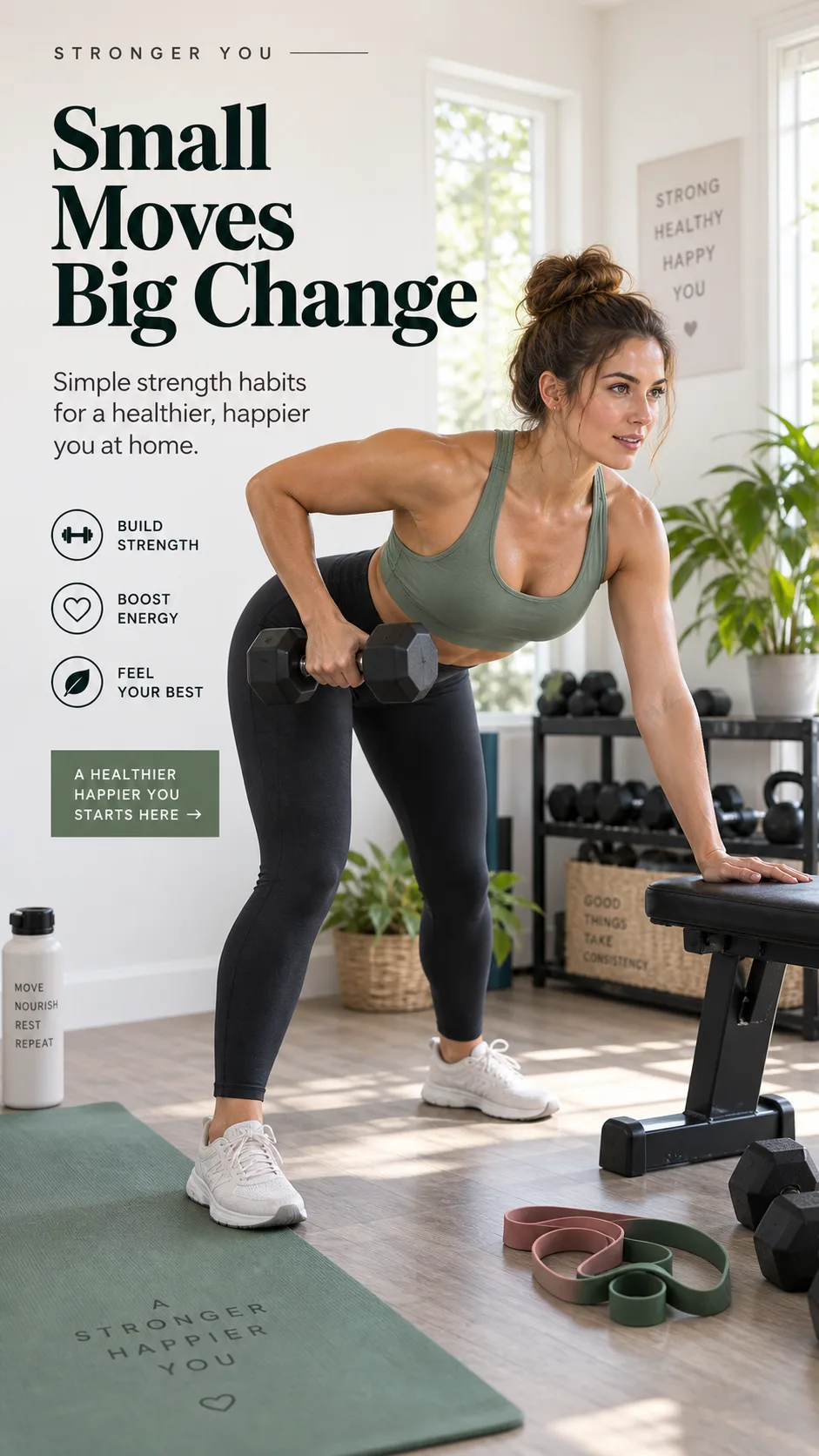
1. Bent-over dumbbell rows
Bent-over rows work your lats, rhomboids, rear shoulders, and mid-back. They also teach you to brace your core while hinging at the hips, so you get a lot from one movement.
Hold dumbbells with your palms facing in, push your hips back, and keep a soft bend in your knees. Pull the weights toward your lower ribs, squeeze your shoulder blades together, then lower them slowly. Aim for 3 sets of 8 to 12 reps.
-
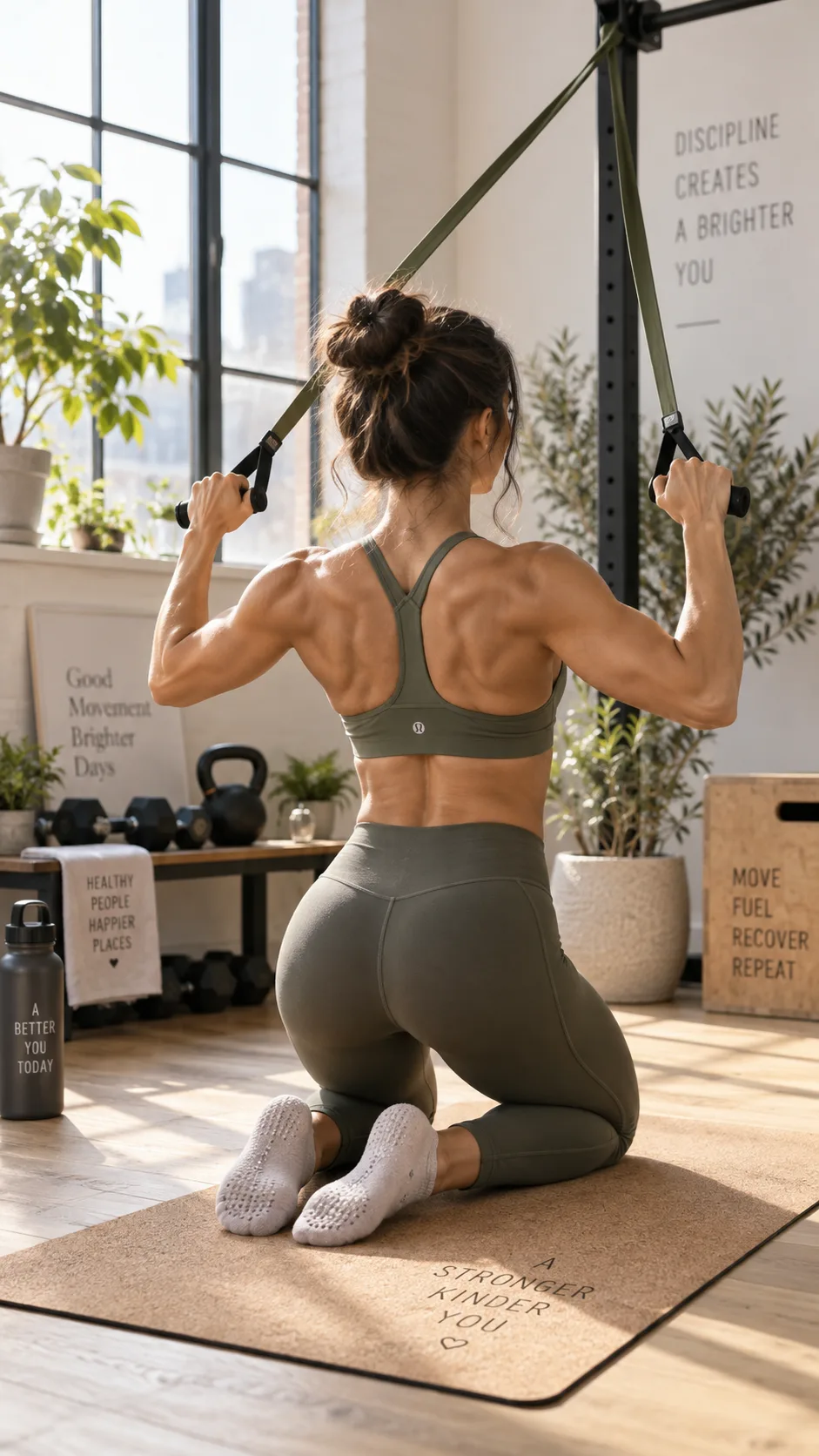
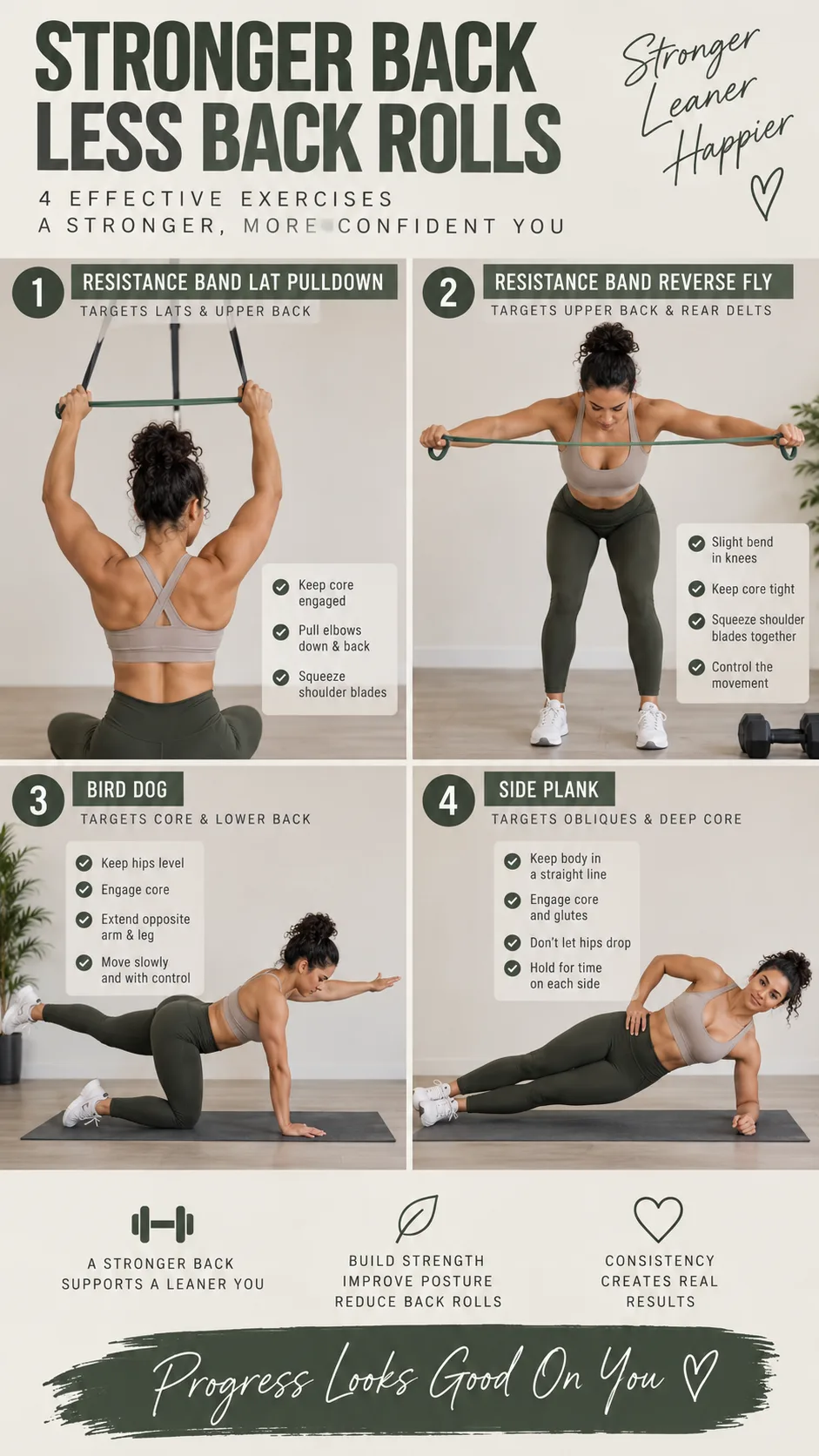
2. Resistance band lat pulldowns
Band lat pulldowns work the lat muscles along the sides of your back. Strong lats can give your upper body more shape and help your shoulders sit in a better position.
Anchor a resistance band overhead, kneel or sit tall, and pull the band toward your upper chest. Keep your ribs down and pull your elbows toward your sides. Complete 3 sets of 12 to 15 reps.
-
3. Reverse flyes
Reverse flyes train your rear delts and upper-back muscles, which can use extra work after long hours at a laptop. They can also counter rounded shoulders and improve upper-body balance.
Hinge forward with light dumbbells, keep a gentle bend in your elbows, and lift your arms out to the sides. Stop when your arms line up with your torso. Use light weights for 3 sets of 10 to 15 slow reps.
-
4. Superman holds
Superman holds strengthen your lower back, glutes, and upper-back stabilisers without equipment. They fit well into a home workout or a quick routine after a day of sitting.
Lie face down, lift your arms and legs a few inches from the floor, and keep your neck long. Hold for 15 to 30 seconds without straining your lower back. Complete 3 holds.
-
5. Bird dogs
Bird dogs build core control while your back muscles keep your spine steady. The move looks simple until you try to keep your hips from wobbling.
Start on all fours, extend your right arm and left leg, then pause without twisting your hips. Return with control and switch sides. Do 3 sets of 8 to 12 reps per side.
-
6. Renegade rows
Renegade rows work your back, arms, shoulders, and core in one move. They teach your torso to resist rotation, which helps with everyday tasks such as carrying uneven loads.
Hold a high plank with your hands on dumbbells, set your feet wide, and row one dumbbell toward your ribs. Keep your hips as still as you can, then switch sides. Perform 3 sets of 6 to 10 reps per side.
-
7. Romanian deadlifts
Romanian deadlifts strengthen your hamstrings, glutes, and spinal erectors. They will not melt lower-back fat directly, but they build your posterior chain and teach a solid hip hinge.
Hold dumbbells in front of your thighs, soften your knees, and push your hips back as the weights travel close to your legs. Stand by squeezing your glutes instead of forcing the movement through your lower back. Try 3 sets of 8 to 12 reps.
-
8. Side planks
Side planks strengthen your obliques, deep core, shoulders, and lateral stabilisers. They help your trunk stay steady during rows, deadlifts, walks, and those awkward moments when you carry something on one side.
Prop yourself on one forearm, stack or stagger your feet, and lift your hips until your body forms a straight line. Hold for 20 to 40 seconds per side across 3 rounds.
-
9. Glute bridges with a reach
Glute bridges with a reach pair hip extension with upper-back control. This exercise wakes up your glutes, strengthens your posterior chain, and lets you practise a more open chest position.
Lie on your back with bent knees, press through your heels, and lift your hips. Reach both arms overhead without flaring your ribs or arching your lower back. Complete 3 sets of 12 to 15 reps.
A simple back roll workout plan
You do not need two hours at the gym. Start with a focused workout that lasts 30 to 40 minutes, two or three days each week.
- Warm-up: Spend 5 minutes brisk walking, doing arm circles, hip hinges, and bodyweight squats.
- Strength circuit: Do bent-over rows, band pulldowns, reverse flyes, Romanian deadlifts, and bird dogs.
- Core finisher: Finish with side planks, Superman holds, and glute bridges with a reach.
- Cool-down: Do gentle chest stretches, lat stretches, and slow breathing for 3 to 5 minutes.
Rest for 45 to 90 seconds between sets. Increase your dumbbell weight when you can reach the top of the repetition range with clean form. That gradual progress gives your muscles a reason to grow stronger.
Nutrition habits that help flatten your back
Exercise builds muscle, but nutrition drives most fat loss. You do not need a harsh detox, a tea that tastes like lawn clippings, or a diet that makes dinner with friends miserable.
Start with habits that make a calorie deficit easier without making food feel like a full-time job. The NHS healthy weight guidance recommends gradual changes such as paying attention to portions, staying active, and eating balanced meals.
- Build each meal around a protein source such as eggs, Greek yogurt, fish, tofu, chicken, beans, or lean meat.
- Fill half your plate with fruit or vegetables for volume, fibre, and nutrients.
- Choose high-fibre carbs such as oats, potatoes, brown rice, lentils, and whole-grain bread.
- Drink water regularly, especially before meals and workouts.
- Keep treats in your routine without turning every snack into a surprise buffet.
Protein supports muscle repair and can help you stay full between meals. The American College of Sports Medicine notes protein’s role in muscle maintenance, especially when you train with resistance.
Posture can change how your back looks
Posture will not burn fat, but it can change how your back looks. When you stack your ribs over your pelvis, bring your shoulders gently back, and keep your core engaged, you create a longer, more supported shape.
If your lower back feels tight or your hips tip forward, work on that too. This guide on anterior pelvic tilt correction exercises can help you gain better pelvic control and ease movement patterns that often contribute to low-back discomfort.
You can use those lower-back and pelvic alignment exercises with your back workout. Better alignment can help you move more comfortably, lift with stronger form, and stand with more confidence.
Common mistakes that slow your progress
Most people do not lose momentum because they lack motivation. They expect instant changes, train without a plan, or make their routine so strict that everyday life knocks it off course.
- Only doing cardio: Walking and cardio help, but strength training builds muscle and supports long-term changes in body composition.
- Training with sloppy form: Fast, jerky repetitions move stress away from the muscles you want to work.
- Ignoring food intake: You cannot out-train regular overeating or the liquid calories that creep in each afternoon.
- Skipping recovery: Your muscles need sleep, rest days, and enough protein to grow stronger.
- Checking results daily: Take photos, measurements, or notes about how your clothes fit every four weeks instead. Mirrors can be harsh judges from one day to the next.
When you should talk to a professional
Stop any exercise that causes sharp pain, numbness, tingling, dizziness, or pain that travels down your arm or leg. A qualified physiotherapist, doctor, or certified trainer can help you adjust your program safely.
If you have an injury, recent surgery, chronic back pain, or a medical condition, ask your healthcare professional before you start a new workout plan. Careful training beats trying to tough it out.
The bottom line
You cannot spot-reduce back fat, but you can improve the strength and appearance of your back. Pair these nine exercises with a realistic calorie deficit, protein-rich meals, walking, and regular sleep.
Train your back two or three times each week, increase the challenge slowly, and give your body time to respond. Start with one workout this week, repeat it next week, and let consistency do its quiet work.