

Your scale has not budged for three weeks. Meal prep feels like a chore, and one more sad chicken salad may send you over the edge. Sound familiar? A carb cycling meal plan can help you work through a fat loss plateau without cutting food so hard that your mood, workouts, and social life suffer.
Carb cycling does not work like magic. It gives you a practical way to match carbohydrate intake with your training, hunger, and energy needs. You eat more carbs on demanding workout days, fewer on rest days, and steady protein each day to help protect muscle.
That flexibility helps. You can eat oats, potatoes, rice, fruit, and pasta when they make sense instead of treating carbs like the enemy.
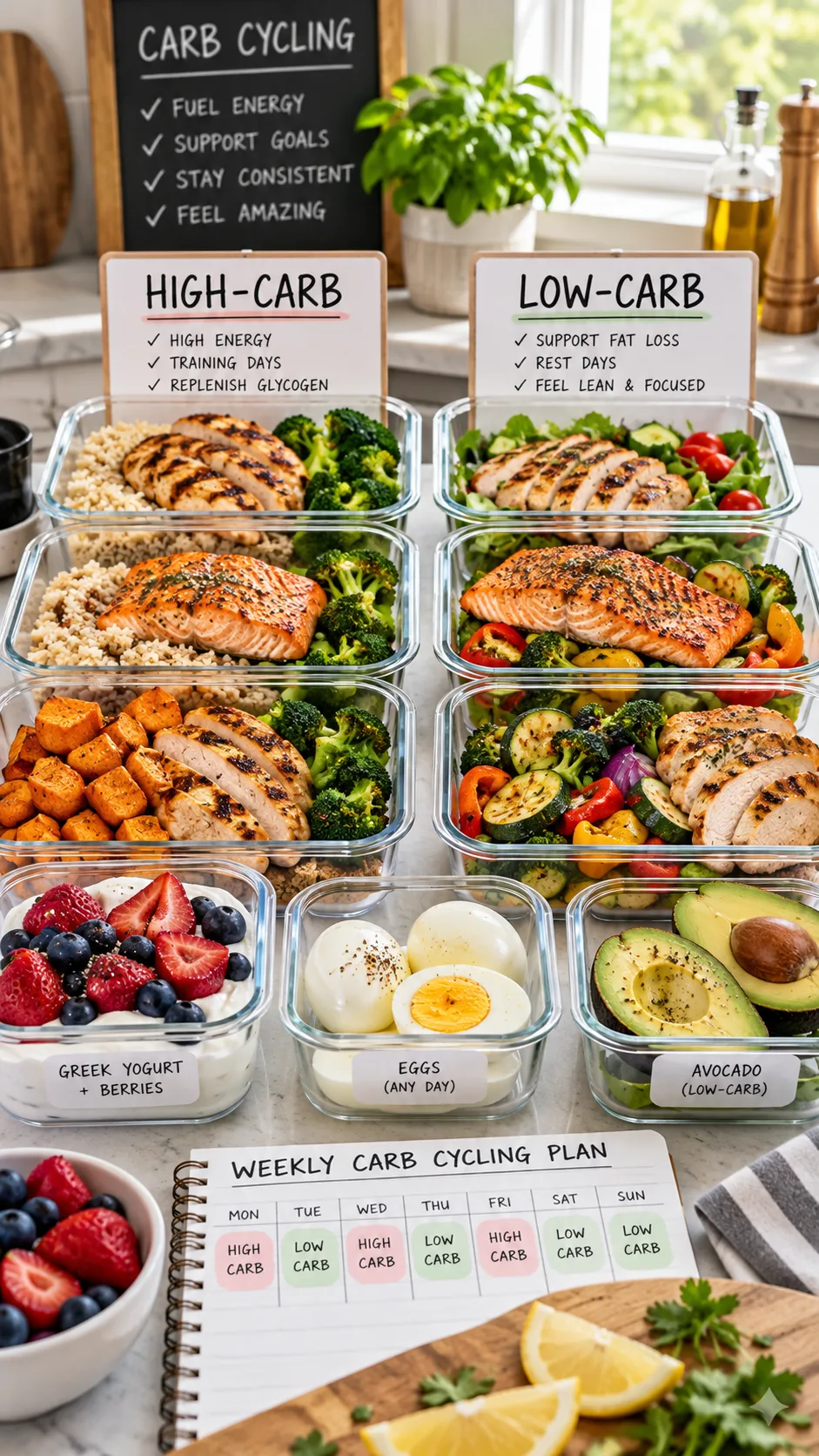
What is carb cycling for fat loss?

Carb cycling means changing your carb intake over the week rather than eating the same amount every day. High-carb days usually fuel hard training sessions. Low-carb days fit rest days, light walks, and easier workouts.
You still need a calorie deficit to lose fat. Carb cycling can make that deficit easier to live with because it puts more fuel around the times you need it. Think about how a hard leg day feels after a week of very low-carb eating. Your body feels that gap.
Most people do well with three types of days: high carb, moderate carb, and low carb. You do not need a spreadsheet fit for a space launch. You need a pattern you can repeat, enough protein, plenty of high-fiber foods, and an honest count of your overall calories.
Why a carb cycling diet can help during a plateau
A fat loss plateau often comes from less movement, loose portion tracking, lower training output, stress, poor sleep, or a smaller body that now uses fewer calories. Your metabolism does not “break,” no matter what dramatic social media captions say. It responds to your habits and energy intake.
Carb cycling can help because high-carb training days can improve workout quality and make a calorie deficit feel less punishing. Better training gives your muscles a reason to stay. Keeping muscle supports strength, body composition, and long-term weight management.
The National Institute of Diabetes and Digestive and Kidney Diseases recommends sustainable eating habits, regular activity, and realistic weight-loss strategies. Carb cycling works best as one flexible tool within that broader approach.
The rules that make carb cycling work

Before you rotate carbs, set the basics. A carb cycling meal plan cannot fix an erratic eating pattern full of skipped meals, oversized “cheat days,” and mystery handfuls from the snack cupboard. Those handfuls count too.
- Keep protein high every day. Aim for roughly 1.6 to 2.2 grams of protein per kilogram of body weight if you train regularly and have no medical reason to limit protein.
- Set a modest calorie deficit. Many people start 300 to 500 calories below maintenance, then adjust based on real progress instead of panic.
- Put high-carb days around hard workouts. Use them for heavy strength sessions, long runs, demanding sports, or high-volume training.
- Use low-carb days for rest or easy movement. Eat plenty of vegetables, protein, healthy fats, and fiber so hunger stays manageable.
- Track trends, not one weigh-in. Compare weekly average weights, waist measurements, photos, gym performance, hunger, and energy.
The American College of Sports Medicine recommends regular aerobic activity and strength training for health and weight management. You do not need to train like an athlete, but your higher-carb days should support a real training demand.
Your protein target stays put
Protein anchors this carb cycling plan. It helps you stay full, supports muscle repair, and keeps low-carb days from turning into a cheese-and-coffee experiment. Build each meal around lean meat, fish, eggs, Greek yogurt, cottage cheese, tofu, tempeh, beans, or protein powder.
For many active adults, 25 to 40 grams of protein per meal works well. Your needs depend on body size, activity, age, appetite, and food preferences. Spread protein over three or four meals if that schedule keeps hunger under control.
Choose carbs that help
High-carb days do not give you permission to spend the afternoon eating cookies and call it sports nutrition. Choose carbs that provide fiber, vitamins, minerals, or easy workout fuel. Fruit, oats, potatoes, rice, quinoa, whole-grain bread, beans, pasta, and cereal can all fit.
Low-carb days do not require zero carbs. Vegetables, berries, dairy, legumes, and small servings of whole grains still contribute carbs. Think lower carb, not carb witness protection.
- High-carb staples: oats, bananas, rice, potatoes, quinoa, whole-grain pasta, beans, corn, cereal, fruit.
- Low-carb staples: leafy greens, broccoli, cauliflower, peppers, mushrooms, zucchini, berries, avocado, nuts, eggs, fish, chicken.
- Easy protein staples: chicken breast, turkey, tuna, salmon, lean beef, tofu, Greek yogurt, cottage cheese, lentils, whey protein.
Your simple weekly carb cycling schedule
This schedule fits someone who strength trains three days each week and stays active on other days. Move the days around to match your workout calendar. A plan that fits real life beats a perfect plan that you cannot follow.
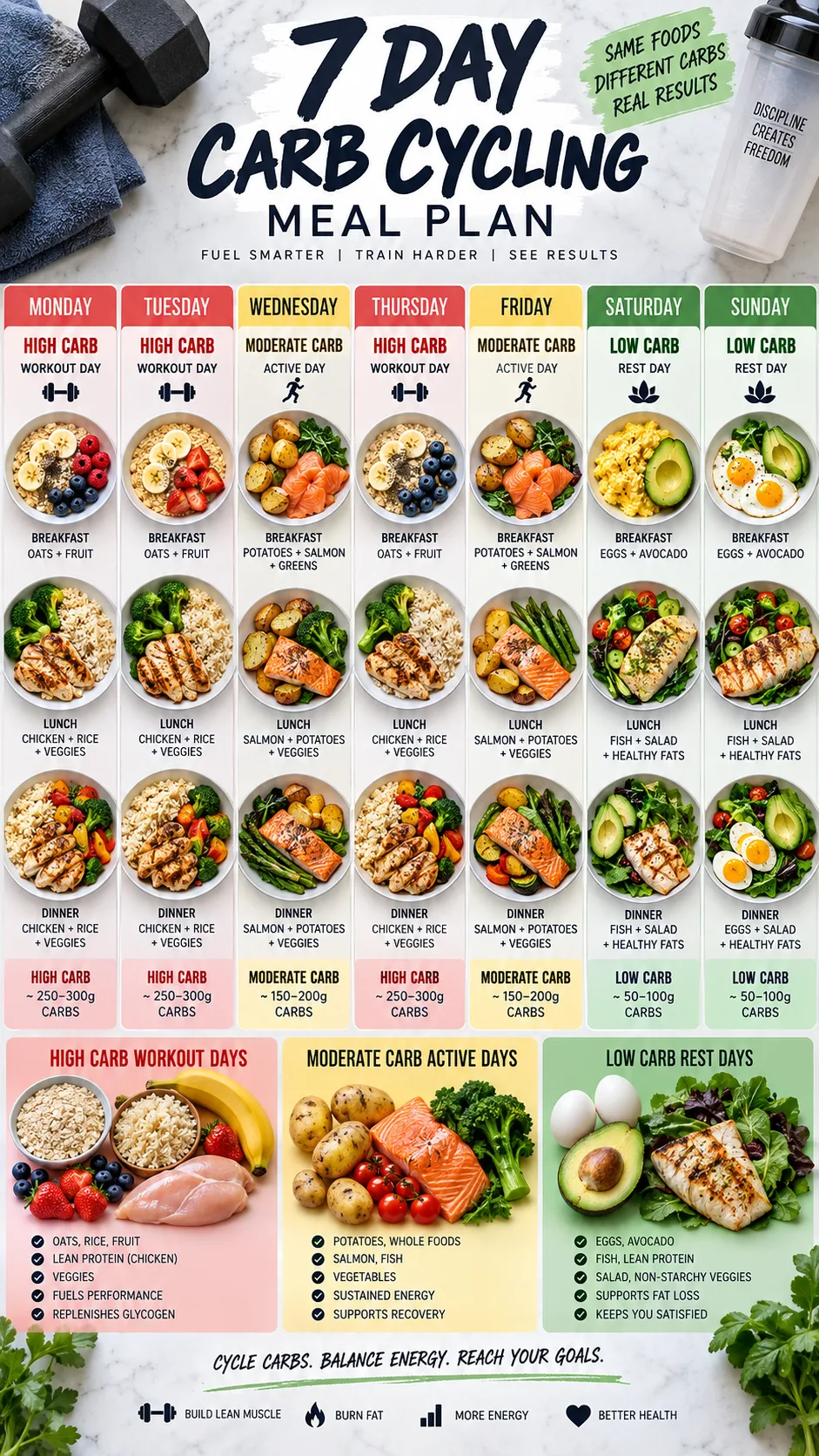
- Monday: High carb. Train lower body, do a hard full-body workout, or take on your most demanding session.
- Tuesday: Low carb. Walk, do mobility work, or rest.
- Wednesday: Moderate carb. Do a lighter strength workout or steady cardio.
- Thursday: Low carb. Focus on steps, hydration, vegetables, and recovery.
- Friday: High carb. Train hard again, especially if you lift weights.
- Saturday: Moderate carb. Enjoy an active hobby, a shorter workout, or flexible social plans.
- Sunday: Low carb. Rest, prep food, and get ready for the week without making Sunday dinner strange.
Start with two high-carb days, two moderate-carb days, and three low-carb days. If you train hard four or five days each week, you may need more moderate- or high-carb days. Let your training volume guide carb intake, not an influencer’s color-coded chart.
Carb cycling macros: A practical starting point
You do not need exact macros to lose fat, but macro targets can help you sort out a plateau. Use these ranges as a starting point, then adjust after two or three weeks of consistent tracking. Medical conditions, pregnancy, diabetes medications, kidney disease, and an eating disorder history all call for personal advice from a qualified clinician or registered dietitian.
| Day Type | Protein | Carbs | Fat | Best For |
|---|---|---|---|---|
| High carb | High and steady | 45 to 55% of calories | Lower to moderate | Hard lifting, intense cardio, sport |
| Moderate carb | High and steady | 30 to 40% of calories | Moderate | Light training, active days |
| Low carb | High and steady | 15 to 25% of calories | Moderate to higher | Rest days, easy movement |
Keep calories a little higher on high-carb days and a little lower on rest days if that arrangement feels natural. Your weekly calorie average determines whether fat loss occurs. A high-carb day does not wipe out the deficit, and a low-carb day does not justify a midnight takeaway.
If you want a simpler calorie framework first, use this 2000 calorie meal plan that keeps you full as a starting reference. Then adjust starch and fat portions around your training days instead of rebuilding every meal.
7-day carb cycling meal plan for fat loss
This sample plan uses familiar foods and flexible portions. Adjust serving sizes to meet your calorie and protein targets. Load up on vegetables, use seasonings freely, and drink enough water. Sometimes “hunger” wears a dehydration costume.
Day 1: High-carb workout day
Breakfast: Protein oats with rolled oats, Greek yogurt, banana, berries, cinnamon, and a scoop of protein powder. Lunch: Chicken rice bowl with black beans, salsa, mixed vegetables, and a little avocado.
Pre-workout snack: Banana with yogurt or a whey shake. Dinner: Lean beef or tofu stir-fry with rice, broccoli, peppers, and teriyaki-style sauce. Add fruit after dinner if your calorie target allows it.
Day 2: Low-carb rest day
Breakfast: Eggs scrambled with spinach, mushrooms, tomatoes, and feta. Lunch: Tuna or chickpea salad with crunchy vegetables, olive oil dressing, and avocado.
Snack: Greek yogurt with berries and chopped walnuts. Dinner: Salmon, roasted broccoli, cauliflower, and a large side salad. Add a small potato if a very low-carb dinner sends you searching the kitchen later.
Day 3: Moderate-carb day
Breakfast: Greek yogurt bowl with berries, chia seeds, and a modest serving of granola. Lunch: Turkey or tofu wrap in a whole-grain tortilla with salad and fruit.
Snack: Cottage cheese with pineapple, or an apple and a protein shake. Dinner: Chicken thighs, roasted sweet potato, green beans, and a yogurt-herb sauce.
Day 4: Low-carb rest day
Breakfast: Omelet with peppers, onion, spinach, and cheese. Lunch: Leftover chicken over a large salad with cucumber, tomato, olives, avocado, and vinaigrette.
Snack: Edamame, cottage cheese, or a protein shake. Dinner: Turkey meatballs or lentil patties with zucchini noodles, marinara, parmesan, and roasted vegetables.
Day 5: High-carb workout day
Breakfast: Whole-grain toast with eggs, fruit, and Greek yogurt. Lunch: Burrito bowl with lean beef or beans, rice, corn, lettuce, salsa, and a little cheese.
Pre-workout snack: Cereal with milk, a banana, or rice cakes with yogurt. Dinner: Pasta with chicken, turkey mince, or lentils in tomato sauce, plus a big salad. Hard training gives carbs a purpose, so enjoy the pasta without treating it like a crime.
Day 6: Moderate-carb flexible day
Breakfast: Protein pancakes with berries and yogurt. Lunch: Salmon or tofu grain bowl with quinoa, roasted vegetables, greens, and lemon dressing.
Snack: Apple with peanut butter. Dinner: Homemade burger on a whole-grain bun, side salad, and oven-baked potato wedges. Flexibility helps you keep the plan going when someone invites you to a barbecue or birthday meal.
Day 7: Low-carb prep day
Breakfast: Cottage cheese bowl with berries, seeds, and cinnamon. Lunch: Egg salad lettuce cups with vegetable soup or a side salad.
Snack: Protein shake and a handful of nuts. Dinner: Roast chicken, asparagus, mushrooms, and cauliflower mash. Prep cooked protein, washed vegetables, rice, potatoes, and snack portions for the coming week.
How to break a fat loss plateau without cutting more food
Before you cut calories again, audit your routine for seven honest days. Measure calorie-dense foods such as oils, nut butter, cheese, sauces, alcohol, and snacks. These foods can fit a healthy diet, but they can turn a small deficit into maintenance faster than you expect.
Then check your daily steps. Many people move less without noticing once dieting fatigue sets in. Add 1,500 to 2,000 daily steps before making drastic food changes, then watch how your body responds.
Review sleep and stress too. Poor sleep can raise hunger, hurt training quality, and make every snack aisle feel emotionally important. The Centers for Disease Control and Prevention recommends at least seven hours of sleep for adults aged 18 to 60.
- Track your weight on three to seven mornings each week and calculate the average.
- Measure your waist every two weeks under the same conditions.
- Keep strength training in your routine at least two days each week.
- Use high-carb days to improve performance instead of turning them into an uncontrolled free-for-all.
- Give the plan two to three consistent weeks before judging it.
Common carb cycling mistakes that stall progress
You turn high-carb days into cheat days
High carb does not mean high everything. When carbs, fats, alcohol, desserts, restaurant portions, and “I deserve it” snacks pile up together, calories rise quickly. Keep fat a little lower on high-carb days and center satisfying carb portions around training.
You slash carbs too hard on rest days
Very low-carb days can cause cravings, irritability, poor sleep, or rebound eating for some people. You do not get a medal for feeling miserable. Add vegetables, fruit, legumes, or a small starch portion if hunger will not let up.
You ignore protein and fiber
Carb cycling falls apart when meals do not satisfy you. Meet your protein target, eat plenty of vegetables, and include fiber-rich foods every day. The Dietary Guidelines for Americans encourages nutrient-dense foods across food groups, so you have far more options than plain chicken and broccoli.
You change everything at once
Do not start carb cycling, add two-a-day workouts, ban every treat, and cut calories in half on the same Monday. You will not know what helped, and you will probably dislike the whole process by Thursday. Change one or two things, track the result, and adjust with a clear head.
Who should try a carb cycling meal plan?
Carb cycling often works well for people who already train consistently, like structure, and feel flat during demanding workouts on a low-carb diet. It can also help people who want more flexibility than a strict keto plan allows. If you prefer lower-carb eating most days, compare this approach with our low-carb beginner meal plan and choose the structure you can maintain.
Carb cycling will not suit everyone. If food rules make you anxious, if you struggle with binge-restrict cycles, or if tracking macros drains you, try a simpler balanced-plate method. A registered dietitian can help you build a plan that supports your health without turning every meal into homework.
Talk with your doctor or dietitian before making major dietary changes if you live with diabetes, take glucose-lowering medication, manage kidney disease, feel pregnant or breastfeeding, or have a history of disordered eating. Your health needs more care than a one-size-fits-all macro calculator can give.
Make this plan easy enough to keep
Cook two proteins, two carb sources, and a tray of vegetables twice each week. For example, prep chicken and turkey mince, rice and potatoes, plus roasted broccoli and peppers. Then increase rice or potato portions on high-carb days and add avocado or extra vegetables on low-carb days.
Keep emergency meals nearby for busy nights. Frozen vegetables, microwave rice, canned tuna, eggs, bagged salad, Greek yogurt, and rotisserie chicken can keep the plan on track when motivation disappears. Convenience beats perfection when your calendar gets chaotic.
Let your results guide you. If your weekly average weight, waist, photos, or clothing fit improve while you feel strong and satisfied, continue. If nothing changes after three consistent weeks, cut 100 to 200 calories, add a little activity, or examine your portions with real honesty.
The bottom line
A smart carb cycling meal plan for fat loss gives you more fuel for hard training and fewer carbs on rest days while protein stays high every day. It can help with a fat loss plateau because it supports better training, fullness, and a calorie deficit that feels easier to sustain.
Start simply: use two high-carb workout days, two moderate-carb days, and three lower-carb rest days. Track your weekly trend, not your feelings after one salty dinner. Build a plan you can repeat, because a good fat loss strategy should not require a dramatic goodbye speech after ten days.