

You prepped five containers of meatballs on Sunday. By Wednesday at 3 p.m., you’re raiding the office snack drawer like a raccoon at a dumpster. Sound familiar?
The meatballs didn’t fail you. The build did. Once you know what makes a meal fill you up, meatball meal prep becomes one of the easiest and cheapest ways to eat well all week, and it tastes good too.
I’ve prepped meatballs most Sundays for years, and I’ve botched nearly every version. I’ve made dry ones, soggy ones, and ones that tasted like sad cardboard by day four. I’m sharing what I learned so you can skip the cardboard phase.
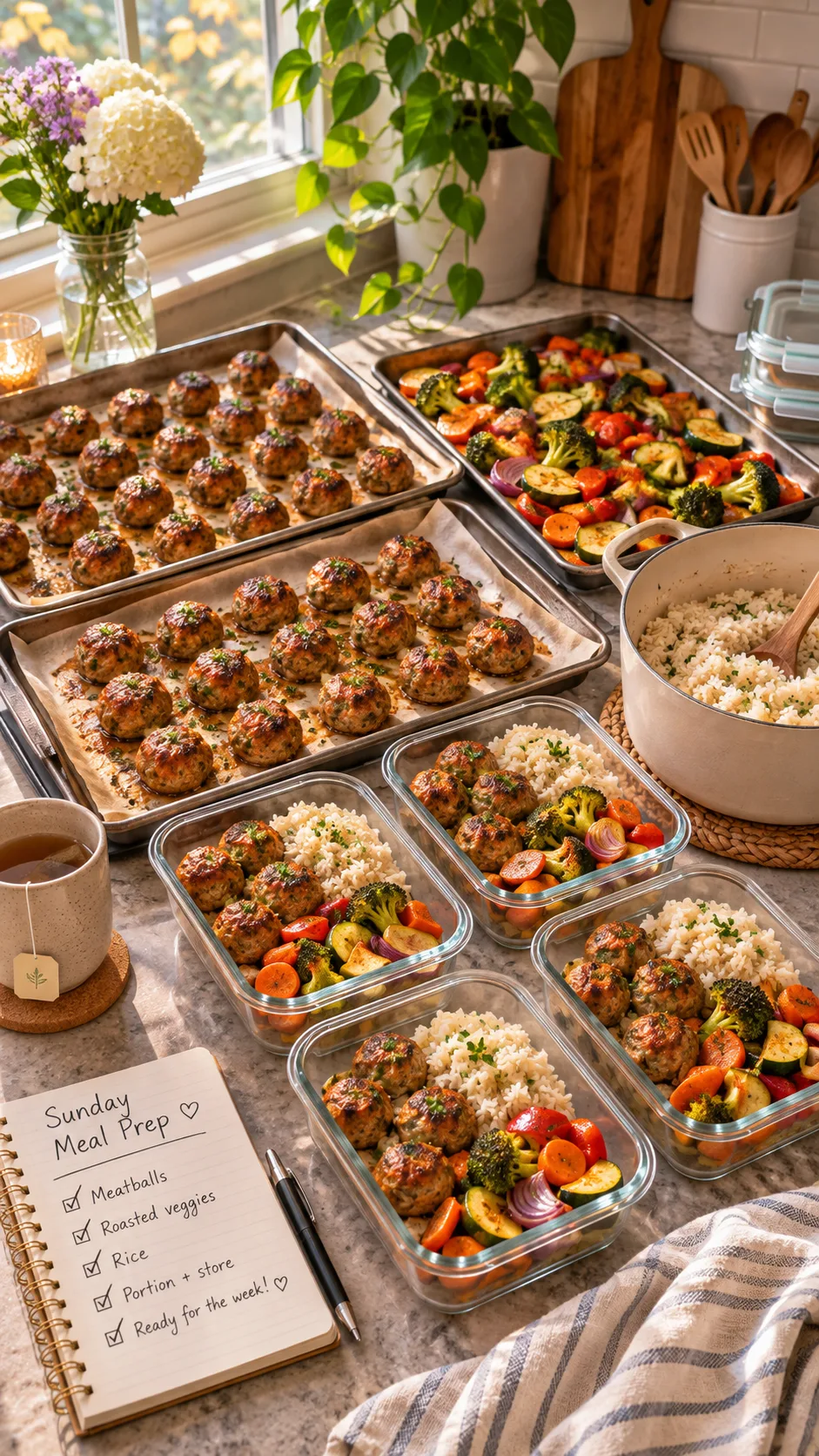
Why most meatball meal prep leaves you hungry
Most people make the same few mistakes. They pile on pasta, skimp on vegetables, and buy the leanest meat they can find. Then they wonder why the meal vanishes from their stomach in two hours.
The usual culprits look like this:
- Too many refined carbs. White pasta digests fast and sends you hunting for snacks.
- Not enough fiber. Without vegetables you get no bulk, and bulk keeps you full.
- Ultra lean meat with nothing to add moisture. You end up with dry pucks you can’t finish anyway.
- Sugary jarred sauce. Some brands pack in more sugar than a cupcake, so check the label.
Fix those four and you fix the problem.
The fullness formula: protein + fiber + volume
Meals that satisfy you for hours share these three traits. I use the formula every week, and it works whether I cook meatballs, chicken, or tofu.
1. Protein does the heavy lifting
Protein generally keeps you fuller than carbs or fat, which explains why a chicken breast holds you longer than a bagel. Meatballs already contain plenty of protein, so you start ahead. Aim for roughly 25 to 40 grams of protein per meal, depending on your size and goals.
2. Fiber slows everything down
Fiber adds bulk and slows digestion. The Mayo Clinic says most adults need roughly 25 to 38 grams of fiber daily, and most of us fall short. Vegetables, beans, and whole grains close that gap fast.
3. Volume tricks your stomach
Your stomach responds to physical bulk, not just calories. A bowl with two cups of roasted vegetables beside your meatballs feels like a feast. A tiny scoop of pasta with the same meatballs feels like a snack.
Why does a restaurant side salad leave you hungry while a big veggie-loaded bowl keeps you going? Volume plus protein explains it.
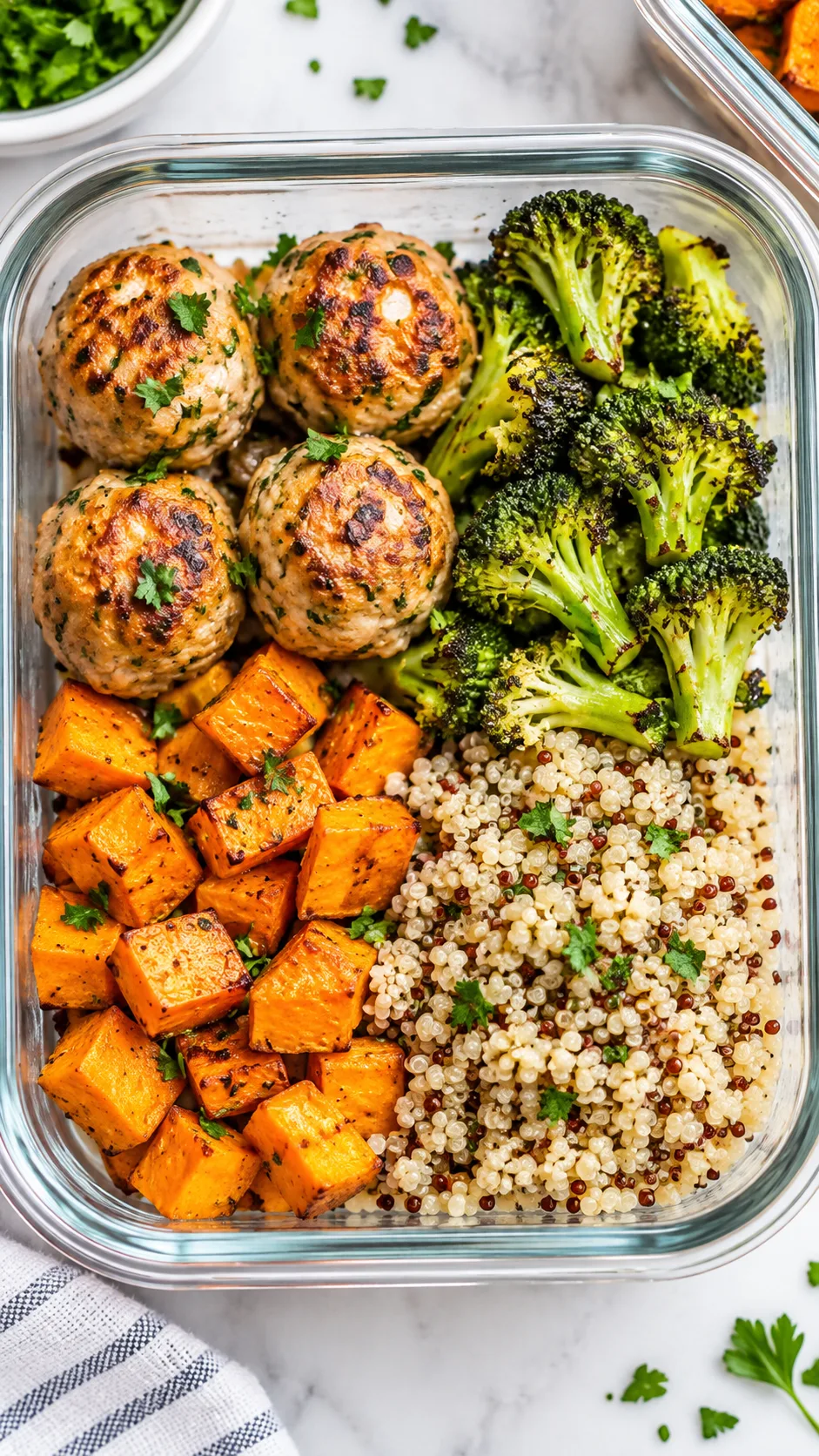
Choose your meat wisely
The meat you pick changes the texture, the price, how well the meatballs reheat, and how much grease ends up in your container. Here’s my honest take on the main options.
- 90/10 ground beef is my go-to. It has enough fat to stay juicy without swimming in grease, and it reheats beautifully.
- Ground turkey (93/7) is leaner and milder. It dries out easily, so add moisture-rich ingredients like grated zucchini or mushrooms.
- Ground chicken is soft and delicate. It works best with bold seasoning, and it pairs well with the ideas in our high-protein chicken breast meal prep guide.
- A beef and pork blend is richer and more tender. It works well if you cook for picky eaters.
- A lentil and mushroom blend is a solid plant-based swap. Mix half the meat with half cooked lentils to boost fiber and stretch your budget.
One safety note: ground meat needs to reach an internal temperature of 160°F (71°C), according to the USDA Food Safety and Inspection Service. Buy a cheap instant-read thermometer. It beats guessing, and it stops you from overcooking everything out of nerves.
My go-to hidden veggie protein meatballs
This recipe makes about 28 meatballs, enough for five meals at 5 to 6 meatballs each. Each serving lands around 30 to 35 grams of protein, though the exact number shifts with your ingredients.
Ingredients
- 2 lb (900 g) 90/10 ground beef, or half beef and half ground turkey
- 1 cup finely grated zucchini, squeezed dry in a clean towel before you measure it
- 1/2 cup finely chopped mushrooms
- 1/2 cup rolled oats
- 2 large eggs
- 1/4 cup grated Parmesan
- 3 cloves garlic, minced
- 1 tsp salt
- 1 tsp dried oregano
- 1 tsp smoked paprika
- 1/2 tsp black pepper
Instructions
- Heat your oven to 400°F (200°C). Line a large sheet pan with parchment.
- Combine the zucchini, mushrooms, oats, eggs, Parmesan, garlic, and seasonings in a large bowl. Let the oats soak for five minutes.
- Add the meat. Mix with your hands just until combined, because overmixing makes tough meatballs.
- Roll the mixture into golf ball sized portions and space them on the pan.
- Bake for 18 to 20 minutes. Check that the center reaches 160°F (71°C).
- Let the meatballs cool on the pan for 10 minutes before you pack them.
The oats and veggies keep the meatballs moist and add fiber. They also stretch the meat, so your grocery bill drops. Nobody at my table has ever noticed the zucchini. I’ve tested this on hostile critics, including my brother-in-law.
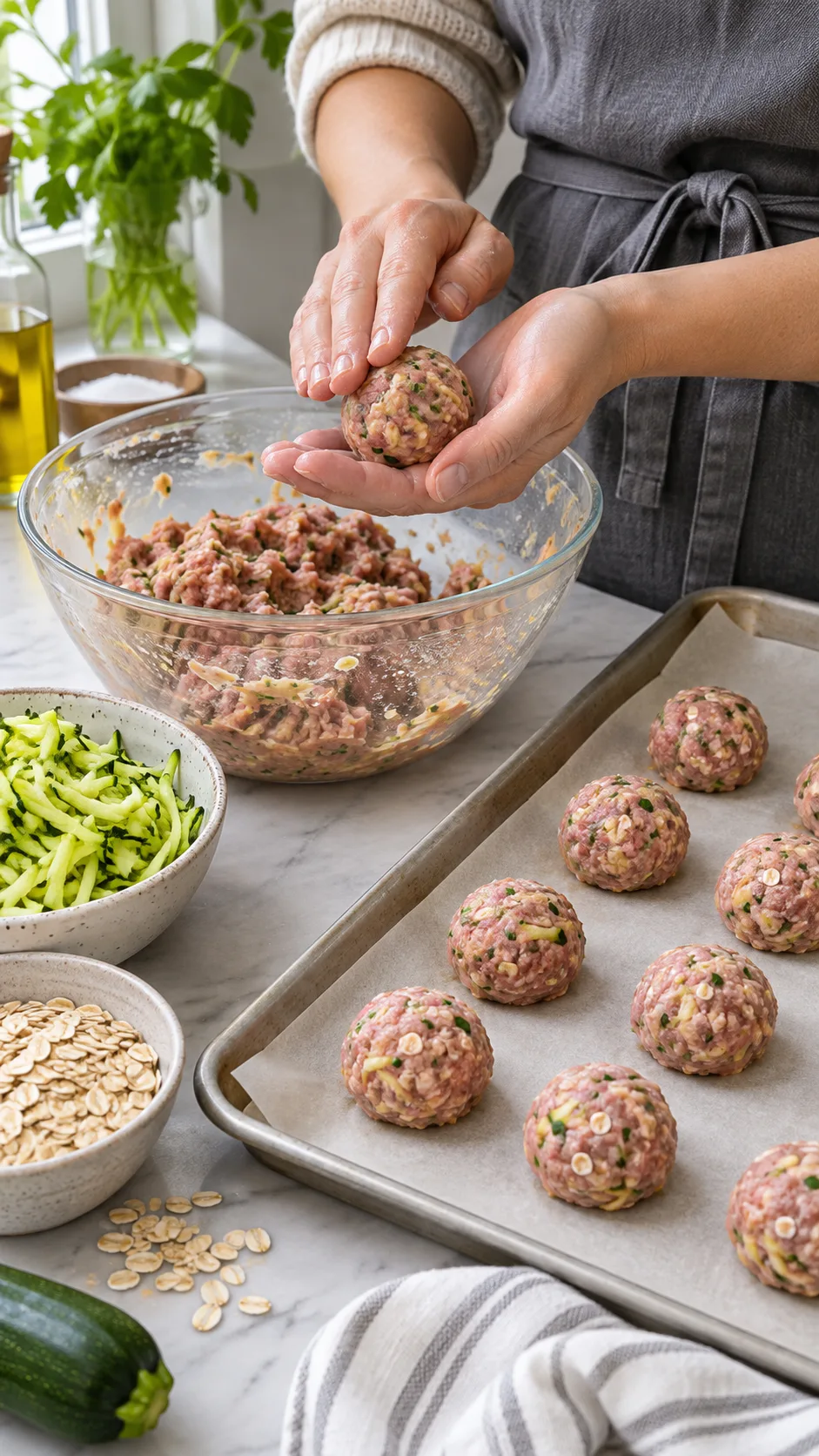
Watch it in action
If you learn better by watching, this video walks through the technique for forming and baking meatballs in bulk.
Five meatball bowls that beat boredom
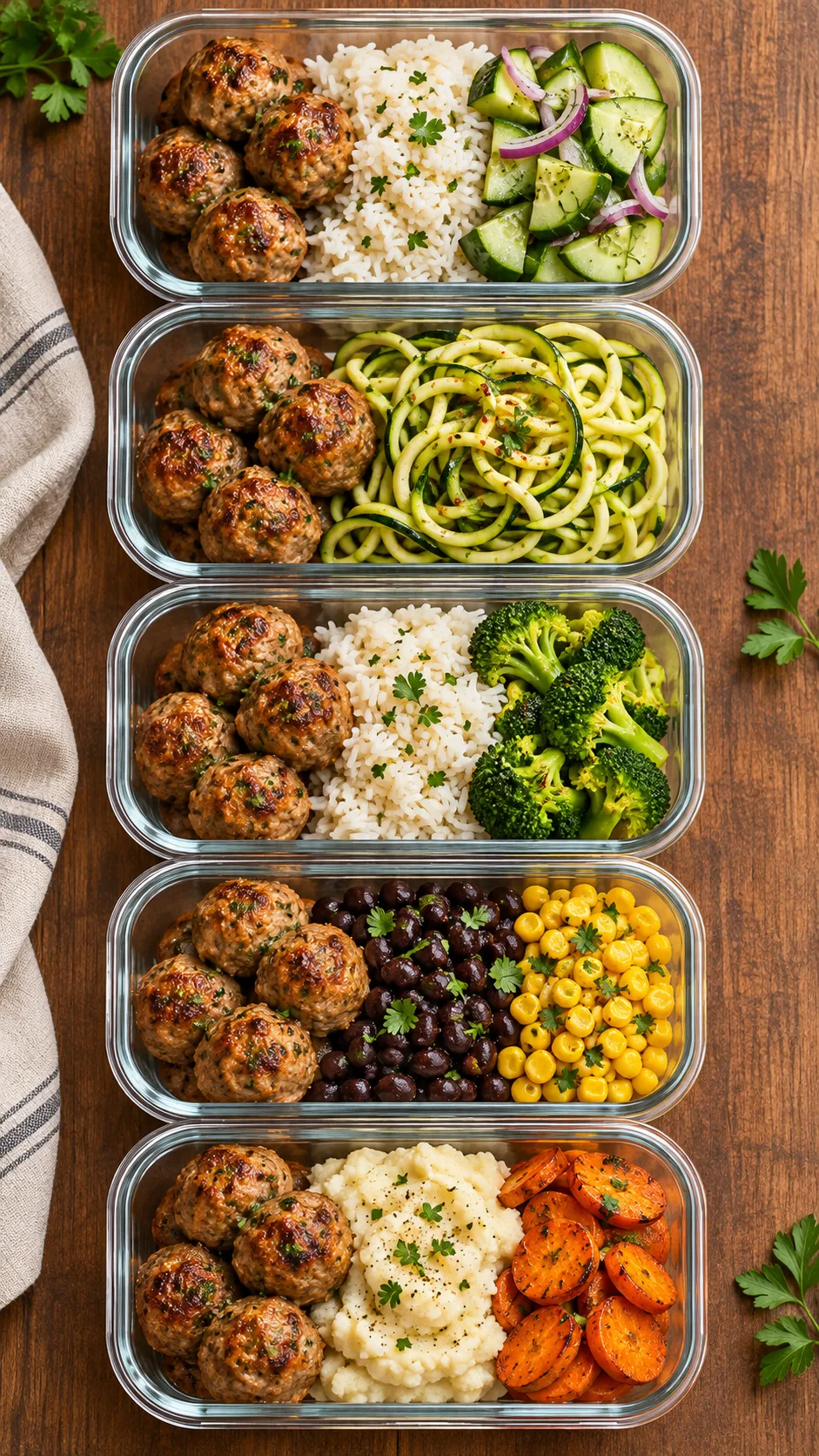
Eating the same dinner five days in a row sounds miserable, so skip that. Cook one batch of meatballs, then change the base, the veggies, and the sauce. I rotate through these five combos.
- The Greek bowl pairs meatballs with cucumber-tomato salad, brown rice, and tzatziki. For more in this vein, see our Mediterranean meal prep ideas.
- Marinara zucchini boats put meatballs over roasted spaghetti squash or zucchini noodles with a low sugar marinara.
- The teriyaki-style bowl tosses meatballs in a light soy-ginger glaze and serves them with steamed broccoli and jasmine rice.
- The burrito bowl combines taco-spiced meatballs with black beans, corn, salsa, and shredded lettuce.
- The cozy fall plate serves meatballs with mashed cauliflower, roasted carrots, and a spoonful of gravy.
You cook the same protein once and get five different dinners. Your taste buds stay interested, and your wallet stays happy.
The plate ratio I use
Most nights I skip the measuring cups and fill the container by eye:
- Fill half with non-starchy vegetables like broccoli, peppers, spinach, or green beans.
- Give one quarter to meatballs (5 to 6).
- Give the last quarter to fiber-rich carbs like brown rice, quinoa, lentils, or sweet potato.
Yes, that leaves meatballs at only a quarter of the volume. They still carry plenty of protein, and the veggies and carbs fill the rest of the space. This ratio is the secret to staying full.
Sauces that add flavor without wrecking your goals
Sauce makes or breaks reheated meatballs. The wrong jar also hides a lot of sugar and sodium.
Smart store-bought picks
Read the label. Look for marinara with under 6 grams of sugar per serving and a short ingredient list. If you shop at Trader Joe’s, our Trader Joe’s meal prep guide covers budget-friendly sauces and frozen veggies that pair well with this recipe.
Quick homemade options
- For a yogurt-herb sauce, stir together plain Greek yogurt, lemon juice, garlic, dill, and salt. It adds extra protein.
- For a peanut-lime drizzle, whisk natural peanut butter with lime, soy sauce, and warm water.
- For a simple tomato sauce, simmer canned crushed tomatoes with garlic, basil, and olive oil. It takes five minutes at most.
Store the sauce in a separate small container. Soggy rice on day three ruins a Wednesday lunch.
Storage: how to make meatballs last the whole week
Cooked leftovers last about 3 to 4 days in the fridge, according to the USDA. If you plan to eat a Sunday batch through Friday, you need a freezer backup.
The split-batch method
- Cook your full batch on Sunday.
- Pack meals for Monday through Wednesday in the fridge.
- Freeze the remaining meatballs in a zip-top bag or container.
- Move the frozen portions to the fridge on Tuesday night so they thaw in time for Thursday and Friday.
Cooked meatballs also keep well in the freezer for about 2 to 3 months at best quality. Flash-freeze them on a sheet pan first so they don’t fuse into one giant meatball boulder.
Cool food fast
Don’t leave cooked food on the counter for hours. Cool it quickly, pack it, and refrigerate it within two hours. That one habit protects you far more than any fancy container.
Reheating without rubber
Nobody wants a meatball that bounces. Reheat gently and the texture stays tender.
- In the microwave, cover the container, add a splash of water or sauce, and heat in 60-second bursts. Stir between rounds.
- On the stovetop, simmer the meatballs in sauce over low heat for 5 to 8 minutes.
- In the oven or air fryer, heat them at 350°F (175°C) for about 8 to 10 minutes if you want crisp edges.
Always reheat until the food is steaming hot throughout. The USDA recommends bringing leftovers to 165°F (74°C).
Common meatball prep mistakes (I’ve made them all)
These errors have cost me a lot of dinners.
- Skipping the squeeze. Wet zucchini turns meatballs into mush, so wring it out hard.
- Packing meatballs too tight on the pan. Crowded meatballs steam instead of browning, so leave a little space.
- Making the meatballs huge. Big meatballs cook unevenly, so stick with golf ball size.
- Forgetting salt in the base. Bland meatballs make bland bowls, so season the mix and not just the sauce.
- Prepping the same bowl five times. Variety is the reason you’ll still be prepping next month.
In my experience, the boredom mistake does the most damage. A good rotation of sauces and sides keeps the habit alive.
Make it fit your goals
Meatball prep bends to fit most plans. If you track calories, a serving of this recipe with a big pile of vegetables and a modest portion of grains slides into most of them. For more structure, our healthy meal prep guide for lazy cooks shows how to build a full week without losing your Sunday afternoon.
If you need more calories, add an extra scoop of rice, a drizzle of olive oil, or half an avocado. If you want fewer, swap the grains for extra roasted vegetables. You control the dial.
Quick FAQ
Can I use breadcrumbs instead of oats?
Yes. Breadcrumbs work fine, but oats add a bit more fiber and hold moisture well.
Do meatballs freeze before or after cooking?
Both work. I prefer freezing them cooked because reheating takes minutes and I skip the raw meat handling on a busy weeknight.
How many meatballs should I eat per meal?
Five or six golf ball sized meatballs make a solid serving for most adults when you pair them with vegetables and a fiber-rich carb. Adjust up or down based on your appetite and goals.
Will my meatballs get dry?
They won’t if you add moisture-rich ingredients, avoid overbaking, and reheat with a splash of sauce. Cook them until they hit 160°F (71°C), then pull them out of the oven. Use a thermometer instead of guessing.
The bottom line
Great meatball meal prep comes down to a few simple moves. Build every meal on protein, fiber, and volume. Hide vegetables in the meat. Vary the sauces and bases. Freeze half the batch so Thursday’s lunch tastes as good as Monday’s.
Do that, and the 3 p.m. snack raid ends. Your Sunday self does a little work, and your Wednesday self says thanks. So grab a sheet pan, roll some meatballs, and prove that “meal prep” doesn’t have to mean “meal regret.”