

Stop burning your hot dogs and calling it “rustic.” You deserve better than sad gas station snacks and charcoal-flavored regret. A little camping meal prep at home turns your campsite into a place where you eat well, and it takes less effort than you think.
I learned this the hard way. On one of my first trips, I forgot the can opener, the oil, and half the dinner ingredients. We ate cold beans and trail mix for dinner. Ever wondered why veteran campers look so smug around the fire? They prepped.
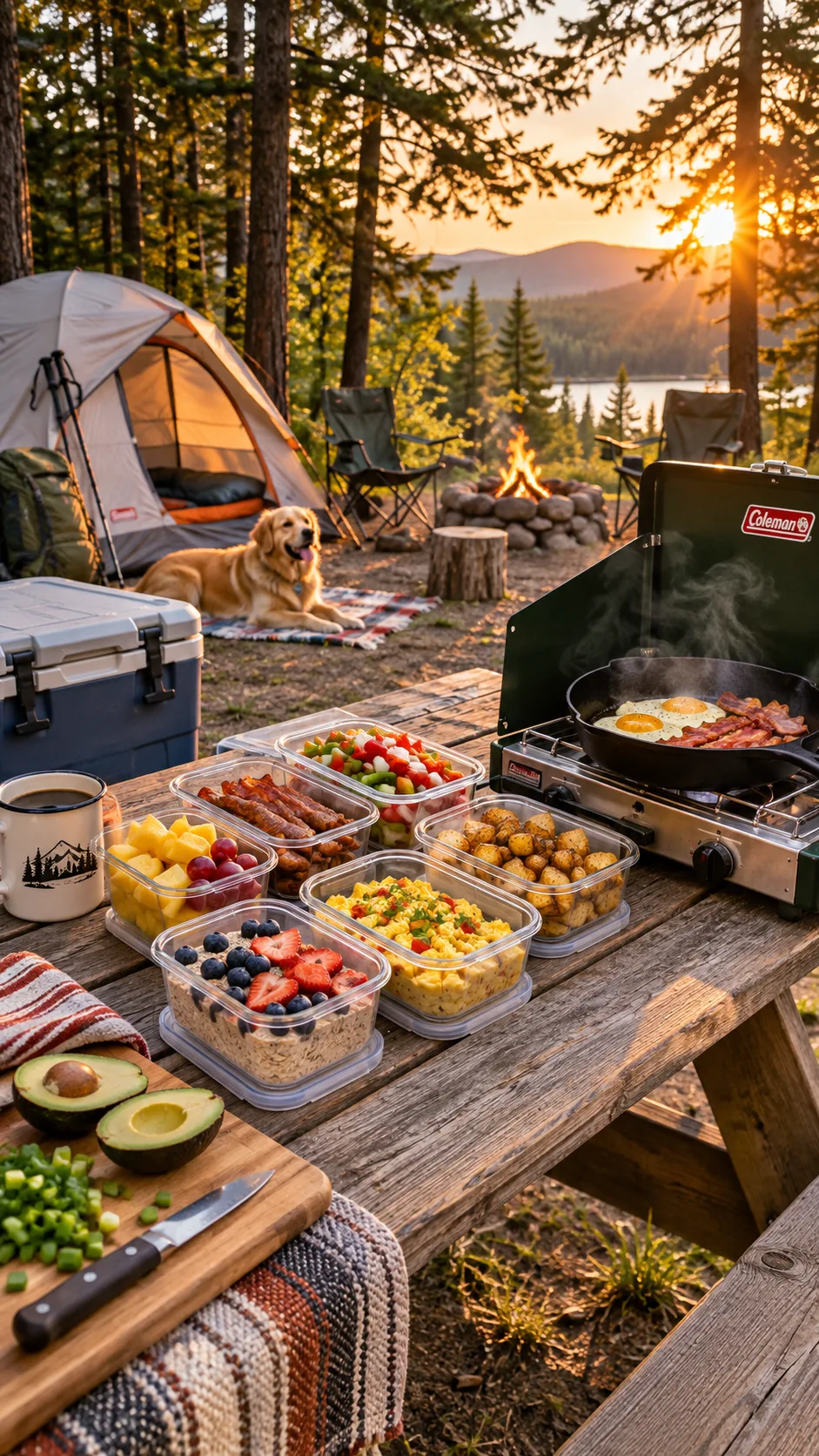
Why camping meal prep beats winging it
Cooking outdoors takes longer than cooking in your kitchen. You have one burner, no counter space, and a mosquito that has chosen you personally. Every task you finish at home is one less task you fight with at camp.
Here is what prepping your camp meals gets you:
- You spend less time at the stove. You heat and eat instead of chopping, measuring, and swearing.
- You waste less food. You pack what you need, not a random pile of “just in case” produce.
- You eat better. You plan protein, veggies, and carbs instead of grabbing whatever needs no cooking.
- You spend less. You skip the panic-buy at the overpriced camp store.
- You wash fewer dishes. One-pot and foil-packet meals save your sanity and your water supply.
To me, the biggest win is mental. You arrive, set up the tent, and dinner is already half done. That feels like cheating, and I love it.
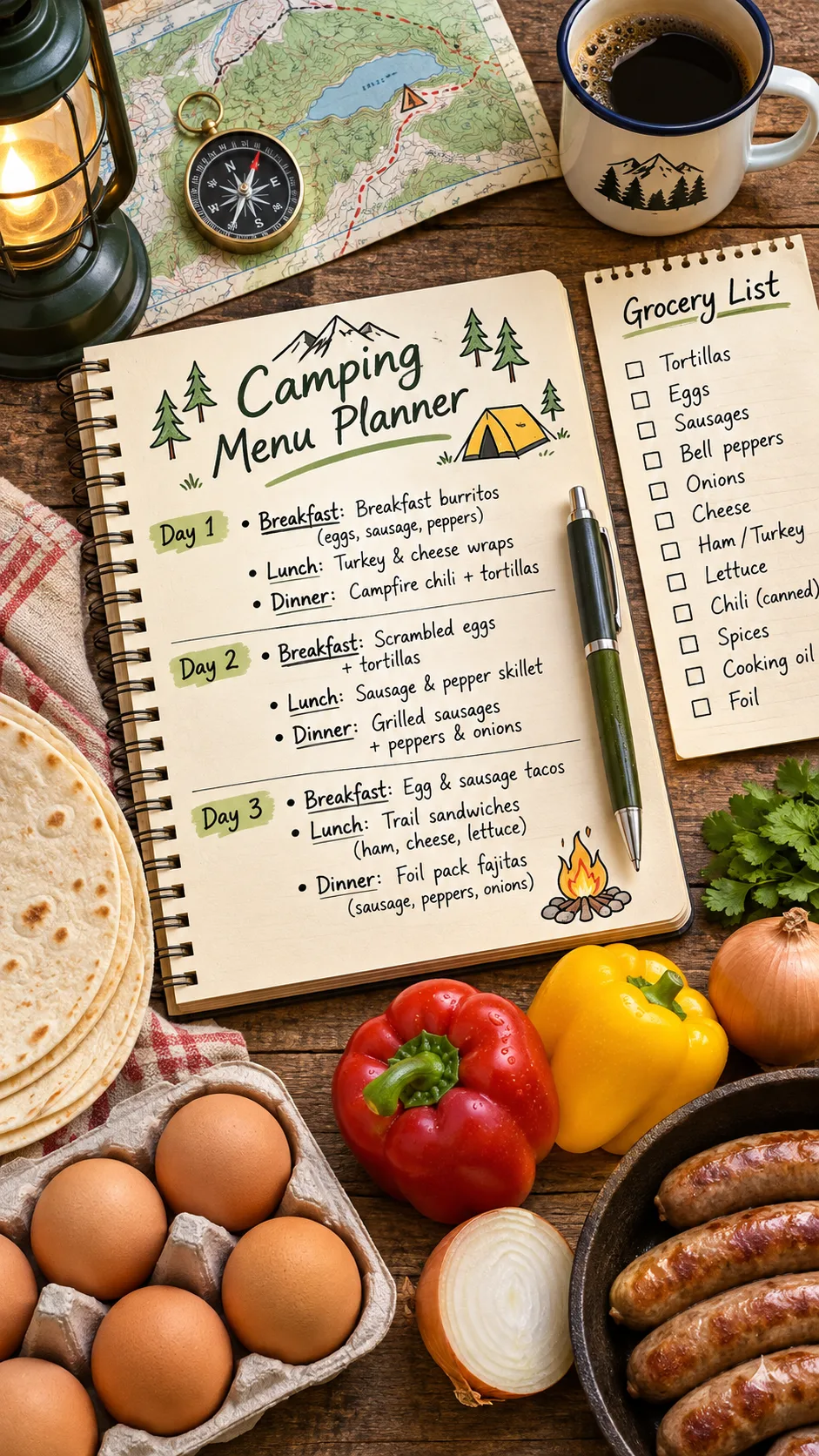
Start with a simple camping menu plan
Good prep starts with a plan. Skip this step and you will overpack, underpack, or both at once. Follow these steps instead:
- Count your meals. Write down every breakfast, lunch, dinner, and snack break from arrival to departure.
- Check your gear. A single-burner stove cannot handle the same menu as a two-burner stove plus a grill grate.
- Pick recipes that share ingredients. One bag of tortillas can cover breakfast burritos and dinner wraps.
- Plan the easiest meal for your first night. You will arrive tired and possibly late.
- Write a grocery list and a packing list. Yes, two lists. Your future self will thank you.
Count meals, not days
A “three-day trip” does not mean nine meals. If you arrive Friday at 5 p.m. and leave Sunday at noon, you need dinner, breakfast, lunch, dinner, and breakfast, plus snacks. Count carefully and you will stop hauling a cooler full of food you never touch.
Plan calories for your activity level
Hiking, paddling, and hauling firewood burn real energy. Many active adults land around 2,000 to 3,000 calories per day outdoors, depending on size and effort. If you want a baseline for balanced portions, check out this 2000 calorie meal plan that keeps you full all day, then add extra snacks for big activity days.
What to prep at home before you leave
Spend one to two hours in your kitchen the night before, and you will earn that time back several times over at camp. So what should you prep?
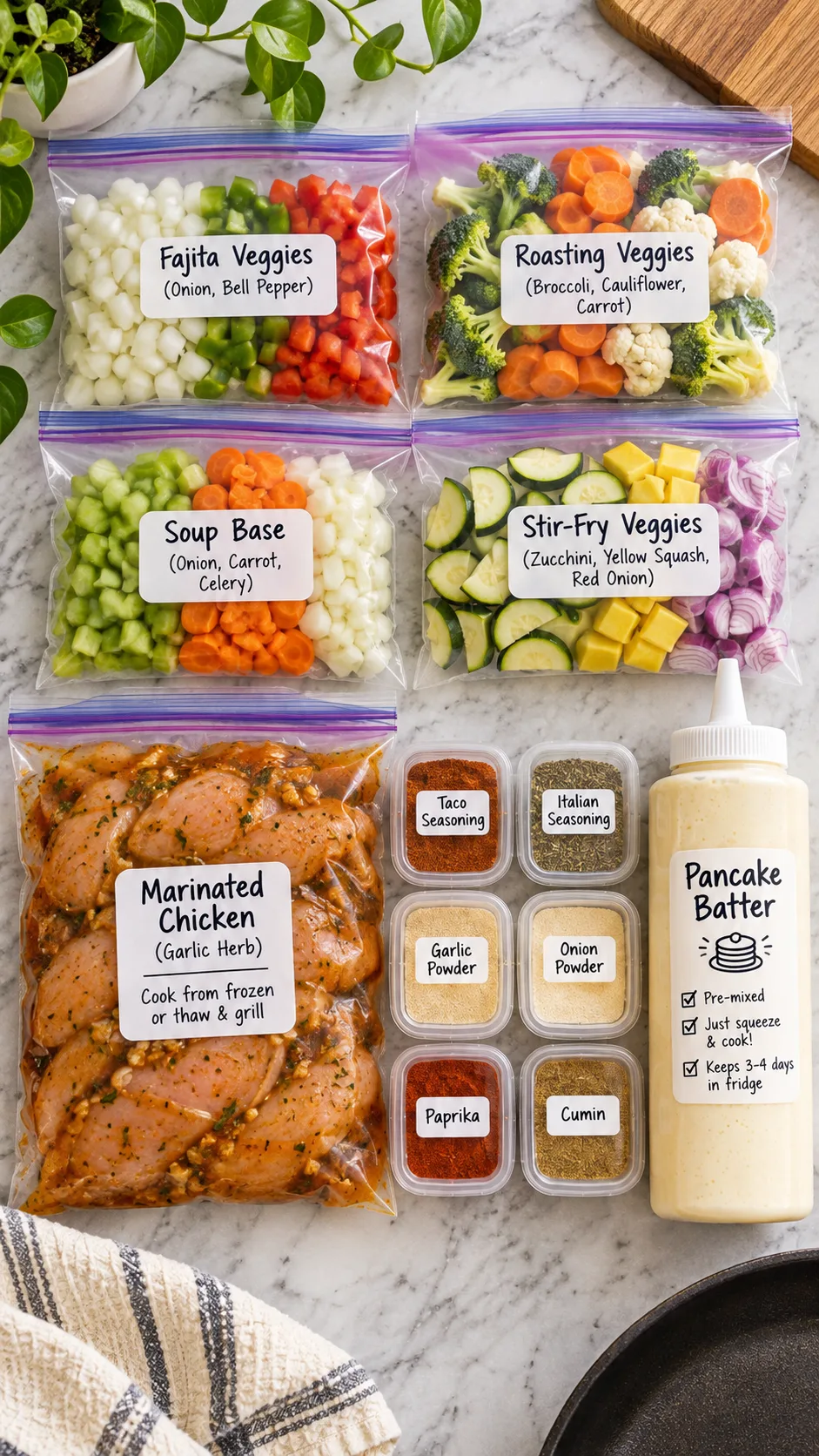
Chop and marinate
Cut your onions, peppers, potatoes, and zucchini at home. Store each in a labeled zip bag or container. Marinate your meat in a freezer bag so it flavors itself in the cooler and doubles as an ice pack while it thaws.
Hardy veggies like carrots, cabbage, and peppers hold up well for several days. Soft ones like tomatoes and avocados bruise easily, so pack them whole and cut them at camp.
Cook ahead and freeze
Soups, stews, chili, and curries freeze well. Freeze them flat in zip bags, and they stack like books and thaw into dinner by day two. A rich Ofe Nsala base, for example, reheats in one pot and tastes like you worked on it all afternoon. You did not. I won’t tell anyone.
Pre-cooked rice, pasta, and grains also save time. Cool them quickly, bag them, and keep them cold.
Build dry mix kits
Pancake mix, oatmeal packets, spice blends, and pasta kits belong in dry bags or small containers. Measure everything at home and label each bag with the recipe name and the amount of water or liquid you need to add. Write the cooking instructions right on the bag. You will forget them otherwise, and no, you will not remember “about a cup.”
- For a pancake kit, pour the pre-mixed dry ingredients into a squeeze bottle, then add water and shake at camp.
- For a spice kit, put salt, pepper, garlic powder, chili flakes, and cumin in a pill organizer or tiny containers.
- For oatmeal jars, combine oats, dried fruit, nuts, and cinnamon, then add hot water when you are ready.
How to pack a cooler like a pro
A smart cooler setup keeps food safe and fresh. A sloppy one gives you soggy bacon and a mystery liquid at the bottom. Which would you pick?
- Pre-chill the cooler. Toss in a sacrificial bag of ice the night before, then dump it before packing.
- Freeze what you can. Frozen meat, soups, and water bottles work as ice and thaw on your schedule.
- Pack in reverse order. Put your last-day meals at the bottom and your first-day meals on top.
- Keep raw meat at the bottom, sealed in a bag or container, so juices never drip onto ready-to-eat food.
- Use block ice. It melts slower than cubes. Fill gaps with cubes if you need to.
- Use two coolers if you can. Keep drinks in one, since people open it constantly, and food in the other.
Park the cooler in the shade, cover it with a blanket or tarp, and open it as little as possible. A full cooler also stays cold longer than a half-empty one, so fill empty space with extra frozen bottles.
Camp food safety: don’t skip this part
Nobody wants food poisoning in a tent, miles from a bathroom. The rule is simple: keep cold food at or below 40°F (4°C) and hot food at or above 140°F (60°C). Bacteria multiply fast in between.
USDA guidance says you should never leave perishable food out for more than two hours, or one hour when the temperature climbs above 90°F. You can read the details at FoodSafety.gov. Put a cheap fridge thermometer in your cooler. It costs a few dollars and tells you the truth.
Quick safety checklist
- Wash your hands, or use sanitizer, before you touch food.
- Use separate cutting boards and utensils for raw meat and veggies.
- Cook poultry to 165°F (74°C) and ground meats to 160°F (71°C).
- Toss anything that sat out too long. Yes, even the good cheese.
- Carry plenty of clean water, or a reliable filter, for drinking and cleaning.
Easy camp meal ideas that taste good
Here is a sample menu for a weekend trip. Each meal relies on prep you finish at home.
Breakfast
- Breakfast burritos: scramble eggs, sausage, and peppers at home, wrap them in foil, and reheat them over the fire or in a skillet.
- Pancakes from a squeeze bottle: you shake, pour, and flip.
- Overnight oats: mix them in a jar at camp the night before and eat them cold in the morning.
Lunch
- Wraps and sandwiches: assemble them at camp from pre-sliced fillings.
- Mason jar salads: put dressing on the bottom, sturdy veggies in the middle, and greens on top.
- Hummus, veggies, and pita: you cook nothing and still get plenty of fiber.
Dinner
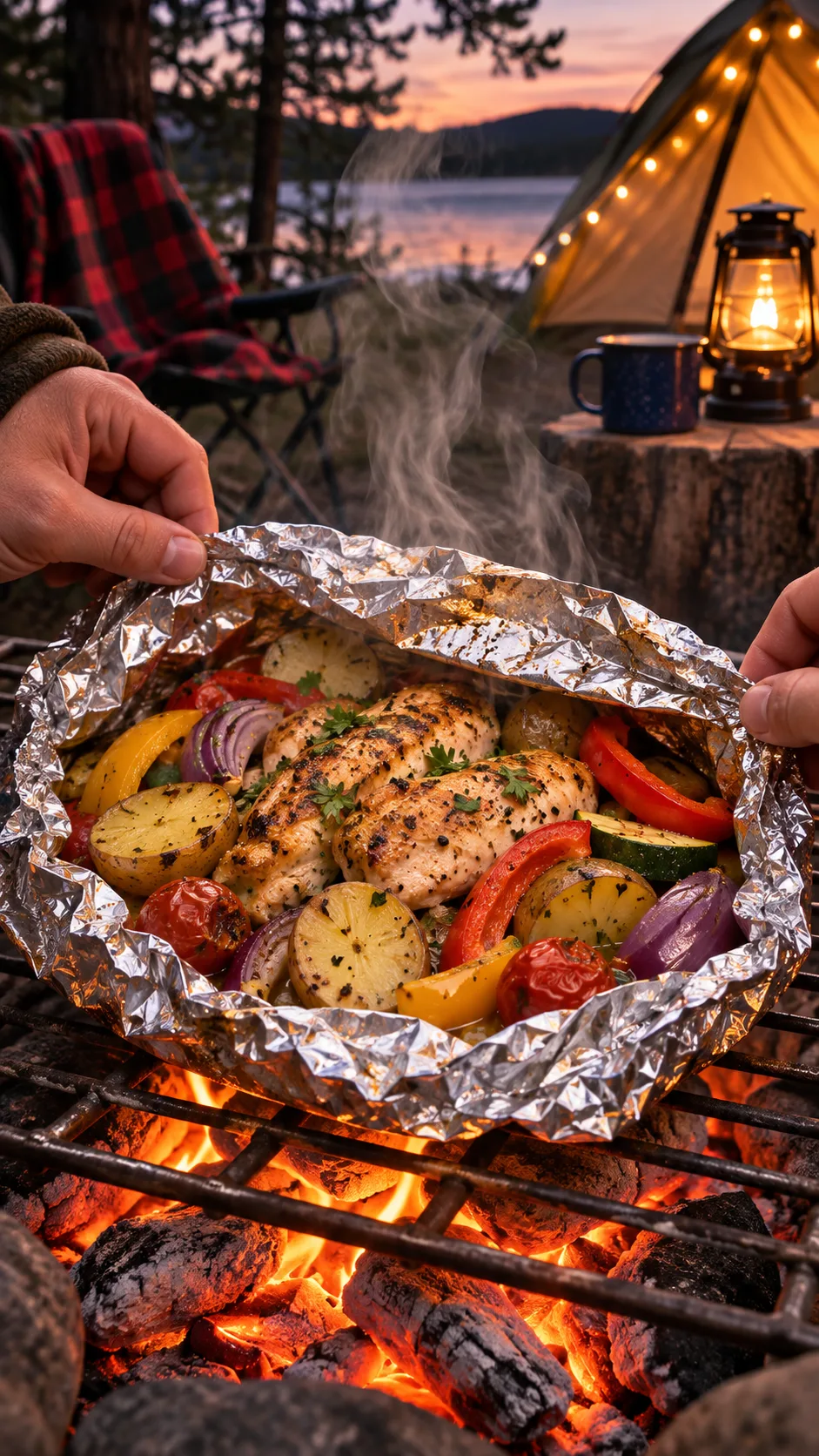
- Foil packet dinners: seal pre-chopped potatoes, veggies, and marinated chicken or sausage in foil and toss the packets on the coals.
- One-pot chili: thaw your frozen batch and heat it with a handful of cheese on top.
- Pasta with pre-cooked sauce: boil the noodles, stir in the sauce, and you finish in 15 minutes.
Snacks
Pack nuts, jerky, fruit, cheese sticks, and trail mix in a dedicated snack bag. Hungry campers get grumpy, and grumpy campers ruin s’mores night. If you watch added sugar, this list of Nigerian foods that don’t contain sugar has plenty of snack and side ideas.
Watch a camp meal prep walkthrough
Sometimes you need to see it done. This video walks you through packing, prepping, and cooking simple meals on a camping trip.
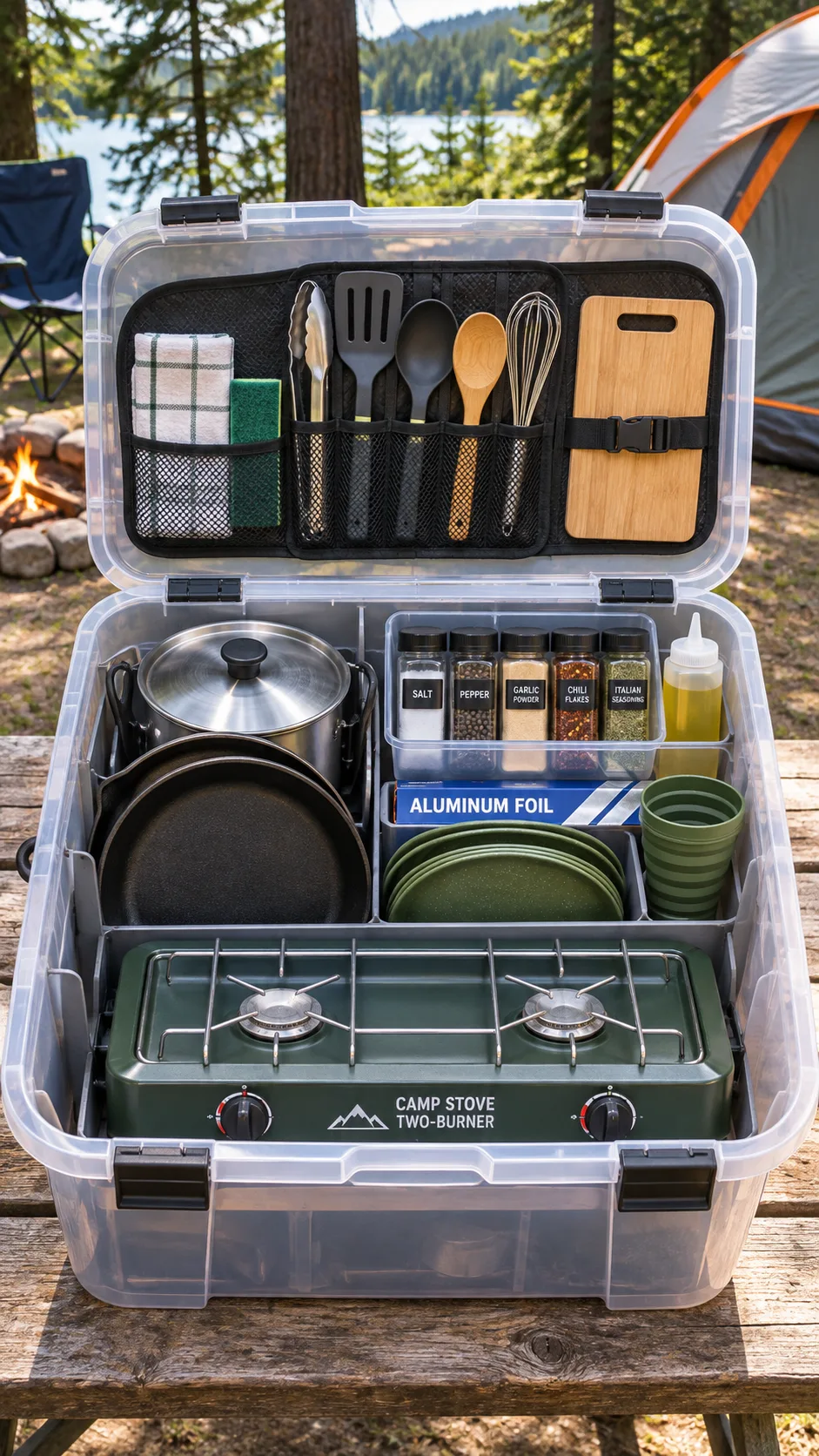
The camp kitchen gear that earns its space
You do not need a mobile restaurant. You need a few reliable tools. After years of overpacking, I now bring only what I use.
- A two-burner stove (or one burner plus a fire grate) with enough fuel for the whole trip.
- One large skillet and one pot with a lid. Together they cover almost every recipe.
- A sharp knife with a sheath and a small cutting board.
- Tongs, a spatula, and a big spoon.
- A can opener and a bottle opener. Write them on your list. I mean it.
- Heavy-duty foil, zip bags, and a roll of paper towels.
- A wash basin, biodegradable soap, and a small scrubber.
- A headlamp. Cooking in the dark teaches humility.
Keep all of this in one labeled bin. If you pack the bin once and restock it after each trip, you never scramble the night before again.
Protect wildlife and leave no trace
Good meal prep also keeps animals out of your dinner. Raccoons, squirrels, and bears all know what a cooler means. Store food in a hard-sided vehicle, a bear-resistant container, or a bear box, depending on your campground’s rules. The National Park Service explains the details in its guide to food storage in bear country.
Pack out all trash, including food scraps. The Leave No Trace Seven Principles point out that even an apple core changes how wildlife behaves. Pre-portioned food creates less packaging waste and less mess, so cleanup goes quickly.
Common camping meal prep mistakes
I have made every one of these. Learn from my suffering.
- Overpacking food. You will not eat six pounds of pasta, so plan portions and stick to them.
- Forgetting the basics. Missing oil, salt, foil, or a lighter can ruin a trip.
- Skipping a backup meal. Rain, wind, or a stove failure can wreck your plan, so pack one no-cook dinner.
- Packing complicated recipes. Camp is not the place to attempt a soufflé.
- Ignoring dietary needs. If someone avoids gluten, dairy, or meat, plan their meals before you leave, not at the campfire.
Trying to eat lighter on the trail? You can adapt most of these meals to fit your goals. The principles in this diet for weight losing guide work just as well around a campfire as they do in your kitchen: lean protein, plenty of veggies, and smart portions.
Your quick pre-trip prep timeline
Not sure when to do what? Here is a simple schedule that keeps the stress low.
- One week before, finalize your menu and write your grocery list.
- Three days before, shop, and check your stove, fuel, and cooler.
- Two days before, cook and freeze soups, sauces, and marinated meats.
- The night before, chop veggies, build dry mix kits, and pre-chill the cooler.
- On departure morning, pack the cooler in reverse meal order, then load the gear bin.
Follow this schedule once and it becomes a habit. Your second trip will feel twice as easy as your first.
Final thoughts: prep once, eat well all weekend
Camping meal prep does not demand perfection. You spend a little time at home so you can spend more time outside. Plan your menu, chop and cook ahead, pack your cooler smartly, and respect food safety and wildlife.
Do that, and you will trade soggy sandwiches for hot, flavorful meals with almost no stress. So grab a notebook, write down your first menu tonight, and start prepping. The best campfire meal you ever eat might be one you cook next weekend.