Skip the “flat tummy detox” tea. Choose meals that help you lose fat, stay satisfied, and handle 3 p.m. hunger without treating it like an emergency.
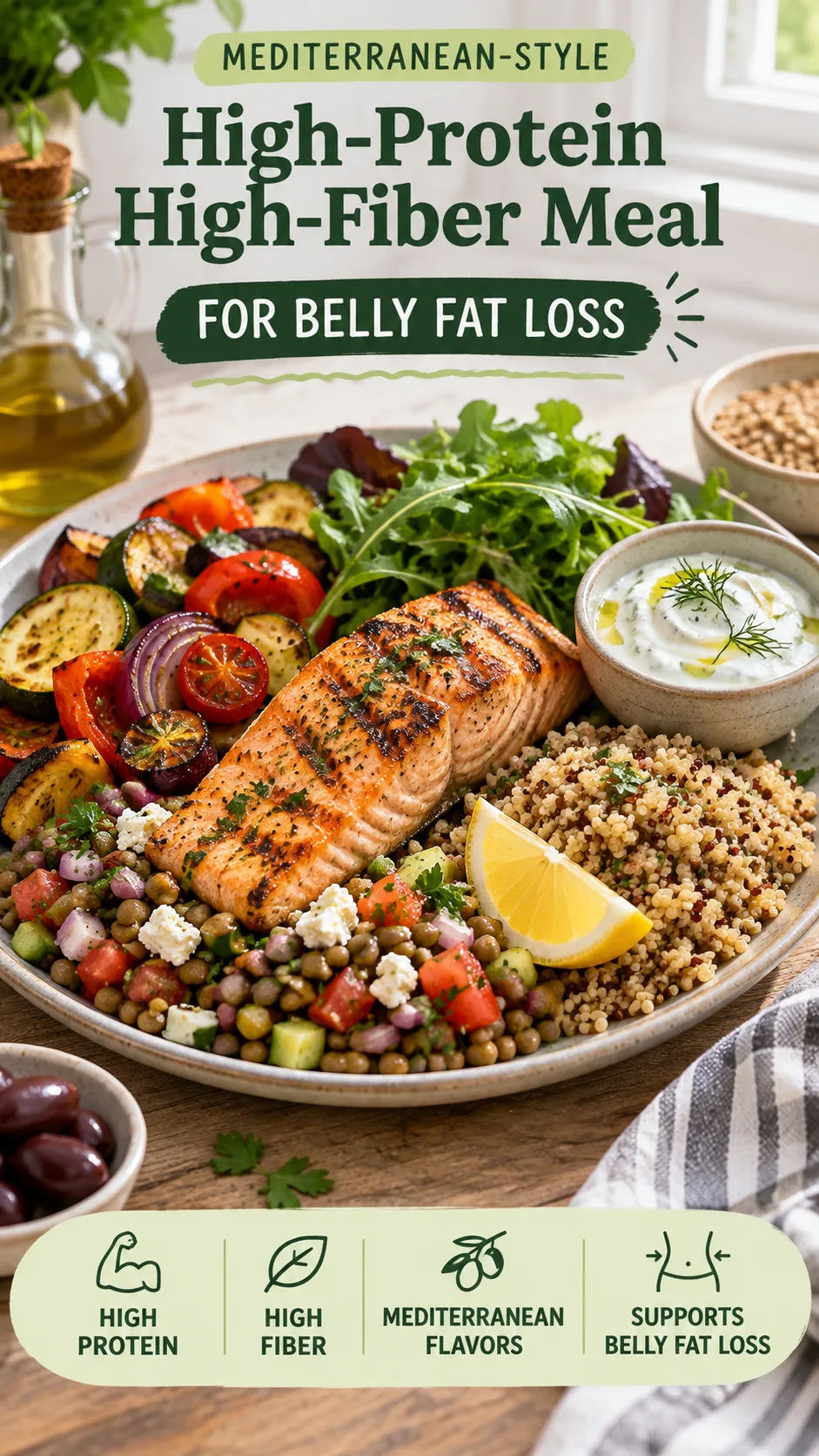
The diet that many people miss combines protein-rich foods, fiber-rich plants, and minimally processed meals. It resembles a protein-focused Mediterranean style of eating, but you do not need expensive olive oil or picture-perfect meals to follow it.
This approach tackles a common problem: many people eat more calories than they notice and still feel hungry all day. A pastry and sweet coffee can vanish in minutes, then leave you searching the pantry an hour later.
First, clear up the belly fat myth
You cannot tell your body where to burn fat first. Crunches, waist trainers, and sour lemon water cannot force your body to take fat from your stomach alone. Genetics, hormones, sex, age, sleep, stress, and overall calorie balance all influence how your body loses fat.
You do not need to give up and buy elastic-waistband pants, either. Lower your total body fat, and your waist often gets smaller too. Research links excess visceral fat, which surrounds internal organs, to higher risks of heart disease, type 2 diabetes, and other metabolic problems.
The National Institute of Diabetes and Digestive and Kidney Diseases recommends steady weight loss and habits you can maintain over crash diets. A seven-day cleanse may sound more exciting, but your body responds better to steady routines.
Visceral fat versus the fat you can pinch
Subcutaneous fat sits beneath your skin, which lets you pinch it around your waist, hips, and thighs. Visceral fat sits deeper in your abdomen around your organs. A bathroom scale cannot tell you exactly how much visceral fat you carry, but a larger waistline can point to greater risk.
Use your waist measurement as one way to track progress. Measure your middle at the same time of day under similar conditions. Do not let one number put you on trial. Watch the trend over several weeks.
Most people lose belly fat by maintaining a calorie deficit. The part many diets miss involves creating that deficit with foods that control hunger instead of making every day feel miserable.
The overlooked diet: protein, fiber, and food volume
Many belly fat diets fixate on foods to cut: carbs, fruit, dairy, dinner, joy. A better plan asks: What can you add that helps you eat less without leaving you hungry?
Protein, fiber, and filling whole foods often answer that question. They help you eat more slowly, stay full, keep muscle while you lose weight, and enjoy meals that feel substantial. The idea is simple. It works for many people.
This approach works well in real life because it leaves room for ordinary food. You can eat eggs, beans, chicken, tofu, potatoes, fruit, yogurt, rice, pasta, and dessert sometimes without turning every meal into a negotiation.
Protein keeps hunger from running the show
Protein helps you feel full after meals and helps you keep lean muscle while you lose weight. Muscle will not melt belly fat overnight, but it supports strength, movement, and energy use. Those things matter when you want lasting fat loss instead of a short-lived drop on the scale.
Many active adults can start around 1.2 to 1.6 grams of protein per kilogram of body weight per day. Body size, training, age, medical conditions, and personal goals can change that number, so use the range as a starting point rather than a strict rule.
Include protein throughout the day. A huge chicken breast at dinner cannot make up for a breakfast of coffee and vibes.
- Breakfast: Try eggs, Greek yogurt, cottage cheese, tofu scramble, protein oats, or a protein smoothie.
- Lunch: Choose chicken, tuna, lentils, tempeh, turkey, beans, or a filling grain and protein bowl.
- Dinner: Eat fish, lean meat, tofu, edamame, chickpeas, eggs, or sauces made with Greek yogurt.
- Snacks: Keep yogurt, roasted chickpeas, cottage cheese, jerky with little added sugar, or fruit with nuts on hand.
If reaching your protein target feels difficult, check out this high-protein diet plan that focuses on staying full. You do not need bland chicken breast six times a day. Nobody deserves that.
Fiber makes your plate work harder
Fiber adds bulk to meals and can help you stay satisfied longer. It also supports regular digestion, which may ease the bloated “my stomach doubled overnight” feeling that convinces people they gained fat after one salty dinner.
Adults often benefit from roughly 25 to 38 grams of fiber per day, depending on age and sex. The Centers for Disease Control and Prevention lists beans, vegetables, fruit, and whole grains among the fiber-rich foods that support a healthy eating pattern.
Add fiber gradually and drink enough water. If you go from very little fiber to a huge bowl of lentils overnight, your digestive system may complain loudly.
- Beans, lentils, and chickpeas
- Oats and barley
- Berries, apples, pears, and oranges
- Broccoli, carrots, leafy greens, peas, and squash
- Potatoes and sweet potatoes with the skin
- Whole-grain bread, brown rice, quinoa, and popcorn
- Chia seeds, flaxseed, nuts, and seeds
Food volume lets you eat satisfying portions
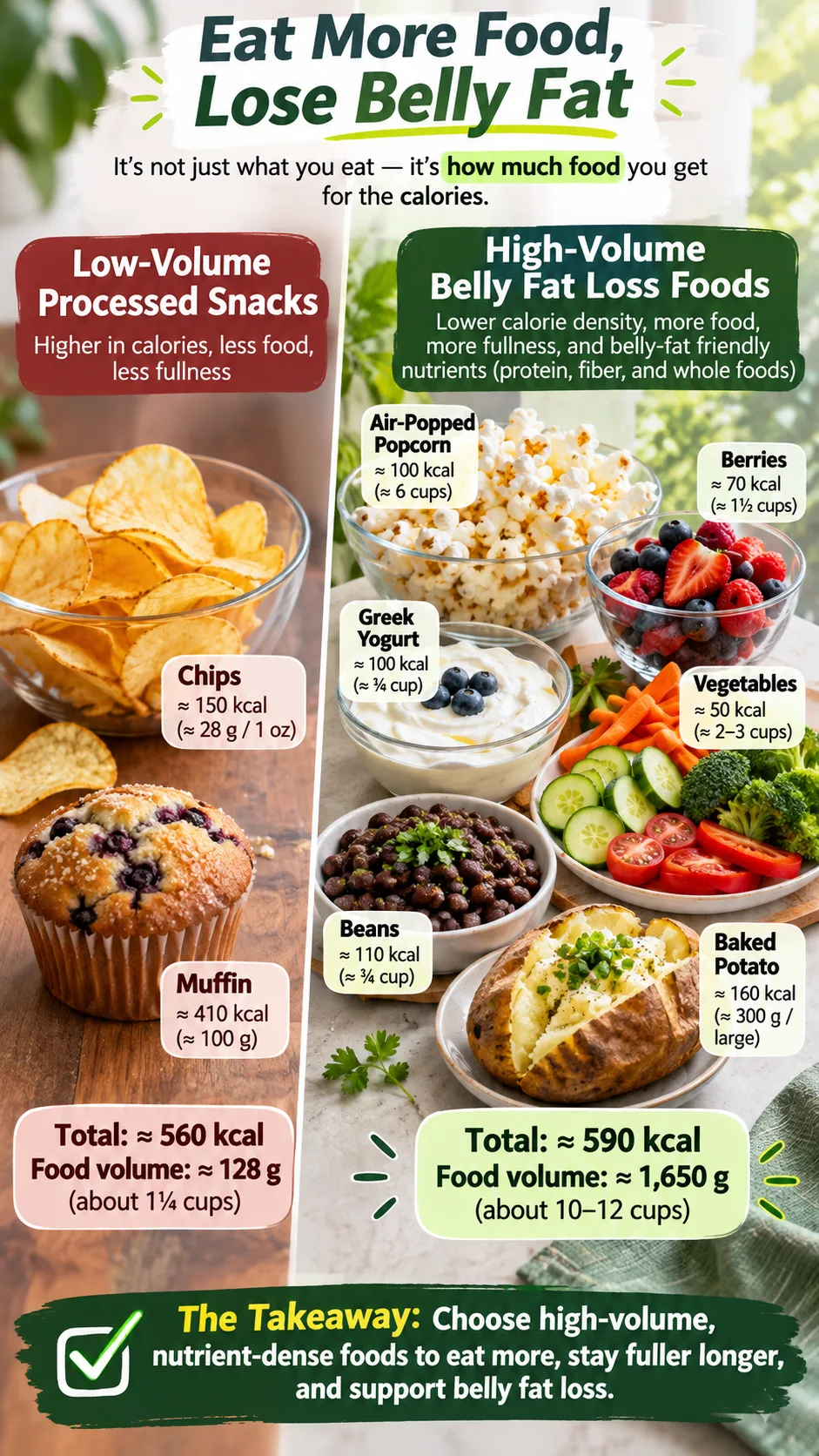
High-volume foods contain a lot of water, fiber, or both. Vegetables, fruit, soups, beans, potatoes, and plain Greek yogurt can fill your plate without adding a huge number of calories. Your eyes see a satisfying meal, and your stomach has enough food to register it.
Compare a handful of chips with a large bowl of air-popped popcorn. Or compare a sugary muffin with eggs, fruit, and yogurt. Both choices can fit into your day, but one usually keeps you full much longer and makes late-night snacking less tempting.
Why a Mediterranean-style pattern helps with belly fat loss
A Mediterranean-style diet does not require a passport, a villa, or a deep personal connection to olives. It focuses on vegetables, fruit, beans, whole grains, nuts, fish, olive oil, and moderate portions of protein-rich foods. It limits highly processed snacks, sugary drinks, and frequent oversized servings.
This style of eating gives you protein, fiber, unsaturated fats, and meals you will want to eat again. The American Heart Association recommends this heart-healthy pattern when people focus on plants, fish, whole grains, and unsaturated fats.
Keep olive oil, nuts, and avocado in perspective. They offer nutrients, but their calories add up quickly. A healthy meal can still exceed your calorie needs when you pour olive oil like a television chef.
A simple plate formula for belly fat loss
Use this formula for most meals to cut down on guesswork. You do not need to weigh every spinach leaf or fear a tablespoon of sauce. Start here, then adjust portions based on your hunger, progress, and activity level.
- Fill half your plate with vegetables or fruit. Pick different colors and foods you enjoy eating.
- Add one palm-sized serving of protein. Choose chicken, fish, eggs, tofu, beans, lean beef, yogurt, or another protein source.
- Add one fist-sized serving of high-fiber carbs. Choose potatoes, oats, brown rice, quinoa, whole-grain pasta, beans, or fruit.
- Add a thumb-sized serving of fats. Use olive oil, avocado, nuts, seeds, cheese, or nut butter.
- Adjust for your goal. If your progress stops, trim fat or starch portions a little while keeping protein and vegetables plentiful.
This method keeps you out of the all-or-nothing trap. You can eat a rice bowl, pasta dinner, tacos, or a sandwich and still lose belly fat. Aim for balance, not a purity certificate.
Foods that can quietly slow belly fat loss
No single food puts belly fat on your body by itself. Some foods, however, make a calorie deficit much harder because they pack many calories into portions that do little for fullness. They also invite mindless eating. Few people mindlessly eat a mountain of steamed broccoli.
You do not need to ban these foods forever. You need to notice them and choose your portions deliberately.
Liquid calories
Soda, sweet coffee drinks, fruit juice, cocktails, energy drinks, and elaborate smoothies can add hundreds of calories without filling you up. Your body may not respond to liquid calories the way it responds to a solid meal. Drinks often offer one of the easiest places to lower calories.
Choose water, sparkling water, unsweetened tea, black coffee, or coffee with a measured amount of milk. If you enjoy sweet drinks, reduce how often you have them instead of pretending you suddenly love plain celery juice.
Ultra-processed snack foods
Chips, cookies, candy, packaged pastries, fast food, and many snack bars combine refined carbs, fats, salt, and strong flavors. That mix can make “just one handful” feel laughably optimistic. Eat these foods sometimes if you want, but do not build your belly fat loss diet around them.
Researchers reported in a controlled trial in Cell Metabolism that participants ate more calories and gained weight on an ultra-processed diet than on a minimally processed diet, even though researchers matched the meals for several nutrients. The way food is processed can make it easier to overeat.
Healthy foods with easy-to-miss portions
Granola, trail mix, peanut butter, cheese, restaurant salads, acai bowls, olive oil, and smoothies can support good health. Small portions can also contain a lot of calories. “Healthy” does not mean “calorie-free.”
Measure calorie-dense foods for a week or two if your progress slows. That brief check can reveal what changed without asking you to track food forever. A casual scoop of peanut butter rarely equals one tablespoon.
A realistic 7-day belly fat loss meal framework
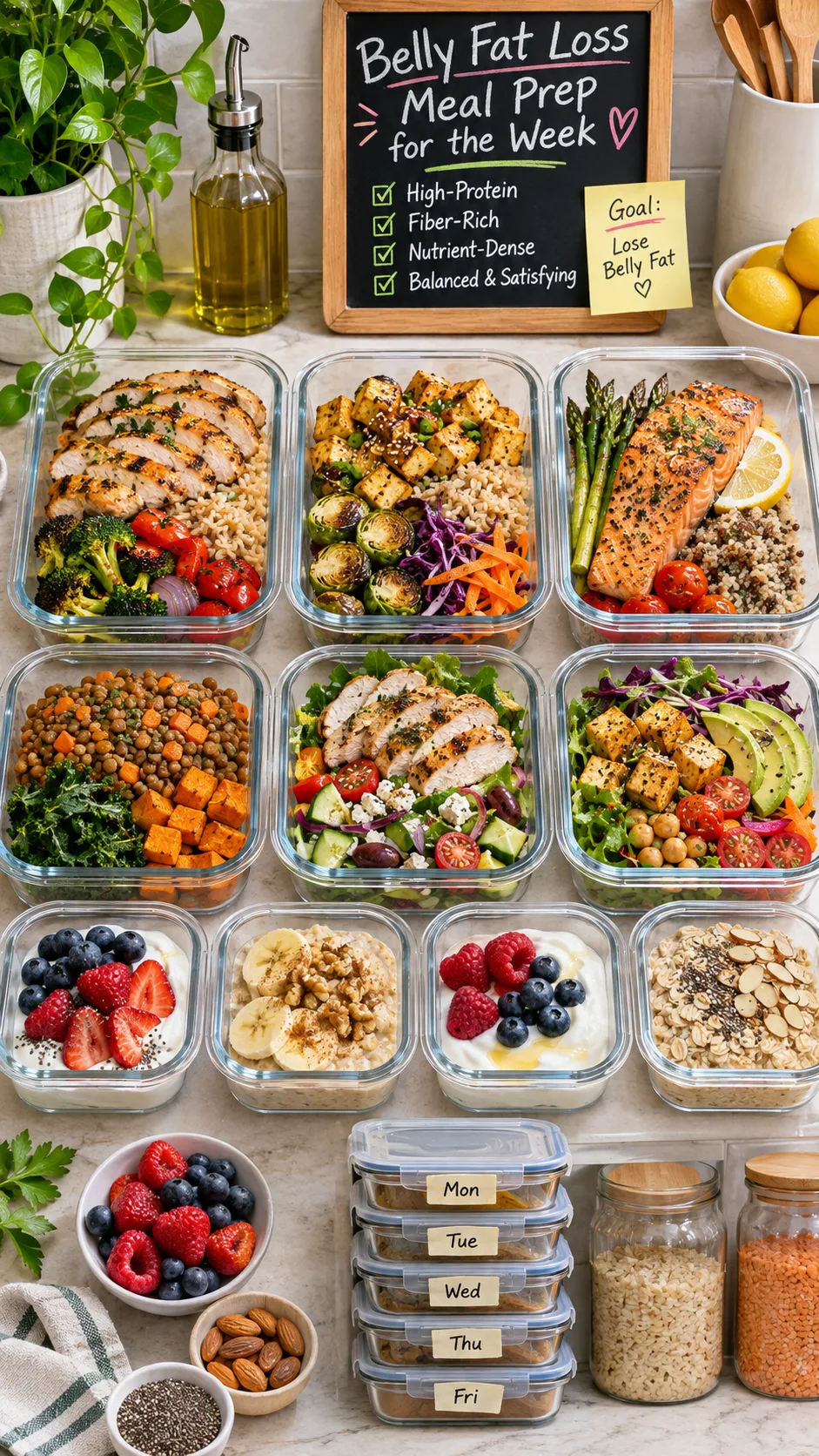
You do not need a rigid meal plan, but meal ideas make this approach easier to use. Mix and match based on your preferences, culture, budget, and schedule. Repeat meals during busy weeks because familiar meals reduce decision fatigue.
Breakfast ideas
- Greek yogurt with berries, chia seeds, and oats
- Egg scramble with vegetables, whole-grain toast, and fruit
- Protein oats with milk, cinnamon, banana, and peanut butter
- Tofu scramble with black beans, salsa, and avocado
- Cottage cheese bowl with fruit, walnuts, and a sprinkle of whole-grain cereal
Lunch and dinner ideas
- Chicken or tofu grain bowl with brown rice, roasted vegetables, and yogurt sauce
- Lentil soup with a side salad and whole-grain bread
- Salmon, baked potato, and green beans
- Turkey chili with beans, vegetables, and Greek yogurt
- Whole-grain pasta with lean meat sauce, mushrooms, and a large salad
- Chickpea curry with vegetables and a measured serving of rice
- Fish tacos with cabbage slaw, black beans, salsa, and avocado
If you enjoy time-restricted eating, pair this food-first approach with a schedule that fits your life. Our fasting diet plan explains how to use intermittent fasting without turning hunger into your full-time hobby.
How to create a calorie deficit without obsessing
Belly fat loss requires an energy deficit over time. You can create one by eating less, moving more, or doing both. Small food changes paired with regular movement work well for many people.
You do not need to cut calories dramatically. Hard restriction can increase hunger, hurt your training, and make you think about cookies like a detective working a case. A moderate deficit that you can stick with usually works better.
Easy ways to start
- Put protein in every meal. This habit often cuts down on random snacking without adding a pile of rules.
- Put vegetables or fruit where you can see them. Add them to your plate before extras.
- Change one calorie-heavy habit. Cut back on daily soda, oversized coffee drinks, nightly dessert, frequent takeout, or television grazing.
Track your food for a few days if you want information, not punishment. You may find that your weekday meals work well while weekend drinks and restaurant portions wipe out your deficit. The information may annoy you, but it beats guessing.
Exercise helps, but food leads the way
You cannot out-train an eating pattern that regularly pushes you past your calorie needs. Exercise still helps you keep muscle, improve your mood, manage stress, and use more energy each day. It can also help you feel stronger and more capable.
Walk more, lift weights, play a sport, cycle, swim, or dance badly in your living room. Pick something you will repeat. The best workout plan fits your real week, not a saved social media post.
Aim for at least two strength sessions each week along with regular walking or other cardio. Strength training helps you hold on to muscle during weight loss. Keeping muscle can help you look firmer as your waist gets smaller.
Sleep, stress, and alcohol can sabotage your waistline
Food choices do not happen in a vacuum. Poor sleep can increase hunger and make high-calorie foods much harder to resist. Stress can lead to comfort eating, missed workouts, and late-night snacking.
Protect a regular sleep routine, especially while you work on fat loss. Set a bedtime alarm, spend less time on screens before bed, and move caffeine earlier in the day if it disrupts your sleep. You do not need perfect sleep. You need fewer decisions made while exhausted.
Alcohol deserves an honest mention too. It adds calories, lowers restraint around food, and can turn “one drink” into fries, pizza, and more cheese than anyone planned. You do not need to quit forever, but drinking less can speed up belly fat loss.
When to talk to a health professional
Talk with a doctor or registered dietitian before making major diet changes if you manage diabetes, kidney disease, digestive disorders, pregnancy, an eating disorder history, or medications that affect appetite or weight. A professional can help you make a safe plan around your health needs.
Get medical advice if you notice rapid, unexplained weight changes, severe fatigue, ongoing digestive symptoms, or a major appetite change. Your body deserves more than guesses from the internet.
The bottom line: build meals that make fat loss easier
The best diet for belly fat loss does not depend on starvation, detoxes, or banning every carb you enjoy. It focuses on protein, fiber, minimally processed foods, sensible portions, and a calorie deficit you can maintain.
Start this week with one protein-rich breakfast, one extra serving of vegetables, and fewer liquid calories. Walk after meals and lift a few times if you can. These habits may seem boring, but they often change your waistline more than flashy diets do.
Stop searching for a perfect diet. Build meals you can repeat, give the process time, and stay consistent.