

You ate breakfast two hours ago and you’re already staring at the biscuit tin like it owes you money. Sound familiar? That isn’t a willpower problem. That’s a protein problem.
I spent years eating “healthy” meals that left me starving by 11am. Porridge, a banana, some sad rice cakes. Then I flipped the ratio, put protein first, and the snack cravings packed their bags. This guide gives you the plan, the science behind it, and the food swaps that make it stick.
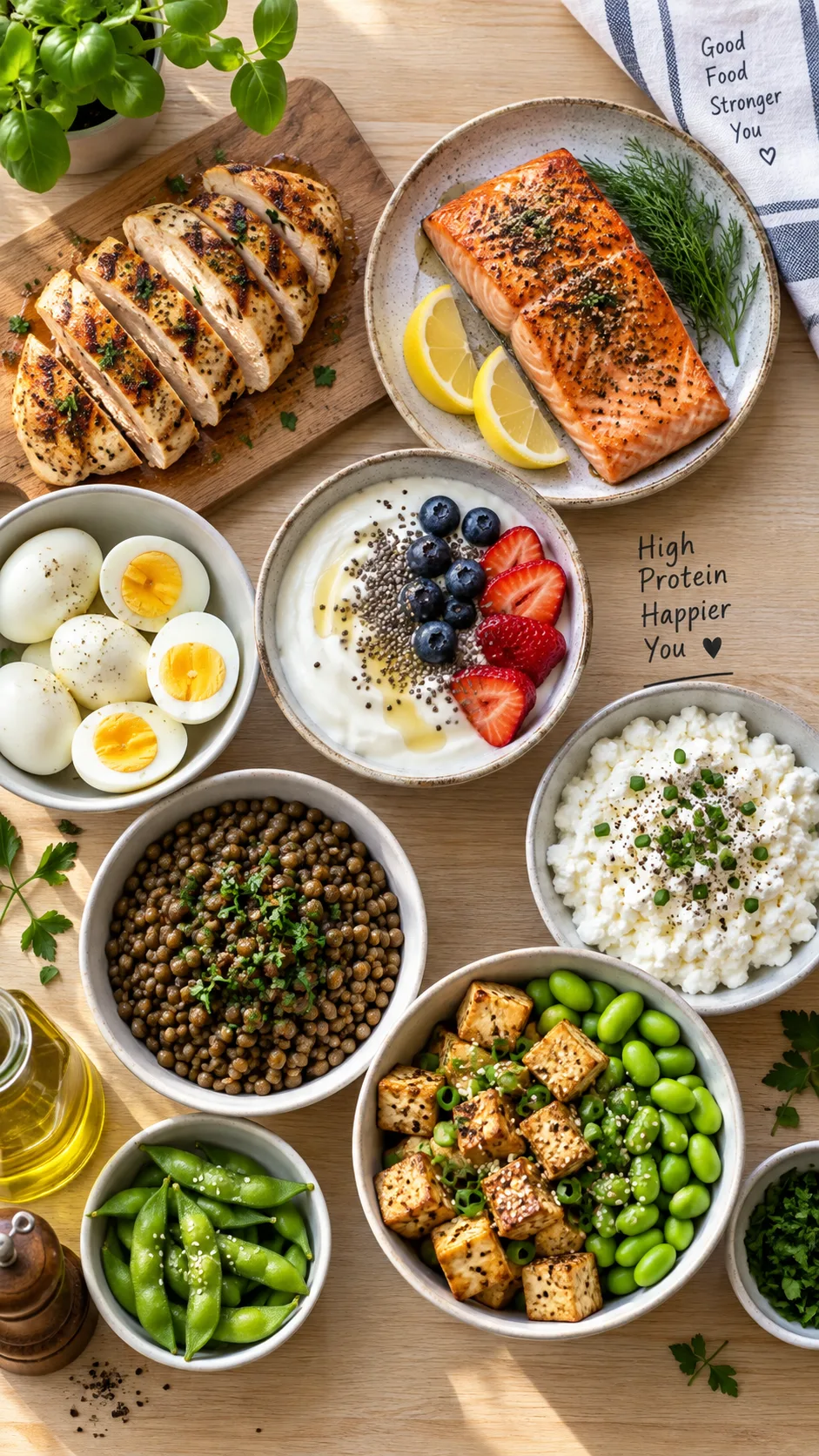
Why protein keeps you full when everything else fails
Your body treats protein differently from carbs and fat. It digests slower, it triggers fullness hormones, and it costs you energy just to process it. That last part has a name: the thermic effect of food (TEF).
Here’s how many calories your body burns simply digesting each macronutrient:
- Protein: 20% to 30% of its own calories burned during digestion
- Carbohydrates: 5% to 10%
- Fat: 0% to 3%
So a 200-calorie chicken breast effectively nets you closer to 150. A 200-calorie muffin nets you about 190. Over a year, that gap matters. Ever wondered why high protein dieters seem to “get away” with more food? Now you know.
The hormone part (stay with me, it’s short)
Protein raises GLP-1, PYY and CCK, the satiety hormones that tell your brain “we’re good here, close the kitchen.” It also blunts ghrelin, your hunger hormone. Research summarised by the National Library of Medicine shows again and again that higher protein intakes cut spontaneous calorie intake without anyone counting a thing.
FYI, those same GLP-1 pathways are what the trendy weight-loss injections target. Protein does a gentler version of the same job, for the price of eggs.
How much protein do you really need?
The government RDA sits at 0.8g per kg of bodyweight. That number prevents deficiency. It won’t build muscle, protect you while dieting, or keep you full. Big difference.
The International Society of Sports Nutrition position stand recommends 1.4g to 2.0g per kg for anyone training regularly. Dieting in a calorie deficit? Push toward the top of that range to protect muscle.
Your target, simplified
- Sedentary, general health: 1.2g per kg bodyweight
- Training 3 to 5 times per week, building muscle: 1.6g to 1.8g per kg
- Cutting fat while lifting: 2.0g to 2.4g per kg
- Over 50 (sarcopenia defence): 1.2g to 1.6g per kg minimum
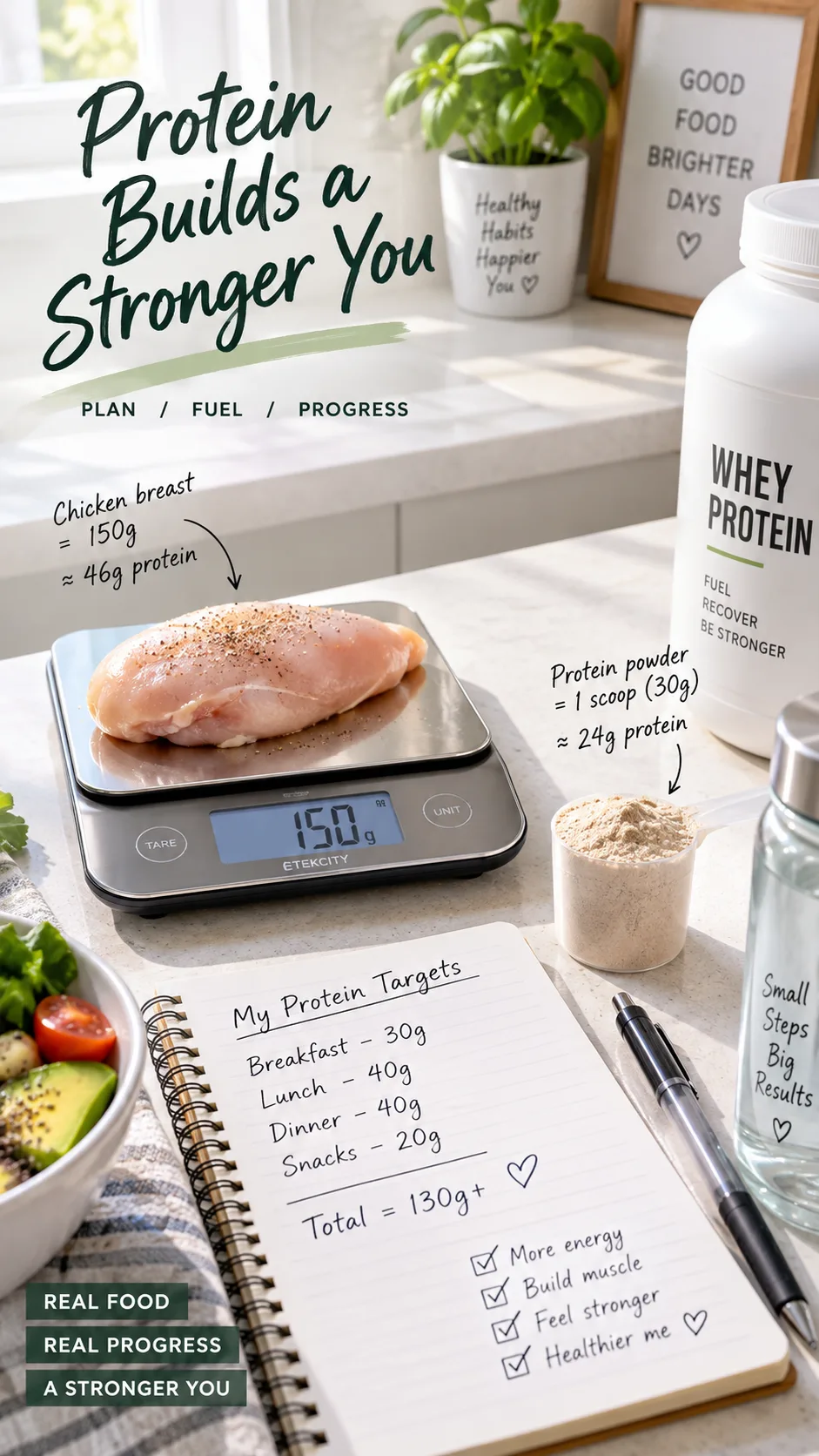
Quick example: an 80kg person who lifts weights lands around 128g to 144g of protein per day. That’s roughly four solid protein servings. Not a mountain. Just a plan.
The muscle-building rules nobody tells beginners
Eating protein doesn’t build muscle. Lifting builds muscle. Protein just supplies the bricks. Skip the training and you’ve simply bought expensive chicken.
Rule 1: Spread it across the day
Your body caps how much it uses for muscle protein synthesis in one sitting, roughly 0.4g per kg per meal. Slamming 100g at dinner wastes the opportunity. Hit 25g to 40g across 3 or 4 meals instead.
Rule 2: Leucine is the trigger
Leucine is the amino acid that flips the muscle-building switch. You need roughly 2.5g to 3g of leucine per meal. Animal proteins hit that easily. Plant eaters need bigger portions or smart combinations.
Rule 3: Protein around training helps, but your daily total wins
People oversold the “anabolic window” panic. Eat protein within a couple of hours either side of training and you’re fine. Your total daily intake does 90% of the work. Stop sprinting to the changing room with a shaker.
Rule 4: Train hard enough to deserve it
Progressive overload beats everything. Add reps, add weight, clean up your form. If your technique needs work, fix the fundamentals first. Small tweaks like leg press foot placement genuinely change which muscles grow. And if you sit at a desk all day, sorting out anterior pelvic tilt will make every squat and deadlift feel better.
The best high protein foods, ranked by usefulness rather than hype
Protein per calorie matters more than protein per serving. Here’s what earns a permanent place in your shopping trolley.
Animal-based heavy hitters
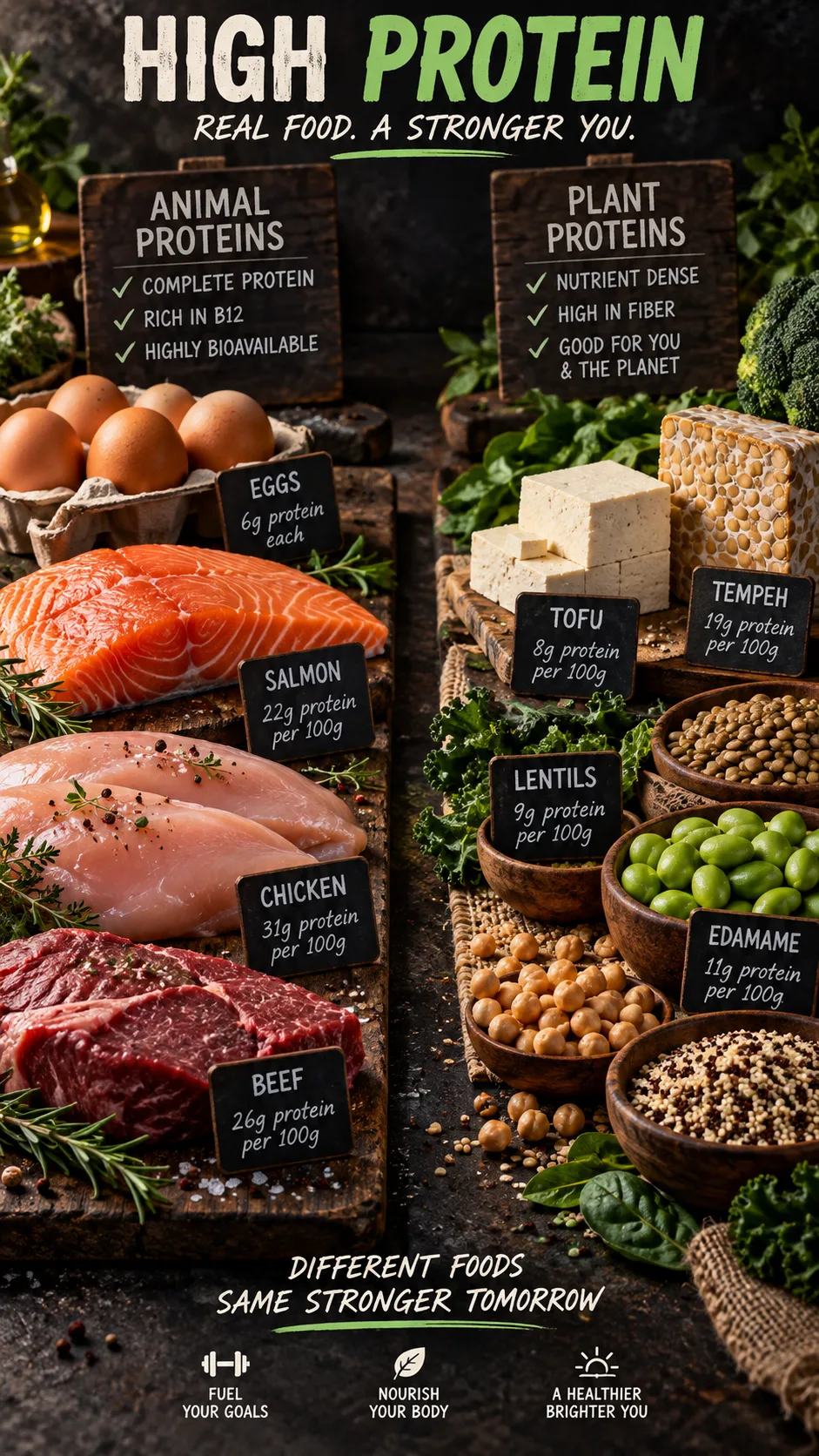
- Chicken breast: 31g protein per 100g cooked. The reliable, slightly boring workhorse.
- Greek yogurt (0% fat): 10g per 100g. Creamy, flexible, and it doubles as a sauce base.
- Cottage cheese: 11g per 100g plus slow-digesting casein. Elite before bed.
- Eggs: 6g each, with the best amino acid profile on the planet.
- Tinned tuna: 25g per tin, costs pocket change, needs zero cooking.
- Salmon: 25g per 100g plus omega-3s for recovery and joint health.
- Lean beef mince (5%): 26g per 100g plus iron, zinc and creatine.
- Prawns: 24g per 100g and almost no fat.
Plant-based winners
- Tofu (firm): 17g per 100g, complete protein, and it soaks up any flavour you throw at it
- Tempeh: 19g per 100g, fermented, easy on the gut
- Lentils: 9g per 100g cooked plus serious fibre
- Edamame: 11g per 100g, complete protein, brilliant snack
- Seitan: 25g per 100g (skip it if you’re coeliac)
- Soy or pea protein powder: 20g to 25g per scoop, both complete
The 7-day high protein diet plan
This plan targets roughly 140g to 160g of protein daily at around 1,800 to 2,000 calories. Scale portions up or down for your own numbers. Nothing here takes more than 20 minutes to cook, because I refuse to spend my evenings julienning anything.
Day 1
- Breakfast: 3-egg omelette with spinach and feta, plus Greek yogurt. 38g
- Lunch: Chicken and quinoa bowl with roasted peppers. 45g
- Dinner: Baked salmon, sweet potato, broccoli. 40g
- Snack: Cottage cheese with berries. 20g
Day 2
- Breakfast: Protein overnight oats with peanut butter. 35g
- Lunch: Tuna and white bean salad with olive oil. 42g
- Dinner: Beef stir-fry with rice and mixed veg. 45g
- Snack: Boiled eggs and an apple. 13g
Day 3
- Breakfast: Greek yogurt bowl with granola and whey. 40g
- Lunch: Turkey and hummus wholemeal wrap. 38g
- Dinner: Chicken curry with lentils and basmati. 48g
- Snack: Edamame with sea salt. 12g
Day 4
- Breakfast: Cottage cheese scrambled eggs on rye toast. 36g
- Lunch: Leftover chicken curry. 45g
- Dinner: Prawn and tofu pad thai style noodles. 42g
- Snack: Protein shake with banana. 28g
Day 5
- Breakfast: Smoked salmon and scrambled eggs. 34g
- Lunch: Big chicken Caesar salad, light dressing. 44g
- Dinner: Pepper soup with fish or lean goat meat. 40g
- Snack: Greek yogurt with honey. 18g
Day 6
- Breakfast: Protein pancakes with berries. 35g
- Lunch: Tempeh and black bean burrito bowl. 36g
- Dinner: Roast chicken thighs with vegetables. 45g
- Snack: Beef jerky and almonds. 16g
Day 7 (the relaxed one)
- Breakfast: Full breakfast: eggs, lean bacon, beans, grilled tomato. 40g
- Lunch: Light Greek yogurt and fruit. 20g
- Dinner: Whatever you fancy, with a fist-sized protein portion. 40g+
- Snack: Cottage cheese before bed. 20g
Notice the pattern? Every single meal starts with a protein anchor. Build the plate around that and the rest sorts itself out. If you want more structure on batch cooking, my lazy cook’s guide to healthy meal prep pairs well with this plan.
The mistakes that sabotage high protein diets
1. Ignoring fibre completely
All chicken, no vegetables? Your digestion will file a formal complaint. Aim for 25g to 35g of fibre daily from vegetables, beans, oats and fruit. Fibre also amplifies the fullness effect of protein, so you get paid twice on satiety.
2. Drinking your protein instead of eating it
Shakes are convenient. They also barely register as a meal. Whole foods chew longer, digest slower and keep you fuller. Use powder to fill gaps, not to replace half your intake.
3. Under-eating carbs and wondering why training sucks
High protein ≠ zero carb. Carbs fuel hard sets. Cut them to the bone and your lifts drop, your recovery tanks, and your mood turns feral. If low carb genuinely suits your life, at least do it properly with a solid list of low carb foods rather than guessing.
4. Forgetting water
More protein means more nitrogen for your kidneys to clear. Healthy kidneys handle this fine, and the Harvard Health team has debunked the “protein wrecks your kidneys” myth repeatedly. Still, drink more water. Two to three litres daily.
5. Eating protein only at dinner
Classic pattern: 10g breakfast, 20g lunch, 90g dinner. You’ll feel hungry all day and waste muscle-building potential. Front-load your protein. A 35g breakfast changes your entire afternoon.
Real talk: what changed for me
I tracked my intake honestly for one week and found out I was eating 78g of protein on a “good” day. I thought I was crushing it. I was not.
Pushing to 150g took three changes: eggs instead of toast, Greek yogurt instead of crisps, and doubling the meat in whatever I cooked. Within two weeks the constant grazing stopped. Within eight weeks my lifts climbed and my waistband loosened, even though I ate roughly the same calories.
The lesson? Most people don’t have a discipline problem. They have a protein deficit dressed up as one.
Frequently asked questions
Can I build muscle on a plant-based high protein diet?
Yes. You’ll want a slightly higher total intake (add roughly 10% to 20%) and more variety to cover all the amino acids. Soy, pea protein, tofu, tempeh, lentils and quinoa cover you comfortably.
Is too much protein dangerous?
For healthy people, no. Long-term studies of intakes up to 3g per kg show no harm to kidney or liver function. If you already have kidney disease, talk to your doctor first. That’s a real exception, not internet paranoia.
Do I need protein powder?
No, but it’s convenient and cheap per gram. Whey digests fast, casein digests slow, and pea or soy work fine for plant-based eaters. Treat it as a tool, not a strategy.
Will high protein help with weight loss specifically?
Yes. It keeps you fuller, it burns more calories during digestion, and it protects muscle while you lose fat, which stops your metabolism from crashing. IMO it’s the single highest-leverage nutrition change most people can make. If you’re also managing calories tightly, this fits neatly alongside structured lower-calorie meal plans.
How fast will I see results?
Appetite control improves within 3 to 7 days. Strength gains show up in 4 to 6 weeks. Visible body composition change takes 8 to 12 weeks of consistency. Nobody transforms in a fortnight, whatever Instagram claims.
Your action plan (start tomorrow)
- Calculate your target: bodyweight in kg × 1.6 for muscle building
- Divide by 4: that’s your per-meal protein goal
- Fix breakfast first: eggs, Greek yogurt or a protein smoothie, 30g minimum
- Anchor every plate: protein goes down first, everything else fills the gaps
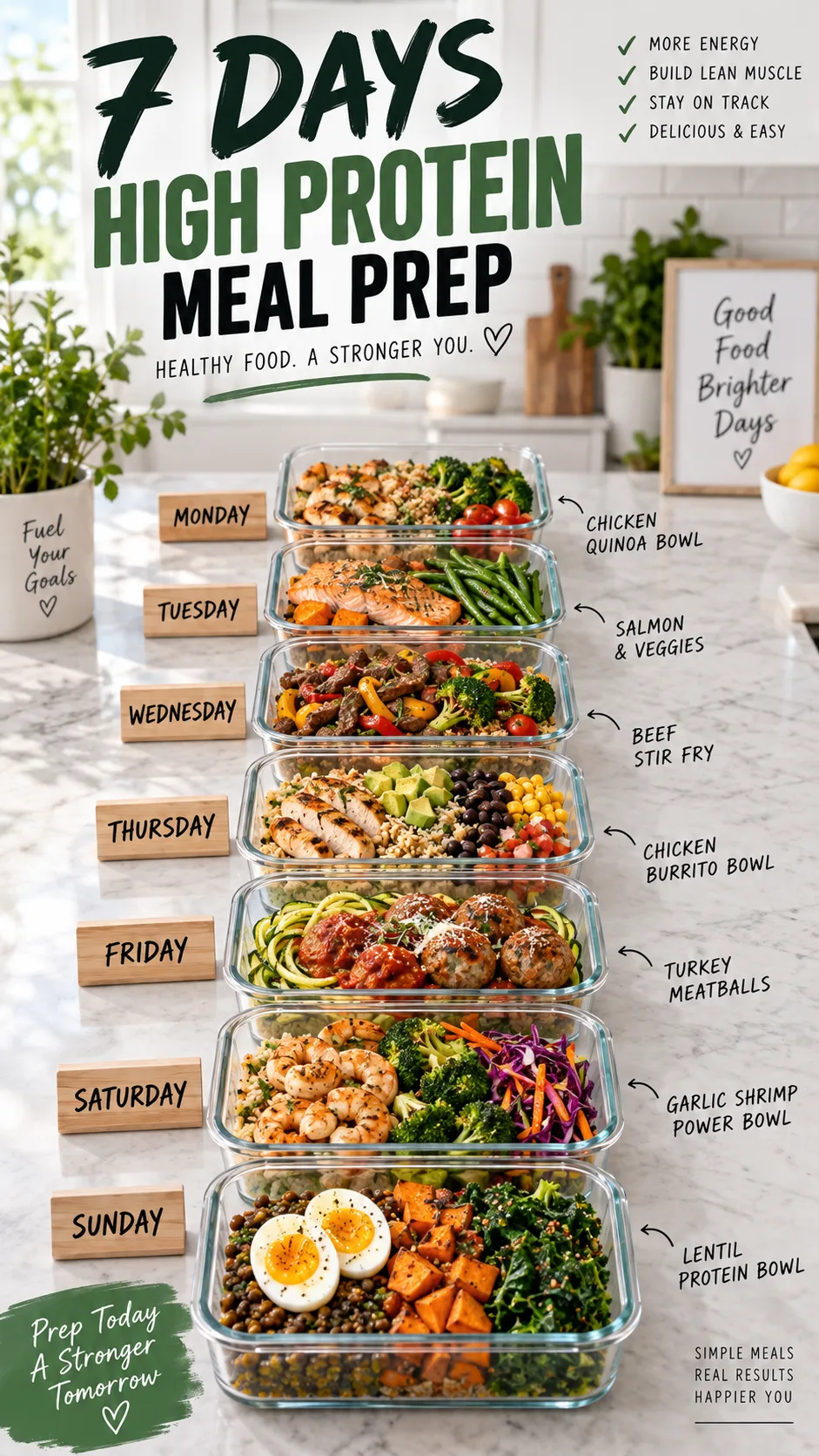
- Batch cook twice a week: Sunday and Wednesday, two hours in total
- Lift weights three times weekly: progressive overload, or the protein has no job to do
- Track for 7 days only: learn your portions, then stop obsessing

The bottom line
A high protein diet plan works because it fixes hunger at the source instead of asking you to white-knuckle your way past the biscuit tin. Hit 1.6g to 2.2g per kg, spread it across 3 or 4 meals, lift something heavy three times a week, and keep the fibre and water flowing.
You don’t need a fancy app, a coach, or a cupboard full of supplements. You need eggs, chicken, yogurt, beans and a bit of repetition.
Start with breakfast tomorrow. Get 30g of protein in before 9am and pay attention to how your afternoon feels. That one meal will convince you faster than any article ever could, including this one.