

You do not need a colour-coded fridge, a personal chef, or a depressing desk salad to eat well during school. You need a teen diet meal plan that fits around early buses, packed classes, homework, practice, and the occasional “I forgot I had a project due tomorrow” panic.
Food should fuel your real life, not feel like another assignment. This plan sticks to quick, filling meals that support growth, focus, sports, sleep, and time with friends. You can eat pizza with friends and still build solid habits.
Most teens need more food than they expect, especially during growth spurts or sports seasons. Skip tiny portions and dramatic “summer body” rules. Aim for regular meals, satisfying snacks, and enough variety. School, hormones, movement, and growth all demand fuel.
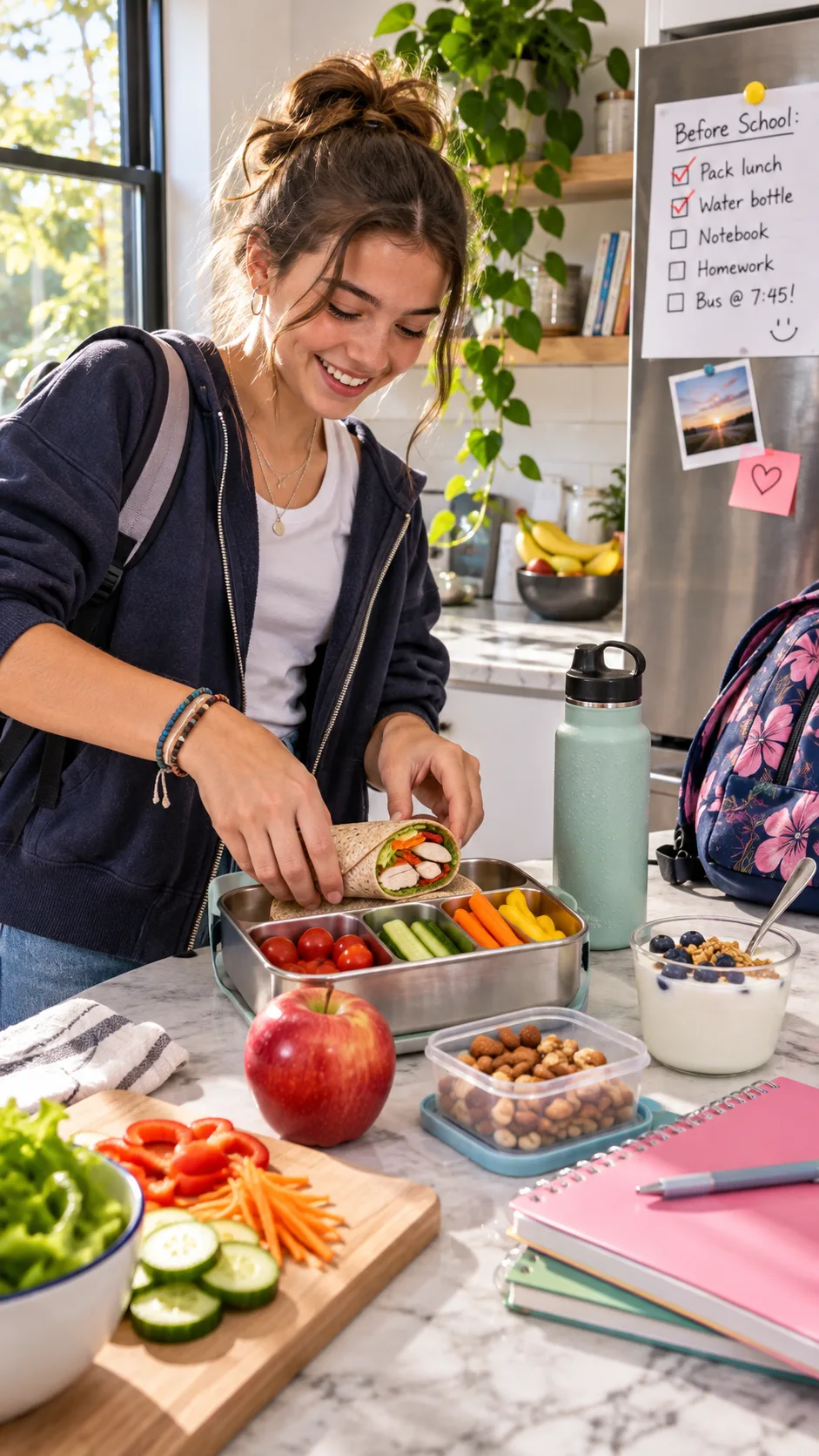
Why most teen meal plans fall apart by Wednesday
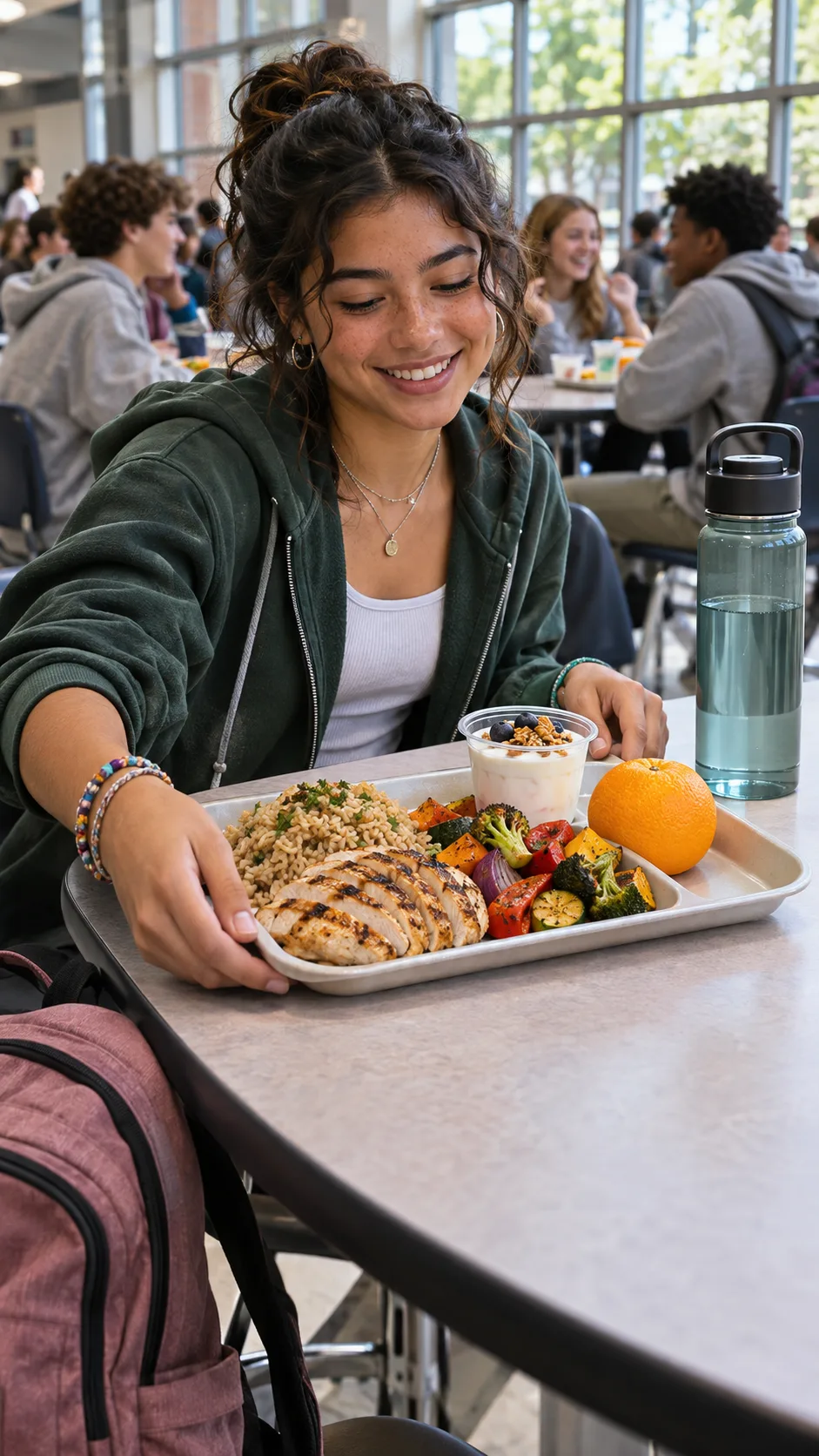
Many diet plans ignore how little control teenagers often have over food. You might eat cafeteria food, whatever your family buys, or whatever you can grab before the bus pulls away. That matters far more than a flawless recipe with 19 ingredients.
Extreme plans create a familiar problem. You skip breakfast, reach lunch starving, buy a giant cookie or energy drink, then feel bad about it later. Your body did not fail a discipline test. It needed food.
A workable healthy meal plan for teenagers uses familiar foods and repeat meals. Repeating meals saves time, money, and mental energy. Nobody needs to invent seven breakfasts before 7 a.m.
Teen nutrition needs a different approach
Teenagers need nutrients for bones, muscles, brains, hormones, and growth. The Dietary Guidelines for Americans recommend eating fruits, vegetables, whole grains, protein foods, and dairy or fortified alternatives. That approach makes more sense than a rule that tells you to “just eat less.”
Weight loss diets can hurt teens when they restrict too much food, cut out major food groups, or make eating scary. Talk with a parent, school nurse, doctor, or registered dietitian if weight concerns, body image stress, frequent dieting, missed periods, dizziness, or binge eating come up. Asking for help takes strength.
Each teen needs something different based on age, growth, activity, health, culture, budget, and appetite. A basketball player who practices two hours a day needs more food than someone who spends afternoons in debate club. Use this article as a flexible template, not a food rulebook carved in stone.
A simple formula for more filling meals
Skip the complicated food math. Build most meals with protein, fibre-rich carbs, and colour. Add a source of fat when you can. That combination can carry you through class without leaving you hungry an hour later.
Protein helps you stay full and build muscle. Fibre-rich carbs give your brain and body steady energy. Fruits and vegetables bring vitamins, minerals, and fibre. Nuts, seeds, avocado, eggs, and olive oil can make meals feel more satisfying.
- Choose a protein: eggs, Greek yogurt, milk, cheese, chicken, tuna, beans, lentils, tofu, turkey, edamame, or peanut butter.
- Add a carb that sticks with you: oats, whole grain bread, rice, potatoes, pasta, tortillas, cereal, fruit, or beans.
- Add colour: berries, bananas, apples, carrots, cucumbers, spinach, tomatoes, peppers, frozen vegetables, or whatever you will honestly eat.
- Include fat when it helps: nuts, seeds, cheese, avocado, olive oil, or nut butter.
Think about a turkey sandwich with fruit and milk. You get protein, carbs, fibre, calcium, and fluids without much fuss. Chips alone taste good for about eight minutes, then your stomach starts filing complaints.
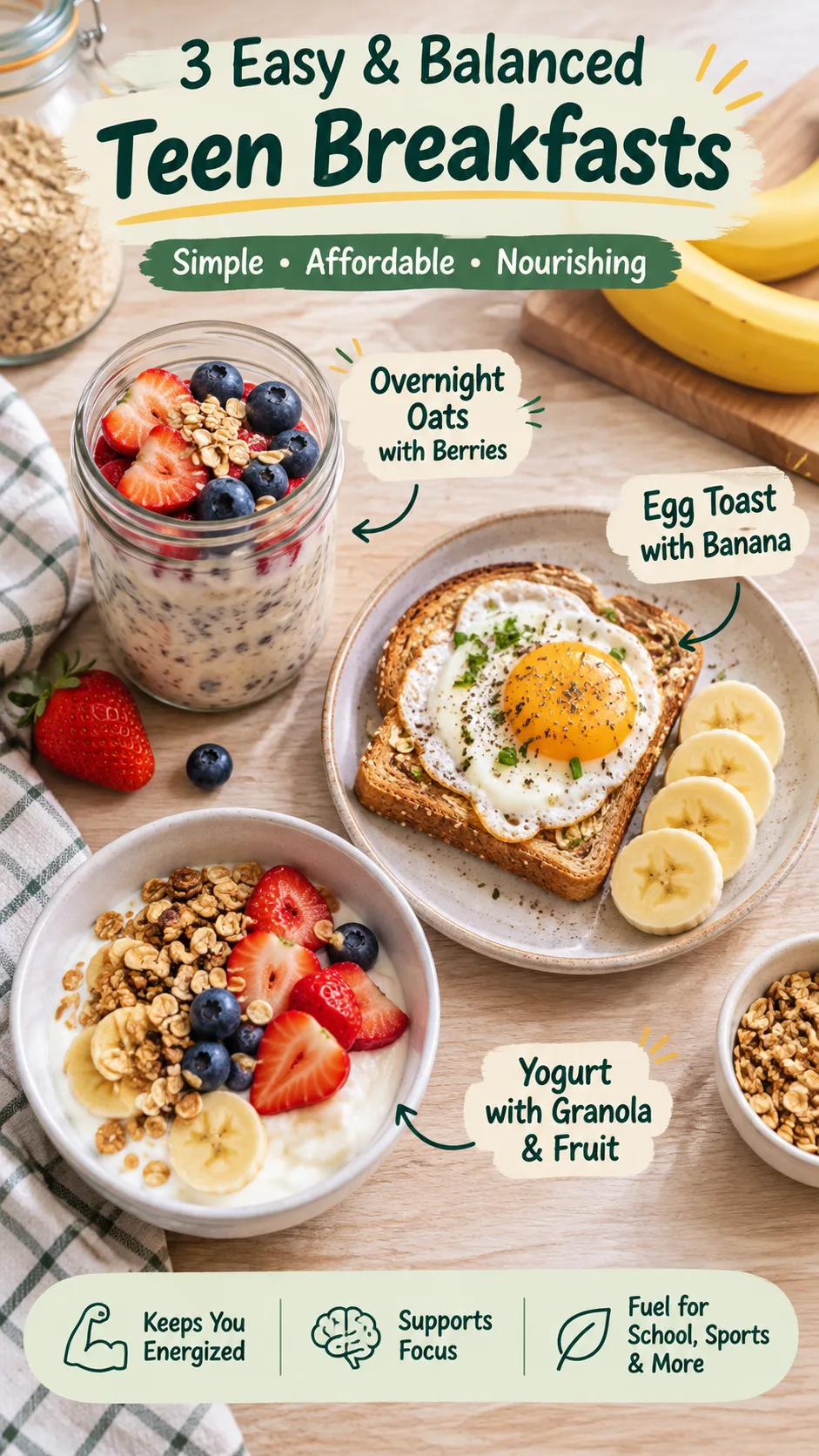
What counts as a balanced school breakfast?
Breakfast does not need to resemble a social media brunch board. A solid teen breakfast combines carbs and protein so you start the day with energy. If you can eat it in five minutes or take it in the car, even better.
- Overnight oats with milk or yogurt, berries, and peanut butter
- Whole grain toast with eggs and a banana
- Greek yogurt with cereal, fruit, and seeds
- Bean and cheese breakfast burrito with salsa
- Whole grain cereal with milk, fruit, and a handful of nuts
- A smoothie with milk or fortified soy milk, fruit, oats, and peanut butter
If mornings feel impossible, get breakfast ready the night before. Put your spoon next to the oats, toss a banana in your bag, or freeze smoothie ingredients in a container. Your morning self will appreciate it.
A realistic 5-day teen diet meal plan for school
This school week meal plan uses familiar foods and flexible portions. Start with enough food to feel satisfied, then eat more when hunger, sports, or a long day calls for it. Hunger changes from one day to the next. That is normal.
Pack lunches the night before when you can. Keep shelf stable backups in your backpack or locker if your school allows them. A granola bar, trail mix, crackers, or a peanut butter packet can save you on a long day.
Monday: Start with an easy win
Breakfast: Overnight oats with milk, yogurt, berries, and peanut butter. Lunch: Turkey and cheese whole grain wrap, baby carrots, apple, and water. Snack: Trail mix or cheese with crackers.
Dinner: Chicken, tofu, or bean tacos with tortillas, lettuce, salsa, cheese, and avocado. Add rice or corn if practice left you extra hungry. Taco night works because everyone can make a plate they like.
Tuesday: Use leftovers without shame
Breakfast: Eggs on toast with fruit. Lunch: Leftover taco bowl with rice, beans, protein, corn, salsa, and cheese. Snack: Yogurt with granola or a banana with peanut butter.
Dinner: Pasta with meat sauce, lentil sauce, or turkey sauce and frozen vegetables on the side. Add a salad if your family likes one, but lettuce cannot fix everything. Pasta gives you useful energy, especially on active days.
Wednesday: Get through the midweek slump
Breakfast: Smoothie with milk, banana, frozen berries, oats, and peanut butter. Lunch: Hummus and veggie wrap with cheese, grapes, and pretzels. Snack: Edamame, roasted chickpeas, or protein-rich yogurt.
Dinner: Baked potatoes with beans, chili, cheese, broccoli, and Greek yogurt. Potatoes bring carbs, potassium, and comfort, which can feel pretty perfect on a Wednesday. Keep the toppings simple and let everyone choose their own.
Thursday: Let convenience help
Breakfast: Whole grain cereal, milk or fortified soy milk, and a banana. Lunch: Tuna salad, chicken salad, or mashed chickpea sandwich with cucumber slices and an orange. Snack: Popcorn and a cheese stick.
Dinner: Stir fry with frozen vegetables, eggs, chicken, tofu, or beans over rice or noodles. Use bottled sauce if it helps your family put dinner on the table. Convenience matters when it means everyone eats.
Friday: Keep food flexible
Breakfast: Yogurt parfait with fruit, cereal, and nuts or seeds. Lunch: A leftover stir fry bowl or a school cafeteria meal with a protein option, fruit, and milk or water. Snack: A granola bar and fruit before an after school activity.
Dinner: Pizza night with a side salad, fruit, roasted vegetables, or whatever your household enjoys. One meal does not make or break your health. Enjoy the pizza, eat until you feel comfortably full, and get on with your evening.
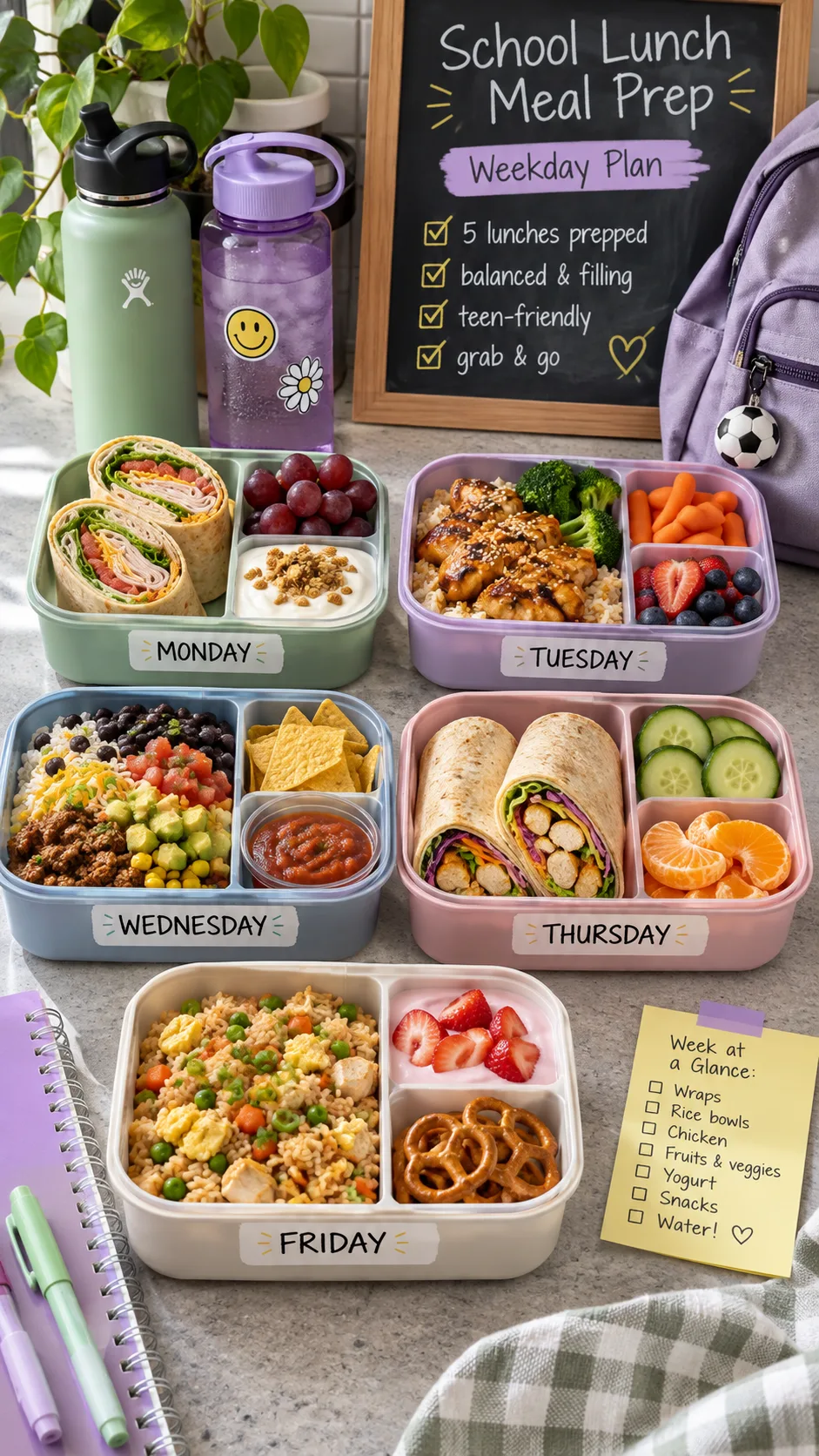
Smart school lunch ideas that travel well
A packed lunch needs to survive a backpack, a crowded fridge, and the strange physics of a school locker. Pick foods that taste good cold, or pack a thermos for warm meals. You do not need to settle for the same dry sandwich every day.
- Chicken, bean, or tofu burrito with salsa and fruit
- Whole grain pasta salad with cheese, chicken or chickpeas, tomatoes, and cucumber
- DIY snack box with crackers, cheese, turkey, hummus, fruit, and carrots
- Rice bowl with edamame, shredded chicken, cucumber, avocado, and soy sauce
- Peanut butter and banana sandwich with yogurt and berries
- Thermos chili with cornbread, crackers, or a cheese quesadilla
- Bagel with cream cheese or egg, plus fruit and milk
Take food safety seriously, especially with meat, dairy, eggs, and leftovers. Pack cold foods with an ice pack and use an insulated container for hot food. The FoodSafety.gov guidance can help families store perishable foods safely.
School cafeteria lunches can fit into a healthy teen eating plan too. Choose a protein, a fruit or vegetable, and a filling carb such as rice, potatoes, bread, or pasta. If your choices feel limited, bring a snack from home instead of skipping lunch.
Snack ideas for sports, study sessions, and long bus rides
Snacks do not “ruin your appetite” when you use them well. They can stop extreme hunger and help you refuel before or after activity. Hungry teenagers need snacks. Nobody should find that shocking.
Carbs and protein make a useful snack pair. Carbs provide quick energy, and protein helps you stay satisfied longer. Try these options:
- Apple slices with peanut or sunflower seed butter
- Banana and a carton of milk
- Greek yogurt with berries
- Cheese, crackers, and grapes
- Hummus with pita bread and carrots
- Trail mix with nuts, cereal, seeds, and dried fruit
- Toast with peanut butter and honey
- Hard-boiled eggs with fruit
- Chocolate milk after hard practice, with a real meal later
Bring extra food on practice days, tournament days, and days when lunch comes unusually early. Activity uses up fuel. Feeling hungry later does not mean you did anything wrong. Your body used what you gave it.
How to meal prep without losing your whole Sunday
Meal prep for teenagers should make weekdays easier, not turn your kitchen into a food factory. Spend 30 to 60 minutes on a few basics, then combine them in different ways through the week. A little prep works better than a huge plan that falls apart by Tuesday.
- Wash fruit and vegetables that your family likes.
- Cook one carb, such as rice, pasta, potatoes, or oats.
- Prepare one or two proteins, such as eggs, chicken, beans, tofu, or chili.
- Pack easy snacks in small containers or bags.
- Choose two breakfasts and two lunches that you can repeat.
- Write the week’s dinner ideas on the fridge so nobody asks “what are we eating?” six times.
Frozen and canned foods can save a lot of time and still provide solid nutrition. Choose low sodium canned beans when possible, rinse them, and keep frozen vegetables ready for soups, pasta, stir fries, and burrito bowls. Fresh food does not win a nutrition contest just because it photographs better online.
For more practical food guidance, the USDA MyPlate site has simple meal ideas and resources for different ages. Use it for ideas, not as a reason to analyze every bite.
What teens should avoid in a “diet” plan
A healthy diet plan for teens should never make you fear food. It should not ask you to starve yourself, use detox teas, take laxatives, try fasting challenges, use diet pills, or cut out whole food groups without medical advice. Those trends often promise control and make life miserable.
Be careful with social media “what I eat in a day” videos that sell one person’s meals as advice for everyone. A creator’s plate cannot account for your height, growth stage, sports schedule, health needs, culture, budget, or hunger. No 30-second video deserves that much influence over your lunch.
Talk to a qualified professional if thoughts about food take over your day or if you notice signs of an eating disorder. The National Eating Disorders Association warning signs guide can help you spot when someone needs support. Tell a trusted adult early. Early support can make a huge difference.
Focus on habits, not a number on the scale
Set goals that help you feel and function better. Eat breakfast four school days this week. Pack a snack for practice. Add fruit to lunch. Drink water during class breaks.
You control those goals, which can build confidence. A scale cannot measure better focus, stronger workouts, steadier moods, or the relief of not feeling starving by third period. Health includes far more than a number.
If you want guidance that supports teen development beyond food, check out science-backed habits that support healthy growth for teenagers. Sleep, movement, nutrition, and overall health affect one another.
Make this meal plan work with your family, budget, and preferences
You do not need expensive “health foods” to eat well. Eggs, oats, beans, peanut butter, frozen vegetables, potatoes, rice, canned tuna, yogurt, and store-brand whole grain bread can make a budget go further. Start with foods your household already buys, then make one useful change at a time.
Vegetarian? Eat beans, lentils, eggs, dairy, tofu, tempeh, edamame, and fortified soy products. Lactose intolerant? Choose lactose-free milk, yogurt, cheese, or fortified plant milks. Gluten-free? Use potatoes, rice, corn tortillas, gluten-free oats, and naturally gluten-free grains.
Keep foods from your culture on the menu too. Rice, beans, dal, flatbreads, soups, noodles, plantains, corn, stews, and family recipes can support balanced teen nutrition. Food connects you with people. It does more than fill a nutrition label.
Final takeaway: Feed your week, not a trend
The best diet meal plan for teenagers fits your school schedule and gives you enough energy to learn, move, grow, and enjoy life. Build meals around protein, filling carbs, fruits or vegetables, and foods you genuinely enjoy. Pack simple snacks, use leftovers, and stay flexible.
Forget perfection. Choose one breakfast, one lunch, and two snacks from this guide, then try them next week. A meal plan works when you can live with it. That matters more than any trendy food rule.