

You’ve probably tried a 1200 calorie diet before. It lasted about four days, you snapped at a coworker over a stapler, and then a pizza “happened.” Sound familiar?
The plan didn’t fail because you lack willpower. It failed because most 1200 calorie meal plans read like a punishment. Steamed broccoli, plain chicken, and a sad rice cake at 3 p.m. Who signs up for that twice?
This guide fixes that. You’ll get a realistic 1200 calorie meal plan for women that keeps you full, plus meal prep shortcuts so you spend less time cooking and more time living.
First, let’s clear up the “1200 calorie deficit” confusion
People throw around the phrase “1200 calorie deficit” and mean two completely different things. The difference matters a lot for your health.
- Eating 1200 calories per day. This is what most women mean. You cap your daily intake at roughly 1200 calories, and your body burns the rest from stored fat.
- Cutting 1200 calories below your maintenance. If you burn 2000 calories a day, this would mean eating 800. That’s too aggressive for almost everyone, and I don’t recommend it.
This article covers the first version: a 1200 calorie a day plan that creates a healthy deficit for most women. Depending on your size and activity, that gap usually lands between 500 and 900 calories daily, which works out to roughly 1 to 2 pounds of fat loss per week.
Want your exact numbers? Plug your stats into the NIH Body Weight Planner. It beats guessing, and it takes two minutes.
Is 1200 calories a day safe for women?
Short answer: for many women, yes, for a limited stretch. Long answer: it depends on who you are and how you do it.
The Mayo Clinic generally treats 1200 calories as the floor for women, not a starting point everyone should aim for. Go lower without medical supervision and you risk losing muscle, dragging through the day exhausted, and coming up short on nutrients.
This plan suits you if:
- You’re a smaller or moderately active woman with a maintenance intake around 1700 to 2100 calories
- You want structure and clear portions instead of “just eat less”
- You can commit to hitting your protein and fiber targets as well as the calorie number
Skip it (or talk to a doctor first) if:
- You’re pregnant or breastfeeding
- You train hard five or more days a week
- You have a history of disordered eating
- You manage diabetes, thyroid issues, or take medication that affects appetite or blood sugar
The biggest mistake I see women make is treating 1200 as a forever number. Use it as a tool for 6 to 10 weeks, then reassess. More on that later.
The 4 rules that make a 1200 calorie meal plan stick
Ever wondered why some women breeze through a low-calorie plan while others crash by Wednesday? It comes down to how you spend those 1200 calories. The number on its own tells you very little.
1. Protein first, always
Aim for 100 to 120 grams of protein daily. Protein keeps you full and protects your muscle while you lose fat. It also costs your body more calories to digest than carbs or fat do. Harvard Health backs this up: higher protein intake helps preserve lean mass during weight loss.
2. Fiber fills the gaps
Shoot for 25 grams of fiber from vegetables, beans, oats, and fruit. Fiber slows digestion and stretches your stomach so your brain gets the “we’re good here” signal. Low-fiber 1200 calorie diets feel like starvation. High-fiber ones feel almost normal.
3. Eat volume, not air
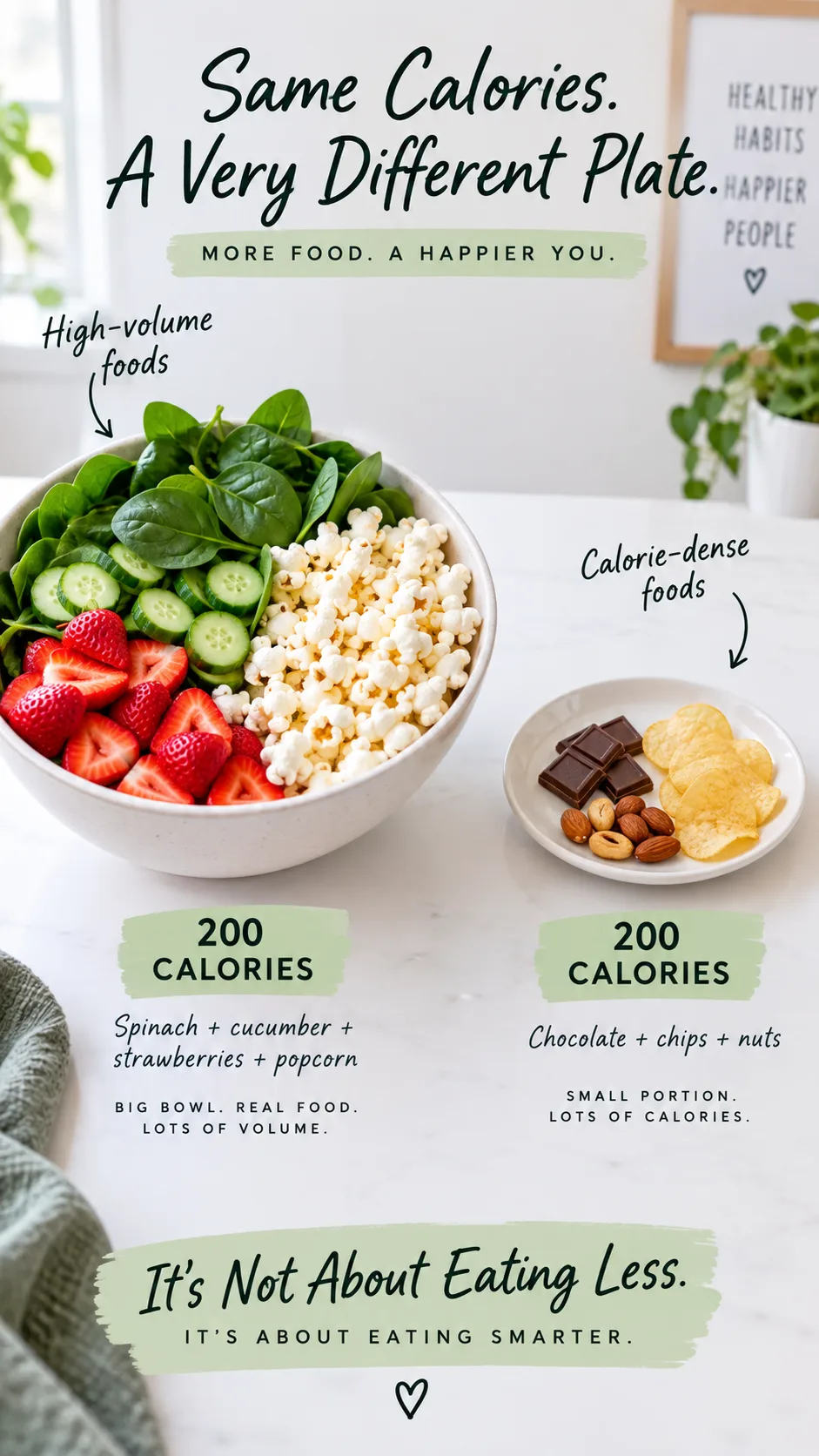
A cup of grapes and a handful of raisins pack similar calories. One fills a bowl. The other disappears in three bites. Choose high-volume, low-calorie foods like leafy greens, zucchini, berries, cucumbers, and broth-based soups whenever you can.
4. Plan your treats on purpose
Ban chocolate and you’ll think about chocolate 400 times a day. Build in a 100 to 150 calorie daily treat and the cravings lose their grip. Strategy beats willpower every single time.
The 7-day 1200 calorie meal plan
Each day follows the same skeleton: breakfast around 300 calories, lunch around 350, dinner around 400, and one snack around 150. The calories below are approximate, so weigh your portions for the first week until your eye gets calibrated.
You’ll notice a lot of repetition in the plan. That’s on purpose. Repeating meals cuts decision fatigue and shortens your grocery list, and it’s the only way meal prep works in a normal week. You can rotate in new meals later once the habit locks in.
Day 1
- Breakfast: Overnight oats with 40g oats, 1 scoop vanilla protein powder, and ½ cup berries (310 cal)
- Lunch: Grilled chicken salad with 120g chicken breast, mixed greens, cherry tomatoes, ½ cup chickpeas, and 1 tbsp light vinaigrette (350 cal)
- Dinner: 120g baked salmon, 1 cup roasted broccoli and bell peppers, ½ cup quinoa (400 cal)
- Snack: Apple with 1 tbsp peanut butter (170 cal)
Day 2
- Breakfast: 2-egg omelet with spinach, mushrooms, and 20g feta, plus 1 slice whole grain toast (300 cal)
- Lunch: Turkey and hummus wrap in a high-fiber tortilla with cucumber and lettuce (340 cal)
- Dinner: Lean beef stir-fry with 100g sirloin, 2 cups mixed vegetables, garlic, ginger, and ½ cup brown rice (410 cal)
- Snack: 170g non-fat Greek yogurt with cinnamon (110 cal)
Day 3
- Breakfast: Protein smoothie with 1 scoop protein powder, 1 cup unsweetened almond milk, 1 cup frozen mango, and a handful of spinach (290 cal)
- Lunch: Leftover beef stir-fry from Day 2 (410 cal)
- Dinner: Pepper soup with 150g lean goat meat or chicken, loaded with vegetables, plus a small boiled plantain (380 cal)
- Snack: 2 boiled eggs (140 cal)
Day 4
- Breakfast: Same overnight oats as Day 1 (310 cal)
- Lunch: Tuna salad with 1 can tuna in water, 1 tbsp light mayo, celery, over a bed of greens with 6 whole grain crackers (340 cal)
- Dinner: 130g grilled chicken thigh (skin removed), 1 cup roasted carrots and zucchini, small sweet potato (400 cal)
- Snack: 1 cup air-popped popcorn and a square of dark chocolate (150 cal)
Day 5
- Breakfast: Cottage cheese bowl with 200g low-fat cottage cheese, sliced peach, and 1 tbsp chopped almonds (300 cal)
- Lunch: Leftover chicken and vegetables from Day 4 (400 cal)
- Dinner: Beans and vegetable stew with 1 cup cooked beans, tomatoes, peppers, onions, and a small portion of grilled fish (380 cal)
- Snack: Baby carrots with 2 tbsp hummus (120 cal)
Day 6
- Breakfast: Same omelet as Day 2 (300 cal)
- Lunch: Leftover beans stew from Day 5 (380 cal)
- Dinner: Shrimp and zucchini “noodles” with 150g shrimp, 2 cups spiralized zucchini, garlic, chili, and 1 tsp olive oil (350 cal)
- Snack: Greek yogurt with ½ cup berries (170 cal)
Day 7
- Breakfast: Protein smoothie from Day 3 (290 cal)
- Lunch: Big salad with 2 boiled eggs, 60g grilled chicken, avocado (¼), greens, and lemon dressing (360 cal)
- Dinner: Your flexible dinner. Eat out or cook a favorite, and aim for roughly 450 calories with a palm-sized protein and plenty of vegetables (450 cal)
- Snack: Skip it or keep it light, since dinner ran higher (0 to 100 cal)
If you eat Nigerian food regularly, swap in low glycemic staples where the plan calls for grains. Beans, unripe plantain, and oats all fit without any fuss. Check the glycemic index table of Nigerian foods to pick carb options that won’t spike your hunger an hour later.
Meal prep shortcuts that save your sanity
A confession: I don’t enjoy cooking. I enjoy eating. So every shortcut below exists because I got tired of spending Sunday afternoons chopping onions like a line cook.

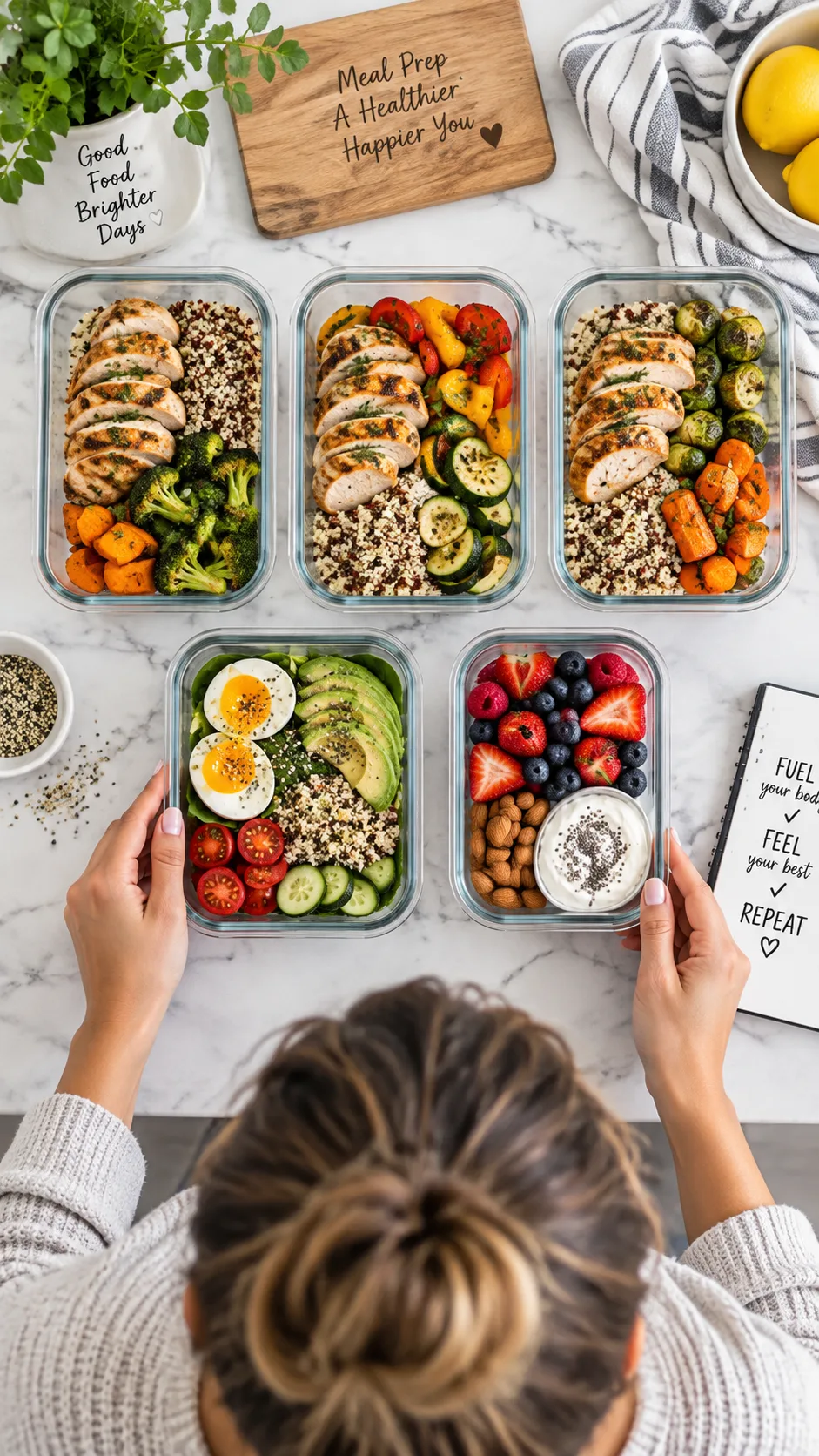
- Cook protein in bulk twice a week. Bake 1kg of chicken breast on Sunday and grill fish on Wednesday. Portion it into 120g servings while it’s still on the counter. Now every lunch and dinner takes two minutes to assemble.
- Use one sheet pan for all your vegetables. Toss broccoli, peppers, zucchini, and carrots with 1 tbsp olive oil and roast at 220°C for 25 minutes. That covers four dinners.
- Make overnight oats in jars for three days. They keep perfectly. Grab a jar, eat, go.
- Portion snacks into bags the moment you get home from shopping. Pre-portioned almonds don’t turn into a 600-calorie accident at 9 p.m.
- Freeze smoothie packs. Bag frozen fruit, spinach, and a scoop of protein powder. In the morning, dump the bag into the blender with liquid and you’re done.
- Buy pre-washed greens and pre-cut vegetables. Yes, they cost more. You know what costs more? Ordering takeout because the celery intimidated you.
- Cook one big pot of beans or stew for the week. Nigerian beans stew, lentil soup, or chili all freeze well and reheat in minutes.
- Double every dinner. Tomorrow’s lunch already exists. You just made it.
Want the full system? My lazy cook’s guide to healthy meal prep walks through the exact Sunday routine that keeps me on track without eating my whole weekend.
Smart swaps and snacks under 150 calories
Struggling at 4 p.m.? Everyone does. Keep these low-calorie snacks stocked and you’ll survive the afternoon slump without raiding the vending machine.
- Boiled egg + 5 cherry tomatoes (95 cal)
- 170g non-fat Greek yogurt (100 cal)
- Cucumber slices with 2 tbsp hummus (90 cal)
- 1 medium orange (60 cal)
- 15 almonds (105 cal)
- Rice cake with 1 tbsp cottage cheese and tomato (70 cal)
- Roasted groundnuts, 1 small handful (120 cal)
- Miso soup or light pepper soup broth (40 cal)
Swaps that save hundreds of calories
- Swap regular soda for sparkling water with lime. Saves 140 calories per can.
- Swap 2 tbsp creamy dressing for 1 tbsp vinaigrette or lemon juice. Saves about 100 calories.
- Swap fried protein for grilled or air-fried. Saves 150 to 250 calories per serving.
- Swap white rice for cauliflower rice or a half-and-half mix. Saves up to 150 calories per cup.
- Swap a café latte for black coffee with a splash of milk. Saves 150 to 200 calories.
Curious about the exact calories in any food? The USDA FoodData Central database gives you accurate numbers instead of a random blog’s guess.
5 mistakes that sabotage a 1200 calorie diet
I’ve watched dozens of women start strong and stall out. The same handful of mistakes shows up every time.
- Skipping breakfast to “save” calories. You’ll eat those calories back by 8 p.m., plus interest. Spread your food across the day.
- Drinking your calories. Juice, sweetened coffee, and “healthy” smoothies from cafés can quietly add 400 calories. Liquids don’t fill you up the way food does.
- Eyeballing portions. Your “tablespoon” of peanut butter probably weighs three tablespoons. Use a food scale for the first two weeks. It’s humbling, and it works.
- Ignoring strength training. On a low-calorie plan, lifting weights tells your body to keep muscle and burn fat instead. Two or three sessions a week changes everything. Start with this beginner-friendly strength training guide for women.
- Quitting after one bad day. One 2000 calorie day doesn’t erase a week of progress. It’s a Tuesday, not a moral failure. Eat normally tomorrow and move on.
How long should you stay on 1200 calories?
Think of 1200 calories as a sprint, not a marathon. Most women do well for 6 to 10 weeks, then benefit from a break.
Why? Your body adapts. After several weeks, your metabolism slows slightly, your energy dips, and workouts feel heavier. Pushing through rarely helps.
Signs it’s time to bump your calories up:
- You’ve lost more than 10% of your starting weight
- Your sleep quality has tanked
- You feel cold all the time, or irritable, or so tired that stairs feel like a workout
- Your weight loss has stalled for 3+ weeks despite honest tracking
- Your period has become irregular or disappeared
When you hit any of these, raise your intake to 1500 or 1600 calories for two to four weeks. You’ll hold your progress and get your energy back, and if you still have weight to lose, you’ll be ready for another productive round.
What results can you realistically expect?
Let’s manage expectations, because Instagram sure won’t. On a well-built 1200 calorie plan, most women lose 1 to 2 pounds per week after the first week.
Week one often shows a bigger drop, sometimes 3 to 5 pounds. That’s mostly water weight from cutting sodium and processed carbs. Enjoy it, but don’t expect it to repeat.
Over an 8-week cycle, a realistic target sits around 8 to 14 pounds of real fat loss. Add strength training and you’ll also look noticeably firmer even before the scale catches up. The mirror often moves faster than the number.
Final thoughts: make it boring, make it work
So what did we cover? A 1200 calorie meal plan works when you build it around protein, fiber, and volume instead of suffering. Repeat meals to kill decision fatigue. Prep protein and vegetables in bulk. Portion your snacks before hunger makes decisions for you.
Treat 1200 as a short, focused phase of 6 to 10 weeks, lift weights while you’re in it, and take a maintenance break when your body asks for one. That’s it. You don’t need magic teas or a detox.
One last thing: don’t wait for Monday. Pick three meals from the plan above, write a grocery list right now, and cook one batch of protein tonight. The women who succeed on this plan aren’t more disciplined than you. They just made the healthy choice the easy choice. You can do exactly the same, starting with your next meal.