

You clicked because you’re tired of diet plans that hand you boiled chicken, sad lettuce, and a stern warning about rice. I get it. I tried one of those “clean eating” plans for eleven days and spent the twelfth day eating nasi padang like it owed me money.
Here’s the good news: Indonesian food is one of the most satiety-friendly cuisines on the planet. You just have to stop building your plate like a carb pyramid. Nobody is deleting sambal. Nobody is pretending you hate tempe goreng. We’re fixing the structure, not your personality.
Why most diets fail you (and why the Indonesian plate doesn’t)
Most diet plans fail for one boring reason: they make you hungry, and hungry people make chaotic decisions at 10 PM. Willpower isn’t a personality trait. It’s a battery, and skipping protein drains it by lunchtime.
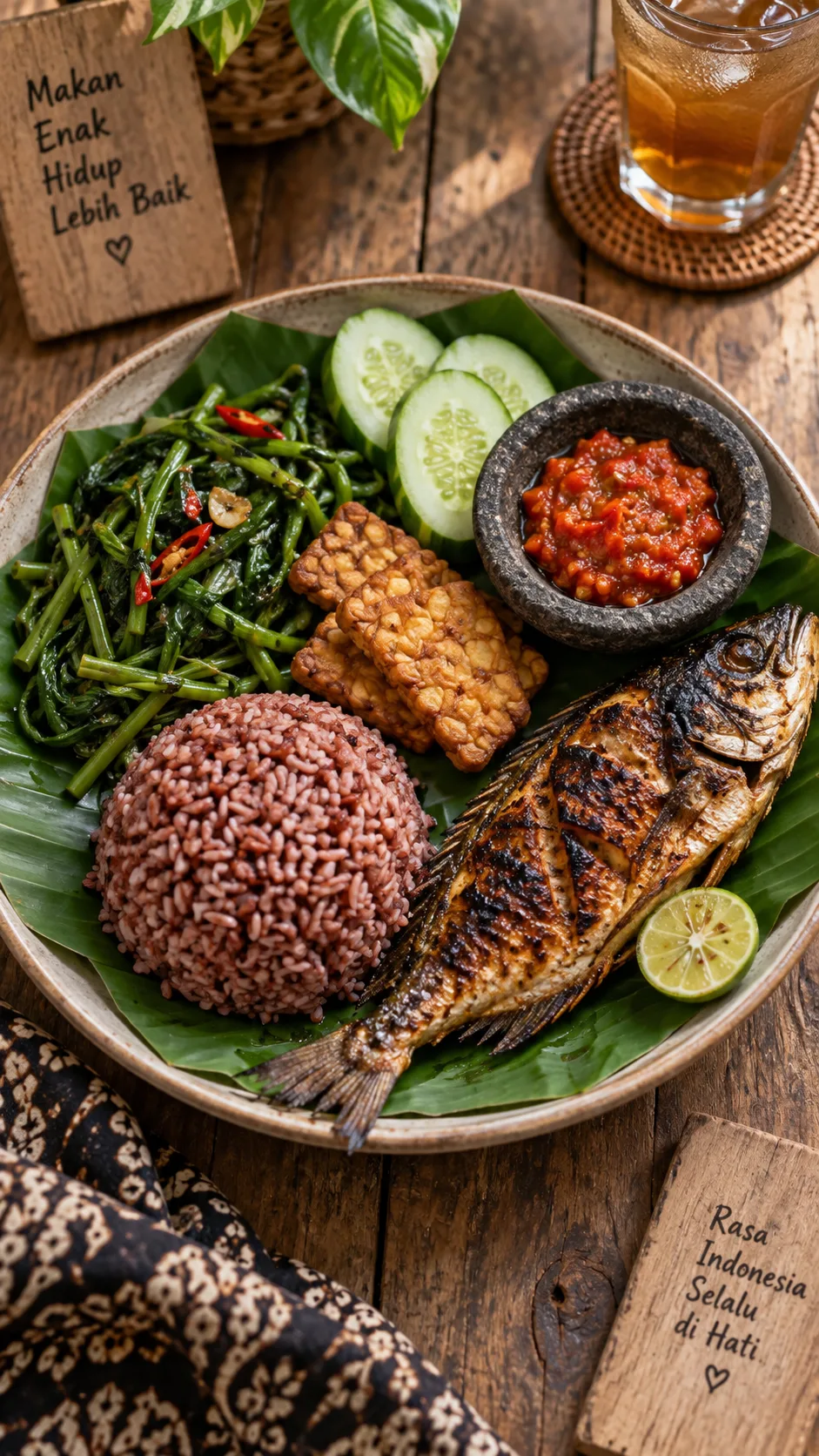
Traditional Indonesian eating solves this beautifully. Think about a proper warung plate: rice, a protein, a vegetable dish, fresh raw veg (lalapan), and chili. Fiber, protein, water volume, and flavor, sitting right there on one plate.
The problem showed up when portions drifted. Rice grew. Vegetables shrank. Fried things multiplied. Sweet iced tea became a beverage you drink three times a day. Ever wondered why your grandparents ate rice daily and stayed lean? Their rice bowl was smaller and their vegetables weren’t decorative.
The science bit: what keeps you full
Fullness isn’t magic. Researchers have measured it, ranked it, and argued about it for decades. Four things drive satiety more than anything else:
- Protein. Gram for gram, protein beats carbs and fat for keeping hunger quiet. It also costs your body more energy just to digest.
- Fiber. It slows digestion, feeds your gut bacteria, and physically fills space. Vegetables, legumes, and whole grains do the heavy lifting.
- Food volume and water content. Soupy dishes like soto and sayur asem fill your stomach with very few calories.
- Chewing time. Food you have to work through signals fullness far better than anything you can drink through a straw.
The Harvard Healthy Eating Plate recommends filling half your plate with vegetables and fruit, a quarter with protein, and a quarter with whole grains. Indonesia’s own “Isi Piringku” guideline from the Ministry of Health says almost exactly the same thing. Two different continents, same conclusion. That’s usually a sign someone’s onto something.
The satiety ranking of common Indonesian staples
- Very filling per calorie: boiled eggs, ikan bakar/pepes, chicken breast, tofu, tempe, kangkung, bayam, sayur asem, boiled ubi jalar, rebus jagung
- Moderately filling: white rice, bihun, rice noodles, bakso soup, nasi uduk (small portion)
- Sneaky and NOT filling: gorengan, kerupuk, martabak manis, es teh manis, boba, sweetened condensed milk in anything
Tempe and tahu: your unfairly cheap secret weapons
If Indonesia exported one nutritional gift to the world, it’s tempe. Fermented, protein-dense, fiber-rich, and cheaper than a cup of coffee. 100g of tempe gives you roughly 19g of protein, more than an egg and a half, for pocket change.
Tahu (tofu) sits close behind at around 8 to 10g of protein per 100g, with a lot more water, which means more volume for fewer calories. Fermented soy foods also come with a growing body of research linking them to better cardiovascular markers, as summarised in studies indexed on PubMed.
My honest opinion? Tempe bacem and tempe goreng tepung are different food groups. One is a protein source. The other is a deep-fried batter delivery system that happens to contain soy. Choose accordingly.
Better ways to cook tempe and tahu
- Tempe bacem (braised, then lightly pan-seared instead of deep-fried)
- Oseng tempe kacang panjang with minimal oil
- Tahu kukus / pepes tahu, steamed, herby, genuinely delicious
- Tempe orek with less palm sugar than the warung version
- Air-fried tempe with a brush of oil and a shake of garlic powder

Rice isn’t the villain. Your rice bowl is.
Every few years the internet declares war on rice. Meanwhile entire nations have eaten rice for millennia without collapsing. The issue isn’t rice. It’s the ratio of rice to everything else.
Take an average nasi padang plate. Sometimes there’s 300g of rice sitting next to 60g of protein and roughly four leaves of cassava. Flip that and you fix the meal without removing a single item.
Three rice hacks that genuinely work
- Halve it, then bulk it. Serve half your usual rice, then fill the empty space with tumis sayur. Same plate size, same satisfaction, 150-ish fewer calories.
- Cook it, chill it, reheat it. Cooling cooked rice increases resistant starch, which behaves more like fiber. FYI, this is basically the scientific justification for nasi goreng made from yesterday’s rice. You’re welcome.
- Mix in beras merah or add jagung. Going 50/50 white and red rice adds fiber without the “why does this taste like cardboard” reaction from your family.
Want context on how portion control works in the opposite direction? This breakdown of a structured meal plan for weight gain runs the same principles in reverse: deliberate portions and protein timing, aimed the other way.
The 7-day Indonesian diet menu (roughly 1,500 to 1,700 kcal)
Adjust portions to your size and activity. A 90kg guy lifting four times a week needs more food than a 50kg desk worker. Treat this as a template, not scripture.
Day 1
- Breakfast: 2 boiled eggs + 1 medium boiled ubi jalar + black coffee
- Lunch: ¾ cup red rice + ayam bakar (skinless) + tumis kangkung + lalapan + sambal
- Snack: Pepaya, 1 cup
- Dinner: Soto ayam with extra bean sprouts, half the usual rice
Day 2
- Breakfast: Bubur kacang hijau (light on santan and sugar)
- Lunch: Gado-gado with reduced peanut sauce + extra tofu and egg
- Snack: Handful of kacang rebus
- Dinner: Pepes ikan + sayur asem + ¾ cup rice
Day 3
- Breakfast: Omelette with 3 eggs, tomato, and daun bawang
- Lunch: Nasi merah + tempe bacem + urap sayur
- Snack: Jambu biji or apple
- Dinner: Sop iga (trim visible fat) with plenty of carrot, potato, and cabbage
Day 4
- Breakfast: Greek yogurt or plain yogurt + banana + chia
- Lunch: Ikan bakar + karedok + ¾ cup rice
- Snack: Edamame or rebus jagung
- Dinner: Cah tauge tahu + 2 eggs + small bowl of rice
Day 5
- Breakfast: Bubur ayam, skip the kerupuk and cakwe, add extra shredded chicken
- Lunch: Nasi padang, DIY style: rice (small), ayam pop, gulai daun singkong, sambal ijo, skip the gravy pour
- Snack: Melon or semangka
- Dinner: Sayur bening bayam + pepes tahu + grilled chicken thigh
Day 6 (the flexible day)
- Breakfast: 2 eggs + 1 slice whole grain bread
- Lunch: Bakso with extra sawi, skip the noodles or halve them
- Snack: Coffee, no condensed milk
- Dinner: Whatever you genuinely love. Yes, really. Eat it slowly, eat it without guilt.
Day 7
- Breakfast: Smoothie with banana, spinach, milk, peanut butter
- Lunch: Nasi goreng made from chilled rice + 2 eggs + loads of vegetables
- Snack: Boiled peanuts or a pear
- Dinner: Cumi/udang tumis pedas + capcay + small rice portion
Notice what’s missing? Nothing you love. Rendang, sambal, nasi goreng, soto: all present. The plan just reorganises them.
Sambal, gorengan, and other things you refuse to give up
Sambal: eat it freely
Fresh sambal built from chili, tomato, shallot, and garlic costs you almost nothing calorically. Capsaicin may nudge metabolism and appetite slightly, though the bigger win is simpler: spicy food slows you down and makes boring vegetables taste incredible. Sambal stays. Non-negotiable.
Gorengan: the honest math
One bakwan or pisang goreng runs roughly 130 to 180 calories. That’s fine. The trouble starts because nobody in recorded history has ever eaten exactly one gorengan. Three pieces plus es teh manis equals a full meal’s worth of calories that leaves you hungry an hour later. :/
My rule: buy gorengan by the piece, never by the bag. Eat it sitting down, with tea, as a scheduled snack. Behaviour design beats willpower every single time.
Rendang and santan dishes
Rendang isn’t the enemy either. It’s protein-rich, iron-rich, and deeply satisfying. Treat it as your protein for that meal, not as a topping for a mountain of rice. Skim the oil pool. Eat a fist-sized portion. Move on with your life.
The build your own plate formula
Forget calorie counting for a second. Use this visual formula at any warung, wedding buffet, or your mother’s dining table:
- ½ plate vegetables, cooked, raw, or in soup form. Lalapan counts.
- ¼ plate protein: fish, chicken, eggs, tempe, tahu, seafood, lean beef.
- ¼ plate carbs: rice, ubi, jagung, singkong, or noodles.
- Add healthy fat on purpose: a spoon of peanut sauce, some avocado, or the oil already in the dish.
- Drink water, teh tawar, or black coffee. Sugar-sweetened drinks go on the occasional list.
This one formula handles 90% of real-world eating decisions. The remaining 10%? That’s weddings, and nobody wins those. 🙂
Smart swaps that don’t taste like punishment
- Es teh manis to es teh tawar with lime. Saves 100 to 150 calories per glass, and you’ll drink three a day anyway.
- Deep-fried tempe to tempe bacem or air-fried tempe. Same flavour family, half the oil.
- Mie instan to mie instan with 2 eggs and a fistful of sawi. Realistic beats perfect.
- Nasi uduk to nasi merah or nasi jagung. More fiber, slower digestion.
- Kerupuk to cucumber and carrot sticks with sambal. You still get the crunch, minus the calories.
- Martabak manis to 2 squares dark chocolate + fruit. Yes, I know. I’m sorry too.
Mistakes I made so you don’t have to
When I first restructured my eating, I went full monk mode: no rice, no oil, no sambal. I lasted nine days and then ate an entire box of martabak in a single sitting while standing over the kitchen sink. Very dignified.
Here’s what I learned the expensive way:
- Cutting rice entirely backfires. You’ll binge on something worse by Friday.
- Skipping breakfast protein wrecks your afternoon. Aim for 25 to 30g at the first meal.
- Drinking your calories is the silent killer. Two es kopi susu a day quietly adds up to a meal.
- Ignoring sleep sabotages everything. Short sleep raises ghrelin and makes gorengan look like a personality upgrade.
- Not moving at all. Diet handles fat loss; training handles shape. Pair this menu with a simple 3-day full body workout plan and you’ll keep muscle while losing fat.
What about drinks? (the part everyone ignores)
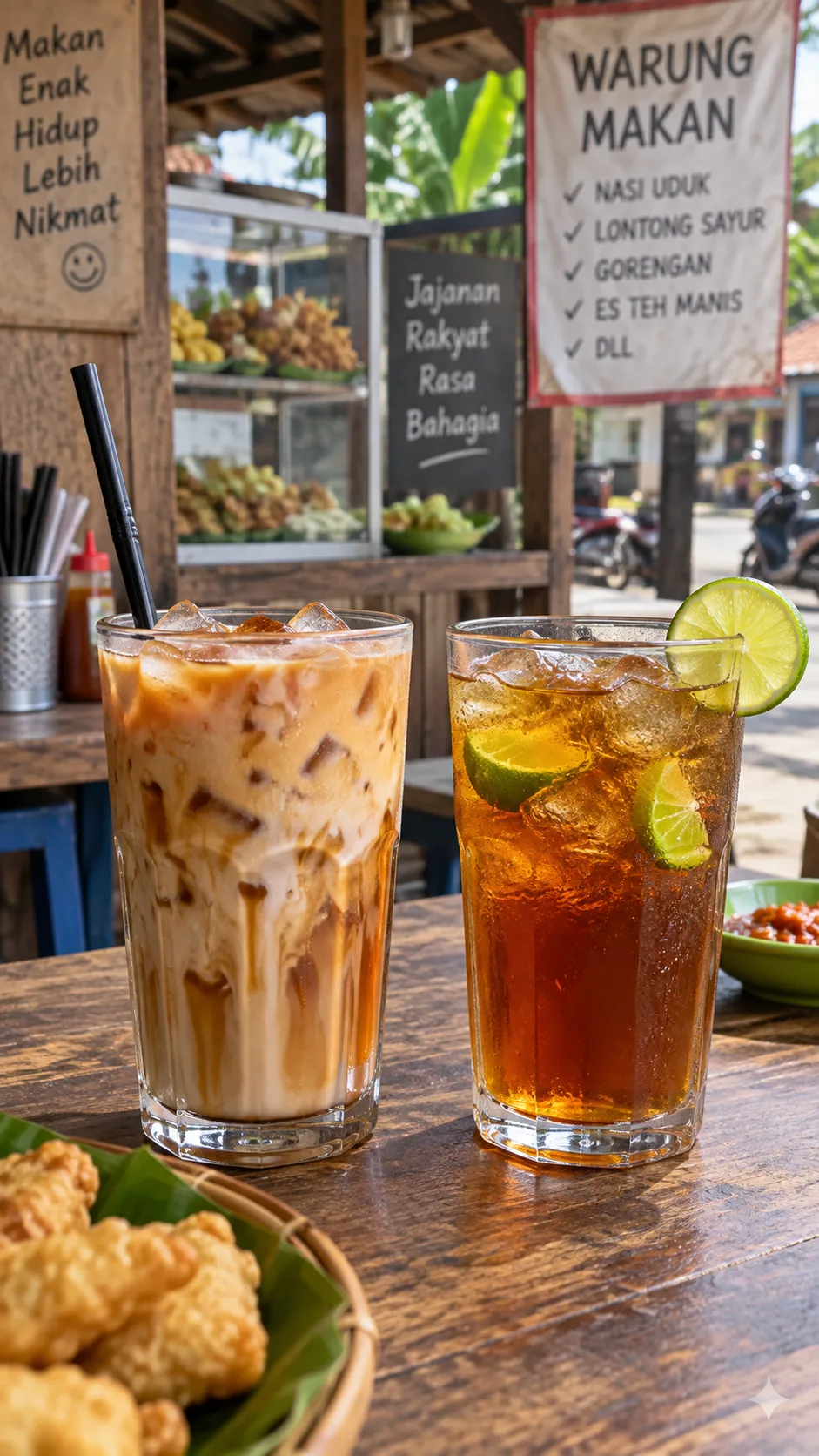
A standard glass of es teh manis carries 20 to 30g of sugar. Boba goes higher. Kopi susu gula aren sits in the same neighbourhood. The World Health Organization recommends keeping free sugars under 10% of daily energy, ideally below 5%. Two sweet drinks blow past that before lunch.
Swap two sweet drinks a day for water or unsweetened tea and you’ll cut roughly 200 to 300 calories daily without touching your food. That’s the biggest single change most people can make, and it takes zero cooking skill.
Meal prep, Indonesian style
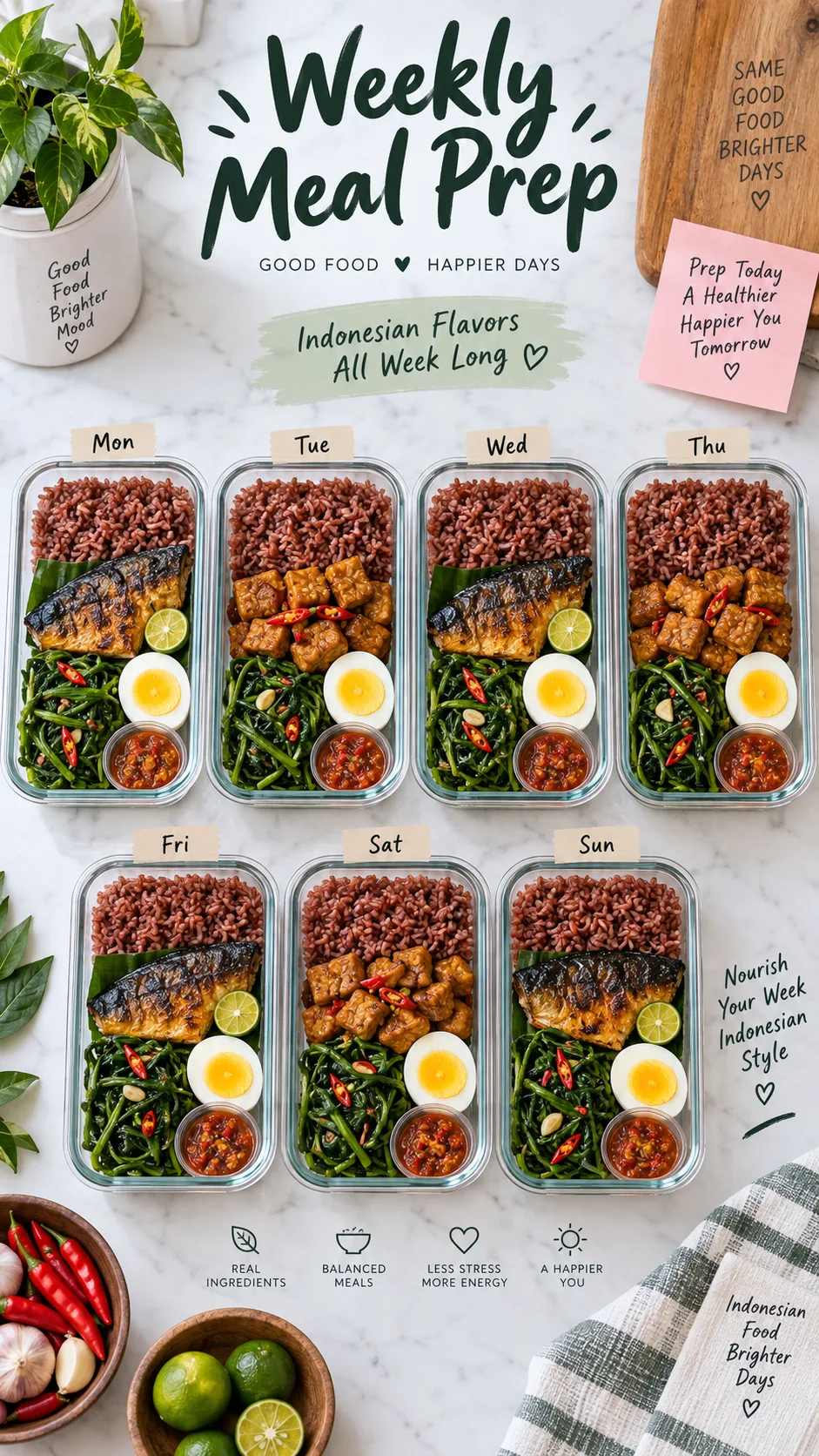
Indonesian food preps beautifully, and bumbu dasar is basically a meal-prep cheat code. Blend a big batch of bumbu merah and bumbu putih on Sunday, freeze it in cubes, and weeknight cooking drops to 15 minutes.
- Sunday: Cook a pot of red rice, boil 8 eggs, make bumbu base, prep sambal.
- Monday to Wednesday: Rotate protein. Fish, chicken, tempe.
- Thursday: Soup day. Sayur asem or soto stretches across two meals.
- Friday: Nasi goreng from chilled rice. Resistant starch, remember?
If you want a broader system for batch cooking plant-forward meals, these healthy vegetarian meal prep ideas translate to Indonesian ingredients almost one for one. Swap chickpeas for tempe and you’re done.
Frequently asked questions
How fast will I lose weight on this?
Expect 0.4 to 0.8 kg per week if you stay consistent. Faster than that usually means you’re losing water and muscle, and you’ll gain it back. The CDC backs the slow and steady approach for a reason: it sticks.
Can I still eat nasi padang?
Yes. Choose grilled over gulai when possible, take a small rice portion, skip the gravy flood, and load up on daun singkong. IMO nasi padang done smartly beats most “healthy” salad bowls for satiety.
Is this suitable for vegetarians?
Extremely. Indonesia might be the easiest place on earth to eat vegetarian. Tempe, tahu, tauge, kacang panjang, and terong cover your protein and fiber needs comfortably.
What about older adults or people with health conditions?
Portion and sodium control matter more with age, and kecap manis plus instant seasoning add up fast. Talk to a registered dietitian if you manage diabetes, kidney issues, or hypertension. Generic internet advice never replaces a professional who knows your bloodwork.
The bottom line
You don’t need a Mediterranean diet, a keto protocol, or a ₹900 smoothie subscription. Indonesian cuisine already gives you everything satiety research asks for: high-protein fermented soy, fiber-rich vegetables, soupy low-calorie volume, and chili that makes healthy food genuinely exciting.
Fix four things and the rest follows:
- Shrink the rice, grow the vegetables.
- Put real protein at every single meal.
- Stop drinking your sugar.
- Keep the foods you love, but schedule them instead of surrendering to them.
Start tomorrow with one change. Just one. Swap your es teh manis for teh tawar and add an egg to breakfast. Do that for a week, and then add the next thing.
Your favorite foods were never the problem. Your plate ratios were. Go fix the ratio, keep the sambal, and stop apologizing for loving rice.