

You do not need to live at the gym to get seriously strong. You need a sensible 3-day full body workout plan, consistent effort, and enough patience to repeat the basics until they pay off.
Three focused sessions each week can build strength, muscle, confidence, and a body that gets through everyday life without your knees making dramatic noises. Some people train six days a week and still go nowhere because they chase new exercises instead of improving the lifts that matter.
This plan stays simple. You will squat, hinge, push, pull, carry, recover, and gradually lift more weight over time.
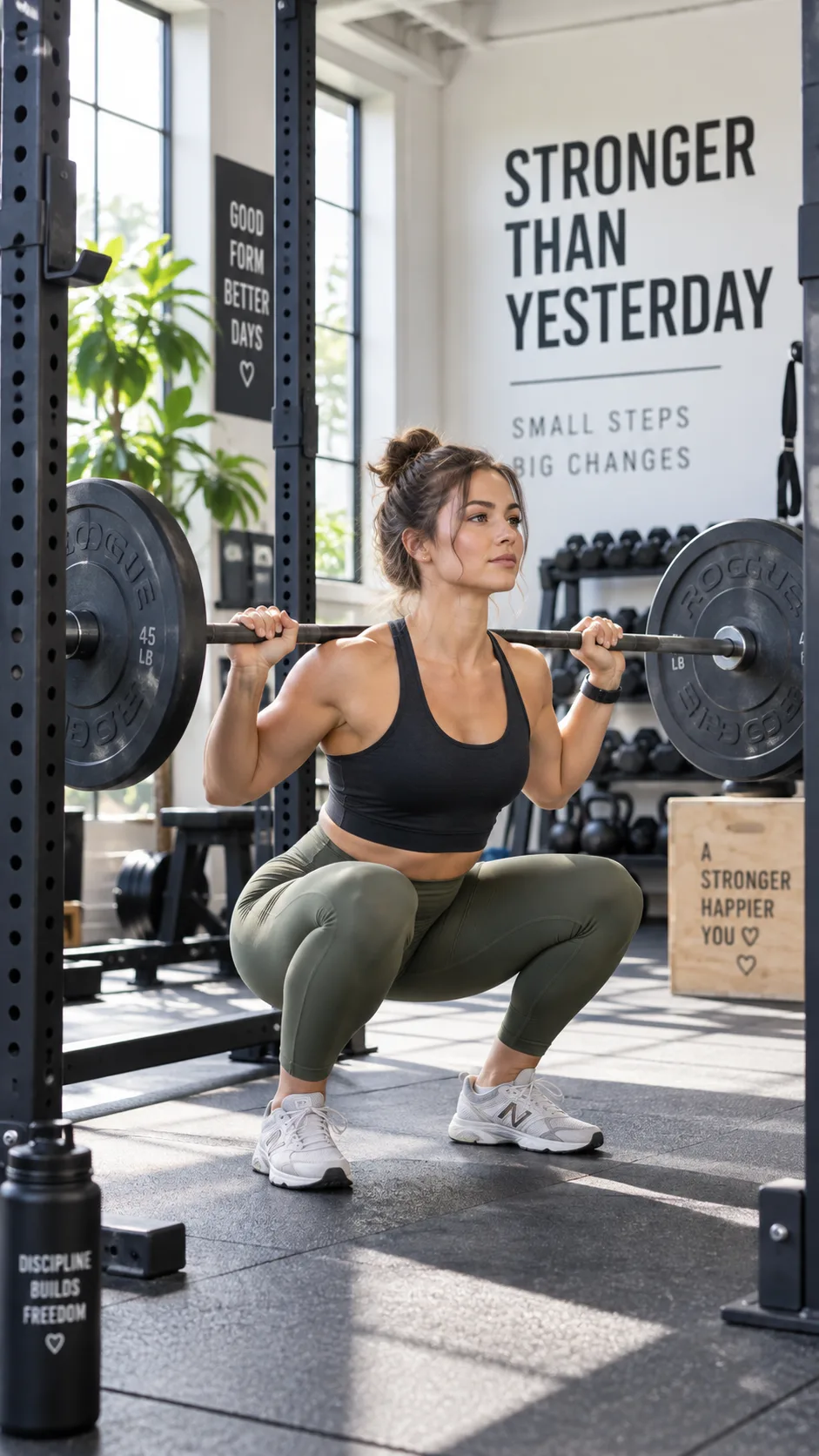
Why a 3-day full body workout builds real strength
A full body strength workout trains your major muscle groups in every session. You practise each movement pattern more often, which helps your brain and muscles coordinate more efficiently. That skill matters as much as raw force when you want to lift heavier.
Three days also leaves room for recovery. Your muscles repair between workouts, your joints get some relief, and your training does not take over your calendar. A plan that fits your real week beats a “perfect” plan you abandon after 10 days.
The CDC physical activity guidelines encourage adults to include muscle-strengthening activity at least two days each week. This routine gives you three chances to train without overwhelming your recovery.
Who should use this plan?
This three-day gym workout suits beginners who want a clear route forward, busy people who need efficient sessions, and intermediate lifters who want steady progress again. You can also use it during a demanding work season when a five-day split feels unrealistic.
Talk with a qualified healthcare professional before you start if you have a medical condition, a recent injury, persistent pain, or pregnancy-related concerns. Strength training should challenge you, not send you toward the emergency room.
The rules that make this workout plan work
Progressive overload drives strength gains. You ask your body to do a little more over time through extra weight, extra repetitions, cleaner form, or better control. You do not need to add weight every workout, but you need a way to move forward.
Focus on good repetitions. Brace your torso, control the lowering phase, and use a range of motion that feels comfortable for your joints. A shaky half rep helps nobody, including your future self.
- Train three non-consecutive days: Monday, Wednesday, and Friday work well.
- Leave 1 to 3 reps in reserve: Finish most sets knowing you could complete a few more reps with good form.
- Rest enough: Take 2 to 3 minutes after heavy compound lifts and 60 to 90 seconds after smaller exercises.
- Track every workout: Write down your weights, reps, and how each set felt.
- Prioritise technique: Add load only when your form stays solid.
The American College of Sports Medicine supports regular resistance training for strength, function, and long-term health. You do not need complicated exercise tricks. You need regular exposure to challenging resistance.
Your 3-day full body strength workout plan
Perform this full body workout on three non-consecutive days. Start each session with five to 10 minutes of light movement, then complete a few warm-up sets before your first heavy lift. Walking, cycling, rowing, and dynamic mobility all work well.
Choose a weight that lets you complete the target reps with control. If you have never used barbells, dumbbells, or cables, ask a qualified trainer to check your setup. A five-minute form check can save you months of bad habits.
Day 1: Squat, push, pull
- Barbell Back Squat: 4 sets of 5 reps
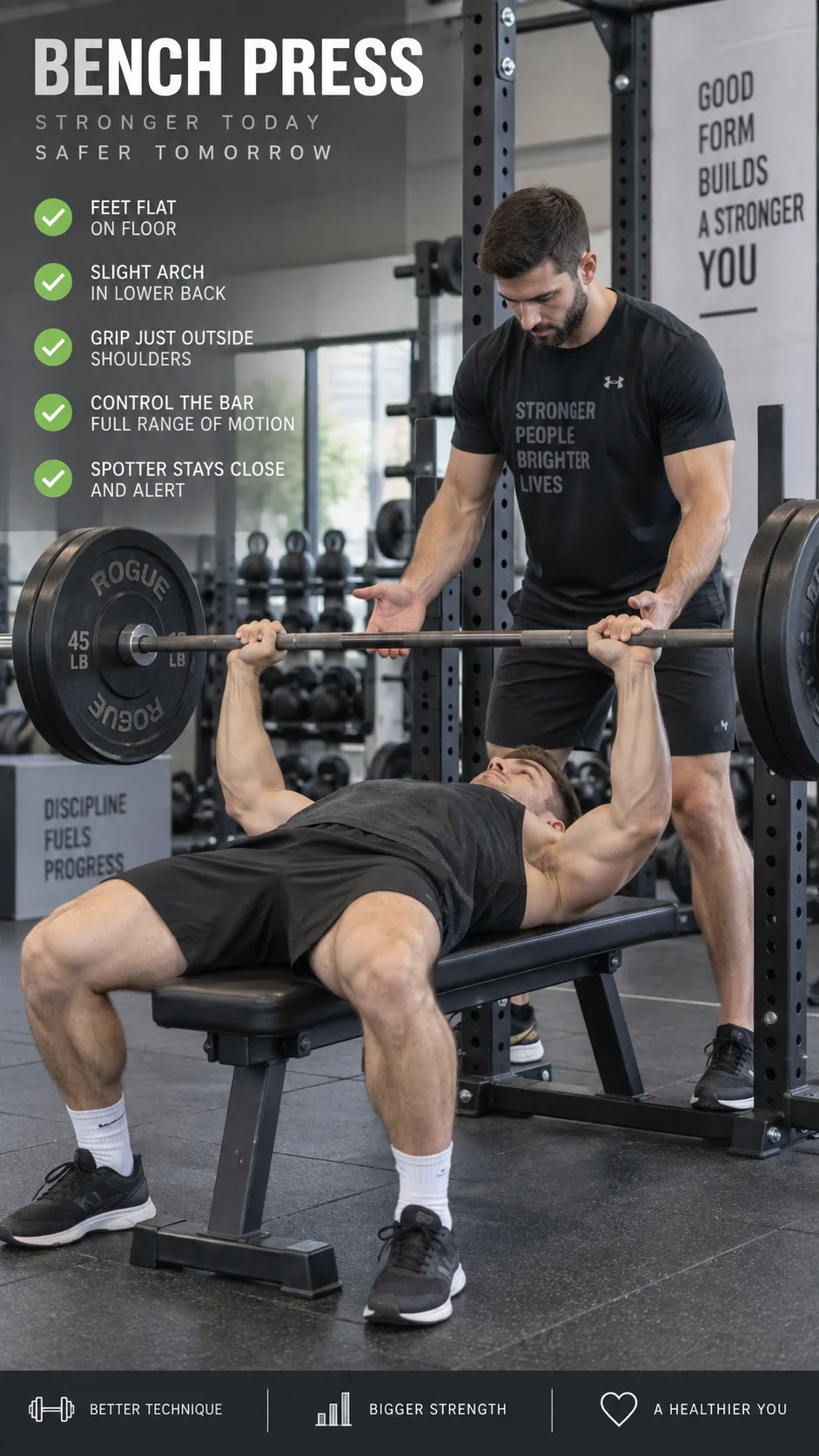
- Barbell Bench Press: 4 sets of 5 reps
- One-Arm Dumbbell Row: 3 sets of 8 to 10 reps per side
- Romanian Deadlift: 3 sets of 8 reps
- Plank: 3 sets of 30 to 60 seconds
The squat builds strong legs while challenging your core and upper back. The bench press builds pressing strength, and rows balance that work while building your upper back. Romanian deadlifts teach your hips and hamstrings to produce force, which helps with everything from sprinting to lifting a stubborn suitcase.
Day 2: Hinge, overhead press, single-leg strength
- Conventional or Trap-Bar Deadlift: 3 sets of 3 to 5 reps
- Standing Overhead Press: 4 sets of 5 reps
- Lat Pulldown or Assisted Pull-Up: 3 sets of 8 to 10 reps
- Bulgarian Split Squat: 3 sets of 8 reps per leg
- Farmer’s Carry: 3 walks of 30 to 45 seconds
Deadlifts build total body strength, but they demand attention. Keep the weight close, brace your midsection before every rep, and push the floor away with your legs. If conventional deadlifts bother your back or feel too technical, use a trap bar or kettlebell deadlift instead.
Farmer’s carries look almost too simple, yet they challenge your grip, core, posture, and mental toughness. Grab heavy dumbbells, stand tall, and walk like you have somewhere to be.
Day 3: Front squat, incline press, row
- Front Squat or Goblet Squat: 4 sets of 6 reps
- Incline Dumbbell Bench Press: 3 sets of 8 reps
- Seated Cable Row: 3 sets of 10 reps
- Hip Thrust: 3 sets of 8 to 10 reps
- Dead Bug: 3 sets of 8 to 12 reps per side
This day repeats the same major patterns without copying Day 1. Front squats demand strong posture and core control, while goblet squats give beginners an approachable alternative. The hip thrust gives your glutes focused work, and your hips will appreciate that during running, climbing, and long days at a desk.

How to progress with a clear plan
Use double progression for most exercises. Start at the lower end of a rep range, then add reps until you reach the top end on every set. Then add a small amount of weight and begin again.
For example, you might dumbbell row 20 kg for 8, 8, and 8 reps. Over the next few workouts, work toward 10, 10, and 10 reps. Then move up to 22 kg and return to 8 reps.
Use smaller jumps for upper body lifts and larger jumps for lower body lifts when possible. Add 1 to 2.5 kg to presses and rows, then add 2.5 to 5 kg to squats and deadlifts. Your gym equipment may limit your choices, so use the smallest sensible increase.
If you miss your target for two or three workouts in a row, keep the same load or reduce it by around 10 percent for one week. That lighter week reduces fatigue while you practise better reps. Smart lifters adjust. Stubborn lifters argue with barbells.
Eat and recover like strength matters
Training starts the signal, but food and sleep help your body respond. Aim for regular meals with protein, carbohydrates, colourful produce, and healthy fats. You do not need an expensive supplement cupboard that resembles a chemistry lab.
Most active people benefit from spreading protein across their meals. Eggs, fish, chicken, lean meat, beans, Greek yogurt, tofu, and milk all offer useful options. Check this guide to Greek yogurt in Nigeria if you want an easy high-protein food for breakfast or post-workout snacks.
Carbohydrates support hard training, especially around squat and deadlift days. Rice, yam, potatoes, oats, fruits, beans, and whole grains can fuel your sessions well. If you manage blood sugar concerns, this glycemic index table of Nigerian foods can help you choose meals with more confidence.
Sleep for seven to nine hours when you can. Drink water throughout the day, eat enough total calories to support your goal, and take rest days seriously. Recovery does not mean laziness. Recovery lets your training count.
Common mistakes that slow down strength gains
- Changing the program every week: Stick with the main lifts for at least eight to 12 weeks.
- Training to failure on every set: Save all-out effort for occasional final sets, not every exercise.
- Skipping warm-up sets: Use them to practise the movement and prepare your joints.
- Ignoring pain: Stop, adjust the exercise, and seek professional advice for sharp or persistent pain.
- Neglecting food and sleep: You cannot out-train a recovery plan that barely exists.
Real strength takes time, but you will notice it everywhere. You carry groceries more easily, climb stairs with less effort, and feel more capable in your own body. That quiet confidence beats chasing random workout trends.
Start this full body workout plan this week
Train hard three days each week, master the basics, and track your progress. This approach builds real strength without letting fitness consume your entire calendar.
Start lighter than your ego wants, keep each rep clean, and earn your increases. Six months from now, you will thank yourself for choosing the boringly effective route 🙂