

Tired of sad desk salads and soggy Tuesday leftovers? Japan has been packing lunches for centuries, and Japanese meal prep gives you balanced, tasty meals that still taste great on day four.
I started prepping this way after one too many weeks of sad takeout. Now I spend about 90 minutes on Sunday, and my weekday self thanks me every single time. Ready to steal the system?
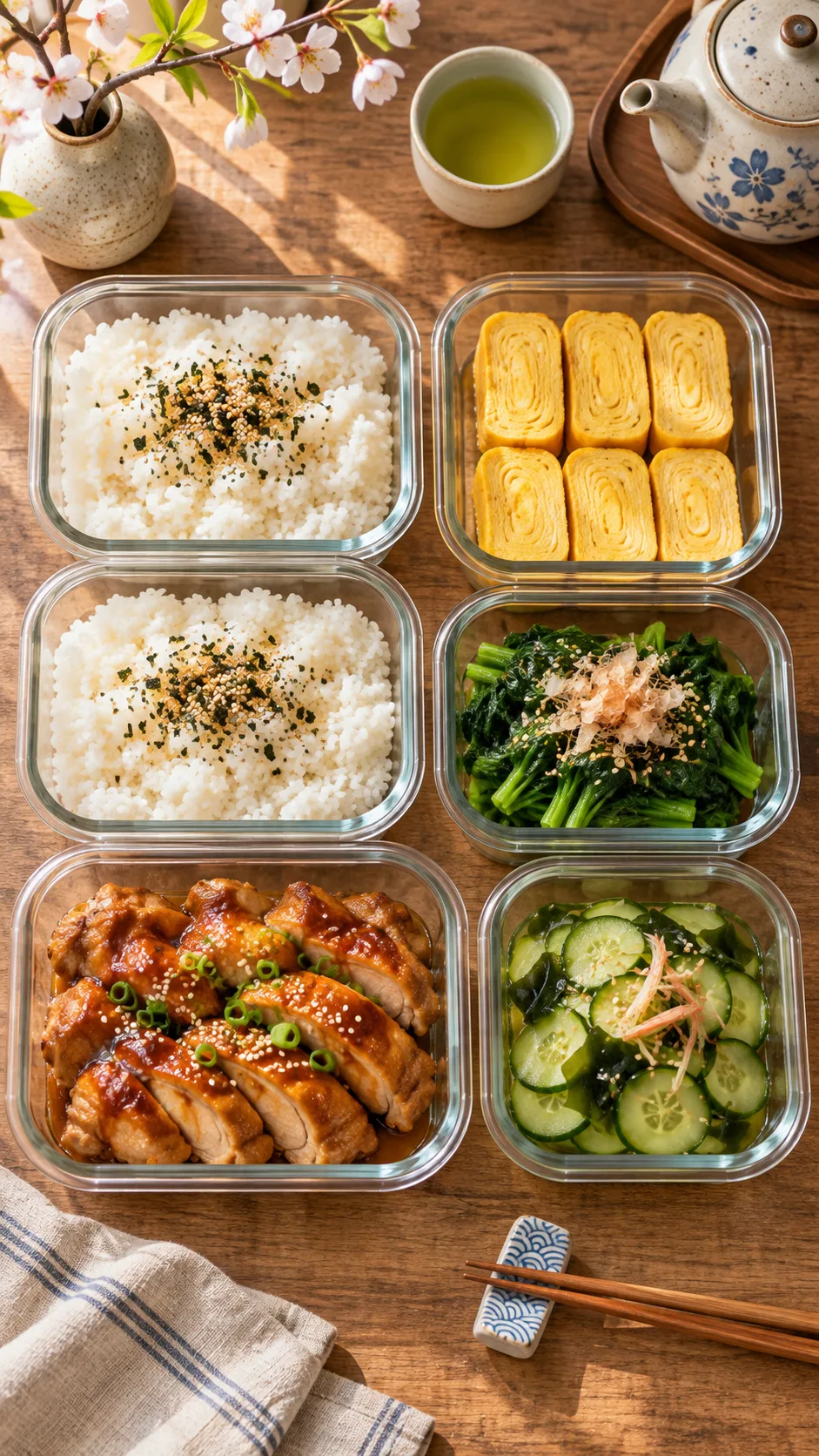
Why Japanese food works so well for meal prep
Japanese home cooking already fits the meal prep mindset. The bento box tradition taught cooks to make food that tastes good at room temperature. Many classic side dishes (okazu) taste better after a night in the fridge.
The structure helps too. Traditional washoku, which UNESCO recognises as intangible cultural heritage, centres on ichiju-sansai: one soup and three dishes alongside rice. That formula gives you variety without making you cook anything complicated.
The health angle
Japanese meals lean on fish, vegetables, fermented foods, and modest portions of meat. They use little added fat, and the flavour comes from umami-rich seasonings like dashi, miso, and soy sauce. Japan’s agriculture ministry even publishes a national food guide that encourages this balance of grains, vegetables, and protein.
Does that mean every Japanese dish is “health food”? Nope. Fried katsu and sweet sauces exist, and I eat them happily. But the everyday home cooking style gives you a great template.
Build your Japanese pantry first
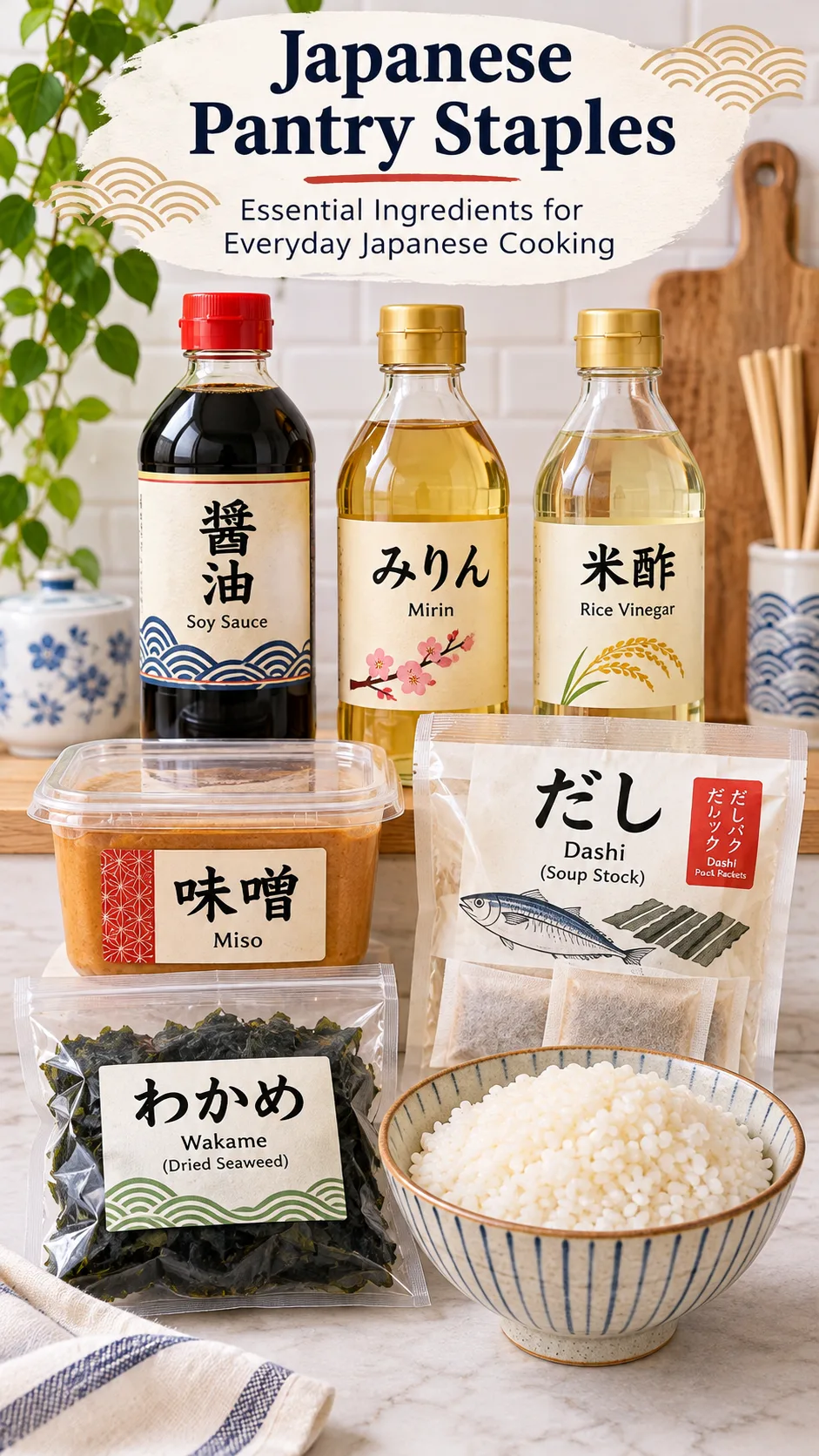
You do not need fifty bottles. A small set of staples covers almost every recipe below, and you can buy them once and use them for months.
- Soy sauce (shoyu): choose a Japanese brand for a rounder, less harsh flavour.
- Mirin: this sweet rice wine adds gloss and gentle sweetness.
- Sake: a cheap cooking sake works fine.
- Rice vinegar: you need it for quick pickles and dressings.
- Miso paste: buy white (shiro) for mild soups and red (aka) for bolder ones.
- Dashi powder or packets: this shortcut gives you instant umami.
- Short-grain Japanese rice: it sticks enough to hold its shape in onigiri.
- Toasted sesame seeds, nori, and dried wakame: these cheap extras add a lot of flavour.
For the record, instant dashi is not cheating. Plenty of Japanese home cooks use it on weeknights, and I refuse to feel guilty about it.
The 90-minute Sunday game plan
The trick is sequencing. You run the stove, rice cooker, and cutting board at the same time, so nothing sits idle. Here is the order I follow.
- Start the rice. Rinse 3 rice cooker cups until the water runs mostly clear, then press start.
- Cut all the vegetables in one session. Slice the cucumbers, trim the spinach, and chop the green onions.
- Marinate the chicken. It soaks while you handle everything else.
- Make the cold sides. Sunomono and ohitashi need almost no stove time.
- Cook the tamagoyaki and the chicken. Use two pans if you own them.
- Portion everything out. Let the food cool before you seal the lids.
Why cut everything first? Because chopping mid-recipe turns a 90-minute job into a three-hour saga. Trust me, I have lived that saga.
Five authentic recipes worth prepping
1. Teriyaki chicken thighs
Real teriyaki has four ingredients and zero thick bottled goop. Chicken thighs stay juicy for days, so they reheat well.
- 4 boneless chicken thighs
- 3 tbsp soy sauce
- 3 tbsp mirin
- 3 tbsp sake
- 1 tbsp sugar
Sear the thighs skin-side down for 5 to 6 minutes until golden. Flip them, pour in the mixed sauce, and simmer for another 6 to 8 minutes. Spoon the sauce over the chicken until it turns glossy and sticky. Slice the chicken and store it with the pan juices.
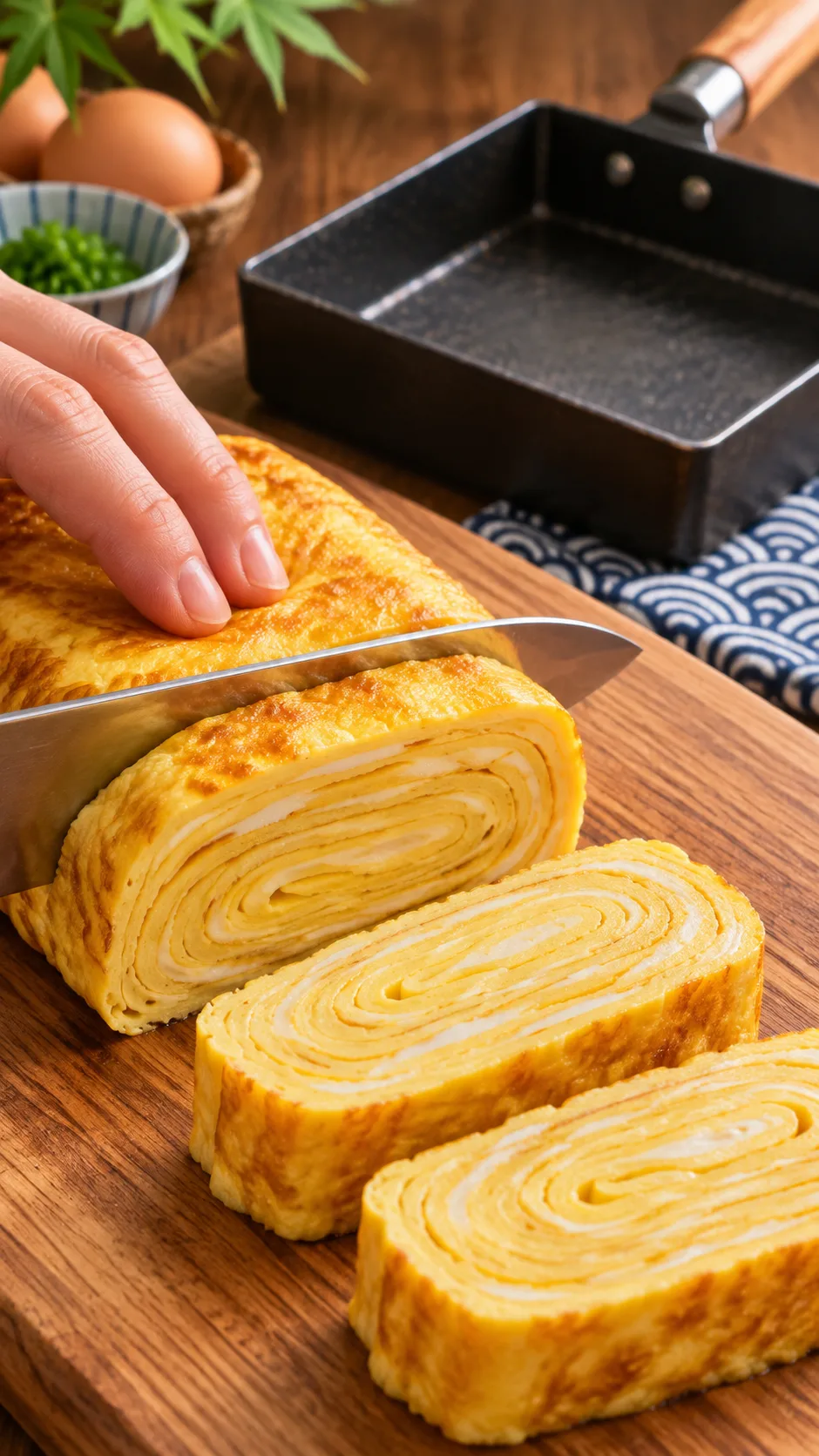
2. Tamagoyaki (rolled omelette)
This sweet and savoury egg roll is the bento superstar. It looks fancy, but it takes about 10 minutes. My first attempt looked like scrambled eggs wearing a disguise, and it still tasted great.
- Whisk 4 eggs with 1 tbsp dashi, 1 tsp soy sauce, 1 tsp mirin, and 1 tsp sugar.
- Oil a small pan over medium-low heat.
- Pour in a thin layer and roll it from one end as it sets.
- Push the roll back, add more egg, and repeat 3 or 4 times.
- Rest the roll for a minute, then slice it into thick pieces.
3. Spinach ohitashi
Ohitashi is the best vegetable side you can make ahead. The spinach soaks up the savoury broth while it sits in the fridge. Blanch 2 bunches of spinach for 30 to 45 seconds, then shock them in cold water.
Squeeze out the water, cut the spinach into short lengths, and cover it with a mix of 200 ml dashi, 1 tbsp soy sauce, and 1 tbsp mirin. Top it with sesame seeds or bonito flakes when you eat it. It could not be simpler.
4. Cucumber and wakame sunomono
Need something bright to cut through the richer dishes? This quick pickle does the job. Slice 2 cucumbers thinly, toss them with ½ tsp salt, and wait 10 minutes. Squeeze out the liquid.
Mix 3 tbsp rice vinegar, 1 tbsp sugar, and 1 tsp soy sauce, then add rehydrated wakame and the cucumber. Eat it within three days for the best crunch.
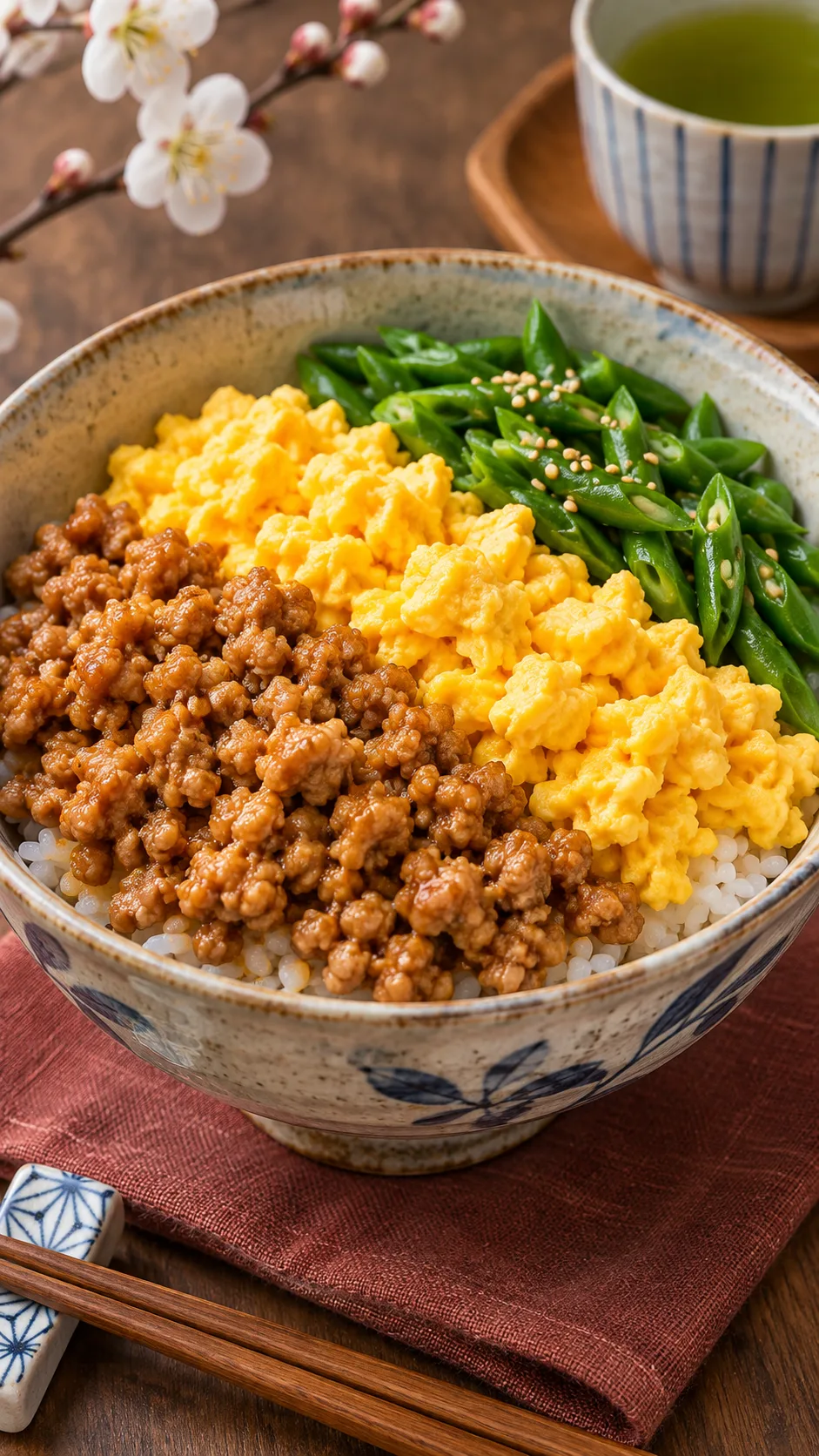
5. Chicken and egg soboro rice bowl
Soboro will save your weeknights. You cook seasoned ground chicken and fluffy scrambled egg, then pile both over rice.
- Combine 400 g ground chicken with 2 tbsp soy sauce, 2 tbsp mirin, 1 tbsp sake, 1 tbsp sugar, and a little grated ginger.
- Stir over medium heat with chopsticks until the chicken forms fine crumbles.
- Scramble 3 eggs with a pinch of sugar and salt in a separate pan.
- Layer both over rice and add blanched green beans for colour.
Watch it in action
Sometimes you need to see the wrist movement on that omelette roll. This video walks through a full week of Japanese meal prep, so you can match your pace to the cook’s.
Freezer heroes: onigiri and miso soup balls
Not everything needs to live in the fridge. Two Japanese staples freeze beautifully, and they rescue you on the days when you forget to eat lunch.
Freezer onigiri
Pack warm rice into a triangle with damp, salted hands. Press a filling into the centre, such as salted salmon, pickled plum (umeboshi), or tuna with a little mayo. Wrap each ball tightly in plastic wrap and freeze it for up to a month.
Microwave one for 1 to 2 minutes, then wrap it in nori. Add the nori after heating, or it turns chewy and sad.
DIY miso soup balls
This is my favourite hack. Mix 1 tbsp miso, ½ tsp dashi powder, a pinch of dried wakame, and a few chopped green onions. Roll the mix into a ball, wrap it, and freeze it.
When you want soup, drop a ball into a mug and pour in hot water. Stir until it dissolves. Never boil miso, because high heat dulls its aroma and flavour.
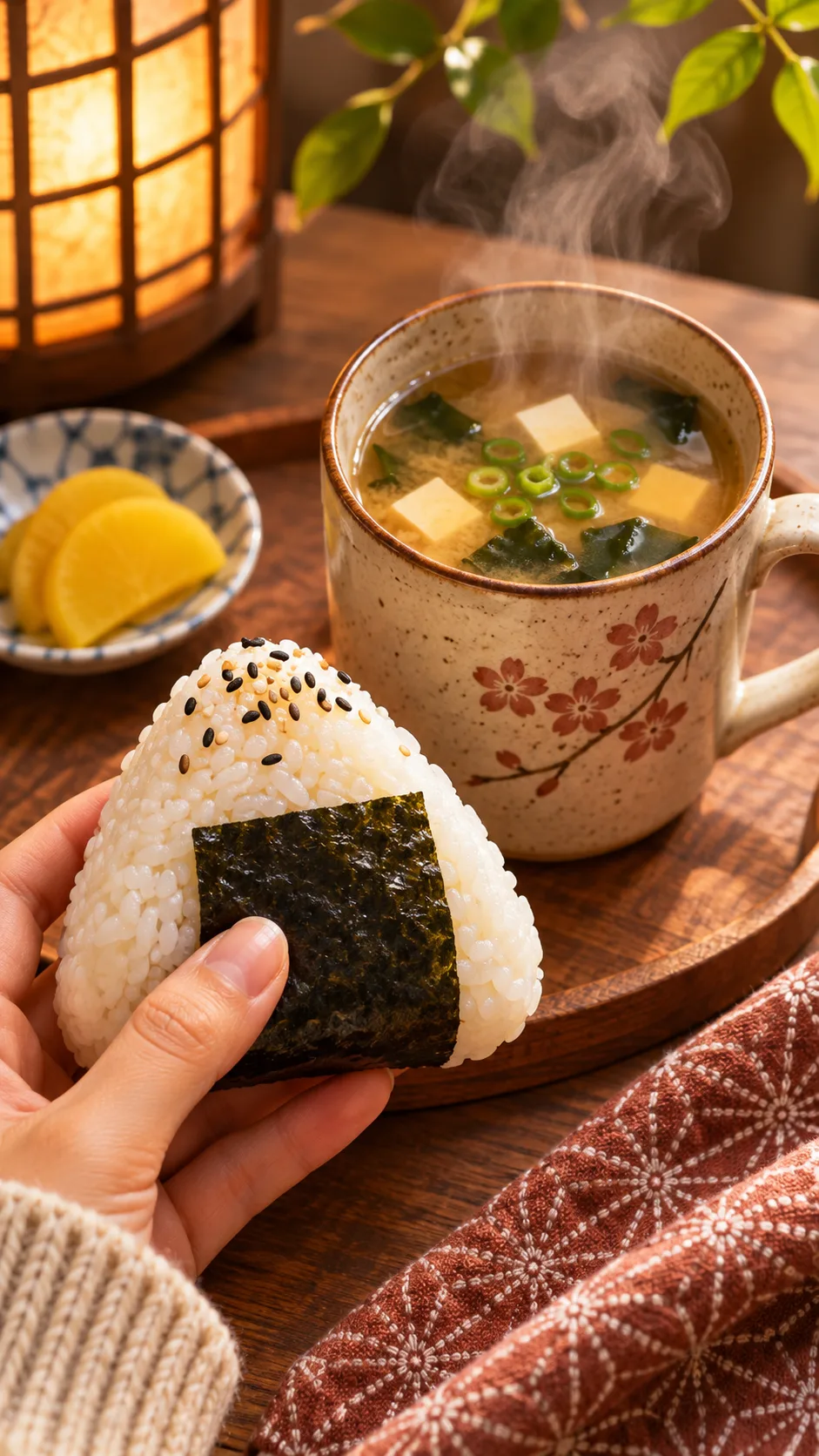
A sample week of Japanese meal prep
Wondering how these pieces fit together? Here is how I rotate them through five workdays. Swap freely based on your appetite.
- Monday: teriyaki chicken, rice, ohitashi, and tamagoyaki.
- Tuesday: soboro bowl with sunomono on the side.
- Wednesday: two onigiri, a miso soup ball, and leftover tamagoyaki.
- Thursday: teriyaki chicken over rice with cucumber salad.
- Friday: an empty-the-fridge bento with whatever remains.
That Friday bento feels like a victory lap, and I think it beats any sad Friday sandwich.
Storage and food safety rules you should not skip
Meal prep only saves time if it does not make you sick. Follow a few simple rules and you will stay safe. The U.S. government’s cold food storage chart lists 3 to 4 days as the standard window for cooked leftovers in the fridge.
- Cool rice fast. Spread it in a shallow container and refrigerate it within an hour or two. Cooked rice can carry Bacillus cereus spores that multiply at room temperature.
- Use airtight containers. Glass works best because it resists stains and odours.
- Reheat thoroughly. Heat leftovers until they steam all the way through.
- Freeze anything you will not eat by day four. Rice, onigiri, and cooked chicken all freeze well.
- Pack sauces separately when you can, so the rice does not turn soggy.
Does that mean day five leftovers will kill you? Probably not, but why gamble with your lunch break?
Common mistakes (I made them all)
Using the wrong rice
Long-grain rice will not stick together for onigiri. Short-grain Japanese rice holds its shape and stays tender after chilling. Reheat it with a splash of water under a damp paper towel to restore the texture.
Overcooking the vegetables
Blanch greens for under a minute. They keep cooking in the container, and mushy spinach ruins ohitashi. Shock them in ice water every time.
Skipping variety
Five days of the same bowl gets old by Wednesday. Prep components instead of identical complete meals, so you can remix them. Swap a side or change the sauce.
Want to go meatless?
Japanese cuisine adapts to vegetarian eating better than most. Swap bonito dashi for kombu and shiitake, and replace chicken with firm tofu or edamame. If you want more ideas beyond Japanese flavours, check out this guide to easy vegan meal prep for the week.
You can also borrow its batch-cooking tips and apply them to your Japanese staples. Our vegan meal prep recipes pair nicely with a pot of miso soup and a rice bowl. Mixing both approaches keeps your week interesting.
For more on building balanced plates, the Harvard Healthy Eating Plate offers a handy visual guide. It matches the Japanese habit of mixing vegetables, protein, and whole grains surprisingly well.
Quick shopping list for one week
- 4 chicken thighs plus 400 g ground chicken
- 1 dozen eggs
- 2 bunches of spinach
- 2 to 3 cucumbers
- Green beans and green onions
- Short-grain rice, nori, and dried wakame
- Salted salmon or umeboshi for onigiri fillings
Check your pantry staples before you shop. Most weeks, you only need to buy fresh produce and protein, which keeps the grocery bill refreshingly low.
Final thoughts: make your future self proud
Japanese meal prep works because it respects your time and your taste buds. You cook once, you eat well all week, and you skip the daily “what’s for lunch?” panic. The recipes use simple ingredients, and the techniques get easier with every Sunday.
To recap, stock a small pantry, cut everything first, cook in sequence, and store your food carefully. Freeze onigiri and miso balls for emergencies. Keep the variety high and the effort low.
So grab your rice cooker this weekend and start with just two recipes. Which one will you try first: the glossy teriyaki or the tricky tamagoyaki? Your Wednesday self already knows the answer.