

You tried vegan meal prep once. You ate a sad container of plain quinoa and steamed broccoli on Monday, felt hungry by 2pm, and raided the office biscuit tin by 3. Sound familiar?
I’ve been there. My first attempt at vegan meal prep looked gorgeous on Instagram and left me gnawing my own arm by Tuesday. Veganism wasn’t the problem. Every single box was missing protein, fat, and fibre.
This guide fixes that. You’ll get real recipes, real numbers, and a system that takes about 90 minutes on a Sunday. No sad salads allowed.
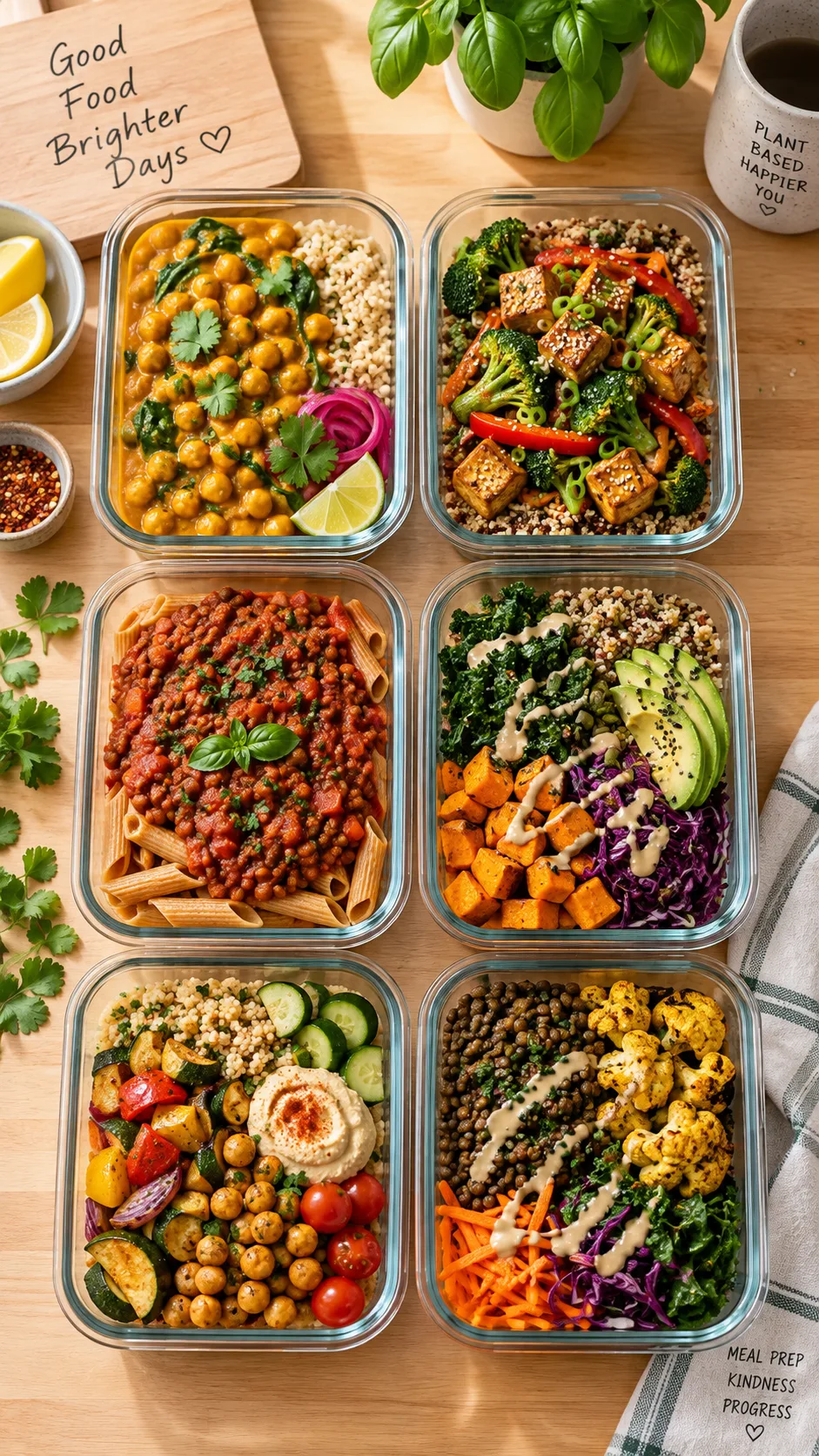
Why most vegan meal prep leaves you starving
Plants are brilliant, but vegetables on their own don’t keep anyone full. A big bowl of roasted veg might come to 200 calories. Your body burns through that before you’ve finished answering your emails.
Satiety comes down to protein, fibre, and fat working together. Miss one and your hunger hormones throw a tantrum. The Harvard T.H. Chan School of Public Health explains how protein keeps you satisfied between meals, and plant eaters have to be deliberate about hitting their numbers.
The fullness formula I use for every container
I build every prep box the same way. It takes zero brainpower once you memorise it:
- 20 to 30g protein: tofu, tempeh, lentils, chickpeas, edamame, seitan
- A fist of complex carbs: brown rice, quinoa, sweet potato, farro, wholegrain pasta
- 8 to 12g fibre: beans, broccoli, cabbage, leafy greens, seeds
- A thumb of healthy fat: tahini, avocado, olive oil, nuts
- Something loud: hot sauce, pickled onions, herbs, lemon, miso
That last one matters more than people admit. Boring food kills meal prep motivation faster than anything else. Ever noticed you’ll happily eat leftovers that taste amazing, but “healthy” beige food ends up in the bin on day four?
Your 90-minute Sunday game plan
You don’t need to cook seven separate meals. You need components that mix and match. Restaurants work this way, and it’s how you stop hating Sundays.
The batch-cook order (follow this exactly)
- 0:00: Oven to 200°C/400°F. Tofu and veg on trays, in they go.
- 0:10: Grains on the hob. Rice cooker if you own one (best £30 I ever spent).
- 0:15: Lentils or beans simmering in pot number two.
- 0:25: Chop raw veg and make two sauces while everything cooks.
- 0:45: Flip the trays. Stir the grains. Drink tea. You’ve earned it.
- 1:10: Cool everything for 20 minutes. Do not skip this.
- 1:30: Assemble, label, fridge. Done.
Why cool before sealing? Hot food traps steam, steam makes condensation, and condensation turns your beautiful crispy tofu into a swamp. Let it cool, or accept soggy. :/
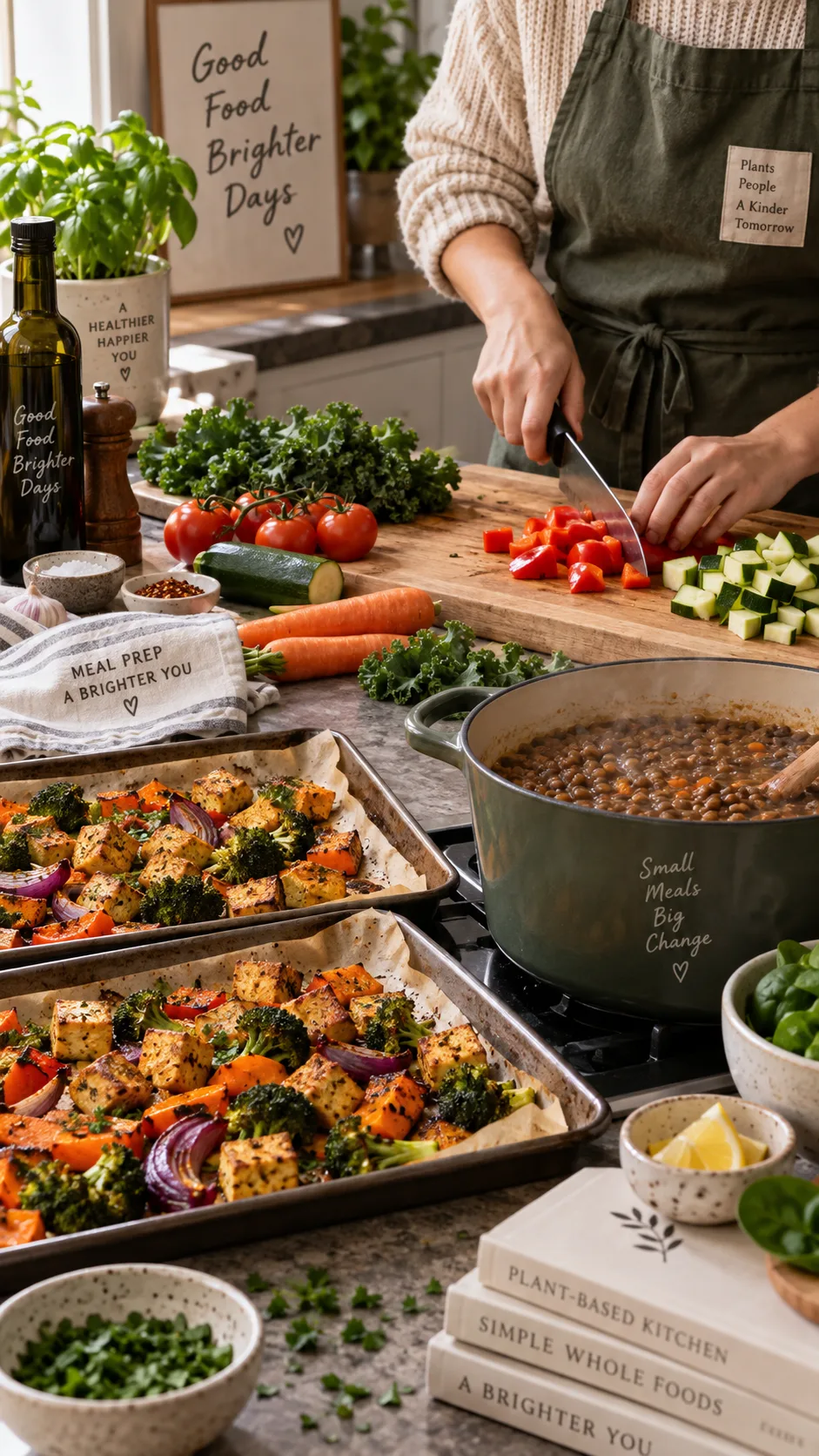
Recipe 1: Crispy peanut tofu bowls (the crowd pleaser)
If you only make one thing this week, make this. Roughly 32g protein per portion, and it tastes like takeaway.
Ingredients (makes 4 portions)
- 2 blocks extra-firm tofu, pressed and cubed
- 3 tbsp cornflour + 2 tbsp soy sauce + 1 tbsp oil
- 2 cups brown rice (dry)
- 1 head broccoli, 2 carrots, 1 red pepper
- Sauce: 4 tbsp peanut butter, 3 tbsp soy sauce, 2 tbsp rice vinegar, 1 tbsp maple syrup, 2 garlic cloves, thumb of ginger, warm water to loosen
Method
- Press tofu for 15 minutes. Press it properly. Wet tofu never crisps.
- Toss the cubes in soy sauce, then cornflour, then oil.
- Roast 25 to 30 minutes at 200°C, flipping halfway.
- Roast the veg on a second tray for the last 20 minutes.
- Blend the sauce. Store it separately and add it on the day.
Separate sauce is the single biggest upgrade you can make to any prep. Sauce on day one means mush by day three. IMO this one rule saves more meal prep than any fancy container ever will.
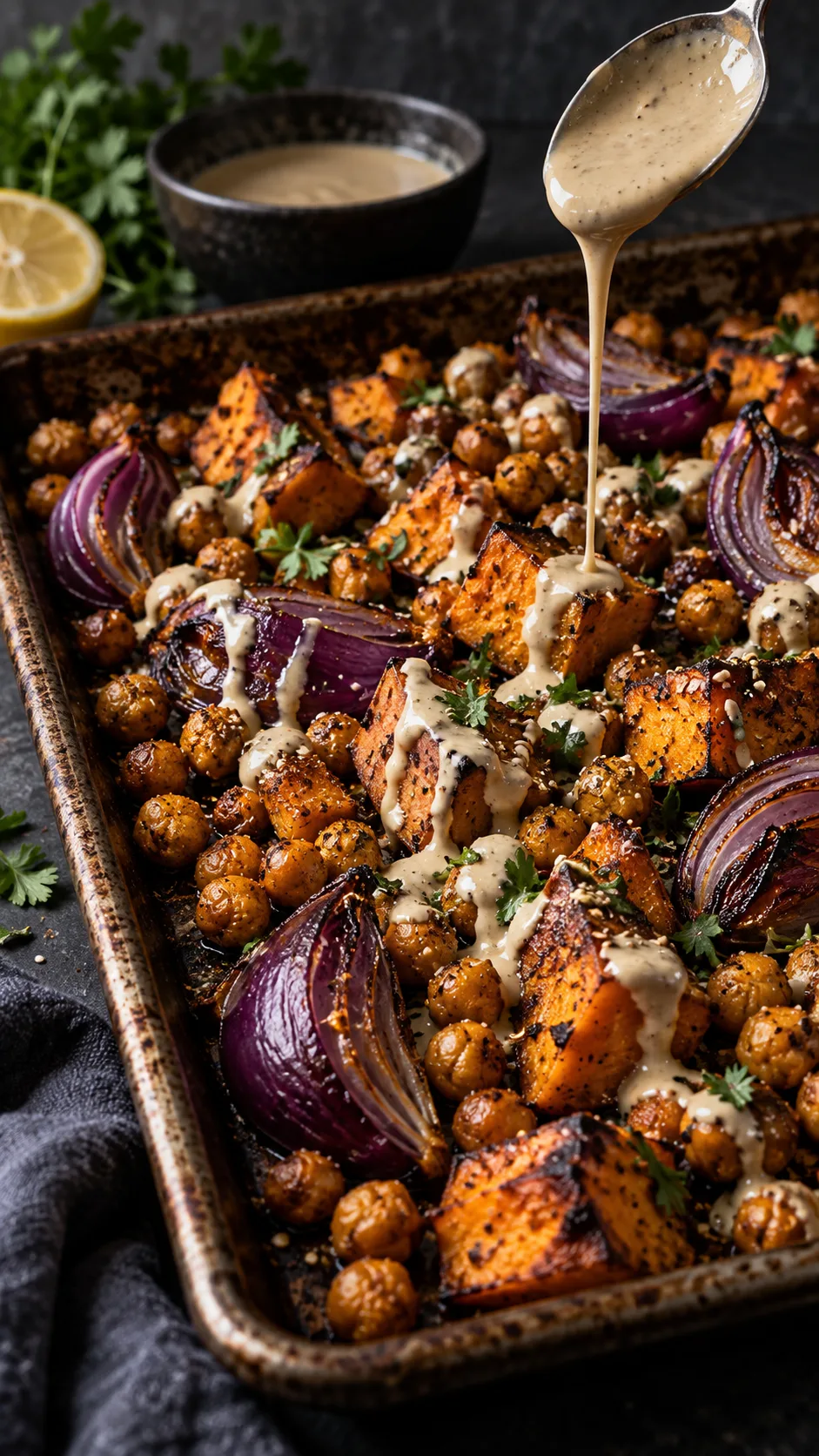
Recipe 2: Smoky chickpea and sweet potato traybake
One tray. One bowl. Ten minutes of real effort. This is my “I have no energy” recipe and it has never let me down.
- 2 tins chickpeas, drained and patted dry
- 3 medium sweet potatoes, cubed
- 1 red onion, thick wedges
- Spice mix: 2 tsp smoked paprika, 1 tsp cumin, 1 tsp garlic powder, ½ tsp chilli flakes, salt
- 3 tbsp olive oil
- Tahini-lemon drizzle: 3 tbsp tahini, juice of 1 lemon, water, pinch of salt
Roast everything at 200°C for 35 minutes. Serve it over spinach or quinoa. Chickpeas bring around 15g protein and 12g fibre per portion, and that fibre is exactly why this carries you past lunch.
Dry your chickpeas properly before they go in the oven. Wet chickpeas steam instead of crisping, and nobody wants a soft chickpea. Ever wondered why yours never go crunchy? That’s the reason.
Recipe 3: Red lentil bolognese that fools meat eaters
I served this to my very sceptical brother-in-law who “doesn’t do vegan food”. He had seconds. He still hasn’t fully forgiven me for telling him afterwards. 🙂
What goes in
- 300g red lentils (or 1 tin brown lentils plus 1 cup red)
- 1 onion, 2 carrots, 2 celery sticks, all finely diced
- 2 tins chopped tomatoes + 2 tbsp tomato purée
- 2 tbsp soy sauce + 1 tbsp balsamic (this is the umami secret)
- 1 tsp dried oregano, 1 bay leaf, 500ml veg stock
- Optional: 1 tbsp miso paste for depth
Simmer for 30 minutes. Red lentils pack about 18g protein per cooked cup and they collapse into a texture that mimics mince closely enough to fool people. Freeze half. It holds beautifully for three months.
The soy sauce and balsamic aren’t optional in my book. They build the savoury depth that plant-based sauces usually lack. Skip them and you’ve made tomato soup with bits.
Recipe 4: Overnight protein oats (breakfast, solved)
Mornings are chaos. These take four minutes on Sunday and save you from another coffee-only breakfast.
- 50g rolled oats per jar
- 1 scoop plant protein powder or 2 tbsp hemp seeds
- 1 tbsp chia seeds
- 150ml soy milk (soy beats almond for protein: 8g against 1g per cup)
- 1 tbsp nut butter
- Fruit on top the morning you eat it
That’s 25 to 30g protein before 9am. If you want more breakfast rotation ideas, I’ve broken down a full week’s worth in my guide to easy healthy breakfast meal prep.
Soy milk deserves more credit. It’s the only common plant milk with a protein profile close to dairy, and the Academy of Nutrition and Dietetics lists soy foods as a reliable complete protein source for plant-based eaters.
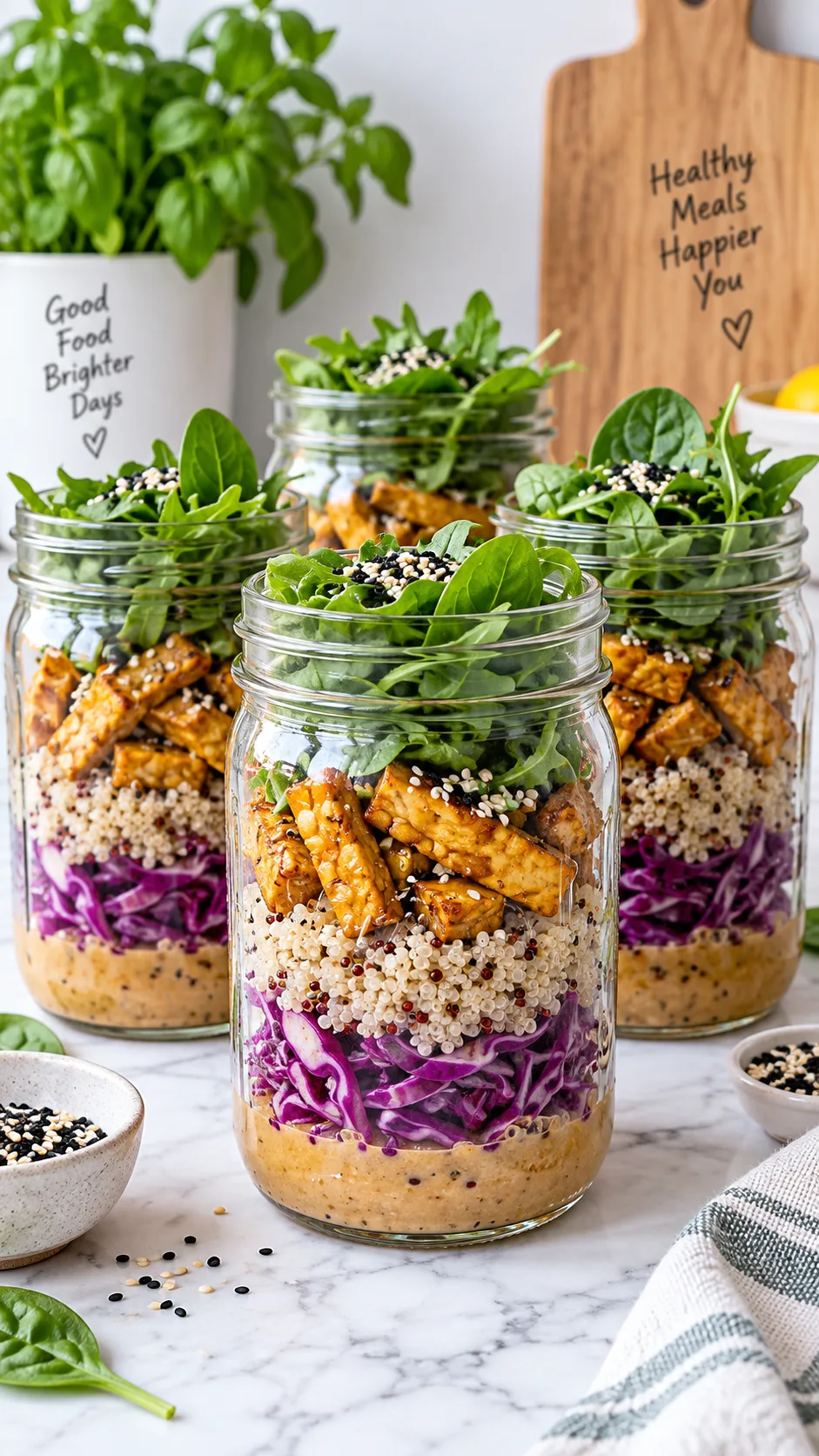
Recipe 5: Tempeh and cabbage crunch salad jars
Salad jars usually disappoint. These don’t, because tempeh brings serious substance and cabbage refuses to wilt.
Layer order (this matters)
- Bottom: dressing (miso + sesame oil + lime + maple)
- Hard veg: shredded cabbage, carrot, peppers
- Grains: cooked quinoa or soba noodles
- Pan-fried tempeh strips
- Seeds, herbs, spring onion
- Top: leafy greens (they stay dry up here)
Shake before eating. Tempeh gives you around 19g protein per 100g, plus it’s fermented, which many people find easier to digest than tofu. Steam it for 8 minutes first if you find it bitter. That trick changed tempeh for me completely.
Watch: a realistic vegan meal prep session
Reading recipes is one thing. Watching someone move through a batch-cook in real time makes the timing click much faster.
The protein cheat sheet every vegan should memorise
People love asking where you get your protein. Now you get to answer with numbers instead of a sigh.
- Seitan: 25g per 100g (the heavyweight champion)
- Tempeh: 19g per 100g
- Extra-firm tofu: 14 to 17g per 100g
- Edamame: 18g per cooked cup
- Lentils: 18g per cooked cup
- Chickpeas: 15g per cooked cup
- Black beans: 15g per cooked cup
- Hemp seeds: 10g per 3 tbsp
- Peanut butter: 8g per 2 tbsp
Aim for at least 0.8g of protein per kilogram of body weight daily, and closer to 1.2 to 1.6g if you train hard. The NHS vegan diet guidance also names B12, iodine, and omega-3 as the nutrients worth supplementing. B12 is non-negotiable, so take it.
Fibre: the underrated fullness hero
Most people eat about half the fibre they should. Vegans usually smash the target without trying, which gives you a big advantage for satiety, because fibre slows digestion and keeps blood sugar steady.
Ramp up gradually though. Going from 15g to 45g of fibre overnight makes your gut… vocal. Add 5g a week and drink more water.
Storage, safety, and not poisoning yourself
Meal prep only works if the food stays good. Here’s what I’ve learned, mostly the hard way.
- Glass containers beat plastic: no staining, no weird smells, and you can microwave them
- 3 to 4 days maximum in the fridge for cooked grains and legumes
- Freeze days 4 to 7 on Sunday, then move them to the fridge on Wednesday night
- Cool within 2 hours of cooking, then refrigerate
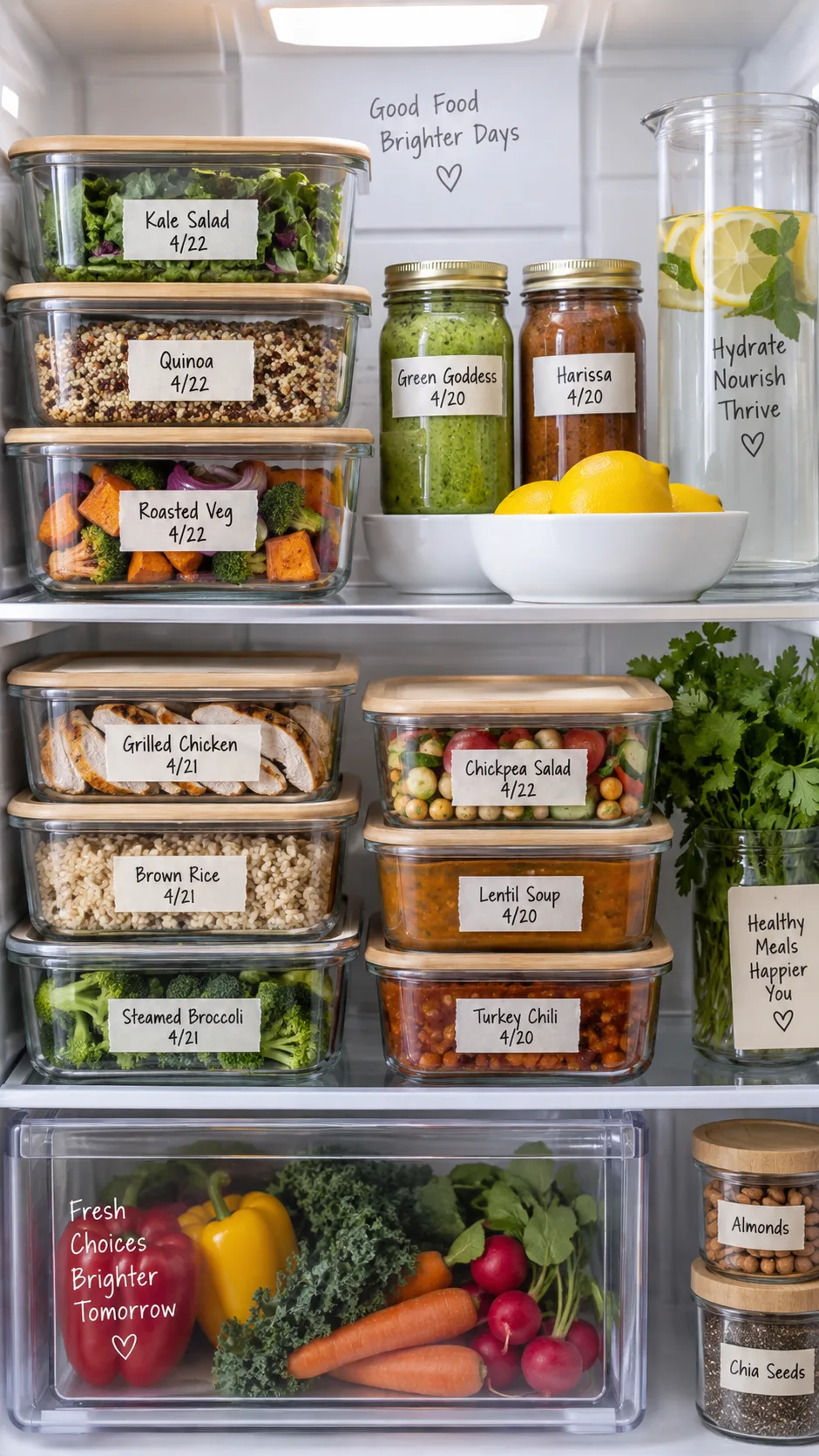
- Label everything with masking tape and a marker, because mystery containers get thrown out
- Store dressings separately in small jars or silicone pots
Cooked rice needs extra care. Bacillus cereus spores survive cooking and multiply at room temperature, so get rice into the fridge fast and reheat it until it steams all the way through. FYI, that’s the real reason behind the “don’t reheat rice” warnings you’ve heard.
What freezes well and what doesn’t
- Freezes brilliantly: lentil bolognese, curries, soups, chilli, cooked grains, burrito fillings
- Freezes fine: roasted tofu, cooked beans, tomato-based sauces
- Absolutely does not: leafy salads, cucumber, raw tomato, avocado, creamy potato
My 5 hard-won meal prep rules
Three years of doing this every week taught me more than any recipe blog. These are the rules I’d tattoo on my forearm.
1. Prep components, not complete meals
Cook a grain, a protein, a veg, and two sauces. Combine them differently each day. You get variety without extra work, which is the whole trick.
2. Never prep more than 4 days
Day five food tastes like regret. Prep on Sunday for Monday through Thursday, then wing it on Friday. You’ll eat all of it that way.
3. Double the seasoning you think you need
Cold food tastes blander than hot food. Salt, acid, and chilli all fade in the fridge, so season aggressively on Sunday.
4. Keep three emergency backups
Tinned beans, frozen edamame, and a jar of curry paste. You get dinner in ten minutes with no decisions and no delivery app.
5. Start with three days, not seven
Ambitious beginners burn out fast. The same principle applies to any habit. I make the identical point in my lazy cook’s guide to healthy meal prep, and it’s the same logic behind starting small when you’re learning to run.
A sample week that works
Here’s a real week from my fridge. Nothing aspirational, nothing fake.
- Monday: Peanut tofu bowl + brown rice + broccoli
- Tuesday: Lentil bolognese over wholegrain pasta + side salad
- Wednesday: Smoky chickpea traybake + spinach + tahini drizzle
- Thursday: Tempeh salad jar + leftover rice fried with frozen edamame
- Breakfast daily: Overnight protein oats, rotating toppings
- Snacks: Roasted chickpeas, hummus + carrots, handful of almonds
Total shopping cost? Around £30 to £40 for the week, depending on where you shop. Legumes and grains cost almost nothing. Vegan eating gets expensive only when you buy the fancy fake meats.
Common mistakes that sabotage your week
- Prepping food you don’t like. Kale doesn’t become fun in a container.
- Forgetting fat. Low-fat vegan meals leave you hungry in 90 minutes, guaranteed.
- Using watery tofu. Press it or accept mediocrity.
- Overcooking veg. Undercook slightly, because reheating finishes the job.
- Making seven identical lunches. You’ll hate it by Wednesday. Every time.
- Skipping the sauce. Sauce is not optional. Sauce is the whole personality.
The bottom line
Vegan meal prep keeps you full when you build it around protein, fibre, and fat rather than vegetables and good intentions. Hit 20 to 30g protein per meal, prep components instead of finished dishes, store your sauces separately, and cap the week at four days.
Start this Sunday with just two recipes. The peanut tofu bowls and the lentil bolognese cover lunch and dinner for four days, and together they’ll take you under an hour.
Your future self on Wednesday at 12:30pm, opening a fridge full of food that tastes good, will thank you. The takeaway apps can wait another week.