

You can stop dumping your pasta down the garbage disposal. You can also quit choking down dry, unseasoned chicken breasts while your family enjoys Friday night tacos. Most traditional diets fail because they demand perfection, ban whole food groups, and treat normal eating like a moral defect.
Counting macros flips that tired approach on its head. Instead of asking, “Am I allowed to eat this?”, you ask, “Does this fit my daily target?” That shift changes your mindset. You take control back from arbitrary food rules and rely on numbers tied directly to your body’s energy needs.
I spent years bouncing between zero-carb misery and weekend binges before I finally learned how to track macronutrients. Once you grasp this basic framework, food stops feeling like an enemy. We will build your personal macro targets from scratch so you can drop body fat, keep your sanity, and eat meals you enjoy.
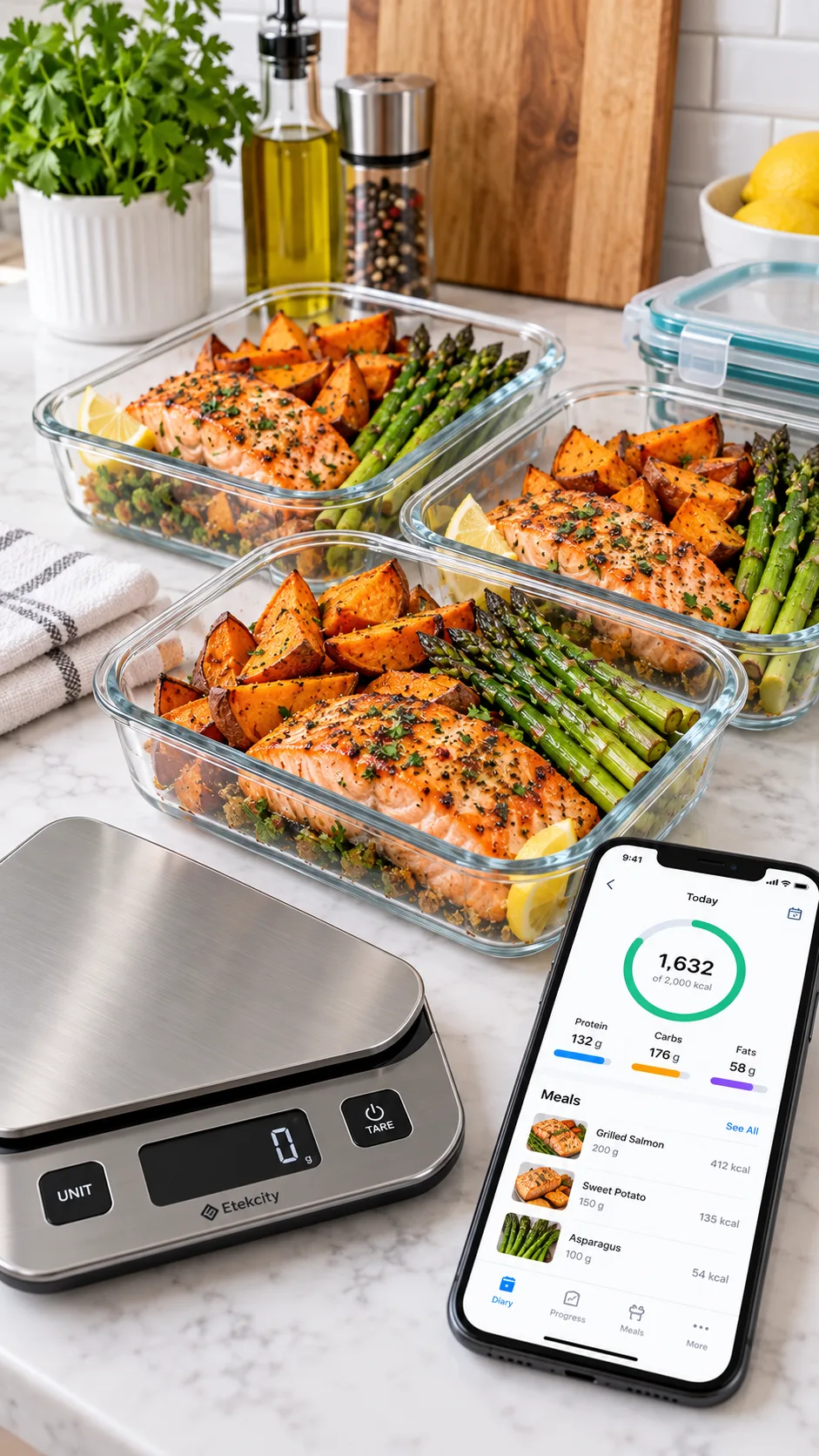
What are macros anyway? (The practical breakdown)

Macronutrients (popularly called macros) are the main nutritional categories your body requires in large amounts to survive, produce energy, and repair tissue. Every calorie you consume comes from three places: proteins, fats, and carbohydrates.
Alcohol counts as a fourth macro at 7 calories per gram, but since it supplies zero nutrition, we leave it out of regular meal planning. A generic calorie count rarely tells the whole story. Your metabolism handles each fuel source differently.
1. Protein: Muscle preservation and hunger control
Protein builds muscle, repairs cells, synthesizes digestive enzymes, and keeps you full longer than any other nutrient. When you digest protein, your body expends roughly 20% to 30% of those calories just breaking the amino acids down. Scientists call this the Thermic Effect of Food (TEF). You can learn more about how dietary protein influences metabolic health via research published on the National Institutes of Health database.
- Caloric density: 4 calories per 1 gram of protein
- Prime sources: Chicken breast, lean beef, turkey, eggs, Greek yogurt, tofu, white fish, whey protein
- Why you need it: Protein prevents your body from burning lean muscle tissue during a calorie deficit. If you struggle to hit higher targets, our guide on The High Protein Diet Plan That Keeps You Full (And Builds Muscle) provides quick meal ideas.
2. Fats: The hormone regulator
Low-fat diet fads from the 1990s damaged metabolic health for millions of people. Your endocrine system requires dietary fat to manufacture hormones like testosterone and estrogen. Dietary fat cushions your organs, builds cell membranes, and helps your gut absorb fat-soluble vitamins (A, D, E, and K).
- Caloric density: 9 calories per 1 gram of fat (more than double the energy density of carbs or protein)
- Prime sources: Olive oil, avocados, whole eggs, almonds, walnuts, chia seeds, fatty fish like salmon
- Why you need it: If you cut your fat intake too low, your hormones plummet, your joints ache, and your daily energy crashes.
3. Carbohydrates: High-octane fuel
Carbohydrates supply the preferred fuel for your brain and skeletal muscles. Your digestive tract breaks carbohydrates down into glucose, then stores excess amounts in your liver and muscle tissue as glycogen. Carbs do not make you gain body fat; an unmonitored calorie surplus causes fat gain.
- Caloric density: 4 calories per 1 gram of carbohydrate
- Prime sources: Rice, oats, potatoes, fruits, whole grains, beans, sourdough bread
- Why you need it: Carbs fuel tough workouts, support thyroid function, and keep your central nervous system running smoothly.
Why macros beat plain calorie counting every single time
Do calories determine weight gain and weight loss? Yes. Thermodynamics governs energy balance. Even so, calories determine your weight, while macros determine your body composition.
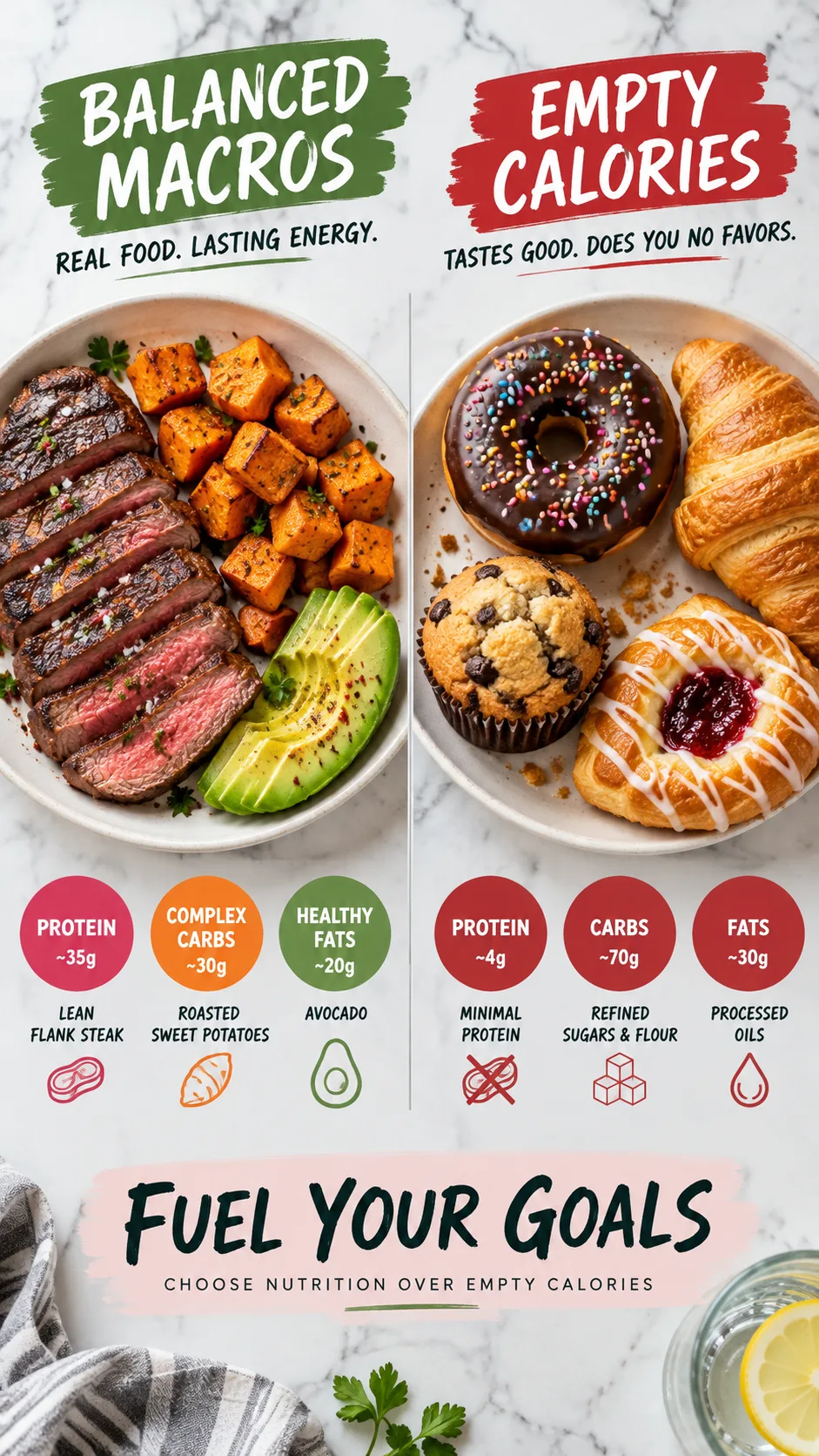
Picture two people who each weigh 180 pounds. Both consume 1,800 calories daily to shed weight. Person A eats 60 grams of protein and fills the rest of their budget with processed snack foods, potato chips, and sugary soda. Person B eats 160 grams of protein alongside potatoes, oats, vegetables, and olive oil.
Both people see lower numbers on the bathroom scale. However, Person A loses muscle alongside body fat, ending up softer and hungrier, a result many coaches call “skinny fat.” Person B loses mostly body fat and keeps lean muscle, creating a firmer, more athletic look. If you pair this strategy with structured lifting from our guide on The Gym Diet Plan That Builds Muscle Without Starving You, your physique improves even faster.
Step-by-step: How to calculate your personal macros
You do not need a biochemistry degree to calculate your numbers. You can map out your starting targets in ten minutes with basic arithmetic. Follow these simple steps.
Step 1: Determine your total daily energy expenditure (TDEE)
Your TDEE measures the total calories your body burns every 24 hours through your resting metabolism, daily steps, workouts, and digestion. You can use verified baseline formulas such as the Mifflin-St Jeor equation, or reference energy balance data directly from the USDA Dietary Guidelines.
For an immediate, practical estimate, multiply your current body weight in pounds by an activity multiplier:
- Sedentary (desk job, under 5,000 steps, little exercise): Body weight × 12 to 14
- Moderately Active (lifting weights 3 to 4 days a week, 7,000 to 10,000 daily steps): Body weight × 14 to 16
- Very Active (hard physical labor or heavy athletic training 5 or more days): Body weight × 16 to 18
Example: Sarah weighs 150 pounds and works out four times a week. We calculate her maintenance intake as: 150 × 15 = 2,250 calories per day.
Step 2: Adjust for your specific goal
Your goal dictates whether you add or subtract energy from that maintenance baseline:
- For Fat Loss: Subtract 15% to 20% from your maintenance calories (a safe, sustainable deficit).
- For Muscle Gain: Add 5% to 10% above your maintenance calories (a controlled lean bulk).
- For Body Recomposition: Stay at your maintenance number while lifting progressively heavier weights.
Sarah wants steady fat loss. She creates a 20% deficit: 2,250 × 0.80 = 1,800 calories per day.
Step 3: Set your daily protein target
Set protein first because it protects your metabolic rate during a diet. Peer-reviewed sports nutrition meta-analyses from sources like Examine.com confirm that consuming between 0.8 and 1.0 grams of protein per pound of body weight maximally preserves lean tissue.
Sarah weighs 150 pounds, so she sets her daily protein target at 130 grams:
- 130 grams of protein × 4 calories per gram = 520 calories from protein
- Calories remaining: 1,800 minus 520 = 1,280 calories
Step 4: Calculate your healthy fats
Never drop fat below healthy physiological thresholds. Allocate between 0.3 and 0.4 grams of dietary fat per pound of body weight (or roughly 20% to 30% of your total calories). Sarah sets a balanced target of 0.35 grams per pound:
- 150 pounds × 0.35 grams = roughly 52 grams of fat daily
- 52 grams of fat × 9 calories per gram = 468 calories from fat
- Calories remaining: 1,280 minus 468 = 812 calories
Step 5: Give remaining calories to carbohydrates
Assign every remaining calorie to carbohydrates to fuel your workouts and cognitive function. Carbs provide 4 calories per gram:
- 812 calories ÷ 4 calories per gram = 203 grams of carbohydrates
• Calories: 1,800 kcal
• Protein: 130 grams (520 kcal)
• Fat: 52 grams (468 kcal)
• Carbohydrates: 203 grams (812 kcal)
Sarah never cuts out fruit, eliminates rice, or suffers through an overly strict keto diet plan to drop body fat. She simply stays within those clear daily guidelines.
The essential tools: How to track without stress
You cannot manage what you do not measure. Macro tracking requires only two simple items: a smartphone app and an inexpensive digital kitchen scale.
1. Buy an inexpensive digital food scale
Put your measuring cups back in the cupboard. Measuring cups track volume, not mass. When you scoop peanut butter with a tablespoon, you can easily pack 200 calories instead of the listed 90 calories by mounding the spoon. A digital scale measuring in grams eliminates guesswork in seconds.
2. Download a reliable food tracking app
Choose an app with an accurate, verified food database. MacroFactor, Cronometer, and MyFitnessPal work well. Scan barcodes on your everyday foods to set up your personal meal library quickly.
3. Weigh food raw whenever possible
Cooking shrinks meat by evaporating water and expands starches like rice or pasta by absorbing it. Four ounces of raw chicken breast drops to roughly three ounces after grilling, yet the calorie content stays the same. Log meats raw whenever you can, or pick the cooked entry in your app database to protect your accuracy.
The 80/20 rule: Eating pizza while losing body fat
Does this approach mean eating fast food all day? No. Early followers often called this method “If It Fits Your Macros.” Some people pushed the idea too far, filling their daily allowance with pastries and protein shakes. They soon ran into digestive issues, constant hunger, and sharp energy dips.
Instead, apply the 80/20 rule:
- Source 80% of your daily macros from whole, minimally processed foods: poultry, lean beef, eggs, potatoes, oats, berries, greens, seeds, and olive oil.
- Keep 20% of your daily macros for social meals and treats: a slice of birthday cake, fresh sourdough, a beer, or pizza with friends.
This balance keeps you from burning out. You can attend social dinners comfortably because you plan your day around them. Extreme food bans cause binges, while planned flexibility builds habits you can maintain for years.
Four beginner mistakes that stall progress
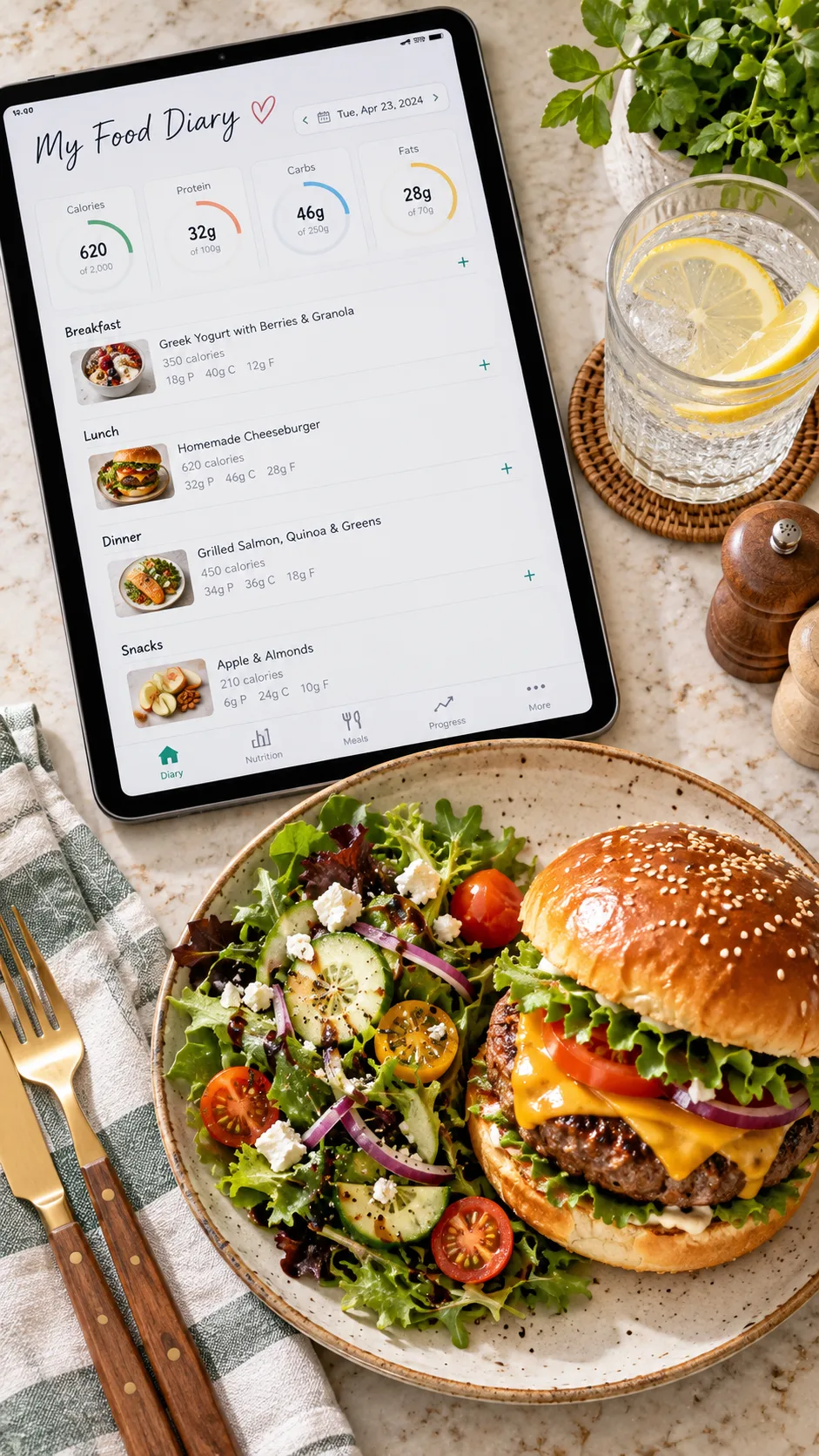
Tracking macros works reliably, but small oversights can stall your progress for weeks. Avoid these four common traps:
1. Pouring cooking oil without measuring
Pouring oil straight into a pan ruins a calorie deficit faster than almost anything else. One tablespoon of olive oil carries 14 grams of fat and roughly 120 calories. Two quick, unmeasured glugs can quietly add 250 untracked calories to your meal. Place your cooking pan directly on the scale, press “tare,” and pour by weight.
2. Chasing single-gram perfection
Many people stress out when their tracker shows 134 grams of protein against a 130-gram target. Human metabolism is not a robotic engine. Give yourself a five-gram buffer on protein and carbs, plus a two-to-three gram buffer on fats. Landing anywhere in that zone delivers solid results.
3. Overlooking liquid calories and drinks
Lattes made with whole milk, sugary sodas, and cocktails pack dozens of calories without curbing your appetite. When you drink alcohol, your liver prioritizes alcohol metabolism over burning fat. If you drink a glass of wine, subtract those calories from your carb or fat targets for that day.
4. Changing targets too fast
Do not cut your calories lower after three days simply because your scale ticked up a pound. Water retention, digestion, salt intake, and stress alter scale readings every morning. Weigh yourself daily, calculate a weekly average, and hold steady for two weeks before making any macro adjustments.
A realistic one-day sample meal plan (1,800 calories)
Here is how a balanced 1,800-calorie day looks in real life, with ample food volume, fiber, and flavor.
Breakfast: High-protein berry French toast
- 3 slices low-calorie bread dipped in 150g egg whites, cinnamon, and vanilla extract
- 100g fresh blueberries
- 2 tablespoons sugar-free maple syrup
- 1 scoop whey protein stirred into water or black coffee
- Macros: 42g Protein | 48g Carbs | 4g Fat
Lunch: Air-fryer chicken and rice bowl
- 150g raw chicken breast seasoned and cooked in the air fryer
- 150g cooked jasmine rice
- 60g black beans
- 50g diced avocado
- Generous spoonful of fresh tomato salsa with lime juice
- Macros: 40g Protein | 55g Carbs | 12g Fat
Afternoon snack: Greek yogurt bowl
- 200g plain nonfat Greek yogurt
- 15g natural peanut butter
- 10g chia seeds
- 1 small sliced apple
- Macros: 25g Protein | 30g Carbs | 12g Fat
Dinner: Lean beef pasta
- 120g 93/7 lean ground beef browned with garlic and oregano
- 75g dry pasta
- 100g marinara sauce
- Side bowl of fresh baby spinach with balsamic vinegar and 5g olive oil
- Macros: 35g Protein | 65g Carbs | 16g Fat
• Protein: 142 grams
• Carbohydrates: 198 grams
• Fat: 44 grams
• Total Energy: Roughly 1,756 calories
What to do when the scale stops moving
Metabolic adaptation affects everyone over time. When your body drops weight, it burns less energy just moving around. Carrying a lighter frame up a flight of stairs takes less fuel. When your weekly scale average stalls for two to three weeks, take one of these two actions:
- Drop 100 to 150 calories from your carbs or fats: Protect your protein intake while dieting. Cut 25 grams of carbs or 10 grams of fat daily to restore your calorie deficit.
- Increase your daily movement (NEAT): Instead of eating less, increase daily energy expenditure. Add 2,000 steps to your daily routine by taking ten-minute walks after meals.
If you have stayed in a calorie deficit for twelve to sixteen consecutive weeks, schedule a two-week diet break. Eat at your maintenance calorie level during this period. This step eases mental fatigue, balances hunger hormones, and prepares you for another fat loss phase.
Take your first step today
Keep this process simple. You do not need to overhaul your entire kitchen pantry tonight or buy expensive health foods. Macro tracking succeeds because it values consistency over culinary perfection.
Start with a simple task for the next three days: eat your standard meals without altering your habits. Buy an inexpensive food scale, open an app, and weigh your food honestly. This gives you a clear baseline of your current intake. Once you understand your starting point, hitting specific numbers becomes straightforward.
Calculate your daily targets, hit your protein goal, maintain your calorie deficit, and watch your body composition improve without giving up your favorite foods.