

If you’ve ever Googled “how to get taller,” you’ve probably run into some genuinely bizarre advice. Drink milk every hour. Hang from a bar for 30 minutes a day. Try this one weird trick. We’re skipping all of that.
Your height is largely determined by genetics, and no amount of stretching will turn you into a 6-footer if your genes had other plans. But there are real, science-backed strategies that can help you maximize your natural height potential, improve your posture, and look and feel taller in ways that actually stick.

First, let’s talk about how height actually works
Your body grows taller primarily because of growth plates, which are soft areas of cartilage near the ends of your long bones. During puberty, these plates stay active and add length to your bones. Once they close (usually in the late teens for girls and early 20s for boys), bone growth is done.
What most people miss is this: posture, spinal health, and soft tissue compression genuinely affect how tall you appear, and even how tall you measure on a doctor’s scale. You can reclaim centimeters you’ve been losing to bad habits.
According to the NHS, genetics accounts for roughly 60-80% of your height. The rest comes down to lifestyle, nutrition, and environment. That remaining 20-40% is where your real opportunity sits.
1. Fix your posture (this is probably the biggest one)
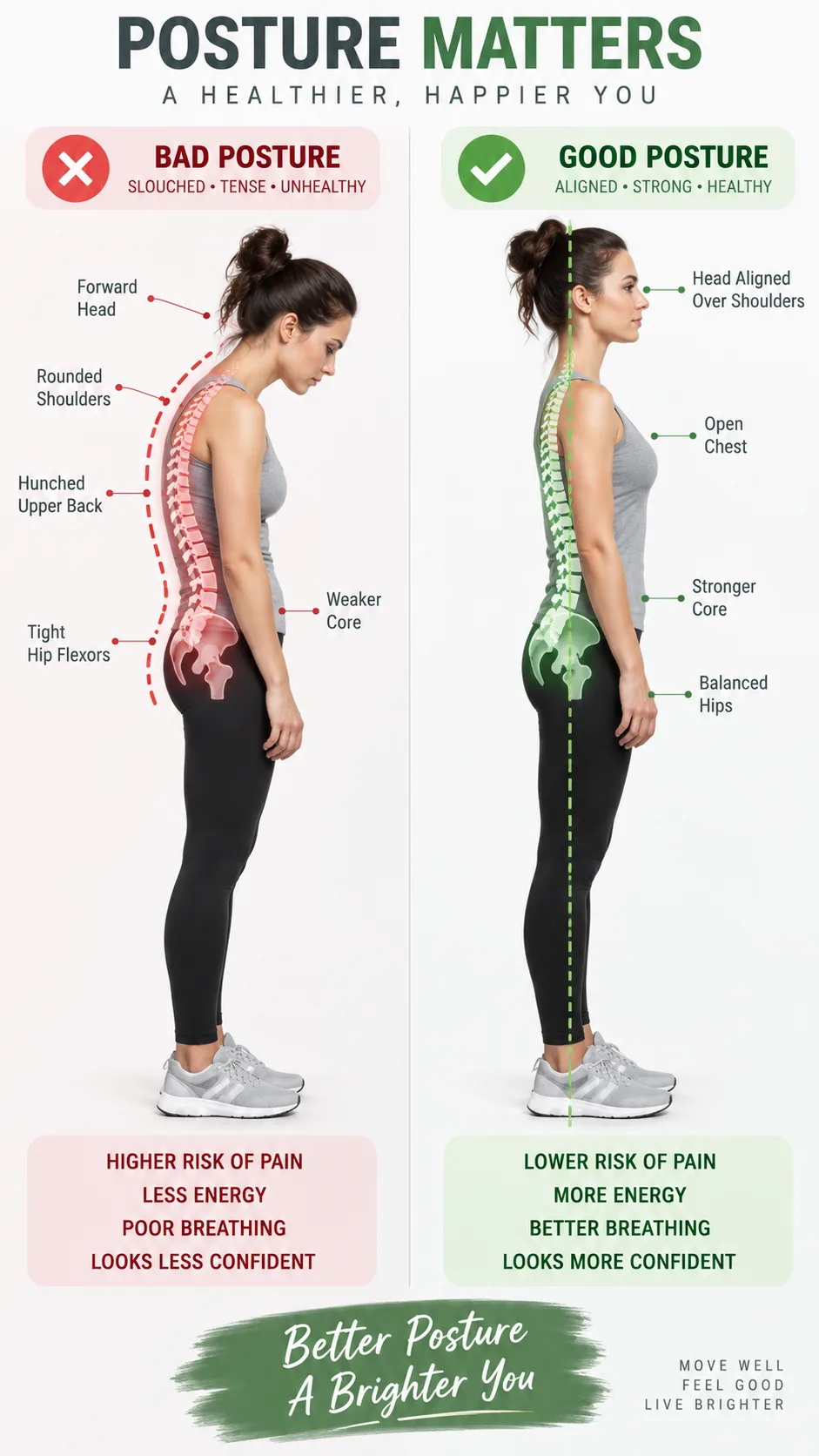
Poor posture steals your height. Slouching compresses your spine and can make you appear 2-4 centimeters shorter than you are. That’s not a small number.
What bad posture actually does
- Compresses the discs between your vertebrae
- Rounds your shoulders forward, collapsing your chest
- Tilts your pelvis and throws off your entire alignment
- Creates chronic tension in your neck and lower back
How to fix it starting today
- Stand with your back against a wall — your head, shoulders, and glutes should all touch it. That’s neutral alignment.
- Strengthen your core — a weak core is often what causes a curved spine in the first place.
- Pull your shoulder blades back and down throughout the day. Set a phone reminder if you need to.
- Sit at 90 degrees when working at a desk. Keeping a laptop on your lap for hours is not doing you any favors.
2. Sleep like you actually mean it
This one sounds almost too simple, but your body releases human growth hormone (HGH) primarily during deep sleep. If you’re skimping on sleep, you’re shortchanging your body’s ability to grow and repair. That’s not a theory. That’s biology.
The Sleep Foundation confirms that most of your daily HGH secretion happens in the first few hours of deep, slow-wave sleep. Miss that window consistently, and you miss growth signals your body needed.
Aim for 8-10 hours if you’re still in your teens, and 7-9 hours as an adult. Sleep on your back when possible since it keeps your spine in its most natural alignment. Sleeping curled up in a tight ball every night isn’t helping your posture either.
3. Nail your nutrition — your bones are literally made of this stuff
You can’t build a tall structure with low-quality materials, and your bones work the same way. Nutritional deficiencies during growth years are one of the main reasons people don’t reach their genetic height potential.
Nutrients that support height and bone health
- Calcium — found in dairy, leafy greens, and fortified plant milks. Builds bone density.
- Vitamin D — helps your body absorb calcium properly. Get sunlight or supplement.
- Protein — needed for tissue growth. Aim for 0.8-1g per pound of bodyweight.
- Zinc — linked to growth in adolescents. Found in meat, seeds, and legumes.
- Magnesium — supports bone mineralization. Find it in nuts, whole grains, and dark chocolate.
Being overweight also affects how you carry yourself and how your body distributes pressure through your joints and spine. Your overall body composition plays a bigger role here than most people expect. If you want broader physical wellness strategies, this doctor’s guide to hygiene and health for plus-size women offers practical, no-judgment advice on building healthy daily habits.
4. Exercise that actually supports height
Lifting weights won’t stunt your growth. That myth needs to retire. Resistance training, done correctly, supports bone density and the muscle strength that holds your posture together. What you want is a mix of stretching, strengthening, and low-impact cardio.
Best exercises for height optimization
- Hanging exercises — decompress your spine and stretch your vertebrae. Even 30 seconds a day helps.
- Yoga and pilates — improve flexibility, posture alignment, and core strength at the same time.
- Swimming — a full-body, low-impact workout that encourages spinal elongation and builds great posture.
- Cat-cow stretches — mobilize your spine and counteract the compression that comes from sitting all day.
- Cobra pose — opens the chest and stretches the spine into extension.

5. Avoid the habits that are actively making you shorter
A surprising number of everyday habits work against you. Some of these are the real culprits behind unexplained height loss, and yes, you can lose measurable height over time if you’re not paying attention.
- Smoking — seriously impairs bone density and growth hormone levels.
- Excessive alcohol — disrupts sleep quality and suppresses HGH release.
- Chronic stress — elevated cortisol negatively affects growth hormone. Manage it actively.
- Sitting for hours without breaks — compresses your spinal discs over time. Stand up every 45 minutes.
- Unsupportive footwear — contributes to poor alignment from the ground up.
6. What about height after 25? Here’s the truth
Most people already know, somewhere in the back of their minds, that they won’t grow 3 inches at 35. That’s fine. What you can do is stop losing the height you already have, because spinal compression, poor posture, and disc dehydration genuinely reduce your height as you age.
The Mayo Clinic notes that adults can lose up to half an inch per decade after their 40s due to disc compression and bone density changes. Building healthy habits now protects the height you have. That’s worth taking seriously.
Focus on daily spinal decompression stretches, strength training to support bone density, and consistently prioritizing sleep and nutrition. These aren’t just height tips. They’re longevity habits.

7. Dress and stand in ways that maximize your height
This won’t biologically increase your height, but it’s practical and it works. How you dress and carry yourself changes how tall you appear to other people and, honestly, to yourself.
- Wear vertical stripes and monochromatic outfits to create a longer visual line.
- Opt for well-fitted clothing. Baggy clothes make you look shorter and wider.
- Choose shoes with a slight heel or insole lift. Even 2cm makes a visible difference.
- Keep your chin parallel to the floor when walking. Looking down instantly makes you appear shorter.
The bottom line
You can’t dramatically change your genetic height ceiling. But most people walk around 2-4 centimeters shorter than they could be because of fixable things: bad posture, poor sleep, nutritional gaps, and compression from a sedentary lifestyle.
Fix those things, and you’re not just potentially taller. You’re healthier, more energetic, and more confident. That’s a solid trade-off.
Start with the two easiest wins: fix your posture today and prioritize sleep tonight. Stack the other habits over time. Consistency beats intensity here, every time.
If you’re working on building healthier habits across the board, it’s worth checking out this comprehensive health guide. It covers daily wellness habits with the same practical, no-nonsense approach. Your whole body benefits when you start paying attention to the basics.
You have more control over this than you think. Start today.