Tired of diets that demand you overhaul your entire life by Monday? Good. This one asks for far less, and that is why it works for so many people.
The 100 50 method boils weight loss down to two small daily moves. You trim about 100 calories from what you eat, and you burn about 50 extra calories through movement. It bans no food groups and needs no pricey powders.
This article covers how the method works, where it falls short, and how to run it in real life.

What is the 100 50 method?
The 100 50 method is not a clinical diet with an official rulebook. No major health organization owns it, and different people describe it in slightly different ways.
The version in this article is the most practical one I’ve found. Eat 100 fewer calories than you usually do, and move enough to burn 50 more calories than you usually do, every day. That creates a modest daily gap of roughly 150 calories.
Does that sound too small to matter? That is the point. Small changes slip under your brain’s “I’m being deprived” radar, so you don’t rebel against them.
Why the “small change” idea has real science behind it
Small energy tweaks beat dramatic overhauls for most people. James Hill’s 2003 paper in Science proposed that closing a gap of around 100 calories a day could stop gradual weight gain in most adults. The 100 50 method borrows that logic and pushes it a little further toward weight loss.
I like this approach because it matches how real life works. Nobody I know has stuck to a 1,200-calorie plan during wedding season. Plenty of people manage to skip one sugary drink.
The math: what 150 calories a day does
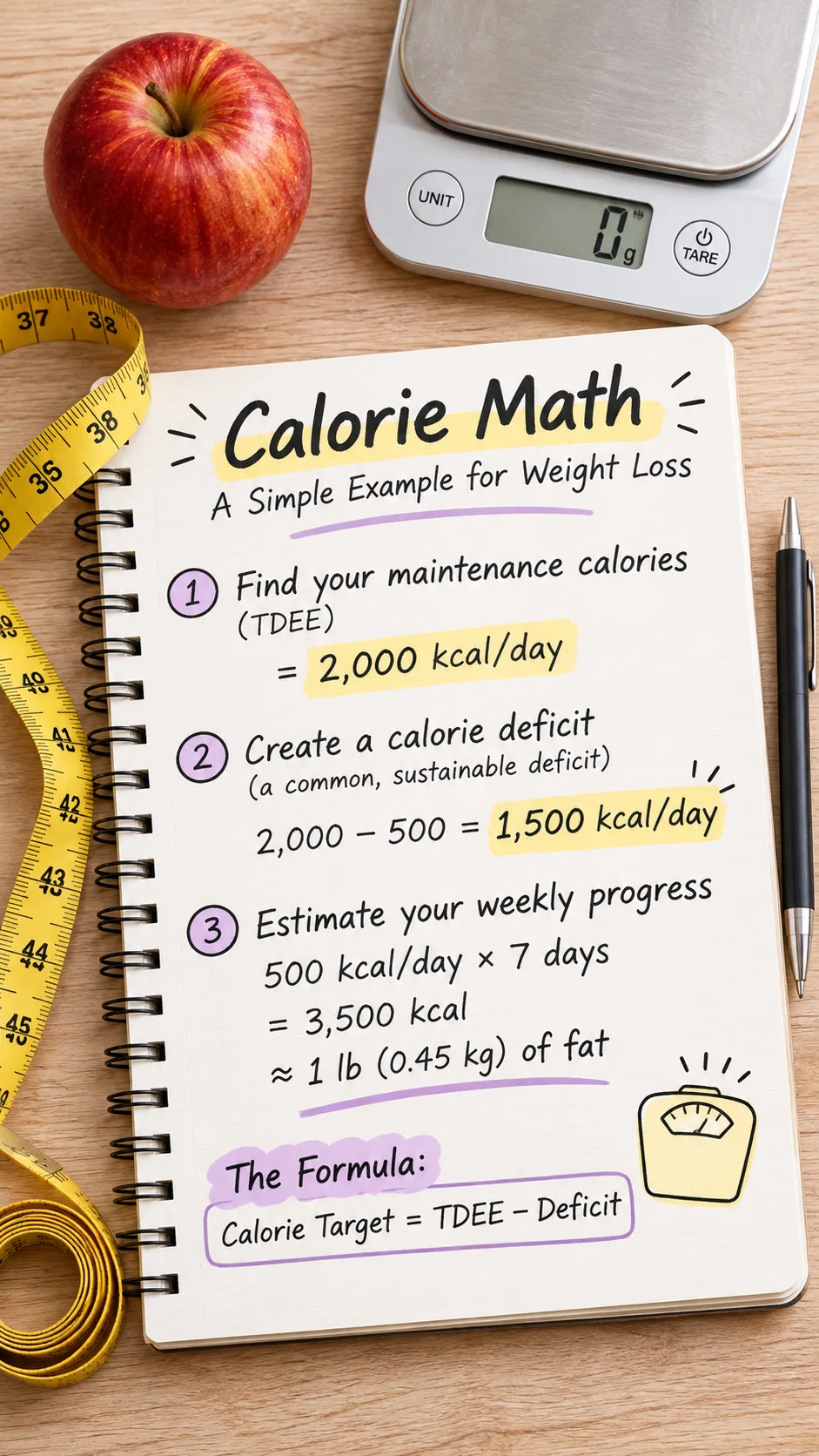
The arithmetic hurts less than a spreadsheet.
- 100 calories cut + 50 calories burned = about 150 calories a day.
- 150 x 7 days = about 1,050 calories a week.
- Over a year, that adds up to roughly 54,000 calories.
The old rule of thumb says about 3,500 calories equals one pound (0.45 kg) of body fat. By that estimate, you would lose roughly one pound every three to four weeks, or about 12 to 16 pounds over a year.
Treat that 3,500 figure as a rough guide, not a law of physics. Your body adapts as you lose weight, so real results drift from the math. The NIH Body Weight Planner models those changes much more accurately than the simple rule does.
Is 150 calories exciting? No. But it adds up faster than you’d expect when you repeat it day after day.
The “100” side: how to cut 100 calories without feeling it
You can keep eating about the same amount of food. Swap or shrink a few things you barely notice. These are the easiest wins.
- Swap one sugary drink for water or sparkling water. A 12-ounce regular soda carries about 140 to 150 calories, so this one swap covers your whole target.
- Measure your cooking oil. One tablespoon of oil packs about 120 calories, and most of us pour closer to two without thinking.
- Trim the sugar and syrup in your tea or coffee. Two teaspoons of sugar add up to roughly 30 to 40 calories, and several cups a day pile on fast.
- Shrink your starch portion by one quarter and fill that space with vegetables.
- Skip the second serving of snacks. Stop at one handful of nuts instead of three.
- Go lighter on mayo, creamy sauces and dressings. One tablespoon of mayo runs about 90 to 100 calories.
- Choose fruit over fruit juice. You get fiber, and fiber keeps you full.
- Leave the last few bites. Yes, you can leave food on a plate. Nobody will arrest you.
A Nigerian kitchen twist
If you cook with plenty of palm oil, fry plantain often, or serve generous scoops of rice, you already have 100 calories hiding in plain sight. Measure the oil with a spoon and cut your swallow or rice portion slightly. Add more protein and vegetables to the plate.
Need ideas? Our list of the best Nigerian foods for weight loss shows you what to put on the plate instead. If breakfast is your weak spot, these Nigerian breakfast ideas for weight loss make a good starting point.
The “50” side: how to burn 50 extra calories
Fifty calories is tiny. A brisk 10-minute walk burns roughly that much for many adults, though the exact number depends on your weight and pace. Harvard Health estimates that a 155-pound person burns around 150 calories in 30 minutes of walking at 3.5 mph, which works out to about 50 calories per 10 minutes.
You don’t need a gym membership or a fancy watch. You need a few more moments of movement spread through your day.
- Walk for 10 minutes after your biggest meal. It also helps you wind down after eating.
- Take the stairs whenever you reasonably can.
- Park farther away, or get off the bus one stop early.
- Pace during phone calls. You talk either way, so you may as well walk.
- Do a five-minute bodyweight circuit of squats, push-ups and a plank before your shower.
- Dance while you cook. I do this, and my neighbors have opinions.

Want a bigger number than 50? Go for it. Treat 50 as the minimum. The CDC recommends at least 150 minutes of moderate activity per week for adults, and your daily 50 calories nudges you in that direction.
Why this rule sticks
Most diets fail for boring reasons. They ask too much, too soon, and then life shows up. The 100 50 method flips that script.
It removes the trap of quitting after one slip
Ever blown your diet at breakfast and then written off the whole day? Most of us have. With the 100 50 rule, one slip barely dents the plan, because you only need to make up a small gap.
It builds habits, not willpower
Willpower runs out by 4 p.m. A habit like “I walk after dinner” runs on autopilot. In my experience, small, repeatable actions beat heroic effort almost every time.
It fits any food culture
You don’t need kale smoothies or imported superfoods. You keep eating your own meals, just a little smarter. That matters if your family cooks jollof, egusi, or pasta every week and you refuse to cook separate dinners.
It leaves room for real life
Birthdays, weddings and Friday nights out all happen. Because the deficit is small, you can absorb a big meal now and then and get back on track the next day.
What results should you expect?
This is a slow method. If you want to drop 10 pounds in three weeks before a wedding, this isn’t your tool.
Here is a realistic timeline:
- In month 1, you might lose very little on the scale. You may notice better energy and fewer cravings.
- In months 2 to 3, your clothes may fit looser, and the scale often starts moving.
- In months 6 to 12, the savings compound, and many people lose 10 to 15 pounds if they stay consistent.
The CDC notes that people who lose weight gradually, at about one to two pounds a week, tend to keep it off better. The 100 50 method sits below that range, so it is a gentle option. You can raise the numbers later if you want faster progress.
A sample day on the 100 50 method
Here is what a regular day might look like. Nothing dramatic happens, and that’s the point.
- In the morning, you drink your tea with one teaspoon of sugar instead of three. Saved: about 30 to 40 calories.
- At lunch, you serve rice one quarter smaller and add extra vegetables. Saved: about 50 calories.
- In the afternoon, you swap a soft drink for water. Saved: about 140 calories, which already covers your goal.
- In the evening, you walk for 10 minutes after dinner. Burned: about 50 calories.
You might overshoot your target on some days, and that’s fine. Extra savings give you a cushion for the days you miss it.
Want more structure around your meals? Our weight loss meal plans and food timetable pair well with this method, because they show you where to swap and trim.
How to track progress without obsessing
You don’t need to log every bite forever. Pick the simplest tracking method you will use.
- Use the checkmark method: mark a calendar each day you hit both your “100” and your “50.”
- Weigh yourself once a week, at the same time, under the same conditions.
- Measure your waist monthly. The scale lies sometimes, but your belt rarely does.
- Take a photo every four weeks.
Daily weigh-ins can drive you up the wall, because water weight swings hide real progress. Judge yourself on trends over weeks, not on one grumpy Tuesday reading.
Common mistakes (and how to dodge them)
Eating back your savings
You walk for 10 minutes, then reward yourself with a 300-calorie pastry. We’ve all done it. Exercise burns far fewer calories than most people guess, so skip the “I earned it” math.
Cutting calories from protein and fiber
Trim extras like sugar, oil and sugary drinks first. Protein and fiber keep you full, and cutting them makes hunger louder and your plan shakier.
Ignoring liquid calories
Juices, sweetened drinks, alcohol and creamy coffees add up quietly. Check these first, because they give you the biggest return for the least sacrifice.
Quitting when the scale stalls
Plateaus happen. Check your portions, add another 10 minutes of walking, and give it two to three more weeks before you change the plan.
Can you combine it with other approaches?
Yes, and many people do. The 100 50 rule works as a base layer, and you can stack other habits on top.
- Intermittent fasting can help if a shorter eating window naturally cuts your calories, because you hit the “100” without extra effort. Read our guide to the intermittent fasting schedule if you want to test it.
- Lifting weights twice a week helps you keep muscle while you lose fat.
- Poor sleep can crank up hunger and cravings, so protecting your rest supports every other habit.
Don’t pile on five new rules at once. Add one change, wait two weeks, then add another.
Who should be careful with this method?
This approach is gentle, but it doesn’t fit everyone. Talk to a doctor or registered dietitian first if any of these apply to you:
- You have diabetes, heart disease, kidney problems or another chronic condition.
- You take medication that affects appetite, blood sugar or weight.
- You are pregnant or breastfeeding.
- You have a history of disordered eating. Counting calories can trigger old patterns, so get professional guidance before you start.
The Mayo Clinic’s weight loss strategies give you another solid reference, backed by evidence, to compare against.
Frequently asked questions
Is the 100 50 method a “real” diet?
It works more like a habit framework than a formal diet. No official plan or clinical trial carries that exact name, but the principle of small, sustained calorie changes has solid research behind it.
Do I need to count calories?
Not strictly. You can estimate by using swaps with known calorie values, like replacing a soda or measuring your oil. A tracking app helps in the first couple of weeks, though, because it trains your eye.
Can I speed it up?
Yes. Many people move to “200 100” after a month or two. Raise the numbers slowly and keep your protein up.
What if I miss a day?
Nothing happens. Pick it up the next morning, and don’t try to “make up” for it by starving yourself.
Final thoughts: small moves, big payoff
The 100 50 method won’t win any awards for drama. It asks you to cut about 100 calories, burn about 50 more, and repeat that on most days. That tiny daily gap adds up to about 1,000 calories a week, and it fits into real life without a fight.
Remember these points:
- Start small. Swap one drink, measure your oil, or walk for 10 minutes.
- Stay patient and expect gradual results.
- Track trends over weeks and months, not single days.
- Check with a professional if you have a health condition.
So what is your 100 going to be tomorrow? Pick one swap, lace up your shoes after dinner, and let the boring little wins stack up. The diet you can stick to beats the one that sounds impressive.