

You’ve tried a 1500 calorie meal plan before, right? And by 3 p.m. you wanted to eat your desk, your neighbour’s lunch, and possibly the printer paper. I’ve been there. The number was never the problem. The problem was WHAT you packed into that number.
Here’s the deal: 1500 calories of chicken, beans, eggs and vegetables feels completely different from 1500 calories of biscuits, juice and “healthy” granola. Same maths. Totally different stomach. This guide gives you a plan that holds you down from breakfast to bedtime, plus the science of why it works.
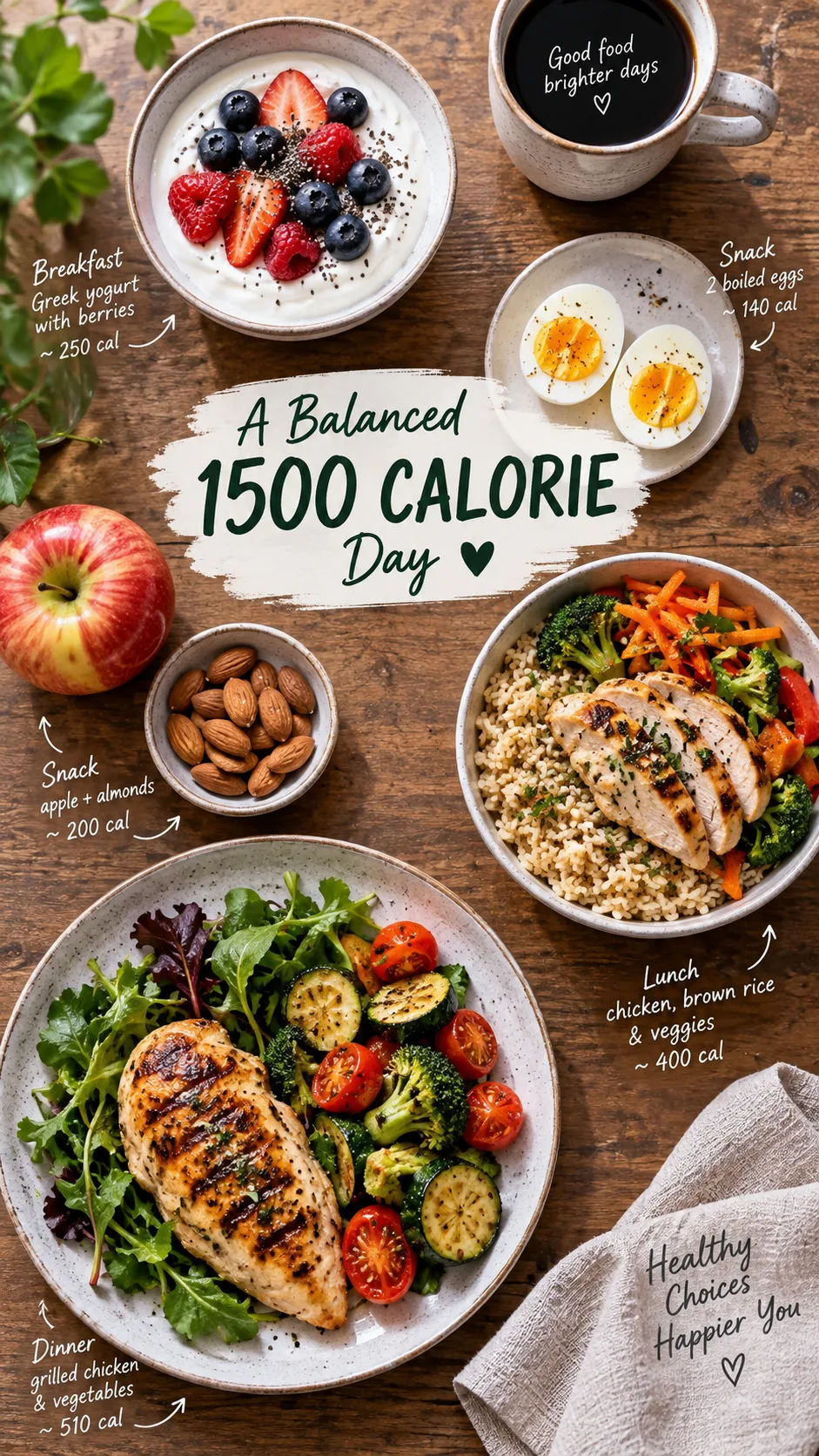
First, is 1500 calories even right for you?
Sort this out before you meal-prep six containers of something you’ll hate by Wednesday. 1500 calories is a moderate deficit for most average-sized adults, especially women and smaller men who want to lose roughly 0.5 to 1kg per week.
If you’re a 6’3″ bricklayer who trains twice a day, 1500 calories will turn you into a grumpy shell of a human. Be honest with yourself. The best calorie target is the one you can repeat for months, not the most aggressive one you can white-knuckle for nine days.
Quick reality check on who this plan suits:
- Great fit: Adults with desk jobs, light or moderate exercise, wanting steady fat loss
- Maybe adjust up: Very active people, tall men, anyone training hard 5+ days a week
- Talk to a doctor first: Pregnant or breastfeeding women, teens, people managing diabetes or on medication
The CDC recommends losing about 1 to 2 pounds per week as the sustainable sweet spot. Go faster than that and you’re mostly losing water, muscle and your sense of humour.
Why most 1500 calorie plans leave you starving
Ever wondered why you can eat a 500-calorie plate of rice and feel hungry an hour later, but 500 calories of eggs and vegetables keeps you quiet until lunch? Willpower has nothing to do with it. Biology does.
The three fullness levers
Satiety runs on three things, and cheap diet plans ignore all of them:
- Protein is the most filling macronutrient by a mile. It triggers hormones like GLP-1 and peptide YY that tell your brain “we’re good here.”
- Fibre slows digestion, feeds your gut bacteria, and physically fills your stomach without adding many calories.
- Volume and water content matter because your stomach has stretch receptors. It literally measures SPACE, not just calories.
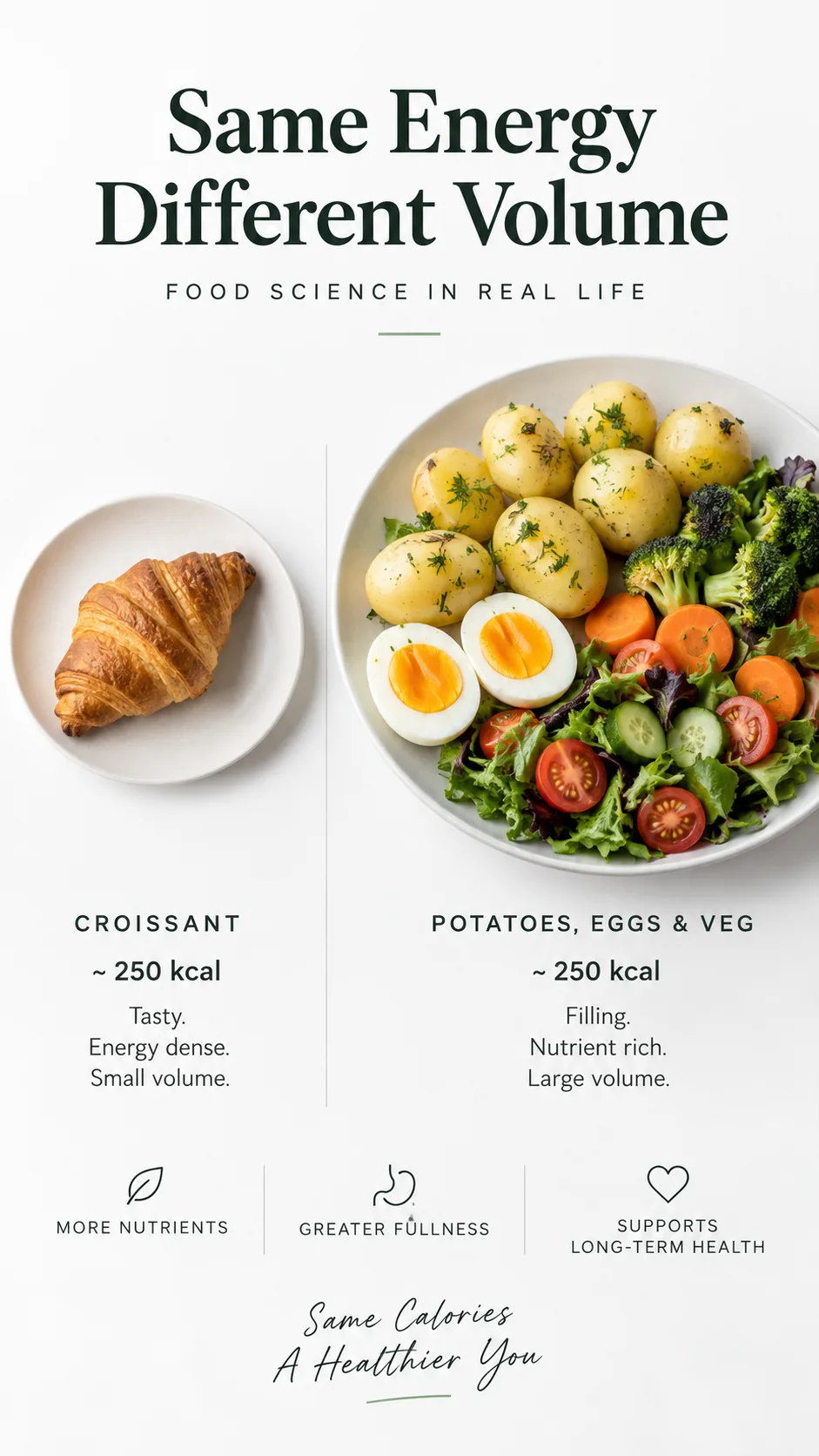
Research on the satiety index (originally run by Susanna Holt at the University of Sydney) found boiled potatoes scored roughly seven times more filling than a croissant for the same calories. Seven times. That’s the whole game right there.
The mistakes I see constantly
- Drinking calories. A 300-calorie smoothie disappears in 90 seconds and fills nothing.
- Fearing fat entirely. Zero-fat meals taste like cardboard and empty your stomach fast.
- Skipping protein at breakfast. Toast and tea at 7 a.m. guarantees a vending machine emergency by 10:30.
- Eating “diet” snacks. Those 100-calorie biscuit packs make you hungrier. IMO they’re a scam with good marketing.
The golden formula for every single meal
Forget memorising recipes. Memorise this template instead and you can build a filling meal anywhere: at home, at a restaurant, at your aunt’s house where the jollof is calling your name.
Every meal = Protein + Fibre + a little Fat + Volume.
- Protein (palm-sized portion): eggs, chicken, fish, beef, turkey, Greek yogurt, beans, lentils, tofu, cottage cheese
- Fibre-rich carb (cupped-hand portion): oats, brown rice, sweet potato, beans, whole grain bread, quinoa
- Fat (thumb-sized portion): olive oil, avocado, nuts, seeds, egg yolks
- Volume (as much as you like): leafy greens, cucumber, peppers, tomatoes, broccoli, cabbage, ugwu, spinach
Do that four times a day and you’ll land near 1500 calories almost by accident. Aim for 100 to 130g of protein and 25 to 35g of fibre daily. Those two numbers do about 80% of the heavy lifting.
The real 1500 calorie meal plan (7 days, zero suffering)
I built this around food you can buy at a normal shop. No açaí powder. No “1 tsp of ancient sea moss.” Portions are approximate, because you’re a human, not a lab scale.
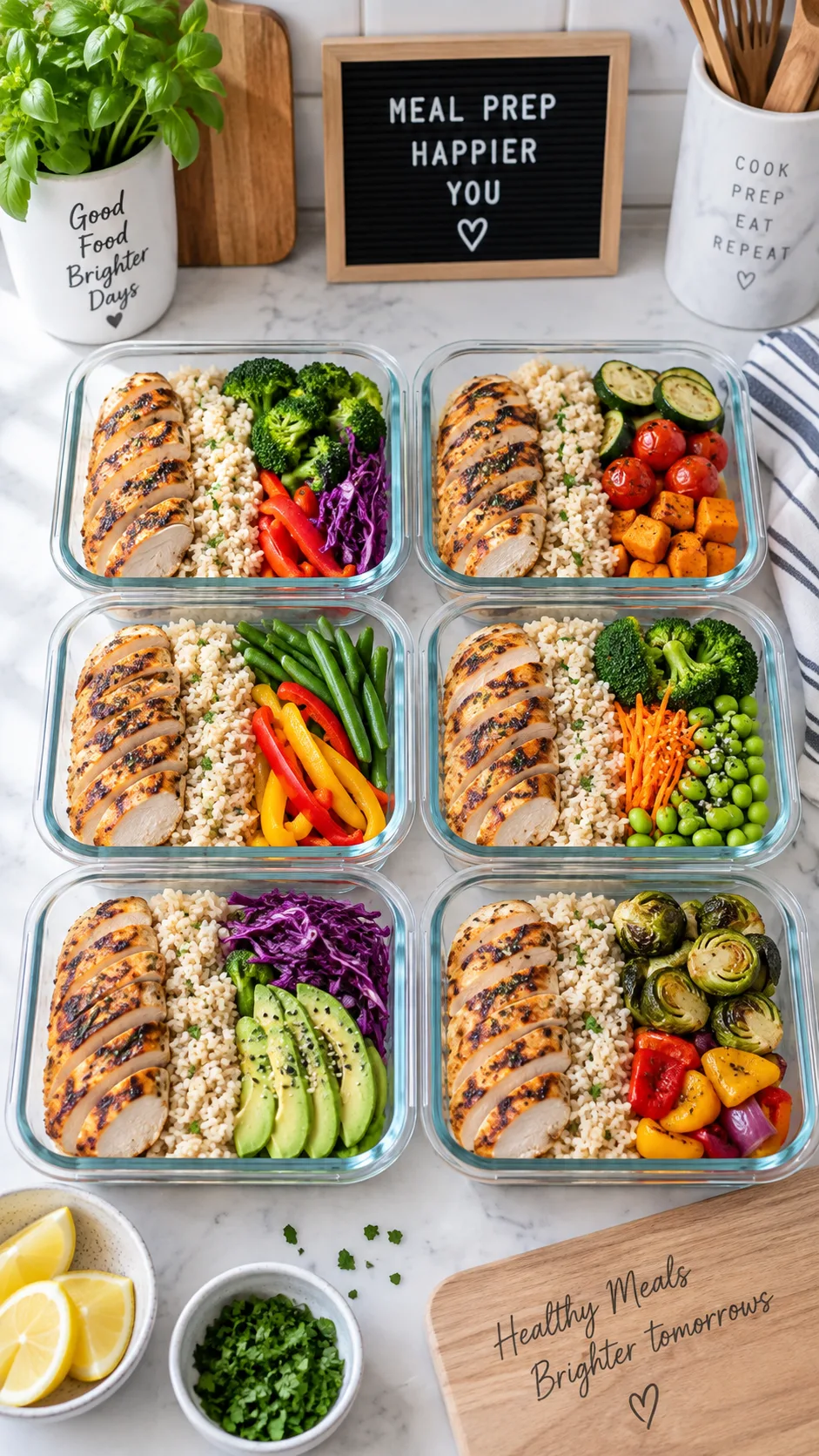
Day 1: the classic
- Breakfast (~380 cal): 3 scrambled eggs + 1 slice whole grain toast + sautéed spinach and tomato
- Lunch (~450 cal): Grilled chicken breast (150g) + big mixed salad + 1 tbsp olive oil dressing + ½ cup brown rice
- Snack (~180 cal): Greek yogurt (170g) + handful of berries
- Dinner (~480 cal): Baked fish fillet + roasted sweet potato + steamed broccoli
Day 2: the bean day
- Breakfast (~350 cal): Overnight oats (40g oats, milk, cinnamon) + 1 scoop protein powder or 2 tbsp Greek yogurt
- Lunch (~470 cal): Stewed beans + boiled plantain (small) + steamed vegetables
- Snack (~170 cal): 1 apple + 10 almonds
- Dinner (~500 cal): Lean beef stir-fry with peppers, onions, cabbage + ½ cup rice
Day 3: the lazy day
- Breakfast (~330 cal): Greek yogurt bowl + 1 tbsp peanut butter + banana slices
- Lunch (~460 cal): Tuna salad wrap (whole wheat) + cucumber sticks
- Snack (~150 cal): 2 boiled eggs + carrot sticks
- Dinner (~530 cal): Chicken and vegetable soup + 2 slices whole grain bread
Day 4: the comfort day
- Breakfast (~360 cal): Veggie omelette (3 eggs, peppers, onions) + ½ avocado
- Lunch (~480 cal): Vegetable soup (light on oil) with 150g grilled fish + small portion of swallow
- Snack (~160 cal): Cottage cheese + pineapple chunks
- Dinner (~470 cal): Turkey meatballs + zucchini noodles + tomato sauce
Day 5: the quick day
- Breakfast (~340 cal): Protein smoothie (protein powder, milk, spinach, frozen berries) + 2 boiled eggs
- Lunch (~450 cal): Leftover dinner from Day 4 (yes, that’s a strategy)
- Snack (~180 cal): Roasted chickpeas (½ cup)
- Dinner (~520 cal): Grilled chicken thighs + large salad + baked potato
Day 6: the social day
- Breakfast (~300 cal): Greek yogurt + oats + cinnamon
- Lunch (~350 cal): Big protein salad (chicken, egg, greens, vinaigrette)
- Dinner out (~700 cal): Grilled protein, vegetables, one carb side. Skip the bread basket. Have the wine if you want it.
- Snack (~150 cal): Only if you’re genuinely hungry
Day 7: the reset day
- Breakfast (~370 cal): Shakshuka (2 eggs poached in tomato sauce) + 1 slice bread
- Lunch (~440 cal): Lentil soup + side salad
- Snack (~190 cal): Handful of mixed nuts + green tea
- Dinner (~500 cal): Salmon or mackerel + roasted vegetables + quinoa
Notice a pattern? Protein shows up at every single meal. It’s the engine of the whole plan. If you want more local options to swap in, this list of 39 best Nigerian foods for weight loss pairs well with the template above.
Watch this if you want the portions explained visually
Some people need to SEE the plate before it clicks. Fair enough. Here’s a solid breakdown:
The 8 foods that punch way above their calorie weight
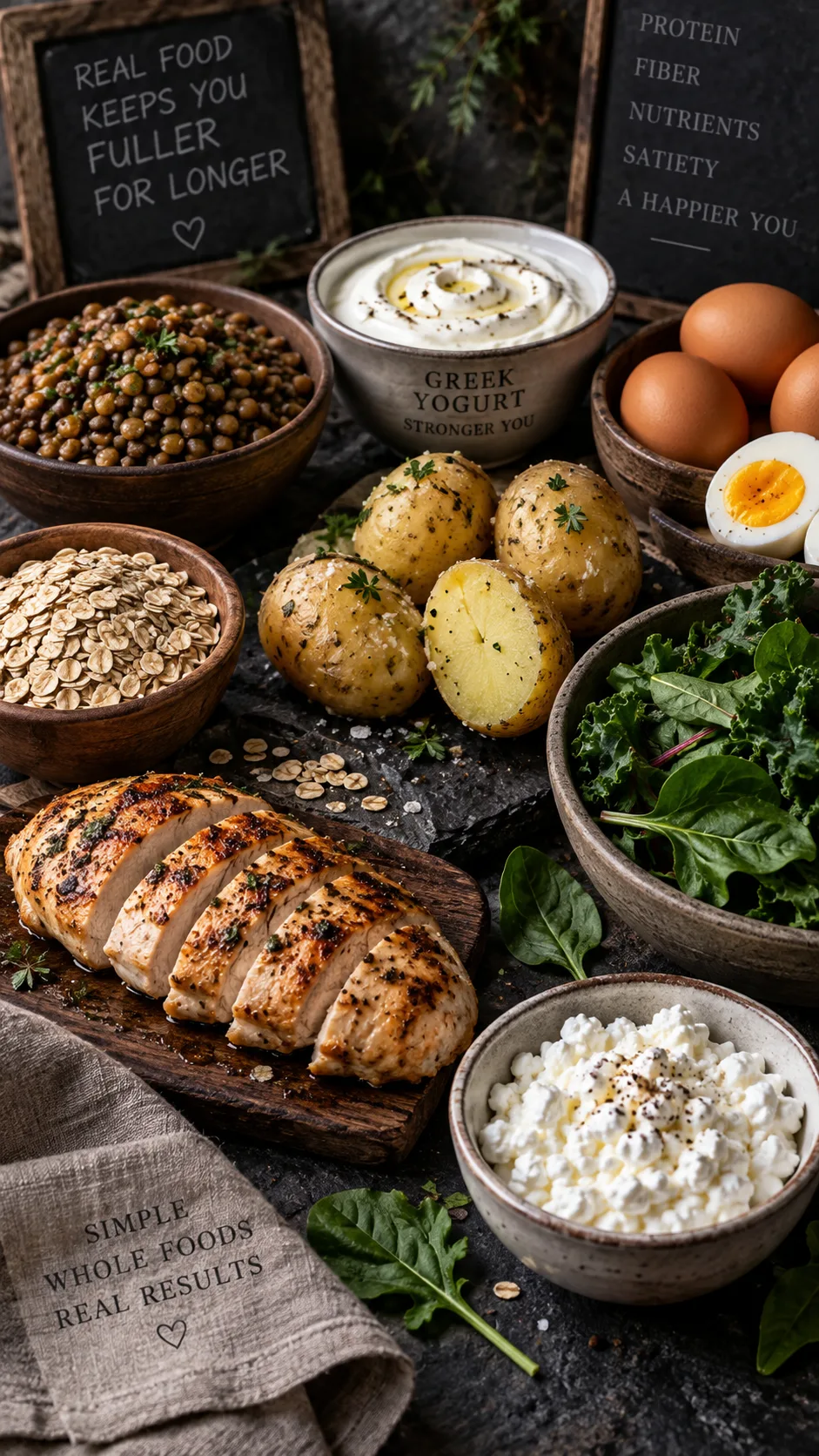
These are the MVPs. Build your plan around them and 1500 calories starts to feel weirdly generous.
- Eggs. About 70 calories each, loaded with protein, and they keep you full for hours. My personal breakfast hill to die on.
- Potatoes (boiled, cooled). The satiety champion. Cooling them creates resistant starch, which feeds gut bacteria.
- Greek yogurt. Double the protein of regular yogurt. Buy the plain one and add your own fruit.
- Beans and lentils. Protein AND fibre in one package. Cheap too.
- Oats. The beta-glucan fibre slows digestion dramatically.
- Chicken breast and white fish. Massive protein for very few calories.
- Leafy greens and cabbage. Near-zero calories, real stomach volume.
- Cottage cheese. Slow-digesting casein protein. Criminally underrated as a night snack.
How to handle hunger without blowing the plan
Drink water before you panic
Thirst and hunger use overlapping signals. Before you raid the kitchen, drink a large glass of water and wait 15 minutes. About half the time the “hunger” walks off on its own.
Unsweetened tea counts too. A lot of people swear by green tea for appetite control, and the catechin content gives that some decent support. Here are some solid green tea options worth trying if you’re curious.
Eat slower than feels natural
Your fullness hormones need roughly 20 minutes to reach your brain. If you finish dinner in seven minutes, you’ve beaten your own biology to the punch. Put the fork down between bites. Chew like you mean it.
Sleep is a diet tool
This one shocks people. Poor sleep raises ghrelin (hunger hormone) and drops leptin (fullness hormone). Research consistently links short sleep to increased appetite and weight gain. You can’t out-meal-plan five hours of sleep. I’ve tried it during deadline weeks and I ate like a raccoon.
Front-load your protein
Getting 30g+ of protein at breakfast cuts total daily intake for most people. It’s the single easiest change I recommend. Three eggs, Greek yogurt, leftover chicken: I don’t care what form it takes.
Questions people ask me
Do I need to count every calorie forever?
No. Count for two or three weeks to calibrate your eye, then coast on the plate template. Counting forever turns food into spreadsheets, and that’s how people burn out.
Can I eat carbs on 1500 calories?
Yes. Please do. The real problem is meals low in fibre and protein but heavy in calories. Rice, potatoes, plantain and bread all fit. Just portion them like a side dish, not the main event.
What about intermittent fasting with this?
It works well for some people because fewer eating windows mean bigger, more satisfying meals. The calories still matter, though. If the idea appeals to you, the intermittent fasting schedule breakdown here explains how to combine it without wrecking your energy.
Will I lose muscle?
Only if you skimp on protein and skip resistance training. Hit your protein target, lift something heavy twice a week, and you’ll keep the muscle while the fat goes. The Harvard T.H. Chan School of Public Health has a very good primer on protein needs if you want to read further.
What if I hit a plateau?
Plateaus usually mean portion creep, not a broken metabolism. Re-measure your oils, nuts and “handful” snacks for a week. Those are the silent calorie assassins. Weight also fluctuates day to day, so judge trends over three or four weeks instead of throwing daily scale tantrums.
Your week-one shopping list
- Proteins: eggs (2 dozen), chicken breast, white fish or mackerel, lean beef mince, Greek yogurt, cottage cheese, canned tuna, dried beans or lentils
- Carbs: oats, brown rice, sweet potatoes, whole grain bread, plantain
- Fats: olive oil, avocado, almonds, peanut butter
- Volume vegetables: spinach, cabbage, broccoli, cucumber, tomatoes, peppers, onions, carrots
- Extras: berries, apples, bananas, green tea, spices (seriously, spices save diets)
One more tip from experience: cook proteins in batches. Sunday-evening chicken and beans remove roughly 90% of the weekday decisions that sabotage people. Decision fatigue kills more diets than hunger does.

The bottom line
A 1500 calorie meal plan doesn’t have to feel like a punishment. The difference between miserable and manageable comes down to a handful of choices you make at the shop, not heroic willpower at 9 p.m.
Remember the four rules:
- Protein at every meal: 100 to 130g daily, non-negotiable
- Fibre from real plants: 25 to 35g daily
- Volume over density: fill the plate with vegetables
- Sleep, water, and patience: the boring stuff that quietly wins
You don’t need a perfect week. You need a repeatable one. Start with tomorrow’s breakfast, make it a protein-heavy one, and let the rest follow. Your 3 p.m. self will thank you.