

You’ve tried the plain grilled chicken. You’ve tried the sad desk salad. You’ve tried eating boiled eggs until you started resenting chickens personally. And yet, here you are, still hungry at 9pm, still staring into the fridge like it owes you money.
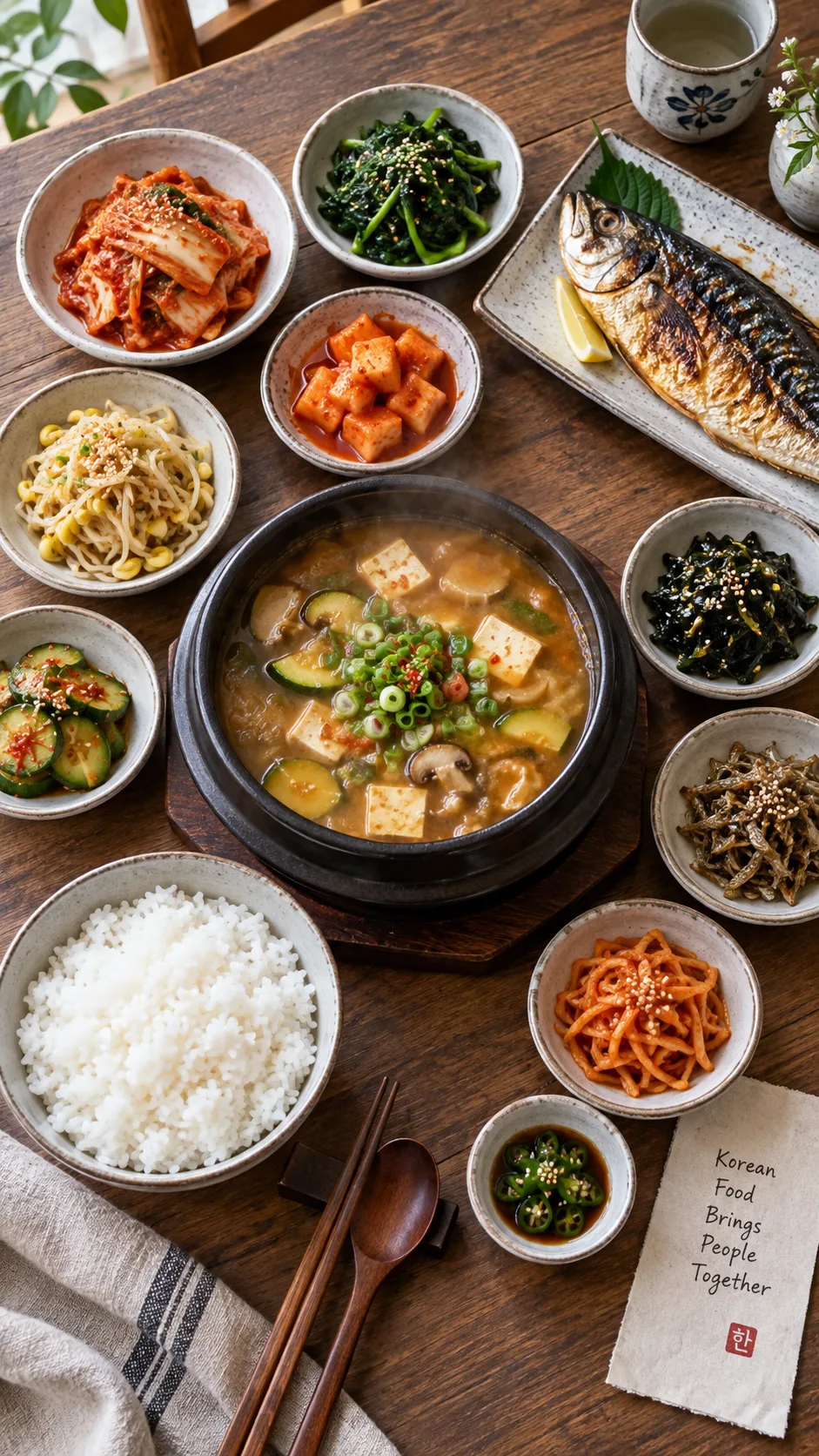
Now look at a typical Korean dinner table. Rice, a bubbling stew, grilled protein, and roughly seven tiny side dishes of vegetables. It looks like a feast. It tastes like a feast. And somehow, South Korea has one of the lowest obesity rates in the developed world, around 6 to 7% compared to over 40% in the US, according to OECD health data.
Coincidence? Nope. There are solid reasons Korean meals make weight loss feel weirdly easy, and specific dishes worth cooking this week.
Why Korean food works when diets don’t
Here’s the thing nobody tells you about dieting: volume matters more than willpower. Your stomach has stretch receptors. They don’t read calorie labels. They just want to feel full.
Korean meals win that game easily. A standard meal gives you a huge physical volume of food for shockingly few calories, because vegetables, broth, and fermented sides do most of the heavy lifting.
The core principles
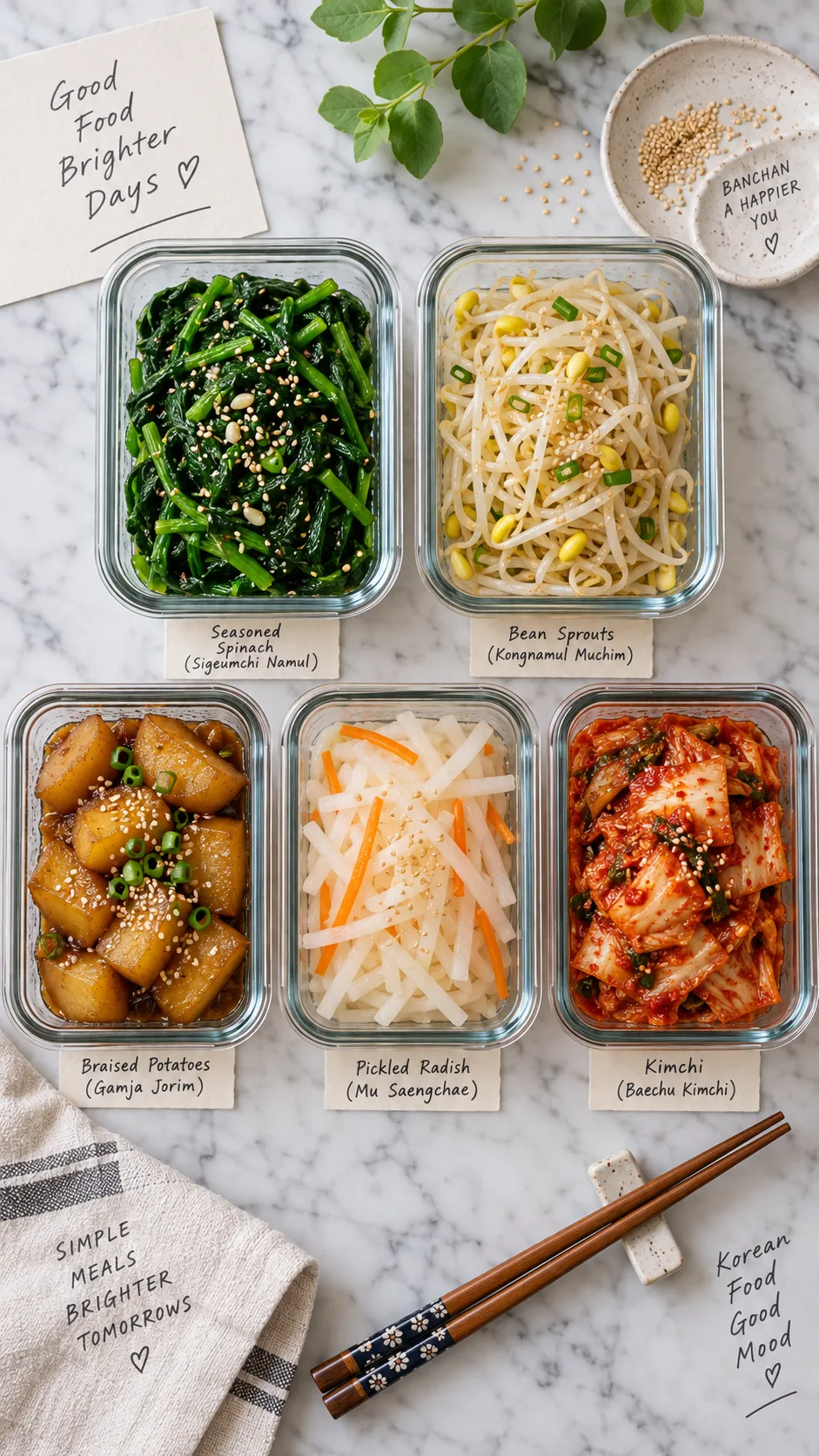
- Banchan culture: Those little side dishes are mostly seasoned vegetables: spinach, bean sprouts, radish, seaweed, cucumber. You eat five to eight of them per meal and barely crack 150 calories.
- Soup at every meal: Broth-based soups slow you down and fill you up. Research on pre-meal soup consumption consistently shows people eat fewer total calories.
- Fermentation everywhere: Kimchi, doenjang, gochujang. Live cultures, fibre, and gut-friendly compounds in nearly every bite.
- Protein in the middle, not the centre: Koreans eat meat and fish, but as ONE component, never a 400g slab dominating the plate.
- Shared eating slows you down: Metal chopsticks, small bites, communal dishes. You physically cannot inhale a Korean meal.
Ever wondered why you feel stuffed after Korean food but not bloated and regretful? That’s the combination working. Fibre, water, protein, and fermentation, all in one sitting.
The kimchi thing (it’s not hype)
I used to think kimchi was just spicy cabbage that made my fridge smell like a science experiment. Then I read the research, and fine, I was wrong.
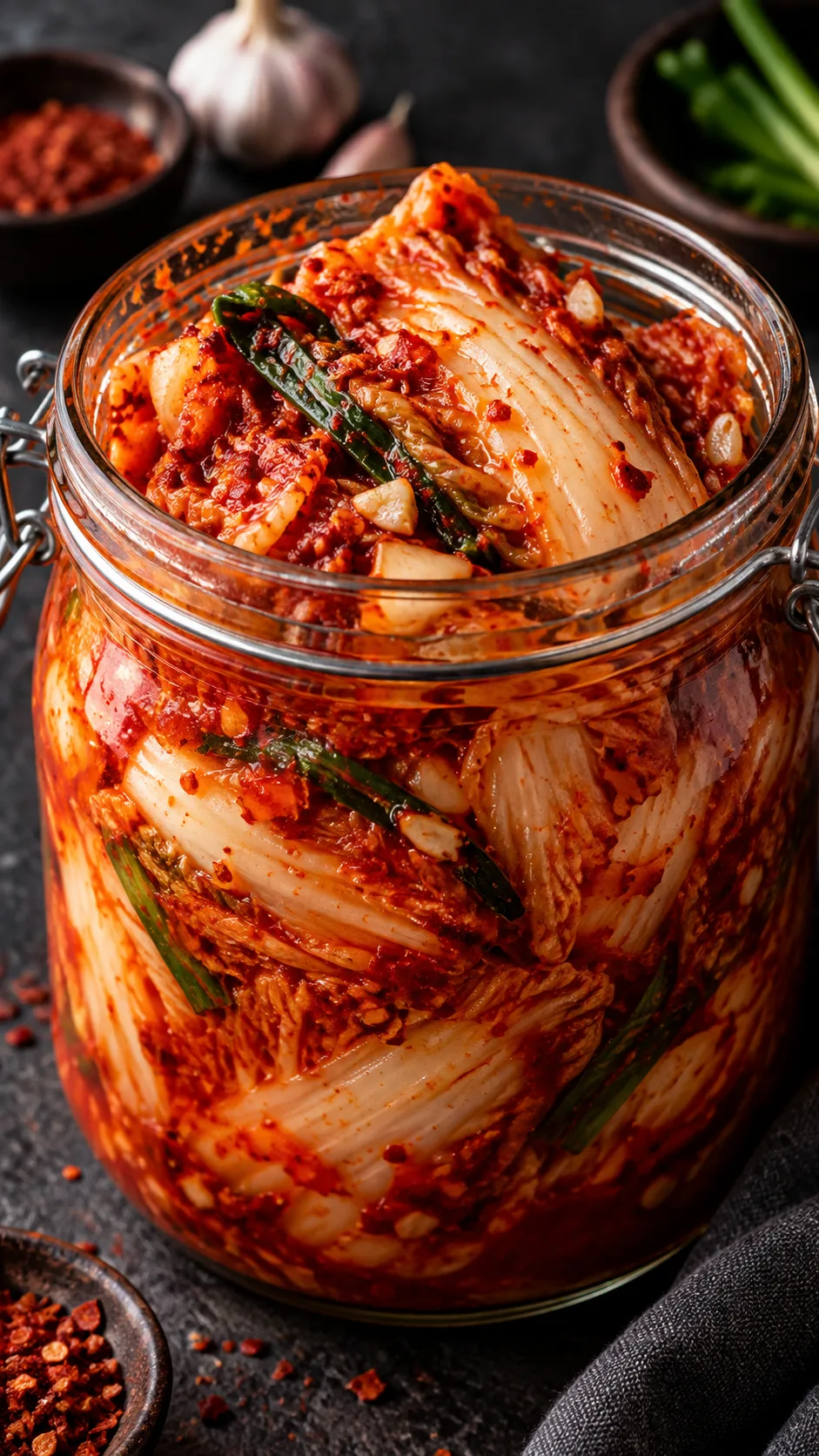
Kimchi has about 15 calories per 100g while giving you fibre, vitamin C, vitamin K, and Lactobacillus bacteria. A frequently cited randomised study in the Journal of Medicinal Food found that overweight participants eating fermented kimchi improved their body fat percentage, waist-hip ratio, and fasting blood glucose compared to those eating fresh (unfermented) kimchi.
The word that matters there is fermented. Fresh kimchi tastes milder and crunchier. Properly sour, aged kimchi carries the bacterial load that seems to do the work. So yes, the funkier jar wins.
How much should you actually eat?
- 50 to 100g per meal is a realistic, useful serving
- Choose brands with no added sugar or MSG if you can
- Watch the sodium, and see the landmine below
- Cook it into stews and fried rice when raw kimchi feels like too much
The Harvard T.H. Chan School of Public Health backs fermented foods generally for gut microbiome diversity, and a more diverse microbiome links to better metabolic health. Not magic. Just useful biology.
The 10 Korean diet meals that do the heavy lifting
Right, time to get practical. These are the meals I’d build a week around. I’ve ranked them by how much weight-loss value you get per unit of effort.
1. Doenjang jjigae (soybean paste stew)
Fermented soybean paste, tofu, courgette, onion, mushrooms, a bit of chilli. Roughly 150 to 200 calories per bowl and it eats like comfort food. This is the meal that converted me. It takes 15 minutes and tastes like someone’s grandmother made it.
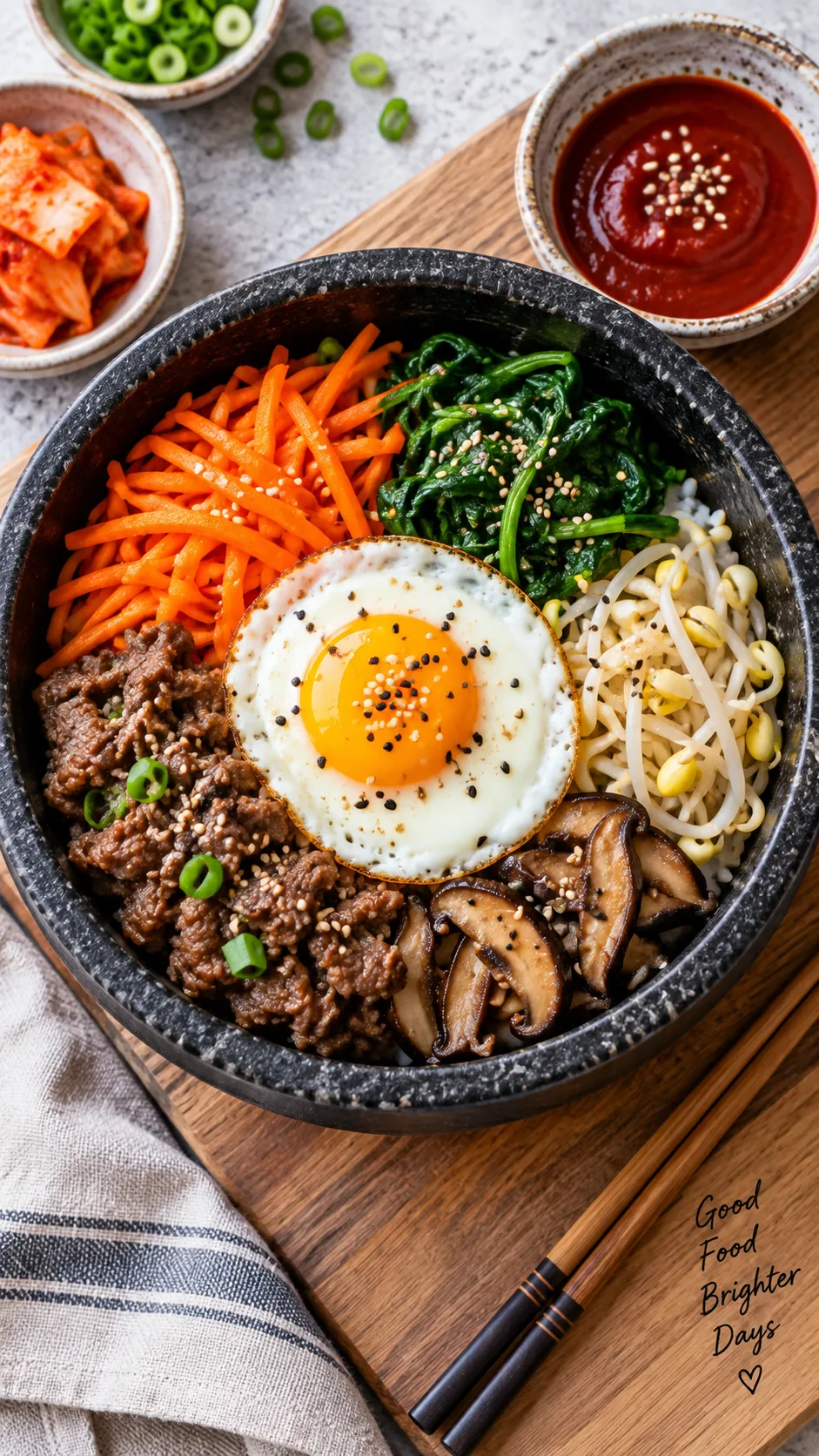
2. Bibimbap
Rice, five or six seasoned vegetables, an egg, a small amount of beef, gochujang on top. Around 500 to 600 calories for an enormous bowl. Swap white rice for brown or cauliflower rice and you’re at 400.
3. Kimchi jjigae
Aged kimchi, tofu, a little pork belly, broth. Spicy, sour, addictive. Use lean pork loin instead of belly and you cut roughly 200 calories without killing the flavour.
4. Samgyetang (ginseng chicken soup)
A whole young chicken simmered with ginseng, garlic, jujube, and a small amount of rice. High protein, deeply satisfying, and traditionally eaten in the peak of summer, because Koreans apparently enjoy sweating on purpose.
5. Gimbap (the vegetable-heavy version)
Seaweed rice rolls stuffed with carrot, spinach, pickled radish, egg, and cucumber. One full roll runs 300 to 400 calories. Perfect portable lunch. Skip the fried versions and the mayo-heavy tuna filling.
6. Japchae
Sweet potato glass noodles stir-fried with vegetables and thin beef strips. Those noodles sit lower on the glycemic index than wheat noodles, which helps with blood sugar stability. Go easy on the sesame oil. It’s delicious, but it’s 120 calories a tablespoon.
7. Sundubu jjigae (soft tofu stew)
Silken tofu, broth, chilli, seafood or mushrooms, cracked egg. Under 250 calories and loaded with plant protein. My personal go-to on lazy Sundays.
8. Bulgogi (portion-controlled)
Marinated grilled beef, traditionally wrapped in lettuce leaves with garlic and ssamjang. The lettuce wrap trick alone slashes the carb load. Keep the marinade sugar light.
9. Namul platter
Blanched, seasoned vegetables: spinach, bean sprouts, fernbrake, radish. Basically Korean meal prep. Make four on Sunday, eat all week.
10. Kongnamul guk (bean sprout soup)
Clear, light, about 60 calories a bowl. Koreans drink it for hangovers. You’ll drink it before dinner to eat 20% less. Both valid.
Watch this before you start
If you’re a visual learner, this walkthrough of everyday Korean home cooking will save you a lot of trial and error:
The sodium problem nobody mentions
Time for some honesty, because I refuse to sell you a fantasy.
Korean cuisine carries a serious sodium load. Kimchi, soy sauce, doenjang, gochujang, salted seafood: it adds up fast. Average Korean sodium intake sits well above the World Health Organization’s recommended 2,000mg per day, and South Korea reports notably high rates of gastric cancer and hypertension.
How to fix it without ruining dinner
- Rinse your kimchi in cold water before eating. This drops sodium meaningfully and you barely lose any flavour
- Dilute your stews with extra water or unsalted stock, then bulk them up with more vegetables
- Use low-sodium soy sauce. It exists, it’s fine, nobody will notice
- Drink the broth sparingly. Eat the solids, leave half the liquid
- Load up on potassium. Bananas, spinach, and sweet potato help offset what sodium does to your blood pressure
That one adjustment turns Korean eating from “good for weight loss but rough on your blood pressure” into “genuinely excellent all round.” Worth the 30 seconds of rinsing.
The foods that will quietly wreck your progress
Not everything Korean is a health food. Korea invented some of the most gloriously calorie-dense street food on Earth, and I love it, and I’m still going to warn you.
- Korean fried chicken (the real KFC): Double-fried, sugar-glazed. One serving can hit 1,200+ calories. It’s phenomenal. It’s also not a diet meal.
- Tteokbokki: Rice cakes in sweet chilli sauce. Refined carbs plus sugar plus more refined carbs.
- Ramyeon: One instant packet carries around 500 calories and 1,700mg of sodium. Sometimes more.
- Unlimited KBBQ: Pork belly and beef short rib are 60%+ fat. The all-you-can-eat format doesn’t help.
- Soju: 400 to 500 calories a bottle, and it makes fried chicken sound like an excellent idea at midnight.
Eat these. Just eat them on purpose, occasionally, not four nights a week while telling yourself you’re “doing the Korean diet.”
A realistic 7-day Korean meal framework
I’m not giving you a rigid plan, because rigid plans die by Wednesday. Here’s a flexible template instead.
Breakfast (pick one)
- Kongnamul guk + half cup rice + kimchi
- Steamed egg (gyeran jjim) + seaweed + brown rice
- Miso-style doenjang soup with tofu
Korean breakfasts look like lunch, and that’s the point. Savoury, protein-forward mornings kill the 11am biscuit craving. If you prefer a local spin, these Nigerian breakfast ideas for weight loss follow exactly the same logic.
Lunch (pick one)
- Vegetable gimbap roll + clear soup
- Bibimbap with brown rice, extra veg, single egg
- Japchae with a side of namul
Dinner (pick one)
- Sundubu jjigae + small rice + 3 banchan
- Grilled mackerel + kimchi + spinach namul + rice
- Bulgogi lettuce wraps + kongnamul + doenjang soup
The plate ratio that matters
Forget calorie counting for a second. Aim for this on every plate:
- 50% vegetables (banchan, soup veg, wraps)
- 25% protein (tofu, fish, egg, lean meat)
- 25% carbs (rice or noodles, ideally brown or mixed grain)
Koreans traditionally eat japgokbap, multigrain rice with barley, black rice, and beans. It sits far lower on the glycemic scale than plain white rice. If you want to track carb quality, this glycemic index table of common foods is a genuinely useful reference.
The habits that matter more than the recipes
The food is only half the story. Korean eating behaviour deserves equal credit.
1. Eat with metal chopsticks
Korea is the only country that widely uses metal chopsticks, and they’re slippery. Smaller bites, slower pace, more chewing. Your satiety hormones need about 20 minutes to register fullness. Slow tools buy you that time.
2. Soup first, always
Broth before the main course cuts how much you eat overall. It’s the cheapest appetite-control trick in existence, and it works whether or not you care why.
3. Dessert isn’t the default
Korean meals traditionally end with fruit or tea, not cake. Green tea pulls double duty here; the catechins in it show modest fat-oxidation effects in research. If you want to test it, here are some solid green tea brands worth buying.
4. Walk everywhere
Seoul residents rack up high daily step counts thanks to dense cities and heavy public transport use. Not a diet tip exactly, but it’s part of why the numbers look the way they do.
Does the science actually support this?
Fair question, and it deserves more than vibes.
Research published in the National Library of Medicine on the traditional Korean diet links higher adherence with lower metabolic syndrome risk, improved lipid profiles, and better blood glucose control. The pattern (high vegetable intake, fermented foods, moderate protein, low added sugar) overlaps heavily with the Mediterranean diet, which has the strongest evidence base of any eating pattern on the planet.
What the evidence supports:
- Fermented foods improve gut microbiome diversity
- High-volume, low-density meals cut total calorie intake
- Soy foods (tofu, doenjang) support cardiovascular markers
- Slower eating speed correlates with lower BMI
What it doesn’t support: kimchi burning fat while you sleep, gochujang “boosting metabolism 300%,” or any product promising Korean-style results in a capsule. Most of those are nonsense, as this breakdown of which weight loss products actually work makes painfully clear.
Your starter shopping list
Walk into any Asian grocery with this list and you’re set for a fortnight:
- Gochujang (chilli paste): a little goes far
- Doenjang (fermented soybean paste): the flavour backbone
- Gochugaru (chilli flakes): smoky, not just hot
- Low-sodium soy sauce
- Toasted sesame oil (small bottle, respect the calories)
- Sweet potato glass noodles
- Firm and silken tofu
- Dried seaweed sheets (gim)
- Aged kimchi
- Bean sprouts, spinach, courgette, mushrooms, radish
- Mixed grain rice (barley, black rice, brown rice blend)
Total outlay: maybe one takeaway’s worth of money. The pastes last months.
The bottom line
Korean food solves the problem that ruins most diets: it doesn’t feel like dieting. You sit down to eight dishes. You eat until you’re genuinely full. You get fibre, fermentation, protein, and flavour that makes you look forward to dinner.
Start with three things this week. Make doenjang jjigae once. Add rinsed kimchi to two meals. Drink a bowl of clear soup before dinner every night. That’s it.
Watch the sodium, keep the fried chicken occasional, and let the vegetables do their job. The scale will move, and better still, you’ll stop white-knuckling your way through meals.
And that’s the whole trick, isn’t it? The best diet isn’t the strictest one. It’s the one you forget you’re even on.