

At 3 p.m., your stomach starts protesting, and the office biscuit tin suddenly looks like fine dining. A high-protein 1600 calorie meal plan can head off that daily hunger spiral without leaving you stuck with sad salads and sheer willpower.
This plan includes filling meals, plenty of protein, fibre-rich carbs, healthy fats, and food you will want to eat. You do not need to fear bread, blend chicken breast into a smoothie, or call celery a snack. Thank goodness.
Most adults need a calorie target that matches their body size, activity, health goals, medication, and lifestyle. Use this 1600-calorie meal plan as a practical starting point, then talk with a registered dietitian or healthcare professional if you manage a medical condition, feel unwell, or need personal nutrition advice.
Why a high-protein 1600 calorie meal plan keeps you fuller
Calories affect weight change, but the makeup of your meals shapes how you feel through the day. You could eat 1,600 calories of pastries, crisps, and sugary drinks, then spend the afternoon planning a raid on your fridge. Or you could build meals around protein, fibre, and generous portions of produce and feel properly fed.
Protein helps you stay satisfied because your body digests it more slowly than refined carbohydrates, and it helps you maintain muscle during weight loss. The National Institutes of Health lists 0.8 grams of protein per kilogram of body weight as the basic adult recommendation. Active people and people aiming to lose fat often need more, with professional guidance.
Research links higher-protein eating patterns with better fullness and appetite control for many people. Protein does not work like magic, though. Chicken cannot erase a weekend of cocktails and takeaway pizza.
Fibre helps too. Vegetables, beans, fruit, oats, potatoes, whole grains, and seeds add bulk to meals and slow digestion. The Dietary Guidelines for Americans encourage nutrient-dense foods from every food group. The advice sounds official, but it makes sense in daily life.
The fullness formula
Build each main meal around protein, colourful produce, a satisfying carbohydrate, and a little fat. That structure can prevent the “I only ate a rice cake for lunch, why am I starving?” problem.
- Protein: chicken, turkey, eggs, Greek yogurt, fish, tofu, lean beef, cottage cheese, beans, or protein powder.
- High-volume produce: leafy greens, broccoli, peppers, carrots, tomatoes, berries, apples, oranges, and frozen vegetables.
- Smart carbohydrates: oats, potatoes, rice, quinoa, beans, whole-grain bread, fruit, and whole-wheat wraps.
- Healthy fats: olive oil, avocado, nuts, seeds, peanut butter, and oily fish.
You do not need picture-perfect meals. You need a structure you can repeat, one that keeps hunger manageable and makes healthy eating feel less tiring.
Who should use a 1600 calorie high-protein meal plan?
A 1,600-calorie meal plan may suit some smaller adults, people with lower activity levels, or people who want a moderate calorie deficit for fat loss. It can also give someone a short-term routine when they want steadier portions and fewer unplanned snack runs.
However, 1,600 calories does not fit everyone. Many taller people, highly active adults, teenagers, pregnant people, breastfeeding parents, and people with physically demanding jobs need more energy. Your body does not give medals for under-fuelling.
The Centers for Disease Control and Prevention recommends gradual, sustainable weight loss instead of extreme restriction. If you deal with constant hunger, low energy, poor sleep, irritability, or obsessive thoughts about food, eat more and reconsider the plan.
If you want a slightly lower starting point, this simple 1500 calorie meal plan gives you another structured option. If you want more room to mix things up through the week, check out this 7-day high-protein meal plan for more meal ideas.
Your high-protein 1600 calorie meal plan for one full day
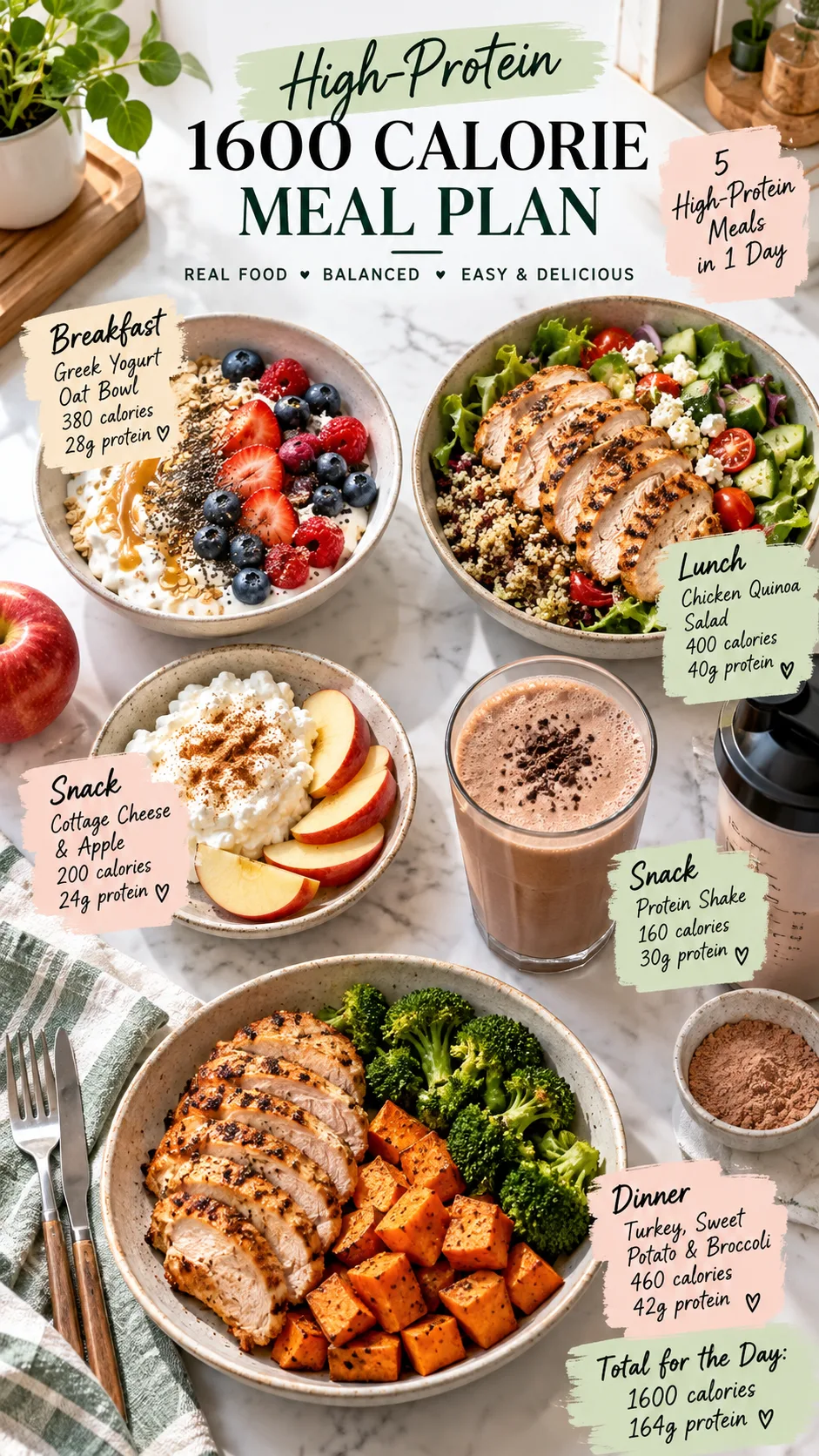
This sample day comes to about 1,600 calories and 145 to 155 grams of protein. Your total will vary with brands and portion sizes. Food labels differ, so use a kitchen scale for a week or two if you want a closer calorie count. You do not need to weigh spinach forever. Nobody wants that kind of relationship with spinach.
Breakfast: Greek yogurt protein oats bowl
Approximate nutrition: 390 calories, 35 grams protein
- ¾ cup plain non-fat Greek yogurt
- ⅓ cup rolled oats
- 1 scoop or serving of whey or plant protein powder
- ½ cup berries, fresh or frozen
- 1 tablespoon chia seeds
- Cinnamon and a splash of water or milk to loosen the texture
Mix everything the night before for easy overnight oats, or make it fresh in five minutes. Greek yogurt and protein powder make a filling base, while oats and chia bring fibre and steady energy.
Choose unsweetened Greek yogurt if you want more control over added sugar. Add vanilla extract, cinnamon, or a zero-calorie sweetener if you prefer a sweeter breakfast. This bowl takes very little effort and gives you a much better start than a breakfast that leaves you hungry an hour later.
Morning snack: Cottage cheese, apple, and cinnamon
Approximate nutrition: 190 calories, 13 grams protein
- ½ cup low-fat cottage cheese
- 1 medium apple
- Cinnamon or pumpkin spice
Cottage cheese gives you slowly digested protein, while the apple adds crunch, fibre, and natural sweetness. Sprinkle cinnamon over both if you like an apple-pie flavour without the “where did my whole pie go?” aftermath.
Swap the apple for a pear, orange, or cup of grapes when you want a change. Keep the fruit. Cutting every carbohydrate can make a meal plan much harder to follow.
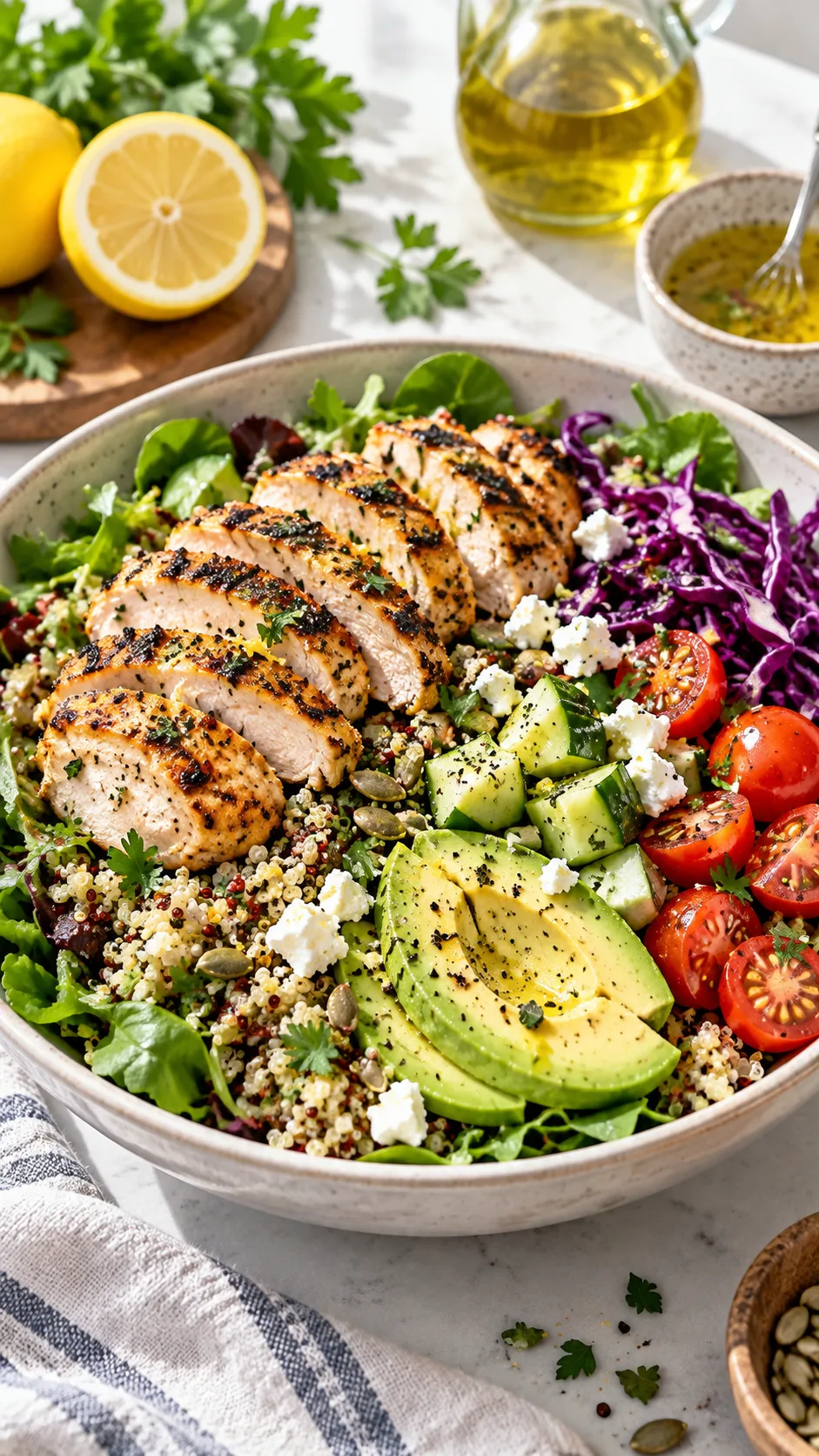
Lunch: Chicken quinoa crunch salad
Approximate nutrition: 465 calories, 43 grams protein
- 4 ounces cooked chicken breast, sliced
- ½ cup cooked quinoa
- 2 large handfuls mixed salad leaves
- 1 cup chopped cucumber, tomatoes, peppers, carrots, or red cabbage
- ¼ avocado
- 2 teaspoons olive oil, lemon juice, salt, pepper, garlic powder, and herbs
This lunch combines lean protein, chewy quinoa, creamy avocado, and a generous pile of crunchy vegetables. Texture matters more than most people expect. A lunch with no crunch can feel like punishment in a bowl.
Cook chicken and quinoa for three or four portions on Sunday, or whenever you have time. Keep the dressing separate, then toss the salad before you eat. That one small habit stops your salad from becoming a damp, tragic mess.
Afternoon snack: Protein shake and a satisfying add-on
Approximate nutrition: 180 calories, 25 grams protein
- 1 serving protein powder mixed with cold water, milk, or unsweetened almond milk
- Ice, instant coffee, cinnamon, or cocoa powder if you want more flavour
A protein shake offers an easy option when work, school, commuting, or general chaos threatens to derail your day. Choose a powder with a flavour you enjoy. You do not need to force down “birthday cake blast” if it tastes like dusty wallpaper.
If shakes bore you, choose two hard-boiled eggs and a small high-protein yogurt, tuna on rye crispbreads, edamame, or turkey slices with cucumber instead. Keep the protein amount similar and carry on with your day.
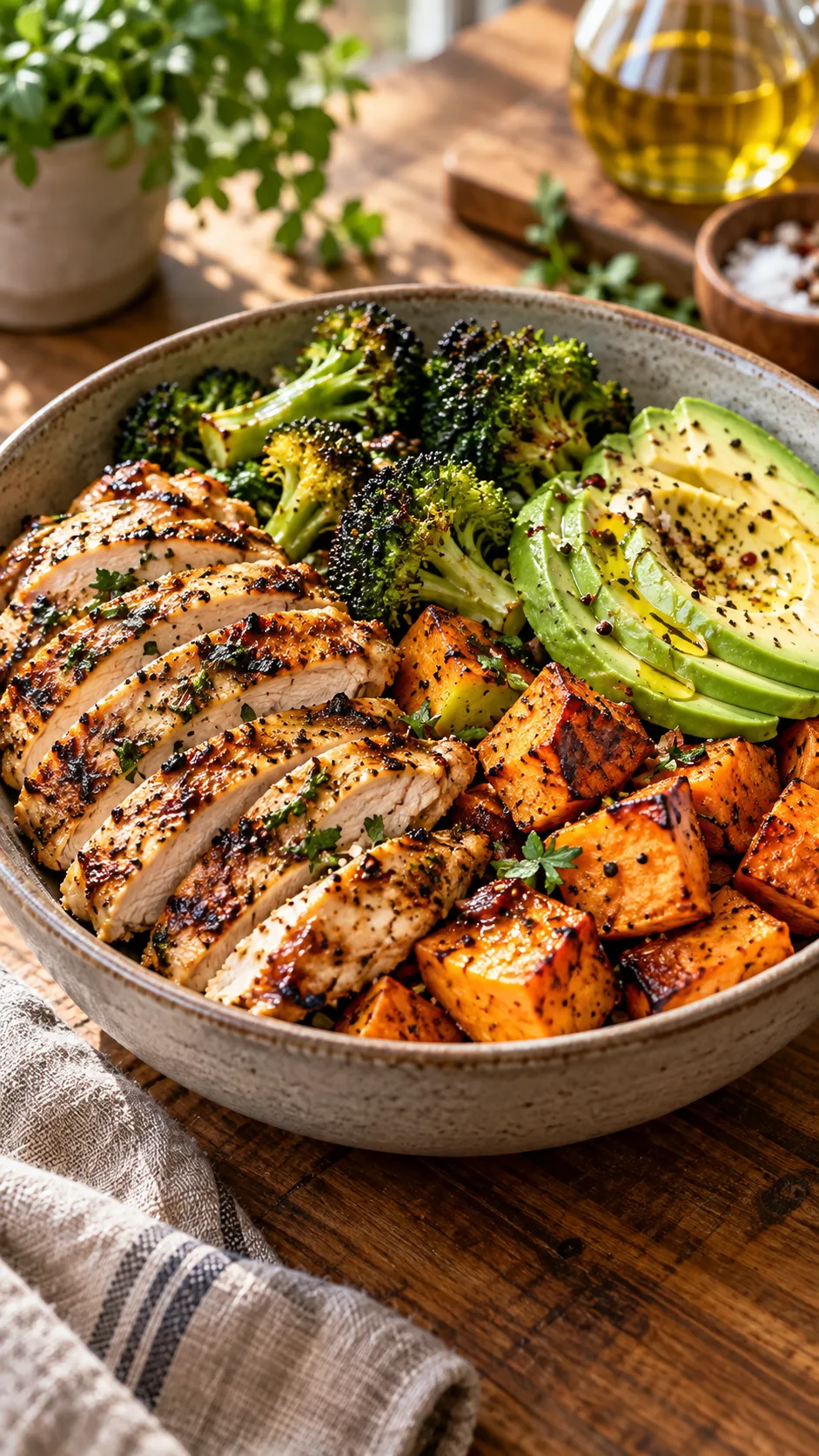
Dinner: Turkey, sweet potato, and broccoli plate
Approximate nutrition: 385 calories, 32 grams protein
- 4 ounces lean turkey mince or turkey breast
- 150 grams roasted sweet potato
- 1½ cups broccoli
- 1 teaspoon olive oil
- Garlic, smoked paprika, black pepper, chilli flakes, and lemon juice
Brown the turkey with garlic, paprika, pepper, and chilli flakes. Roast the sweet potato and broccoli with olive oil, salt, and pepper until the edges caramelise. Add lemon juice at the end for a fresh note that lifts the whole plate.
This dinner gives you protein, potassium-rich carbohydrates, fibre, and enough food to make the plate feel generous. You should finish dinner satisfied, rather than heading straight to the cupboard for cereal.
Daily total
- Calories: approximately 1,600
- Protein: approximately 148 grams
- Fibre: approximately 28 to 35 grams, with the exact amount changing by brand and produce portion
- Meals and snacks: 3 meals plus 2 planned snacks
Your numbers will change with different yogurt brands, protein powders, cooking oils, and portion sizes. Treat calories and macros as useful estimates, not a courtroom verdict.
Easy swaps so you do not get bored by Wednesday
Variety helps people stick with a high-protein diet. You can swap foods without throwing off the plan if you keep the basic meal structure. Start with protein, add plants, then include a measured carbohydrate and fat.
Protein swaps
- Swap chicken for turkey, prawns, tuna, salmon, extra-lean beef, tofu, tempeh, or seitan.
- Swap Greek yogurt for skyr, cottage cheese, soy yogurt with added protein, or a protein shake.
- Swap turkey mince for lean beef mince, lentils plus tofu, chicken thigh without skin, or white fish.
- Swap whey protein for pea, soy, rice, or blended plant protein if dairy does not agree with you.
Carbohydrate swaps
- Swap quinoa for brown rice, couscous, bulgur, beans, lentils, or a whole-wheat pita.
- Swap sweet potato for regular potato, rice, corn, whole-grain pasta, or butternut squash.
- Swap oats for high-fibre cereal, whole-grain toast, or a banana with Greek yogurt.
Fat and flavour swaps
- Use tahini, hummus, nuts, seeds, or peanut butter instead of avocado.
- Use salsa, mustard, vinegar, lemon, hot sauce, herbs, garlic, ginger, and spices for low-calorie flavour.
- Measure oils, nut butters, cheese, and dressings. These foods can support a healthy diet, but the calories add up quickly when you free-pour.
Want meal ideas that need very little fuss? This lazy girl meal plan can help on days when your motivation takes an unscheduled holiday.
How to meal prep this 1600 calorie meal plan
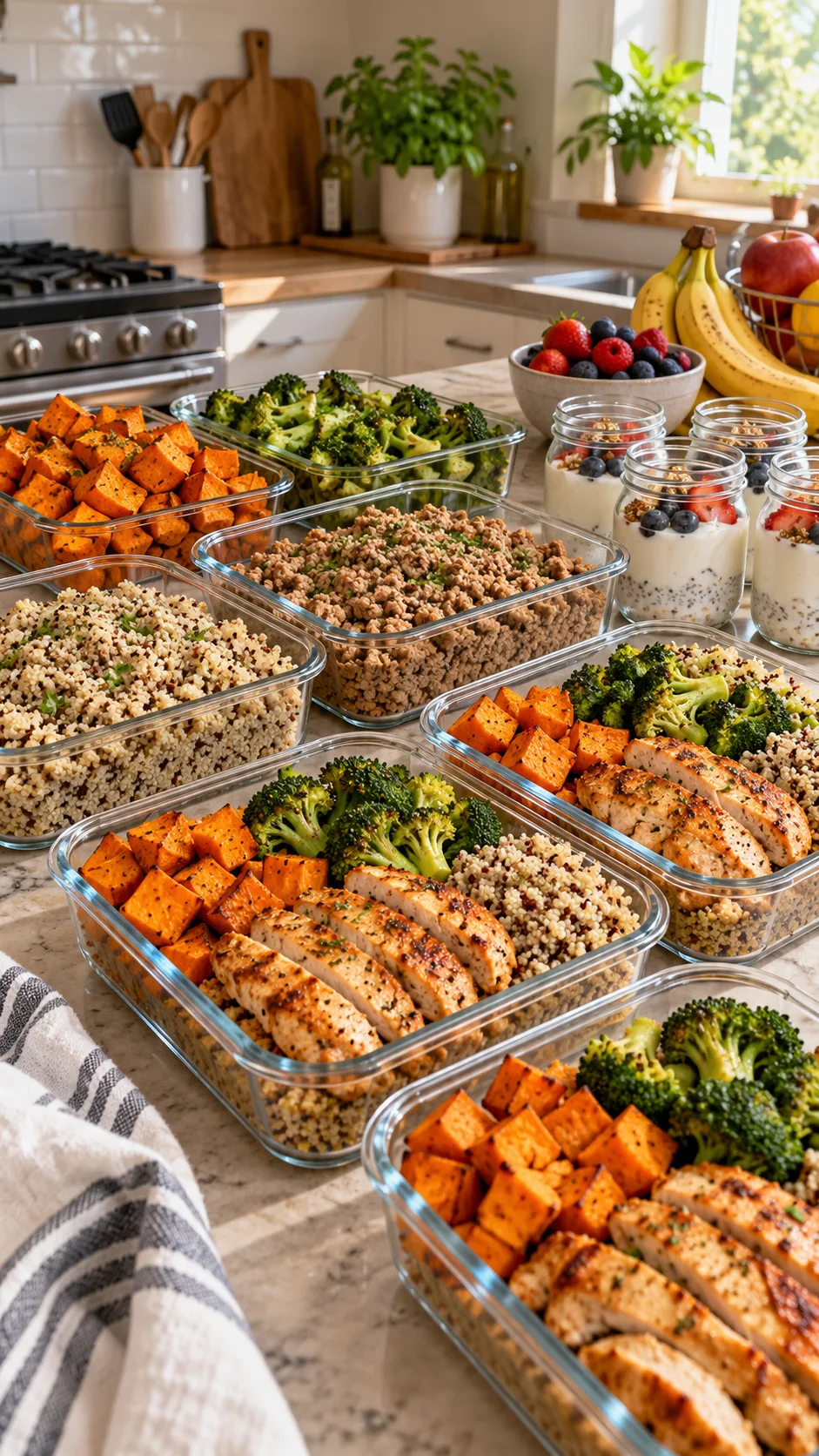
Meal prep does not require twelve matching glass containers or a personality built around Sunday cooking. A little preparation cuts down on decisions when hunger hits. Every drive-through looks more tempting when you have no lunch ready.
- Cook two protein options. Bake chicken breasts and brown lean turkey mince, or make tofu and boiled eggs for a vegetarian-friendly mix.
- Prepare your carbohydrate base. Cook quinoa, roast sweet potatoes, and portion oats into jars or containers.
- Wash and chop vegetables. Keep salad greens dry, cut crunchy vegetables, and buy frozen broccoli for backup.
- Make easy flavour boosters. Mix lemon juice, olive oil, mustard, herbs, garlic, and pepper in a small jar.
- Plan your snacks. Put fruit where you can see it, portion cottage cheese, and keep protein powder at work or in your bag.
Start with three days of prep if a full week feels like too much. Food stays more appealing when you skip seven identical chicken-and-broccoli boxes. Your taste buds deserve basic human rights.
Common mistakes that make 1600 calories feel miserable
Skipping breakfast, then overeating at night
Some people prefer a later first meal, and that approach can work. But if skipping breakfast leaves you ravenous by lunch, change the strategy. Add a protein-rich breakfast or move more calories into a substantial early lunch.
Choosing low-calorie foods with no staying power
Rice cakes, plain crackers, diet drinks, and tiny snack bars can fit your calorie target, but they often leave you hungry. Build snacks around protein and produce instead. Cottage cheese and fruit will usually take you further than six crackers and a prayer.
Ignoring fats completely
Fats add flavour and satisfaction, and they help your body absorb nutrients. You do not need much, but you do need some. Measure olive oil, avocado, nuts, and nut butter instead of avoiding them or accidentally adding 400 calories while you “just eyeball it.”
Eating too little protein at breakfast
A sugary coffee and toast may feel quick, but they often leave you hungry by mid-morning. Aim for 25 to 40 grams of protein at breakfast when you can. Greek yogurt, eggs, cottage cheese, tofu scramble, and protein oats make that goal easier.
Forgetting drinks and sodium
Drink water regularly, especially when you eat more fibre or exercise more. Coffee and tea can fit too, but keep an eye on sugary syrups and oversized cream-heavy add-ins. If you sweat heavily or eat a very high-fibre diet, ask a qualified professional about your sodium and hydration needs.
How to know whether the plan works for you
Track more than the scale. Pay attention to hunger, gym performance, energy, mood, sleep, digestion, and your ability to follow the plan on busy ordinary days. A plan works when you can repeat it without letting food take over your life.
Give a new routine two to three weeks before you judge it, unless your body sends clear warning signs. Day-to-day scale shifts often come from water, hormones, sodium, digestion, and carbohydrate stores. Put your progress in context instead of panicking over one number.
If you feel hungry all the time, check your protein portions, vegetable volume, sleep, hydration, and snack choices first. Then consider adding 100 to 200 calories, especially if you exercise often. Sustainable fat loss beats quick results that boomerang back.
People with diabetes, kidney disease, digestive disorders, an eating disorder history, pregnancy, breastfeeding needs, or medication that affects appetite should get personal advice before following a calorie-controlled high-protein meal plan. A registered dietitian can adjust portions and protein targets safely.
Final thoughts: Fullness beats white-knuckle willpower
A good 1600 calorie high-protein meal plan should not leave you staring at the clock until your next meal. It gives you protein at each meal, fibre-rich plants, satisfying carbohydrates, measured fats, and enough flexibility to enjoy your life.
Start with this one-day menu, repeat the meals you love, and use the swaps when boredom sets in. Keep meals simple, eat protein consistently, and set realistic expectations. Feeling full while you work toward your goals should feel normal. For a lot of people, it does not.