

You ate a “healthy” breakfast at 8am. By 10:15 you’re circling the office kitchen like a shark who smells someone’s birthday cake. Sound familiar?
Nobody tells you this part: your willpower probably isn’t the problem. Your protein intake is. Fix that, and the “I’m starving 90 minutes after eating” problem mostly sorts itself out.
I built this 7-day high protein meal plan after years of watching people (including past me) white-knuckle their way through diets that left them ravenous. This one doesn’t do that. Here’s exactly how it works.
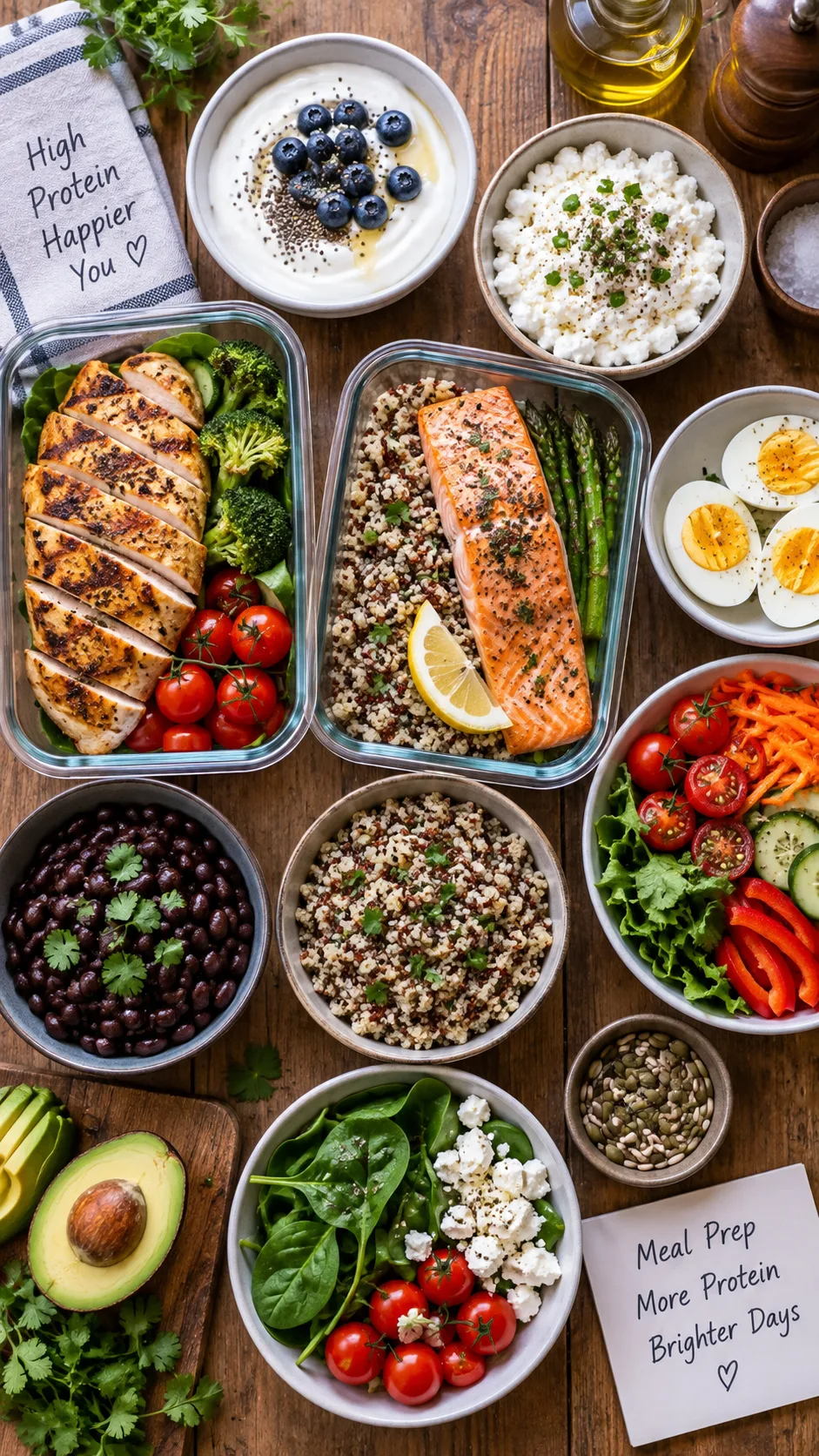
Why protein keeps you full when everything else fails
Protein wins the fullness game for three unglamorous, thoroughly boring biological reasons. No magic involved.
1. It costs your body energy to digest
Your body burns calories breaking food down. Nutritionists call this the thermic effect of food (TEF), and protein dominates the category.
- Protein: burns 20 to 30% of its own calories during digestion
- Carbs: burn roughly 5 to 10%
- Fat: burns a measly 0 to 3%
So 100 calories of chicken nets you around 75. A hundred calories of butter nets you basically 100. Small edge, but it stacks up every day.
2. It flips your hunger hormones
Protein raises satiety hormones like GLP-1, PYY and CCK while pushing down ghrelin, the hormone that whispers “cake” in your ear. Research published by the National Library of Medicine found that high-protein diets raise fullness and cut spontaneous calorie intake. Translation: you eat less without trying.
3. It protects your muscle
Lose weight without enough protein and you’ll shed muscle alongside fat. Bad trade. Muscle burns calories at rest and keeps you looking toned instead of, well, deflated.
The Harvard Health team points out that the official RDA of 0.8g per kg is a minimum to prevent deficiency, not an optimal target for someone active or trying to lose fat. Big difference.
How much protein do you really need?
Ignore the guy at the gym telling you to eat 400g a day. Here’s the realistic range the research supports:
- Sedentary, general health: 1.2g per kg of bodyweight
- Fat loss while preserving muscle: 1.6 to 2.2g per kg
- Serious strength training: 1.8 to 2.2g per kg
- Over 60: 1.2 to 1.6g per kg (older muscle resists protein signals more)
Quick example: a 70kg woman aiming for fat loss lands around 112 to 154g of protein daily. Spread across four eating occasions, that’s roughly 30 to 38g per meal. Very doable.
FYI, don’t stress about hitting the exact gram. Consistency beats precision every single time.
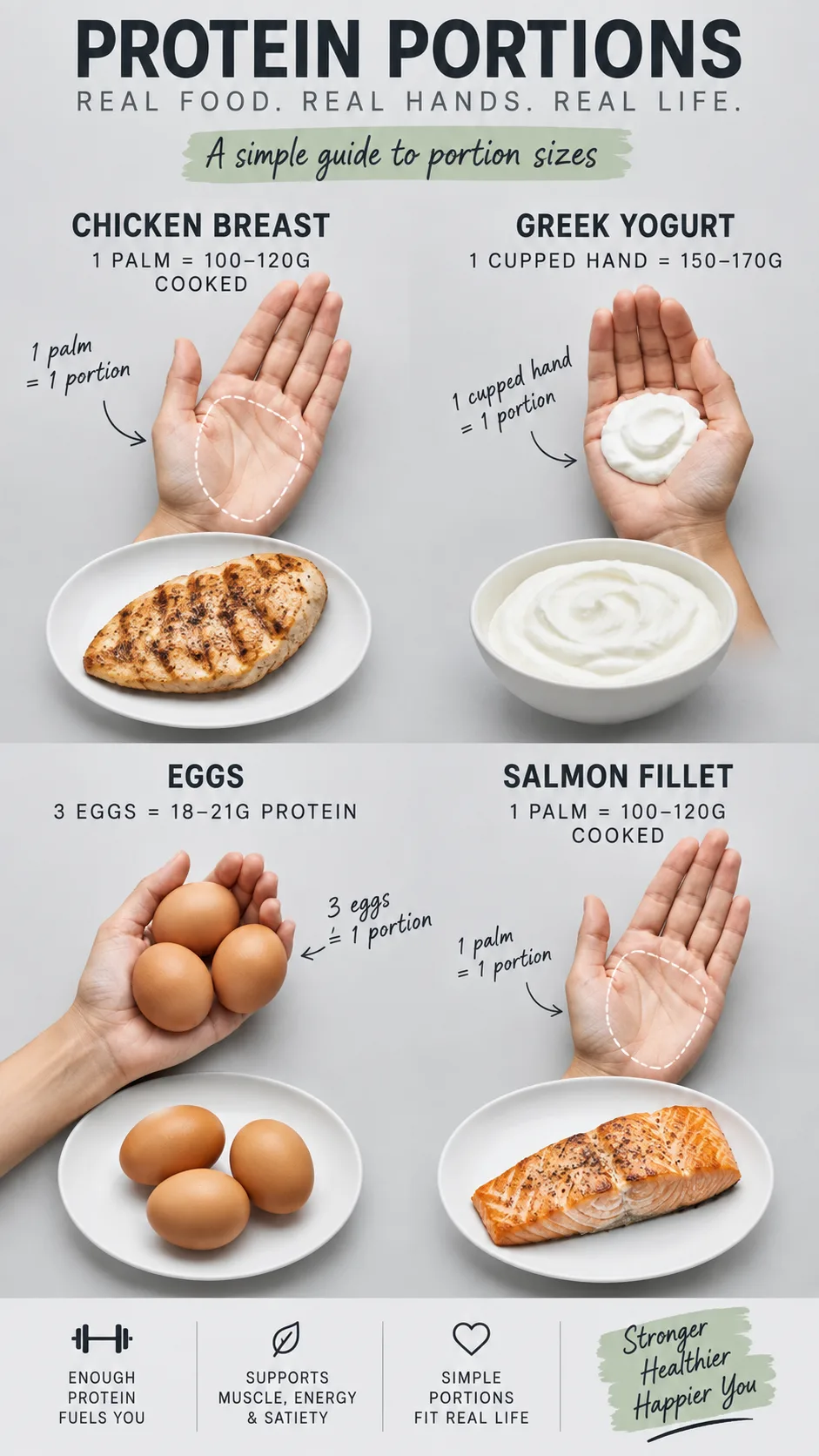
The rules that make this plan work
Before the day-by-day breakdown, learn the framework. Follow these five rules and you can swap any meal you want.
- Rule 1: 30g minimum per meal. Below 30g, you barely move the satiety needle.
- Rule 2: protein first, always. Build the plate around the protein, then add everything else.
- Rule 3: add fibre every meal. Protein plus fibre makes the fullness power couple.
- Rule 4: drink more water. More protein means your kidneys handle more nitrogen. Water helps.
- Rule 5: don’t fear the carbs. This isn’t keto. Carbs fuel your workouts and your mood.
Ever wonder why people quit high-protein diets? They turn every meal into dry chicken and steamed broccoli, then wonder why they hate their life. Season your food. Use sauces. Enjoy it.
The 7-day high protein meal plan
Each day lands between 1,500 and 1,700 calories with 130 to 150g of protein. Eating for maintenance or muscle gain? Add an extra carb portion at lunch and dinner. Easy.
Day 1, Monday (the easy start)
- Breakfast: 3-egg scramble with spinach, feta and 2 slices wholegrain toast (34g protein)
- Lunch: Grilled chicken burrito bowl with black beans, brown rice, salsa (45g protein)
- Snack: Greek yogurt (170g) with blueberries (18g protein)
- Dinner: Baked salmon, roasted sweet potato, green beans (38g protein)
Daily total: ~135g protein. Notice how none of that feels like diet food? I planned it that way.
Day 2, Tuesday (leftover magic)
- Breakfast: Cottage cheese bowl with banana, cinnamon, walnuts (28g protein)
- Lunch: Leftover salmon flaked into a big salad with chickpeas (36g protein)
- Snack: Two hard-boiled eggs and an apple (13g protein)
- Dinner: Turkey mince chilli with kidney beans over rice (48g protein)
Day 3, Wednesday (the fast one)
- Breakfast: Protein smoothie with whey, frozen berries, spinach, oats and milk (40g protein)
- Lunch: Leftover turkey chilli (42g protein)
- Snack: Beef jerky and a handful of almonds (15g protein)
- Dinner: Garlic prawn stir-fry with edamame and noodles (40g protein)
Wednesday exists for busy people. Every meal here takes under 12 minutes. I make the smoothie in a shaker bottle when the blender feels like too much commitment.
Day 4, Thursday (comfort food day)
- Breakfast: Overnight oats with protein powder and peanut butter (32g protein)
- Lunch: Tuna melt on sourdough with a side salad (38g protein)
- Snack: Cottage cheese with cherry tomatoes and black pepper (20g protein)
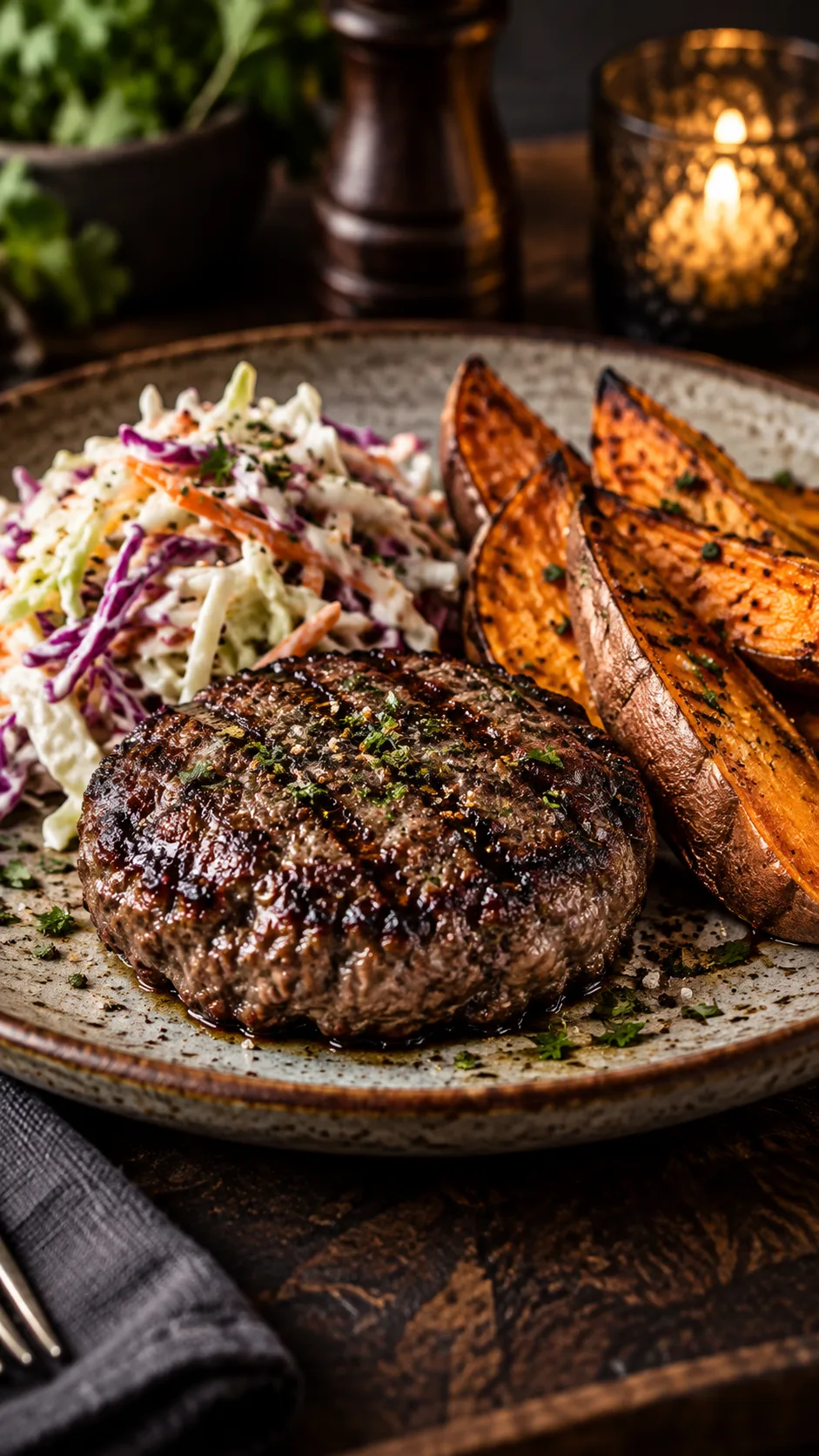
- Dinner: Lean beef burger patty, sweet potato wedges, slaw (42g protein)
Day 5, Friday (plant-forward)
- Breakfast: Tofu scramble with turmeric, peppers, wholegrain toast (30g protein)
- Lunch: Lentil and quinoa bowl with roasted veg and tahini (26g protein)
- Snack: Soy yogurt with pumpkin seeds and a scoop of protein (28g protein)
- Dinner: Chicken thighs with couscous, olives, roasted courgette (44g protein)
Day 6, Saturday (your social life still exists)
- Breakfast: Big brunch omelette with 3 eggs, mushrooms, cheese and smoked salmon (42g protein)
- Lunch: Something light, like Greek yogurt with honey and granola (20g protein)
- Snack: Protein shake before you head out (25g protein)
- Dinner: Restaurant meal. Order the steak, chicken or fish. Share the fries. (~45g protein)
Saturday builds in flexibility on purpose. A meal plan that collapses the second someone invites you to dinner works as a trap, not a plan.
Day 7, Sunday (prep day)
- Breakfast: Shakshuka with two eggs and crumbled feta (26g protein)
- Lunch: Roast chicken with potatoes and greens (48g protein)
- Snack: Protein hot chocolate (24g protein)
- Dinner: Cottage cheese pasta bake with spinach (38g protein)
Roast an extra chicken on Sunday. Future You will send a thank-you card. Seriously, shredded roast chicken carries Monday, Tuesday and half of Wednesday.
Your Sunday meal prep blueprint (90 minutes, done)
I’m not asking you to spend five hours in the kitchen with sixteen identical containers. Nobody keeps that up past week two.
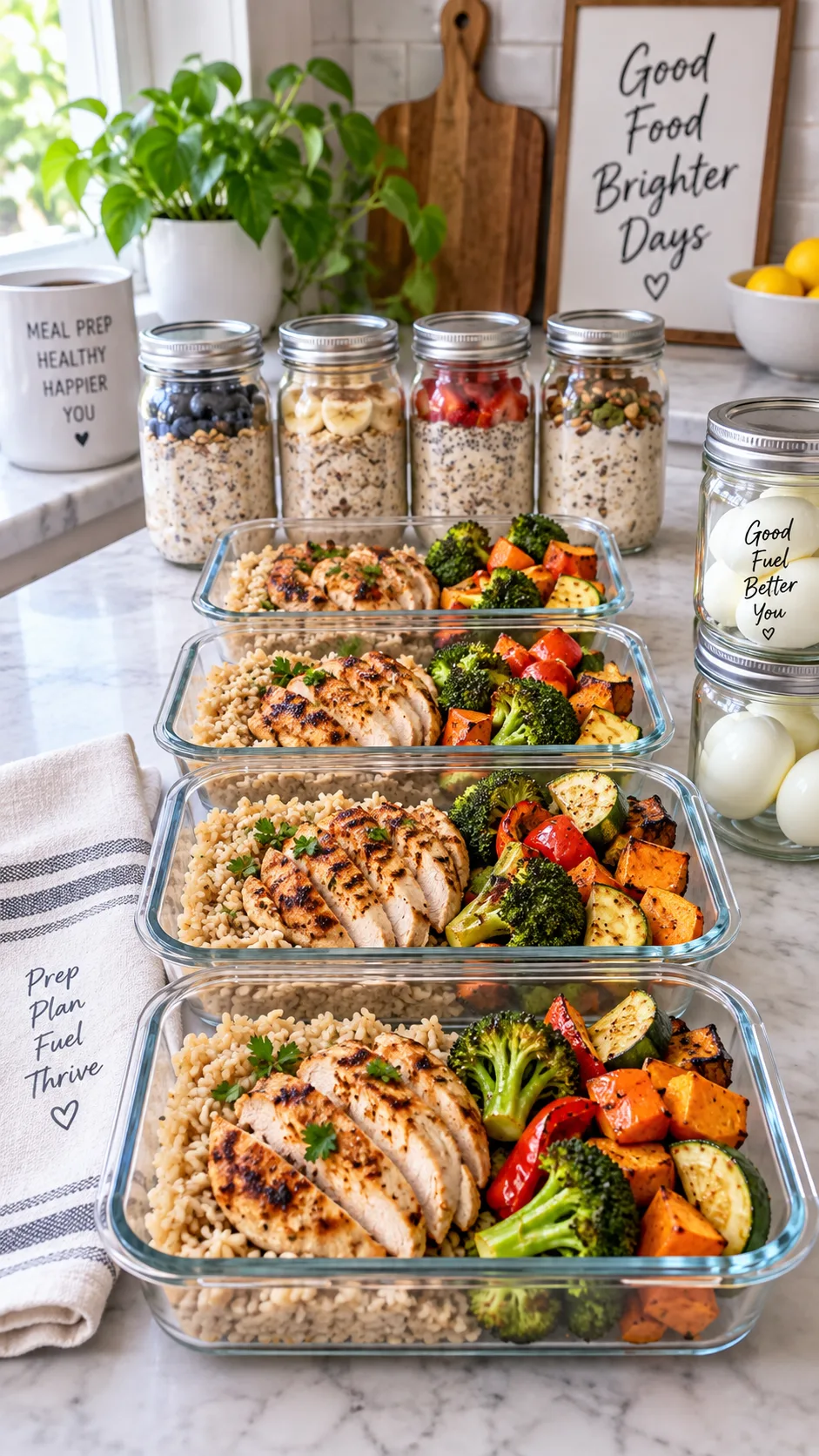
- Cook two proteins in bulk: one roast chicken, one batch of turkey chilli. Done.
- Boil a dozen eggs. They last a week in the fridge and rescue you constantly.
- Cook one grain batch: rice or quinoa, four portions.
- Roast one tray of vegetables: peppers, courgette, red onion, olive oil, salt.
- Portion Greek yogurt and cottage cheese into small jars with fruit.
That’s it. Five tasks, roughly 90 minutes, and you’ve covered most of the week. For more container-friendly ideas, my guide to high protein meal prep recipes breaks down the exact combinations that survive four days in the fridge without turning sad.
Mornings trip up most people, which is why I wrote a whole separate piece on high protein breakfast meal prep. Fix breakfast and the rest of the day follows.
Watch: how to hit your protein target without losing your mind
The best protein sources (ranked by practicality)
Animal-based heavy hitters
- Chicken breast: 31g per 100g, the reliable workhorse
- Greek yogurt (0%): 10g per 100g, snack MVP
- Cottage cheese: 11g per 100g, criminally underrated
- Tinned tuna: 25g per 100g, cheap and fast with no cooking
- Eggs: 6g each, the original convenience food
- Lean beef mince (5%): 26g per 100g
- Prawns: 24g per 100g, cooks in four minutes
Plant-based winners
- Tempeh: 19g per 100g, the plant protein king
- Tofu (firm): 17g per 100g
- Lentils: 9g per 100g cooked, plus serious fibre
- Edamame: 11g per 100g, a weirdly satisfying snack
- Seitan: 25g per 100g (skip it if you’re gluten-sensitive)
Eating plant-based? Combine sources across the day to cover all essential amino acids. Your body pools them, so you don’t need perfect pairing at every meal. That myth died decades ago.
Common mistakes that sabotage high protein diets
Mistake 1: back-loading all your protein
Most people eat 10g at breakfast, 25g at lunch, then 80g at dinner. Your body handles distributed protein far better for muscle protein synthesis. Spread it evenly.
Mistake 2: forgetting fibre
High protein plus low fibre creates a very unhappy digestive situation. I’ll leave it there. Aim for 25 to 35g of fibre daily from vegetables, beans, fruit and whole grains.
Mistake 3: drinking your protein exclusively
Shakes are convenient, but liquid calories don’t fill you up the same way. Chewing matters more than you’d think. Use shakes as a backup, not a foundation.
Mistake 4: ignoring total calories
Protein helps you eat less naturally, though it isn’t calorie-free. If fat loss is the goal, the maths still applies. Our 1500 calorie meal plan pairs nicely with these protein targets if you want the numbers laid out for you.
Mistake 5: assuming “high protein” labels tell the truth
That “high protein” cereal with 6g per bowl? Marketing. Check the label. The FDA’s Nutrition Facts guidance explains how to read servings properly, and most people read them wrong.
Is too much protein bad for you?
Short answer: for healthy people, no. This fear traces back to studies on patients who already had kidney disease, then somehow became universal gospel.
A comprehensive review in the Journal of the International Society of Sports Nutrition found no adverse kidney effects in healthy individuals eating high-protein diets long-term. Already have a kidney condition? Talk to your doctor first. I mean that sincerely, and not as legal boilerplate.
The realistic side effects sound far more boring: constipation if you skip fibre, dehydration if you skip water. You can prevent both.
Adjusting the plan for your goals
For fat loss
Keep protein where it is. Trim 200 to 300 calories from carbs and fats. Add a 20-minute walk after dinner. Leave the protein alone, since it’s the one thing protecting your muscle.
For muscle gain
Add 400 to 500 calories daily, mostly from carbs around your training. Push protein to the upper end, around 2g per kg. Lift heavy things three to four times weekly.
For maintenance
Follow the plan as written, add an extra snack, and stop weighing yourself daily. Your weight swings 1 to 2kg on its own. That’s water, not fat, and panicking about it helps nobody.
Frequently asked questions
How fast will I notice the difference?
Most people report better fullness within 3 to 5 days. Visible body composition changes take 4 to 8 weeks. You’ll need patience.
Can I eat the same meals every day?
Absolutely. Variety matters for micronutrients, but repetition wins for adherence. I eat the same breakfast roughly 300 days a year and I’ve made peace with it.
Do I need protein powder?
No. It’s a convenience tool, not a requirement. That said, hitting 140g of protein purely from whole foods takes real planning. A shake covers the gap on chaotic days.
What about eating out?
Order the protein-forward option: grilled fish, steak, chicken, eggs at brunch. Ask for extra vegetables instead of the default chips. Restaurants handle this request constantly, and nobody judges you.
The bottom line
Protein keeps you full because of physiology. Your hunger hormones shift, digestion costs energy, blood sugar stays steadier. Marketing has nothing to do with it.
Here’s what genuinely matters from all of this:
- Hit 1.6 to 2.2g of protein per kg bodyweight if you want fat loss with muscle retention
- Get 30g minimum per meal, spread evenly across the day
- Pair protein with fibre at every single meal
- Prep two proteins on Sunday and stop overcomplicating it
- Build in flexibility, because rigid plans fail by week three
Start with breakfast tomorrow. Just breakfast. Get 30g of protein before 10am and pay attention to how your 11am hunger behaves. That single change convinces more people than any article ever will.
Then come back and do the other six days. Your future self, the one who isn’t raiding the biscuit tin at 3pm, will appreciate it.