

You start a meal plan feeling focused, organised, and oddly pleased about matching containers. Then day three hits, your stomach starts shouting, and a biscuit turns into “emotional support.” Sound familiar?
This 21 Day Fix meal plan helps you build balanced meals without counting every calorie or pretending a sad rice cake makes a proper lunch. The plan relies on sensible portions, enough protein, plenty of fibre, and meals that look and taste like food.
I like this way of eating because it gives dinner some structure without turning it into a maths exam. You can use the classic colour container system or apply the same portion ideas with regular bowls, measuring cups, and common sense.
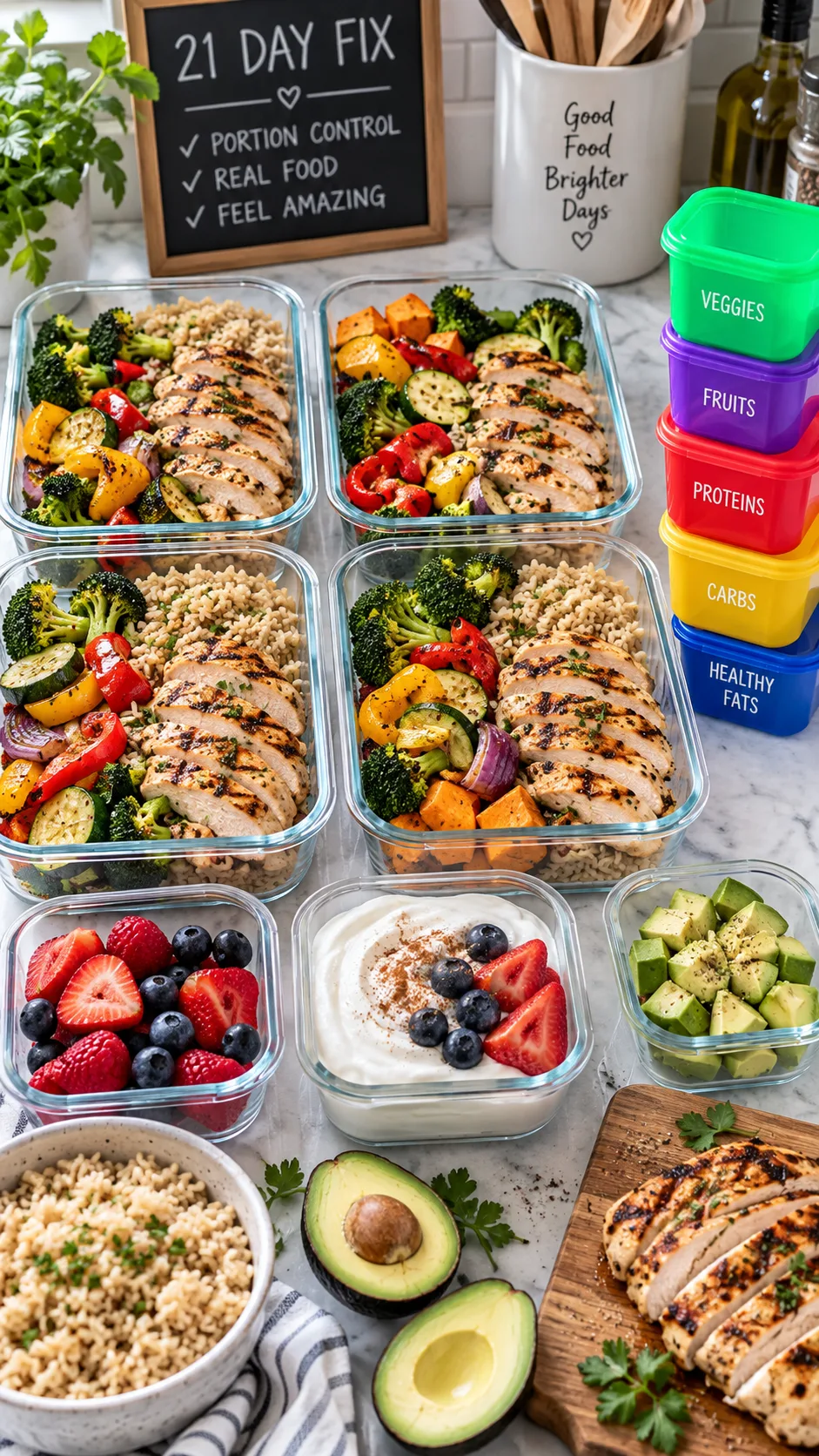
What is the 21 Day Fix meal plan?
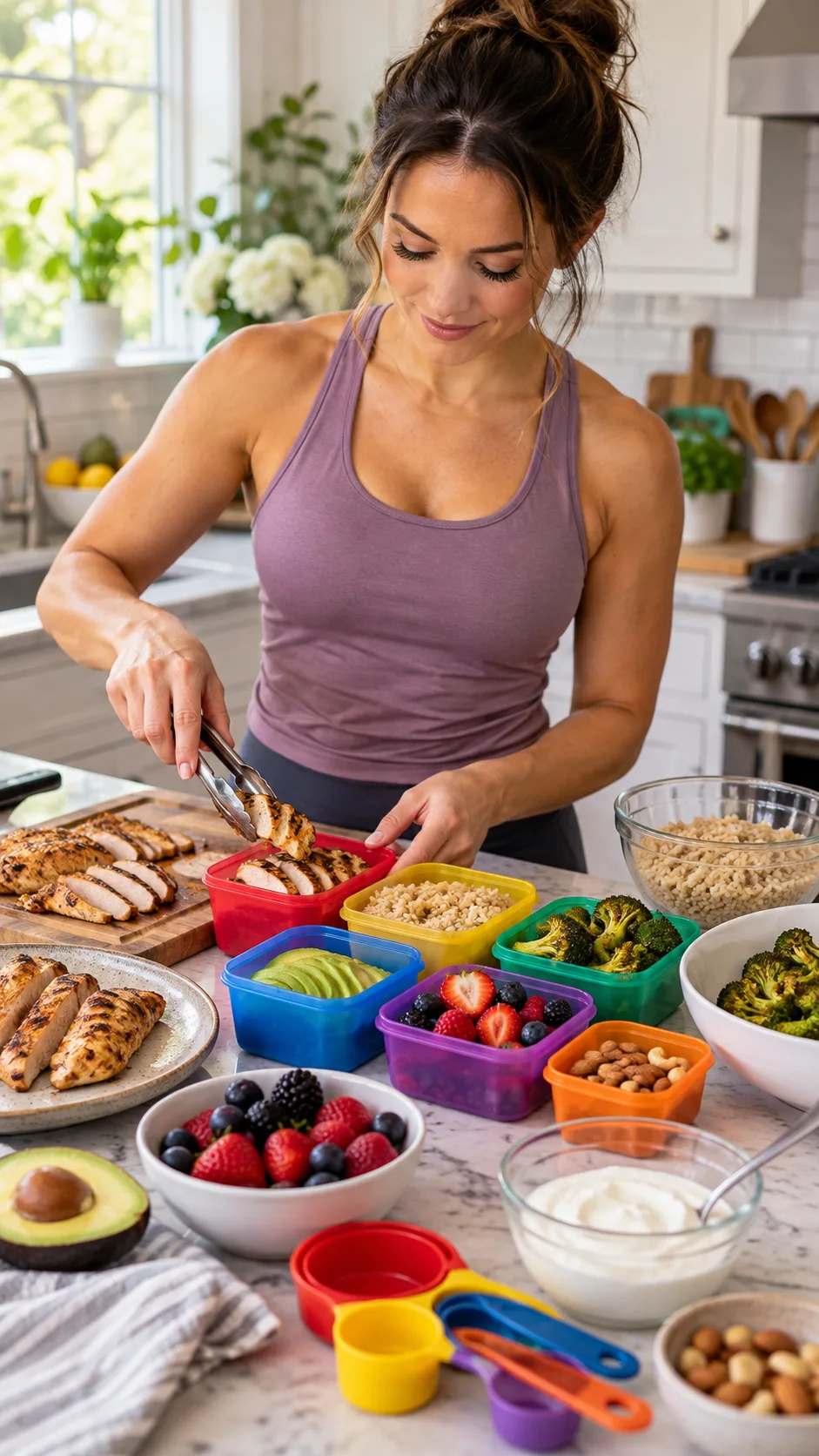
The 21 Day Fix meal plan uses portion controlled food groups instead of calorie counting. Each food group has a colour coded container, and your daily container count changes according to your calorie needs and activity level.
The original program combines these meals with short daily workouts, but food drives most of your progress. You cannot out lunge a dinner that includes half a pizza and a “just one more slice” negotiation.
The plan usually includes vegetables, fruit, lean protein, whole food carbohydrates, healthy fats, and measured treats. That mix makes a 21 day weight loss meal plan easier to stick with than extreme detoxes or juice only diets.
The basic container groups
- Green: vegetables such as spinach, broccoli, peppers, salad greens, courgettes, and carrots.
- Purple: fruit such as berries, apples, oranges, grapes, melon, and bananas.
- Red: protein such as chicken, fish, eggs, tofu, Greek yogurt, lean beef, cottage cheese, and beans.
- Yellow: carbohydrates such as oats, brown rice, quinoa, potatoes, whole grain pasta, and beans.
- Blue: healthy fats and cheese, including nuts, seeds, avocado, feta, and mozzarella.
- Orange: seeds and dressings, including chia seeds, hummus, olives, and measured oils.
- Teaspoons: cooking oils, nut butters, sauces, and small extras.
You do not need to buy containers to use this plan. Use a one cup measure for vegetables, a half cup measure for cooked carbs, and a palm sized serving for protein. Simple works better than perfect, especially after a long Tuesday.
Why so many diets leave you hungry
Most restrictive plans slash calories too hard, skimp on protein, or treat carbs like villains in a low budget action film. Your body answers with cravings, low energy, and a strong urge to eat everything in the cupboard.
This 21 Day Fix eating plan works best when you build meals around foods that digest slowly and keep you satisfied. Protein, fibre, volume, and healthy fats help you stay full without sending your calorie intake through the roof.
The Centers for Disease Control and Prevention recommends an eating pattern that includes fruit, vegetables, whole grains, and different protein foods. These foods add nutrients and make a meal feel substantial.
The fullness formula that makes this plan work
- Start with protein. Put eggs, chicken, fish, tofu, beans, Greek yogurt, or lean meat in every meal.
- Fill half your plate with vegetables. Vegetables bring crunch, colour, fibre, and plenty of volume for few calories.
- Keep carbs on the plate. Choose a measured serving of oats, rice, potatoes, beans, or whole grains for energy and satisfaction.
- Add a little fat. Avocado, olive oil, nuts, seeds, or cheese help meals taste good and keep you satisfied longer.
- Plan snacks before hunger takes over. A planned snack can stop the late afternoon vending machine spiral.
Have you noticed that chicken salad can leave you hungry, while chicken with roasted potatoes, vegetables, and olive oil dressing can carry you for hours? Your body needs a balanced meal, not a pile of dry lettuce with trust issues.
How to set up your 21 Day Fix portions
Start with the original program’s calorie bracket if you follow its container system, but do not treat an online chart as personal medical advice. Your height, weight, goals, age, medications, activity level, and health history all matter.
If you feel ravenous all the time, exhausted, dizzy, or preoccupied with food, you may eat too little for your needs. Talk with a registered dietitian or clinician, especially if you manage diabetes, take medication, are pregnant, breastfeed, or have a history of disordered eating.
For most people, the simplest approach includes three balanced meals and one or two snacks. Build each main meal around protein and vegetables, then change your carbohydrate and fat portions according to your hunger and activity.
A practical no container portion guide
- Protein: Aim for one palm sized portion at meals and a smaller protein portion at snacks.
- Vegetables: Aim for one or two fists at lunch and dinner. Add vegetables at breakfast when that feels realistic.
- Carbohydrates: Use one cupped hand portion at most meals, then raise or lower it according to your energy needs.
- Fats: Use one thumb sized portion of oil, nut butter, or cheese, or a small handful of nuts.
- Fruit: Eat one piece or one cup with breakfast, snacks, or dessert.
The USDA MyPlate guide offers another easy visual: fill half your plate with fruit and vegetables, add protein, then include grains or starchy vegetables. You do not need food scales, spreadsheets, or a degree in quinoa logistics.
Your easy 21 Day Fix meal plan: The 7 day menu
Use this seven day menu three times, then switch similar foods when boredom starts creeping in. Repeating meals saves money and time, while a few changes stop your taste buds from filing a formal complaint.
Each day includes protein, fibre rich produce, satisfying carbohydrates, and healthy fats. Change serving sizes to suit your container allowance or hunger needs.
Day 1
- Breakfast: Greek yogurt with berries, chia seeds, and a small serving of oats.
- Lunch: Chicken quinoa salad with cucumber, tomatoes, spinach, peppers, and olive oil lemon dressing.
- Snack: Apple slices with peanut butter.
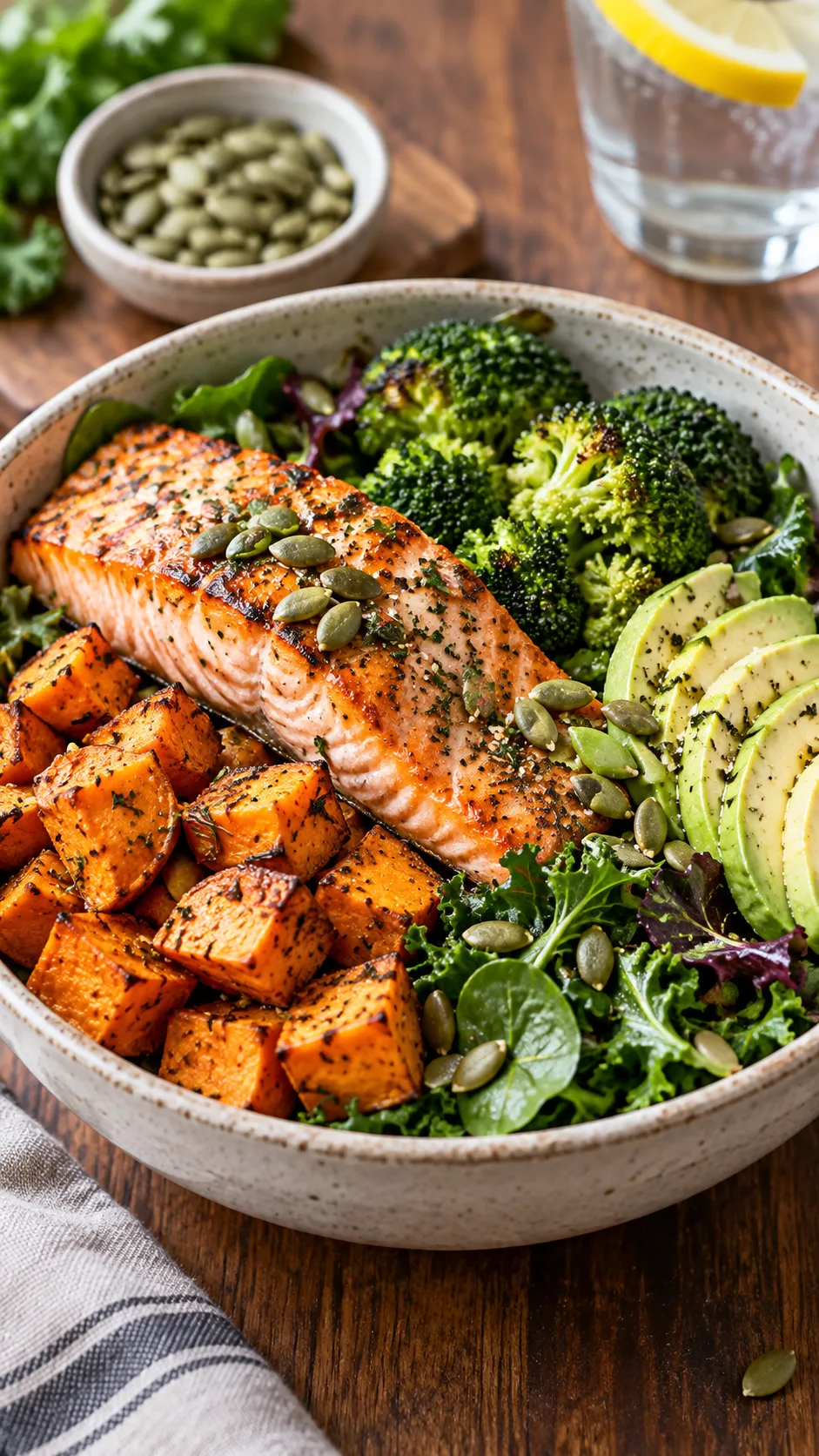
- Dinner: Baked salmon, roasted sweet potato, and broccoli.
Day 2
- Breakfast: Scrambled eggs with spinach, mushrooms, tomatoes, and whole grain toast.
- Lunch: Turkey or tofu lettuce wraps with brown rice, avocado, shredded carrots, and salsa.
- Snack: Cottage cheese with pineapple or berries.
- Dinner: Lean beef or lentil chilli with beans, peppers, onions, and a side salad.
Day 3
- Breakfast: Overnight oats with milk, Greek yogurt, cinnamon, banana, and walnuts.
- Lunch: Tuna and white bean salad with leafy greens, olives, tomatoes, and whole grain crackers.
- Snack: Carrots, peppers, and hummus.
- Dinner: Chicken stir fry with mixed vegetables and brown rice.
Day 4
- Breakfast: Protein smoothie with milk, Greek yogurt or protein powder, berries, spinach, and chia seeds.
- Lunch: Leftover chicken stir fry in a bowl with extra vegetables.
- Snack: Pear with a small handful of almonds.
- Dinner: Turkey meatballs, whole grain pasta, marinara sauce, and roasted courgettes.
Day 5
- Breakfast: Avocado toast with two eggs and sliced tomato.
- Lunch: Black bean burrito bowl with lettuce, salsa, corn, brown rice, avocado, and plain yogurt.
- Snack: Greek yogurt with cocoa powder and berries.
- Dinner: Sheet pan chicken thighs with peppers, onions, potatoes, and green beans.
Day 6
- Breakfast: Vegetable omelette with feta and fruit.
- Lunch: Chickpea salad with cucumber, tomatoes, parsley, red onion, lemon, and olive oil.
- Snack: Banana with peanut butter.
- Dinner: Fish tacos in corn tortillas with cabbage slaw, avocado, salsa, and black beans.
Day 7
- Breakfast: Oatmeal with berries, cinnamon, yogurt, and chopped nuts.
- Lunch: Chicken or tofu Caesar style salad with plenty of greens, parmesan, chickpeas, and a measured dressing.
- Snack: Air popped popcorn with fruit or a boiled egg.
- Dinner: Homemade burger bowl with lean beef or turkey, roasted potato wedges, salad, pickles, and yogurt based burger sauce.
Want more meal ideas that keep prep simple? Our clean eating meal plan for busy people gives you flexible options that fit neatly with the 21 Day Fix approach.
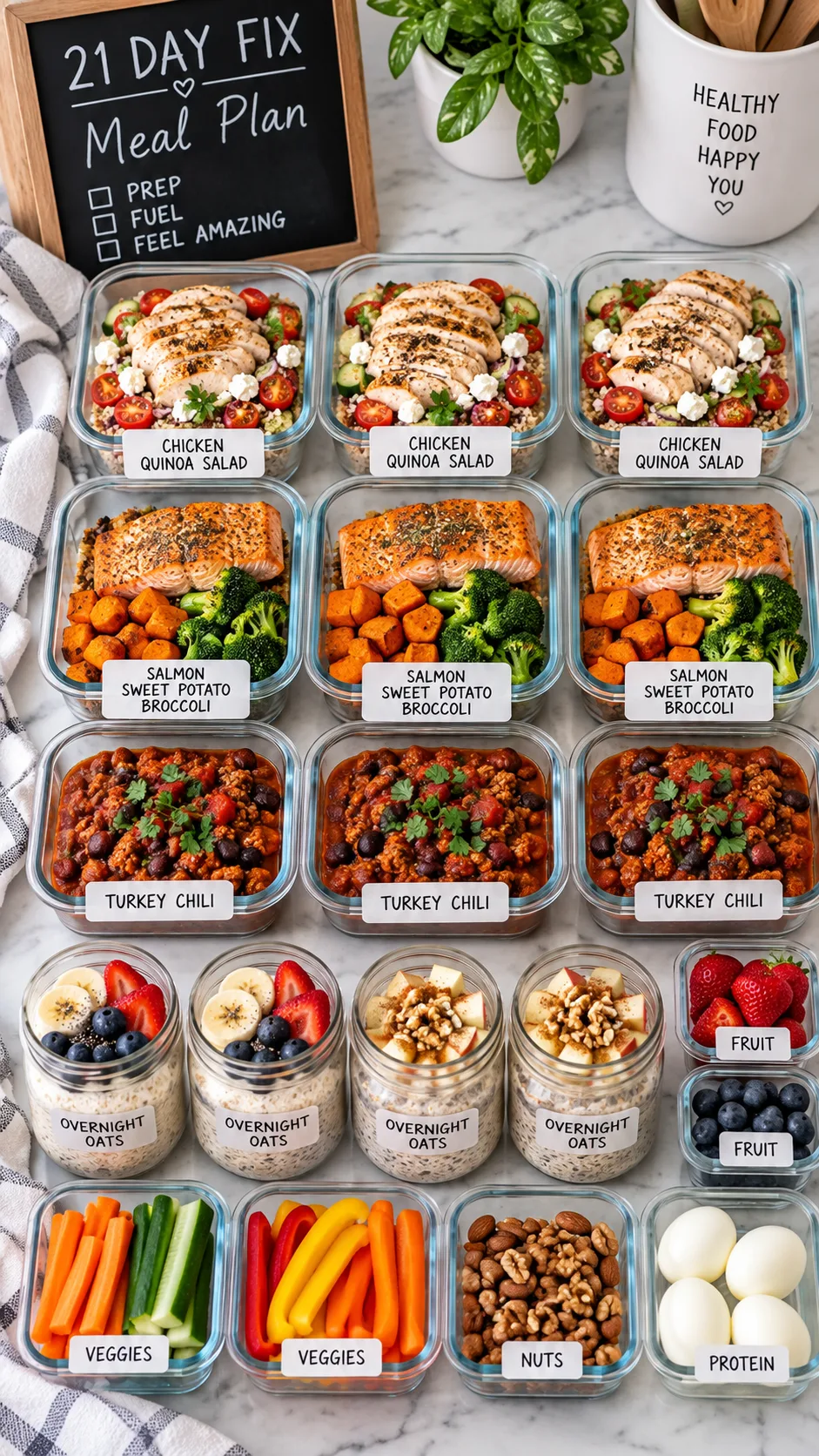
How to repeat the plan for all 21 days without getting bored
You do not need 63 different meals. You need a dependable framework and enough variety to stop yourself ordering takeaway because you cannot face another plain chicken breast.
Repeat the seven day menu for three weeks, but make easy food swaps each time. Keep your portions steady and change the flavours.
Week two swaps
- Swap chicken for turkey, prawns, extra lean beef, tempeh, or tofu.
- Swap brown rice for quinoa, whole wheat couscous, potatoes, or beans.
- Swap broccoli for asparagus, cauliflower, cabbage, green beans, or frozen mixed vegetables.
- Use taco seasoning, pesto, lemon herb dressing, curry spices, or garlic and ginger to change the flavour.
Week three swaps
- Make breakfast egg muffins instead of scrambled eggs.
- Turn chilli into stuffed sweet potatoes.
- Put leftover roasted vegetables into wraps, omelettes, or grain bowls.
- Cook a large soup with chicken, beans, vegetables, and potatoes for easy lunches.
Frozen vegetables, tinned beans, bagged salad, rotisserie chicken, and microwaveable grains can save dinner on chaotic days. Convenience does not ruin healthy eating. Often, it saves it.
Meal prep tips that make the 21 Day Fix easier
Meal prep does not require five hours, fifteen matching glass boxes, and an Instagram worthy fridge. You need a short shopping list, a few cooked basics, and a plan for those moments when hunger makes every choice feel urgent.
- Choose two proteins. Bake chicken and cook turkey mince, tofu, lentils, or eggs.
- Cook one or two carbs. Roast a tray of potatoes and cook a pot of rice, quinoa, or oats.
- Prep vegetables your future self will eat. Roast some, chop some, and keep frozen options ready.
- Make two sauces. Try salsa, hummus, yogurt ranch, pesto, or lemon tahini dressing.
- Portion snacks right away. Divide nuts, fruit, yogurt, boiled eggs, and hummus into easy grab and go servings.
Safe storage matters too. The FoodSafety.gov cold storage charts can help you decide how long to keep cooked leftovers in the fridge. If food smells questionable, do not gamble. Your meal plan does not need a plot twist.
Smart snacks that keep you full
A good snack carries you between meals. A weak snack, such as sweets or crisps on their own, can leave you even hungrier half an hour later.
Pair protein or healthy fat with fruit, vegetables, or whole food carbs. That pairing helps you stay satisfied and cuts down on random grazing.
- Greek yogurt, berries, and chia seeds
- Apple or banana with peanut butter
- Boiled eggs with cherry tomatoes
- Hummus with carrots, cucumbers, and peppers
- Cottage cheese with fruit and cinnamon
- Edamame with sea salt and chilli flakes
- Whole grain crackers with tuna or cheese
For more filling ideas, check out our 7 day high protein meal plan. Protein does not solve everything in life, sadly, but it can make a big difference when hunger keeps knocking your plans off course.
Common 21 Day Fix mistakes that trigger hunger
You skimp on protein
A smoothie that contains only fruit may taste great, but it rarely keeps you full for long. Add Greek yogurt, milk, cottage cheese, tofu, or a suitable protein powder and turn it into a meal.
You fear all carbohydrates
Your body uses carbohydrates for energy, especially when you exercise. Choose measured portions of high fibre carbs instead of cutting them out and then raiding the kitchen at 10 p.m.
You eat tiny meals to “save” containers
Eating far below your needs often backfires. Spread your portions through the day, eat satisfying meals, and save a snack for the time when hunger usually hits hardest.
You forget flavour
Bland food can bring on diet fatigue fast. Use herbs, spices, garlic, citrus, vinegar, salsa, mustard, chilli, and measured sauces to make meals enjoyable.
You expect perfection for 21 straight days
One restaurant meal or slice of birthday cake does not erase your progress. Go back to your next planned meal, drink water, and carry on. Consistency works because it can survive real life.
Can you lose weight on a 21 Day Fix meal plan?
You can lose weight when this plan helps you create a calorie deficit while meeting your nutritional needs. You may also notice steadier energy, less intense hunger, and more confidence around food before the scale changes much.
Your results depend on your starting point, portion sizes, activity, sleep, stress, medical needs, and consistency. No honest plan can promise a particular number on the scale in 21 days. Anyone who does deserves a dramatic eyebrow raise.
Track more than your weight. Pay attention to hunger, energy, digestion, workout performance, waist measurement, strength, and how your clothes fit. These details tell you more than one number can.
Final thoughts: Make the plan fit your life
The best 21 Day Fix meal plan gives you enough structure to make progress and enough flexibility to enjoy your real life. Build meals around protein, vegetables, filling carbs, and healthy fats, then prep a few basics before your busiest days.
Use the seven day menu, repeat it for three weeks, and swap foods when you want variety. You do not need to eat perfectly. You need enough consistency that hunger stops running the show.
Start with your next meal, not next Monday. Your future self will appreciate the chicken, the potatoes, and the fact that you stopped treating hunger like a personality flaw.