

You’ve tried the 1400 calorie thing before, right? You lasted until about 4pm, and then the biscuits in the cupboard started whispering your name. By 9pm you’d eaten half a loaf of bread standing up in the kitchen, which, let’s be honest, nobody counts as a real meal.
Here’s the thing nobody tells you: the calorie number wasn’t the problem. The composition was. A 1400 calorie day built on toast, fruit and “light” yoghurt will leave you ravenous. The same 1400 calories built around protein, fiber and high-volume food? Completely different experience. I’ve tested both on myself, and the difference isn’t small. It’s the gap between white-knuckling a diet and barely noticing you’re on one.
So let’s build the version that works.
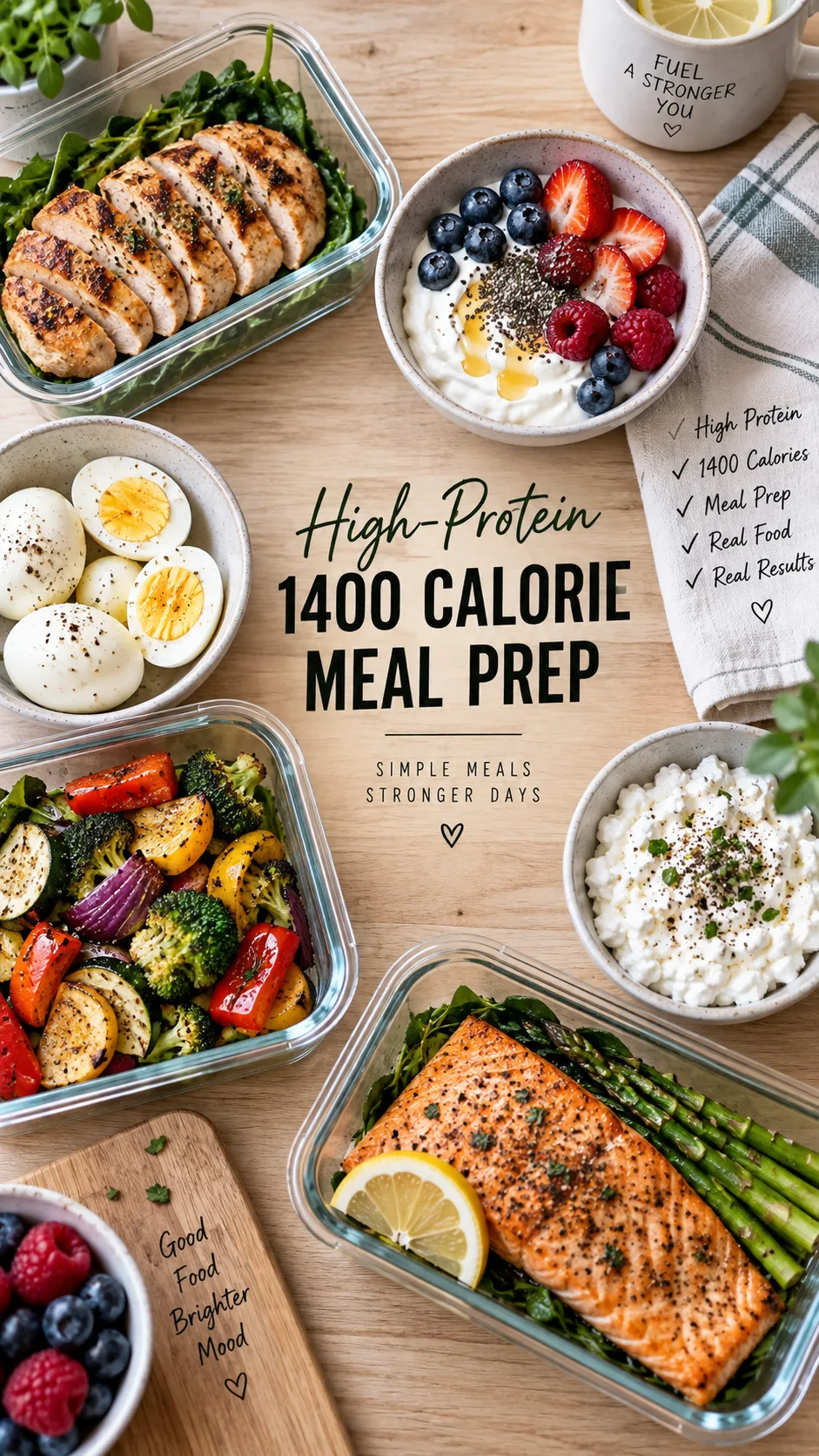
Why most 1400 calorie meal plans leave you starving
Most low-calorie plans treat calories as if they’re all interchangeable. They’re not, at least not where your appetite is concerned. Your body responds very differently to 300 calories of chicken breast and vegetables than it does to 300 calories of granola.
Protein triggers the release of satiety hormones like GLP-1, PYY and cholecystokinin, the same signalling pathways those new weight-loss injections exploit. Fiber slows digestion and physically fills your stomach. Refined carbs do neither particularly well, and they spike then crash your blood sugar, which your brain reads as “FEED ME IMMEDIATELY.”
At 1400 calories you have a small budget, so every calorie needs to earn its place. Anything that doesn’t fill you up is a calorie you’ve thrown away.
The three things a 1400 calorie day must deliver
- Enough protein to protect muscle. Losing weight while losing muscle just makes you a smaller version of the same problem.
- Enough food volume to feel like a meal. Your stomach has stretch receptors, and they don’t read nutrition labels.
- Enough flavour that you’ll do it again tomorrow. Sad steamed broccoli has ended more diets than pizza ever has.
How much protein do you need at 1400 calories?
Here’s where people get nervous, so let me be specific. On a calorie deficit, research consistently supports a higher protein intake than the standard RDA. The Harvard T.H. Chan School of Public Health notes that the RDA of 0.8g per kg is a floor to prevent deficiency, not an optimal target, and certainly not a target for someone dieting.
For a 1400 calorie high-protein meal plan, aim for 110g to 140g of protein per day. That’s roughly 1.6g to 2.2g per kg of your goal body weight, and it puts you at about 31% to 40% of your calories from protein. Sounds aggressive. Feels amazing.
Studies on protein and appetite say the same thing over and over: higher-protein diets cut spontaneous calorie intake and improve fullness ratings. One well-cited review in the American Journal of Clinical Nutrition found significantly greater fullness on higher-protein intakes compared with normal-protein controls.
The rest of your macros
- Protein: 120g (480 calories)
- Fat: 45g (405 calories). Don’t go lower, because your hormones and your sanity need it
- Carbs: around 130g (520 calories), mostly fibrous vegetables, fruit, legumes and some whole grains
- Fiber target: 28g to 35g minimum
Ever wondered why so many people crash and burn on low-fat AND low-carb plans at the same time? They’ve removed everything that makes food pleasant. Don’t do that to yourself.
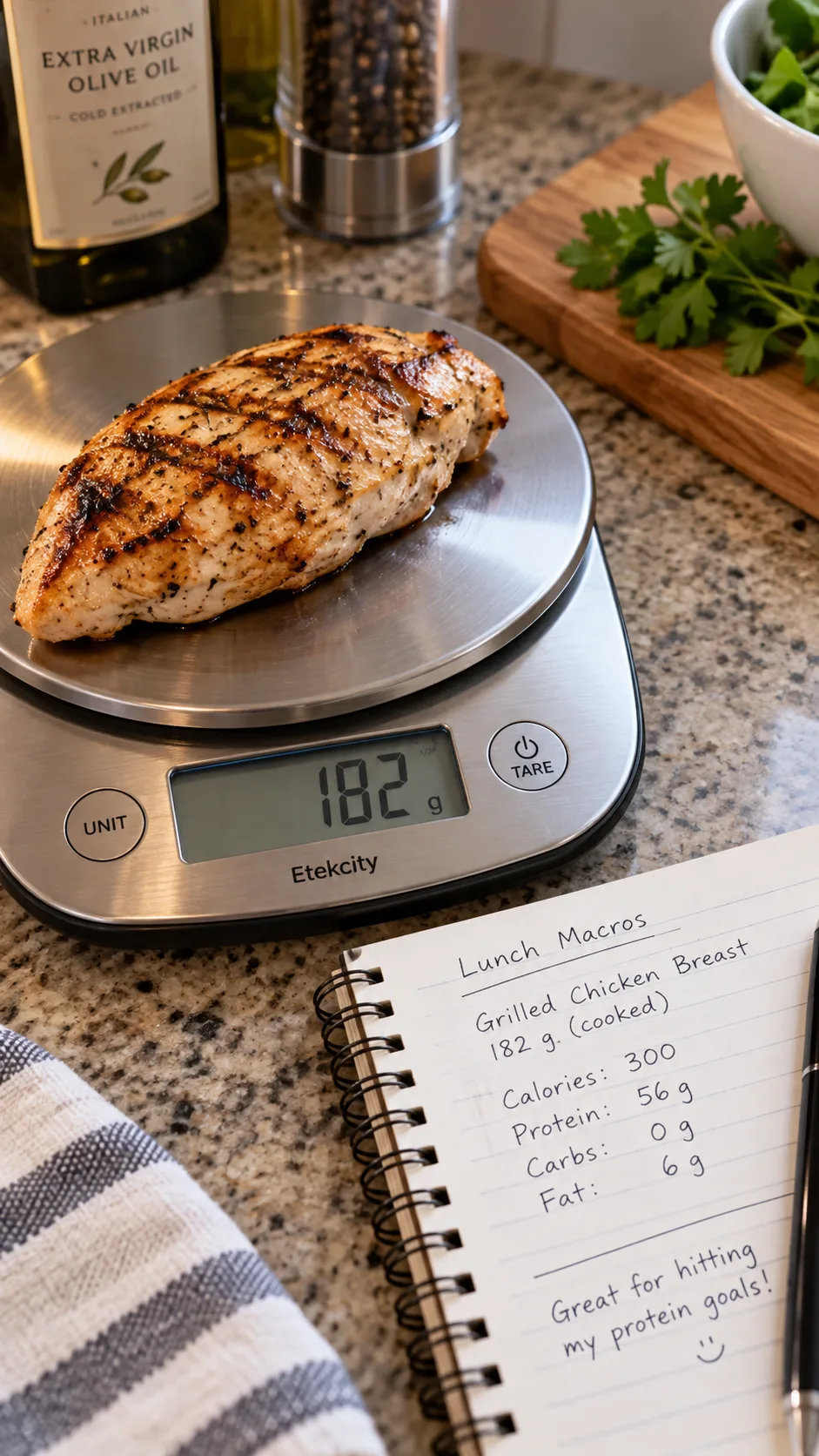
The satiety formula: build every meal like this
Forget memorising recipes. Learn the template and you can build hundreds of meals without opening an app.
Every meal = 30g to 40g protein + 1 to 2 cups of vegetables + a thumb of fat + a fist of smart carbs.
That’s the whole system. Four components, no maths, and it works whether you’re eating jollof rice or a Caesar salad.
Why the 30g protein threshold matters
Spreading protein evenly across meals beats loading it all at dinner. Your body handles roughly 25g to 40g per sitting for maximum muscle protein synthesis, and (more to the point here) even spacing keeps your appetite flat all day instead of dropping you into a 3pm hunger spiral.
Three meals at 35g plus a 25g snack gets you to 130g without any effort or protein powder heroics.
The 1400 calorie high-protein meal plan (3 full days)
Real food, real portions, none of that “half a cup of air” nonsense. Calorie figures come from USDA FoodData Central and I round them sensibly, because your measuring cup isn’t a laboratory instrument and neither is mine.
Day 1: the classic
- Breakfast (340 cal / 34g protein): 3 whole eggs scrambled with spinach, mushrooms and onions, cooked in 1 tsp olive oil, plus 100g plain Greek yogurt on the side
- Lunch (410 cal / 42g protein): 150g grilled chicken breast, large mixed salad, 80g chickpeas, 1 tbsp vinaigrette
- Snack (180 cal / 20g protein): 170g low-fat cottage cheese, 1 small pear, cinnamon
- Dinner (440 cal / 38g protein): 140g baked salmon, 200g roasted broccoli and peppers, 120g sweet potato
- Extra (30 cal): Herbal tea, black coffee, unlimited water
Daily total: around 1400 calories, 134g protein, 33g fiber. Try being hungry on that. I dare you.
Day 2: the lazy day
- Breakfast (300 cal / 32g protein): Protein smoothie with 1 scoop whey, 200ml unsweetened almond milk, 100g frozen berries, 15g chia seeds and a handful of spinach
- Lunch (420 cal / 40g protein): Tuna and white bean bowl with 1 tin tuna in water, 100g cannellini beans, cherry tomatoes, cucumber, red onion, lemon, 2 tsp olive oil
- Snack (170 cal / 18g protein): 2 boiled eggs and 1 satsuma
- Dinner (500 cal / 45g protein): Turkey mince chilli using 150g lean turkey mince, kidney beans, chopped tomatoes and peppers, spooned over 150g cauliflower rice with 20g grated cheese
Daily total: around 1390 calories, 135g protein, 36g fiber. Total active cooking time? Maybe 25 minutes.
Day 3: the West African twist
Nobody should have to give up real food to hit a protein target. If you want exact numbers for local dishes, this breakdown of calories in Nigerian foods is one of the most useful resources you’ll find for building plans like this.
- Breakfast (330 cal / 30g protein): Moi moi (1 medium wrap), 2 boiled eggs, fresh tomato and pepper sauce
- Lunch (450 cal / 44g protein): Grilled tilapia (200g) with a generous portion of efo riro made with minimal palm oil
- Snack (150 cal / 15g protein): Roasted groundnuts (20g) and 150g plain yogurt
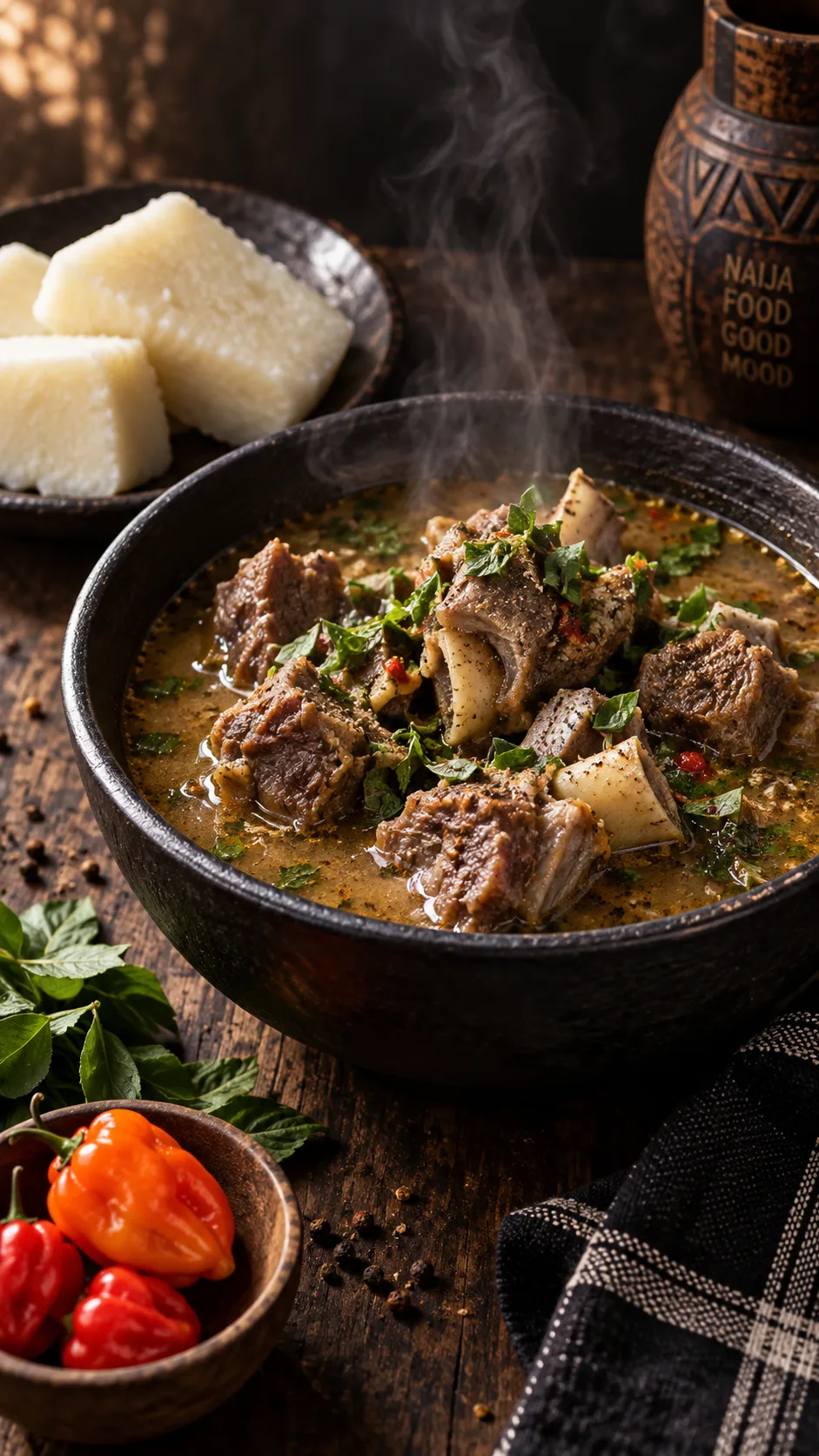
- Dinner (450 cal / 40g protein): Goat meat pepper soup (lean cuts, skim the fat) with a small portion of boiled yam (100g) and steamed ugu
Daily total: around 1380 calories, 129g protein. Pepper soup at a calorie deficit is criminally underrated. It’s hot, spicy, brothy and takes forever to eat, which is exactly what your satiety signals want.
Watch: how protein controls your appetite
If you’d rather hear someone explain this with proper science instead of my ramblings, this breakdown is solid:
The highest-protein foods per calorie (your cheat sheet)
Pin this. These foods give you the most protein for the fewest calories, which matters enormously when you’re working with 1400.
- Egg whites: 11g protein per 100 calories
- White fish (cod, tilapia, hake): 22g per 100 calories
- Prawns: 21g per 100 calories
- Chicken breast, skinless: 19g per 100 calories
- Tuna in water: 22g per 100 calories
- Low-fat cottage cheese: 17g per 100 calories
- Plain non-fat Greek yogurt: 17g per 100 calories
- Whey protein isolate: 22g per 100 calories
- Lean turkey mince (5% fat): 17g per 100 calories
- Tofu, firm: 11g per 100 calories
Notice what’s missing? Nuts, cheese, fatty cuts of meat, nut butter. I eat all of them, so this isn’t a moral judgement, but they cost you a lot of calories for the protein they hand back. Use them as flavour, not as your protein source.
High-volume foods that trick your stomach
- Cabbage, courgette, cauliflower, mushrooms: enormous volume, almost no calories
- Broth-based soups: the water content genuinely increases fullness
- Berries: high fiber, low sugar load, and they handle the sweet craving
- Shirataki noodles: weird texture, I’ll admit it, but the calories are basically zero
- Air-popped popcorn: 3 cups for 90 calories and it takes ages to eat
Meal prep: how to make this take 90 minutes a week
Nobody sticks to a plan that demands three cooking sessions a day. I learned this the hard way during a stretch where I genuinely believed I’d cook fresh every evening. I lasted nine days before ordering a takeaway out of spite.
The Sunday batch system
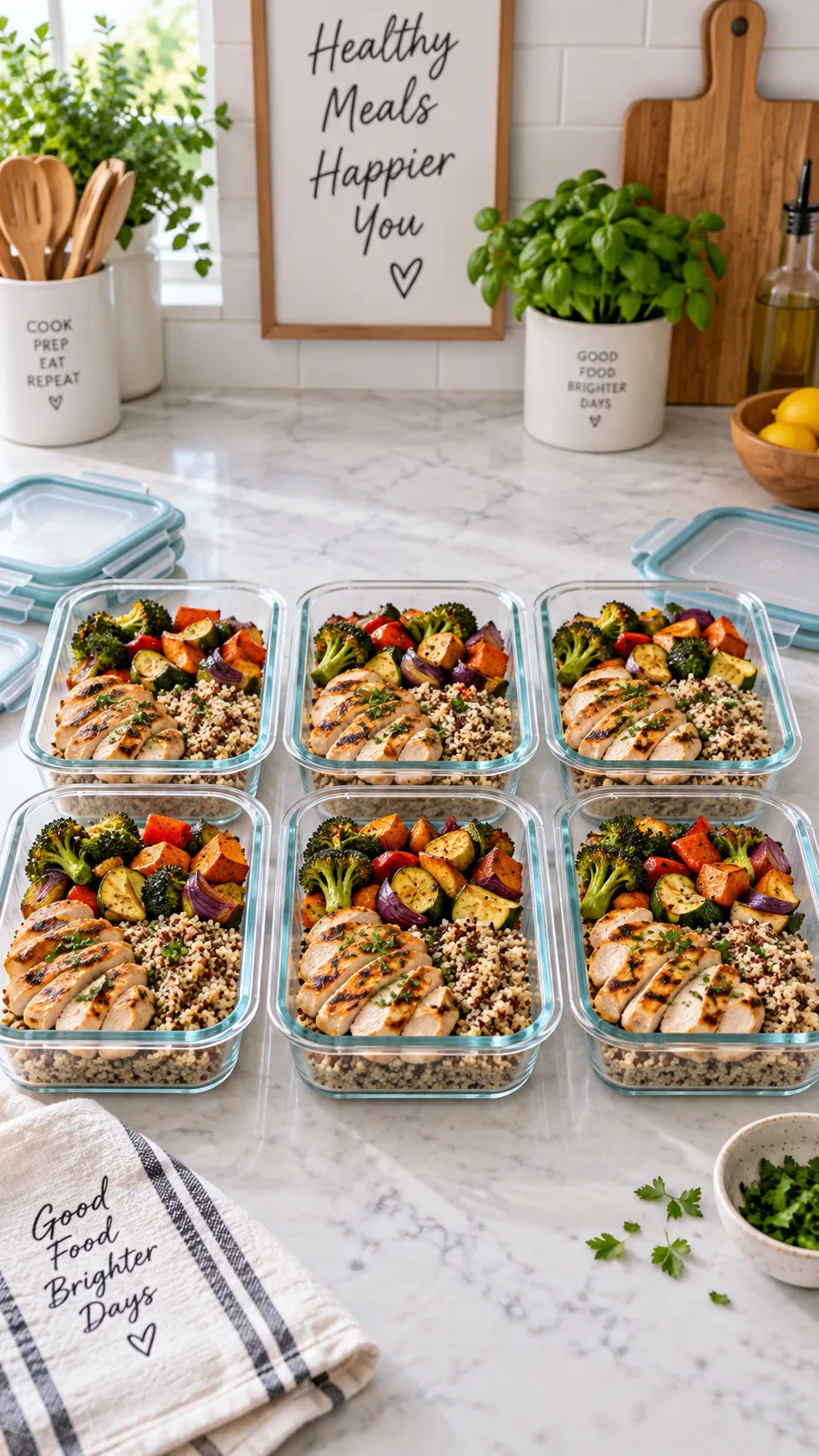
- Cook one large protein batch. Roast 1kg of chicken thighs or breast, using different seasoning on each tray so you don’t eat identical food five days running.
- Boil a dozen eggs. They’re the best emergency protein on earth.
- Roast two large trays of vegetables. Peppers, courgette, red onion, broccoli. Olive oil, salt, 200°C, 25 minutes.
- Cook one carb base. Around 500g of rice, quinoa or sweet potato, portioned into containers.
- Make one sauce. A yogurt-herb dressing or a chilli-lime sauce turns the same ingredients into a different meal.
Your variety comes from sauces and spices, not from cooking separate meals. Same chicken, five different flavours, no extra effort.
7 mistakes that sabotage a 1400 calorie plan
- Drinking your calories. That flat white and orange juice combo costs you 300 calories and hands back roughly 4g of protein. Rough deal.
- Under-eating vegetables. People cut vegetables to “save calories,” which is like cancelling your insurance to save money.
- Going too low on fat. Below 40g per day, food stops being satisfying and your hormones get grumpy.
- Skipping breakfast then over-correcting. Fine if it works for you. A disaster if you binge at 8pm.
- Forgetting cooking oil. That “splash” of olive oil costs 120 calories per tablespoon. It counts.
- Not weighing food for the first two weeks. Your eyeball lies to you. Calibrate it, then relax.
- Ignoring salt and hydration. Dehydration masquerades as hunger constantly.
Should you even be eating 1400 calories?
The honest answer is maybe not. 1400 calories suits many smaller, less active women and some shorter men aiming for gradual fat loss. It’s too low for most active men and for anyone training hard five days a week.
Work out where you’re starting from first. This BMI calculator gives you a quick baseline, though treat it as a rough screening tool rather than a verdict on your health. Then calculate your maintenance calories and take a 15% to 25% deficit from there.
Do NOT run 1400 calories if you’re:
- Pregnant or breastfeeding
- Under 18
- Managing a history of disordered eating
- Training for endurance events
- Taking medication that affects appetite or metabolism without medical guidance
The NHS generally advises against sustained intakes below 1400 to 1500 calories for women and 1800 for men without supervision. Talk to a registered dietitian if you’re unsure. FYI, I’m not writing that as a legal disclaimer. It’s genuinely good advice.
Add resistance training or you’ll regret it
High protein protects muscle. Lifting weights protects it better. Even two sessions a week changes your body composition outcome dramatically, and you don’t need a gym membership, because bodyweight work counts. Simple movements like glute bridge pulses build real strength with no equipment, and they’re weirdly satisfying to do badly on a living room floor.
Frequently asked questions
Will I lose muscle at 1400 calories?
Not if you hit 110g or more of protein and lift weights twice weekly. Those two variables decide whether you lose fat or lose everything.
How fast will I lose weight?
Expect 0.5kg to 1kg per week depending on your starting point. Faster than that usually means water and muscle, not fat. Patience beats drama here.
Can I do this without protein powder?
Absolutely. Every day in the plan above works with whole foods. Powder is convenient, not compulsory.
What about cheat meals?
Plan one higher-calorie meal weekly and eat it without guilt. Aim for consistency over months instead of perfection. IMO the people who allow themselves flexibility are the ones still on track a year later.
The bottom line
A 1400 calorie meal plan doesn’t have to feel like punishment. Load it with 120g or more of protein, pile on the vegetables, keep at least 40g of fat for flavour and hormones, and hit 30g of fiber. Build every meal from the same four-part template. Batch cook on Sundays so future you doesn’t have to negotiate with a hungry brain at 7pm.
The plan that keeps you full isn’t the one with the cleverest recipes. It’s the one you can repeat on a Tuesday in February when you’re tired and nothing sounds appealing. If you’re also managing specific health goals, pairing this approach with something like an anti-inflammatory eating strategy makes the whole thing easier to keep up.
Start tomorrow. Weigh your protein, eat your vegetables, and notice how quiet your appetite gets by day four. That silence is the whole point.