

You’re on the couch at 3 a.m., baby latched, phone in one hand, thumb-typing “foods that increase breast milk.” I’ve been there. My sister rang me at that exact hour once, convinced she’d “run out” of milk because her breasts felt soft.
Nobody says this part clearly enough: what you eat matters, but probably not in the way the internet screams about it. Lactation cookies won’t fix a supply problem caused by a bad latch. But a well-fed mum makes milk more comfortably, heals faster, and doesn’t hit noon feeling like a zombie.
So here’s the science, separated from the snake oil.
First, the truth about milk supply (read this before buying anything)
Milk production runs on supply and demand. Your breasts make milk because your baby removes milk. Full stop. Remove more, make more. Remove less, make less.
Food supports the machinery. Food does not run the machinery. That one distinction will save you hundreds of naira (or dollars) on “magic” teas that mostly taste like wet hay.
That said, your body burns roughly an extra 450 to 500 calories a day making milk, according to the CDC’s guidance on maternal diet during breastfeeding. Skip those calories day after day and two things happen: your energy tanks, and eventually your supply follows.
When diet DOES affect your supply
- Chronic under-eating. Crash dieting in the first 8 weeks kills supply
- Dehydration. Milk is about 87% water, so yes, it matters
- Very low carb eating. Some mums tank hard on keto while nursing
- Nutrient gaps. Low iron, low B12 or low vitamin D will leave you exhausted even when your supply is fine
When diet is NOT the problem
- Shallow latch or tongue tie
- Long stretches between feeds or pumping sessions
- Certain medications (some decongestants, hormonal birth control)
- Retained placenta or thyroid issues
If any of those describe you, see an IBCLC lactation consultant before you buy another bag of fenugreek. Seriously.
Your daily breastfeeding diet blueprint
Forget rigid meal plans. You have a newborn. You need something you can pull off half-asleep with one hand.
Here’s the framework I give every new mum who asks me, and it fits on a sticky note.
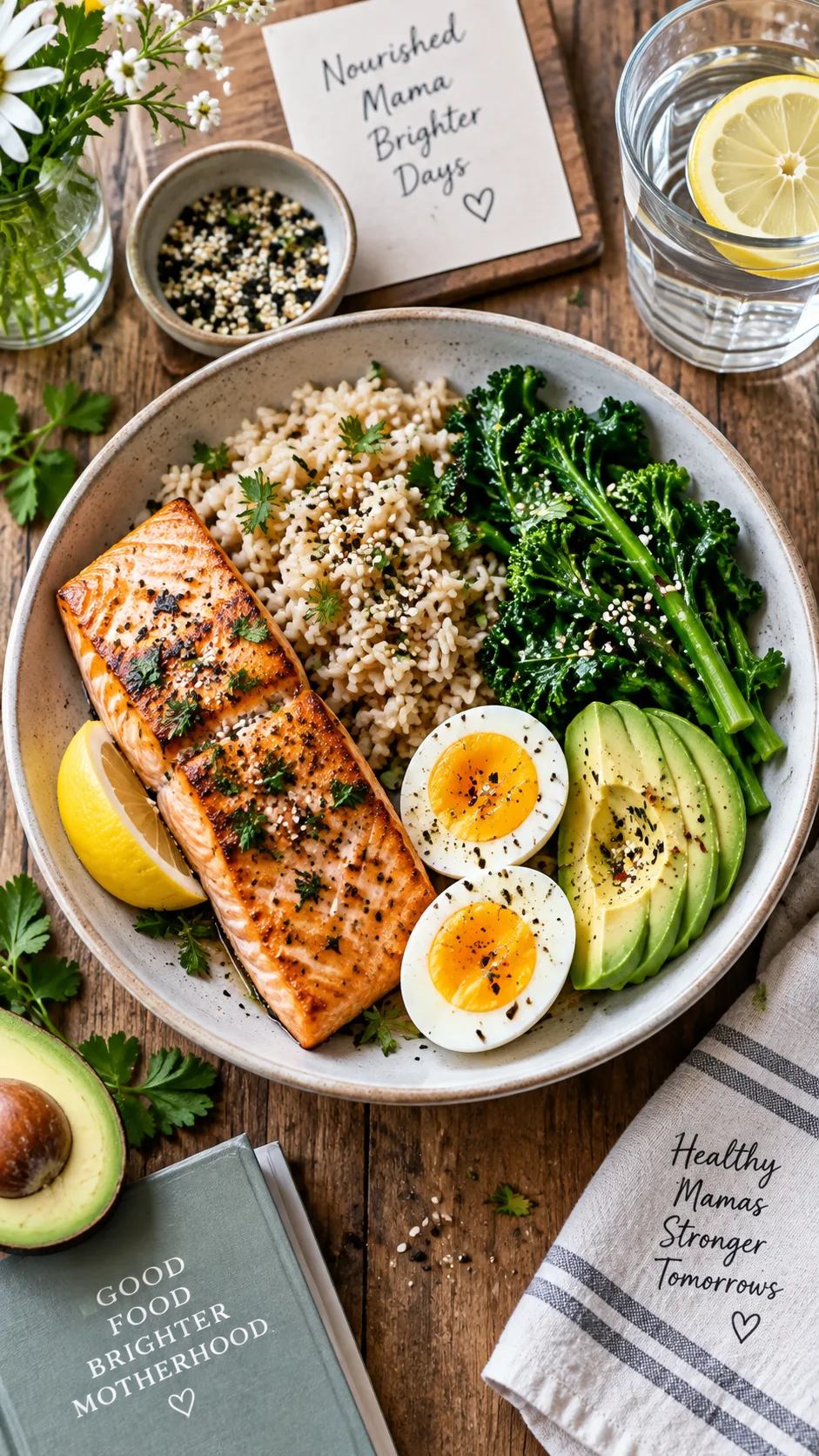
- Eat protein at every single meal. Aim for 1.1 to 1.5g per kg of body weight daily. Eggs, fish, chicken, beans, Greek yogurt, beef, moi moi.
- Include a real carb source at every meal. Oats, rice, yam, sweet potato, plantain, bread. Your brain and your milk both run on glucose.
- Add fat on purpose. Avocado, palm oil, olive oil, nuts, egg yolks, fatty fish. Fat makes food satisfying and feeds hormone production.
- Two fruits, two veg minimum. Colour variety beats perfection.
- Drink to thirst, then a bit more. Roughly 3 litres daily, but don’t force-chug: it won’t increase your supply, it’ll just send you to the toilet.
Five rules. You don’t need a macro tracking app.
The foods that genuinely earn their spot
Some foods get hyped. A few deliver. Here’s my honest ranking, based on nutrition science plus what real mums report.
1. Oats (the reigning champion)
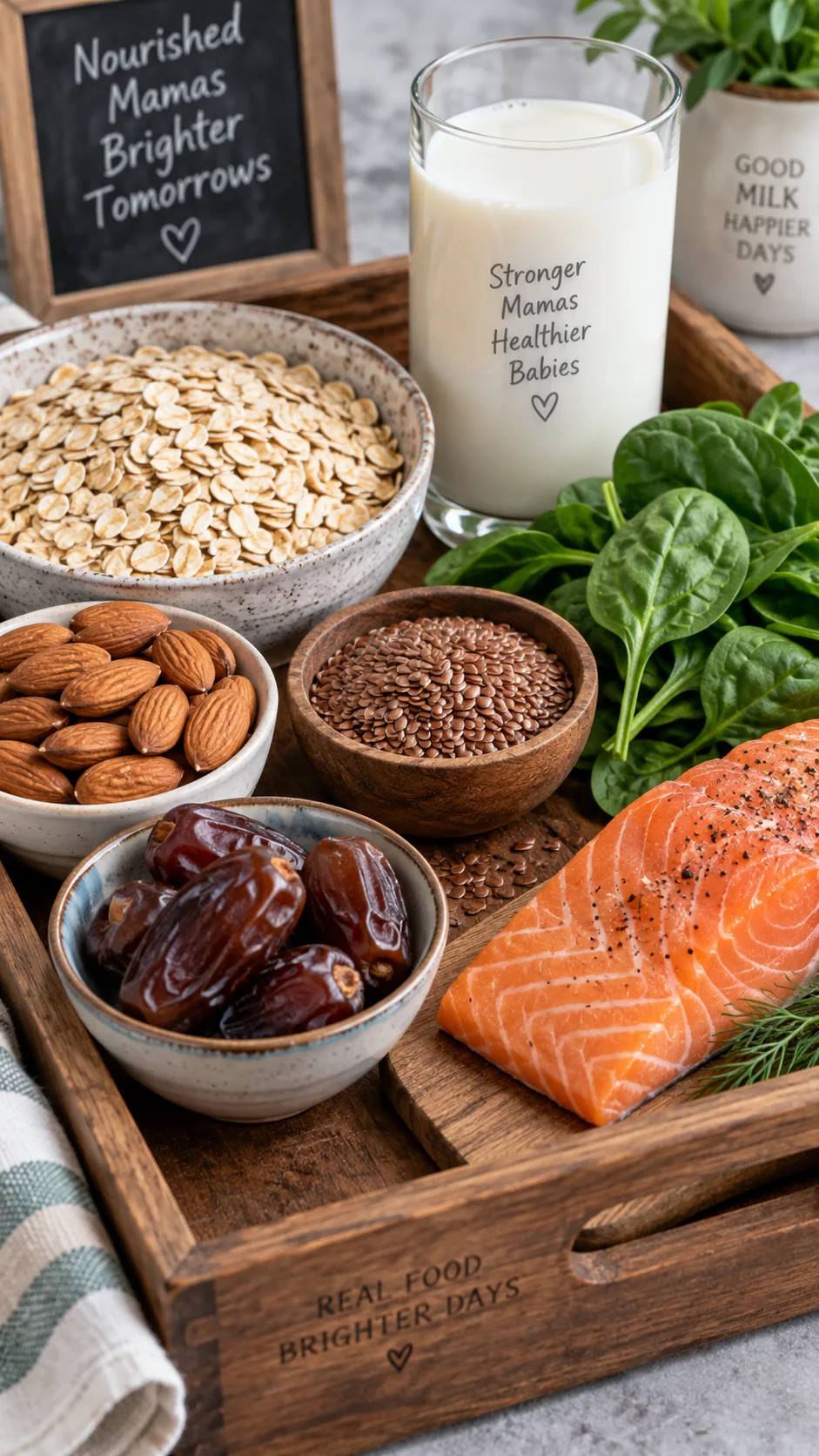
Oats turn up in every lactation recipe for a reason. They give you iron, beta-glucan fibre and slow-release carbs. Low iron tracks closely with low supply, and postpartum women lose a LOT of iron.
Is there a giant randomised trial proving oats boost milk? No. Does anecdotal evidence from thousands of mums count for something? IMO, yes. And oatmeal is cheap, filling, and takes four minutes.
2. Eggs
Choline, B12, protein, vitamin D, selenium. An egg is basically a prenatal vitamin with a shell. Choline passes straight into breast milk and feeds your baby’s brain development, and most women fall short on it.
3. Fatty fish (salmon, sardines, mackerel, titus)
The DHA in your milk mirrors what you eat. More omega-3s for you means more for your baby. The FDA recommends 2 to 3 servings of low-mercury fish weekly for breastfeeding women. Sardines are underrated and dirt cheap.
4. Dark leafy greens
Ugu, spinach, kale, efo. Folate, calcium, iron, vitamin K. Bonus: you can throw them into any soup or stew without thinking.
5. Legumes and beans
Protein, iron and fibre for almost no money. Beans, lentils, chickpeas, ewa agoyin. Worried about gas? The gas-producing compounds never reach your breast milk. That myth needs to die.
6. Full-fat dairy
Calcium, protein, iodine, vitamin B12. Whole milk and Greek yogurt both work beautifully as fast snacks. If you shop locally, read this guide to the best whole milk options in Nigeria before you grab the first tin on the shelf.
7. Nuts and seeds
Almonds, cashews, groundnuts, sesame, chia, flax. Calorie-dense, easy to eat one-handed, zero prep. Keep a jar next to your nursing chair. That single habit lifted my sister’s energy more than anything else she tried.
8. Hydrating fruits
Watermelon, oranges, pawpaw, berries. Water, vitamin C, potassium. The vitamin C also helps you absorb iron from your beans and greens, which is a nice two-for-one.
The galactagogue question: do herbs work?
Galactagogue. Fancy word for “thing that supposedly increases milk.” Here’s what the evidence says.
Fenugreek
The famous one. Studies land all over the place: some show modest increases, others show nothing at all. Side effects include maple-syrup-scented sweat (true story), gas, and blood sugar drops in diabetic mums. The NIH’s National Center for Complementary and Integrative Health calls the evidence limited.
Moringa
This one looks promising. Several small trials, mostly out of the Philippines, measured real increases in milk volume. Moringa also carries iron, calcium and vitamin A. If I had to pick one herb, I’d pick this one.
Fennel, blessed thistle, shatavari
Weak evidence across the board. Mostly harmless. Mostly expensive. Your call.
What about those “lactation cookies”?
They contain oats, flaxseed, brewer’s yeast and roughly 300 calories of sugar. Do they help? The calories help. The oats help. The chocolate chips help your mood. Just don’t expect a biscuit to perform a miracle.
One warning: stay away from detox and slimming teas entirely while nursing. Plenty of them contain senna and other laxatives that reach your baby. If you’re curious about what goes into them, this breakdown of popular flat tummy teas and their real effectiveness is worth five minutes of your time.
A realistic day of eating (no chef required)
Here’s what a solid nursing day looks like when you have roughly zero free time.
Breakfast (make it while the kettle boils)
- Oatmeal with whole milk, banana, groundnut butter, sprinkle of flaxseed
- OR two eggs, toast with avocado, orange juice
Mid-morning snack
- Greek yogurt with berries
- Handful of almonds and 2 dates
Lunch
- Rice or yam with a protein-heavy stew and plenty of greens
- OR jollof rice with grilled chicken and a side salad
Afternoon snack
- Boiled eggs and fruit
- Cheese and crackers
- Smoothie: milk, banana, oats, peanut butter, spinach
Dinner
- Fish with sweet potato and steamed vegetables
- OR a hearty soup like egusi with plenty of protein and leafy greens, which ticks every box on the nursing checklist
Night feed snack
- Glass of milk and a handful of nuts
- Leftover anything
Pro tip: batch-cook protein on Sunday. Boil a dozen eggs. Cook a big pot of stew. Future you, at 2 a.m., will thank present you.
The energy problem nobody warns you about
Ever wonder why 4 p.m. wrecks you even though you ate lunch? Blood sugar. Postpartum hormones, broken sleep and a carb-only meal add up to a crash you could set your watch by.
Here’s how you fix it.
Pair everything
Never eat a naked carb. Bread alone? Crash. Bread with eggs and avocado? Steady. Fruit alone? Crash. Fruit with nuts? Steady. This one rule beats any supplement on the shelf.
Eat every 3 hours
Long gaps drop your blood sugar and push your cortisol up. Nursing mums do better on smaller, frequent meals. Set alarms if you need to, because you will forget otherwise.
Watch your caffeine timing
Up to 300mg of caffeine a day counts as safe while breastfeeding, roughly two to three cups of coffee. But coffee after 2 p.m. ruins the quality of the little sleep you get. Trade-offs, always trade-offs.
Check your iron and vitamin D
Postpartum iron deficiency is wildly common, and it feels exactly like “new mum tiredness.” Ask your doctor for a ferritin test, not just haemoglobin. Same goes for vitamin D, since most of us run low. If you want food-based options, here’s a list of vitamin D-rich Nigerian foods worth adding to your rotation.

Supplements worth taking (and ones to skip)
Worth your money
- Vitamin D3. 4,000 to 6,400 IU daily lifts your milk’s vitamin D content enough to cover your baby. Talk the dose through with your doctor first.
- Omega-3 / DHA. 200 to 300mg daily if you don’t eat fish twice a week.
- Your prenatal. Keep taking it. It covers the gaps cheaply.
- Iron. Only if bloodwork confirms you need it. Don’t guess.
- B12. Non-negotiable if you eat vegan or mostly plant-based. Deficiency damages infant neurological development.
Save your money
- Pricey “lactation blends” with 12 herbs and no dosing transparency
- Collagen marketed as a milk booster (it’s just incomplete protein)
- Any fat burner, appetite suppressant or detox product. Full stop
Myths I’d happily delete from the internet
- “Drinking more water makes more milk.” Nope. Drink to thirst. Flooding yourself with water can nudge your supply down slightly.
- “Beans and cabbage give your baby gas.” Those compounds never cross into milk.
- “Spicy food upsets the baby.” Babies everywhere thrive on milk from mothers eating chili, curry and pepper soup daily.
- “You must avoid dairy, soy, nuts and eggs just in case.” Cut a food only if your baby reacts for real: blood in stool, severe eczema, persistent distress. Random elimination diets wreck your own nutrition.
- “Soft breasts mean low supply.” Your breasts soften around 6 to 12 weeks as your supply regulates. That’s normal and it’s good news.
The NHS has a genuinely useful page on low milk supply if you want a second, non-Instagram opinion.
What about losing the baby weight?
I know you’re thinking about it. So let’s be practical.
Wait until 8 to 12 weeks postpartum before you cut calories on purpose. Your supply needs to settle first. After that, a slow deficit of 300 to 500 calories below maintenance works fine for most women and rarely touches milk output.
Problems start when you lose more than 0.5 to 1kg per week. Go slower than you want to. Breastfeeding burns a chunk of calories on its own, so plenty of mums lose weight steadily without trying.
Once your doctor clears you for exercise, gentle movement beats aggressive cardio. A structured, sensible start like this beginner gym plan will do far more for you than punishing a still-healing body on a treadmill.
Quick wins you can start today
- Put a snack basket and water bottle next to your nursing spot. Tonight.
- Eat within 30 minutes of waking. It sets your energy for the whole day.
- Add a protein source to every snack. Not just carbs.
- Boil 8 eggs on Sunday. Twelve minutes of work, four days of food.
- Take your vitamin D. Same time daily, parked next to your toothbrush.
- Accept help with food. When someone asks what you need, say “a cooked meal.” Every time.
The bottom line
Your milk supply leans far more on frequent, effective milk removal than on any food you eat. But your energy, your mood, your recovery and your sanity all lean heavily on eating enough of the right stuff.
Eat real food. Hit your protein. Don’t fear carbs. Drink when thirsty. Take vitamin D. Skip the detox teas and the miracle powders. Call a lactation consultant if your supply genuinely worries you, because that’s the fix, not a cookie.
And here’s the thing I’d tell any friend at 3 a.m.: feeding yourself IS feeding your baby. Nobody hands out medals for martyrdom. Put the snack in your mouth.
FYI, run every supplement decision past your doctor or an IBCLC, especially if you have thyroid issues, diabetes, or you take medication. This article gives general guidance, not personal medical advice.