

It’s 6:47 p.m. on a Tuesday. You’re starving, your blood sugar has left the building, and the only thing in your fridge is half an onion and some questionable yogurt. Guess who orders pizza? You do. And then you spend three days trying to claw your way back into ketosis.
I’ve been there more times than I’d like to admit. The fix wasn’t more willpower. It was a fridge stocked with food I genuinely wanted to eat. That’s what keto meal prep really does. It removes the decision, and the decision is the part that breaks you.
So let’s build you a week of low-carb food that takes about 90 minutes to make, tastes like something you’d pay for, and keeps you in fat-burning mode without turning your life into a sad parade of dry chicken breast.
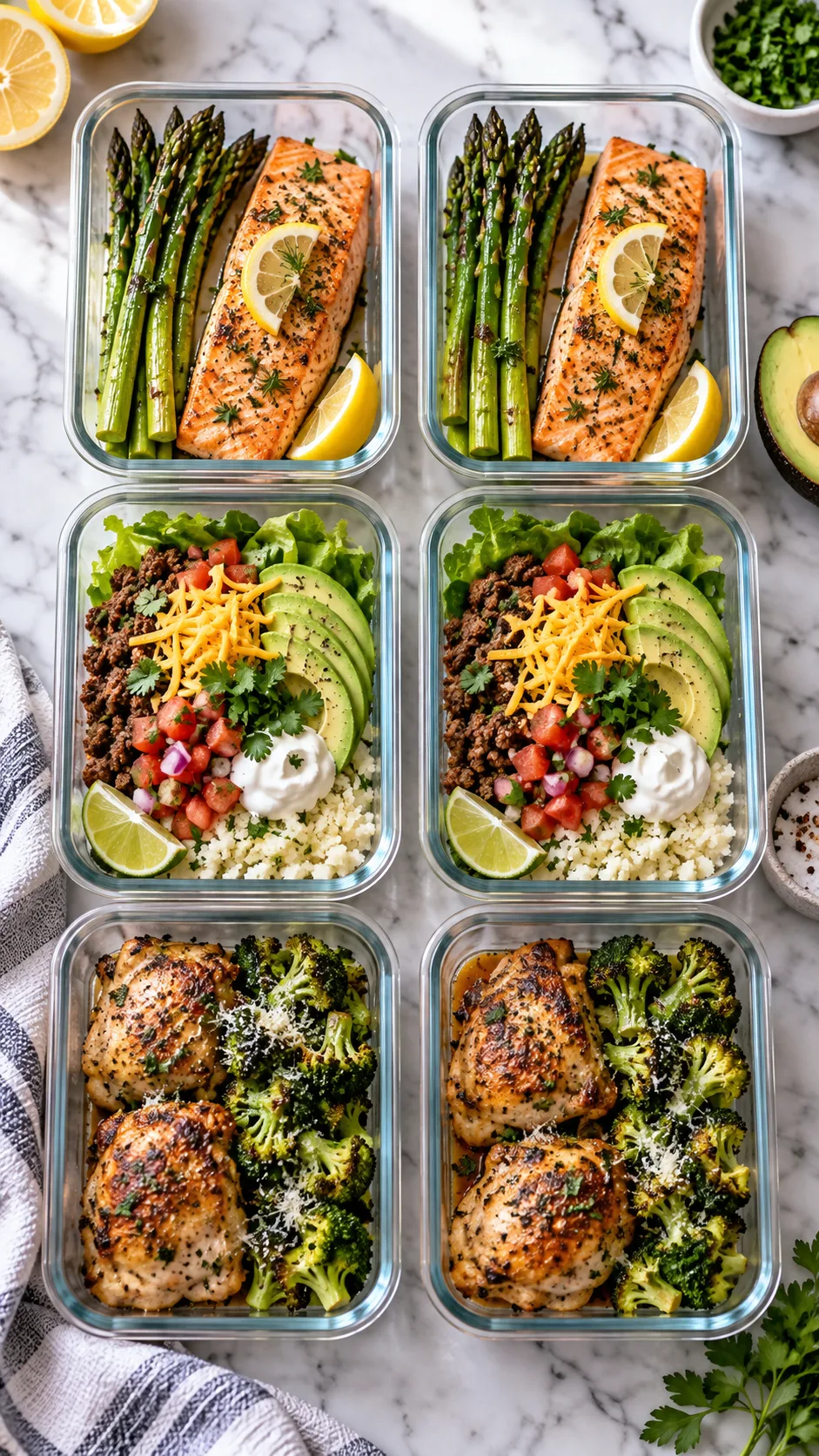
Why keto meal prep beats keto willpower
Ever wonder why keto feels easy for two weeks and then falls apart in week three? It’s not a character flaw. It’s the friction gap: the distance between “I’m hungry” and “there is keto food in my hand.”
When that gap is 25 minutes of cooking, your brain picks the 4-minute option every single time. Meal prep shrinks the gap to zero. Open fridge, grab container, eat. Ketosis survives because convenience finally works in your favor.
There’s a real physiological angle here too. Keto works partly because protein and fat fill you up. Research on high-protein, low-carb eating consistently finds reduced appetite and lower spontaneous calorie intake. You can read solid, non-hyped summaries at the Harvard T.H. Chan School of Public Health. But none of that matters if the food isn’t ready when your stomach files its complaint.
The three enemies of keto consistency
- Decision fatigue. By 6 p.m. your brain has made 200 choices and refuses to make another good one.
- Flavor boredom. Eat the same grilled chicken five days straight and you’ll be face-down in a bread basket by Thursday.
- Hidden carbs. Sauces, “sugar-free” snacks, and that innocent-looking marinade with 9g of sugar per tablespoon.
Good prep kills all three. Here’s how.
Step 1: Set your macros before you buy a single egg
Prepping without knowing your targets is like packing for a trip without knowing the destination. You’ll bring ski boots to Miami.
Standard ketogenic ratios land roughly here:
- Carbs: 20 to 50g net carbs per day (most people do well at 20 to 30g starting out)
- Protein: 0.7 to 1.0g per pound of lean body mass, and do NOT skimp here
- Fat: fills the rest of your calories, not an unlimited free pass
FYI, the biggest mistake I see? People under-eat protein because someone on the internet scared them about gluconeogenesis. Adequate protein protects muscle, keeps you full, and will not kick you out of ketosis at normal intakes. If you’re training hard, protein matters even more. I go deep on that in this guide on how to gain muscle for women.
Net carbs, quickly
Net carbs = total carbs minus fiber minus sugar alcohols (mostly). Erythritol and allulose get a full subtraction. Maltitol does not. It spikes glucose in plenty of people, and yes, it will also make your digestive system file a formal grievance. :/
Cross-check anything you’re unsure about on the USDA FoodData Central database instead of trusting a random blog’s numbers. Mine included.
Step 2: The 90-minute Sunday system
Here’s the part people get wrong. They try to cook seven complete, plated dinners, burn out by meal three, and swear off meal prep forever.
Don’t cook meals. Cook components. Then you mix and match all week like a slightly unhinged chef with a Lego set.
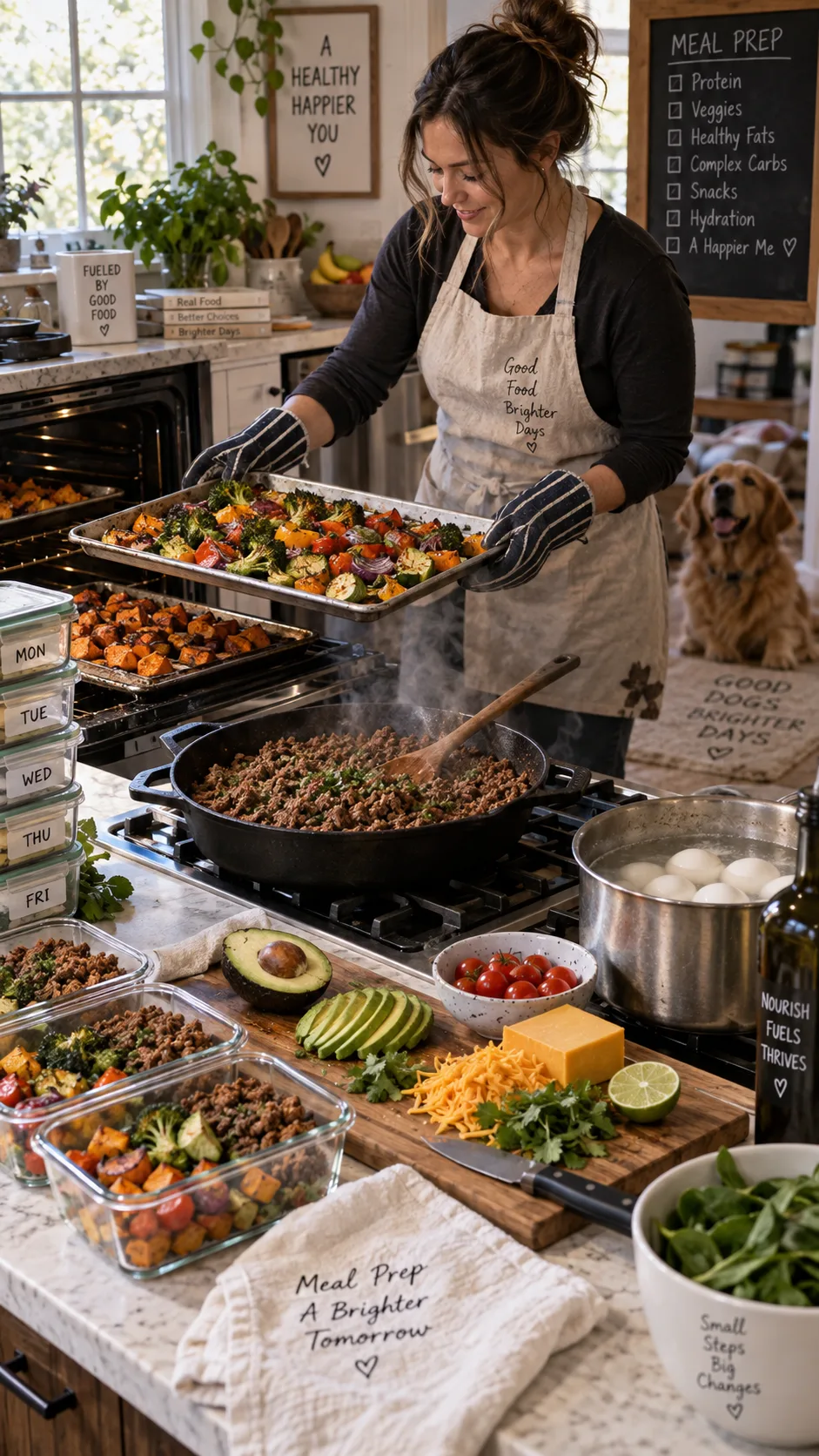
The component method (my exact routine)
- Two proteins, cooked in bulk. Say, 3 lbs of chicken thighs and 2 lbs of ground beef. Thighs, not breasts. Fat means flavor, which means you’ll eat it.
- Two roasted veg trays. Broccoli, cauliflower, zucchini, bell peppers, or Brussels sprouts. Olive oil, salt, 400°F, 25 minutes.
- One fresh element. Chopped cucumber, romaine, cherry tomatoes. Store dry, with a paper towel in the container.
- Two sauces. This is the whole game. Garlic aioli, chimichurri, spicy mayo, lemon-herb butter. Sauces turn three ingredients into nine meals.
- One protein snack. A dozen hard-boiled eggs, cheese crisps, or pre-portioned nuts.
Total active time? Around 90 minutes if you run the oven and stovetop at the same time. Put on a podcast. You’ll finish before you get annoyed.
The timeline that keeps you off the clock
- 0:00. Oven to 400°F. Eggs on to boil. Chop vegetables.
- 0:15. Veg trays into the oven. Start browning ground beef.
- 0:30. Beef done and seasoned. Sear chicken thighs, then finish them in the oven.
- 0:45. Blend sauces while everything cooks. Peel eggs.
- 1:00. Everything comes out. Cool 20 minutes on the counter.
- 1:20. Portion into containers. Label with the date. Done.
Never seal hot food. Steam condenses, containers sweat, and by Wednesday your chicken tastes like a swamp. Cool it first, always.
Step 3: A real 5-day keto meal prep plan
Here’s a week that doesn’t taste like punishment. Rough targets: 1,700 to 1,900 calories, under 30g net carbs daily. Scale portions to your own numbers.
Breakfasts (pick two, rotate)
- Baked egg muffins. 12 eggs, spinach, cheddar, chopped bacon. Muffin tin, 350°F, 22 min. About 1g net carb each.
- Chia pudding. Chia, full-fat coconut milk, vanilla, a few raspberries. Make Sunday, eat through Thursday.
- Cottage cheese with everything bagel seasoning and smoked salmon. Zero cooking, high protein, weirdly addictive.
If breakfast is your weak spot, most of the principles carry over from any solid routine. This breakdown of easy healthy breakfast meal prep ideas works with small keto swaps.
Lunches
- Monday: Chicken thigh, roasted broccoli, garlic aioli
- Tuesday: Beef taco bowl with ground beef, lettuce, cheese, sour cream, salsa (check the label)
- Wednesday: Chicken Caesar-ish salad with romaine, parmesan, chicken, sugar-free dressing
- Thursday: Beef, zucchini, and chimichurri over cauliflower rice
- Friday: Big chopped salad with everything left, topped with two boiled eggs
Dinners
- Salmon, asparagus, lemon butter. Cook fresh, 15 minutes, no excuses
- Sheet-pan sausage, peppers, and onions. One pan, 30 minutes
- Creamy garlic chicken with spinach. Heavy cream, parmesan, done in a skillet
- Bunless burgers with bacon and avocado. Friday night, non-negotiable
- Leftovers night. Every prep plan needs one. Pretending otherwise is fantasy.
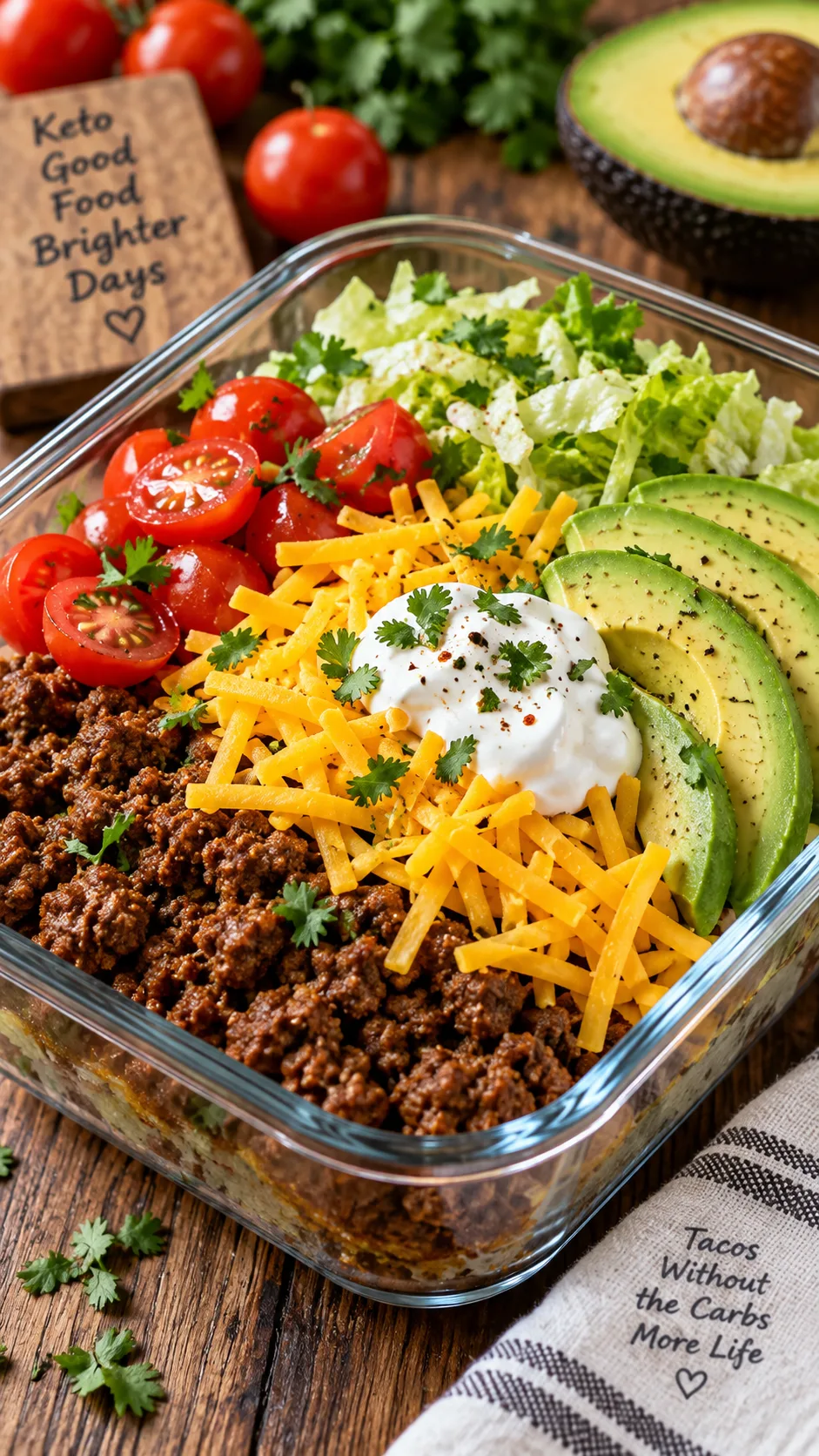
Step 4: Storage rules that stop food waste
Nothing kills momentum like opening a container and finding something that smells… opinionated. A few rules I learned the annoying way:
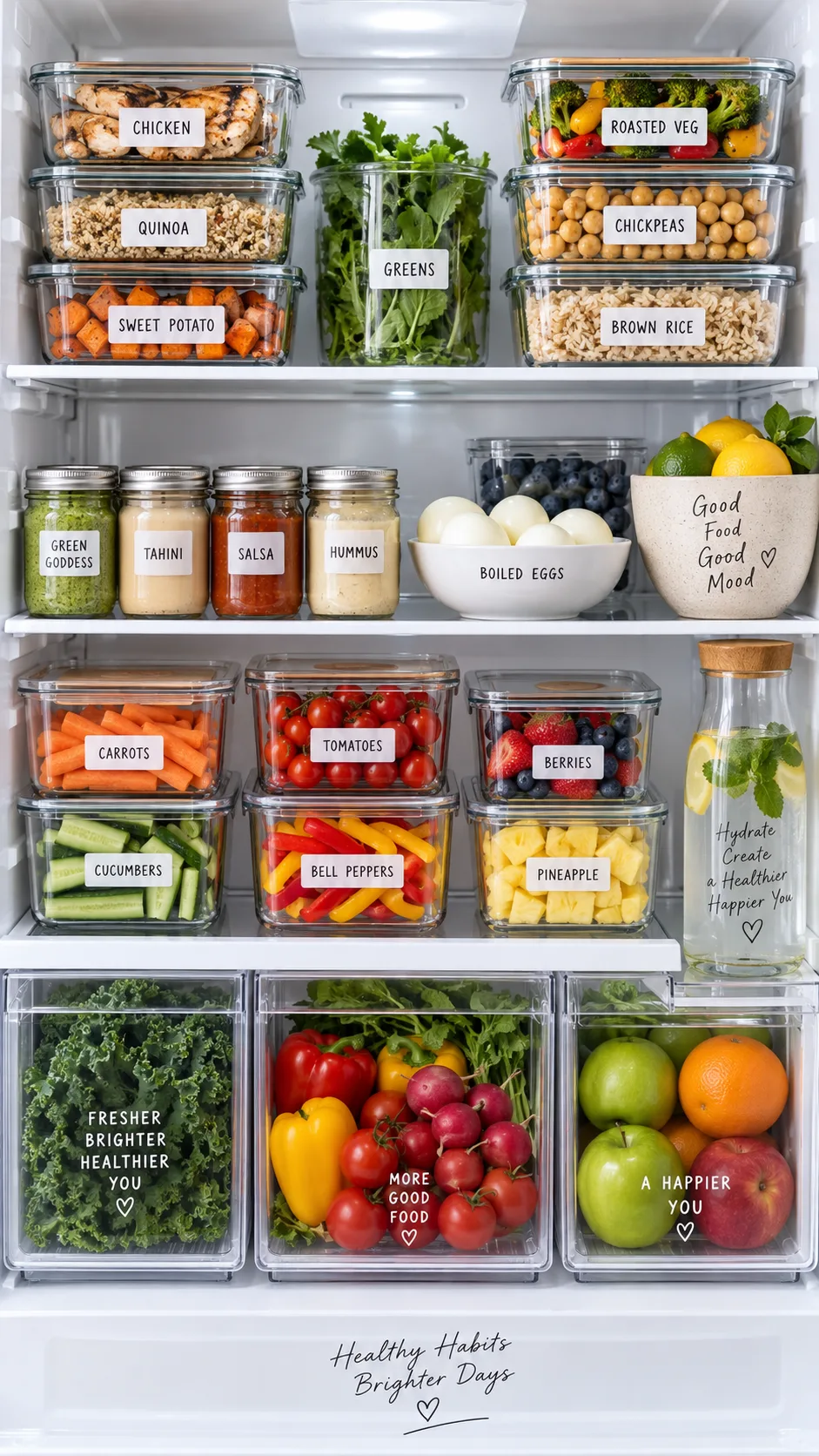
- Glass over plastic. Reheats better, doesn’t stain, doesn’t hold onto last week’s curry.
- Three to four days in the fridge, max, for cooked meat and vegetables. The USDA cold food storage guidelines back this up. After that, quality and safety both slide.
- Freeze days five through seven immediately. Don’t “see how it goes.” Freeze on Sunday, thaw Thursday night.
- Store sauces separately. Small 2 oz containers. Sogginess is the enemy of enthusiasm.
- Keep raw vegetables dry. Paper towel in the container, swapped midweek.
What freezes beautifully? Ground beef, chili, soups, egg muffins, meatballs, and cooked chicken thighs. What freezes terribly? Anything with mayo, cucumber, leafy greens, or a cream sauce you love. Learn the difference and you’ll waste almost nothing.
Step 5: Never feel deprived (the part everyone skips)
Deprivation is a flavor problem disguised as a discipline problem. Solve flavor and the “I miss carbs” feeling gets much, much quieter.
Build a sauce arsenal
- Garlic aioli: mayo, crushed garlic, lemon juice, salt
- Chimichurri: parsley, oregano, garlic, red wine vinegar, olive oil, chili flakes
- Spicy mayo: mayo plus sriracha (check the sugar) or a gochujang alternative
- Herb compound butter: softened butter, parsley, garlic, lemon zest, frozen in a log and sliced as needed
- Tahini-lemon drizzle: tahini, lemon, water, salt, cumin
Five sauces. Fifteen minutes total. They turn the SAME chicken into five different meals, and your brain genuinely buys it.
Use fat and salt like a professional, not a nervous dieter
Keto shifts your fluid and electrolyte balance fast, especially in the first two weeks. Low sodium is why people feel like a deflated balloon and blame “keto flu.” Salt your food properly. Eat foods rich in magnesium and potassium: avocado, spinach, salmon. The Cleveland Clinic’s overview of ketosis covers the adaptation period well.
Plan one meal you genuinely look forward to
Mine is Friday burgers. Bacon, sharp cheddar, avocado, garlic aioli, lettuce wrap. I think about it on Wednesday. That anticipation is a legitimate adherence tool, not a cheat. 🙂
The grocery list (screenshot this)
Proteins
- Chicken thighs, bone-in or boneless (3 lbs)
- Ground beef, 80/20 (2 lbs)
- Salmon fillets (2 to 4)
- Bacon and breakfast sausage
- Eggs (2 dozen, yes, two)
Fats
- Olive oil, butter, avocado oil
- Avocados (4 or 5, at staggered ripeness)
- Heavy cream, full-fat sour cream
- Hard cheeses: cheddar, parmesan
Vegetables
- Broccoli, cauliflower, zucchini, asparagus
- Spinach, romaine, bell peppers
- Garlic, onion (small amounts), fresh herbs
Extras
- Chia seeds, almond flour, psyllium husk
- Olives, pickles, pork rinds
- Coconut milk, sugar-free dressings
- Good salt, plus a magnesium supplement if needed
Curious how this compares to other low-carb approaches? The carnivore diet beginner’s playbook takes the same logic and strips it down even further. Worth a read if vegetables aren’t your love language.
Mistakes that sabotage keto meal prep
- Prepping 21 identical meals. You are not a machine. Variety is adherence.
- Ignoring protein. Fat bombs are not a meal plan. Muscle is expensive to lose and slow to rebuild.
- Trusting “keto” packaging. Read the label. Some keto bars have more net carbs than an apple, IMO a genuine scam.
- Skipping the cooling step. Hot food plus a sealed lid equals soggy regret.
- Forgetting electrolytes. Headaches, cramps, and fog usually mean sodium, not failure.
- Zero snacks. Keep boiled eggs, cheese, and olives ready. Hunger makes terrible decisions.
- Cooking every vegetable soft. Mushy broccoli has ended more keto attempts than any craving.
How to know you’re in ketosis
You don’t need to test daily. But early on, feedback helps you connect cause and effect.
- Blood ketone meter. The most accurate. Nutritional ketosis sits around 0.5 to 3.0 mmol/L.
- Urine strips. Cheap, fine for week one, useless after a few weeks once you adapt.
- Breath meters. Reusable, decent, mid-range accuracy.
Honest signs that cost nothing: steadier energy, appetite that quiets down, fewer 3 p.m. crashes, and that slightly metallic taste in week one. Numbers are data, not a grade. If you feel great and your clothes fit better, the strips don’t get a vote.
One serious note on trustworthiness: if you take medication for diabetes or blood pressure, talk to your doctor before you start. Keto can lower blood glucose and blood pressure quickly, and dosages often need adjusting. That’s not a disclaimer for legal cover. People genuinely get caught out by it.
Make it yours: cultural swaps that keep it interesting
Keto doesn’t require a specific cuisine. It requires a carb ceiling. Swap freely:
- Mexican: carnitas, fajita veg, guacamole, cheese, no tortilla
- Thai: coconut curry with chicken over cauliflower rice
- Mediterranean: lamb meatballs, tzatziki, olives, cucumber
- West African: pepper soup, grilled fish, and low-carb soups with leafy greens instead of swallow
- Indian: butter chicken (watch the sugar), saag paneer, no rice or naan
If you cook Nigerian food regularly, you’ve got more keto-compatible options than you think. Rich, oil-based soups fit beautifully once you drop the starch. Even something like a proper banga soup works when you pair it with protein instead of pounded yam.
Final thoughts: prep your week, protect your progress
Here’s the whole thing in one breath: cook components, not complete meals. Build sauces. Cool food before sealing it. Eat enough protein. Salt your food. Freeze days five through seven.
Keto doesn’t fail because the science is shaky. It fails at 6:47 p.m. on a Tuesday, when the fridge is empty and your brain is tired. You already know how to fix that now.
Pick a 90-minute window this weekend. Cook two proteins, two veg trays, and two sauces. That’s it, and please don’t overbuild it on attempt one. Do that for three weeks and meal prep stops being a project. It becomes the reason you finally stopped starting over.
Now go buy the eggs. Two dozen. I wasn’t joking.