

Imagine this: it is Friday night, your kitchen counter holds a fresh pizza, and you take a massive slice without feeling an ounce of guilt. You do not panic. You do not promise yourself two hours of brutal cardio tomorrow morning to burn it off.
Instead, you sit down, enjoy your food, and still step on the scale lighter by Sunday morning. It sounds like an infomercial claim, but basic metabolic math backs it up.
The 80/20 diet rule turns that balance into a routine you can maintain. Most commercial diets force you into a corner of boiled chicken breast, steamed vegetables, and miserable social outings. They demand perfection, and unrealistic perfection always backfires.
This guide explains how to flip the script on standard dieting. You will learn the exact framework that lets you drop body fat while keeping pizza, burgers, and chocolate firmly on your weekly menu.
What exactly is the 80/20 diet rule?
Italian economist Vilfredo Pareto first spotted a curious pattern in 1896: eighty percent of consequences come from twenty percent of causes. Decades later, nutrition coaches adapted this ratio into an eating philosophy that works for real life.
The concept runs on clean logic:
- The 80 Percent: You fuel your body with nutrient-rich, unprocessed whole foods that support your digestion and maintain steady daily energy.
- The 20 Percent: You allocate the remaining fifth of your intake to fun food, such as pizza, gelato, craft beer, or pastries.
This split eliminates absolute deprivation. When you tell your brain that you can never touch garlic bread again, your brain obsesses over garlic bread at all hours. The 80/20 structure removes that forbidden food mentality entirely.
Researchers at the Harvard T.H. Chan School of Public Health consistently stress long-term dietary adherence over strict dogmatism. You stick to an eating pattern only when you genuinely look forward to your meals.
The science: how pizza and fat loss coexist
Your stomach does not contain a sensor that labels foods as good or evil. Your body runs on energy balance. When you burn more calories than you consume across an entire week, your body metabolizes stored body fat for fuel.
Take your weekly calorie targets as an example. If you need 2,000 calories a day to maintain your current weight, your weekly maintenance budget sits at 14,000 calories.
To lose roughly one pound of fat per week, you create a modest deficit by eating 1,500 to 1,600 calories each day. That gives you an operating budget of roughly 11,000 calories across seven days.
Now, examine how the 80/20 distribution divides that energy:
- 8,800 Calories (80%): You fill these calories with lean proteins, fiber, micronutrients, complex carbohydrates, and quality fats.
- 2,200 Calories (20%): You spend this remaining calorie bank entirely on your favorite comfort foods throughout the week.
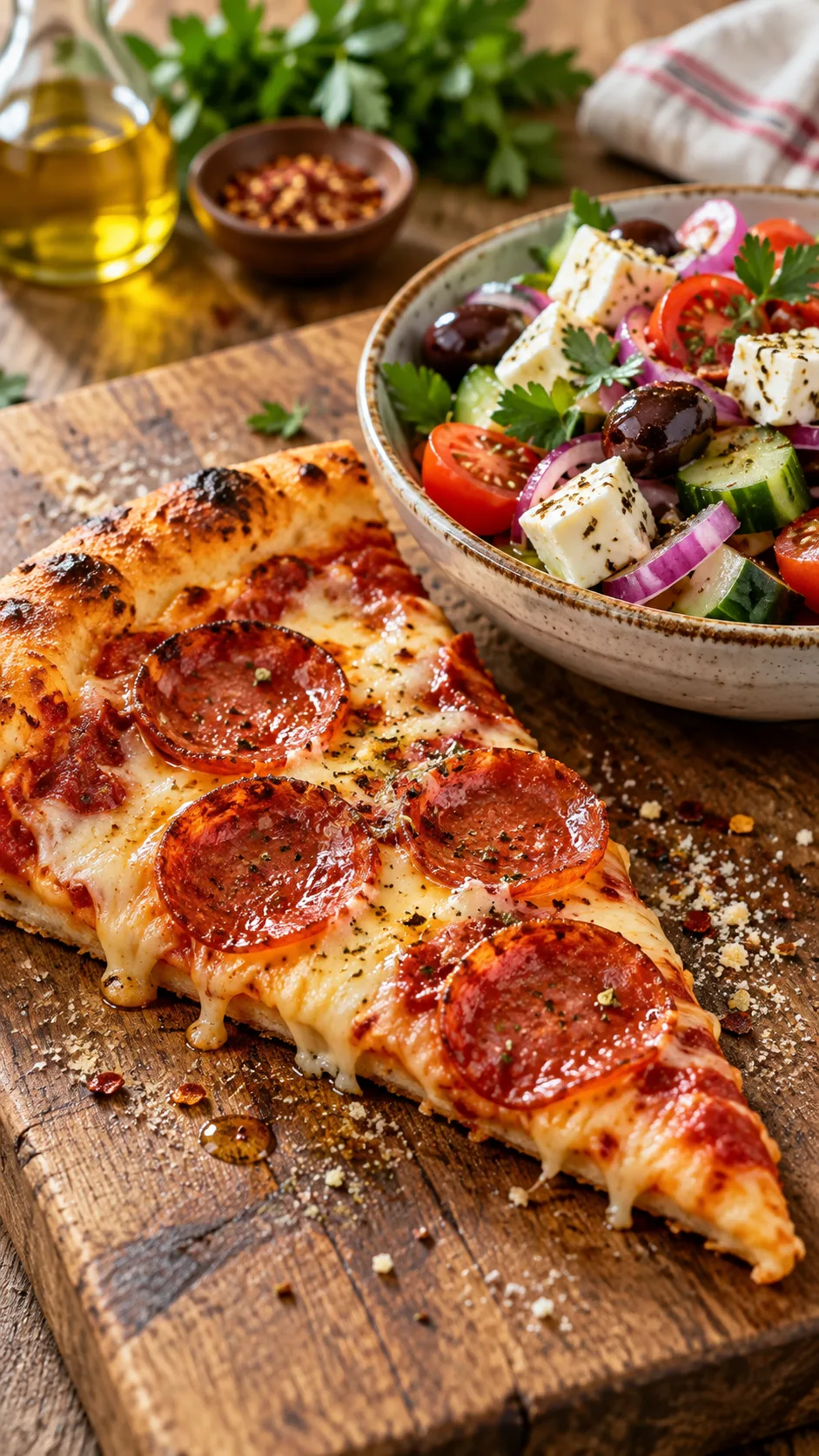
Two large slices of thin-crust pepperoni pizza usually add up to about 650 calories. You can eat those two slices on Friday night and still finish the week several hundred calories below your fat-loss ceiling.
This flexibility preserves your peace of mind. If you prefer timed eating windows, you can combine this system with the fasting diet intermittent schedule to save more of your daily calorie allowance for larger dinners.
Why strict diets fail so consistently
Think about the typical diet routine: you eat like a monk from Monday to Thursday, and then you empty the kitchen cabinets on Friday night. Most people know that frustration intimately.
Extreme diets fail because they clash with basic human psychology and biological survival mechanisms. When you cut calories too sharply or ban entire food categories, your brain triggers survival alarms. Your body spikes ghrelin (the hunger hormone) and reduces leptin (the fullness hormone).
Clinical data published by the National Institutes of Health shows that severe restriction reliably predicts weight regain down the road. Harsh rules breed an all-or-nothing trap: eat one cookie at an office party, declare the diet ruined, and finish the night with a pint of ice cream and delivery food.
The 80/20 rule breaks that cycle. When you deliberately plan your indulgences, a slice of pizza represents part of your weekly plan rather than a lapse in self-control.
The 80 percent: building your nutritional foundation
Before you run to your favorite pizzeria, consider the workhorse of this equation: the 80 percent. The rule does not give you license to eat junk food around the clock.
Most of your food choices must accomplish three specific tasks:
- Keep you full so you never battle constant hunger.
- Supply vitamins and minerals to support hormone production and daily energy.
- Provide enough protein to protect lean muscle mass while your body sheds fat.
Core foods for the 80 percent
Build your daily meals around these whole foods:
- Lean Proteins: Chicken breasts, turkey, whole eggs, salmon, sirloin, tofu, and plain Greek yogurt. Protein demands more energy to digest than fats or carbohydrates, which raises your daily energy expenditure.
- High-Volume Vegetables: Broccoli, spinach, sweet peppers, zucchini, cauliflower, and green beans. These fill your stomach without racking up high calorie counts.
- Complex Carbohydrates: Sweet potatoes, brown rice, rolled oats, quinoa, berries, and apples. These replenish muscle glycogen and support steady blood sugar.
- Healthy Fats: Extra virgin olive oil, avocados, almonds, walnuts, and pumpkin seeds.
If you enjoy international recipes, drawing ideas from structured whole-food meal plans gives you plenty of tasty ways to hit your 80 percent goal.
The 20 percent: how to eat pizza without derailing progress
Fitting pizza, fries, or chocolate into your routine requires simple tactics. You can follow these four practical habits to enjoy your treats while staying inside your calorie targets:
1. Front-load your protein and fiber. On days when you plan a pizza dinner, eat lean protein sources and large vegetable salads for breakfast and lunch. By dinner time, you have already hit your protein baseline and blunted sharp hunger pangs.
2. Pick quality over mindless volume. Skip cold buffet pizza that tastes like cardboard. Order two hot slices from an artisanal wood-fired pizzeria that uses ingredients you love. Sit down and savor the food instead of swallowing it mindlessly while looking at your phone.
3. Add a generous salad to your plate. Fill half your dinner plate with dark greens, sliced cucumbers, and a splash of vinaigrette. Finish the salad first, then eat your pizza. The fiber fills your stomach, so two slices satisfy you completely.
4. Remove the phrase cheat meal from your vocabulary. That label implies guilt and moral failure. Call it your 20-percent meal instead. You planned it, you accounted for the calories, and you enjoyed it responsibly.

A realistic 7-day 80/20 meal template
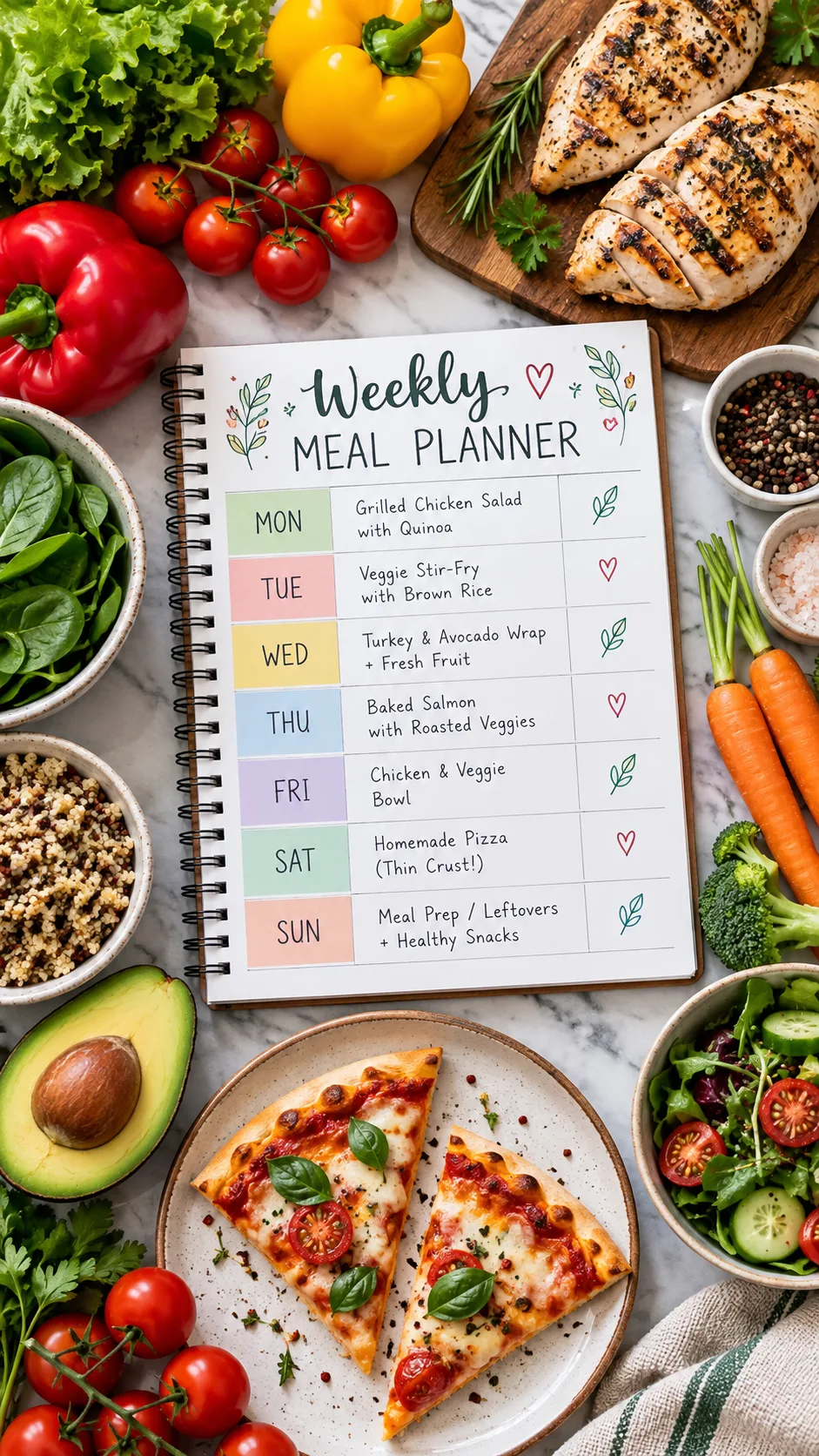
Here is how a balanced week looks in everyday life, showing how the numbers translate onto an actual plate:
Monday through Thursday: the clean engine
- Breakfast: Scrambled eggs with baby spinach and a slice of toasted sourdough.
- Lunch: Chicken salad bowl with mixed greens, avocado slices, black beans, and olive oil dressing.
- Afternoon Snack: Plain Greek yogurt with fresh blueberries.
- Dinner: Pan-roasted salmon fillet, steamed asparagus, and baked sweet potato wedges.
Friday: the pizza night transition
- Breakfast: Whey protein shake blended with unsweetened almond milk, spinach, and chia seeds.
- Lunch: Sliced turkey breast wrapped in romaine leaves with bell peppers and cottage cheese.
- Dinner (The 20%): Two large slices of thin-crust pepperoni pizza with a large side bowl of dressed arugula.
Saturday: social dining
- Breakfast: Egg omelet with sliced mushrooms, onions, and turkey bacon.
- Lunch: Warm quinoa bowl with grilled chicken strips and roasted broccoli.
- Evening (The 20%): A dinner out with friends featuring a pub burger, a pint of beer, and a side of grilled vegetables.
Sunday: the weekly reset
- Breakfast: Warm oatmeal stirred with egg whites for extra protein, topped with cinnamon and chopped apples.
- Lunch: Warm lentil soup paired with a crisp garden salad.
- Dinner: Extra-lean ground beef stir-fry with peppers, onions, and jasmine rice.
This layout mirrors ordinary life. You do not decline dinner invitations or isolate yourself from family. You maintain your social connections while your waistline drops.
4 mistakes that ruin the 80/20 diet
The 80/20 rule gives you flexibility, but you must avoid several common pitfalls that derail newcomers:
1. Turning the 20 percent into a 48-hour binge
Some people treat the 20 percent allocation as permission to eat anything in sight from Friday evening until Sunday night. A two-day free-for-all easily wipes out your entire weekly calorie deficit. Keep your treats intentional and portioned.
2. Guessing your portions instead of measuring
Many dieters believe they follow an 80/20 split when their plates actually look closer to 50/50. Free-poured salad dressings, heavy coffee creamers, and handfuls of mixed nuts add hundreds of uncounted calories. Weigh or track your portions for two weeks so you learn your true baseline intake.
3. Skipping protein inside the 80 percent
If your clean days rely heavily on fruit smoothies, white bagels, and granola bars, you will deal with constant sugar crashes. Place a quality protein source at the center of every single whole-food meal.
4. Relying on supplement shortcuts
Fat burners and detox teas cannot override excess calories. Many commercial over-hyped weight loss products waste your money while delivering zero results. Rely on whole foods, adequate protein, and consistent habits instead.
The psychological power of flexible eating
Flexible nutrition works better than rigid meal plans over the long haul because of how it treats your mind.
Rigid rules drain your willpower. Every time you decline a coworker’s birthday treat or refuse pizza at a family movie night, your brain expends mental energy. Over time, that willpower reservoir empties out, which triggers intense binge eating.
The 80/20 principle preserves your mental reserves. It reminds you that individual foods lack the power to make you gain fat overnight. Your overall calorie balance across weeks and months dictates your body weight.
Guidelines from the Centers for Disease Control and Prevention (CDC) confirm that people who make steady, flexible adjustments maintain their weight loss far longer than those who rely on severe crash diets.
When you remove guilt from eating, you take charge of your choices. You eat pizza because you made a conscious decision to enjoy it, not because an overwhelming craving broke your resolve.
Frequently asked questions about the 80/20 rule
Can I eat pizza multiple times a week on the 80/20 diet?
Yes. Your weekly calorie deficit matters more than the specific days you eat treats. If you want one slice on Tuesday and another on Friday, fit both into your 20 percent allowance while hitting your daily protein targets.
Do I need to count every calorie forever?
No. Tracking calories serves as a temporary learning tool when you begin. Once you understand portion sizes and your body’s hunger cues, you can eyeball your meals and maintain your weight through intuitive eating.
What happens if an 80/20 day turns into a 50/50 day?
Stay calm and avoid extreme compensation the next morning. One high-calorie day cannot erase weeks of steady fat loss. Drink water, return directly to your whole-food routine at your next meal, and continue with your week.
Does the 80/20 rule work well for beginners?
Beginners often succeed with this approach faster than with traditional plans because it introduces no extreme disruptions. You do not throw out your groceries or cook separate meals from the rest of your family; you simply adjust the balance on your plate.
Your game plan to start today
Put this framework into action with four direct steps:
- Calculate your daily targets: Find your maintenance calories with an online calculator and subtract 300 to 500 calories for your daily fat-loss target.
- Stock your kitchen for the 80 percent: Buy chicken breast, eggs, dark greens, sweet potatoes, apples, and olive oil on your next grocery run.
- Pick your weekly treat: Decide when you want your favorite meal (whether that means two slices of pizza, a burger, or fresh bakery cookies) and enjoy it without second-guessing yourself.
- Prioritize consistency over perfection: Focus on steady execution across months rather than flawless compliance over a few days.
Fat loss does not require endless restriction. Build your habits on the 80/20 rule, enjoy your favorite foods, and create a routine you can live with for decades.