

You woke up stiff again. Your knees creak like an old wooden staircase, your face looks puffier than it should, and by 3pm your brain quietly checks out of the meeting. Sound familiar?
Chronic inflammation does that. And every “anti-inflammatory diet” article tells you to sip golden milk at sunrise and marinate wild salmon overnight, which works beautifully if you happen to live inside a wellness magazine. You don’t. You have a job, maybe kids, and a fridge that currently contains half an onion and hope.
So let’s build a low inflammation diet plan that survives real life: real schedules, real budgets, real takeaway temptations. You will not need a 6am ritual.
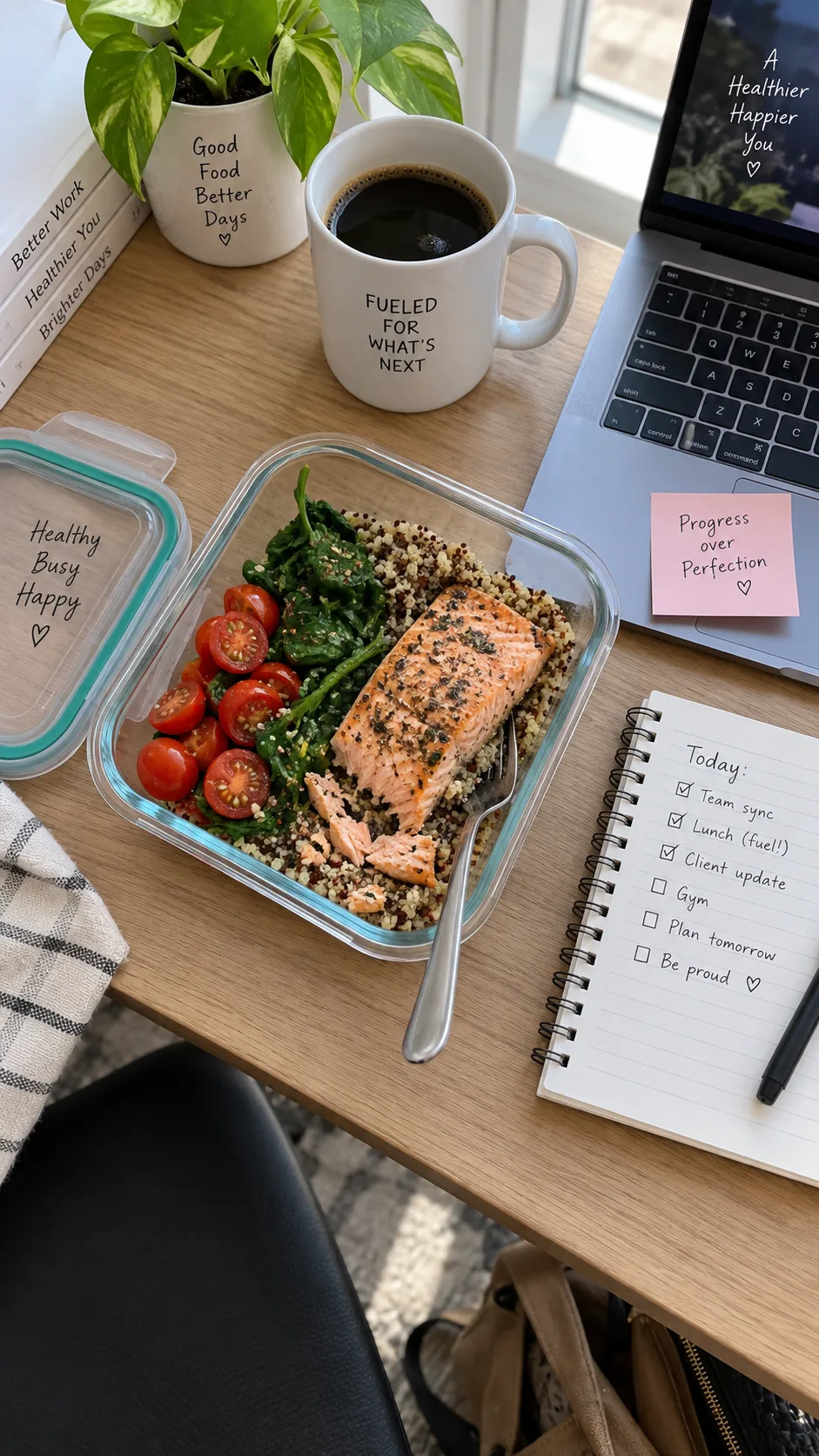
First, what is inflammation doing to you?
Your immune system fires inflammation on purpose. You cut your finger, the area swells, white blood cells rush in, and you heal. That’s acute inflammation, the good kind, the kind that saves your life.
Chronic low-grade inflammation plays a different game. It simmers quietly for years, nudged along by poor sleep, stress, belly fat, smoking, and a diet built on ultra-processed food. Nobody feels a dramatic symptom. You just feel… off.
Researchers link that slow burn to heart disease, type 2 diabetes, fatty liver, joint pain, and depression. Harvard Health has covered this connection extensively, and the Arthritis Foundation recommends eating patterns that calm it down rather than feed it.
Signs your body might be running hot
- Morning stiffness that takes 20+ minutes to shake off
- Persistent bloating or unpredictable digestion
- Afternoon energy crashes that coffee barely dents
- Skin flare-ups: acne, eczema, random redness
- Brain fog and poor focus most days
- Slow recovery after workouts or minor illness
None of these prove anything on their own. You should still see a doctor for ongoing symptoms, because food fixes a lot but it never diagnoses anything.
The core rule: eat more, not less
Here’s what surprised me most when I cleaned up my own eating. The wins came from additions, not restrictions. I didn’t ban bread. I added two fists of vegetables to lunch and suddenly cared less about the bread.
Restriction burns willpower, and busy people run low on willpower by Tuesday afternoon. Addition costs almost nothing. Ever noticed how a “no” list feels exhausting while a “yes” list feels like shopping?
Your anti-inflammatory yes list
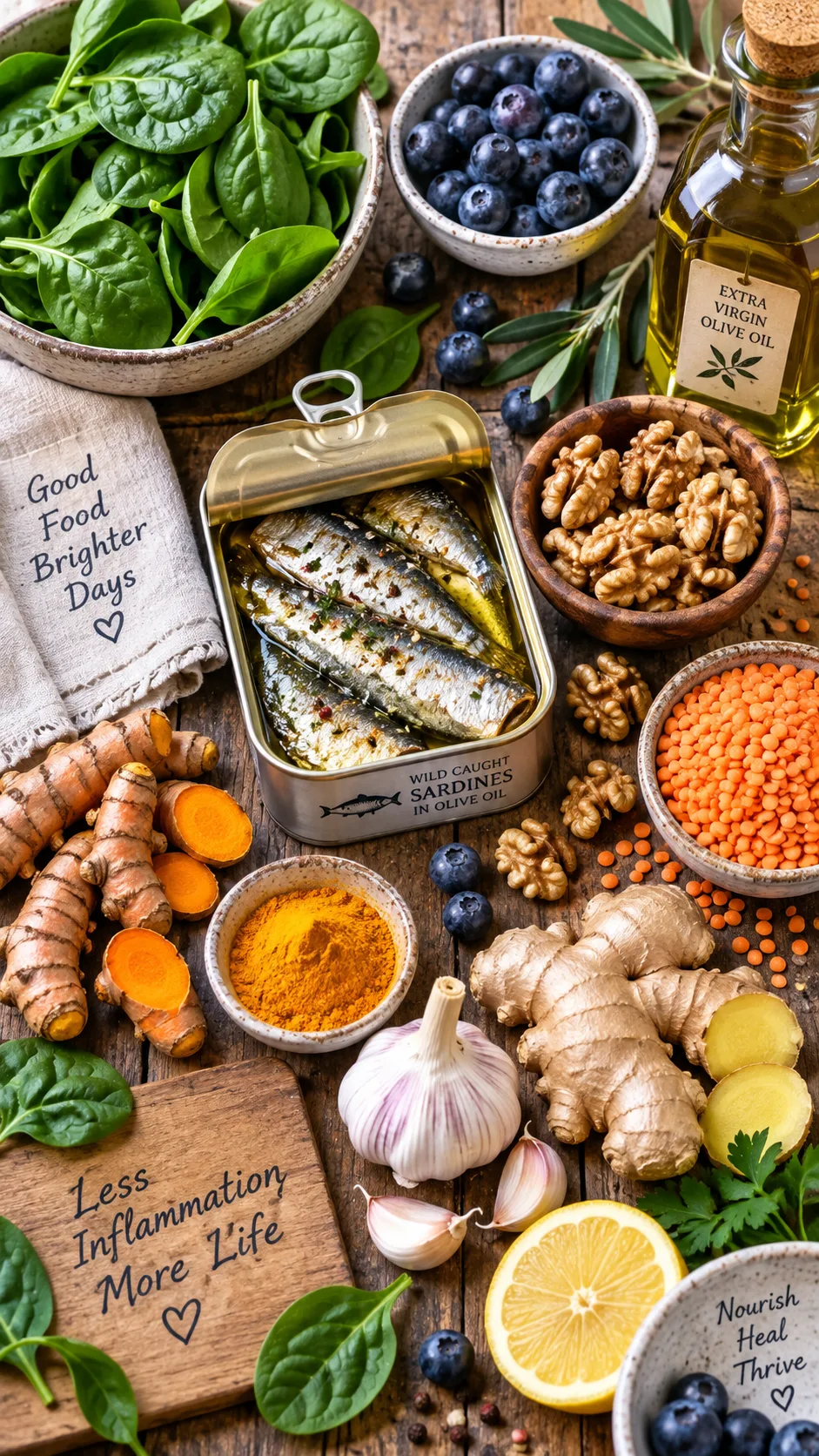
- Fatty fish: salmon, sardines, mackerel, herring. Omega-3s directly reduce inflammatory markers. Tinned counts. Tinned counts a LOT.
- Leafy greens and cruciferous veg: spinach, kale, broccoli, cabbage, ugu, bitter leaf.
- Berries and colourful fruit: polyphenols do the heavy lifting here. Frozen berries work perfectly and cost less.
- Extra virgin olive oil: oleocanthal behaves a little like ibuprofen in the body. Use it generously and raw.
- Nuts and seeds: walnuts, almonds, chia, flax, pumpkin seeds.
- Beans and lentils: fibre feeds gut bacteria, and your gut bacteria basically run your immune system.
- Whole grains: oats, brown rice, quinoa, whole wheat, millet.
- Herbs and spices: turmeric, ginger, garlic, cinnamon, rosemary. Cheap, potent, no prep time.
- Fermented foods: yoghurt, kefir, kimchi, sauerkraut.
- Green tea and real coffee: yes, coffee belongs on the good list. You’re welcome.
The stuff that fans the flames
I won’t hand you a forbidden-foods list carved in stone, because that’s how people quit by Thursday. But some things genuinely stoke inflammation, and you should know them.
- Ultra-processed snacks and fast food: the biggest offender by volume, not by any single ingredient
- Sugary drinks: soda, energy drinks, sweetened juices, the 4pm caramel latte situation
- Refined carbs eaten alone: white bread, pastries, biscuits
- Processed meats: sausage, bacon, deli meat as a daily habit
- Excess alcohol: the dose makes the poison here
- Repeatedly reheated frying oils: a real issue in street food and home deep-frying alike
Notice what’s missing? Gluten and dairy. Unless you have coeliac disease, a genuine allergy, or a personal reaction you’ve tracked, the evidence doesn’t support cutting them for everyone. Don’t let the internet delete food groups from your life for free.
The 80/20 framework that survives a busy week
Perfection fails. Systems work. I run an 80/20 approach: eat anti-inflammatory 80% of the time, then enjoy jollof at the party without a single guilty thought.
Your body responds to your average, not your exceptions. One pizza does not undo a week of sardines and spinach. One salad does not undo a week of pizza either, and that part stings a bit.
The three-anchor method
Instead of planning 21 meals, anchor three habits. That’s the whole plan.
- Anchor 1, protein plus plant at every meal. Ask one question before you eat: where’s my protein and where’s my vegetable? If you can answer both, you’re winning.
- Anchor 2, omega-3s three times a week. Fatty fish on Monday, Wednesday, Saturday. Set a repeating phone reminder if you must.
- Anchor 3, swap the drink, not the meal. Sugary drinks deliver the fastest inflammatory hit for the least satisfaction. Kill those first.
That’s it. Three anchors beat a 47-item rulebook every single time.
A real 7-day low inflammation meal plan (for people with zero free time)
Every meal below takes under 20 minutes or comes from a batch you already made. Nothing requires a spiraliser. Nothing requires you to “activate” almonds.
Monday
- Breakfast: Overnight oats with chia, frozen berries, cinnamon, spoon of peanut butter
- Lunch: Tinned salmon on wholegrain toast, rocket, olive oil, lemon
- Dinner: Sheet-pan chicken thighs, broccoli, red onion, sweet potato. One tray, one wash-up
- Snack: Walnuts and an orange
Tuesday
- Breakfast: Greek yoghurt, ground flax, banana, drizzle of honey
- Lunch: Leftover sheet-pan dinner over brown rice
- Dinner: Lentil and tomato stew with spinach stirred in at the end, served with wholegrain bread
- Snack: Hummus and carrot sticks
Wednesday
- Breakfast: Two eggs scrambled with spinach and turmeric, avocado on the side
- Lunch: Big bowl: leftover lentil stew, quinoa, cucumber, olive oil
- Dinner: Mackerel pan-fried in olive oil, garlic sautéed cabbage, boiled yam or potatoes
- Snack: Dark chocolate (70%+) and green tea
Thursday
- Breakfast: Smoothie with frozen berries, spinach, kefir, chia, half a banana
- Lunch: Chickpea salad with feta, tomato, red onion, parsley, olive oil
- Dinner: Stir-fry with beef strips, mixed peppers, ginger, garlic, brown rice
- Snack: Pumpkin seeds and an apple
Friday
- Breakfast: Overnight oats again (the batch you made Sunday)
- Lunch: Sardines mashed with lemon and chilli over wholegrain crackers, side salad
- Dinner: Your 80/20 meal. Order the thing. Eat it slowly. Enjoy it fully.
Saturday
- Breakfast: Shakshuka, eggs poached in spiced tomato sauce, wholegrain bread
- Lunch: Leftovers or a loaded soup
- Dinner: Grilled salmon, roasted vegetables, tahini drizzle
Sunday
- Breakfast: Yoghurt bowl with berries, nuts, cinnamon
- Lunch: Bean and vegetable soup from the freezer
- Dinner: Roast chicken with a tray of vegetables. Leftovers become Monday’s lunch
Want the same structure with different goals? The same batch-cooking logic drives these easy meal prep ideas, and if you eat beef more often than fish, these ground beef meal prep recipes slot in neatly with extra vegetables.
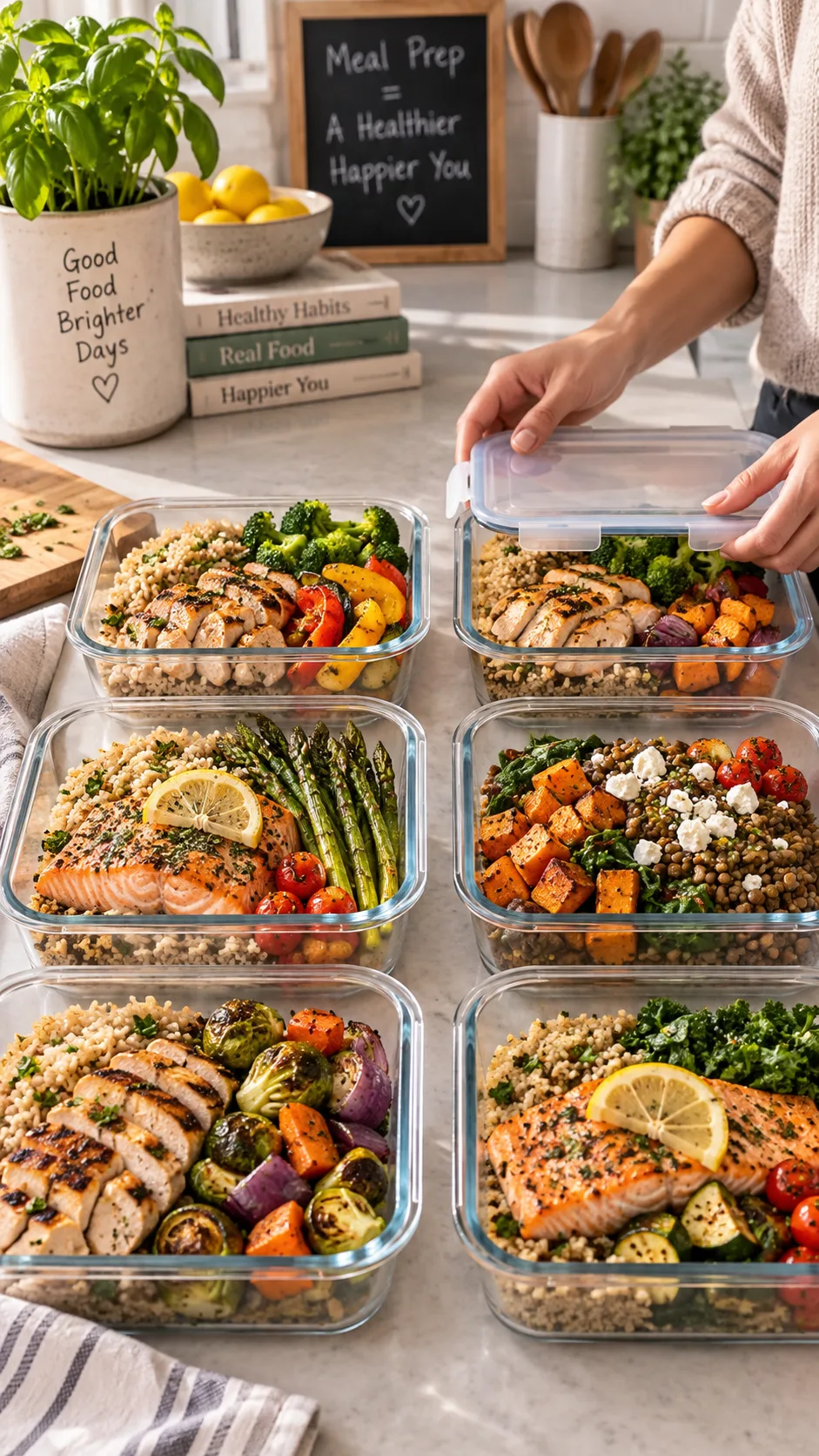
The Sunday 90-minute reset
I resisted meal prep for years because the internet made it look like a second job. Then I cut it down to 90 minutes and never looked back. Here’s the exact sequence.
- Minutes 0 to 10: Oven on. Chop vegetables, toss in olive oil, salt, pepper. Onto two trays.
- Minutes 10 to 15: Season chicken thighs or a whole chicken. Into the oven with the vegetables.
- Minutes 15 to 25: Start a pot of brown rice or quinoa. Start a pot of lentils or beans.
- Minutes 25 to 40: Assemble five jars of overnight oats. Oats, chia, milk, cinnamon. Done.
- Minutes 40 to 60: Wash and dry greens. Make one dressing: olive oil, lemon, mustard, garlic, salt.
- Minutes 60 to 90: Everything cools. You portion it into containers. You put the kettle on and feel smug.
Result: five breakfasts, four lunches, and the bones of three dinners. Total active work? Less time than one episode of whatever you’re binge-watching.
The emergency shelf
Every busy person needs a shelf that saves them at 9pm on a terrible day. Mine holds:
- Tinned sardines, salmon, and tuna
- Tinned chickpeas, black beans, kidney beans
- Tinned chopped tomatoes
- Frozen spinach, frozen mixed berries, frozen peas
- Microwave brown rice pouches (no shame here)
- Good olive oil, garlic, ginger, turmeric, chilli flakes
With that shelf, you build a genuinely anti-inflammatory meal in seven minutes. Tomatoes plus chickpeas plus frozen spinach plus spices equals dinner. Anyone who tells you healthy eating requires a farmers’ market has not tried it.
Eating out without blowing it up
Restaurants won’t ruin your progress. Weekly habits will. Still, a few moves tilt the odds your way.
- Order grilled, roasted, or steamed over deep-fried where you can
- Get a vegetable side instead of the automatic chips, at least sometimes
- Drink water first, then decide if you really want the soda
- Take half home if portions look like they’re feeding a small village
- Skip the “healthy” salad drowning in ranch, because it’s a dessert wearing a costume
And when the meal is genuinely special? Eat it. Guilt raises stress hormones, and stress raises inflammation. There’s a beautiful irony in feeling terrible about cake making things worse.
What about supplements?
Food first. Always. But a few supplements carry decent evidence behind them, and Mayo Clinic covers the omega-3 research clearly if you want the detail.
- Omega-3 (EPA/DHA): genuinely useful if you eat fish less than twice a week
- Vitamin D: worth testing first, especially if you work indoors all day
- Curcumin: needs piperine or a lipid formulation for absorption, since plain turmeric capsules mostly pass through you
- Magnesium: supports sleep, and sleep controls inflammation more than most foods do
Talk to your doctor or pharmacist before you start anything, especially if you take blood thinners. Most people overspend on pills and underspend on vegetables.
The non-food factors nobody mentions
You can eat perfectly and still feel inflamed. Why? Because your plate handles maybe 60% of the job.
Sleep beats kale
One week of short sleep raises inflammatory markers measurably. Seven to nine hours does more for your joints than any smoothie. Harsh, but true.
Movement, not punishment
Regular moderate exercise lowers chronic inflammation. Daily walks, two or three strength sessions a week, done. If you lift, small technique details matter, and even something like hack squat foot placement changes which muscles do the work.
Stress and the gut
Chronic stress keeps cortisol elevated, which eventually disrupts your gut lining and immune signalling. The World Health Organization ties diet quality to overall disease risk, but the psychological side counts too. Ten minutes of quiet, a walk without your phone, a lunch break you take away from your desk: these aren’t luxuries.

How long until you feel different?
Let’s set honest expectations, because vague promises help nobody.
- Week 1: Steadier energy, less bloating, better digestion for most people
- Weeks 2 to 4: Improved sleep, clearer thinking, reduced puffiness
- Weeks 4 to 8: Joint comfort improves, skin often calms, workout recovery speeds up
- Months 3 to 6: Measurable changes in blood markers like CRP, if your doctor tests them
If your symptoms centre heavily on digestion, you might need a more targeted approach. This IBS diet plan tackles trigger identification properly instead of guessing.
The bottom line
A low inflammation diet doesn’t demand monk-level discipline. It asks for a few repeatable habits you can run on your worst week, not just your best one.
Remember the short version:
- Add before you subtract: more plants, more omega-3s, more fibre
- Run the three anchors: protein plus plant, fish three times weekly, ditch sugary drinks
- Prep 90 minutes on Sunday and stock an emergency shelf
- Protect sleep and movement: they matter as much as your plate
- Live at 80/20 and stop apologising for the other 20
Start with one change this week. Just one. Swap the afternoon soda for green tea, or throw a tin of sardines into your shopping basket.
Your body has been sending you signals for a while now. This week, answer one of them.