

You do not need a fridge packed with identical chicken and rice containers to eat well all week. You need a few flexible healthy meal prep recipes that still taste good on Thursday, not only on Sunday.
That small difference matters. When lunch waits in the fridge, you skip the desk snack spiral, avoid pricey takeout, and make healthy eating much easier.
I think of meal prep as insurance for future me. Future me gets hungry, busy, and oddly emotional about snacks, so I give her a solid plan.
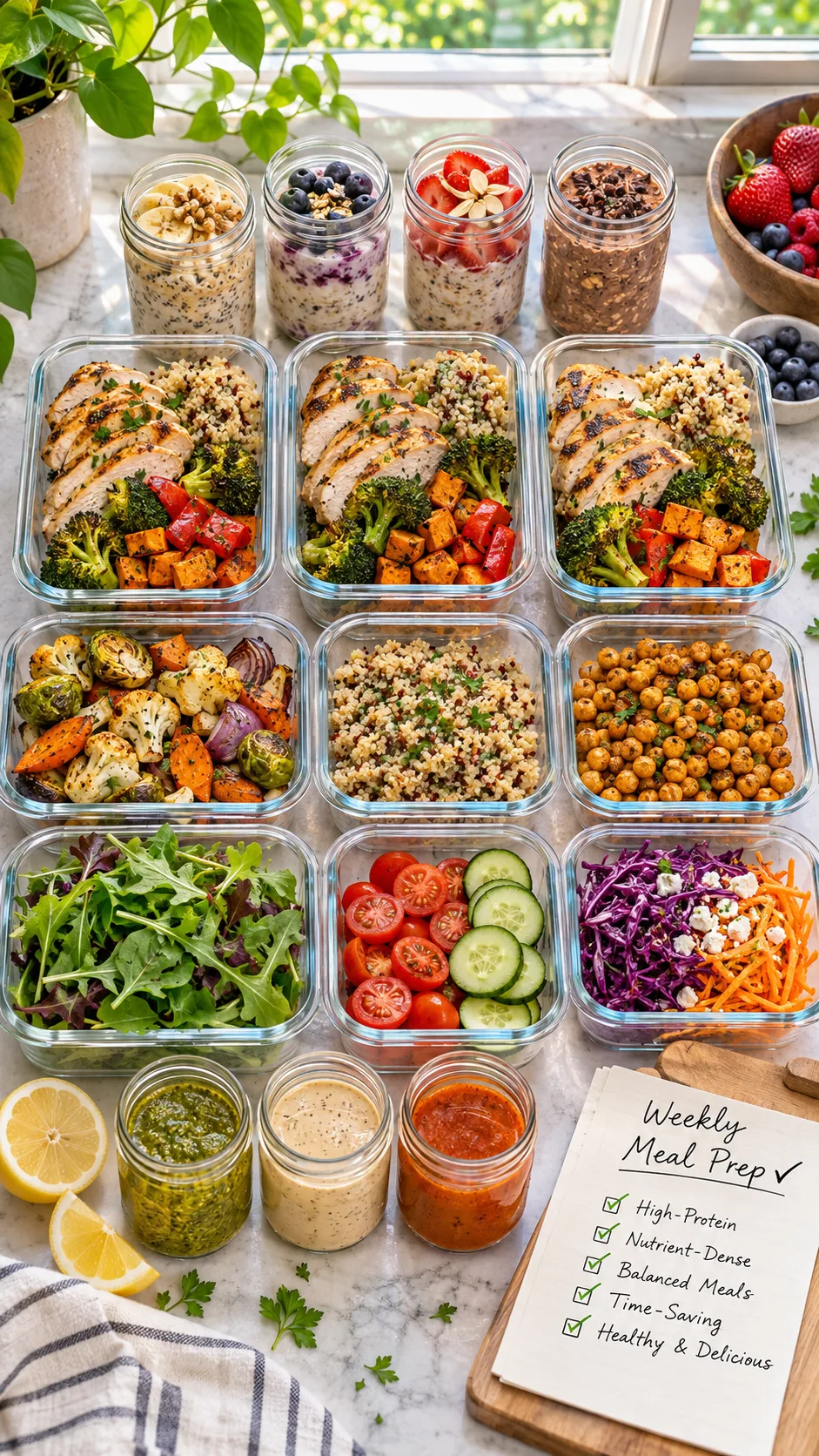
Why these healthy meal prep recipes work
The best meal prep meals solve a familiar weekday problem: hunger shows up before motivation. A good plan gives you protein, fiber, produce, and flavor without asking you to cook every night.
You also need variety. By day four, nobody wants to find five containers full of bland food in the fridge.
These recipes reuse ingredients in different ways, so you can keep your grocery bill in check without eating the same meal on repeat. Roast one large tray of vegetables, cook one or two proteins, make a grain, and change the sauces.
Build every meal around four simple pieces
Skip complicated food rules. Build your meal prep bowls and boxes around four basic parts, then change the portions based on your hunger, activity, and goals.
- Protein: Chicken, salmon, eggs, tofu, lentils, Greek yogurt, turkey, beans, or lean beef can help you stay full.
- Colorful produce: Use roasted vegetables, raw crunchy vegetables, fruit, greens, or any combination that sounds good.
- Smart carbs: Add potatoes, oats, brown rice, quinoa, whole grain pasta, beans, or fruit for steady energy.
- Flavor and healthy fats: Use olive oil, avocado, nuts, seeds, tahini, pesto, salsa, lemon, herbs, and bold sauces.
The USDA MyPlate guide gives you a useful visual starting point: fill half your plate with fruits and vegetables, then add protein and grains. You do not need to measure every spinach leaf as if you work for NASA.
Want a simpler system? Read this practical guide to meal prep for the week before you fill your cart. A little planning can save a lot of weekday chaos.
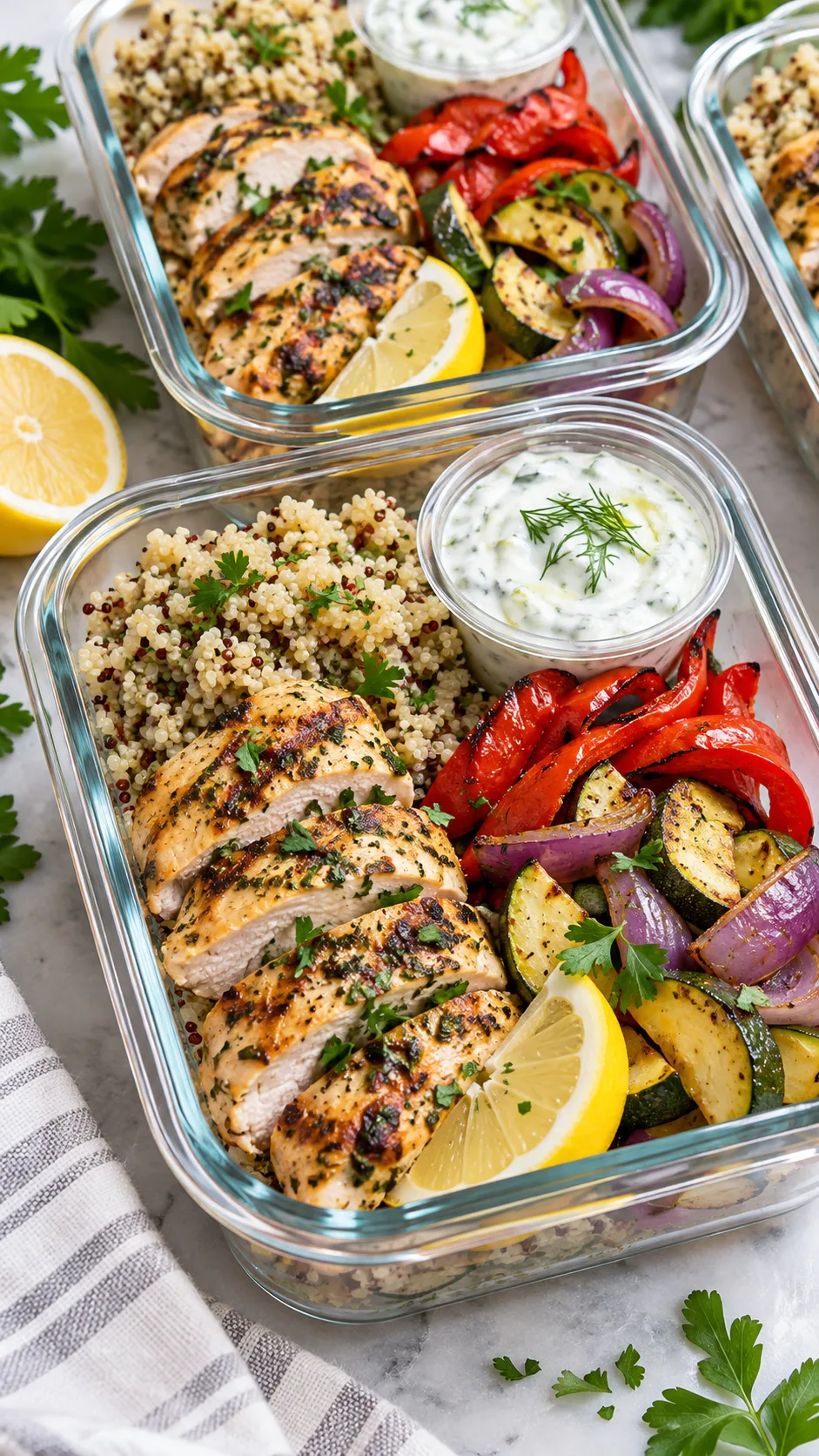
1. Lemon herb chicken, roasted vegetables, and quinoa bowls
This recipe belongs near the top of the list because it tastes fresh, travels well, and works with nearly any sauce. Lemon, garlic, and herbs make plain chicken taste like you put in far more effort than you did.
Choose boneless chicken thighs for a juicier result, or use chicken breast if you prefer a leaner option. I often make both for a family meal because everyone suddenly turns into a poultry critic at dinner.
What you need for four servings
- 1 1/2 pounds chicken breast or boneless chicken thighs
- 1 cup dry quinoa
- 2 bell peppers, sliced
- 1 zucchini, chopped
- 1 red onion, cut into wedges
- 2 tablespoons olive oil
- 1 lemon, zest and juice
- 2 garlic cloves, minced
- Dried oregano, salt, black pepper, and paprika
- Optional: feta, parsley, cucumber, and tzatziki
How to prep it
- Heat your oven to 425°F and line a sheet pan with parchment paper.
- Toss the peppers, zucchini, and onion with olive oil, salt, pepper, and paprika.
- Rub the chicken with lemon zest, lemon juice, garlic, oregano, salt, pepper, and a little olive oil.
- Roast the vegetables for 25 to 30 minutes and cook the chicken until it reaches 165°F in the thickest part.
- Cook the quinoa according to the package directions, then fluff it with a fork.
- Divide the quinoa, vegetables, and sliced chicken among four containers.
Add tzatziki just before eating, or pack it in a small container. That creamy sauce can turn a dependable chicken bowl into lunch you look forward to at 12:37 p.m.
2. Turkey taco meal prep bowls
Taco bowls make healthy meal prep feel less like a chore and more like a reward. They also welcome plenty of changes, so everyone can build a bowl that suits their appetite.
Lean ground turkey gives you plenty of protein, while black beans and corn bring fiber and texture. Salsa and lime carry plenty of flavor, so you do not need to cover everything in shredded cheese.
What you need for four servings
- 1 pound lean ground turkey
- 1 cup dry brown rice or cauliflower rice
- 1 can black beans, drained and rinsed
- 1 cup corn, fresh, frozen, or canned
- 1 red bell pepper, diced
- 1 tablespoon olive oil
- 2 tablespoons taco seasoning or a mix of cumin, chili powder, garlic powder, and smoked paprika
- Salsa, lime wedges, cilantro, and avocado for serving
Cook the rice while you brown the turkey with olive oil, pepper, and seasoning. Warm the beans and corn in the same pan during the last few minutes, then portion everything into containers.
Keep the avocado separate until you eat because it turns brown fast. Add salsa, Greek yogurt, or hot sauce when you reheat the bowl.
For a lower carb version, trade brown rice for shredded cabbage, cauliflower rice, or extra roasted peppers. You can find more options in these low carb meal prep ideas when you want lighter bowls without settling for a sad salad.
3. Sheet pan salmon, sweet potato, and green bean boxes
Salmon can make meal prep feel special without adding much work. It gives you protein and omega 3 fats, and it cooks quickly on one pan with vegetables.
The American Heart Association encourages people to eat fish, especially oily fish, twice each week. Read its guidance on fish and omega-3 fatty acids for more detail.
What you need for four servings
- 4 salmon fillets, about 4 to 5 ounces each
- 2 medium sweet potatoes, cubed
- 12 ounces green beans, trimmed
- 1 1/2 tablespoons olive oil
- 1 tablespoon Dijon mustard
- 1 tablespoon maple syrup or honey
- 1 lemon
- Garlic powder, salt, and black pepper
Roast the sweet potatoes at 425°F for 15 minutes first because they need more time. Add the green beans and salmon, brush the salmon with Dijon and maple, then roast everything for another 10 to 14 minutes.
Use a food thermometer instead of guessing. Salmon flakes when it cooks through, but a thermometer helps you avoid dry fish that tastes like a kitchen sponge.
Store these boxes in the fridge for up to three days if you want the best texture. If you prep more portions, freeze cooked sweet potatoes and cook fresh salmon later in the week.
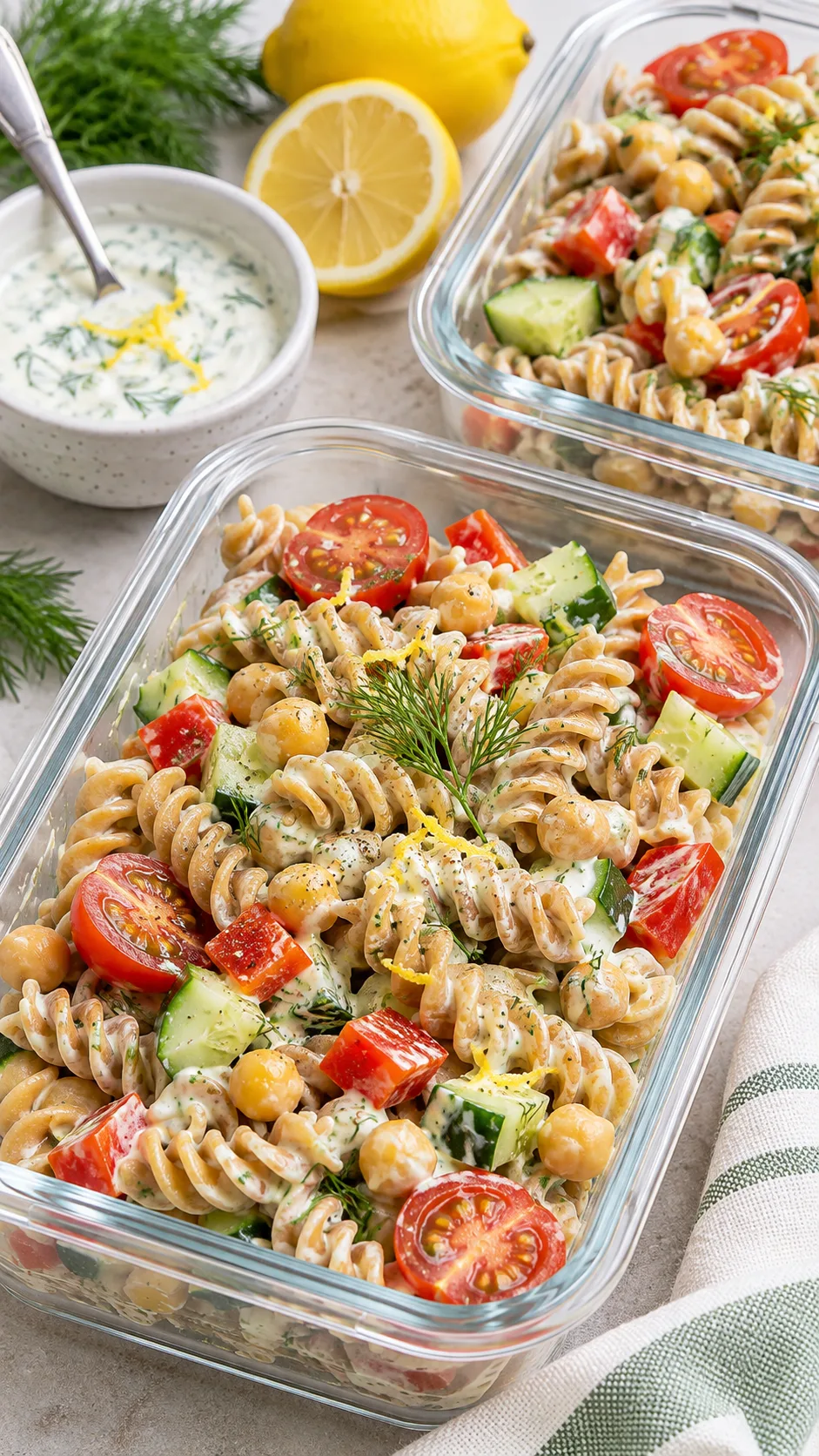
4. Creamy chickpea pasta salad for grab and go lunches
Cold meal prep lunches come in handy when your office microwave smells like someone reheated fish in 2014. This chickpea pasta salad stays crisp, creamy, and filling without weighing you down.
Chickpeas bring plant protein and fiber, while Greek yogurt makes a tangy dressing with more protein than mayonnaise alone. Whole wheat pasta adds more fiber, though regular pasta works well too.
What you need for five servings
- 12 ounces whole-wheat rotini or penne
- 1 can chickpeas, drained and rinsed
- 1 cucumber, chopped
- 1 pint cherry tomatoes, halved
- 1 bell pepper, chopped
- 1/2 red onion, finely chopped
- 1/2 cup plain Greek yogurt
- 2 tablespoons olive oil
- 1 tablespoon Dijon mustard
- 1 lemon, juiced
- Dill or parsley, salt, and black pepper
Cook the pasta until al dente, rinse it under cool water, and toss it with the vegetables and chickpeas. Whisk the Greek yogurt, olive oil, Dijon, lemon, herbs, salt, and pepper, then stir the dressing into the salad.
This meal tastes even better after a few hours in the fridge because the flavors have time to come together. Add a handful of arugula or baby spinach just before eating if you want more greens.
5. Peanut ginger tofu and broccoli rice bowls
Tofu meal prep bowls can make a plant based lunch feel hearty, savory, and satisfying. The sauce does most of the work, because plain tofu starts out like a blank page.
Press firm or extra firm tofu before cooking, then bake or pan sear it until the edges turn golden. That step gives it a better texture and helps the sauce cling to it.
What you need for four servings
- 1 block extra-firm tofu, pressed and cubed
- 2 cups cooked rice, brown rice, jasmine rice, or quinoa
- 4 cups broccoli florets
- 1 carrot, sliced into matchsticks
- 2 tablespoons natural peanut butter
- 1 tablespoon low-sodium soy sauce or tamari
- 1 teaspoon grated ginger
- 1 teaspoon maple syrup
- 1 lime, juiced
- Warm water to thin the sauce
Roast the tofu and broccoli at 425°F with a little oil, salt, and pepper until the tofu turns crisp and the broccoli browns around the edges. Whisk peanut butter, soy sauce, ginger, maple syrup, lime juice, and water until smooth.
Pack the sauce separately if you want the tofu to stay crisp through the week. Sprinkle sesame seeds, sliced scallions, or crushed peanuts over each bowl before eating for a small restaurant style touch.
People often ask whether plant proteins count as “real” protein. They do. The Harvard Nutrition Source protein guide explains how beans, soy foods, nuts, seeds, fish, poultry, and other foods can support a balanced eating pattern.
6. Protein rich egg muffins and overnight oats
Breakfast meal prep keeps mornings from turning into a coffee only gamble. Pair savory egg muffins with overnight oats, and you have an option for days when you want something warm and days when you have 90 seconds.
Vegetable egg muffins
Whisk 10 eggs with salt, pepper, chopped spinach, diced bell pepper, cooked turkey sausage or feta, and a splash of milk. Pour the mixture into a greased muffin tin and bake at 350°F for 18 to 22 minutes.
Store the muffins in the fridge for up to four days or freeze them for longer storage. Reheat two muffins in the microwave, then eat them with fruit or whole grain toast.
Berry peanut butter overnight oats
For each jar, combine 1/2 cup rolled oats, 1/2 cup milk, 1/3 cup Greek yogurt, 1 tablespoon chia seeds, and 1 teaspoon peanut butter. Add berries right away, or pack them separately if you prefer a firmer texture.
The oats soften overnight, and the chia seeds thicken the jar without any cooking. You get fiber, protein, and enough flavor to skip a pastry run before 10 a.m.
7. Slow cooker lentil chili for easy dinners
A big pot of lentil chili can cover dinner, lunch, and the occasional “I forgot to shop” moment. Lentils cost little, bring fiber and plant protein, and soak up every smoky spice you add.
Add dry brown or green lentils, diced tomatoes, tomato sauce, black beans, corn, diced peppers, onion, garlic, vegetable broth, chili powder, cumin, smoked paprika, and oregano to a slow cooker. Cook on low for six to eight hours or on high for three to four hours.
Top each bowl with Greek yogurt, avocado, cilantro, or grated cheese. Serve the chili with a baked potato, brown rice, or crunchy cabbage slaw for a complete meal.
This recipe freezes well, so make extra. Your freezer can act as your backup cook, and that cook never complains.
How to prep a full week without losing your Sunday
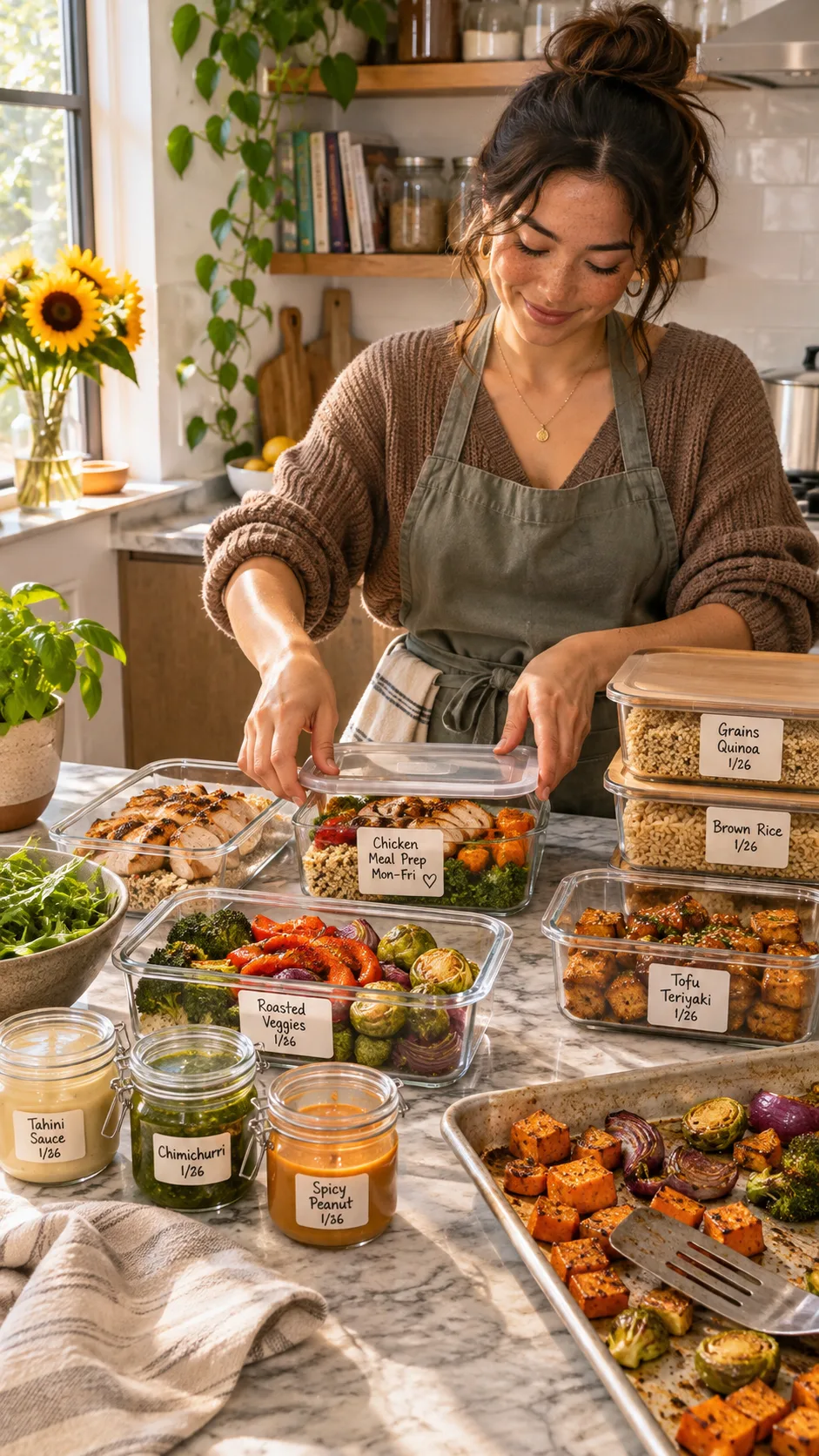
You do not need to spend five hours chopping vegetables while your weekend disappears. Choose two proteins, two vegetables, one or two carbs, and two sauces, then combine those parts in different meals.
Start with recipes that share ingredients. Use broccoli in tofu bowls and egg muffins, for example, or use quinoa in chicken bowls and alongside chili.
A simple 90 minute meal prep plan
- Start the longest cooking item first. Turn on the oven, start the rice or quinoa, and set up your slow cooker.
- Chop all vegetables at once. Group them by cooking method so you do not create a mountain of little bowls.
- Cook proteins while vegetables roast. Brown turkey or cook tofu on the stovetop while the sheet pan takes care of the rest.
- Mix sauces during cooking time. Lemon yogurt sauce, peanut ginger sauce, salsa, and vinaigrette take only a few minutes.
- Cool food before sealing containers. This protects the texture and helps the food cool safely.
- Label meals with the date. Your Wednesday self deserves clarity instead of a mystery container.
For more batch friendly dinner ideas, try these sheet pan meal prep dinners. You will wash fewer dishes, and your kitchen will not look like it hosted a cooking show meltdown.
Food safety tips that keep meal prep fresh
Healthy meal prep depends on safe storage. Cool cooked meals promptly, divide them into shallow containers, and refrigerate them within two hours of cooking.
The FoodSafety.gov cold storage chart recommends that you use most cooked leftovers within three to four days. Freeze extra portions early instead of taking chances on day six.
- Keep your refrigerator at 40°F or below.
- Use airtight containers to protect flavor and texture.
- Store sauces, crunchy toppings, and delicate greens separately.
- Reheat leftovers until they reach 165°F.
- Pack lunch with an ice pack if you do not have refrigerator access.
Trust your senses, but do not rely on smell alone. If food has sat too long, throw it out and move on. Losing one container costs less than losing a day to an upset stomach.
Make these meal prep recipes fit your goals
Your meal prep plan should fit your life, not someone else’s macro spreadsheet. Change portions and ingredients based on your needs, whether you want more energy, better fullness, weight management, or fewer drive through dinners.
For fat loss or a calorie deficit
Fill much of your container with non starchy vegetables, choose lean protein, and measure calorie dense extras such as cheese, oil, nuts, and creamy sauces. You do not need to fear those foods. You only need to notice how quickly a “little drizzle” turns into a puddle.
Read this guide to calorie deficit meal prep for filling meal ideas that can keep hunger manageable. Consistency beats aggressive restriction.
For more protein
Add an extra egg, Greek yogurt, cottage cheese, chicken, tofu, tuna, edamame, or beans to meals you already enjoy. Spread protein across the day instead of trying to cram it all into dinner.
For more convenience
Use frozen vegetables, rotisserie chicken, microwaveable whole grains, canned beans, bagged salad, and pre chopped produce. Convenient ingredients still count as real food.
Final thoughts: Prep once, eat well all week
The best meal prep recipes make healthy eating easier when life gets noisy. Start with lemon herb chicken bowls, turkey taco bowls, salmon boxes, chickpea pasta salad, tofu bowls, easy breakfasts, and freezer friendly chili.
Pick two recipes this week, not seven. Build the habit first, then add to your rotation once your fridge starts doing more work than your willpower.
Your future self can open the fridge, spot a meal that sounds good, and feel relieved. That is the whole point.