

Your fifth identical Tupperware of dry chicken and white rice is not a personality trait. It’s also not the only way to gain muscle. You can eat food you look forward to and still build real strength.
I spent my first couple of lifting years convinced that bodybuilding meant suffering through bland meal prep. Then I noticed something: the people who stuck with their nutrition for years never ate that way. They ate a wide variety of food, and they liked it.
This muscle gain meal plan shows you how. You get the numbers, a full sample day, a swap list, and a few tricks for hitting your calories without feeling stuffed.
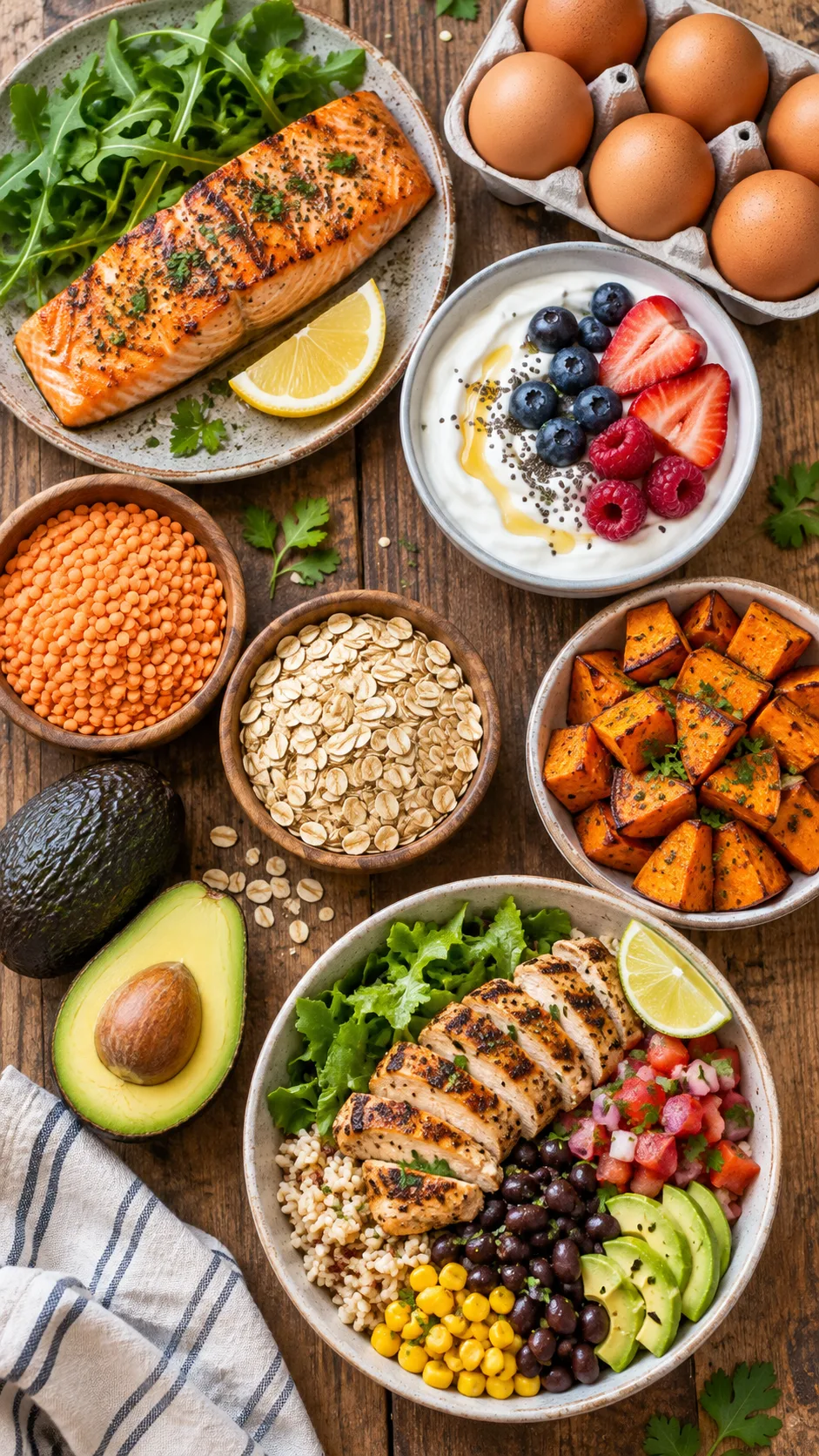
Why chicken and rice became the default (and why you can ditch it)
Chicken and rice took over because it’s cheap, easy to measure, and simple to repeat. Bodybuilders on strict contest prep needed predictability, so they ate it. You probably don’t.
Your muscles don’t care whether protein comes from chicken breast, salmon, or Greek yogurt. They respond to enough total protein, enough total calories, and progressive training. That’s the whole recipe.
Why do so many people quit their “bulk” after six weeks? Boredom beats willpower almost every time. A plan you enjoy beats a perfect plan you abandon.
The four numbers that drive muscle growth
Before you plan a single meal, set these four targets. Everything else is decoration.
1. Calories: eat a small surplus
You need to eat slightly more than you burn. A surplus of roughly 250 to 500 calories above maintenance works well for most lifters. Go bigger and you mostly add body fat faster, not muscle faster.
Not sure of your maintenance? Track your food and weight for two weeks. If your weight stays flat, that average intake is your maintenance.
2. Protein: aim for 1.6 to 2.2 g per kilogram
A large meta-analysis of resistance training trials found that about 1.6 g of protein per kg of body weight per day maximizes muscle gains for most people. Eating up to roughly 2.2 g/kg gives you a safety margin. The International Society of Sports Nutrition position stand on protein and exercise backs a similar range.
For an 80 kg (176 lb) lifter, that works out to roughly 130 to 175 grams of protein daily.
3. Carbs: fuel the work
Carbs power your hard sets and help you recover. Most lifters do well with 3 to 6 g per kg of body weight. Don’t fear carbs, because strength gains need fuel.
4. Fats: keep them in the middle
Aim for about 0.7 to 1 g per kg of body weight. Fat supports hormone production and makes food taste good. It also packs calories into small portions, which helps if you struggle to eat enough.
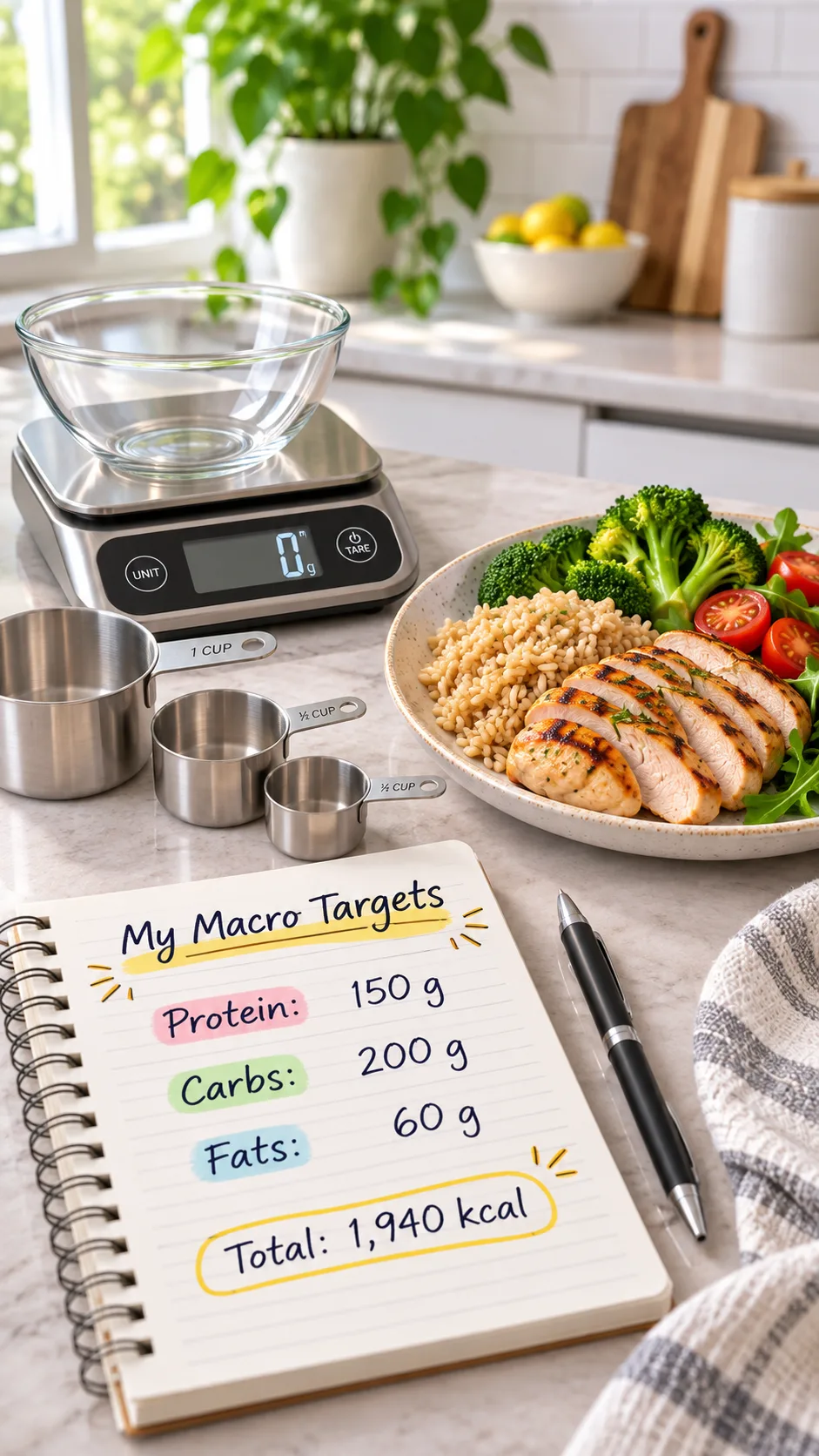
The muscle gain meal plan structure
This is the framework I recommend. It uses four to five eating moments and spreads protein evenly. Schoenfeld and Aragon’s research suggests about 0.4 g/kg of protein per meal across four meals works well for maximizing muscle protein synthesis.
You don’t need to wake up at 3 a.m. to chug a shake. Even spacing through your waking hours does the job.
- At breakfast, eat 30 to 45 g protein plus carbs.
- At lunch, eat 40 to 50 g protein and make this your biggest carb portion.
- For an afternoon snack or shake, get 25 to 35 g protein.
- At dinner, eat 40 to 50 g protein with some healthy fats.
- If you want an evening bite, add 20 to 30 g protein from something that digests slowly.
A full sample day (about 3,000 calories and 175 g protein)
This sample day suits an 80 kg lifter in a mild surplus. Scale the portions up or down for your size. Every number below is an estimate, so check your own labels.
- For breakfast (about 650 kcal, 40 g protein), have a three-egg veggie scramble with spinach and peppers, two slices of sourdough with butter, and a small bowl of berries.
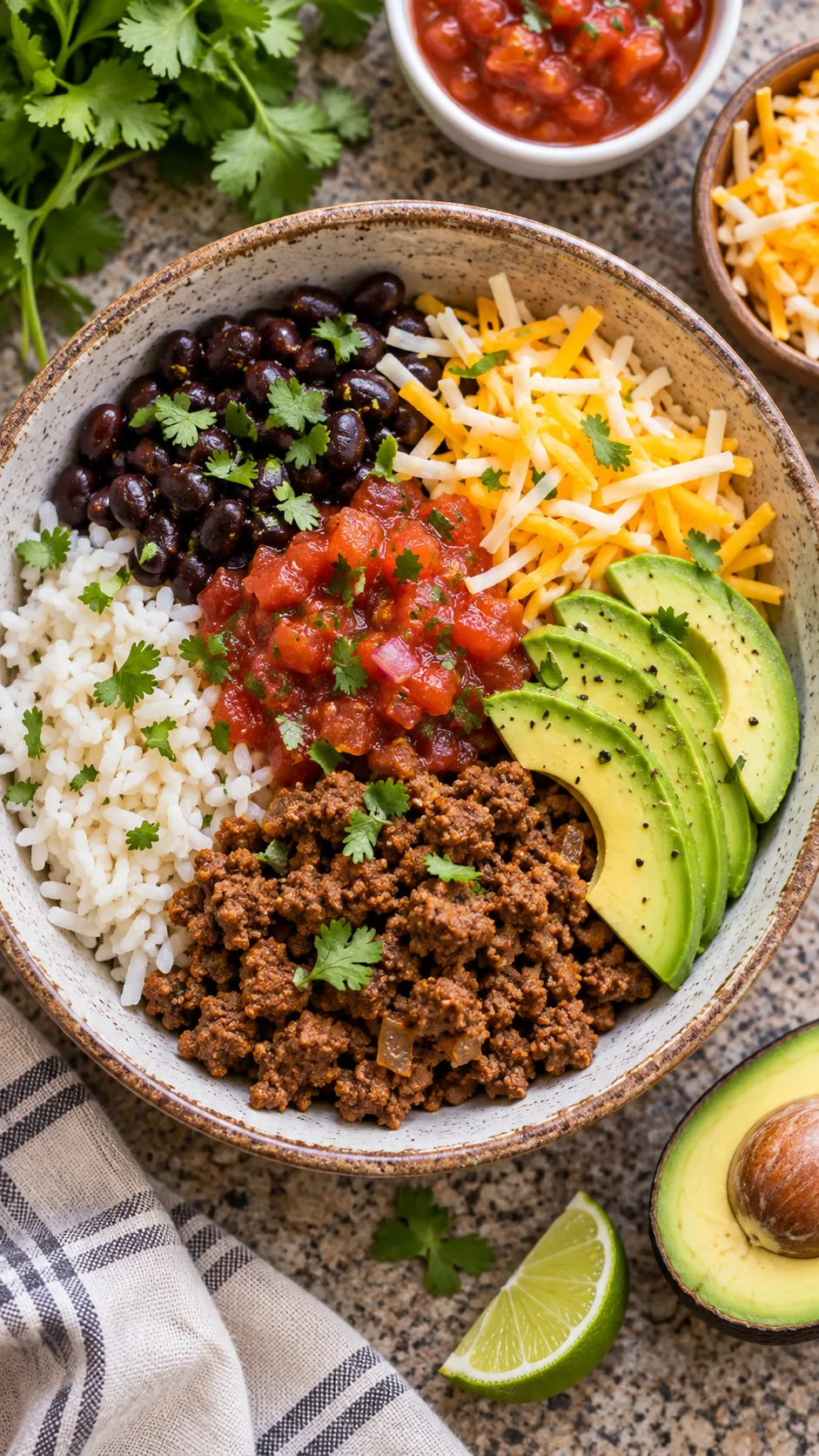
- For lunch (about 800 kcal, 45 g protein), build a burrito bowl with lean ground beef, rice, black beans, avocado, salsa, and a little cheese.
- For an afternoon snack (about 450 kcal, 30 g protein), eat cottage cheese with pineapple chunks and a handful of almonds.
- For dinner (about 750 kcal, 40 g protein), bake salmon and serve it with two medium roasted potatoes, broccoli, and olive oil.
- For an evening bowl (about 400 kcal, 20 g protein), stir Greek yogurt together with oats, peanut butter, and a drizzle of honey.
Look at the ingredients. The day contains no plain chicken breast. You still hit your protein, and every meal tastes like real food.
Protein sources that beat chicken breast
Variety keeps you eating consistently, and consistency builds muscle. Rotate through these.
Animal proteins
- Whole eggs give you about 6 g protein each, cost little, and work in almost any meal.
- Plain nonfat Greek yogurt has roughly 15 to 20 g per cup, depending on the brand.
- Cottage cheese digests slowly, which makes it a good evening choice.
- Salmon and trout supply protein along with omega-3 fats.
- Lean beef and pork tenderloin bring iron, zinc, and plenty of flavor.
- Chicken can stay if you choose thighs, which taste better than breasts.
- Canned tuna and sardines are cheap, keep for months, and take minutes to eat.
Plant proteins
- Tofu and tempeh both soak up marinades well.
- Lentils, chickpeas, and black beans give you protein, carbs, and fiber in one scoop.
- Edamame makes an easy snack with solid protein.
- Soy or pea protein powder works well if you avoid dairy.
If you eat West African food, check out this list of 17 Nigerian foods for muscle gain. Great protein sources exist in every cuisine.
Want to double-check a food’s protein content? The USDA’s FoodData Central database lists nutrition for thousands of foods.
Carb sources that aren’t white rice
Rice is fine. It’s just not mandatory. Swap in these and your plate gets more interesting fast.
- Oats work at breakfast, as overnight oats, or blended into smoothies.
- Potatoes and sweet potatoes fill you up, cost little, and taste great roasted.
- Pasta counts too. Add ground turkey and sauce for an easy 700-calorie dinner.
- Sourdough and whole grain bread handle sandwiches and toast.
- Quinoa and couscous cook quickly and give you a different texture.
- Bananas, mangoes, and dried fruit add easy calories.
- Tortillas and wraps make portable lunches simple.
Watch this before you prep your week
A video shows portion sizes and prep better than text does. This walkthrough covers how to build an eating plan for muscle.
A 7-day rotation so you never get bored
You don’t need seven brand-new dinners. Cook two or three bases on Sunday, then remix them through the week. This simple rhythm works.
- Monday brings an egg scramble breakfast, a beef burrito bowl, and salmon with potatoes.
- Tuesday brings overnight oats with protein powder, a tuna wrap, and turkey pasta.
- Wednesday brings a Greek yogurt parfait, lentil and sausage soup, and stir-fried tofu with noodles.
- Thursday brings a breakfast burrito, a chicken thigh rice bowl, and pork tenderloin with roasted veggies.
- Friday brings protein pancakes, leftover pasta, and homemade pizza on a protein-rich base.
- Saturday brings a big omelet with toast, burgers with sweet potato fries, and a relaxed dinner out.
- Sunday brings a cottage cheese and fruit bowl, slow-cooker chili, and batch prep for the week.
That is not boring bodybuilder food. It is normal eating with a protein target attached.
How to eat more when you can’t finish your plate
Hard gainers know this struggle. Big calorie targets feel like a part-time job. Try these tactics.
Drink some calories
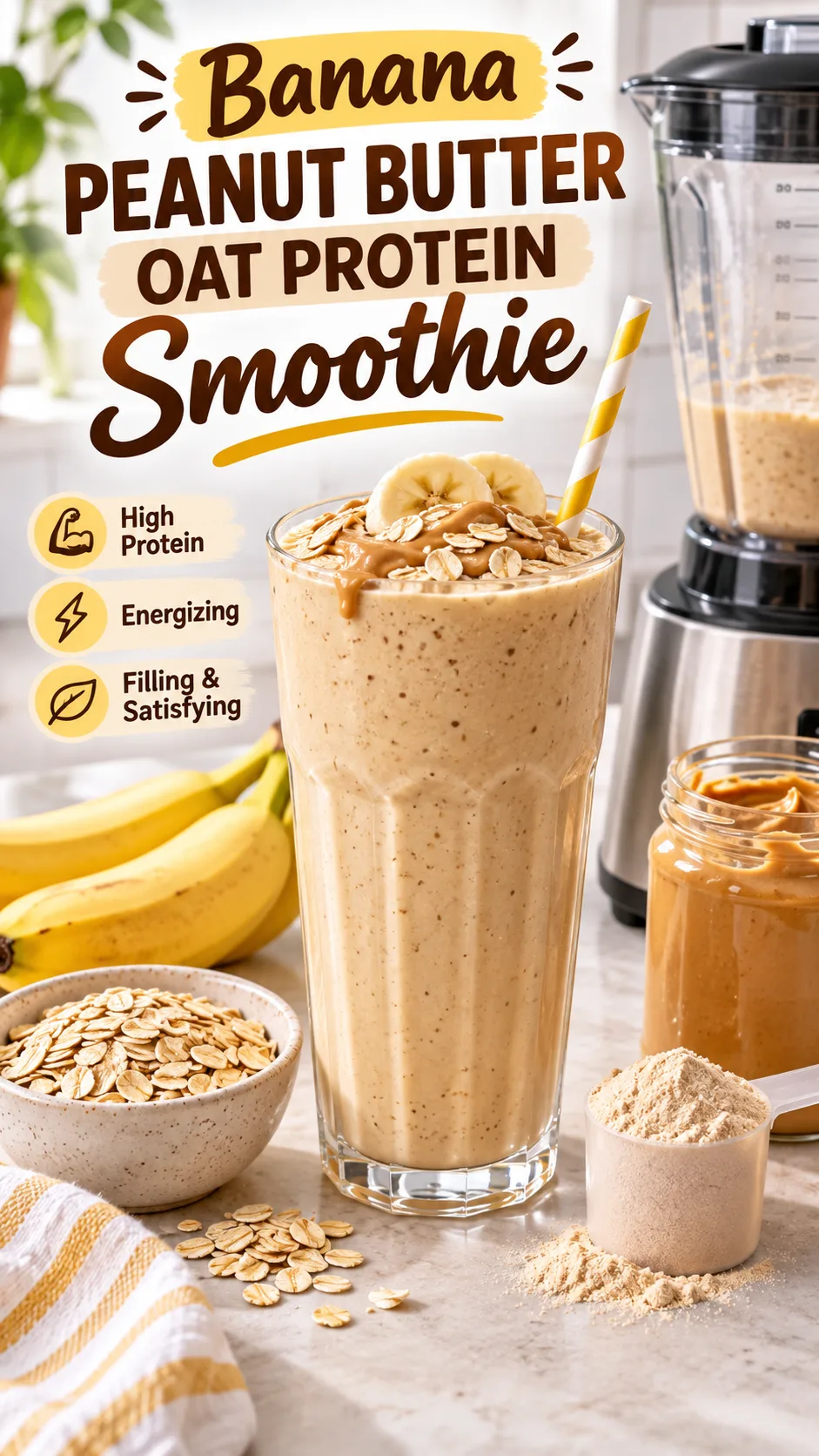
Liquid calories go down easier than solid ones. Blend milk, a banana, oats, peanut butter, and a scoop of whey. That one glass delivers 600+ calories and about 40 g of protein in under five minutes.
Add calorie boosters
Small additions stack up fast:
- Drizzle 1 tablespoon of olive oil (about 120 kcal) over rice, veggies, or pasta.
- Stir nut butter into oats and yogurt.
- Top your meals with avocado, cheese, or seeds.
- Cook with butter instead of cooking spray.
Choose carbs that pack calories
When you need to keep volume down, pick white bread, pasta, and rice over big salads. Fiber is great, but too much of it fills you up before you hit your targets. I think that’s the most overlooked bulking mistake.
Supplements: what helps and what’s hype
Supplements fill gaps but don’t replace food, and most of the supplement aisle is marketing noise.
- Whey or plant protein powder is convenient, not magical. Use it when whole food falls short.
- Creatine monohydrate is the best-studied supplement for strength and lean mass, and 3 to 5 g daily is the standard dose. The Mayo Clinic’s creatine overview explains the basics and safety considerations.
- Consider vitamin D or omega-3 if your diet or sun exposure falls short, and check with your doctor first.
Skip the “mass gainers” with 80 g of sugar and mystery blends. You can build a better one in your own blender for less.
Train so the food has a job to do
The best meal plan in the world won’t build muscle if your training sits idle. Food supplies the raw material, but progressive overload sends the signal to grow.
Lift three or four days a week, and add weight or reps over time. If you need a simple template, try this full body workout plan that builds real strength in just 3 days a week.
Women often undereat when they chase muscle, which stalls progress. If that sounds familiar, read our guide on how to build muscle for women for specific training and food fixes.
Common mistakes that stall muscle gain
Most plateaus trace back to the same handful of errors. Check yourself against this list.
- You guess your calories. Most people overestimate how much they eat, so track for two weeks and see.
- You save all your protein for dinner. Spread it across the day instead.
- You gain too fast. A rate of about 0.25 to 0.5% of body weight per week keeps fat gain reasonable.
- You skip sleep. Aim for seven to nine hours, because recovery happens in bed, not in the gym.
- You change everything every week. Give any plan four to six weeks before you judge it.
- You eat only “clean” food. A surplus sometimes needs pizza, ice cream, or burgers, and that’s fine in moderation.
How to track progress without obsessing
Weigh yourself three or four mornings a week and watch the weekly average. Take progress photos every two weeks. Log your lifts.
If your weight hasn’t budged in two weeks, add 150 to 200 calories a day. If you gain faster than 0.5% of body weight per week, trim a little. Small tweaks beat dramatic overhauls.
Are your lifts going up? That’s the real scoreboard. A bigger squat and a heavier bench tell you the plan works, even when the mirror lags behind.
Who should talk to a professional first
This article gives general guidance, not medical advice. If you have kidney disease, diabetes, a history of disordered eating, or you take medication, talk to your doctor or a registered dietitian before you change your diet. Pregnant or breastfeeding? Do the same.
A professional can tailor numbers to your body, goals, and health history. That beats any generic template, including this one.
Final thoughts: build muscle without hating your plate
Five habits cover most of it:
- Eat a modest surplus of about 250 to 500 calories above maintenance.
- Hit 1.6 to 2.2 g of protein per kg of body weight, spread across 4 to 5 meals.
- Rotate your protein and carb sources so you never face another sad container of chicken and rice.
- Use easy calorie boosters like smoothies, nut butter, and olive oil.
- Train with progressive overload and sleep enough to recover.
The best muscle gain meal plan is the one you’ll follow for months. So pick two new proteins and one new carb this week, cook them, and see how they taste. Your taste buds will notice the change first, and your strength numbers will follow.