

You train hard, wake up sore, and then catch the same reflection in the mirror. Frustrating, right? Women need more than random workouts and an optimistic protein shake to build muscle.
You need solid strength training, enough food, and a plan that keeps asking more of you over time. The good news: you do not need to spend your life in the gym, avoid heavy weights, or eat nothing but chicken and sadness.
This guide covers the training mistakes that slow muscle growth and lays out what helps. Stop putting in effort without seeing it pay off.
First, clear up the biggest myth about women and muscle
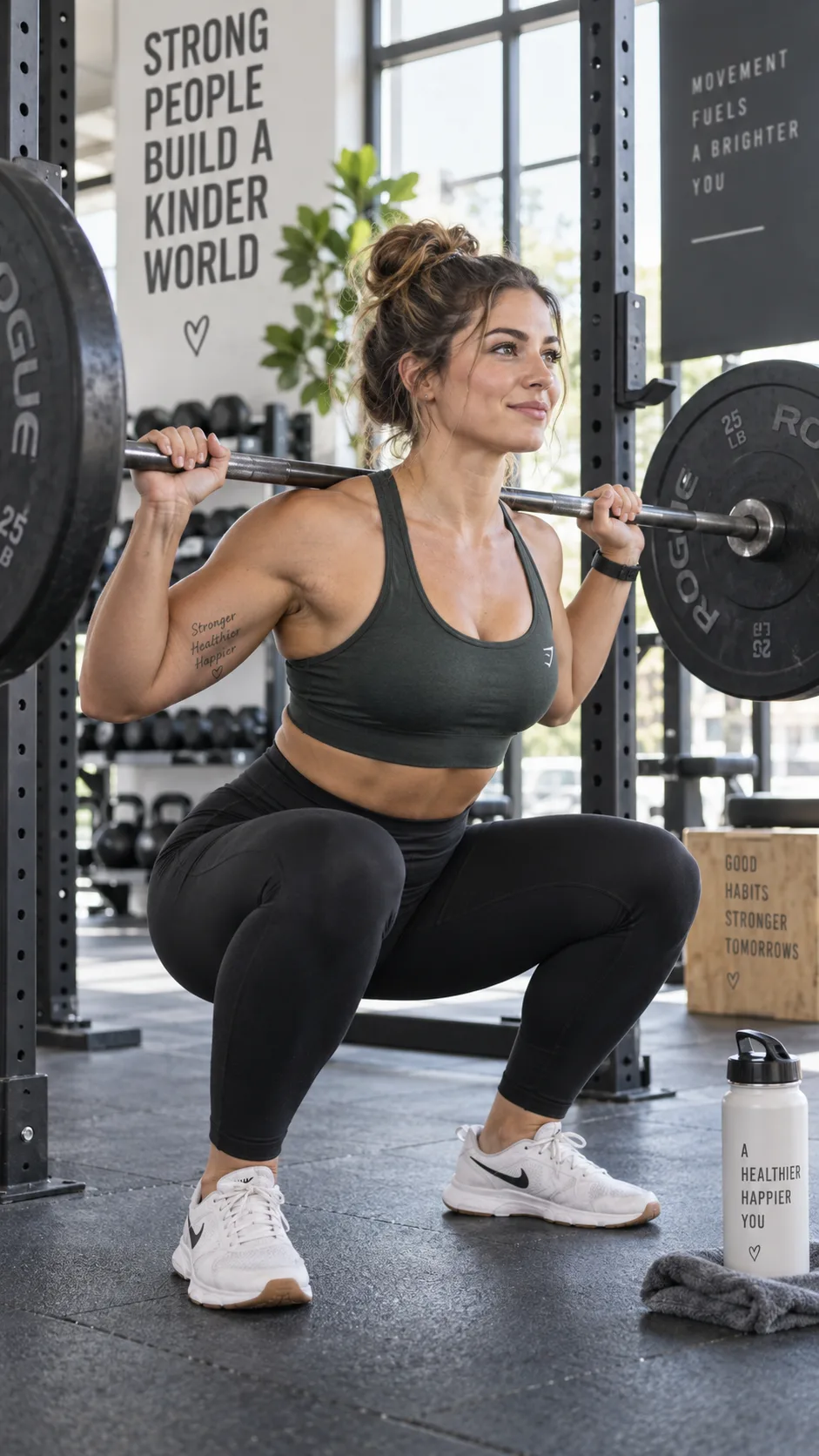
Many women avoid challenging weights because they worry about looking “bulky.” That worry leaves plenty of people doing endless sets with light dumbbells and getting nowhere but annoyed.
Women usually gain muscle slowly. Your hormones, genetics, lifting experience, food intake, sleep, and program all affect how fast you add lean mass. You can control several of those factors, so you have plenty of ways to move forward.
Strength training helps women build muscle, support bone health, handle daily tasks more easily, and feel stronger in their bodies. The U.S. Physical Activity Guidelines recommend muscle-strengthening activity at least two days per week for adults.
Do you want fuller glutes, stronger legs, more defined arms, or a more athletic build? You need muscle. Cardio supports your health and fitness, but resistance training gives your muscles a reason to grow.
Mistake #1: You never train close enough to failure
Your body changes when you give it a real challenge. If you finish every set knowing you could knock out another 15 reps, your muscles got the message that the work felt easy. They do not need to adapt.
Muscle-building workouts work best when you take most working sets close to muscular failure. Stop when your form starts to slip or when you know you only have one to three clean reps left.
What “close to failure” feels like
- Your last few reps move more slowly than your first few.
- You need to concentrate to finish the set with good form.
- You could probably complete one, two, or three more reps.
- You stop before your technique turns into chaotic interpretive dance.
You do not need to hit failure on every set. Push harder on safer exercises such as leg presses, machine rows, hamstring curls, and dumbbell curls. Leave a little more room on demanding barbell lifts.
Choose a weight that challenges you within your target rep range. If your plan calls for 8 to 12 reps, pick a load that makes rep 10, 11, or 12 feel very tough.
Mistake #2: You keep using the same weights forever
Your body adapts fast. Once it gets used to your 15-pound dumbbells, that workout no longer gives your muscles the same reason to grow. You do not owe your favorite weights lifelong loyalty.
Progressive overload means gradually asking your muscles to do more work. Add weight, do more reps, use a fuller range of motion, add a set, or slow down and control each rep better.
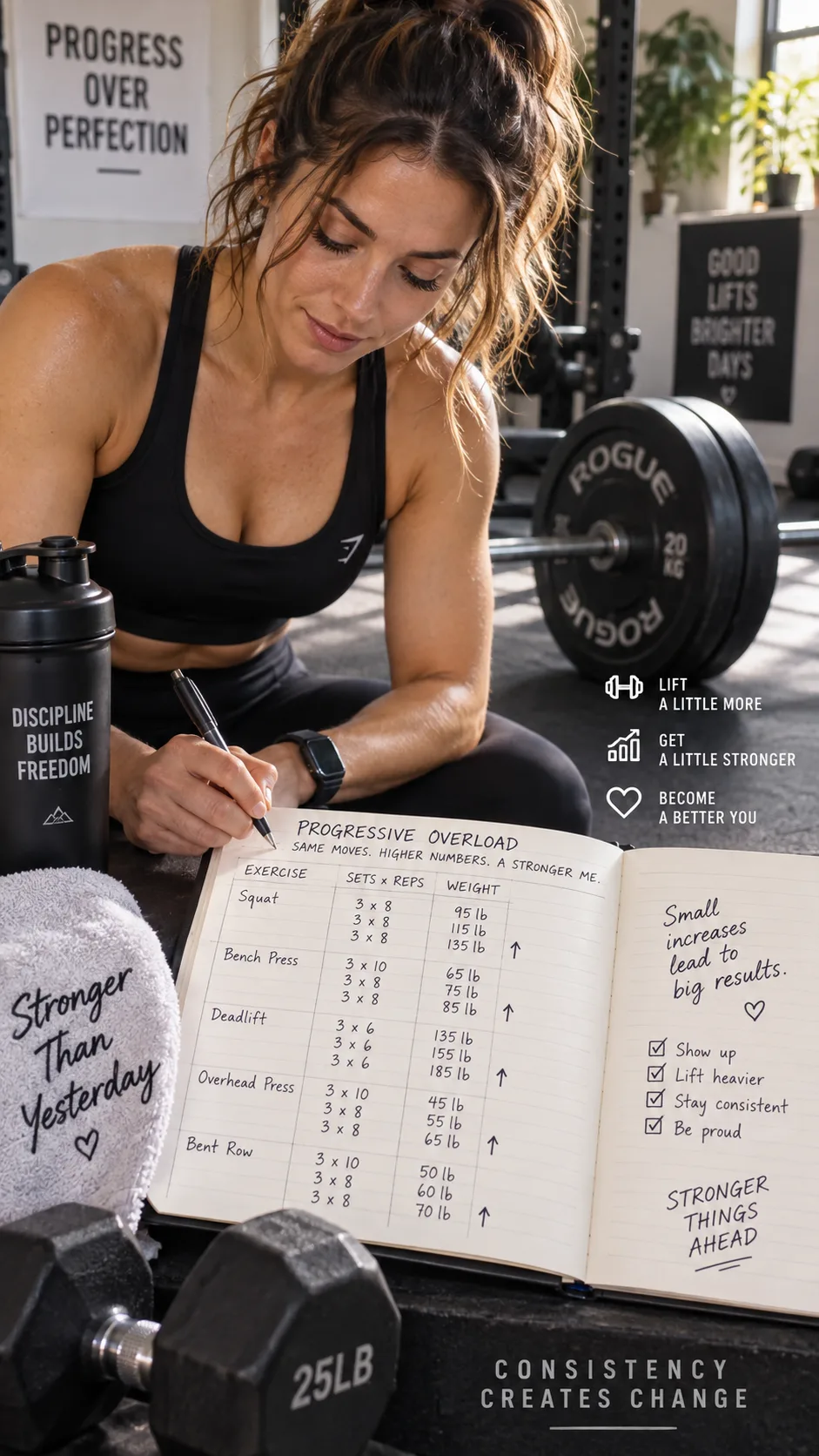
A simple progressive overload method
- Choose a rep range, such as 8 to 12 reps.
- Use the same weight until you complete 12 clean reps on every working set.
- Increase the load by the smallest amount available.
- Build back up through the rep range with the heavier weight.
- Track each workout so you can see your progress.
Say you squat 65 pounds for 10, 9, and 8 reps this week. Next week, shoot for 10, 10, and 9. When you reach 12 reps across your sets with good form, add weight.
Progress does not move in a perfect straight line. Your cycle, sleep, stress, and schedule can change your performance, so watch the pattern over several weeks. One rough workout does not matter much. Dropping your plan after one rough workout does.
Mistake #3: Your program lacks enough big, basic lifts
Band kickbacks and tiny pulses can make your muscles burn, but they cannot replace strong foundational exercises. Compound lifts work several muscles at once and give you more from your gym time.
Build your program around movement patterns instead of trendy exercise names. Your body does not care whether a workout went viral on social media. It responds to tension, effort, recovery, and consistency.
Your muscle-building exercise menu
- Squat pattern: goblet squats, back squats, front squats, leg presses, split squats.
- Hip hinge pattern: Romanian deadlifts, deadlifts, hip hinges, back extensions.
- Glute-focused work: hip thrusts, glute bridges, lunges, step-ups.
- Push pattern: push-ups, dumbbell presses, bench presses, overhead presses.
- Pull pattern: cable rows, dumbbell rows, lat pulldowns, assisted pull-ups.
- Accessories: lateral raises, triceps extensions, hamstring curls, calf raises, curls.
A good women’s strength training program uses compound exercises alongside targeted accessory work. Big lifts build a strong base. Accessory exercises let you give more work to muscles such as your shoulders, glutes, biceps, and hamstrings.
If you want more arm ideas, check out how to get biceps that show. Strong arms do more than fill out a T-shirt. They also make grocery bags and stubborn jars easier to handle.
Mistake #4: You train randomly instead of following a plan
When you walk into the gym and pick exercises based on whatever equipment sits open, you create a messy record of your progress. You cannot improve lifts that you never repeat.
Keep the same core routine for at least 8 to 12 weeks. Swap an exercise if pain, missing equipment, or boredom causes a real problem. Do not rebuild your entire plan every Monday because a fitness influencer posted a new glute circuit.
A simple 3-day muscle-building split
This setup suits many beginners and busy lifters. Train on nonconsecutive days when you can, and take your rest days seriously.
- Day 1: Lower body: squat or leg press, Romanian deadlift, hip thrust, split squat, calf raise.
- Day 2: Upper body: dumbbell press, row, lat pulldown, overhead press, lateral raise, curls, triceps work.
- Day 3: Full body: deadlift variation, lunge, chest press, cable row, glute bridge, core work.
Aim for two to four challenging sets per exercise. Most women can make excellent progress with roughly 10 to 20 hard weekly sets for each muscle group, though beginners should start closer to 10.
Need a more detailed place to start? Use this strength training guide for women to put together a routine that fits a beginner.
Mistake #5: You eat too little to build muscle
Training alone will not build much muscle. Your body needs energy and protein to repair tissue after lifting, and aggressive dieting makes that work harder.
Many women try to lose fat and build muscle at the same time. Beginners, people who return after a break, and people with higher body-fat levels can often do both for a while. Most other people gain muscle faster with a small calorie surplus.
Eat enough protein at every meal. The International Society of Sports Nutrition notes that active people often benefit from roughly 1.4 to 2.0 grams of protein per kilogram of body weight each day. Read its evidence-based protein and exercise position stand for the full context.
Easy nutrition targets for muscle growth
- Eat 25 to 40 grams of protein at three or four meals each day.
- Eat carbohydrates around training to support energy and recovery.
- Include fats from foods such as nuts, olive oil, avocado, eggs, and salmon.
- Eat mostly whole foods, while making room for foods you enjoy.
- Use a small calorie surplus when you want to focus on muscle gain.
Protein powder can help, but it has no magic powers. Greek yogurt, tofu, lentils, eggs, chicken, fish, cottage cheese, tempeh, and lean meat all work. Consistency beats a perfect macro spreadsheet that you quit using by Thursday.

Mistake #6: You treat recovery like an optional extra
Your workouts start the muscle-building process, but recovery lets your body adapt. If you train the same muscles hard every day, sleep poorly, and eat too little, your performance will drop sooner or later.
Aim for seven to nine hours of sleep on most nights. Give the same muscle group at least 48 hours between hard sessions when you can. Walk, stretch gently, or do easy cardio on rest days if those activities make you feel better.
Pay attention to warning signs. Sharp pain, joint pain, lasting exhaustion, falling strength, and poor sleep need your attention. A qualified physical therapist, sports medicine clinician, or registered dietitian can help if pain or food struggles continue.
The American College of Sports Medicine offers practical guidance on physical activity and strength training if you want another reliable place to start. Good coaching and good healthcare beat internet guesswork.
Mistake #7: You judge progress only by the scale
The scale cannot tell you whether you gained muscle, held water, ate a salty dinner, or weighed yourself after wash day. Muscle gain can offset fat loss, so your body weight may barely change.
Track more than one measure. Stronger lifts, progress photos, looser jeans, changing measurements, better energy, and more confidence all show progress.
Use these progress markers instead
- Log weights, reps, sets, and exercise performance.
- Take photos every four to six weeks in similar lighting and clothing.
- Measure your waist, hips, thighs, arms, or chest monthly if that helps you.
- Pay attention to how your clothes fit and how daily tasks feel.
- Track your recovery, mood, sleep, and energy.
Give your plan time. Most women need several months of consistent strength training and nutrition before they see clear muscle changes in the mirror. That may feel unfair, but your body does not offer overnight shipping.
What works for building muscle as a woman
Keep it simple: train hard, use progressive overload, eat enough protein, recover well, and repeat. You do not need a complicated split, expensive supplements, or workouts that feel like punishment.
Start with three strength workouts each week and stick with them for 12 weeks. Track your lifts. Add reps or weight when you earn them. Eat like someone who wants to get stronger.
Stop waiting until you feel “ready” to lift heavier. Pick up the weights, practice the basics, and give your strength a chance to surprise you. Your future self will thank you.