You do not need to spend every afternoon glaring at the office biscuit tin like it insulted your family. A smart calorie deficit diet plan helps you lose fat while you still eat meals that feel generous and normal.
The goal does not involve tiny salads, joyless chicken breast, or pretending sparkling water counts as dessert. You need a manageable calorie deficit, plenty of protein and fibre, and meals with enough volume to keep hunger from running the show.
Ever wondered why some people lose weight without thinking about food all day? They have no magical willpower. They build their meals around foods that fill them up before the calorie budget runs out.
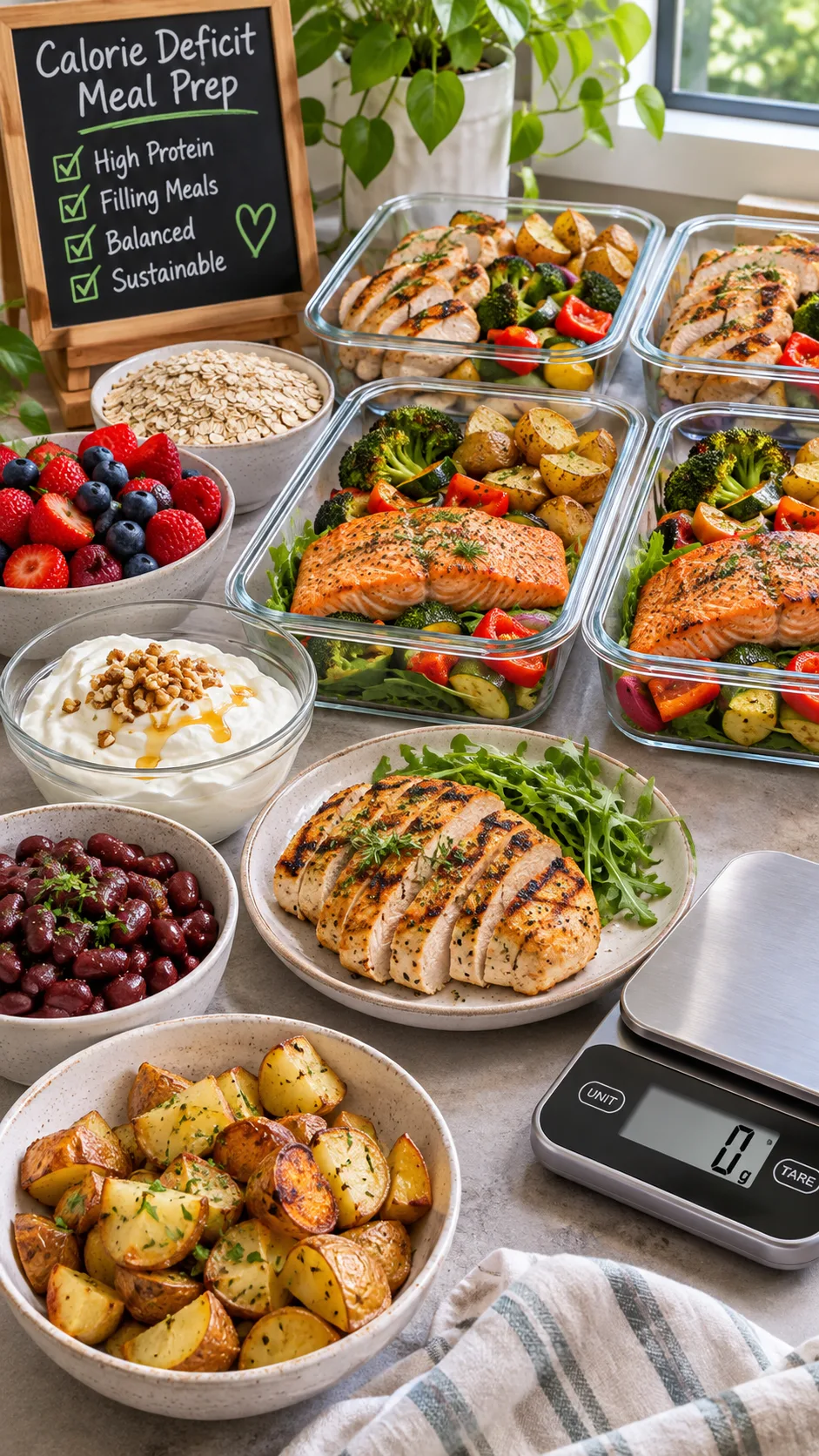
What a calorie deficit means

A calorie deficit happens when you eat fewer calories than your body uses over time. Your body then taps stored energy, including body fat, to cover the gap.
You do not need to starve for this to work. Extreme restriction often makes hunger louder, workouts worse, and late-night snack attacks far more likely.
Most people do best with a moderate calorie deficit of around 300 to 500 calories below maintenance each day. That pace usually supports steady fat loss and leaves room for meals you enjoy.
Your maintenance calories depend on your body size, age, activity level, muscle mass, sleep, stress, and about twelve other things that make online calculators slightly dramatic. Use a calculator as a starting point, then adjust based on real progress.
How fast should you lose weight?
Many adults can aim to lose roughly 0.5% to 1% of body weight each week. Someone who weighs 200 pounds could target one to two pounds weekly, while someone who weighs 140 pounds may see slower changes.
The Centers for Disease Control and Prevention supports gradual weight loss because realistic habits tend to last longer. Fast results may look exciting on social media, but your body does not care about a dramatic before-and-after montage.
Track your progress for at least two to four weeks before you change calories. Daily scale changes often reflect water, digestion, sodium, hormones, and that suspiciously salty takeaway you ordered on Friday.
Why most low-calorie diets leave you hungry
Many diet plans cut calories by removing entire meals, skimping on protein, or leaning on “healthy” snacks that barely qualify as food. A rice cake with a whisper of peanut butter will not carry you through a busy afternoon. It will just make you think about dinner at 3:17 p.m.
Hunger rises when meals lack volume, protein, fibre, and satisfying fats. Your brain notices when you try to fuel a human body with a sad handful of dry cereal.
A filling calorie deficit diet plan focuses on food quality first. You can still include treats, but your everyday meals need to do the heavy lifting.
The four fullness levers
- Protein helps you feel fuller after meals and supports muscle while you lose weight.
- Fibre adds bulk, supports digestion, and slows the movement of food through your system.
- Food volume comes from fruits, vegetables, soups, potatoes, and lean proteins, which give you more food for fewer calories.
- Satisfaction comes from flavour, texture, and a little fat, which stop meals from feeling like punishment.
When you combine all four, your meals keep you full for hours instead of minutes. Who wants to “save calories” at lunch only to eat half the kitchen after dinner?
Set your calorie target without making it weird
Start by estimating your maintenance calories with a reputable calculator, then choose a modest deficit. The NIH Body Weight Planner can help you explore realistic calorie and activity targets.
If you prefer a simple starting point, subtract 300 to 500 calories from your estimated maintenance intake. Smaller people, highly active people, and anyone close to their goal weight may need a smaller deficit.
Do not slash calories because a random fitness influencer eats 1,200 calories while filming a “what I eat in a day” video. Their needs may differ from yours, and cameras rarely show the full story.
Use your results to adjust the plan
- Choose a calorie target you can follow for at least two weeks.
- Weigh yourself three to seven mornings each week under similar conditions.
- Calculate your weekly average instead of panicking over one number.
- Track waist measurements, gym performance, energy, sleep, and hunger.
- Lower calories slightly only if progress stalls for two to four consistent weeks.
If your hunger feels relentless, your sleep tanks, or your training falls apart, raise calories a little. A diet plan should challenge you without turning you into a cranky zombie.
Build every meal around protein
Protein gives your calorie deficit diet plan real staying power. It helps you keep muscle during weight loss, speeds recovery from exercise, and makes meals feel more substantial.
Many active adults do well with roughly 1.2 to 1.6 grams of protein per kilogram of body weight each day. People who lift weights, carry more body weight, or diet aggressively may benefit from higher intakes, but individual needs vary.
Spread protein across three or four meals instead of cramming it all into dinner. A protein-heavy breakfast often helps people skip the mid-morning hunt for pastries.
High-protein foods that work in real life
- Eggs and egg whites
- Greek yogurt, skyr, cottage cheese, and quark
- Chicken breast, turkey, lean beef, and pork loin
- Fish, shrimp, tuna, and salmon
- Tofu, tempeh, edamame, lentils, and beans
- Protein powder for quick shakes, oats, or yogurt bowls
Aim for 25 to 40 grams of protein at most main meals. You do not need perfection, but one lonely slice of turkey folded onto white bread will not get you there.
If you eat plant-based, check out our vegan diet plan for beginners for practical ways to build filling meals without relying on deprivation.
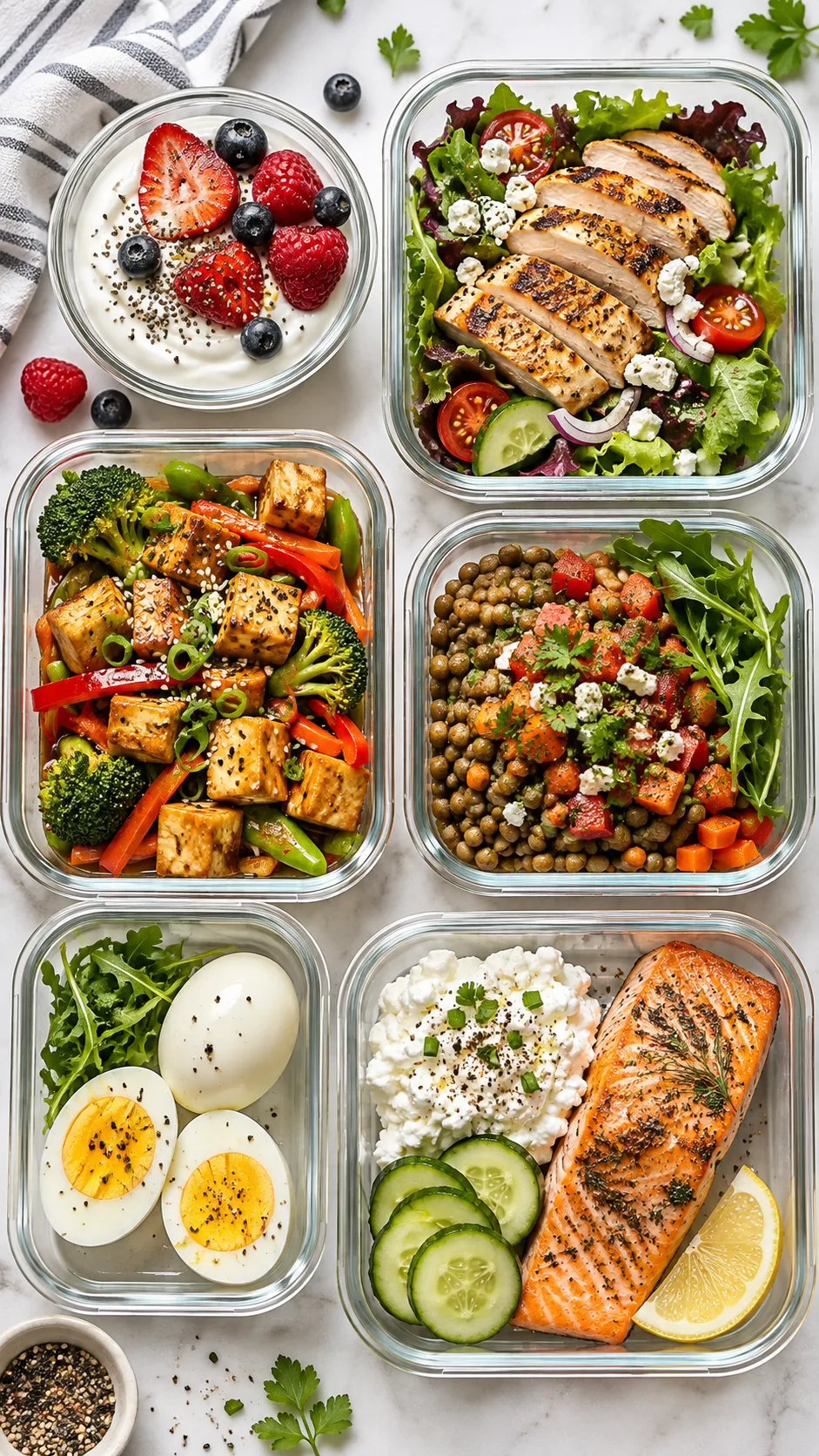
Choose high-volume foods for bigger plates
High-volume foods contain lots of water, air, or fibre relative to their calories. They let you eat a visually satisfying portion without blowing through your calorie target.
Vegetables top the list, but you do not need to chew plain lettuce until your jaw files a complaint. Roast them, stir-fry them, blend them into soups, add them to pasta, or load them into tacos.
Fruit helps too, since it packs sweetness, water, fibre, and nutrients into one package. Most people gain more from eating whole fruit than from fearing a banana like it carries classified information.
Foods that make a deficit feel easier
- Boiled, baked, or air-fried potatoes can feel incredibly satisfying.
- Oats become a breakfast that lasts when you add protein powder, yogurt, berries, and chia seeds.
- Beans and lentils give you fibre, protein, and plenty of meal bulk.
- Broth-based soup can take the edge off hunger before a meal.
- Air-popped popcorn gives you crunch and volume for relatively few calories.
- Leafy greens and crunchy vegetables stretch wraps, bowls, omelettes, and stir-fries.
Try the plate method when calorie tracking feels tiring. Fill half your plate with vegetables, add a palm-sized serving of protein, include a fist-sized portion of carbs, and use a measured source of fat.
That structure will not replace calorie awareness completely, but it gives you an easy visual system. You need habits that survive chaotic Tuesdays as well as peaceful meal-prep Sundays.
Do not fear carbs or fats
Carbs help you train hard, recover well, and enjoy your meals. Fats add flavour and satisfaction, support hormone health, and make vegetables taste less like a personal challenge.
Portion awareness matters more than food fear. A tablespoon of olive oil, a small handful of nuts, or half an avocado can fit well into a fat loss diet, but these foods pack calories quickly.
Choose carbs that earn their place on the plate. Potatoes, oats, rice, whole-grain bread, fruit, beans, and pasta can all support a calorie deficit when you match portions to your target.
For a flexible approach with satisfying meals and little fuss, our strict diet plan that works gives you useful structure without the misery Olympics.
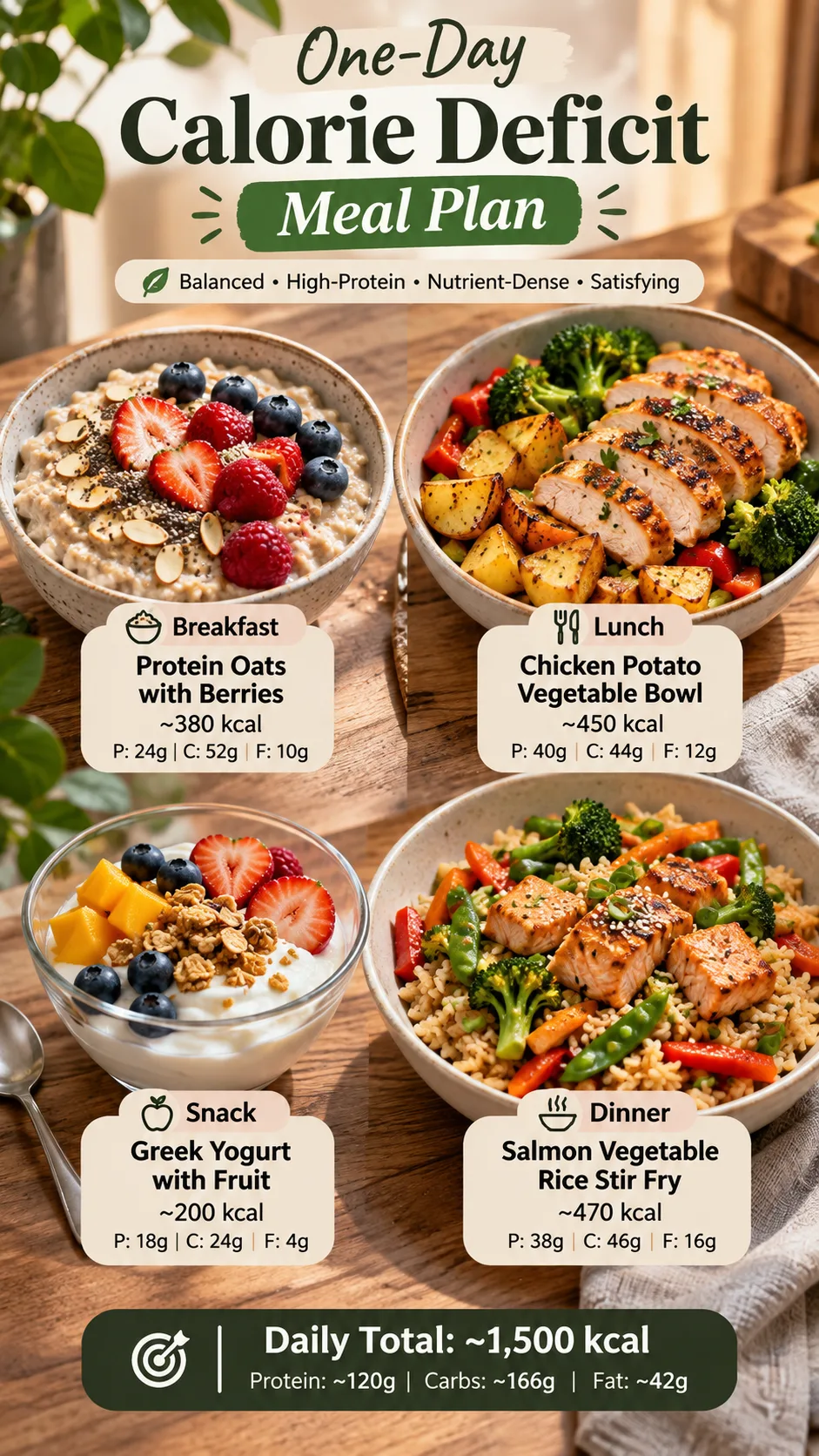
A full day of eating on a filling calorie deficit diet plan
This sample day lands near 1,800 calories, but you should adjust portions for your own needs. The menu prioritises protein, fibre, and foods that look like real meals.
Breakfast: protein oats with berries
Cook oats with milk or water, then stir in protein powder and top with Greek yogurt, berries, and cinnamon. This meal gives you slow-digesting carbs, protein, fibre, and a sweet start without a sugar crash.
Aim for roughly 400 to 450 calories and 30 to 35 grams of protein. Add a teaspoon of peanut butter if you need more satisfaction, and skip the peanut butter landslide.
Lunch: chicken potato power bowl
Build a bowl with grilled chicken, roasted potatoes, mixed vegetables, salad leaves, and a yogurt-based dressing. Season aggressively with herbs, lemon, garlic, chilli, paprika, or whatever makes you excited to eat vegetables.
Aim for roughly 500 to 550 calories and 40 grams of protein. Swap the chicken for tofu, tuna, lean beef, or chickpeas if you prefer.
Snack: yogurt, fruit, and crunch
Combine high-protein yogurt with an apple or berries and a small serving of high-fibre cereal. This snack works well before the afternoon hunger gremlin starts suggesting vending-machine decisions.
Aim for roughly 250 to 300 calories and 20 to 25 grams of protein.
Dinner: salmon stir-fry with rice
Cook salmon or tofu with broccoli, peppers, mushrooms, snap peas, garlic, ginger, soy sauce, and a measured portion of rice. This dinner tastes bold, looks generous, and balances protein, fibre, carbs, and healthy fats.
Aim for roughly 550 to 650 calories and 35 to 40 grams of protein. Keep frozen vegetables on hand for nights when chopping feels like too much admin.
Optional evening treat
Save 100 to 150 calories for dark chocolate, a small ice cream, hot cocoa, or a homemade protein pudding. Planned treats often prevent the all-or-nothing thinking that turns one cookie into a full-blown snack festival.
Ways to stay full between meals
You will feel hungry sometimes during fat loss, and that does not mean the plan has failed. The trick is to tell normal appetite from a plan that leaves you underfed.
If you feel mild hunger between meals, start with water, coffee, tea, or a zero-calorie drink. Then ask yourself a simple question: “Would I eat chicken, yogurt, fruit, or leftovers right now?”
If the answer is no and only cookies sound appealing, boredom or craving probably drives the urge. If the answer is yes, eat a planned snack and move on without the guilt theatre.
Practical fullness habits
- Eat slowly. Give your body time to register the meal.
- Start meals with vegetables or soup. The extra volume calms frantic hunger.
- Measure calorie-dense extras. Oils, sauces, cheese, nuts, and dressings can quietly overwhelm a deficit.
- Sleep enough. Poor sleep makes hunger and cravings harder to manage.
- Plan for your hardest hunger window. Keep filling foods ready for the time you usually snack.
- Lift weights if you can. Strength training helps you keep muscle as you lose weight.
The Nutrition.gov guide to food labels can help you compare protein, fibre, serving sizes, and calories when you shop. Labels do not need to become a personality trait, but they can reveal why some “healthy” snacks barely touch your hunger.
Common calorie deficit mistakes that trigger overeating
People rarely abandon a diet because they lack discipline. They usually follow a plan that asks too much and gives too little back.
Going too low too fast
A huge calorie deficit may produce fast scale changes at first, but it also brings fatigue, hunger, irritability, and weaker training sessions. Choose the smallest deficit that gives you steady progress.
Skipping protein at breakfast
A sugary coffee and a muffin can taste great, but they rarely keep you full until lunch. Add eggs, Greek yogurt, cottage cheese, tofu scramble, or a protein smoothie to build a stronger first meal.
Drinking your calories without noticing
Fancy coffees, juice, alcohol, creamy smoothies, and sugary sodas use up calories without giving you much chewing satisfaction. Keep them if you love them, but count them honestly.
Eating “clean” but boring food
Bland food invites rebellion. Use spices, marinades, salsa, pickles, mustard, citrus, low-calorie sauces, and fresh herbs so your meals taste like food and not like a wellness punishment.
When you should get personal support
Talk with a registered dietitian or qualified healthcare professional if you have diabetes, kidney disease, digestive conditions, or a history of eating disorders, or if you use weight-loss medication. Your health needs a plan that fits your medical situation.
If you use GLP-1 medication, food quality still matters because low appetite can make it hard to get enough protein, fluids, fibre, and nutrients. Our Wegovy diet plan guide explains how to build meals that support medication-based weight loss without sacrificing nutrition.
Seek help if food tracking causes anxiety, guilt, or obsessive thoughts. You can pursue health goals without turning every meal into a maths exam.
Eat enough to lose weight
The best calorie deficit diet plan leaves you neither starving nor miserable, and it never has you fantasising about an entire loaf of garlic bread in the car. It gives you enough protein, fibre, volume, flavour, and flexibility to stay consistent.
Start with a moderate calorie deficit, build every meal around protein, pile on produce, and measure the calorie-dense extras that sneak in easily. Then give the plan enough time to work.
Fat loss works best when your meals feel satisfying enough to repeat. Build a plate you want to eat tomorrow, and you will stop treating your diet like a short-term sentence.