

Your gut flares up, your doctor says “low residue,” and suddenly dinner looks like a hospital tray. Take a breath. You can eat real, tasty food on this plan, and you don’t have to live on plain toast.
This guide gives you a practical low residue diet food list, a sample day of meals, and tricks that make eating feel normal again. It also covers what to skip and when to call your care team.
What is a low residue diet, really?
“Residue” means the undigested material that moves through your colon and bulks up your stool. Fiber makes up most of it. A low residue diet cuts that bulk so your bowel has less work to do and fewer reasons to cramp.
Most plans aim for roughly 10 to 15 grams of fiber per day, though your doctor or dietitian sets your exact number. Treat that figure as a ballpark, not a personal prescription.
Low residue vs. low fiber: same thing?
Close, but no. A low fiber diet limits only fiber. A low residue diet goes further and also limits anything else that adds to stool volume, such as large amounts of milk and dairy.
Why does dairy matter? Milk leaves some residue behind in the colon, and in some people it triggers gas or loose stools. Many plans cap dairy at about two cups a day.
Who needs a low residue diet, and for how long?
Doctors usually prescribe this diet for short stretches. Common reasons include:
- Crohn’s disease or ulcerative colitis flares, when inflammation irritates the bowel.
- Diverticulitis recovery, once the acute phase settles and you move past clear liquids.
- Bowel narrowing (strictures), where rough, fibrous food can cause a blockage.
- The days before a colonoscopy or bowel surgery, so the colon stays as empty as possible.
- The weeks after bowel surgery, while the gut heals.
Most people follow it for days or weeks, not years. Never start or stop it on your own. The National Institute of Diabetes and Digestive and Kidney Diseases explains how doctors adjust diet during digestive conditions, and the Crohn’s & Colitis Foundation offers patient guidance on eating through flares.
The low residue diet food list
I sorted the list by food group so you can shop without squinting at labels for twenty minutes. Check your own plan first, because your doctor may tweak these rules.
Grains and starches
Refined grains work best here. Stripping the bran and germ removes the fiber, which is exactly the point. In my opinion, this is the one time white bread deserves a victory lap.
- White bread, plain rolls, and plain bagels (no seeds)
- White rice and refined pasta
- Plain crackers, such as saltines
- Refined cereals like cornflakes or puffed rice
- Cream of wheat, cream of rice, and grits
- Peeled, well-cooked potatoes (mashed, boiled, or baked without skin)
- Plain pancakes and waffles with a little syrup
Protein foods
Your body still needs protein to heal, even when your diet is restricted. Choose tender, soft proteins that need little chewing and carry little gristle.
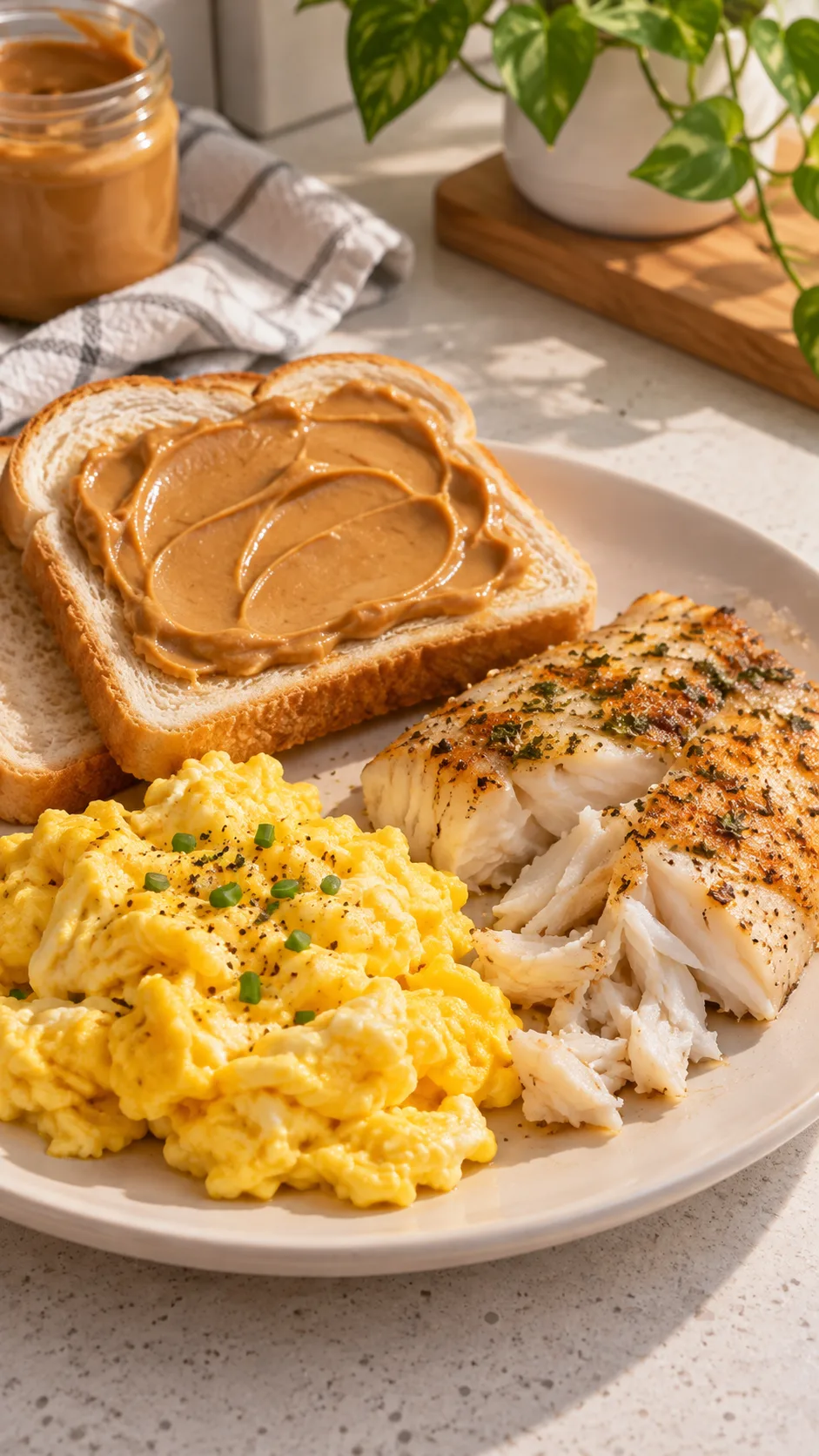
- Eggs, scrambled, poached, or soft-boiled
- Chicken and turkey without skin
- Fish and canned tuna
- Tender, lean beef, pork, or lamb that you cook until it falls apart
- Smooth peanut butter or other smooth nut butters (in small amounts)
- Tofu
Dairy and alternatives
Keep dairy modest. Aim for about two cups a day unless your care team says otherwise.
- Milk, in limited amounts
- Plain or vanilla yogurt without fruit chunks, nuts, or seeds
- Mild cheeses, such as mozzarella or mild cheddar
- Cottage cheese, in small portions
- Lactose-free milk if dairy upsets you
Fruits
Raw fruit with skins and seeds usually spells trouble. Cooked, canned, or very ripe fruit without skins or seeds works far better.
- Applesauce (smooth, unsweetened if you can find it)
- Ripe bananas
- Canned peaches, pears, and apricots (no skin)
- Peeled, cooked apples
- Ripe cantaloupe and honeydew melon
- Strained fruit juice without pulp
Vegetables
Raw salads go on the “not now” list. Cook vegetables until they turn very soft, and peel or remove the seeds from anything that needs it.
- Carrots you cook until tender
- Green beans and wax beans, cooked soft
- Asparagus tips
- Peeled, seedless squash and zucchini
- Spinach, cooked and finely chopped
- Beets
- Strained vegetable juice and tomato sauce without seeds
Fats, soups, drinks, and sweets
- Butter, margarine, and oils in moderate amounts
- Mayonnaise and smooth salad dressings
- Broth and strained soups without cream
- Gelatin, plain pudding, and custard
- Plain cakes and cookies without nuts, seeds, or dried fruit
- Water, herbal tea, and electrolyte drinks
One more thing: drink plenty of fluids on this plan. With less fiber, your stool relies on fluids to keep moving comfortably.
Foods to avoid on a low residue diet
This list hurts a bit, because it includes a lot of foods we call “healthy.” The restriction is temporary, so relax. Your kale will wait.
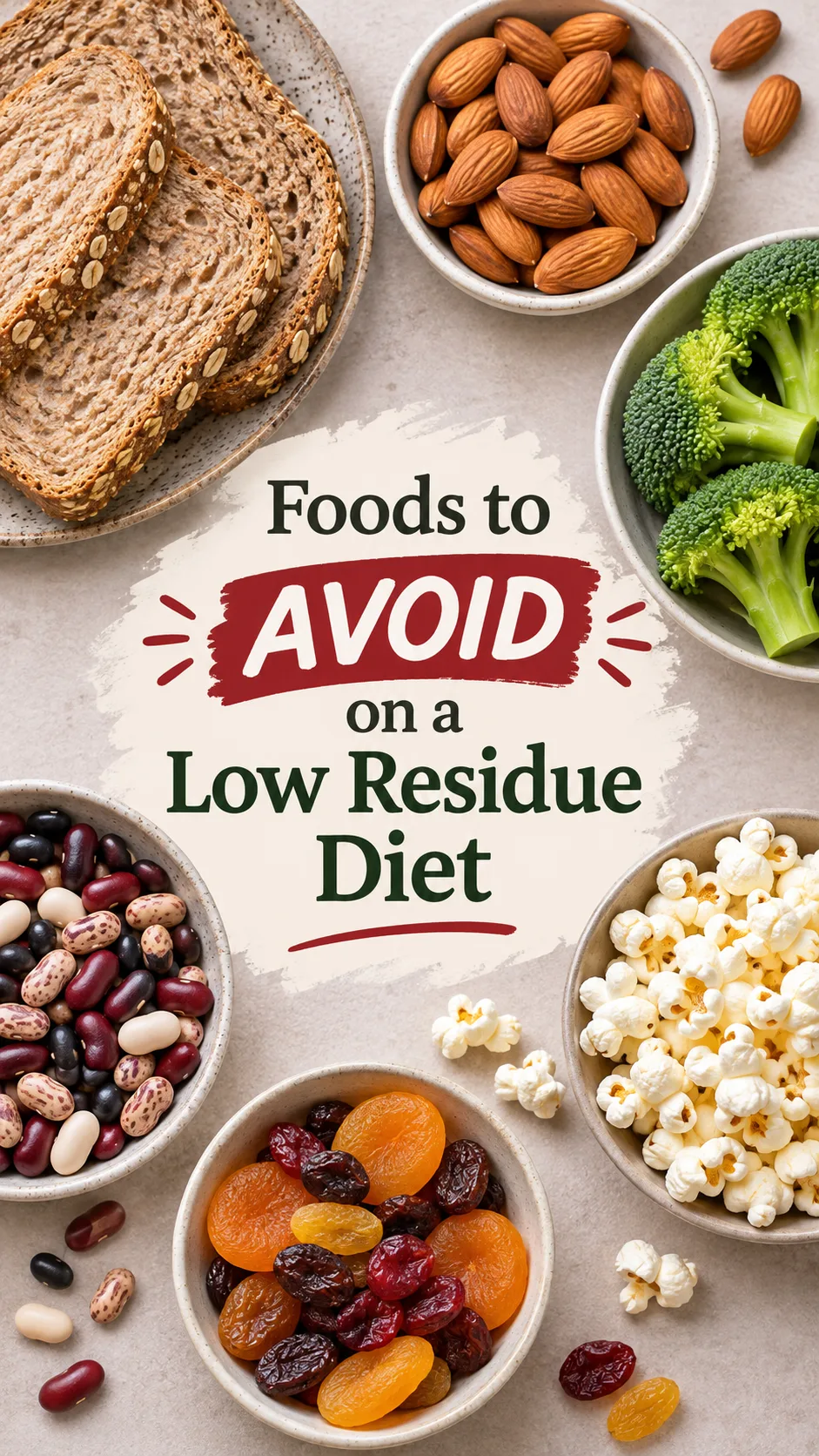
- Whole grains: whole wheat bread, brown rice, oatmeal with bran, quinoa, and popcorn
- Nuts and seeds: almonds, sesame, flax, chia, and anything crunchy and chunky
- Beans, peas, and lentils
- Raw vegetables and salads, plus corn, broccoli, cauliflower, and Brussels sprouts
- Dried fruit, berries with seeds, and fruit skins
- Prune juice and pulpy juices
- Tough, gristly, or processed meats with casings
- Fried, greasy, or very spicy dishes if they upset you
- Caffeine and alcohol if your doctor flags them
How to make low residue meals feel normal again
The food list is the easy part. Boredom is the real enemy. Plain chicken and white rice for ten days will break anyone.
So let’s fix that without bumping into the rules.
Build flavor without fiber
Fiber isn’t flavor. You can season generously with salt, mild herbs, and cooking fat, and you rarely need to worry. Check with your doctor about garlic, onion, and chili, since some bowels hate them during a flare.
- Roast chicken with butter, salt, and a little thyme
- Stir mild cheese into mashed potatoes or grits
- Simmer rice in broth instead of water
- Add a splash of lemon juice (no pulp) to fish
- Use smooth sauces, like a simple béchamel, to pull a meal together
Mix up textures
Soft, soft, soft gets old fast. Add a crisp edge with toasted white bread, crackers, or a seared chicken cutlet (not deep-fried). A small crunch makes a plate feel like real dinner.
If chewing tires you out, our soft food diet meal ideas give you more satisfying options. Many of them overlap with the low residue list.
Eat small, eat often
Large meals can overwhelm an irritated gut. Five or six small meals usually sit better than three big ones. Chew slowly, too, so you notice your body’s signals sooner.
A sample day of low residue meals
Here’s a realistic day. Swap items freely within the food list above.
- Breakfast: scrambled eggs, white toast with butter, and a ripe banana.
- Mid-morning snack: plain yogurt with a spoonful of smooth applesauce.
- Lunch: tuna salad (mayo, no celery or onion) on white bread, plus a cup of strained broth.
- Afternoon snack: saltine crackers with smooth peanut butter.
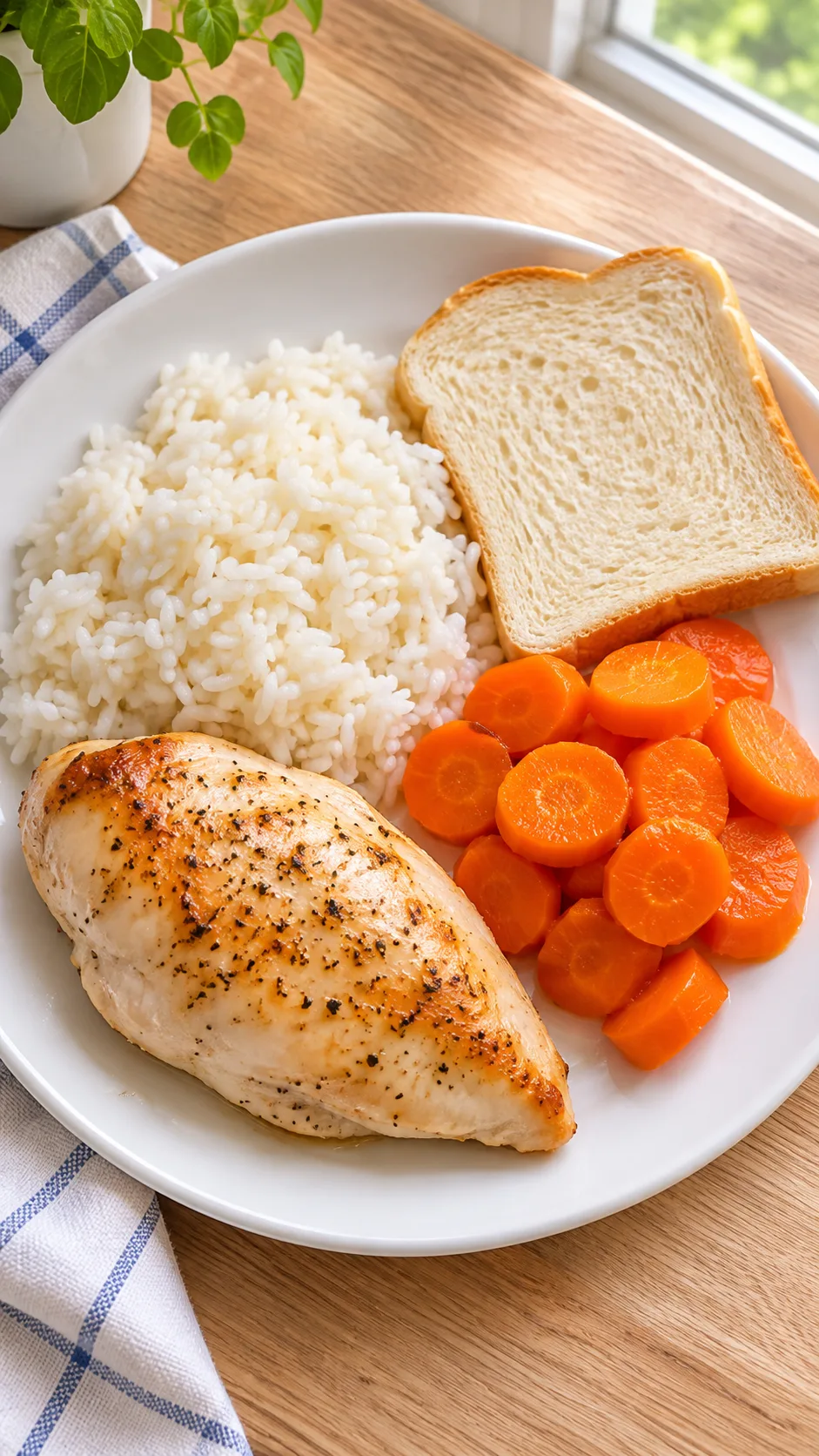
- Dinner: baked chicken breast, white rice, and carrots you cook until they mash easily with a fork.
- Evening treat: vanilla pudding or gelatin.
Nothing exotic here, but it tastes like food and it follows the rules.

Watch a dietitian walk through it
Sometimes seeing the food helps more than reading about it. This video gives a visual overview of low residue eating.
Common mistakes people make
I see the same slip-ups again and again. Dodge these and you’ll feel better faster.
Guessing instead of reading labels
“Multigrain” and “wheat” breads often contain plenty of fiber. Look for “enriched white flour” and under 1 to 2 grams of fiber per serving. One sneaky seed or nut piece can ruin your day.
Drinking too little
Dehydration makes everything worse. Sip fluids all day, and ask your doctor how much suits you, especially if you have diarrhea.
Staying on the diet too long
This mistake matters most. A low residue diet doesn’t give you complete nutrition for the long haul. It lacks fiber, and it often falls short on certain vitamins and minerals.
Your care team may add supplements or guide you back to higher-fiber foods gradually. When you’re ready for a longer-term approach, our guide to healthy diet food that keeps you full shows how to build satisfying meals once you can widen your menu.
Ignoring reflux and other triggers
Many people with gut issues also deal with heartburn. If that’s you, try these acid reflux diet meals for ideas that suit a sensitive stomach. Clear any overlap with your doctor first.
How to reintroduce fiber without a setback
Once your symptoms calm down, you’ll want your normal foods back. Fair enough. Go slowly and add one new food at a time.
- Start with soft, cooked vegetables and peeled fruit.
- Move to small portions of whole grains, like oatmeal.
- Test nuts, seeds, and raw vegetables last.
- Keep a simple food and symptom diary so you spot patterns.
If symptoms return, step back to the last food that worked and tell your doctor. Reintroduction rarely follows a straight line, so don’t beat yourself up over a bad day.
When to call your doctor
Diet helps, but it doesn’t replace medical care. Call your doctor promptly if you notice any of these:
- Severe or worsening abdominal pain
- Persistent vomiting or a swollen belly
- Blood in your stool
- Fever with digestive symptoms
- Unplanned weight loss or signs of dehydration
For general digestive health information, the Mayo Clinic publishes patient-friendly resources. Still, nothing beats advice from the clinician who knows your history.
Quick answers to common questions
Can I drink coffee on a low residue diet?
Coffee has no fiber, but caffeine stimulates the gut in some people. Ask your doctor, and start with a small cup if they say yes.
Is a low residue diet good for weight loss?
No. It exists to rest your bowel, not to slim you down. Because it limits many nutritious foods, you shouldn’t use it as a long-term weight plan.
Can I eat out?
Yes, with a bit of strategy. Order grilled or baked chicken or fish, plain rice or mashed potatoes, and soft cooked vegetables. Ask the kitchen to skip seeds, skins, and heavy spices. Most servers handle that request without blinking.
The bottom line
A low residue diet gives your gut a break, and it doesn’t have to wreck your meals. Stick to refined grains, tender proteins, peeled and cooked produce, and moderate dairy. Skip whole grains, nuts, seeds, raw veggies, and tough meats until your doctor gives the green light.
Season boldly within your limits, vary your textures, and eat small meals through the day. Then widen your menu slowly when your doctor says you can.
Print the food list, stick it on your fridge, and bring it to your next appointment. You have a plan now, and dinner can feel like dinner again.