

You slept nine hours. You still feel like someone unplugged you at 2pm. Sound familiar?
If your thyroid runs slow, you already know that “just get more rest” advice does nothing. Your energy problem doesn’t live in your pillow. It lives in your hormones, your gut, your blood sugar, and yes, your plate.
I’ve spent years helping people rebuild their eating around a sluggish thyroid, and the same pattern repeats. People obsess over avoiding one or two “bad” foods while ignoring the stuff that moves the needle: protein, iodine, selenium, iron, and stable blood sugar. Sort those out, and the afternoon crash stops feeling like a daily ritual.
This guide gives you the full hypothyroid diet meal plan: what to eat, what to time carefully, what to stop stressing about, and a 7-day plan you can cook without a personal chef.
First, why does hypothyroidism make you so exhausted?
Your thyroid is the thermostat for your metabolism. It pumps out T4 and T3 hormones that tell every cell in your body how fast to burn fuel. When output drops, your cells downshift into energy-saving mode, and you feel it everywhere.
That’s why hypothyroidism arrives as a weird combo platter: fatigue, brain fog, cold hands, constipation, dry skin, hair thinning, and weight that creeps up even though you swear you’re eating the same. According to the National Institute of Diabetes and Digestive and Kidney Diseases, roughly 5 in 100 Americans aged 12 and older have hypothyroidism, and women get hit far more often than men.
Here’s the part nobody tells you: food doesn’t replace thyroid medication. Nothing on this page replaces levothyroxine if your doctor prescribed it. But food controls how well your body uses the hormone you’ve got. Big difference.
The fatigue cycle, explained in plain English
- Low thyroid hormone slows your metabolic rate, so you feel wiped out.
- You reach for quick carbs and caffeine to push through the slump.
- Blood sugar spikes, then crashes, and cortisol jumps in to rescue you.
- High cortisol blunts T4-to-T3 conversion, which makes the original problem worse.
- Repeat tomorrow. Forever. Fun, right?
Your meal plan’s entire job is to break step 2 and step 3. That’s it. Everything below serves that goal.
The 5 nutrients your thyroid genuinely cares about
Forget the 47-supplement protocols on Instagram. Your thyroid runs on a short list, and most people come up short on at least one item.
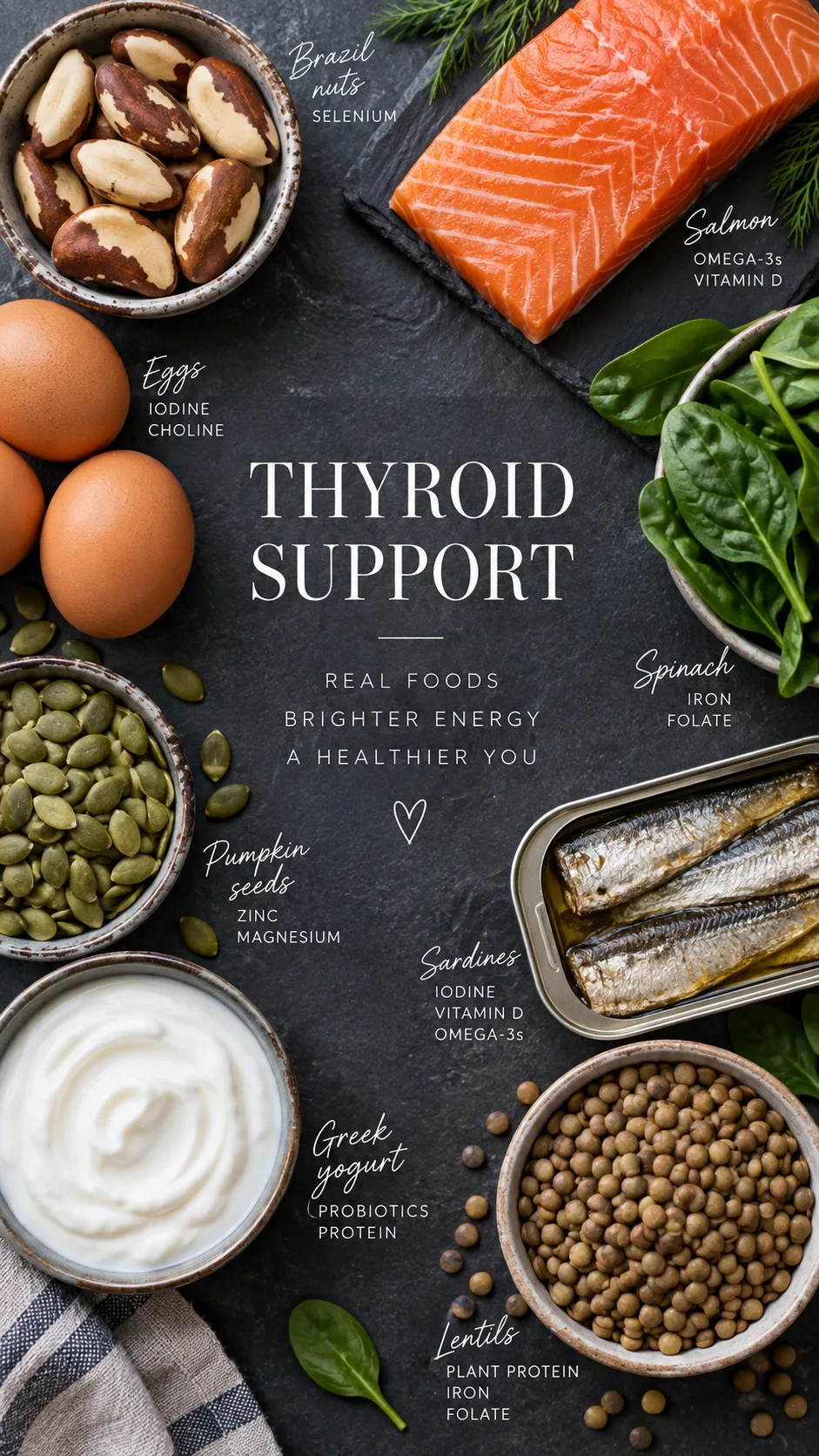
1. Iodine, the raw material
Your thyroid literally builds hormones out of iodine. Too little and production stalls. Too much and you can worsen autoimmune thyroid disease. This is a Goldilocks nutrient, not a “more is better” nutrient.
- Best sources: iodized salt, cod, shrimp, dairy, eggs, seaweed (sparingly)
- RDA: 150 mcg/day for adults, higher in pregnancy
- Warning: Skip mega-dose kelp supplements unless your doctor tells you otherwise
2. Selenium, the converter
Selenium powers the enzymes that turn inactive T4 into active T3. Research summarized by the NIH Office of Dietary Supplements shows the thyroid holds more selenium per gram than any other tissue in the body. That’s not an accident.
Two Brazil nuts a day covers you. Two. Not a handful. Selenium turns toxic at high doses, and nobody wants brittle nails and garlic breath as a side quest.
3. Iron, the silent saboteur
Low ferritin tanks thyroid function AND causes fatigue on its own. Women with heavy periods get hit hardest. Ask your doctor to check ferritin, not just hemoglobin. Plenty of people sit at “normal” hemoglobin with a ferritin of 12.
4. Zinc, the signal booster
Zinc helps your body produce thyroid hormone and keeps hair on your head. Oysters, beef, pumpkin seeds, and lentils all deliver.
5. Protein, the underrated hero
Protein stabilizes blood sugar, protects muscle (which drives your metabolic rate), and supplies tyrosine, the amino acid your thyroid pairs with iodine. Aim for 25 to 35g of protein per meal. Most people with fatigue eat maybe 10g at breakfast and then wonder why 11am feels like a wall.
What about goitrogens? (the broccoli panic is overblown)
Every hypothyroid forum has that one person screaming about cruciferous vegetables. Let me save you some anxiety.
Goitrogens, the compounds in broccoli, kale, cabbage, cauliflower, and soy, can interfere with iodine uptake. In theory. In practice, you’d have to eat absurd quantities of raw cruciferous vegetables daily while being iodine deficient before it mattered. One documented case involved a woman eating roughly 1 to 1.5 kg of raw bok choy per day.
Are you eating a kilo of raw bok choy? IMO, no. So relax and eat your broccoli. Cooking deactivates most goitrogenic compounds anyway, and the fiber and antioxidants you get in return are worth far more.
The thing that really matters: soy and your medication
Soy doesn’t wreck your thyroid. But soy, calcium, iron, coffee, and high-fiber foods all block absorption of levothyroxine. That’s the real issue, and the fix comes down to timing:
- Take your thyroid medication on an empty stomach, 30 to 60 minutes before breakfast
- Wait 4 hours before calcium or iron supplements
- Give coffee at least 30 to 60 minutes of space
- Stay consistent: same time, same conditions, every single day
Half the people who tell me “my meds aren’t working” are chugging a latte with their pill. Fix the timing first, then judge the dose.
The blood sugar rule that ends the 3pm crash
My single favorite intervention costs nothing.
Never eat a naked carb. Ever. Toast alone, fruit alone, crackers alone, rice alone: all of it spikes your glucose, triggers an insulin surge, and drops you into a cortisol-fueled slump 90 minutes later.
Pair every carb with protein and fat. Apple plus almond butter. Rice plus chicken plus olive oil. Oats plus Greek yogurt plus seeds. That’s the whole trick.
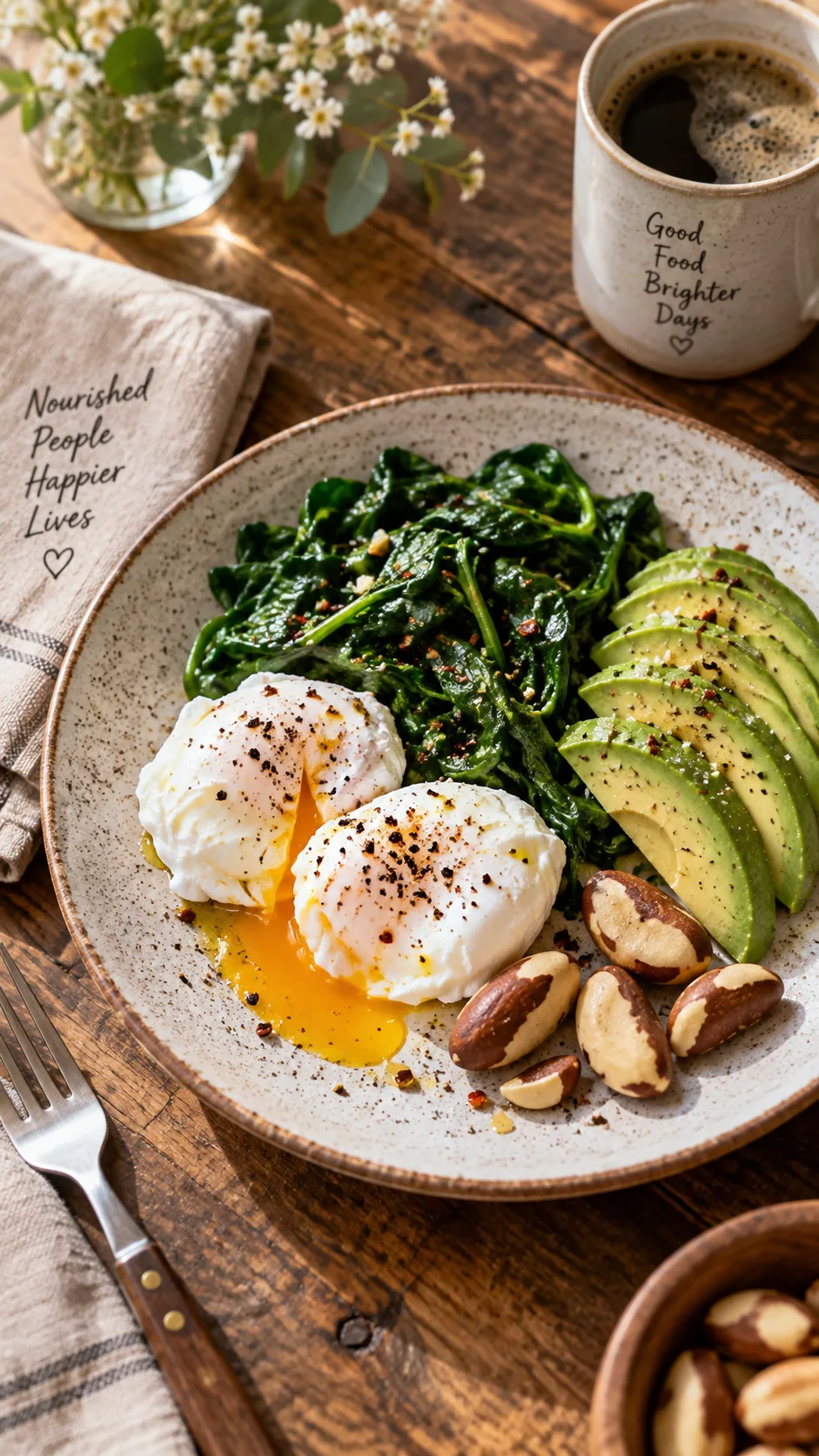
A client of mine (busy nurse, three kids, Hashimoto’s) swore she needed a nap every afternoon. We changed nothing except her breakfast: cereal out, three eggs with spinach and avocado in. Two weeks later she texted me “I forgot to be tired.” That’s the power of front-loading protein.
If blood sugar stability is your main battle, the principles in this prediabetic diet meal plan overlap neatly with thyroid support. Same enemy, different door.
The 7-day hypothyroid diet meal plan
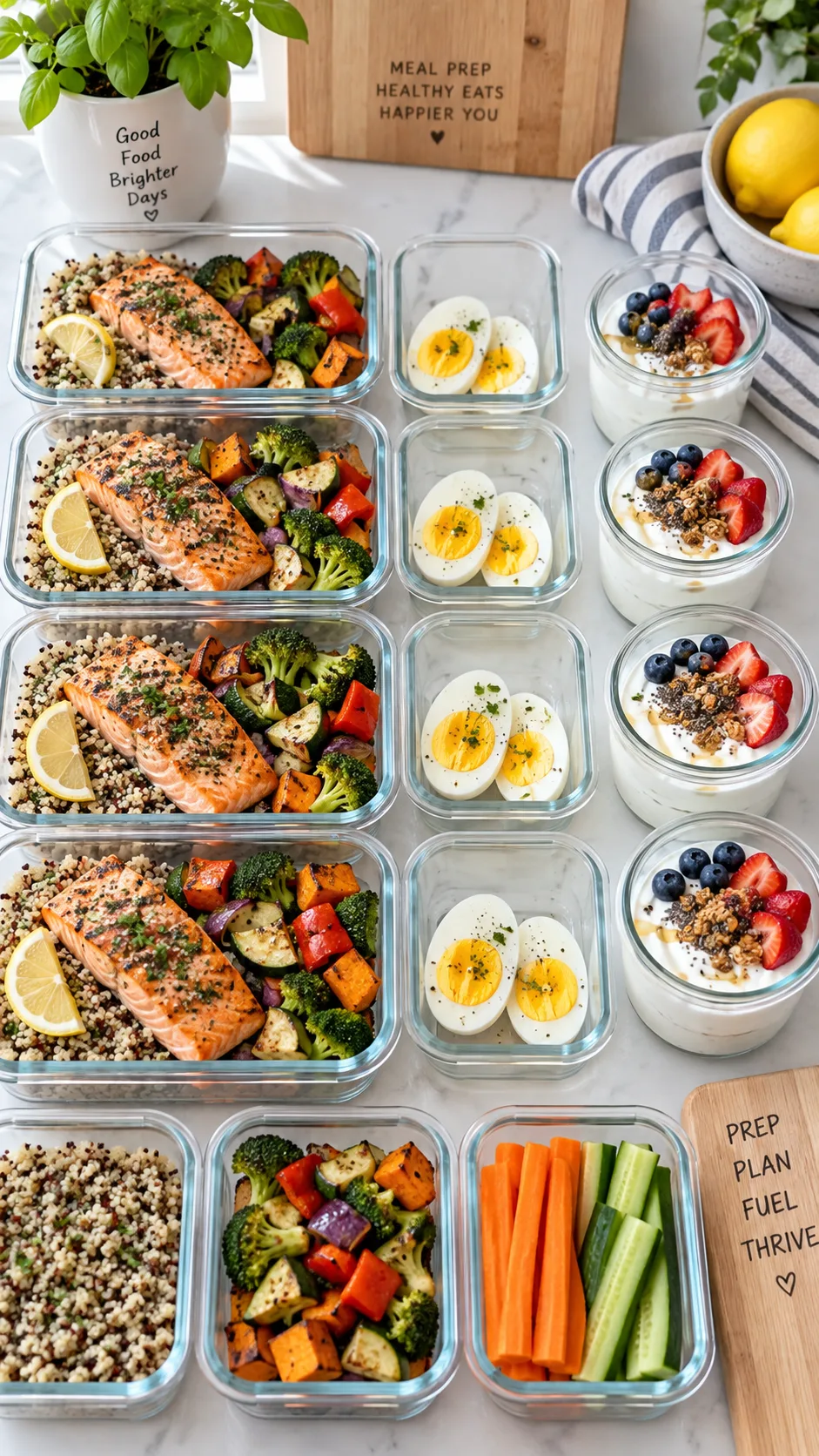
Every day hits protein at breakfast, selenium daily, iodine 3 to 4 times weekly, and zero naked carbs. Adjust portions to your appetite and activity. This is a template, not a prison sentence.
Day 1
- Breakfast: 3-egg omelette with spinach and feta + 1/2 avocado
- Lunch: Grilled chicken salad, olive oil dressing, pumpkin seeds, chickpeas
- Snack: 2 Brazil nuts + Greek yogurt
- Dinner: Baked cod, roasted sweet potato, steamed green beans
Day 2
- Breakfast: Greek yogurt bowl, berries, chia seeds, walnuts
- Lunch: Leftover cod flaked into a quinoa bowl with cucumber and tahini
- Snack: Boiled egg + apple slices
- Dinner: Beef stir-fry with cooked broccoli, peppers, and brown rice
Day 3
- Breakfast: Protein smoothie with whey or pea protein, banana, spinach, almond butter, flaxseed
- Lunch: Tuna and white bean salad with red onion and parsley
- Snack: 2 Brazil nuts + a handful of grapes
- Dinner: Roast chicken thighs, mashed cauliflower, sautéed kale
Day 4
- Breakfast: Cottage cheese with pineapple and sunflower seeds
- Lunch: Lentil soup + side of grilled shrimp
- Snack: Hummus with carrot sticks
- Dinner: Salmon fillet, roasted Brussels sprouts, wild rice
Day 5
- Breakfast: Shakshuka (2 eggs poached in tomato sauce) + sourdough slice
- Lunch: Turkey and avocado wrap on a whole-grain tortilla + side salad
- Snack: 2 Brazil nuts + kefir
- Dinner: Sardine pasta with garlic, chili, parsley, and olive oil
Day 6
- Breakfast: Savoury oats with an egg on top and grated cheese
- Lunch: Chicken and vegetable soup with barley
- Snack: Pumpkin seeds + dark chocolate square
- Dinner: Grilled steak, baked potato with butter, arugula salad
Day 7
- Breakfast: Smoked salmon and cream cheese on rye + cherry tomatoes
- Lunch: Big Buddha bowl: quinoa, roasted veg, boiled eggs, tahini drizzle
- Snack: 2 Brazil nuts + orange
- Dinner: Prawn and vegetable curry with coconut milk over basmati rice
Notice what’s missing? Nothing dramatic. No 17-ingredient elimination protocol. Just real food, protein at every meal, and iodine-rich seafood a few times a week.
Hashimoto’s: when you need to go a step further
Around 90% of hypothyroidism cases in iodine-sufficient countries come from Hashimoto’s thyroiditis, an autoimmune condition where your immune system attacks your own thyroid tissue. The American Thyroid Association confirms it as the leading cause.
If that’s you, the standard plan above still applies, but inflammation control becomes a bigger deal. A few extra moves worth testing:
- Get screened for celiac disease. Hashimoto’s and celiac travel together more often than chance explains.
- Load up on omega-3s with fatty fish three times a week, or a quality fish oil.
- Consider vitamin D. Deficiency shows up constantly in autoimmune thyroid patients.
- Trial reduced gluten for 8 weeks if symptoms persist, and track how you feel rather than how the internet says you should feel.
For a deeper protocol, the Hashimoto’s disease diet plan breaks the autoimmune side down properly. You can also layer in strategies from an anti-inflammation diet meal plan if joint aches and puffiness ride along with your fatigue.
Foods to limit (not fear)
I hate fear-based food lists. But a few things genuinely work against you:
- Ultra-processed snacks. They spike glucose, feed inflammation, and give you nothing back.
- Excess alcohol. It disrupts sleep architecture, which torpedoes your energy the next day.
- Kelp and high-dose iodine supplements. These can trigger thyroid dysfunction in susceptible people.
- Extreme calorie restriction. Crash diets lower T3 output. Your body isn’t stupid; it slows down to survive.
- Coffee within an hour of your pill. Absorption drops significantly.
Notice that “gluten” and “broccoli” didn’t make the top five. Priorities matter.

Lifestyle habits that multiply your results
Sleep like it’s your job
Poor sleep raises cortisol, and cortisol suppresses T4-to-T3 conversion. Seven to nine hours isn’t a luxury when your thyroid already underperforms. Set a bedtime alarm, not just a morning one.
Lift something heavy
Cardio is fine. Resistance training is better. Muscle tissue burns energy at rest, and building it counteracts the metabolic slowdown directly. Two or three sessions a week changes things.
Walk after meals
A 10-minute post-meal walk blunts glucose spikes measurably. It’s the laziest high-return habit in existence. Mediterranean cultures have done this instinctively for centuries, long before anyone strapped on a continuous glucose monitor.
Test, don’t guess
Ask for a full panel: TSH, free T4, free T3, TPO antibodies, ferritin, vitamin D, and B12. A lonely TSH number tells you maybe 40% of the story. Bring this list to your appointment. Good doctors appreciate an informed patient.
What realistic progress looks like
Let’s set honest expectations, because Instagram sure won’t.
- Week 1 to 2: Fewer energy crashes, better digestion, less bloating
- Week 3 to 6: Steadier mood, clearer thinking, improved sleep quality
- Week 8 to 12: Noticeable fatigue reduction, gradual weight shifts, better labs on retest
- Month 4 and beyond: Hair and nail improvements, which lag behind everything else
Weight loss with hypothyroidism moves slower than it does for other people. That’s biology, not a personal failing. If fat loss sits high on your list, pair this approach with a structured calorie framework like a 1500 calorie meal plan rather than slashing intake to nothing.
The bottom line
Your fatigue isn’t a character flaw and it isn’t laziness. It’s a metabolic feedback loop, and loops break at the weakest link.
So here’s your recap:
- Protein at every meal, 25 to 35g, starting with breakfast
- Two Brazil nuts daily for selenium, no more
- Seafood three times a week for iodine, without megadose kelp
- Never eat a naked carb. Pair every carb with protein or fat
- Take your medication properly: empty stomach, 30 to 60 minutes before food
- Test ferritin, vitamin D, and B12, not just TSH
- Stop fearing broccoli and start fixing timing, protein, and sleep
Pick two changes from that list and start tomorrow morning. Not Monday. Tomorrow. The version of you that doesn’t need a 3pm nap is closer than you think.
This article shares general nutrition education and doesn’t replace medical advice. Talk to your doctor or an endocrinologist before changing medication, starting supplements, or overhauling your diet, especially if you take levothyroxine or manage an autoimmune condition.