

Right now, you need food that can keep pace with your day. Between feeds, nappy changes, piles of laundry, and cups of tea that somehow go cold untouched, your body needs steady fuel.
A sensible breastfeeding meal plan can help you maintain your energy, recover after pregnancy and birth, and meet your nutrient needs without tracking every bite. You do not need a “perfect” diet, a pantry full of lactation cookies, or a spreadsheet for three almonds.
You need regular meals, easy snacks, enough fluids, and room to adapt. That is manageable.
Why your breastfeeding diet matters
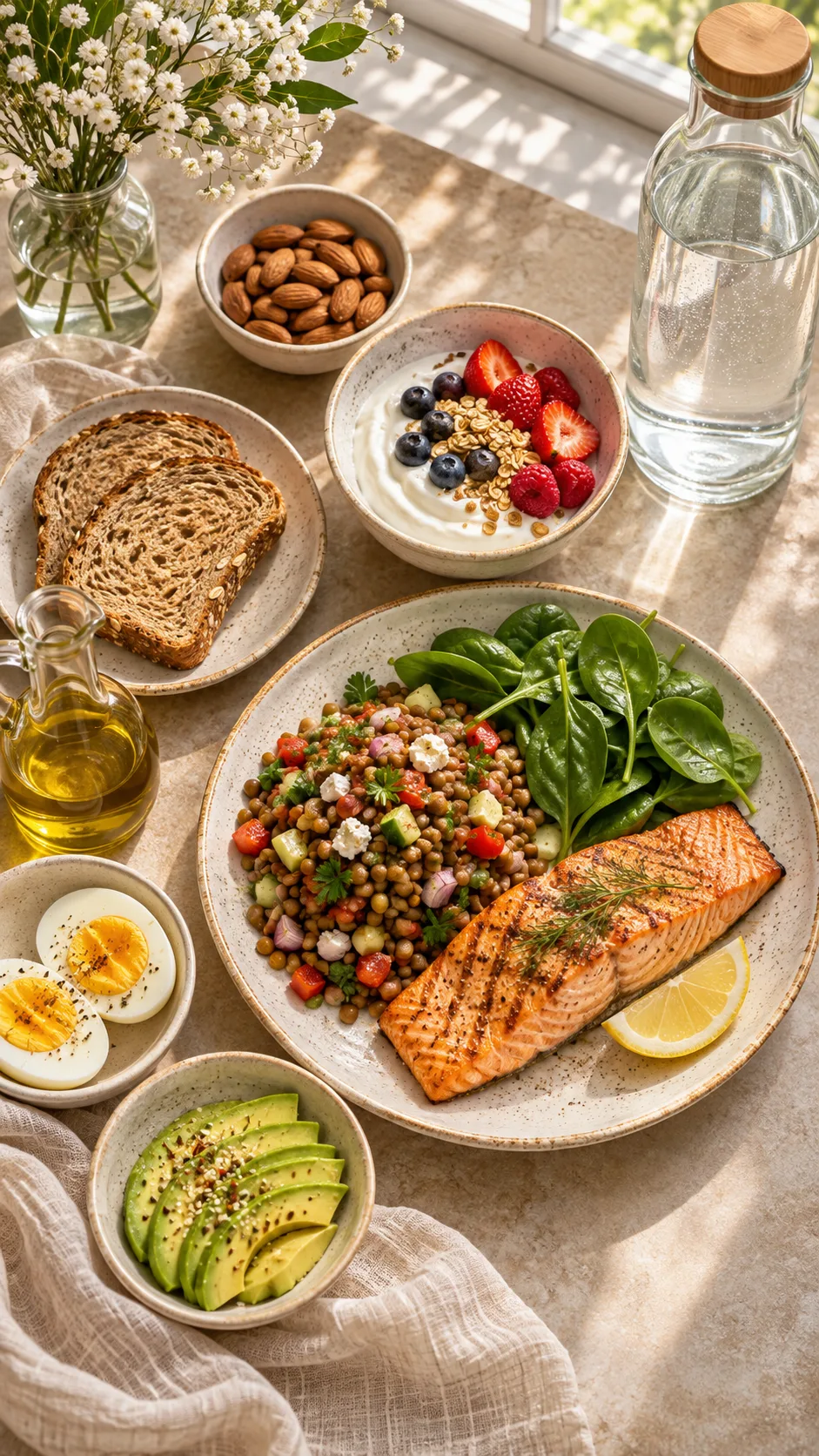
Breastfeeding puts real demands on your body. You make milk, recover from pregnancy and birth, cope with interrupted sleep, and still try to remember where you put your phone.
Many breastfeeding parents need more energy each day, though your personal needs depend on your body size, activity, milk production, recovery, and whether you breastfeed exclusively. The Centers for Disease Control and Prevention says breastfeeding mothers generally need an extra 330 to 400 calories a day compared with what they ate before pregnancy.
Use that figure as a starting point, not a rigid rule. Your hunger can tell you a lot, particularly during cluster feeding or a growth spurt.
You can read the CDC’s guidance on maternal diet and breastfeeding nutrition for more detail. Your doctor or registered dietitian can tailor advice if you manage diabetes, thyroid disease, anaemia, food allergies, or another health condition.
Food nourishes you, but it does not turn milk supply on
One myth deserves a clear answer: no individual food can suddenly make your body produce a flood of milk.
Frequent and effective milk removal has the strongest effect on milk production. A baby who nurses well, regular pumping, a good latch, and appropriate feeding help matter far more than oats, fennel tea, or a large plate of cookies.
Still, eating too little, becoming dehydrated, and missing meals can leave you worn out and make your feeding routine harder to manage. A practical breastfeeding meal plan helps with that.
If you worry about low supply, contact a board certified lactation consultant or your healthcare professional. The La Leche League low milk supply guide explains evidence based next steps and signs of a genuine supply problem.
The parts of a filling breastfeeding meal plan
Think of each meal as a chance to keep your energy more even. You do not need to eat “clean” all day. You need meals that help you avoid the 3 p.m. crash while you hold a hungry baby.
A straightforward formula can help: protein + fibre rich carbohydrate + healthy fat + colourful produce. Together, these foods help you stay full, supply nutrients, and provide steadier energy.
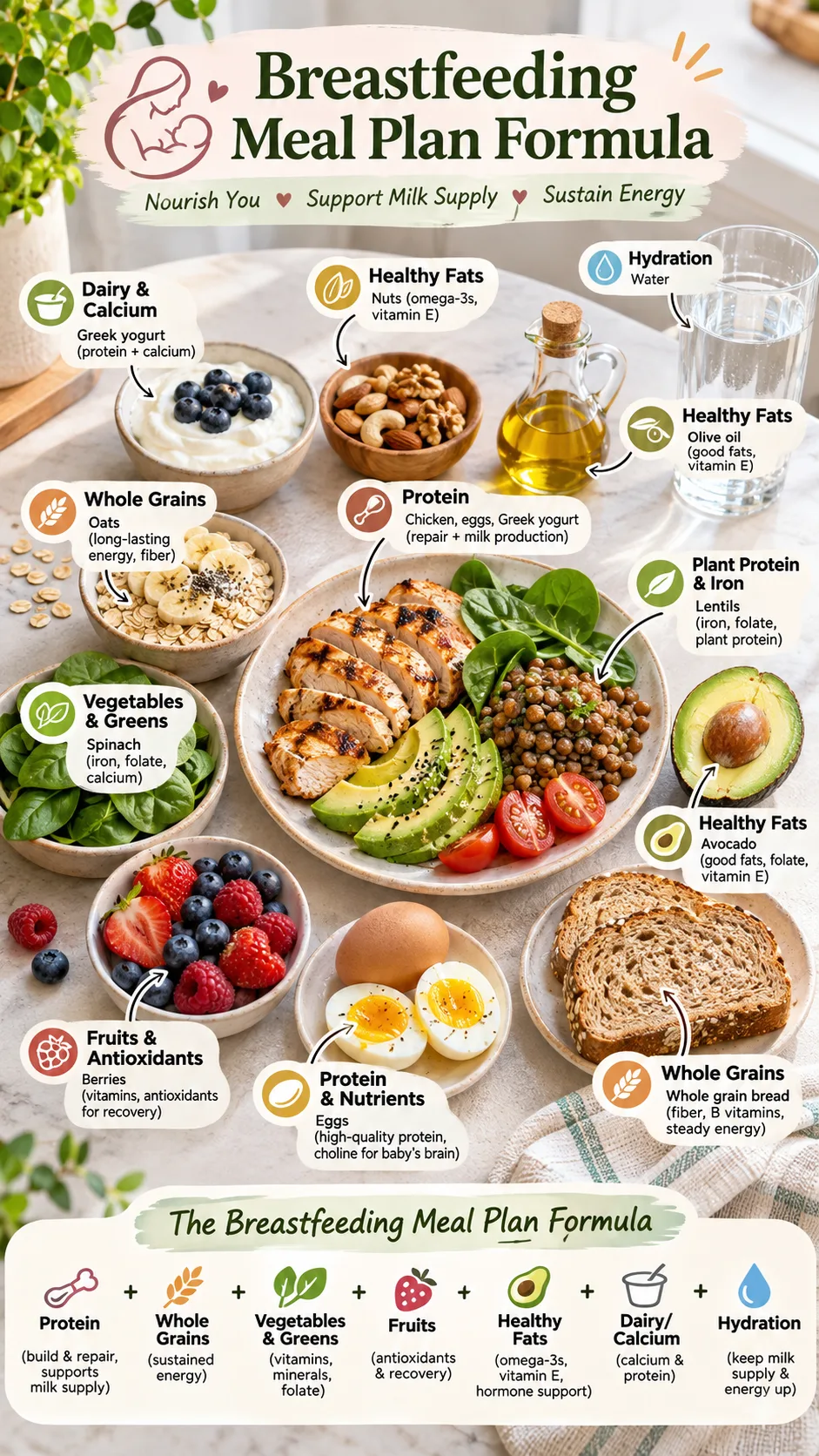
Protein: the nutrient that helps you stay full
Protein can help you feel satisfied after a meal and support tissue recovery after birth. It can also make a snack more filling than crackers alone, which often leave you hungry again five minutes later.
Try to include a protein source with every meal and most snacks. Choose animal or plant proteins according to your preferences, budget, culture, and what you can eat with one hand.
- Eggs: Quick, affordable, and rich in choline.
- Greek yogurt or cottage cheese: Simple choices for breakfast or snacks.
- Chicken, turkey, lean beef, and fish: Sources of protein, iron, zinc, and B vitamins.
- Beans, lentils, chickpeas, tofu, and tempeh: Plant foods that provide fibre.
- Nut butter: Easy to spread on toast or add to fruit and overnight oats.
- Cheese: A convenient source of protein and calcium alongside fruit or whole grain crackers.
Carbohydrates: a dependable source of energy
Carbohydrates do not harm breastfeeding nutrition. Your body uses carbohydrates for energy, and your brain needs more than wishful thinking and cold coffee.
Choose higher fibre carbohydrates most often. Whole grains, fruit, starchy vegetables, and beans provide energy along with fibre, vitamins, and minerals.
- Oats and overnight oats
- Whole grain bread, wraps, pasta, and crackers
- Brown rice, quinoa, couscous, and barley
- Potatoes and sweet potatoes
- Bananas, berries, oranges, apples, and pears
- Beans, peas, and lentils
Healthy fats: small additions that satisfy
Healthy fats help meals feel more satisfying and provide essential fatty acids. They also make food taste good, which matters when you eat the same breakfast for three days straight.
Add avocado, olive oil, nuts, seeds, nut butter, olives, and oily fish such as salmon or sardines. A tablespoon of peanut butter or some pumpkin seeds can turn a plain snack into something that lasts until your next meal.
Fruit and vegetables: make them easy
You do not need to chop seven vegetables while your baby objects from the bouncer. Frozen vegetables, bagged salad, cut carrots, tinned tomatoes, and microwave steam bags all count.
Try to eat fruit or vegetables with most meals. They provide vitamin C, folate, potassium, fibre, and antioxidants that contribute to your overall health.
Nutrients to focus on while breastfeeding
Varied meals can cover a lot of nutritional ground, but a few nutrients need extra attention during breastfeeding. Your healthcare team may suggest a prenatal or postnatal vitamin, especially if you follow a vegan diet, had low iron during pregnancy, or find it hard to eat a varied diet.
Calcium and vitamin D
Calcium supports bone health for both you and your baby. Dairy foods offer an easy source, while fortified plant milks, calcium set tofu, sardines with bones, kale, and fortified cereals can help too.
Vitamin D helps your body absorb calcium and supports immune health. Food provides only small amounts, so ask your healthcare professional whether you or your baby need a supplement.
Iron
Birth can reduce your iron stores, especially if you lost a lot of blood. Low iron can make fatigue, shortness of breath, headaches, and that “why do I feel like a ghost?” feeling worse.
Eat iron rich foods such as lean red meat, lentils, beans, fortified cereal, spinach, and pumpkin seeds. Pair plant sources of iron with vitamin C foods, including oranges, berries, peppers, or tomatoes, to help your body absorb more iron.
Iodine, choline, and vitamin B12
Iodine supports thyroid function and your baby’s brain development. Iodised salt, dairy, seafood, and eggs can help you meet your needs, though your doctor may suggest a supplement based on your diet and where you live.
Choline matters too, and eggs offer one of the easiest sources. Vitamin B12 needs particular attention if you eat a fully plant based diet, so talk with a registered dietitian or doctor about a dependable supplement plan.
Omega 3 fats
Fish with lower mercury levels provides protein, vitamin D, iodine, and omega 3 fats in one meal. The U.S. Food and Drug Administration encourages pregnant and breastfeeding people to eat two to three servings each week from seafood choices with lower mercury.
Salmon, sardines, trout, anchovies, and canned light tuna can all work well. Check the FDA’s advice about eating fish if you want a simple guide to lower mercury seafood.
A 7 day breastfeeding meal plan for steady energy
This plan offers meal ideas, not strict portion rules. Adjust your servings according to hunger, recovery, activity, and your feeding pattern.
Add another snack, a larger serving of rice, or more avocado when your hunger rises. Your body does not need permission to ask for food.
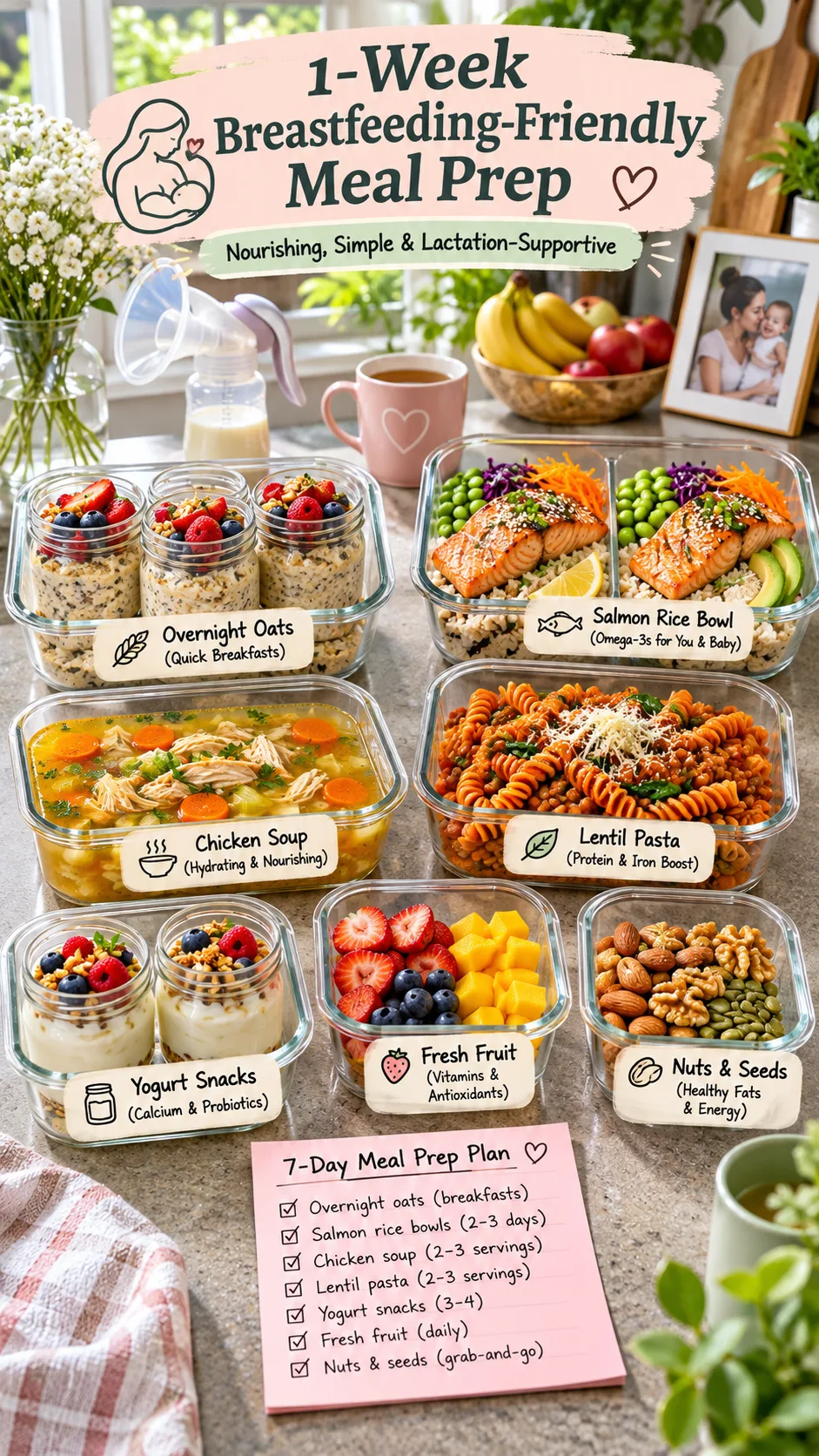
- Day 1: Start with overnight oats, Greek yogurt, chia seeds, berries, and peanut butter. Have a turkey and avocado whole grain sandwich with vegetable soup for lunch. Make salmon, roasted sweet potatoes, and broccoli for dinner. Snack on an apple with cheese or peanut butter.
- Day 2: Eat scrambled eggs, whole grain toast, and orange slices for breakfast. Choose a lentil and vegetable bowl with quinoa, feta, and olive oil for lunch. Make chicken tacos with black beans, salsa, avocado, and corn tortillas for dinner. Keep trail mix nearby for a quick snack.
- Day 3: Blend a smoothie with milk or fortified soy milk, banana, berries, oats, Greek yogurt, and nut butter. Eat leftover chicken tacos or a bean wrap for lunch. Cook whole grain pasta with turkey mince, tomato sauce, spinach, and parmesan for dinner. Have yogurt and granola as a snack.
- Day 4: Make toast with mashed avocado and two eggs for breakfast. Fill a baked potato with tuna, Greek yogurt, sweetcorn, and salad for lunch. Eat a beef or tofu stir fry with brown rice and frozen mixed vegetables for dinner. Have crackers with hummus in the afternoon.
- Day 5: Eat cottage cheese with fruit, walnuts, and whole grain cereal. Make chickpea salad pitas with cucumber, tomato, olive oil, and lemon for lunch. Cook a chicken, bean, and vegetable chilli with rice for dinner. Have a banana with peanut butter before an evening feed.
- Day 6: Cook oatmeal with milk, cinnamon, pear, and almond butter. Make a snack plate for lunch with boiled eggs, whole grain crackers, hummus, carrots, grapes, and cheese. Bake salmon or tofu with couscous and green beans for dinner. Eat a handful of nuts and dried fruit when you feel hungry.
- Day 7: Make a breakfast burrito with eggs, beans, cheese, spinach, and salsa. Eat leftover chilli or soup with whole grain bread for lunch. End the week with a sheet pan meal of chicken sausage, potatoes, peppers, onions, and olive oil. Have Greek yogurt with berries for an easy dessert or snack.
Want more structure without making family dinner feel like a nutrition hostage situation? Our family weekly meal plan for busy weeks can help you plan meals for everyone at the table.
Easy breastfeeding snacks you can eat with one hand
Snacks can rescue you when a feeding session lasts longer than you expected. Keep food where you usually nurse: beside the sofa, near your bed, in your nappy bag, and perhaps in the mysterious chair where clean laundry goes to retire.
Choose snacks that contain protein, fibre, or healthy fats. A plain biscuit can certainly fit into your day, but it probably will not sustain you through a long nursing session.
- Greek yogurt with berries and granola
- Banana with peanut or almond butter
- Hard boiled eggs with fruit
- Hummus with pita bread, crackers, or vegetables
- Cheese stick with an apple or pear
- Whole grain toast with avocado and seeds
- Trail mix with nuts, seeds, dried fruit, and dark chocolate
- Cottage cheese with pineapple or sliced tomatoes
- Roasted chickpeas and a piece of fruit
- Leftover chicken, rice, and vegetables in a small bowl
Hydration for breastfeeding: drink enough, not too much
Breastfeeding can make you thirsty, so keep water nearby during feeds. Sip throughout the day and drink when you feel thirsty.
You do not need to force down litres of water past the point of comfort to produce more milk. Too much water will mostly send you to the toilet more often, which feels like a particularly unhelpful pastime with a newborn.
Water works well, but milk, herbal tea, soup, sparkling water, and water rich foods all contribute to hydration. Add lemon, cucumber, berries, or a splash of juice if plain water starts to bore you.
What about coffee and alcohol?
Most breastfeeding parents can enjoy moderate amounts of caffeine. The CDC suggests limiting caffeine to about 300 mg a day or less, though some babies seem more sensitive than others.
Pay attention to your baby’s behaviour if you drink coffee, energy drinks, tea, or cola. If your baby seems unusually unsettled or wakes more often, reduce your intake and see whether things change.
Alcohol takes more planning. Avoiding alcohol offers the safest option, but an occasional drink does not automatically mean you need to panic or “pump and dump” every time. Timing matters. Ask your healthcare professional for advice that fits your situation, and check the CDC’s breastfeeding information for current recommendations.
Foods you do not need to fear
Many parents hear that broccoli, beans, spicy food, garlic, or chocolate will upset their baby. Babies fuss for plenty of reasons, and your dinner should not take the blame automatically.
Eat a varied diet unless you notice a consistent link between a certain food and symptoms in your baby. Talk with your paediatrician before you remove major food groups, particularly dairy, because unnecessary restrictions can make feeding yourself much more difficult.
Some babies have allergies or medical conditions that call for dietary changes. Your healthcare team can help you recognise those situations without sending you into a spiral over one slice of pizza.
Can you lose weight while breastfeeding?
Yes, many people lose weight gradually while breastfeeding, but aggressive dieting can drain your energy and make recovery harder. Your body needs regular nourishment right now, not punishment dressed up as a “reset.”
Focus first on regular meals, gentle movement once your healthcare professional clears you, and as much sleep as life permits. Sleep may not cooperate for a while, but every bit still helps.
If weight loss matters to you, aim for slow, sustainable progress and work with a dietitian who understands postpartum nutrition. Our breastfeeding diet guide offers more practical ideas for eating well while supporting milk production and postpartum recovery.
Making this meal plan work on hard days
The best postpartum meal plan does not ask you to cook gourmet food. It gives you backup choices for days when your baby only naps on you and your kitchen looks like the scene of a cereal crime.
Build a short emergency food list
Keep foods that need little or no preparation at home. Your fridge and pantry can do some of the work when you need a decent meal in minutes.
- Frozen vegetables and frozen fruit
- Eggs and cooked chicken
- Tinned beans, lentils, tuna, salmon, and soup
- Microwaveable rice, quinoa, or potatoes
- Whole grain bread, wraps, and crackers
- Greek yogurt, cheese, and fortified milk
- Bagged salad and cut vegetables
- Nut butter, nuts, seeds, and easy fruit
Accept help without overthinking it
If someone asks what they can bring, ask for a meal, fruit, muffins, soup, or a supermarket gift card. You do not earn a medal for surviving on toast while turning down help.
Ask visitors to bring food that freezes well. Lasagne, chilli, lentil soup, breakfast burritos, and pasta bakes can help when your energy runs low.
When to ask for more support
Talk with your doctor, midwife, lactation consultant, or registered dietitian if you feel constantly dizzy, severely exhausted, depressed, unable to eat, or concerned about your milk supply. Reach out promptly if your baby gains weight poorly, has fewer wet nappies than expected, or struggles to feed.
You deserve help before a small worry grows into a large one. A good feeding plan includes professional support when you need it.
Final thoughts: feed yourself like you matter
A solid breastfeeding meal plan includes regular meals, protein rich snacks, fibre filled carbohydrates, healthy fats, fruit and vegetables, and regular hydration. It can support your energy without asking for food perfection.
Pay attention to your hunger, use shortcuts, and keep easy food close by. You nourish a tiny human all day. Remember to nourish yourself too.