

It’s dark at 5 p.m., your toes feel like ice cubes, and cooking dinner sounds like punishment. Sound familiar? Winter meal prep fixes that problem before it starts.
You cook once, usually on a Sunday, and you eat well for days. You skip the scrambling and the overpriced delivery, and cereal for dinner (again) stops being a habit. This guide gives you a system and the dishes to fill it, plus the storage rules that make cold-weather cooking easy.
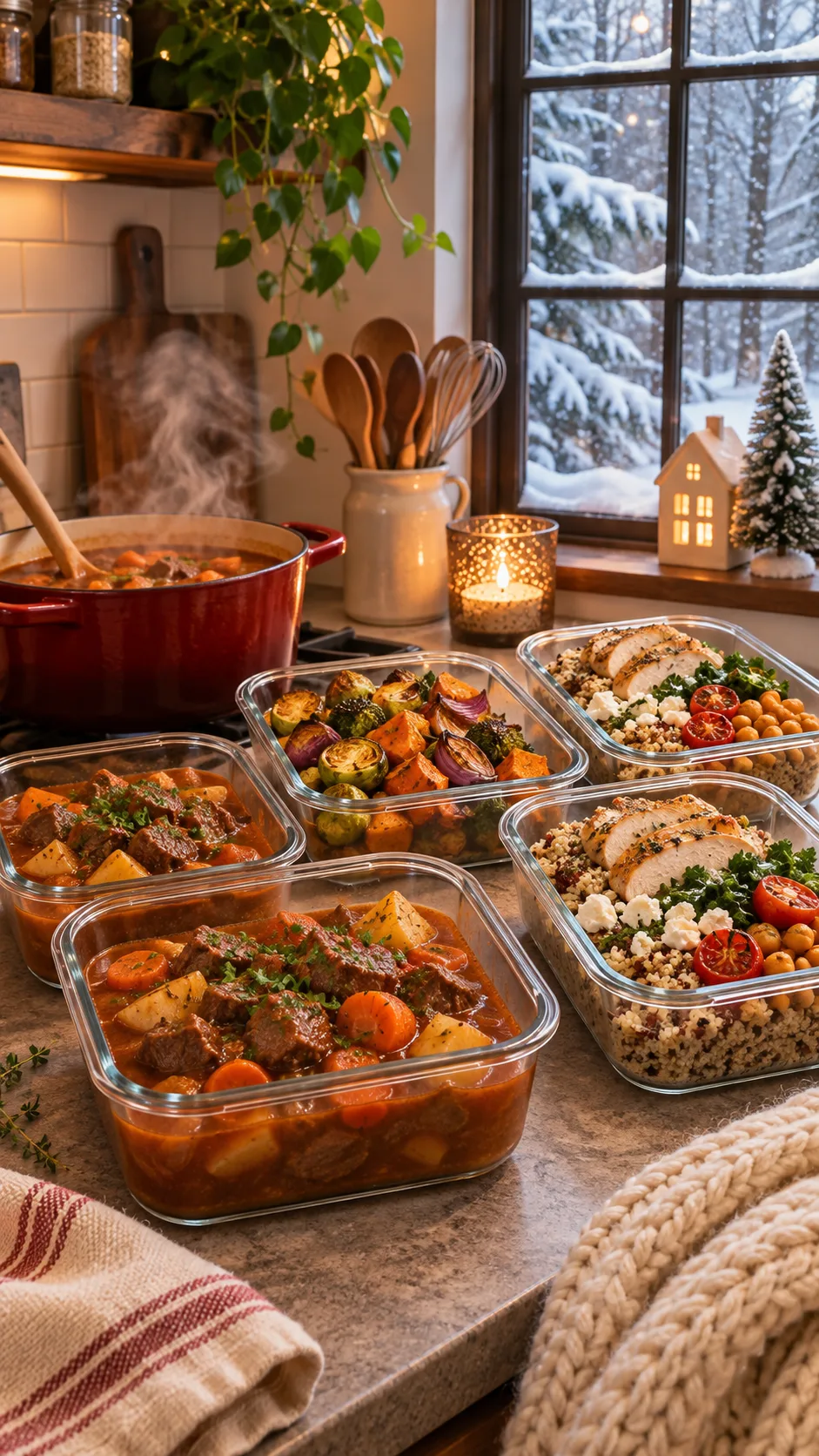
Why winter meal prep works better than summer meal prep
Summer meal prep means cold salads and soggy cucumbers. Winter meal prep means hearty, reheatable food that tastes better on day three. Soups, stews, braises, and casseroles improve as the flavors settle overnight.
Your body also asks for more fuel when temperatures drop. You crave heavier, warmer food, and that’s normal. Prepping lets you answer those cravings with real ingredients instead of whatever the drive-through offers.
Prepping in winter pays off in four ways:
- You save time. You cook for two or three hours once instead of 40 minutes every night.
- You save money. Root vegetables, beans, and cheaper cuts of meat cost less than takeout, and they cost the least in winter.
- You save mental energy. You stop having the nightly “what’s for dinner?” debate with yourself.
- You control the salt, oil, and portion sizes.
Build your winter meal prep system first
Random cooking leads to random leftovers. A simple system saves you from the sad Wednesday fridge full of mystery containers. I learned that after throwing out three forgotten containers of chili one January. That stung.
The 1-2-3 formula
Each week, cook one big pot meal, two proteins, and three vegetables. That mix gives you variety without turning Sunday into a six-hour marathon.
- One big pot meal, such as a soup, stew, or chili that feeds you for 3-4 meals.
- Two proteins, for example baked chicken thighs and a pot of lentils.
- Three vegetables. Roast two kinds and keep one raw for crunch.
Add a starch like rice, potatoes, or pasta, and you can mix and match all week. Want more recipe ideas beyond winter dishes? Check out these meal prep recipes that make healthy eating effortless.
Gear that earns its counter space
You don’t need a fancy kitchen. You do need a few reliable basics:
- A large Dutch oven or heavy pot
- Two sheet pans
- A slow cooker or pressure cooker (a lifesaver)
- 10-12 airtight containers, glass if you can swing it
- Masking tape and a marker for labels
Soups and stews: the backbone of cold-weather meal prep
Soup is the easiest meal prep food. It stores well, reheats fast, and freezes well. Better still, one pot gives you several lunches.
Chicken and white bean soup
Simmer chicken thighs with onions, garlic, carrots, celery, and canned white beans. Finish with a squeeze of lemon and a handful of spinach. The beans add fiber and protein, so the bowl keeps you full for hours.
Smoky lentil stew
Lentils cook in about 25 minutes and need no soaking. Toss them in a pot with smoked paprika, cumin, tomatoes, and diced sweet potato. This vegan stew costs pennies per serving and tastes like you worked much harder than you did.
Beef and vegetable stew
Brown cubes of chuck roast, then simmer them low and slow with potatoes, carrots, and a splash of broth. Tough cuts turn tender with time, so cheap beef works well here. Patience beats price every time.
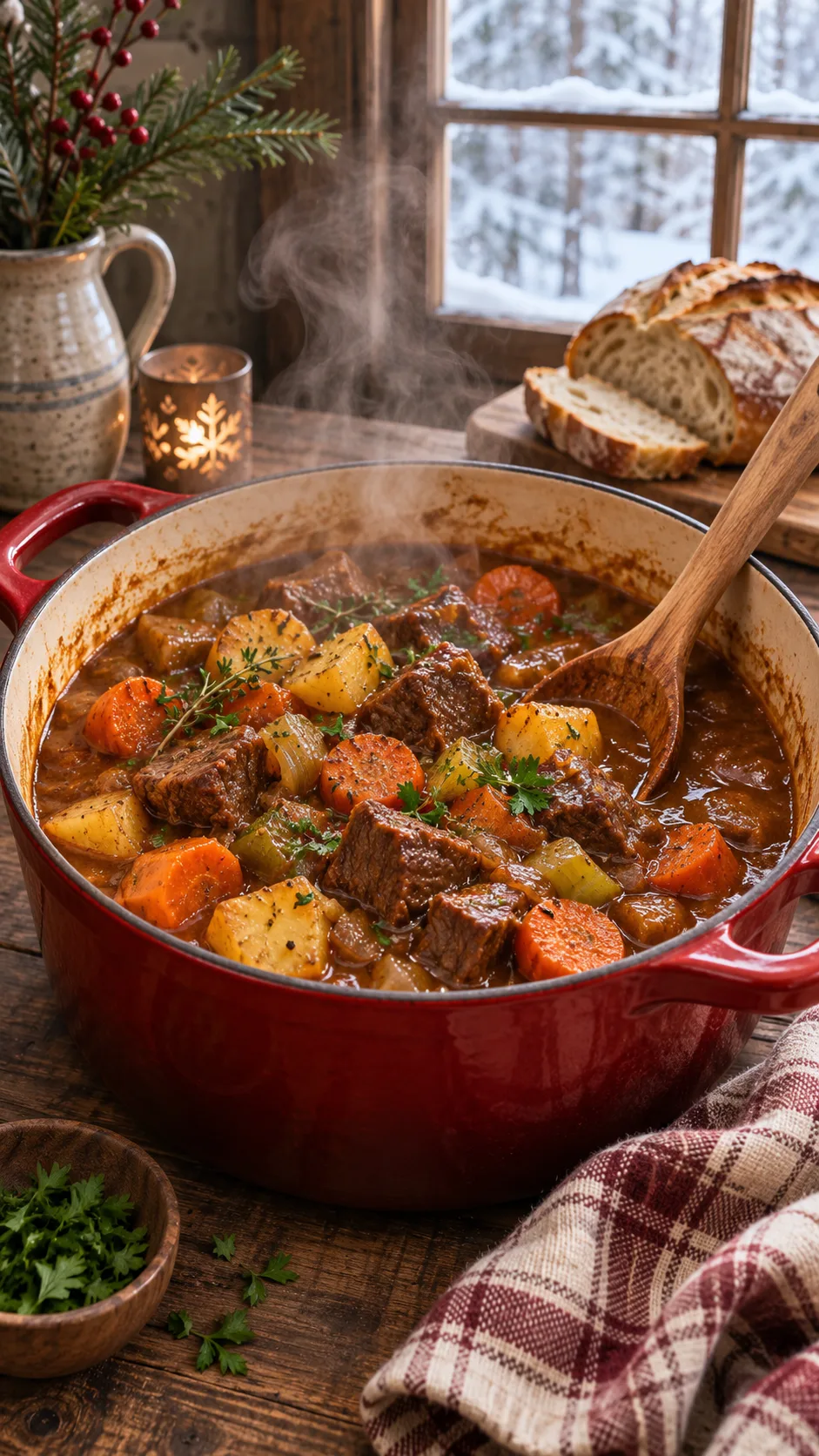
Why soup keeps you full
Ever wonder why a bowl of soup fills you up so well? The Harvard T.H. Chan School of Public Health Nutrition Source points to fiber-rich foods like beans, lentils, and vegetables as a major driver of fullness. Liquid, fiber, and protein together make a slow-burning, satisfying meal.
Sheet pan meals: maximum flavor, minimum effort
Sheet pan cooking lets your oven do most of the work. You chop, season, and slide the pan in. Then you walk away.
Roasted chicken thighs with root vegetables
Toss bone-in chicken thighs with chopped parsnips, carrots, red onion, and baby potatoes. Coat everything with olive oil, salt, pepper, and dried thyme. Roast at 425°F (220°C) for about 35-40 minutes, until the skin crisps and the juices run clear.
Sausage, peppers, and Brussels sprouts
Slice your favorite sausage and mix it with halved Brussels sprouts and bell peppers. Roast until the edges brown. Brussels sprouts get sweet and crispy in the oven, which wins over even the biggest sprout skeptics.
Spiced chickpea and cauliflower tray
Roast chickpeas and cauliflower florets with curry powder and a little oil. Serve over rice with a spoonful of yogurt. This one is plant-based and holds up for four days.
If you want a full week mapped out without meat, the 7-day vegetarian meal plan gives you a ready-made structure.
Make-ahead breakfasts that beat the snooze button
Winter mornings are brutal. Your bed is warm, and your kitchen is not. Prep breakfast, and you give yourself one less reason to skip it.
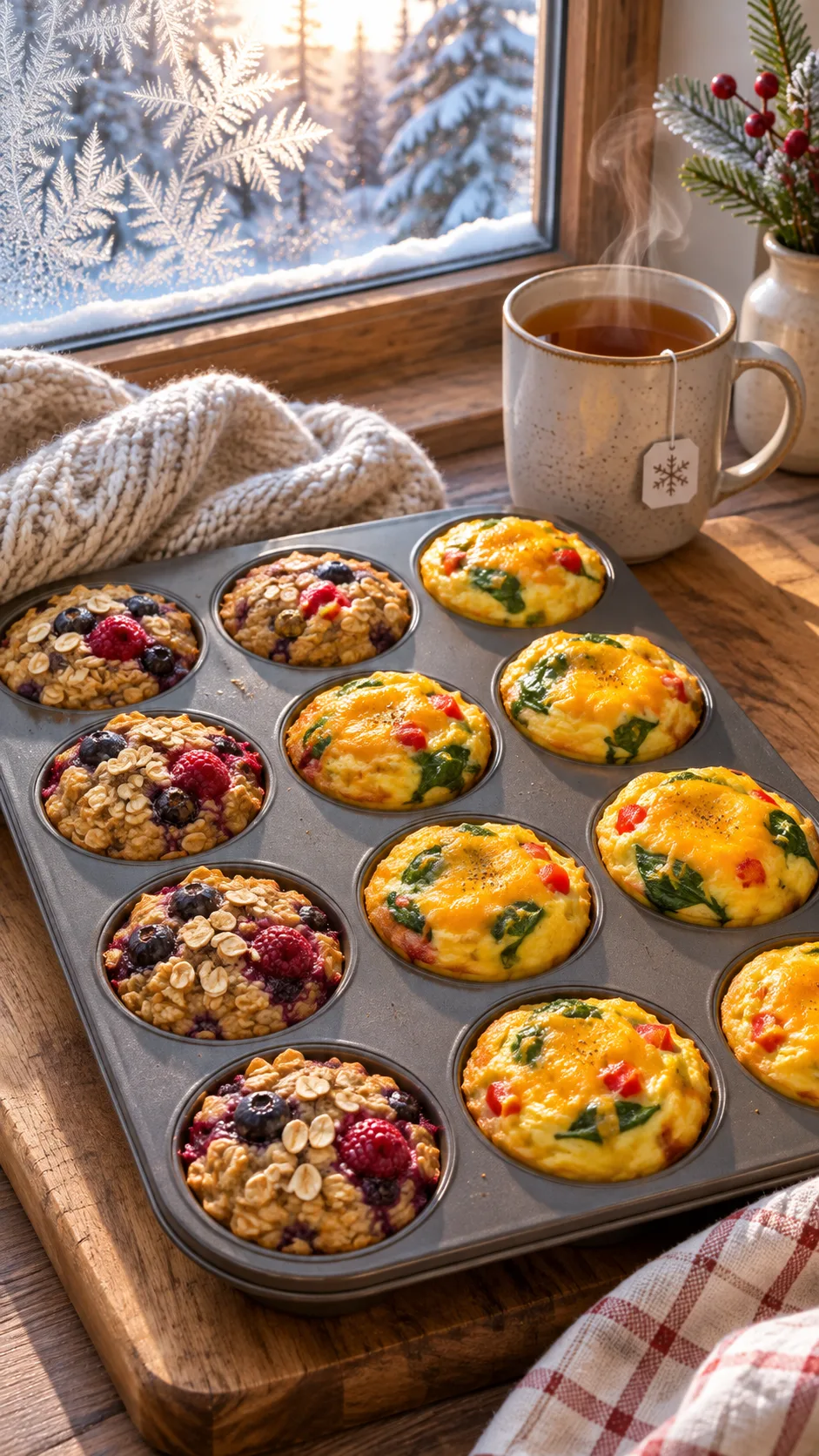
- Make baked oatmeal cups by mixing oats, mashed banana, milk, cinnamon, and apples, then baking them in a muffin tin. Reheat for 45 seconds.
- Fill tortillas with scrambled eggs, black beans, cheese, and salsa to make breakfast burritos. Wrap them in foil and freeze them.
- Whisk eggs with spinach, peppers, and feta for egg muffins. Bake them in a muffin tin for about 20 minutes.
- Warm up your overnight oats. Yes, you can heat them. Microwave for a minute and add nuts on top.
Oats deserve extra love in cold months. They cook into a creamy, filling bowl for almost nothing. For a full week of ideas, read the 7-day oatmeal diet plan.
Slow cooker and pressure cooker wins
These two appliances do the work while you do literally anything else. Load them up, press a button, and walk away.
Slow cooker pulled chicken
Place chicken breasts in the slow cooker with salsa, cumin, and garlic. Cook on low for 6-8 hours, then shred. One batch becomes tacos, rice bowls, soup toppers, and sandwiches. That’s four meals from one pot.
Pressure cooker chili
Brown ground turkey or beef, then add beans, tomatoes, onions, chili powder, and broth. Cook under pressure for about 15 minutes. You get slow-simmered flavor in a fraction of the time.
Slow cooker dal
Red lentils, turmeric, ginger, garlic, and coconut milk make a creamy dal that tastes like a restaurant dish. Spoon it over rice or sop it up with flatbread. Ginger and turmeric also warm you up on freezing days.
Speaking of spices, this list of herbs and spices for weight loss offers some smart ways to flavor your meals while you work toward your health goals.
Watch this: a visual guide to winter meal prep
Some of us learn better by watching. This tutorial walks through a full cold-weather prep session from start to finish.
Smart starches and grain bowls
Carbs aren’t the enemy in winter. They fuel you and make food feel like a hug. Choose well and prep them in bulk.
Best starches to batch cook
- Brown rice or wild rice, which is sturdy and reheats well.
- Roasted sweet potatoes, which are sweet, filling, and rich in vitamin A.
- Quinoa, which cooks fast and adds extra protein.
- Barley, which is chewy, hearty, and perfect in soups.
- Whole wheat pasta, which suits baked casseroles.
The winter grain bowl formula
Start with a grain, add a protein, pile on roasted vegetables, and drizzle a sauce. That’s the whole recipe. Tahini, peanut sauce, or a simple yogurt and garlic dressing all work.
I make this combo constantly: barley, roasted carrots, shredded chicken, and a lemon-tahini drizzle. It tastes just as good on day four as on day one. Keep the sauce in a separate small container so nothing turns soggy.
Don’t skip the protein
Protein keeps you full and helps your body maintain muscle, especially when you skip the gym because it’s snowing. Build every container around a solid protein source.
Good winter picks include chicken thighs, eggs, lentils, chickpeas, canned fish, tofu, and Greek yogurt. If you cook with West African ingredients, this list of 36 high-protein foods in Nigeria gives you plenty of local options to rotate.
Storage and food safety: the boring part that matters
Nobody wants food poisoning from Tuesday’s stew. Follow a few simple rules, and you avoid the problem entirely.
The core rules
- Cool food fast. Refrigerate cooked food within two hours, and divide big pots into shallow containers so they chill quickly.
- Follow the 3-4 day rule. The USDA Food Safety and Inspection Service says you should eat refrigerated leftovers within 3 to 4 days.
- Reheat to 165°F (74°C). Use a food thermometer instead of guessing.
- Freeze the rest. Anything you won’t eat by day four goes into the freezer.
For a quick check on how long different foods last, hang the FoodSafety.gov cold food storage chart on your fridge door.
What freezes well (and what doesn’t)
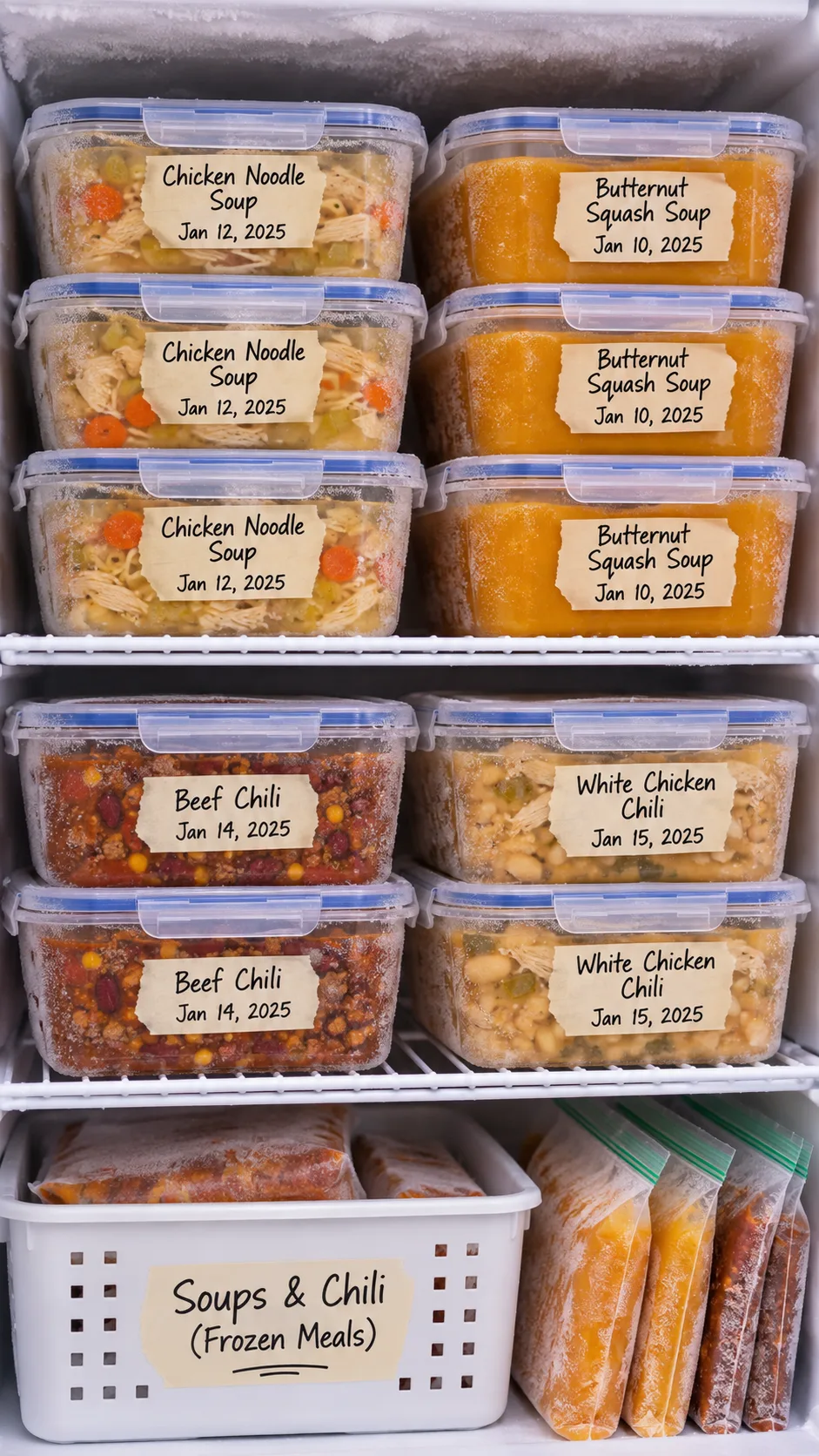
Soups, stews, chili, cooked beans, shredded meat, and baked oatmeal cups all freeze well. Cream-based soups can separate, so stir well after reheating. Skip freezing raw potatoes, cucumbers, and leafy greens. They turn mushy and sad.
Label every container with the dish and the date. Future you will say thanks. Trust me, “mystery brown block” is not a dinner plan.
A sample winter meal prep week
Want to see how this works in real life? This simple plan runs on one Sunday session of about two and a half hours.
Sunday prep list
- Start a pot of chicken and white bean soup.
- Roast a sheet pan of root vegetables.
- Bake a second pan of chicken thighs.
- Cook a big pot of brown rice.
- Bake a tray of egg muffins while everything else cooks.
How you eat it all week
- Monday: chicken thighs, rice, and roasted vegetables.
- Tuesday: chicken and white bean soup with toast.
- Wednesday: a rice bowl with shredded chicken, veggies, and sauce.
- Thursday: soup again, with a handful of spinach stirred in.
- Friday: a leftover freezer meal or a fresh-cooked treat. You earned it.
Breakfasts come from the egg muffins, with fruit on the side. Notice how few dishes you cook? That’s the whole point.
Common winter meal prep mistakes
I’ve made every one of these. Learn from my kitchen disasters.
- Don’t prep too many recipes. Three or four components beat ten complicated dishes.
- Don’t ignore flavor variety. Rotate sauces, spices, and toppings so you don’t bore yourself by Thursday.
- Don’t overcook vegetables. Slightly undercook them, because reheating finishes the job.
- Don’t forget snacks. Hungry people raid the pantry, so prep roasted nuts, hummus with carrots, or hard-boiled eggs.
- Don’t skip the freezer. It’s your best friend on weeks when life gets chaotic.
Budget-friendly winter shopping list
Winter produce costs less and tastes better when you buy in season. Fill your cart with staples that stretch:
- Carrots, potatoes, onions, cabbage, and squash
- Canned tomatoes, beans, and chickpeas
- Dried lentils, oats, and rice
- Frozen spinach, broccoli, and peas
- Chicken thighs, eggs, and a cheap cut of beef for stewing
- Garlic, ginger, cumin, paprika, and bouillon
Frozen vegetables deserve respect. Producers freeze them at peak ripeness, so they often match fresh ones nutritionally. They also never rot in your crisper drawer.
Final thoughts: cook once, eat warm all week
Winter meal prep takes a plan and a few big pots. Perfection is optional. Here’s the quick recap:
- Use the 1-2-3 formula: one pot meal, two proteins, three vegetables.
- Lean on soups, stews, and sheet pans for easy, reheatable comfort.
- Prep breakfasts and snacks too, not just dinners.
- Follow the 3-4 day fridge rule and freeze everything else.
- Keep it simple, because you will eat the simple meals.
So this weekend, grab your biggest pot, put on a playlist, and make your future self’s week easier. When the wind howls on Wednesday and a hot bowl of stew waits in your fridge, you’ll feel like a genius. Start with one recipe tonight, and build from there.