You want to lose fat without spending every afternoon eyeing the office biscuit tin. A sensible vegetarian diet plan for fat loss can give you filling meals, enough protein, and a calorie deficit without reducing lunch to a sad pile of leaves.
One problem: “vegetarian” does not automatically support fat loss. Chips count as vegetarian. So does a mountain of cheese on white toast. Your body needs a better plan than that.
This guide lays out a practical veg diet plan for fat loss built around protein, fibre, volume, flavour, and consistency. You will find meal ideas, portion guidance, a seven-day plan, and the everyday habits that help it stick.
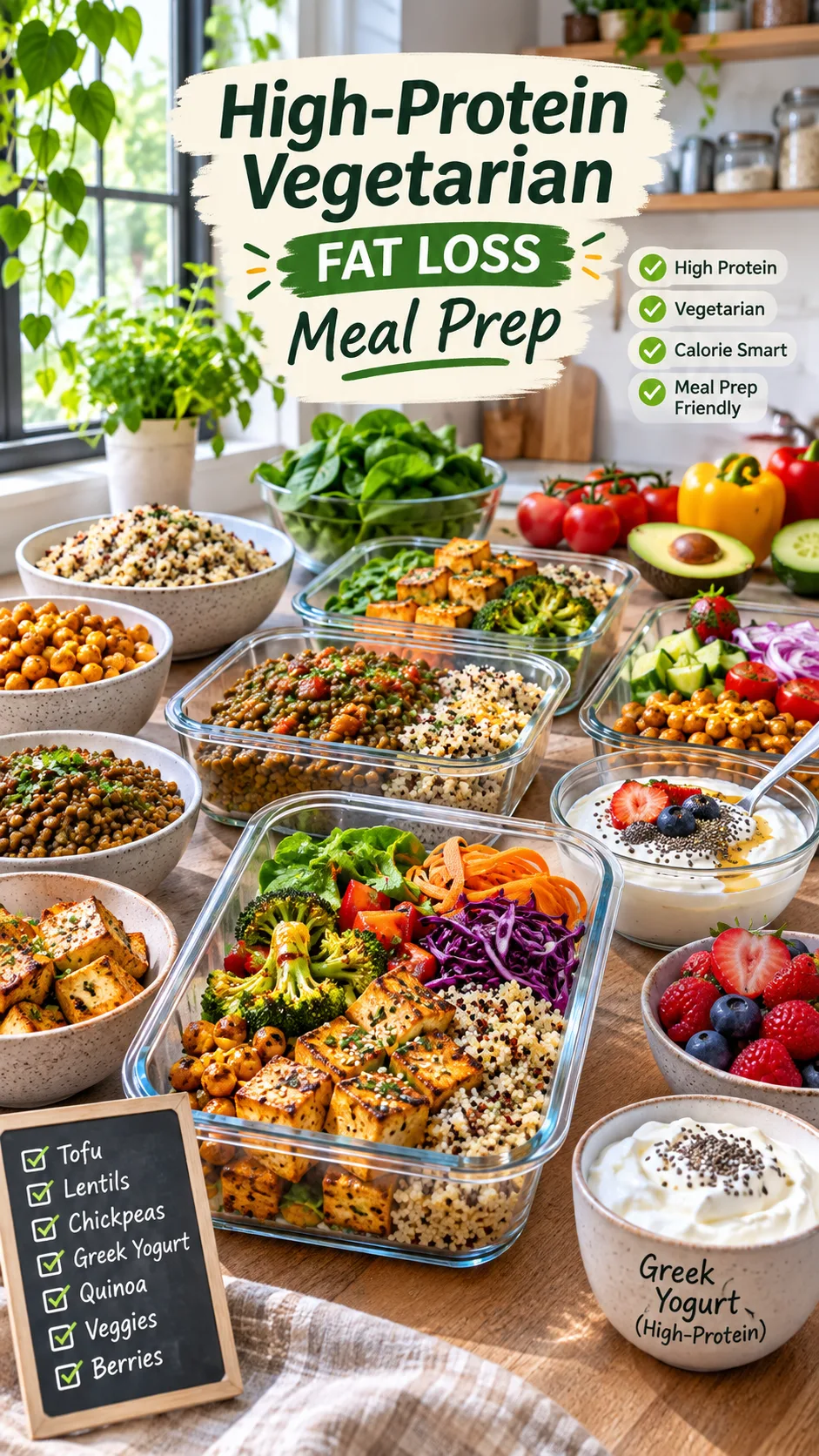
Why many vegetarian fat loss plans leave you hungry
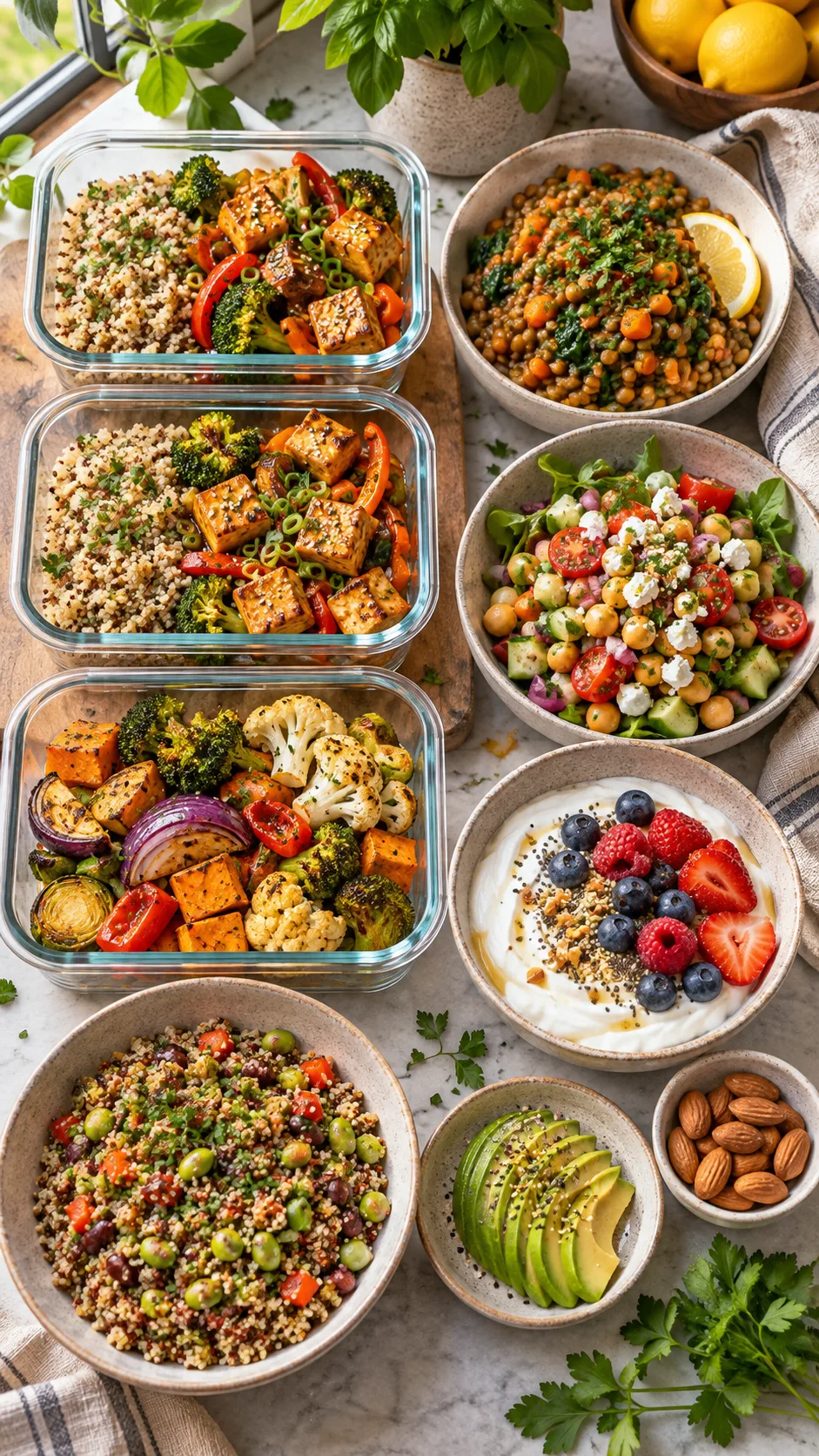
Many people begin a vegetarian weight loss diet by cutting portions, overlooking protein, and eating lots of low-calorie salads. Hunger arrives at 4 p.m., they empty the cupboard, and they blame their willpower. Their plan let them down, not their willpower.
Your meals need enough protein and fibre to rein in your appetite. They also need enough volume and flavour to feel like a proper meal. Nobody keeps up a diet that feels punishing, and plain cucumber will not win anyone over.
The fullness formula
Build most meals around four parts: protein, high-fibre carbs, vegetables or fruit, and a measured source of fat. Together, they slow digestion, support training, and give you a generous-looking plate.
- Protein helps protect lean muscle during fat loss and keeps you satisfied.
- Fibre adds bulk, supports digestion, and helps meals keep you going for longer.
- Volume from vegetables, soups, fruit, and beans lets you eat more food for fewer calories.
- Healthy fats make food taste better and can help with fullness, but nuts and olive oil pack plenty of calories into small servings.
The NHS healthy weight guidance focuses on balanced meals, sensible portions, and habits you can keep for the long haul instead of extreme restriction. Those plain basics tend to beat dramatic plans.
The best vegetarian foods for fat loss and fullness
You do not need unusual powders or a fridge packed with expensive wellness products. Start with everyday foods that offer plenty of protein and fibre without blowing your calorie budget. Keep your weekly shop straightforward.
Protein foods to eat regularly
Include a decent protein source at every meal. Most active adults aiming to lose fat do well with roughly 1.2 to 1.6 grams of protein per kilogram of body weight each day, although body size, activity, age, health conditions, and calorie intake all affect your needs.
If you have kidney disease, take medication, are pregnant, or manage a medical condition, speak with a registered dietitian or clinician for advice tailored to you. Your body deserves more than guidance from a random comment section.
- Tofu and tempeh: Use them in stir fries, wraps, curries, and bowls.
- Seitan: It packs in protein, but people with coeliac disease or gluten sensitivity need to avoid it.
- Lentils, beans, and chickpeas: They provide protein, fibre, iron, and enough substance to stretch a meal.
- Edamame: Add it to bowls, salads, and snack plates.
- Eggs and egg whites: Ovo-vegetarians can rely on these filling, affordable options.
- Greek yogurt, cottage cheese, skyr, and quark: Lacto-vegetarians can use these convenient protein sources.
- Protein powder: It helps on hectic days, though whole foods should provide most of your protein.
Fibre-rich carbs that help with fat loss
Carbs do not stop fat loss. Eating more calories than you use does. Choose high-fibre carbohydrate sources most of the time, keep an eye on portions, and use the energy they provide.
- Oats and oat bran
- Potatoes and sweet potatoes
- Brown rice, quinoa, barley, and bulgur
- Wholegrain bread, wraps, and pasta
- Beans, lentils, peas, and chickpeas
- Bananas, apples, berries, oranges, and pears
The Harvard T.H. Chan School of Public Health explains why carbohydrate quality matters more than cutting carbs out of fear. A bowl of oats and berries affects your appetite very differently from a packet of sugary biscuits.
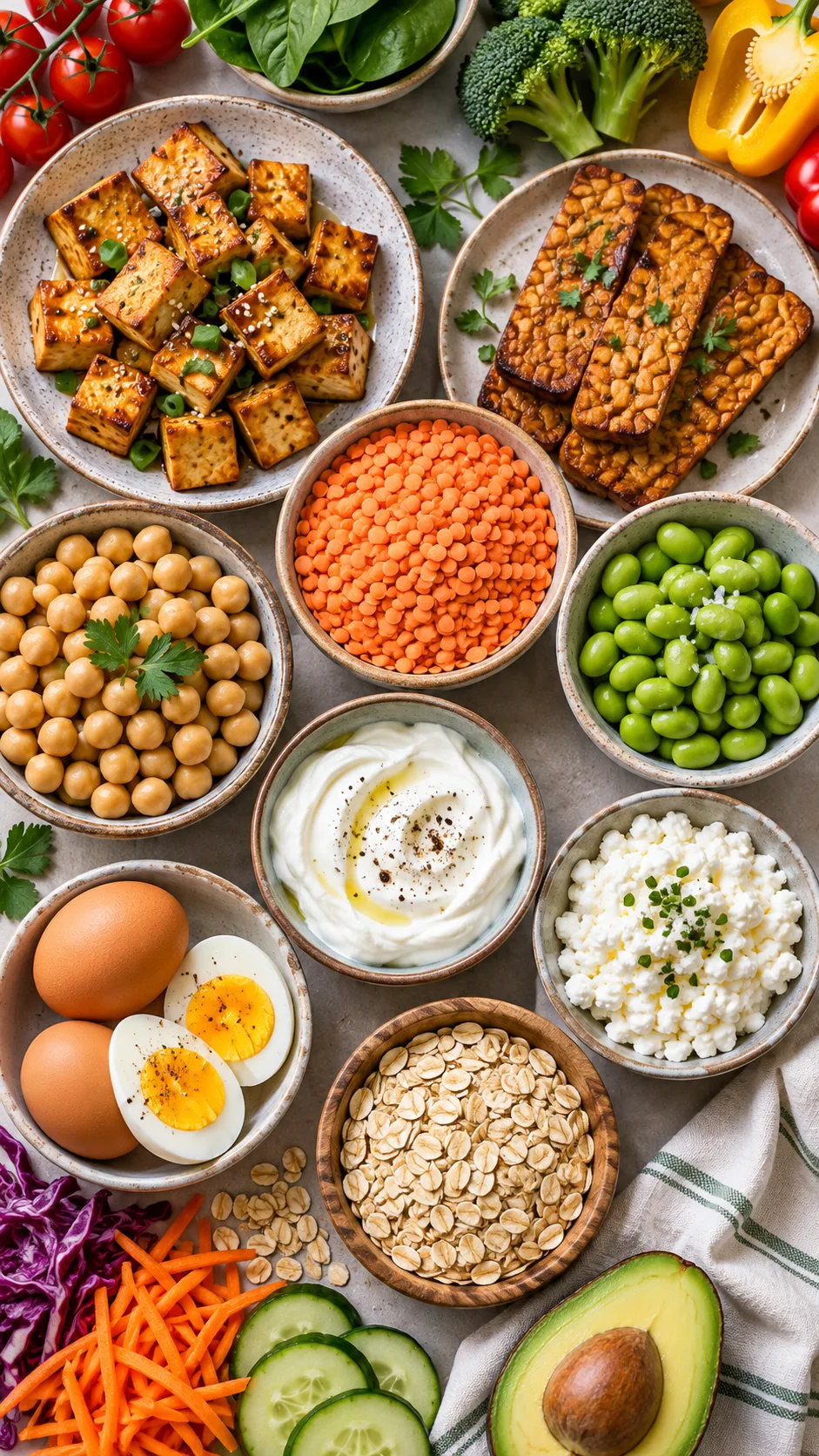
A simple plate method for vegetarian fat loss
Calorie counting can help, but you do not need to log every spinach leaf forever. The plate method gives you a useful place to start, especially if tracking leaves you miserable or obsessive.
At lunch and dinner, fill half your plate with non-starchy vegetables, one quarter with protein, and one quarter with high-fibre carbs. Add a small amount of fat for flavour and satisfaction.
- Choose protein first: Pick tofu, lentils, Greek yogurt, eggs, tempeh, beans, cottage cheese, or seitan.
- Add vegetables: Aim for two or more handfuls of roasted, steamed, raw, grilled, or stir-fried vegetables.
- Pick one carb: Choose potatoes, rice, quinoa, pasta, oats, bread, or beans.
- Measure calorie-dense extras: Use a teaspoon of oil, a tablespoon of seeds, or a small handful of nuts.
- Add plenty of flavour: Try salsa, chilli, lemon, herbs, vinegar, garlic, curry paste, mustard, or yogurt sauce.
This method helps you create a calorie deficit without shrinking every meal. Your overall energy intake still drives fat loss, but filling meals make that deficit much easier to maintain.
How many calories should you eat for vegetarian fat loss?
Most people lose fat when they consistently eat fewer calories than they burn. Your best calorie target still depends on your body size, daily movement, training, age, sleep, and usual intake.
Start with a moderate deficit instead of a crash diet. Many people do well when they cut around 300 to 500 calories per day from their usual intake. That often leads to a gradual loss of roughly 0.25 to 0.75 kilograms per week, though water, salt, hormones, and digestion can make the scale jump around.
Signs that you need to adjust your plan
- You feel constantly hungry, cold, exhausted, or distracted by food.
- Your workouts suffer for several weeks.
- You lose weight very quickly and struggle to manage normal daily life.
- You see no progress after three to four consistent weeks, even though you measure portions accurately.
- You repeatedly “start over Monday” after very large weekend meals.
Track your weekly average weight, waist measurement, energy, hunger, and gym performance. One salty takeaway does not overturn the laws of physics overnight.
If you want a broader approach that avoids starvation tactics, read the fat loss diet plan that works without starving yourself. It works well alongside this vegetarian approach.
A 7-day vegetarian diet plan for fat loss
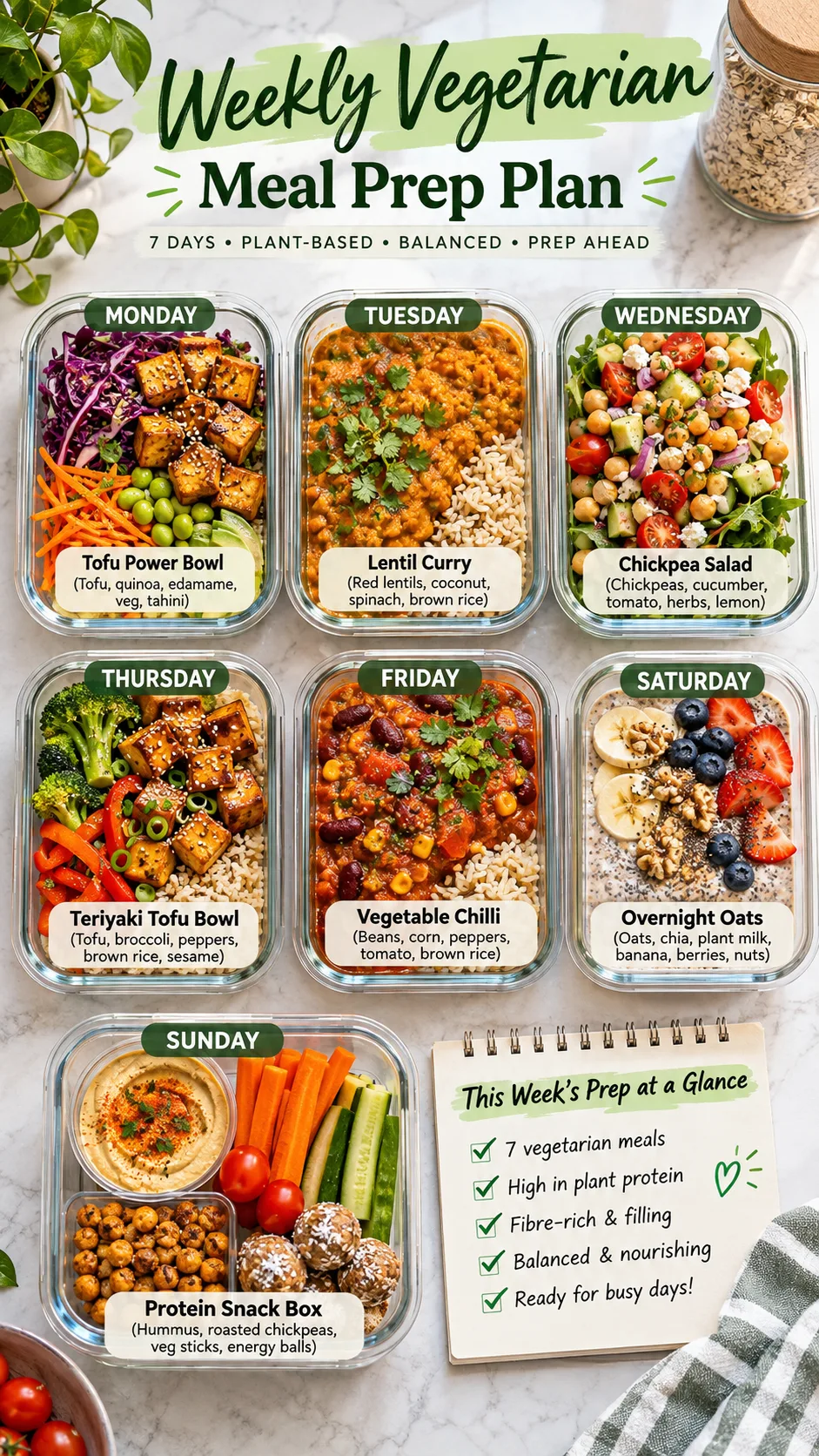
This seven-day vegetarian meal plan gives you a flexible blueprint. Adjust portions for your calorie needs, hunger, body size, and activity. Add extra vegetables freely, and raise your protein before you cut carbs too aggressively.
Each day includes breakfast, lunch, dinner, and one snack. Swap meals between days if you like. Your body does not know that Tuesday has rules.
Day 1
- Breakfast: Overnight oats with Greek yogurt or soy yogurt, chia seeds, berries, and cinnamon.
- Lunch: Lentil and roasted vegetable salad with quinoa, rocket, lemon, and a spoonful of feta.
- Dinner: Tofu stir-fry with broccoli, peppers, mushrooms, edamame, and brown rice.
- Snack: Cottage cheese or soy yogurt with an apple.
Day 2
- Breakfast: Scrambled eggs or tofu scramble with spinach, tomatoes, mushrooms, and wholegrain toast.
- Lunch: Chickpea wrap with crunchy salad, grated carrot, cucumber, hummus, and chilli sauce.
- Dinner: Three-bean chilli with peppers, tomatoes, sweetcorn, and a baked potato.
- Snack: Edamame with sea salt and lemon.
Day 3
- Breakfast: Protein smoothie with milk or fortified soy milk, protein powder, frozen berries, spinach, and half a banana.
- Lunch: Leftover bean chilli over a large salad with yogurt-lime dressing.
- Dinner: Tempeh fajita bowl with black beans, peppers, onions, salsa, cauliflower rice, and avocado.
- Snack: Carrots, peppers, and two tablespoons of hummus.
Day 4
- Breakfast: Skyr or Greek yogurt with oats, pear, walnuts, and cinnamon.
- Lunch: Mediterranean couscous bowl with chickpeas, cucumber, tomatoes, olives, herbs, and grilled halloumi or tofu.
- Dinner: Red lentil dal with spinach, green beans, and a measured serving of basmati rice.
- Snack: A protein pudding or a boiled egg with fruit.
Day 5
- Breakfast: Veg omelette with peppers, onion, spinach, and a side of berries.
- Lunch: Tofu noodle soup packed with mushrooms, pak choi, carrots, and rice noodles.
- Dinner: Veggie burger in a wholegrain bun with air-fryer wedges and a giant side salad.
- Snack: Roasted chickpeas or a small protein shake.
Day 6
- Breakfast: Oatmeal with protein powder stirred in, banana slices, and peanut butter powder or a measured teaspoon of peanut butter.
- Lunch: Egg salad or mashed chickpea salad sandwich on wholegrain bread with plenty of crunchy vegetables.
- Dinner: Paneer or tofu tikka with mixed vegetables, tomato-based sauce, and roasted cauliflower.
- Snack: Greek yogurt or soy yogurt with strawberries.
Day 7
- Breakfast: Wholegrain toast with cottage cheese, sliced tomato, black pepper, and fruit.
- Lunch: Leftover tofu tikka in a salad bowl with lentils and cucumber yogurt sauce.
- Dinner: Homemade vegetable pizza on a wholegrain base with mushrooms, peppers, spinach, mozzarella, and a side salad.
- Snack: Air-popped popcorn and a high-protein yogurt.
This plan works because it uses familiar meals that you can make again and again. Repeating meals saves mental effort, which tends to vanish when hunger kicks in.
Portion tips that prevent “healthy” overeating
Nut butters, oils, cheese, granola, trail mix, and hummus all bring nutritional benefits. They also pack a lot of calories into small portions. You do not need to fear them. Just stop pouring them as though you host a cooking show.
- Cooking oil: Measure one to two teaspoons instead of pouring freely.
- Nuts and seeds: Use a small closed handful, around 15 to 20 grams.
- Cheese: Use it to add flavour rather than making it the whole meal.
- Avocado: Use one quarter to one half, depending on the rest of the meal.
- Hummus: Start with two tablespoons, then add vegetables for more volume.
- Rice, pasta, and grains: Start with a cooked fist-sized portion and adjust from there.
If you feel hungry after meals, add vegetables, lean vegetarian protein, broth-based soup, fruit, or potatoes before reaching for handfuls of calorie-dense snacks. That small shift can change a lot.
Smart snacks for a high-protein vegetarian diet
Snacks can help with fat loss when they answer real hunger. They can also become a second dinner while you scroll on your phone. Before you eat one, ask yourself: “Will this fill me up?”
- Greek yogurt, skyr, or fortified soy yogurt with berries
- Cottage cheese with cucumber, tomatoes, and cracked pepper
- Protein shake with fruit
- Edamame with chilli flakes and lime
- Roasted chickpeas with a piece of fruit
- Two boiled eggs with carrot sticks
- Apple slices with a measured tablespoon of peanut butter
- High-protein pudding with strawberries
Aim for 15 to 25 grams of protein in a snack when dinner sits several hours away. That usually keeps hunger at bay better than a cereal bar that leaves you hungry again 30 minutes later.
Nutrients vegetarians should watch during fat loss
A calorie deficit makes food quality more important. Your body has fewer calories to work with, so each meal needs to contribute something useful. You do not need perfection, but you do need to pay attention.
Protein, iron, vitamin B12, calcium, iodine, and omega-3 fats
Vegetarians need to plan for protein rather than hope it works itself out. Pair iron-rich foods such as lentils, beans, tofu, fortified cereal, pumpkin seeds, and leafy greens with vitamin C-rich foods such as peppers, citrus, berries, or tomatoes.
Vitamin B12 needs extra attention, especially if you follow a vegan diet. Fortified foods and supplements can help, and the National Institutes of Health B12 fact sheet explains dependable sources and the role this nutrient plays.
Choose fortified plant milks and yogurts if you avoid dairy. Include walnuts, chia seeds, flaxseed, hemp seeds, or algae-based omega-3 supplements if you rarely eat foods rich in omega-3 fats. These details matter when you follow a veg diet plan for months.
For more practical weekly meal ideas, check out the vegetarian diet meal plan that keeps you full all week. Use it when you want more variety without rebuilding your shopping list.
Exercise, sleep, and habits that make fat loss easier
Food drives most fat loss, but daily habits shape how manageable the process feels. Strength training helps you hold on to muscle, walking raises your daily movement, and sleep makes hunger easier to handle. You do not need a perfect gym routine or a sunrise boot camp.
- Walk daily: Start with 7,000 to 10,000 steps if your lifestyle allows, then increase gradually.
- Lift two to four times weekly: Focus on squats, hinges, pushes, pulls, carries, and core work.
- Sleep seven to nine hours: Poor sleep can ramp up cravings and make food choices harder.
- Plan your meals: Prepare protein and vegetables before your busiest days.
- Keep fun foods: Include treats in sensible portions so you can avoid the restrict-and-binge cycle.
The CDC physical activity guidelines recommend regular aerobic activity and muscle-strengthening work for adults. You do not need to earn food through exercise, but movement can support your health and body composition.
Common vegetarian fat loss mistakes to avoid
Normal habits cause most fat loss stalls, not a broken metabolism. Catch these patterns early, change one thing at a time, and keep going.
- Eating too little protein: Build meals around protein instead of treating it as an afterthought.
- Relying on bread, pasta, and cheese: These foods can fit a healthy diet, but pair them with protein and vegetables.
- Drinking calories without noticing: Fancy coffees, juice, alcohol, and smoothies can add up quickly.
- Calling every snack “just a handful”: That handful can grow suspiciously large when you eat from the bag.
- Skipping meals: This often leads to late-night overeating and low-energy workouts.
- Changing everything at once: Pick two habits, get comfortable with them, then add more.
Final thoughts: Eat more strategically, not less miserably
The best veg diet plan for fat loss will not leave you hungry, obsessed with food, or afraid of carbs. It gives you protein at every meal, fibre-rich foods, plenty of vegetables, measured fats, and meals you enjoy eating.
Try one week of simple, filling vegetarian meals. Repeat your favourites, track your progress calmly, and adjust portions when you need to. Fat loss does not need drama. It needs a plan you can follow when life gets busy.
Fill your plate, fuel your body, and let consistency do its quiet work.