

It is 7 AM. You have a baby on your hip, you are staring into the fridge, and you need an answer. What do I feed this tiny human today? Can you give them banana again? Did they get enough iron? Is that avocado still okay? If this sounds familiar, you have plenty of company.
Baby feeding should come with a manual. Instead, your mother-in-law, Instagram, and that parenting forum all give you different advice. A simple baby meal plan can cut down on daily stress and give you a path from first tastes through toddlerhood.
I have spent too many hours reading about baby nutrition, trying recipes, and scraping sweet potato off the ceiling. Yes, the ceiling. This plan focuses on meals that fit real life, not meals that only look good on a Pinterest board.
When should you start solid foods?
The American Academy of Pediatrics recommends starting solid foods around 6 months of age. Your neighbor may have started at 4 months. You may feel nervous about waiting until 8 months. Start around 6 months, when your baby shows clear signs that they are ready.
Signs your baby is ready for solids
Age alone does not tell you enough. Your baby should reach most of these milestones before you offer that first spoonful:
- They can sit upright with little support and hold their head steady
- They no longer use the tongue-thrust reflex to push food out of their mouth
- They show real interest in your food by reaching for it, watching your plate, or opening their mouth when food comes close
- They can grasp objects and bring them to their mouth
- They still seem hungry after a full milk feeding
If your baby meets most of those signs, you can start solids. Prepare for a mess. Buy more bibs than you think you need.
The basics of a good baby meal plan
Before you map out meals, keep a few non-negotiable principles in mind. Pediatric nutrition guidance from groups such as the World Health Organization and the AAP supports these practices.
Breast milk or formula comes first
Until your baby reaches 12 months, breast milk or formula provides most of their nutrition. Solid foods add to milk feeds. They do not replace them. Your baby uses solids to practice eating.
Offer plenty of variety
During the first year, offer many flavors, textures, and food groups. Research in the journal Pediatrics links early exposure to a wider range of foods with less picky eating later. Offer broccoli, lentils, and mild spices. Babies often accept more than adults expect.
Start with iron-rich foods
Around 6 months, the iron stores your baby received before birth begin to drop. Offer iron-rich foods among the first foods you introduce. Try pureed meat, iron-fortified baby cereal, lentils, and beans.
Try one new food at a time
Offer one new food every 2 to 3 days. That gap helps you spot an allergy or intolerance. If your baby develops a rash after egg yolk on Tuesday, you can identify the likely cause instead of sorting through five unfamiliar foods.
The baby meal plan: stage by stage
This plan has three age-based stages, but every baby develops at their own pace. Use the ages as a guide rather than a deadline.
Stage 1: First tastes (6 to 7 months)
Start with smooth purees and foods with one ingredient. Your baby is learning what eating feels like, so keep things simple. Offer one or two small meals a day. At this point, a meal may mean two tablespoons of food and a surprising amount on the floor.
Sample daily schedule:
- Morning milk feed: breast milk or formula as usual
- Mid-morning meal: 1 to 2 tablespoons of iron-fortified baby rice cereal mixed with breast milk, or pureed sweet potato
- Afternoon milk feed
- Late afternoon meal: 1 to 2 tablespoons of pureed pear, apple, or banana
- Evening milk feed and bedtime routine
First foods to rotate through:
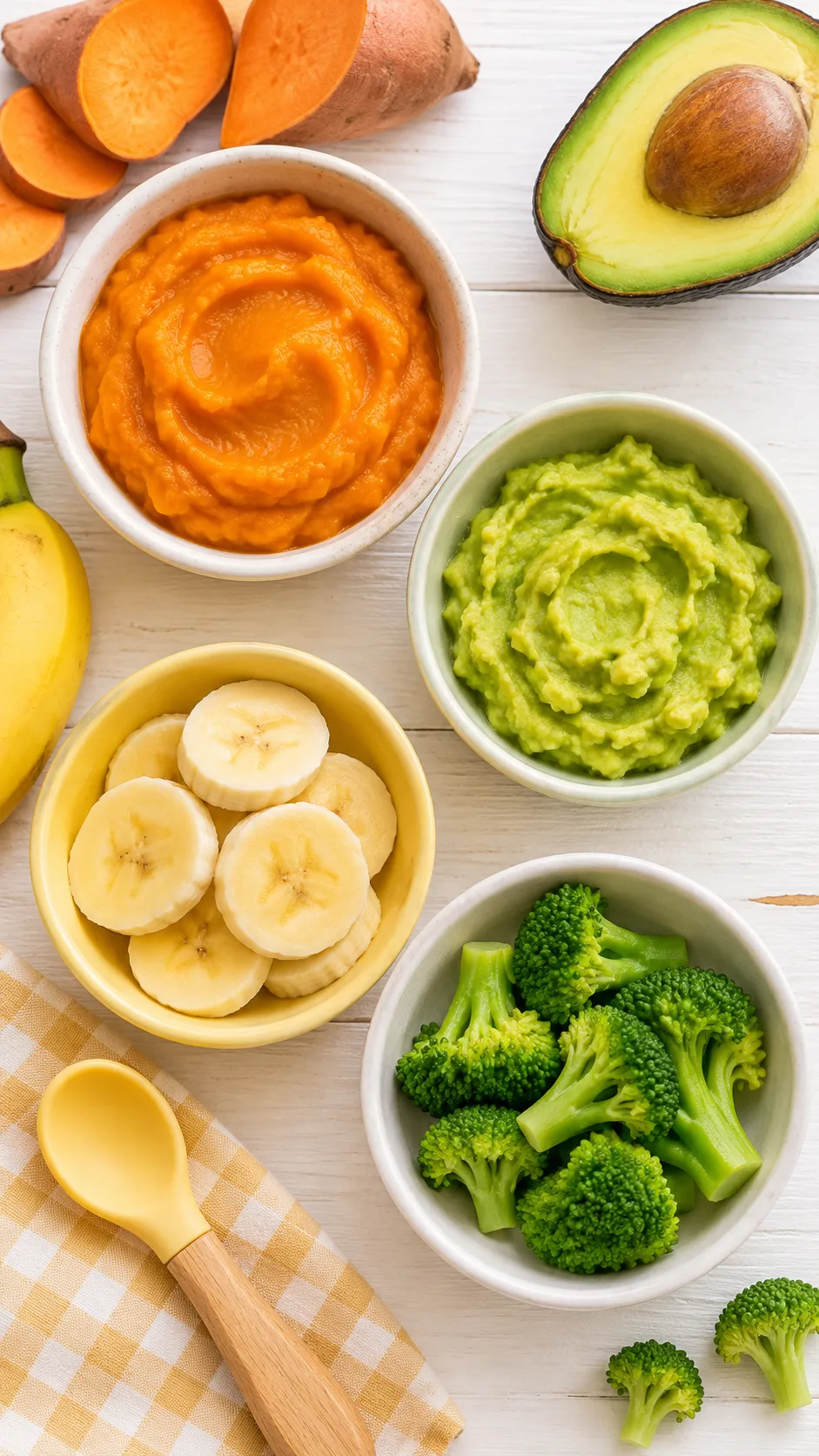
- Sweet potato puree
- Butternut squash puree
- Avocado, mashed smooth
- Banana, mashed smooth
- Iron-fortified baby cereal
- Pureed peas
- Pureed carrots
- Pureed chicken or turkey
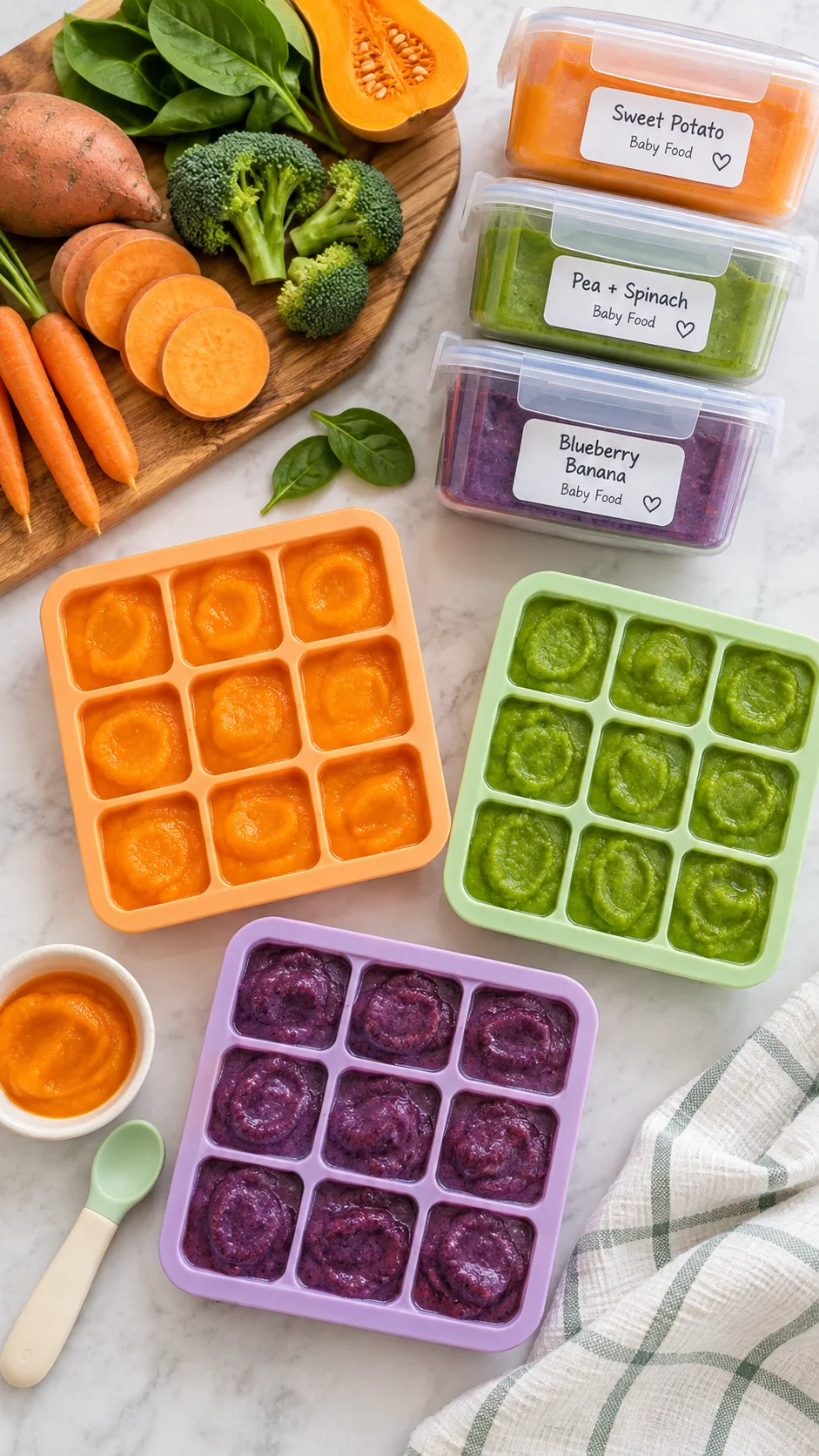
Learn from my mistake: cook purees in batches on Sunday and freeze them in ice cube trays. Pop out one or two cubes each day, thaw them, and serve. That small bit of planning can save you a lot of weekday time.
Stage 2: Building variety (7 to 9 months)
Your baby can now manage thicker textures, mashed foods, and soft finger foods. Move up to two or three meals a day and begin pairing ingredients. Sweet potato and chicken taste good together. Babies have taste buds, after all.
Sample daily schedule:
- Early morning milk feed
- Breakfast (8 AM): mashed banana with a little cinnamon and iron-fortified oatmeal
- Mid-morning milk feed
- Lunch (12 PM): pureed lentils with carrots and a small amount of cumin, plus soft avocado strips
- Afternoon milk feed
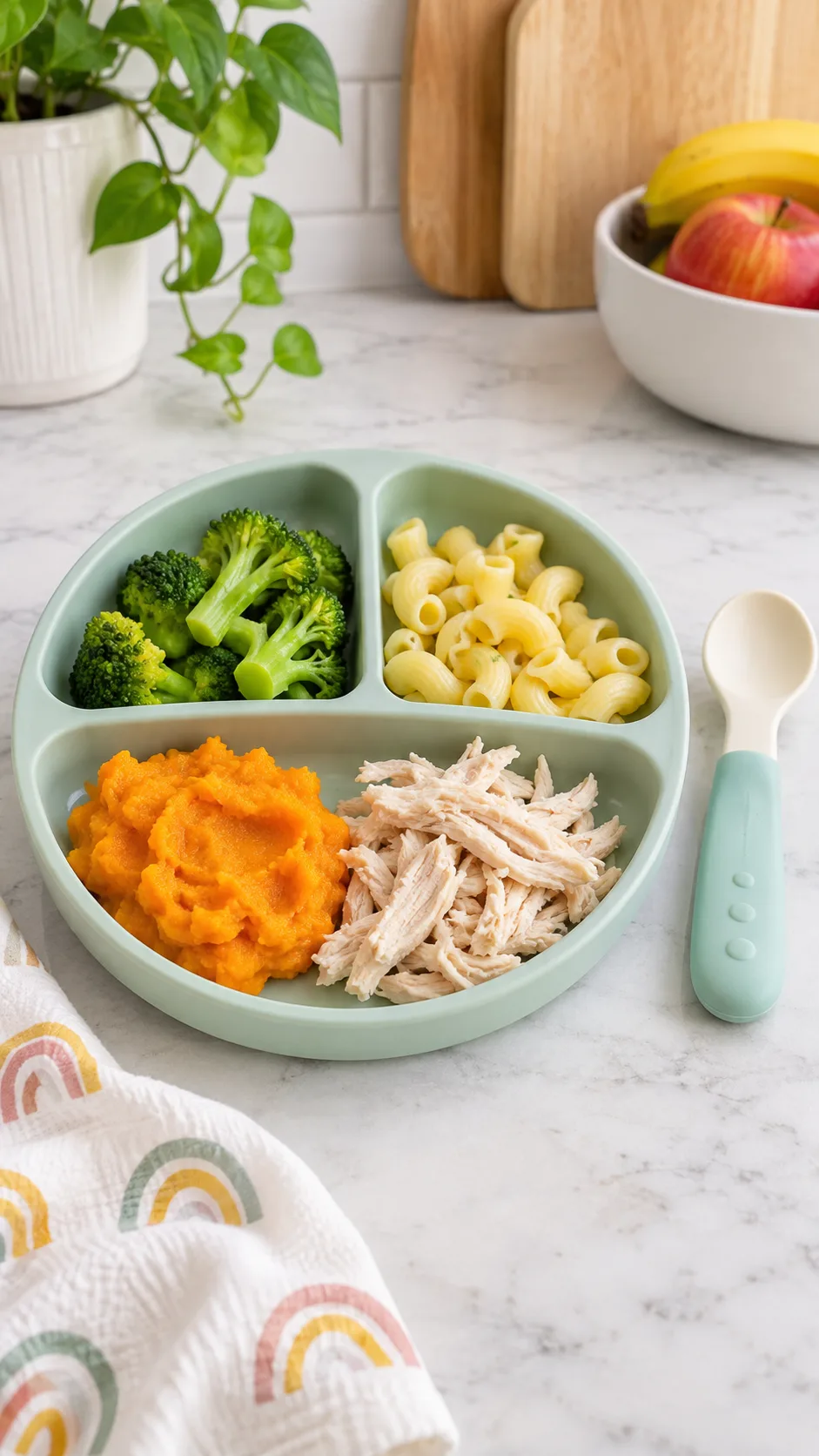
- Dinner (5:30 PM): mashed sweet potato with shredded chicken and steamed broccoli florets soft enough for gums
- Bedtime milk feed
Foods to introduce during this stage:
- Egg yolk, then whole egg. The AAP supports introducing allergens early.
- Well-cooked lentils and beans
- Full-fat plain yogurt
- Soft cheese
- Nut butters thinned and mixed into purees. Never give whole nuts.
- Fish such as salmon, which provides omega-3 fats
- Tofu
- Soft pasta shapes
- Soft berries, mashed or quartered
This stage gives you a good chance to introduce allergens such as peanut, egg, and fish. Current evidence supports early introduction instead of avoidance. Talk with your pediatrician if food allergies run in your family. Most babies can try these foods safely.
Stage 3: Nearly a foodie (9 to 12 months)
At this stage, your baby can eat adapted versions of the meals your family eats. Most babies move toward three meals a day and one or two snacks. Offer soft chunks, minced meat, and finger foods that let your baby feed themselves.
Sample daily schedule:
- Breakfast (7:30 AM): scrambled eggs with soft toast strips and sliced strawberries
- Morning snack (10 AM): full-fat yogurt with mashed blueberries
- Lunch (12:30 PM): minced chicken with soft rice and steamed green beans
- Afternoon snack (3 PM): banana slices with a thin spread of peanut butter and a few puffs or teething crackers
- Dinner (6 PM): flaked salmon with mashed potato and steamed carrot sticks
- Bedtime milk feed
By this point, many babies take about 3 to 4 milk feeds each day as they eat more solids. Do not rush that change. Follow your baby’s lead. Some days they will finish everything. Other days they will drop your carefully prepared salmon on the floor and laugh. That happens.
Foods to avoid before 12 months
Some foods create choking risks or health concerns for babies. Keep this list on your fridge:
- Honey: it can cause infant botulism. Do not offer it.
- Whole nuts and seeds: they can cause choking
- Cow’s milk as a drink: wait until 12 months. You can use it in cooking.
- Added salt and sugar: babies’ kidneys cannot handle too much sodium, and early sugar habits can stick
- Whole grapes, cherry tomatoes, or hot dog rounds: cut them lengthwise, never into rounds
- Raw or undercooked eggs, meat, or fish
- Low-fat or diet products: babies need full-fat foods for brain development
- Fruit juice: the AAP advises against juice before age 1
Some of these points may seem obvious, but well-meaning grandparents sometimes add honey to teething remedies. Tell them no. Every time.
Meal prep strategies that save your sanity
You are tired, you may have spit-up on your shirt, and cooking elaborate baby meals three times a day can sound ridiculous. Batch prep can make this much easier.
The Sunday prep method
- Choose 4 or 5 base ingredients for the week, such as sweet potato, chicken, peas, pears, and oats
- Cook everything at once: roast the sweet potato, boil the chicken, and steam the peas
- Puree or mash the food to suit your baby’s stage
- Divide the food into ice cube trays or small containers and freeze it
- Take out what you need each morning and thaw it in the fridge or warm it gently
This approach takes about 1 to 2 hours on Sunday and can save roughly 30 minutes each day. Over a week, you get more than 3 hours back. Take a nap. Take a shower. Stare at a wall in silence. All reasonable choices.
If you like meal prep and want a plan for your own meals too, our guide to high protein meal prep recipes can help you stay fed while you care for your baby.
Baby-led weaning vs. traditional spoon-feeding: Which should you choose?
This topic can spark more arguments than a teething baby at 3 AM. Most families do well with a mix of both methods.
Traditional spoon-feeding
You control the spoon, texture, and pace. Spoon-feeding creates less mess, at least compared with baby-led weaning, and it helps you get food into your baby’s mouth instead of only onto the tray. It works well for purees, cereals, and soups.
Baby-led weaning (BLW)
Your baby feeds themselves with soft finger foods cut to an appropriate size from the beginning. This approach builds independence and fine motor skills, and it may help with picky eating later. Expect a mess. Your kitchen may look like a food fight happened after every meal.
My recommendation: Offer spoon-fed nutrient-dense foods such as iron-fortified cereal and meat purees. Put soft finger foods beside them so your baby can explore. Your baby gets iron and other nutrients while practicing self-feeding.
Dealing with picky eating and food refusal
Your baby will reject food. They may reject a food they loved yesterday or a meal you spent 45 minutes making. This behavior is normal. It does not mean you failed, and it does not mean your child will live on crackers forever.
Research suggests that a baby may need 15 to 20 exposures before accepting a new food. Offer that broccoli again on Thursday, then next week, then the week after. Keep the mood calm. Do not turn the meal into a fight.
Strategies that help
- Eat together as a family: babies learn when they watch you eat the same foods
- Stay neutral: do not over-celebrate bites or show frustration when they refuse food
- Offer refused foods in different forms: if your baby dislikes steamed carrots, try roasted carrot sticks or stir carrot into oatmeal
- Keep portions small: a huge pile of food can overwhelm a small child
- Respect hunger cues: turning away, clamping their mouth shut, or pushing food away can mean “I’m done”
My friend’s baby ate only banana and yogurt for what felt like three weeks. That same child now eats curry happily. Patience helps.
Hydration and drinks for babies
When your baby starts solids, you can offer small sips of water with meals. Use an open cup or straw cup. If you can, skip the sippy cup. Speech therapists often prefer cups that support a more natural drinking motion.
How much water do they need? Not much. Offer a few sips with meals, perhaps 2 to 4 ounces total each day between 6 and 12 months. Breast milk or formula still provides most of their hydration.
Skip juice before 12 months. Do not use cow’s milk as your baby’s main drink before 12 months. Do not use plant milks in place of breast milk or formula because they do not provide enough fat and protein for babies. Stick with milk feeds and a little water.
Common mistakes parents make with baby meal plans
I have seen and made plenty of these mistakes. You can learn from them:
- Starting with fruit only: this can build a preference for sweet foods. Start with vegetables and iron-rich foods instead.
- Making separate baby food forever: by 9 to 10 months, your baby can eat adapted family meals. This saves time and helps them learn family eating habits.
- Avoiding allergens out of fear: delayed introduction can raise allergy risk for many babies. Introduce peanut, egg, fish, and dairy early, with pediatrician guidance when needed.
- Relying too heavily on pouches: pouches help on busy days, but sucking food from a pouch does not teach chewing or expose babies to many textures.
- Forgetting about iron: iron deficiency ranks as the most common nutritional deficiency in babies. Offer iron-rich foods throughout the first year.
If you also want to organize your own meals after birth, our 1000 calorie meal plan guide can offer structure. Talk with your doctor before restricting calories while breastfeeding.

A quick-reference weekly baby meal plan (8 to 10 months)
This week of meals suits a baby in Stage 2 or 3. Adjust portions for your baby’s appetite. Your baby often knows how much they need better than a chart does.
- Monday: Oatmeal + mashed peach | Chicken + sweet potato + peas | Scrambled egg + toast strips + avocado
- Tuesday: Yogurt + banana | Lentil soup + soft bread | Salmon + mashed potato + steamed carrots
- Wednesday: Iron-fortified cereal + pear puree | Beef + rice + green beans | Pasta with tomato sauce + cheese
- Thursday: Egg + toast + berries | Bean puree + avocado + soft tortilla | Chicken + couscous + broccoli
- Friday: Oatmeal + blueberries | Fish + sweet potato + spinach | Turkey meatballs + pasta + peas
- Saturday: Pancakes with no sugar + yogurt | Lentils + rice + carrots | Family dinner adapted for baby
- Sunday: Scrambled egg + avocado toast | Chicken + vegetable soup | Batch prep day: cook, puree, and freeze food for next week
Snacks between meals can include soft fruit, yogurt, cheese sticks, teething crackers, or homemade recipes adapted for baby-safe textures. Keep snacks small so they do not crowd out meals.
When to talk to your pediatrician
Many feeding issues improve with time and consistency. Call your pediatrician when you notice any of these concerns:
- Your baby regularly gags or chokes on textures that suit their age
- They show signs of an allergic reaction, such as hives, swelling, vomiting, or trouble breathing. Call 911 for severe reactions.
- They do not gain weight as expected despite regular feeding
- They refuse all solids after 7 to 8 months and show no interest in food
- You notice blood in their stool after you introduce a new food
Trust your instincts. You know your baby better than anyone else. If something feels wrong, make the appointment. Your pediatrician would rather check a false alarm than miss a problem.
Bringing it all together
Feeding your baby does not need to feel like solving a Rubik’s cube while blindfolded. A baby meal plan gives you a starting point that you can adjust for your baby’s preferences, your family’s culture, and whatever the grocery store has on sale.
Start with iron-rich single foods around 6 months. Add more flavors and textures over time. Introduce allergens early. Prep food in batches when you can. Keep meals relaxed and free from pressure.