

That shaky, sweaty, I-need-food-now feeling can throw off your whole day. One minute you answer emails. The next, you stare at a vending machine like it might solve every problem in your life.
A sensible hypoglycemic diet plan helps you head off blood sugar crashes instead of trying to patch things up after one starts. You do not need strange powders, joyless meals, or a new personality. You need regular meals, dependable snacks, and a clearer sense of which foods send your blood sugar up and down.
This guide lays out a practical way to keep your blood sugar steadier, whether you have reactive hypoglycemia, take diabetes medication, exercise often, or tend to crash between meals. Some breakfasts carry you through to lunch. Others send you looking for food by 10:30. Food choices and timing explain much of that difference.

What is hypoglycemia, exactly?
Hypoglycemia means low blood glucose. Healthcare professionals often define it as a reading below 70 mg/dL (3.9 mmol/L). Your brain depends heavily on glucose, so low levels can leave you shaky, hungry, sweaty, dizzy, irritable, weak, or confused.
Your body may send quieter signals, too. You might get a headache, struggle to focus, feel unusually anxious, or snap at someone over an innocent question. Your body does not suddenly dislike everyone. It needs fuel.
People experience blood sugar crashes for several reasons. Diabetes medicines such as insulin can push glucose too low. Long gaps between meals, alcohol, intense exercise, hormone problems, and meals heavy in refined carbohydrates can also bring on symptoms.
The National Institute of Diabetes and Digestive and Kidney Diseases notes that people who use insulin or certain diabetes medicines face the greatest risk. If you take these medicines, ask your clinician to help you adjust meal timing and medication doses. Food can help, but it cannot replace medical care.
Know when you need medical help
Do not assume every afternoon slump means hypoglycemia. A clinician can confirm low glucose with a meter, a continuous glucose monitor, or lab tests when needed. Dehydration, anxiety, anemia, thyroid conditions, and other problems can cause similar symptoms.
Get urgent help if low blood sugar causes confusion, fainting, seizures, or trouble swallowing. Ask a friend or family member to call emergency services if you cannot treat yourself safely. Take severe symptoms seriously. Trying to tough it out can put you in real danger.
Why blood sugar crashes happen
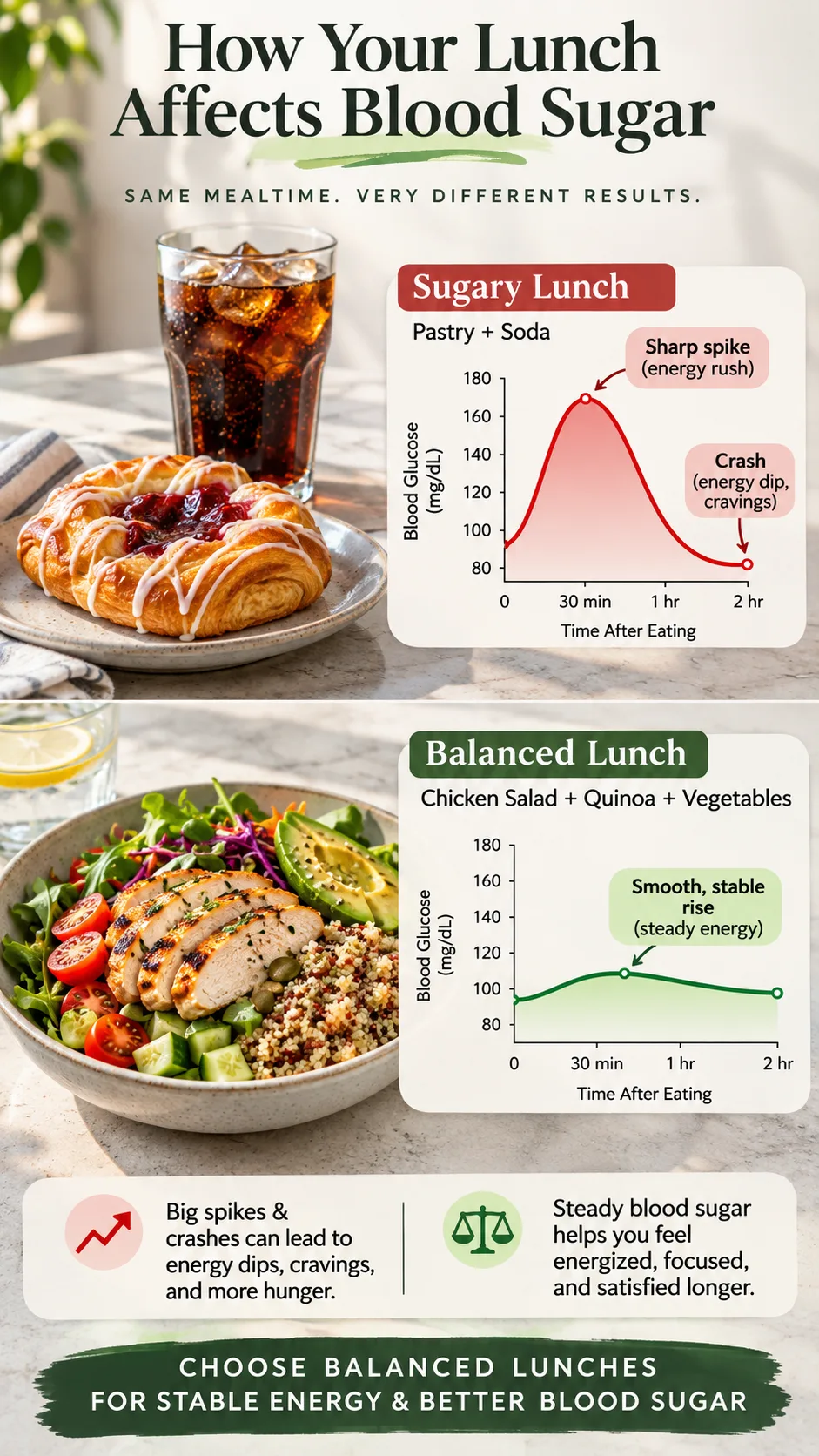
Many blood sugar crashes follow a familiar pattern. You eat a quickly digested carbohydrate, blood glucose rises fast, your body releases insulin, and glucose then drops sharply. Some people feel that drop more intensely, especially after meals high in sugar or refined starch.
A doughnut and sweet coffee can taste great for ten minutes. Your body may handle that combination like fireworks: bright, exciting, and gone too soon.
Your goal is to slow digestion and smooth out the glucose curve. Protein, fiber, unsaturated fat, and reasonable portions can help. Regular meal times offer another layer of support.
Common triggers for low blood sugar symptoms
- Skipping meals: Your body runs short on readily available fuel when you wait too long to eat.
- Eating mostly refined carbs: Candy, pastries, white bread, sugary cereal, and soda can raise glucose quickly and leave you hungry soon afterward.
- Drinking alcohol without food: Alcohol can interfere with your liver’s ability to release stored glucose.
- Exercising without a plan: Long or intense workouts can use up glucose, especially when you start without enough food in your system.
- Taking too much glucose-lowering medicine: Insulin and some diabetes tablets can cause dangerous lows when medication, food, and activity do not line up.
- Ignoring early symptoms: A small dip can turn into a bigger problem when you keep pushing through it.
The pattern matters. The best hypoglycemia diet plan does not depend on one magic food. It gives your body a routine for handling incoming energy.
The basic rules of a hypoglycemic diet plan
You do not need to count every blueberry or fear every carbohydrate. Choose carbohydrates with more care, then pair them with foods that move glucose into your bloodstream more gradually. That approach beats living on lettuce and resentment.
Build every meal around blood sugar balance
At meals, include protein + fiber rich carbohydrate + colorful produce + healthy fat. This mix helps you stay full, slows digestion, and gives your body vitamins and minerals it can use.
Compare plain oatmeal with oatmeal topped with Greek yogurt, berries, chia seeds, and peanut butter. Both contain carbohydrates, but the second bowl will usually keep you satisfied much longer. A breakfast that lasts beats one that leaves you hungry an hour later.
- Protein: Eggs, fish, chicken, turkey, tofu, tempeh, cottage cheese, Greek yogurt, beans, lentils, and edamame.
- Fiber rich carbs: Oats, beans, lentils, quinoa, brown rice, sweet potatoes, whole grain bread, fruit, and starchy vegetables.
- Healthy fats: Avocado, olive oil, nuts, seeds, natural nut butter, and oily fish.
- Non-starchy vegetables: Leafy greens, broccoli, peppers, zucchini, mushrooms, tomatoes, cucumbers, and cauliflower.
Choose carbs that work with you
Carbohydrates do not automatically cause problems. Your body turns carbs into glucose, and your brain and muscles use glucose for energy. The type, amount, food pairing, and timing make the difference.
Choose foods with fiber and little processing most of the time. A whole apple gives you fiber and something to chew. Apple juice gives you sugar quickly, with little of the chewing that can slow down how fast you drink it.
The American Diabetes Association’s nutrition guidance recommends a pattern built around vegetables, lean proteins, fiber rich carbohydrates, and minimally processed foods. You can use the same foundation to prevent blood sugar crashes.
Eat often enough for your body
Some people do well with three balanced meals and one snack. Others need three meals plus two planned snacks, especially during pregnancy, athletic training, long work shifts, or medication changes. Let your hunger, symptoms, activity, and glucose readings guide your schedule.
If crashes happen often, start by eating every three to four hours while you are awake. Then adjust with your clinician or dietitian. This routine does not make you “dependent on snacks.” It stops you from waiting until hunger feels urgent.
Do not force yourself to eat by a rigid schedule if you rarely feel hungry and your glucose stays steady. Watch for patterns instead. If a four hour gap leaves you shaky, foggy, or ravenous, your body has given you useful information.
Your practical hypoglycemia meal plan
This sample plan offers balanced ideas, not a strict menu carved in stone. Swap foods to fit your culture, budget, allergies, preferences, and appetite. A plan you dislike will end up in the junk drawer with the single use gadgets.
Breakfast ideas that prevent the midmorning crash
- Two eggs scrambled with spinach and mushrooms, one slice of whole grain toast, and half an avocado.
- Plain Greek yogurt with berries, chia seeds, walnuts, and a small serving of unsweetened oats.
- Steel cut oats with peanut butter, cinnamon, ground flaxseed, and sliced pear.
- Tofu scramble with black beans, peppers, salsa, and a small corn tortilla.
- Cottage cheese with apple slices, pumpkin seeds, and whole grain crackers.
Do not make coffee your breakfast. Coffee can worsen jitters, especially on an empty stomach, and it cannot replace food. Have coffee with a meal or at least a balanced snack.
Lunch ideas that keep your afternoon productive
- Chicken or chickpea salad with mixed greens, crunchy vegetables, olive oil dressing, and quinoa.
- Turkey and avocado whole grain wrap with side vegetables and hummus.
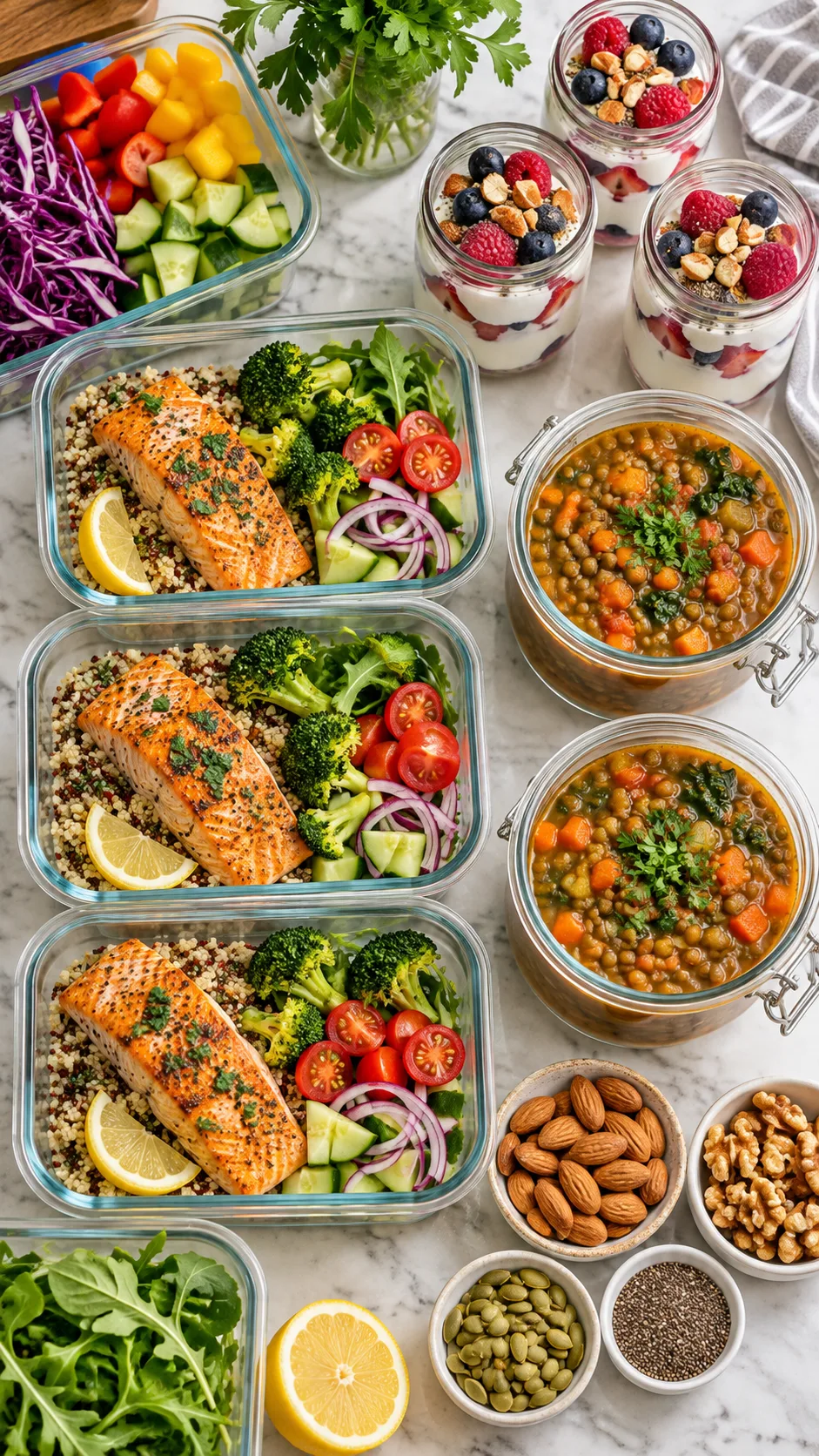
- Lentil soup with a side salad, pumpkin seeds, and whole grain toast.
- Salmon bowl with brown rice, roasted broccoli, cucumber, and tahini dressing.
- Bean chili topped with plain Greek yogurt, avocado, and chopped cilantro.
Lunch matters more than many people admit. Crackers and a granola bar may seem efficient at your desk, but your brain may protest by 3 p.m. Give lunch enough protein and fiber to get you through the afternoon.
Dinner ideas that support overnight stability
- Baked salmon, roasted sweet potato, and green beans with olive oil.
- Turkey meatballs, whole wheat pasta, tomato sauce, and a large side salad.
- Stir fried tofu with broccoli, peppers, edamame, and brown rice.
- Chicken fajita bowl with black beans, salsa, lettuce, avocado, and a small portion of rice.
- Vegetable and lentil curry with cauliflower, spinach, and basmati or brown rice.
Keep dinner balanced, but avoid piling huge portions on your plate because you skipped lunch. That habit can lead to a high and low cycle that makes the next day harder. Regular meals work better than the familiar “I’ll start fresh tomorrow” routine.
Smart snacks for preventing blood sugar crashes
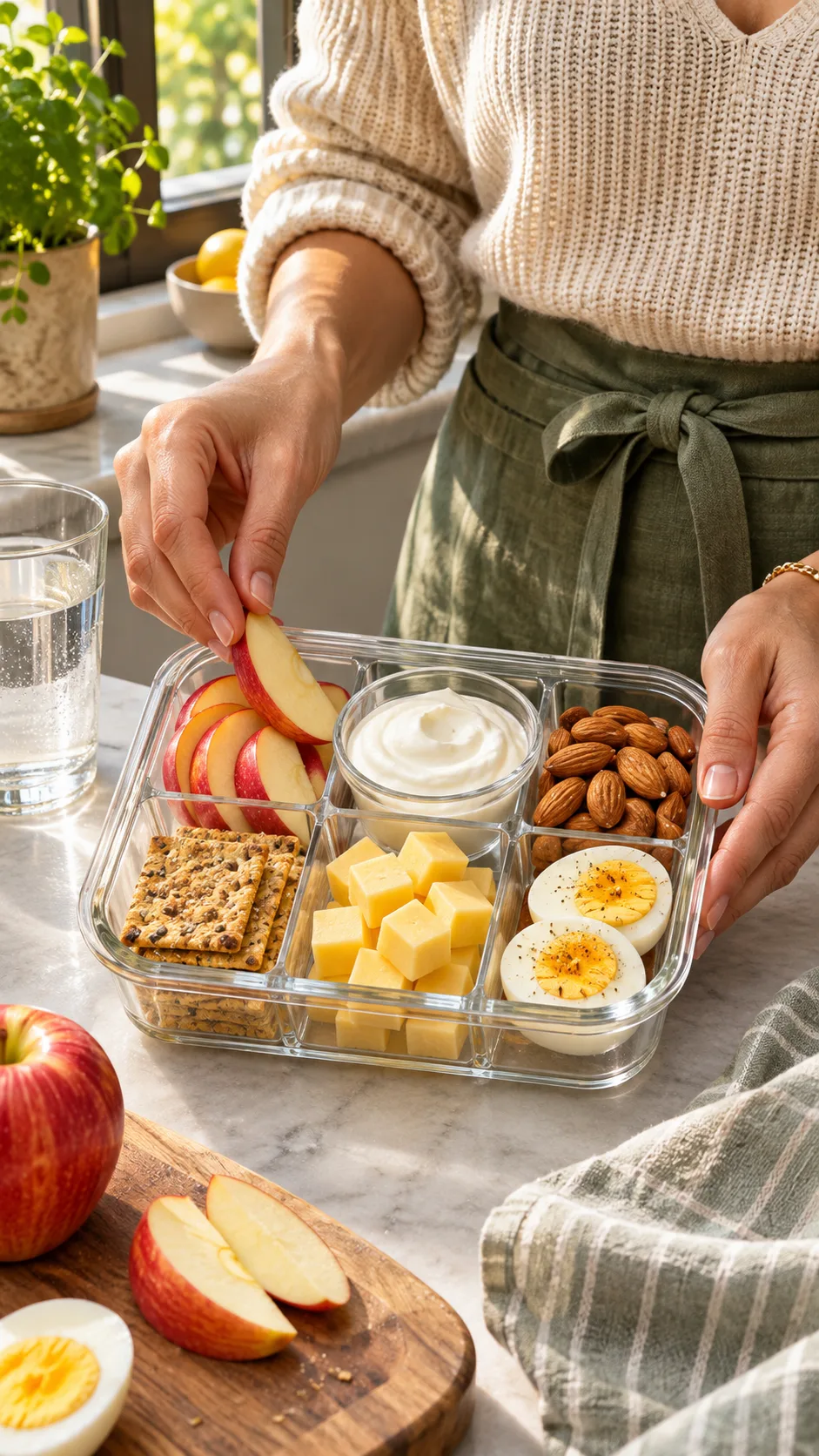
When you need quick fuel, a good snack pairs a carbohydrate with protein, fiber, or fat. Fruit alone works for some people, but fruit with protein or fat often holds you longer. Think apple with peanut butter, rather than gummy candy followed by regret.
Keep emergency snacks in your bag, desk, car, or gym locker. You cannot control traffic, meetings, delayed flights, or the coworker who schedules a “quick” call during lunch. You can keep useful food within reach.
- Apple or pear with peanut or almond butter.
- Plain Greek yogurt with berries and chia seeds.
- Whole grain crackers with cheese or hummus.
- Handful of nuts with a clementine.
- Hard-boiled eggs with cherry tomatoes.
- Roasted chickpeas and a piece of fruit.
- Cottage cheese with cucumber, pepper, and everything-bagel seasoning.
- Edamame with a small serving of whole grain pretzels.
When possible, portion snacks before hunger kicks in. Eating nut butter straight from the jar can become an accidental science experiment. A small bowl or packet lets you enjoy it without losing track of how much you ate.
What to eat when low blood sugar hits
Prevention matters, but you still need a plan for a real low. If a glucose meter or continuous glucose monitor shows low blood sugar, or if you have familiar symptoms and your clinician has told you how to treat them, follow the 15-15 rule.
Take 15 grams of fast acting carbohydrate, wait 15 minutes, and check again if you can. If your glucose remains low, repeat the process. The Centers for Disease Control and Prevention offers clear instructions for treating low blood sugar safely.
- Four glucose tablets, depending on the brand label.
- One tube of glucose gel, according to the package instructions.
- Four ounces of regular juice.
- Four ounces of regular soda, not diet soda.
- One tablespoon of sugar, honey, or syrup.
Save chocolate, cookies, and high fat desserts for later. Fat slows digestion, so those foods cannot raise glucose quickly enough during a true low. After your glucose recovers, eat a balanced snack or meal if your next meal is more than an hour away.
If you use insulin, sulfonylureas, or other glucose lowering medicines, ask your prescriber about glucagon. Tell family, friends, and coworkers where you keep it and how to use it. The conversation may feel uncomfortable, but it beats an avoidable emergency.
Exercise, alcohol, and blood sugar: the parts people forget
Fuel your workouts
Exercise can improve insulin sensitivity and support long term metabolic health, but it can also lower glucose during or after activity. Your risk goes up when you train hard, exercise for a long time, skip meals, or take glucose lowering medicines.
Eat a balanced snack one to two hours before a workout if you often crash. Try yogurt and berries, a banana with peanut butter, or whole grain toast with egg. Bring fast acting carbohydrates with you, especially on runs, rides, hikes, or long gym sessions.
Check your glucose before, during, and after exercise if your clinician recommends it. Your own numbers can teach you more than general internet advice. For more help with glucose balance, read this insulin resistance diet plan that helps blood sugar work for you.
Handle alcohol like a grown-up
Alcohol can delay your liver’s release of glucose, raising the chance of low blood sugar for hours afterward. If hypoglycemia affects you, do not drink on an empty stomach. Eat a meal or snack with protein and carbohydrates first.
Drink water between alcoholic drinks, and tell someone you trust if you use insulin or diabetes medication. Low blood sugar can resemble intoxication, which can create a dangerous situation. Give your safety more attention than a second round.
Track patterns without obsessing over every bite
A food and symptom log can reveal personal triggers. Write down meal times, foods, exercise, alcohol, symptoms, stress, sleep, and glucose readings if you track them. A few weeks of notes can reveal patterns.
Ask yourself simple questions. Did you crash after skipping a meal? Did sweet cereal leave you hungrier than eggs and toast? Did a hard workout change how much food you needed?
You can work with a registered dietitian if symptoms continue even with regular meals. A dietitian can help you build a realistic reactive hypoglycemia diet plan without removing every food you enjoy. If pregnancy changes your needs, read our gestational diet guide for steady blood sugar during pregnancy.
A simple 7-day reset to start this week
You do not need to remake your kitchen by tomorrow morning. Start with a few repeatable habits that make steady blood sugar easier. Repeated small changes can add up quickly.
- Day 1: Eat breakfast with protein, fiber, and fat before you start your busiest task.
- Day 2: Pack two balanced snacks for work, school, errands, or travel.
- Day 3: Replace one sugary drink with water, sparkling water, or unsweetened tea.
- Day 4: Add a non-starchy vegetable to lunch and dinner.
- Day 5: Eat every three to four hours if you often feel shaky between meals.
- Day 6: Keep glucose tablets or another fast carb option somewhere easy to reach.
- Day 7: Review your hunger and energy patterns, then plan next week’s meals around what helped.
This reset does not demand perfection. It asks you to notice what helps your body feel steady. That gives you useful progress, not a grade for being “good” or “bad” with food.
When a hypoglycemic diet plan needs extra medical support
Food can support steady glucose, but repeated lows need medical attention. Contact a healthcare professional if you have frequent symptoms, readings below 70 mg/dL, nighttime episodes, unexplained weight loss, or symptoms that worsen despite regular eating.
Ask about medication timing, continuous glucose monitoring, hormone tests, and other possible causes when those options fit your situation. If you have diabetes, do not reduce or stop medication on your own after changing your meals. Your care team can help you adjust safely.
Parents should seek prompt guidance for children who may have hypoglycemia. Children cannot always describe symptoms clearly. They may turn pale, become clingy or irritable, seem sleepy, or act confused. Trust your instincts and get professional help.
The bottom line: steady beats perfect
The best hypoglycemic diet plan focuses on regular meals, fiber rich carbs, protein, healthy fats, smart snacks, and a clear plan for true lows. You do not need to ban carbohydrates or live on tiny meals. You need meals that support one another instead of setting up the next crash.
Start with one balanced breakfast, one emergency snack, and an honest look at your meal timing. Those changes can make your energy feel more predictable. Your blood sugar does not need drama, and neither do you.