

Your stomach feels off, your appetite has disappeared, and pizza suddenly seems like a terrible gamble. You need food, but you also need a little peace. A sensible bland diet food list gives your digestive system a break without sentencing you to dry toast for every meal.
The word that matters here is sensible. A bland diet does not require tiny portions or a steady diet of bananas. You choose mild foods that cause less irritation while nausea, diarrhea, reflux, gastritis, or a stomach bug settles down. Your body still needs enough fuel to recover.
Plain rice often feels safer than spicy noodles when your gut protests because mild foods tend to contain less fat, spice, acid, and rough fiber. They demand less work from an irritated digestive tract. You still need protein, carbohydrates, fluids, and enough calories to get well.
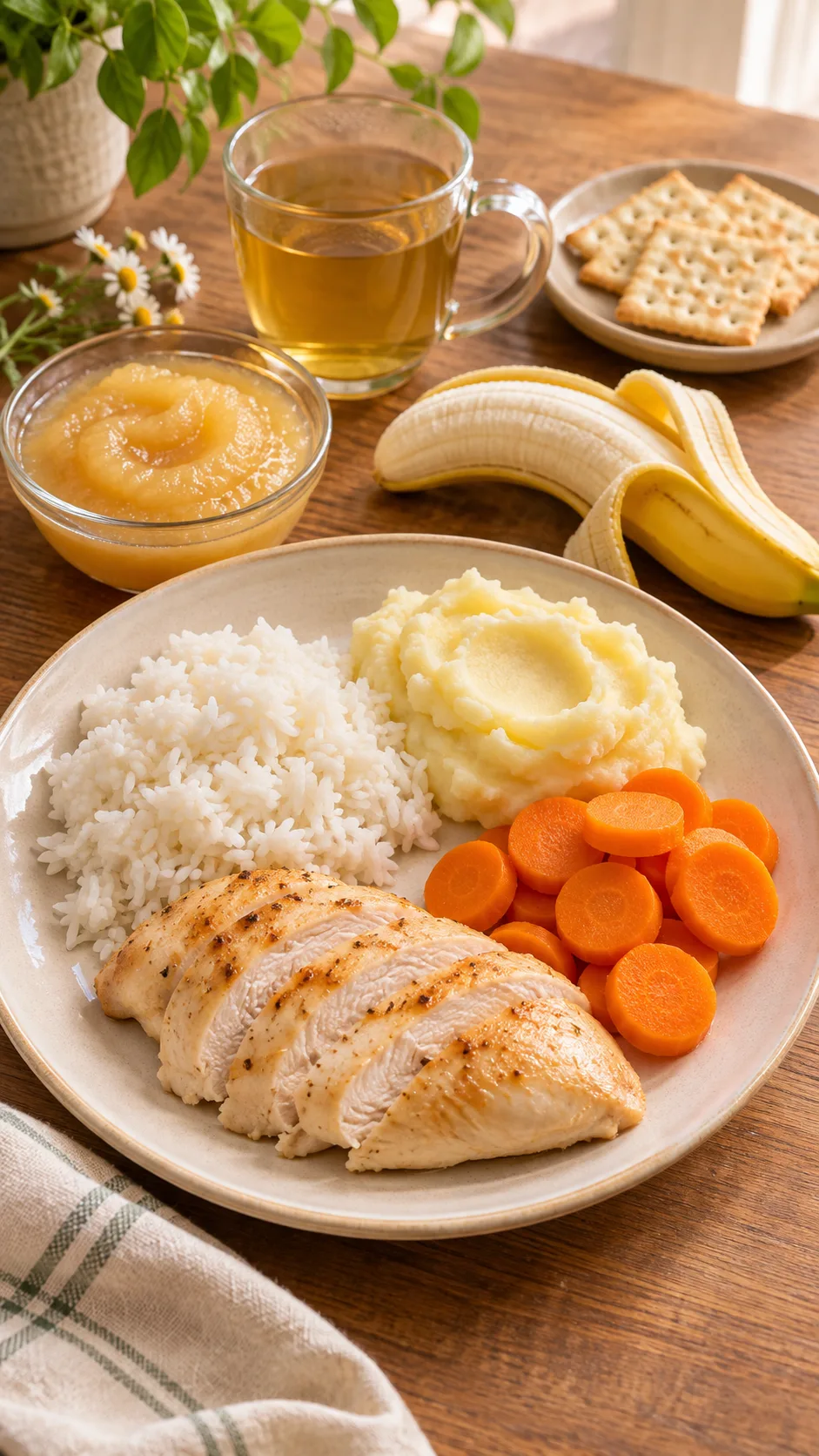
What a bland diet means
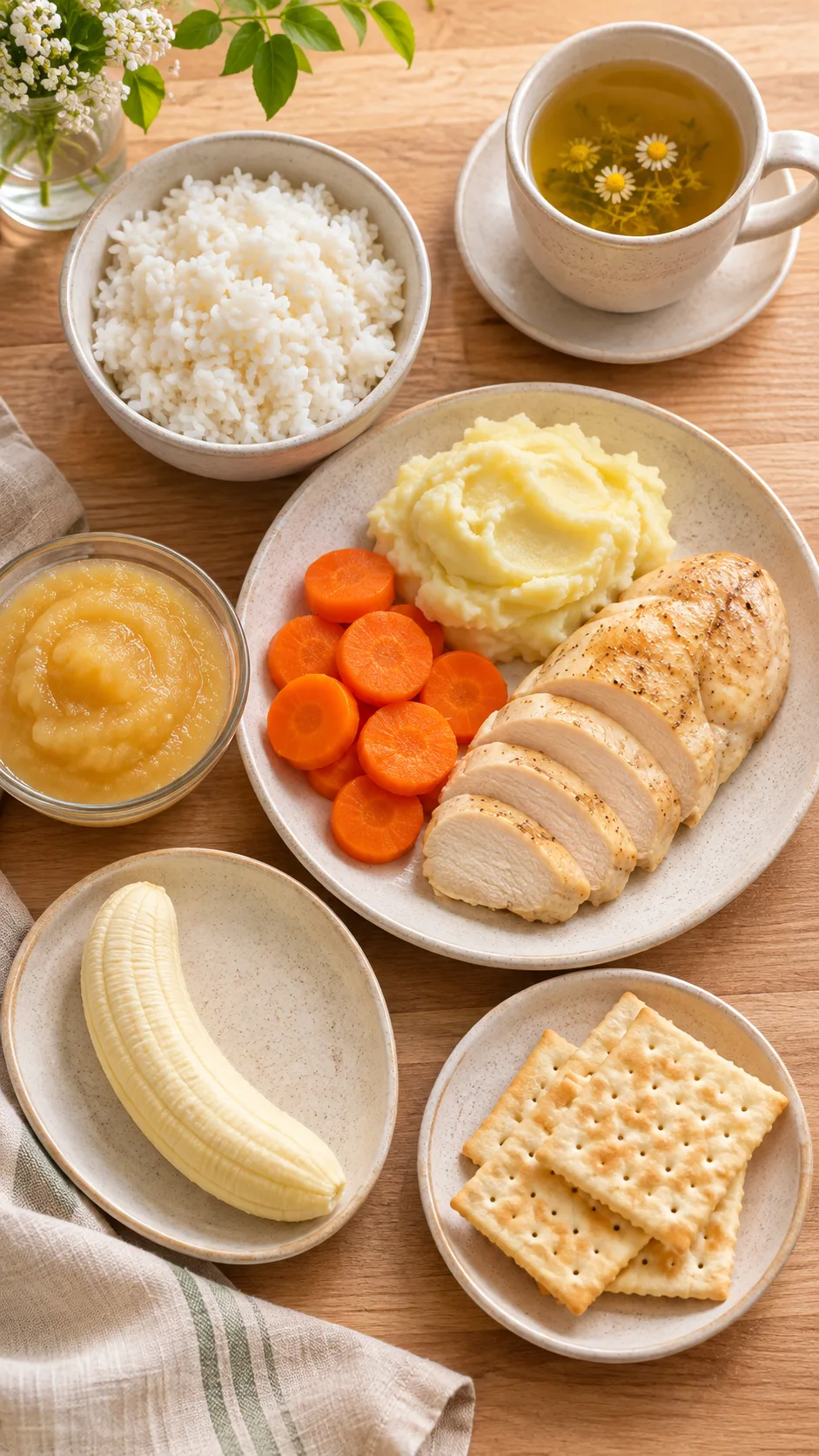
A bland diet centers on soft, mild foods that digest easily. You usually limit hot spices, fried foods, alcohol, caffeine, rich sauces, strongly acidic foods, and anything that reliably worsens your symptoms. Keep meals calm and simple, but do not make them miserable.
Doctors may recommend a bland eating plan during short digestive problems, after certain procedures, or when reflux causes discomfort. Your food choices should fit your symptoms, diagnosis, and your clinician’s instructions. One person may feel fine after yogurt, while another may regret it an hour later.
The National Library of Medicine offers practical guidance on eating a bland diet, including foods to choose and foods to limit. Start with a general list, then notice how your own body responds. Your gut can make its opinions known very quickly.
When a bland diet can help
A bland diet can help during a temporary digestive problem, but it cannot solve every stomach issue. Use it for the short term while you rest, drink fluids, and deal with the cause of your symptoms. Follow your clinician’s plan if you have a diagnosed condition.
- Nausea or vomiting after a viral stomach illness
- Diarrhea while you replace fluids and begin tolerating food again
- Heartburn, indigestion, or mild gastritis symptoms
- Recovery after dental work, surgery, or a medical procedure when your care team permits it
- Medication related stomach upset, with advice from the prescriber
- Temporary digestive irritation during travel, stress, or a food related upset
You do not need to eat bland food forever. Most people bring back more variety as their symptoms improve. Too much restriction over time can leave you low on fiber and nutrients, and it can make lunch feel very bleak.
The best bland diet food list
The best bland diet foods pair a gentle texture with real nutrition. Try small meals every two or three hours if larger meals bring on nausea or reflux. That often feels more manageable than pushing through three oversized meals when your stomach already feels touchy.
Gentle carbohydrates for steady energy
Carbohydrates give you accessible energy when eating feels difficult. Choose soft, simply prepared foods without a lot of butter, chili, cheese sauce, or grease. Plain food need not feel dull when you add mild protein or a little broth.
- White rice or rice porridge
- Plain pasta or noodles
- Boiled or mashed potatoes without heavy cream
- Plain oatmeal or cream of wheat
- Toast, plain bagels, English muffins, or soft white bread
- Saltine crackers, pretzels, or plain rice cakes
- Low sugar cereal with milk or a milk alternative if you tolerate it
- Plain pancakes or waffles with a small amount of syrup
White grains can feel easier during diarrhea or nausea because they contain less insoluble fiber than whole grains. When symptoms ease, bring back oats, whole grain toast, and other fiber rich foods gradually. Your body needs fiber over time, but it also needs good timing.
Mild protein foods that help you stay full
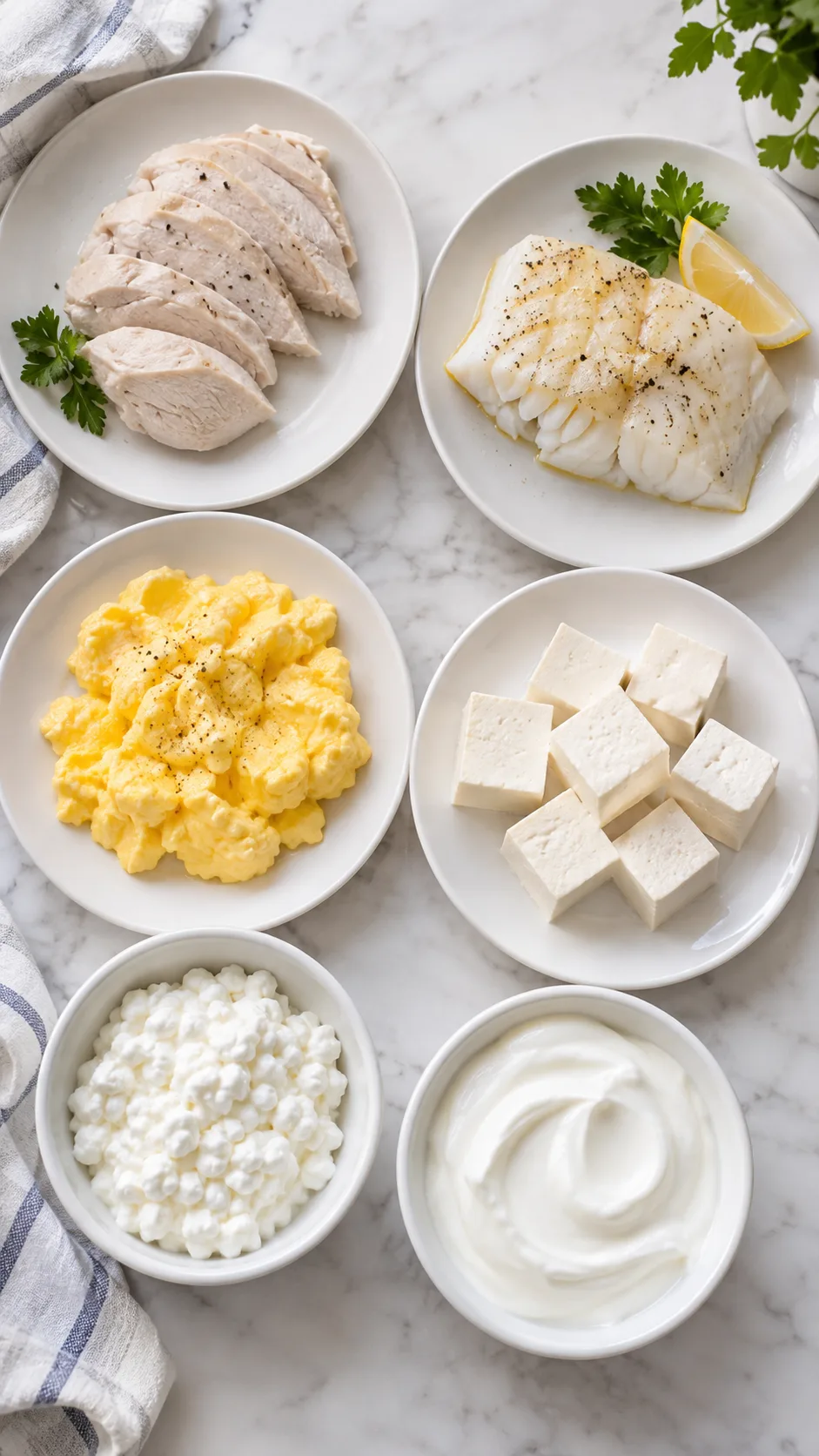
Protein helps your body recover, especially when illness has flattened your appetite. You do not need a large steak to get it. Choose tender, lower fat proteins and cook them by baking, poaching, steaming, or simmering.
- Skinless chicken or turkey
- Lean fish such as cod, tilapia, haddock, or sole
- Eggs, including softly scrambled, poached, or hard boiled eggs
- Tofu with mild seasoning
- Low fat cottage cheese if you tolerate dairy
- Plain Greek yogurt or regular yogurt with live cultures if dairy feels okay
- Smooth nut butter in small portions, if fat does not worsen your symptoms
- Well cooked lentils or beans in small amounts once diarrhea settles
Begin with a palm sized portion of chicken, fish, tofu, or eggs. Your stomach may take a few bites now and accept more later, so let it set the pace. Pair protein with rice, potatoes, toast, or noodles for a meal that stays with you.
Fruits that usually feel easier
Fruit supplies vitamins, fluid, and natural sweetness, but raw skins and seeds can feel rough during a flare. Start with ripe, peeled, cooked, canned in juice, or pureed fruit. If diarrhea feels severe, wait on large servings of dried fruit, seeded berries, and prunes until your gut settles.
- Ripe bananas
- Applesauce or peeled cooked apples
- Peeled ripe pears or canned pears in juice
- Peaches without skins, fresh and ripe or canned in juice
- Melon in small servings
- Fruit smoothies without seeds, protein powders, or lots of added sugar
Bananas can help because they contain potassium, which vomiting or diarrhea can deplete. Applesauce offers another soft option when chewing sounds exhausting. Start with modest portions, since even nutritious foods can upset a sensitive stomach when you eat too much at once.
Vegetables that go easy on your gut
Cooking makes many vegetables softer and easier to digest. Peel them when needed, cook them until tender, and skip heavy sauces. You do not need to avoid vegetables forever. You only need to pick the right time for them.
- Carrots
- Green beans
- Zucchini without tough skin or seeds
- Yellow squash
- Potatoes without skins
- Sweet potatoes without skins
- Pumpkin or butternut squash
- Spinach cooked until soft
Raw salads, onions, broccoli, cabbage, corn, and peppers can cause gas or cramping for some people. These foods are not bad. They simply ask more of your digestion when your gut needs a quiet day.
Dairy, drinks, and comfort foods
Some people tolerate dairy during digestive trouble, while others develop temporary lactose intolerance after a stomach bug. Try a small serving and see how you feel. If milk brings bloating, cramps, or diarrhea, choose lactose free milk or a fortified plant milk that agrees with you.
- Water, still or lightly chilled
- Oral rehydration solution during significant fluid loss
- Clear broth or mild soup
- Weak herbal tea without peppermint if reflux bothers you
- Low fat milk or lactose free milk
- Plain yogurt or kefir, if tolerated
- Gelatin, ice pops, or applesauce when solids feel difficult
During serious diarrhea or vomiting, oral rehydration solutions work better than water alone because they replace electrolytes as well. The National Institute of Diabetes and Digestive and Kidney Diseases explains why hydration matters during diarrhea. Take frequent small sips if larger drinks worsen nausea.
A bland diet meal plan that does not feel like a punishment
A food list helps, but meals make the plan easier to use. Combine mild carbohydrates, lean protein, and soft produce so you stay full and take in more nutrients. Your meals can feel comforting without requiring a complicated recipe.
- Breakfast: Oatmeal with banana slices and a spoonful of smooth peanut butter, plus water or weak tea.
- Mid-morning snack: Applesauce with plain crackers or a slice of toast.
- Lunch: White rice with baked chicken and steamed carrots, seasoned lightly with salt and a little parsley.
- Afternoon snack: Plain yogurt with peeled pear slices, if dairy agrees with you.
- Dinner: Mashed potatoes, poached white fish, and cooked zucchini.
- Evening option: Toast with a thin layer of nut butter or a small bowl of rice cereal.
For more ideas when your gut feels irritated, our low residue diet food list has meals that reduce rough, bulky fiber during certain digestive flares. The plans overlap, but a low residue diet has a more specific purpose and often requires medical guidance.
A warm bowl of rice porridge with shredded chicken can carry you through a lot of bad stomach days. Add a pinch of salt, ginger if you tolerate it, and soft carrots for a simple filling meal. Keep the flavor gentle, but let it taste like food.
Foods to avoid on a bland diet
Foods do not deserve moral labels, but some can worsen nausea, reflux, cramps, or diarrhea while your digestive tract recovers. Limit common irritants for now, then bring them back when you feel better. Focus on comfort and recovery, not lifelong food rules.
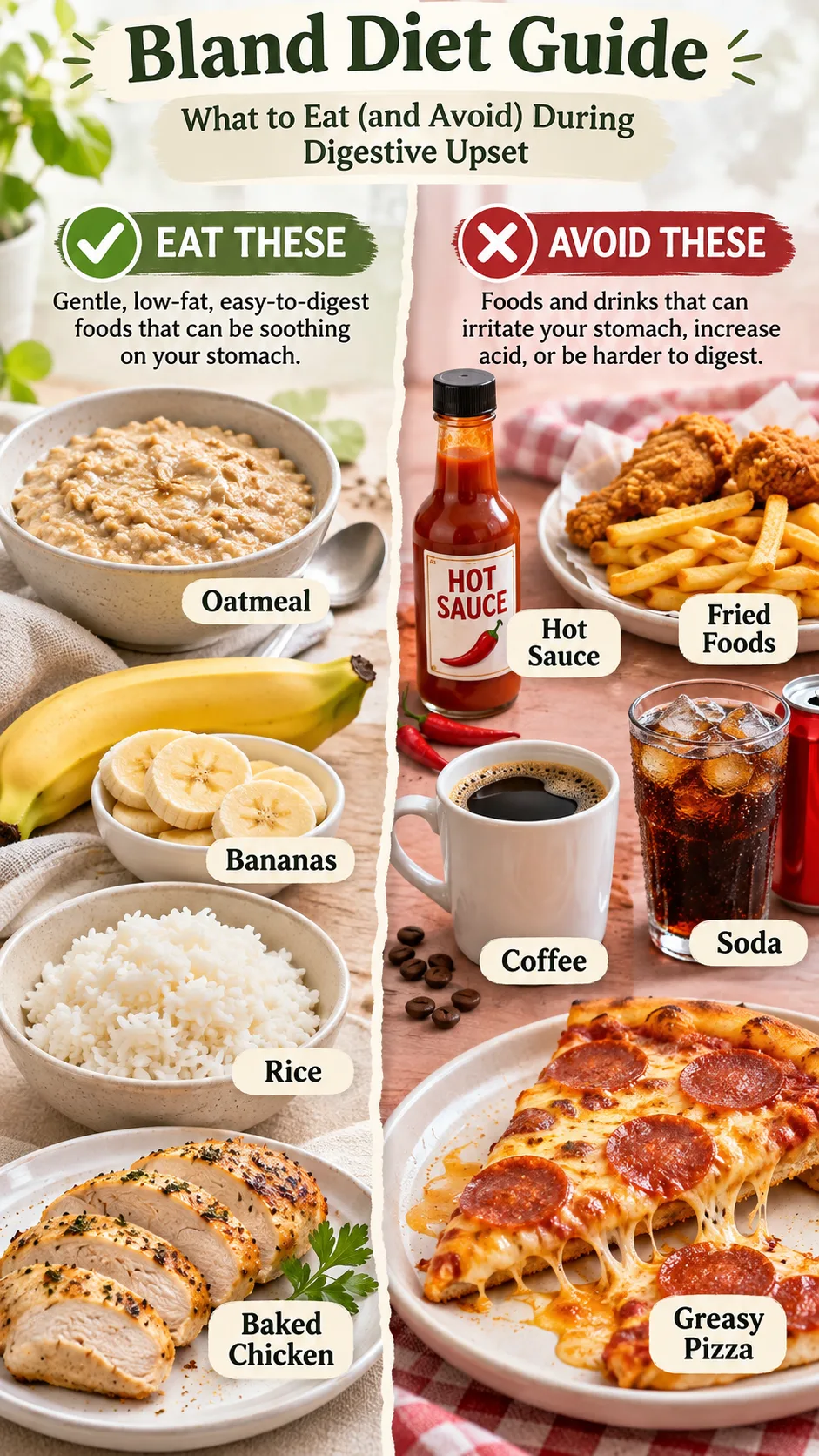
- Fried chicken, fries, chips, and greasy fast food
- Hot peppers, chili oil, hot sauce, and heavily spiced meals
- Alcohol, energy drinks, and strong coffee
- Carbonated drinks if bloating or reflux bothers you
- Tomato sauce, citrus juice, and vinegar heavy foods if acid triggers heartburn
- Chocolate and peppermint if you struggle with reflux
- Fatty cuts of meat, sausage, bacon, and rich creamy sauces
- Raw onion, garlic, cabbage, broccoli, and cauliflower during active symptoms
- High sugar desserts and sugar alcohols such as sorbitol, which can worsen diarrhea
Fat often causes the most trouble because it slows stomach emptying. Spicy foods can sting an irritated stomach and worsen reflux. You do not have to eat bland, empty tasting food. Mild herbs, a little salt, cinnamon, parsley, dill, and small amounts of ginger can bring in flavor.
How to build a bland diet that supports healing
A bland diet works best when you keep it flexible. Begin with foods you tolerate, eat enough to maintain your energy, and widen your choices as symptoms improve. Let restriction support recovery instead of creating another source of stress.
Use these simple rules
- Eat smaller meals more often. Five or six mini meals may feel easier than three large meals.
- Choose low fat cooking methods. Bake, steam, poach, boil, or simmer your food instead of frying it.
- Keep a quick food and symptom note. Write down what you ate, how much you ate, and how you felt afterward.
- Prioritize fluids. Sip liquids throughout the day, especially after vomiting or diarrhea.
- Add foods back one at a time. Try one richer or higher fiber food, then give your body time to respond.
- Stop before you feel stuffed. Fullness can turn into nausea quickly when your stomach feels sensitive.
If reflux bothers you, stay upright for at least two to three hours after you eat and skip heavy late night meals. The NIDDK guide to GERD diet and nutrition explains how meal timing and personal trigger foods can affect symptoms. A bland diet may help, and your daily habits matter too.
If you want a broader reset after a gut flare, you may also like our ancestral diet food list for simple, minimally processed meal ideas once your stomach handles more variety. Do not jump from toast to a huge plate of steak and fermented vegetables. Give your gut time to adjust.
Common bland diet mistakes
People often make a bland diet more restrictive than it needs to be. That can leave you hungry, tired, constipated, and irritated with everyone eating tacos nearby. A few practical changes can prevent that.
Living on the BRAT diet for too long
The older BRAT plan includes bananas, rice, applesauce, and toast. These foods can help at the beginning of a stomach illness, but they do not supply enough protein, fat, or overall nutrition for a longer recovery. Add eggs, yogurt, chicken, fish, tofu, cooked vegetables, and other foods you tolerate as soon as you can.
Ignoring hydration
Food cannot fully correct dehydration. Vomiting and diarrhea can quickly drain water, sodium, potassium, and other electrolytes. Drink often, and use an oral rehydration drink if you lose a significant amount of fluid.
Eating “healthy” foods that feel too rough right now
Huge raw salads, bran cereal, spicy kombucha, and protein bars may sound nutritious, but your gut may reject them during a flare. Recovery calls for a practical approach, not a gold star. Bring high fiber foods back after your symptoms settle.
When to call a doctor instead of relying on bland food
A bland diet can support mild symptoms, but it cannot replace medical care. Call a healthcare professional when symptoms feel severe, persistent, or unusual for you. Pay attention when something feels wrong.
- Blood in your stool or vomit
- Black, tar like stool
- Severe or worsening abdominal pain
- High fever or fever that continues
- Signs of dehydration, such as dizziness, confusion, fainting, very dark urine, or little urination
- Vomiting that prevents you from keeping fluids down
- Diarrhea that lasts more than a few days
- Unplanned weight loss, trouble swallowing, or ongoing appetite loss
- Digestive symptoms during pregnancy, infancy, older age, or immune suppression
The Mayo Clinic lists additional warning signs for diarrhea and explains when you should seek care. If you have inflammatory bowel disease, ulcers, diabetes, kidney disease, food allergies, or a history of eating disorders, ask your clinician or registered dietitian for a plan that suits your needs.
The bottom line: Gentle food can still be real food
A useful bland diet food list includes far more than crackers and applesauce. Build meals around gentle carbohydrates, lean protein, cooked vegetables, easy fruits, and plenty of fluids. Keep portions small, limit grease and spice, and pay attention to the foods your body handles well.
As you feel better, add more variety at a pace your stomach can manage. A bland diet should help you get through a rough patch, not make eating feel like another problem to solve.